-
-
Home
-
What we provide
-
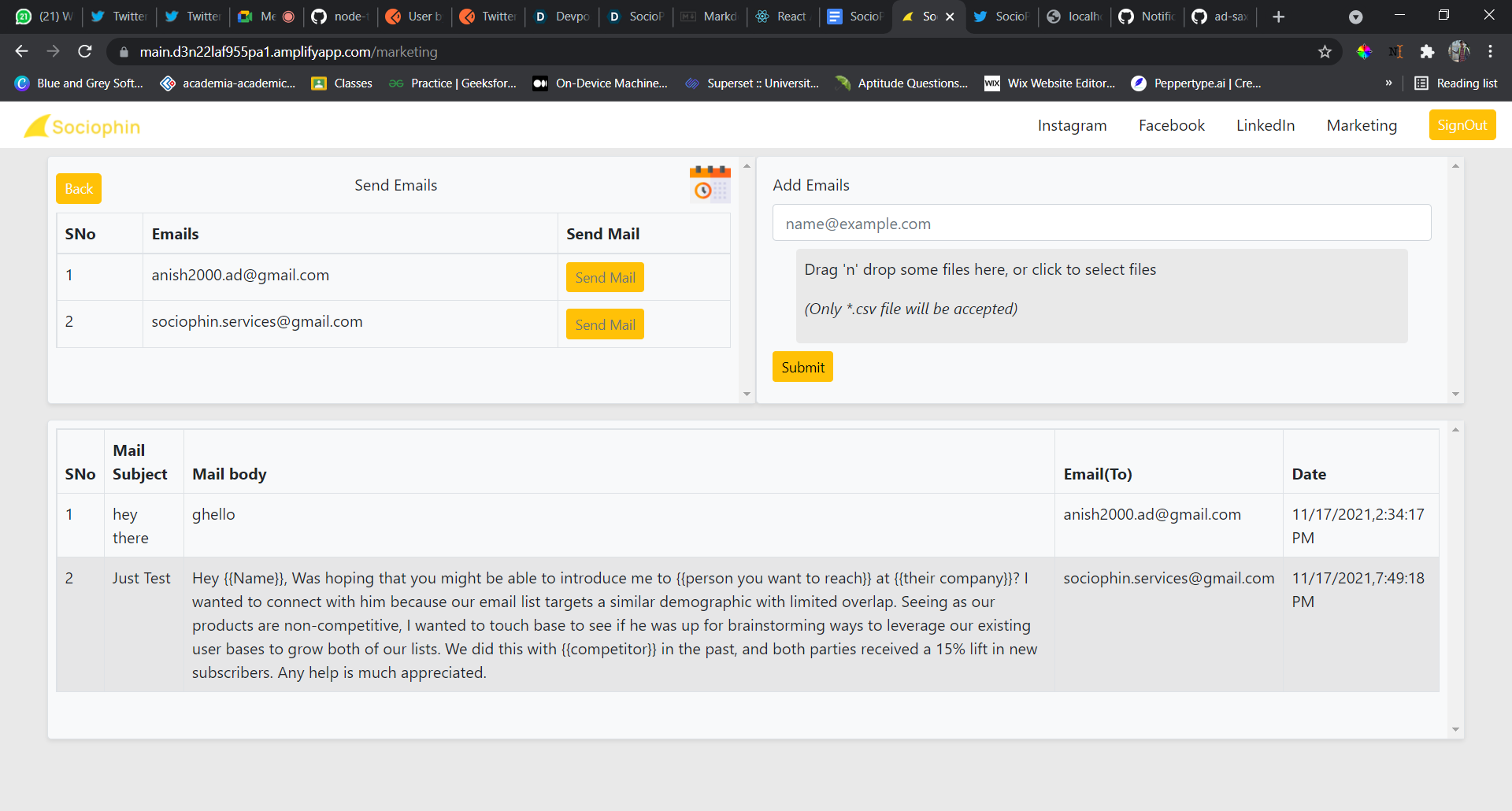
Email Marketing
-
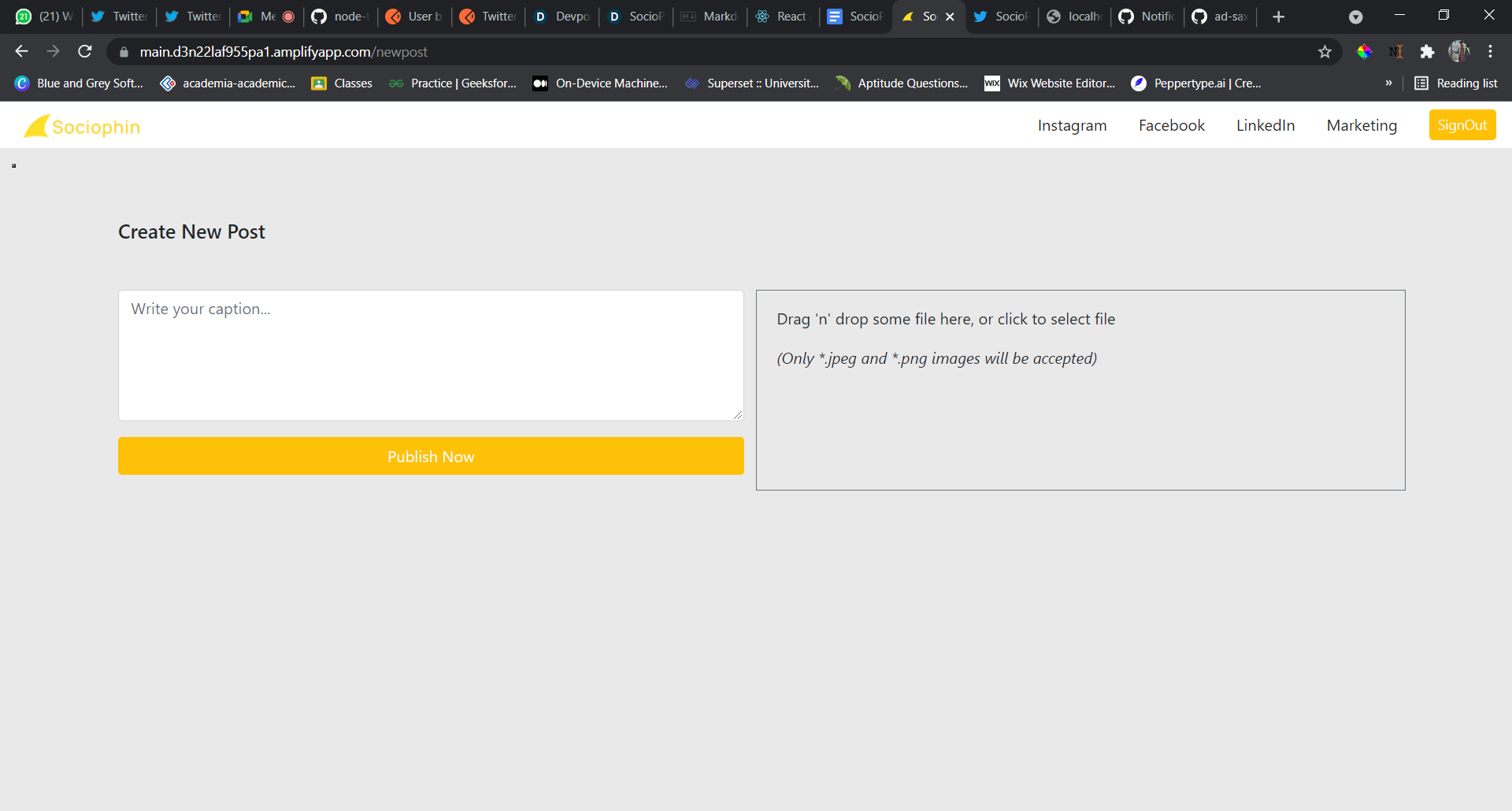
Upload Post to fb page
-
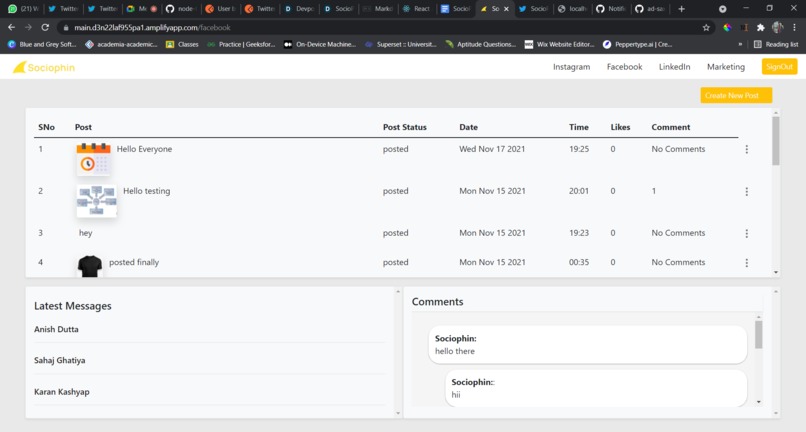
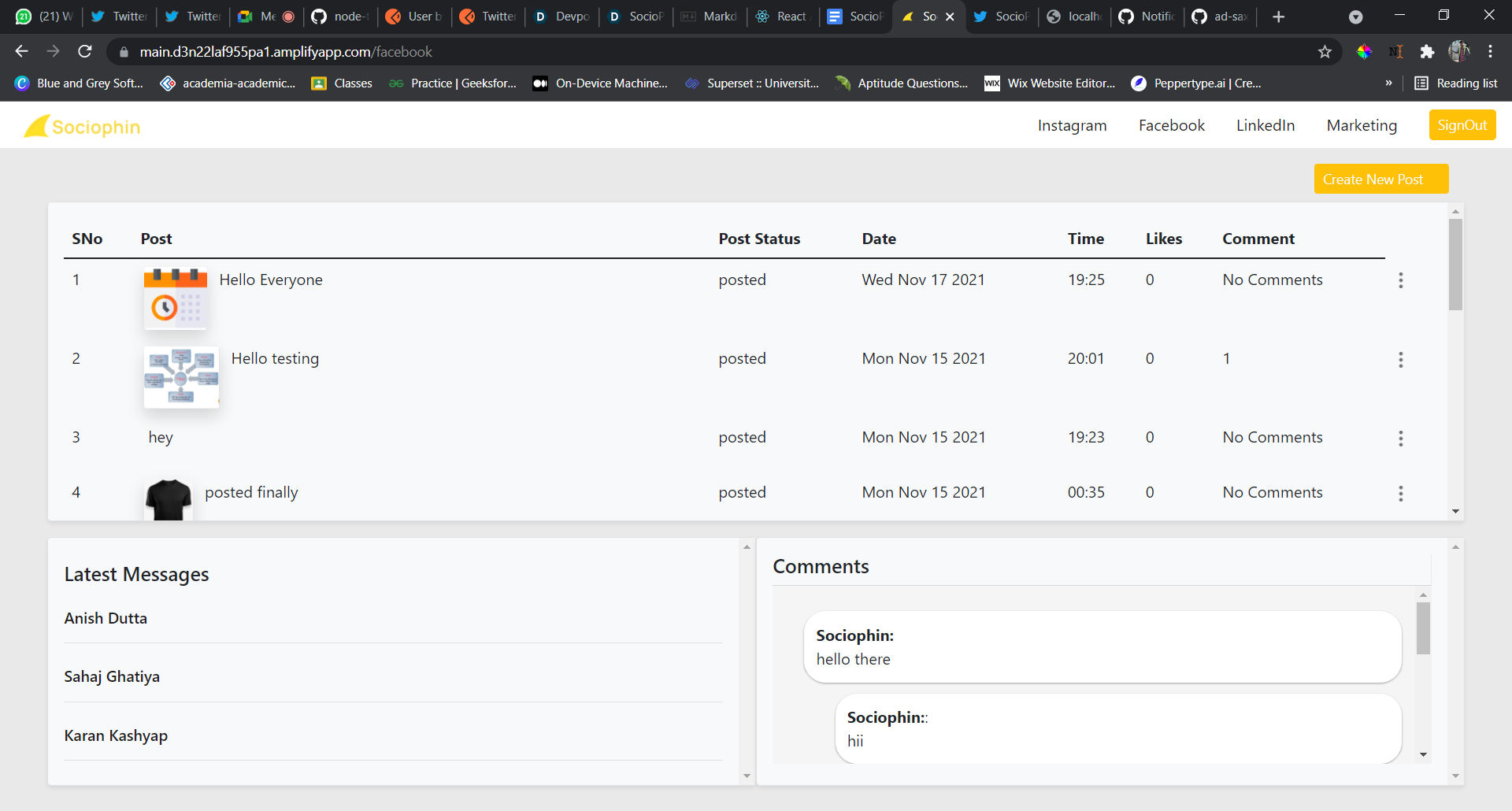
Posts and comments
-
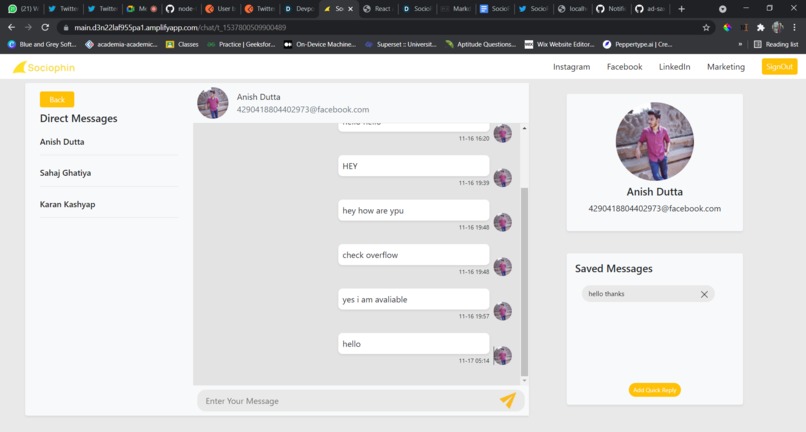
Fb Messenger
-
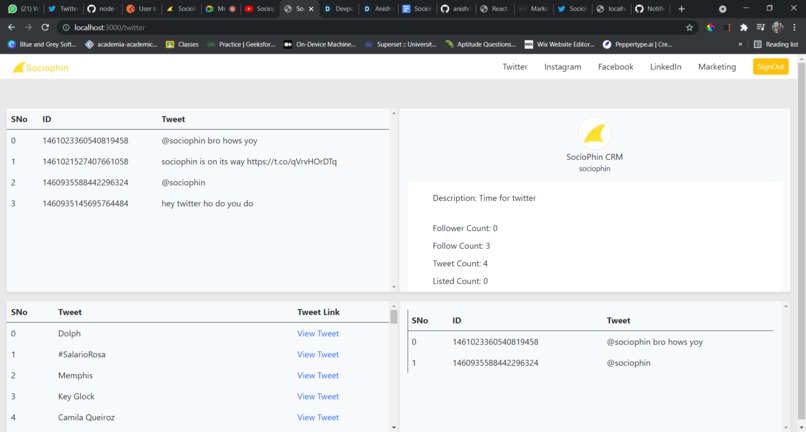
Twitter Module
Inspiration
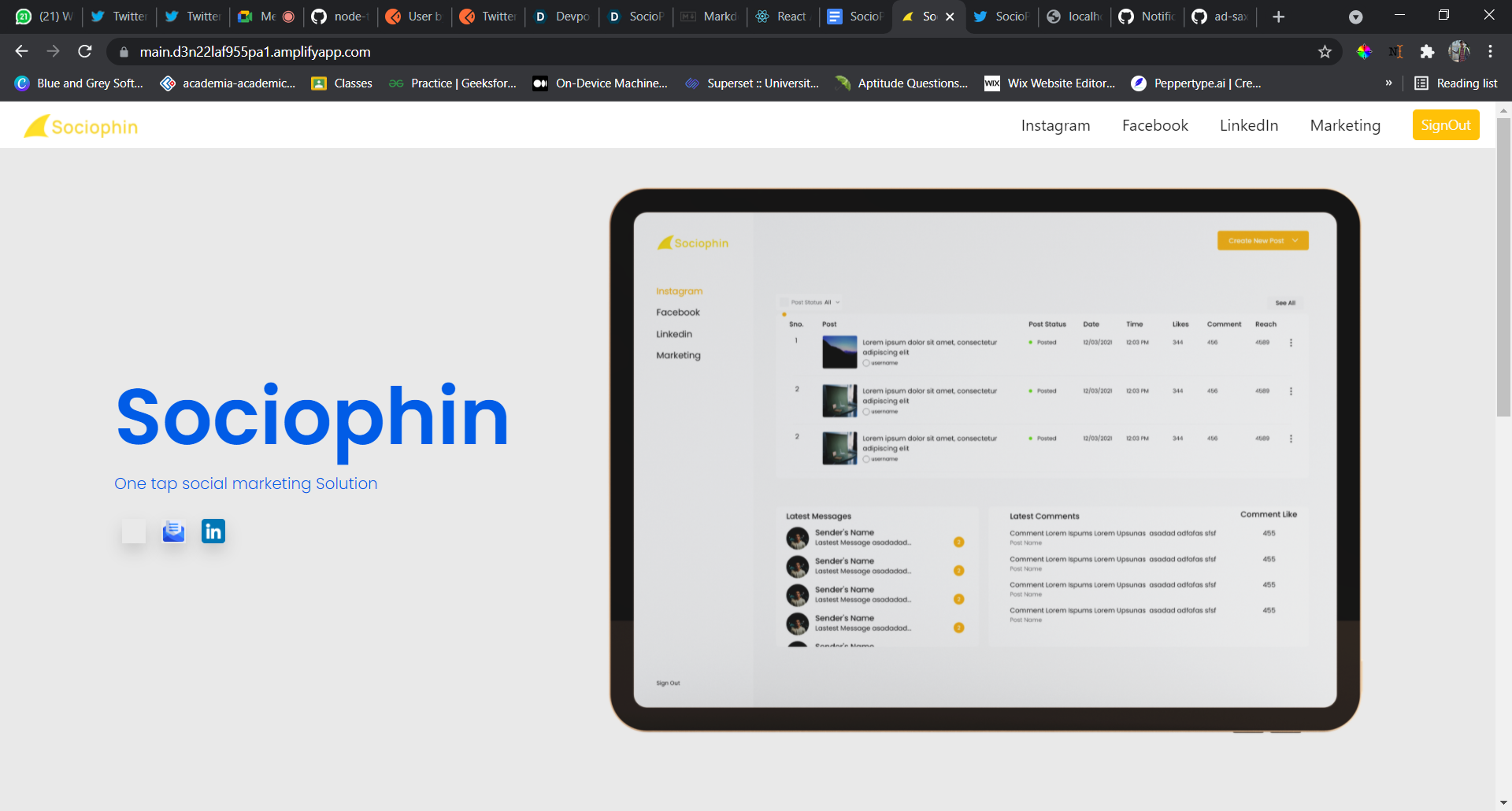
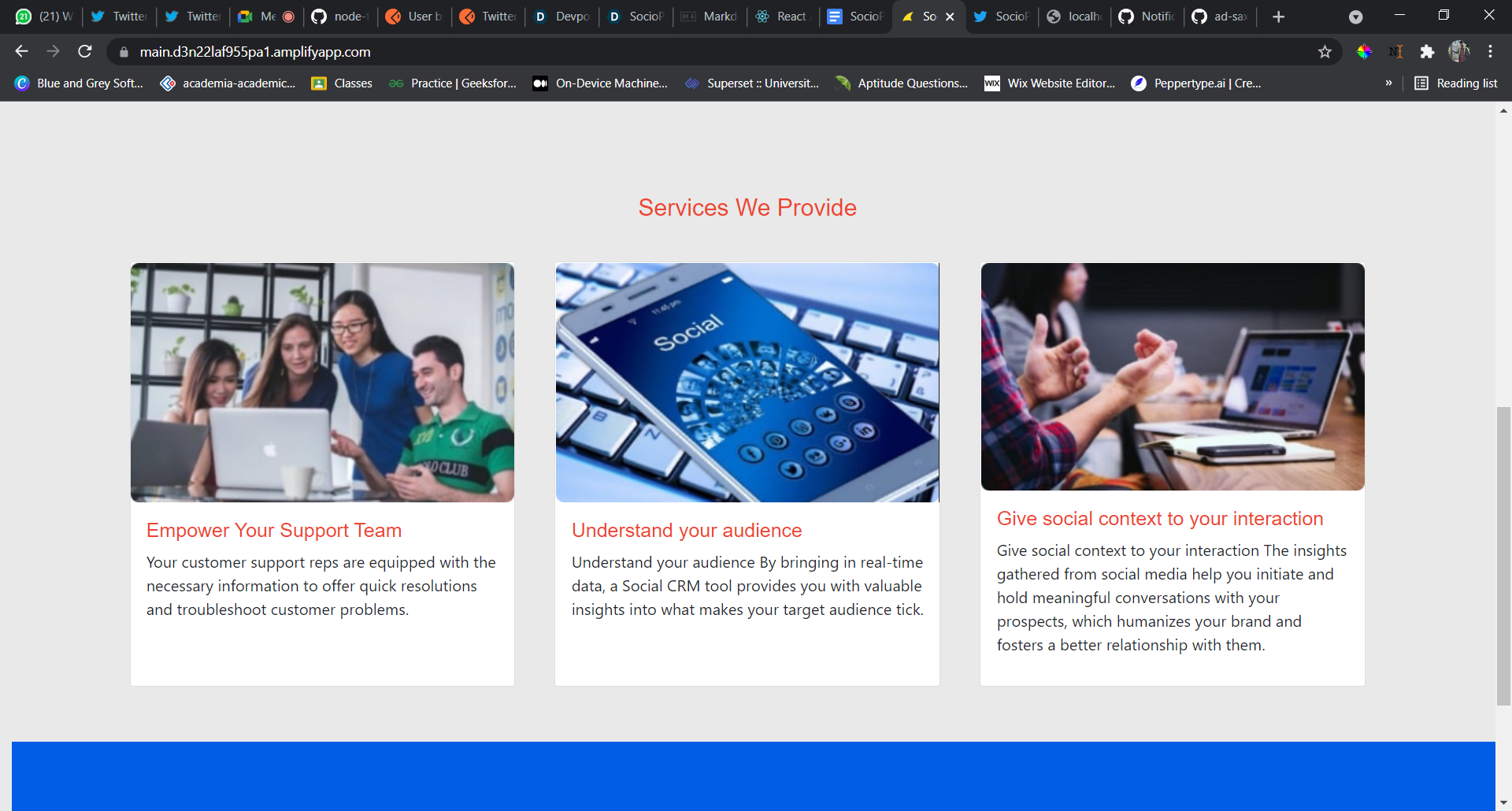
With over 3 billion active users, social media is a platform where consumers spend time every day conversing to one another about their likes, dislikes, and interests. Every business, from SMEs to large corporations, needs a social media plan to broaden their reach, raise brand awareness, attract new consumers, and engage existing customers with valuable content.
What it does
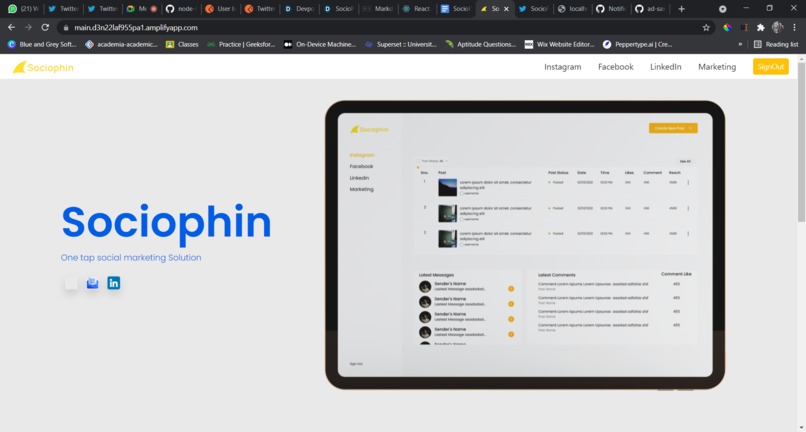
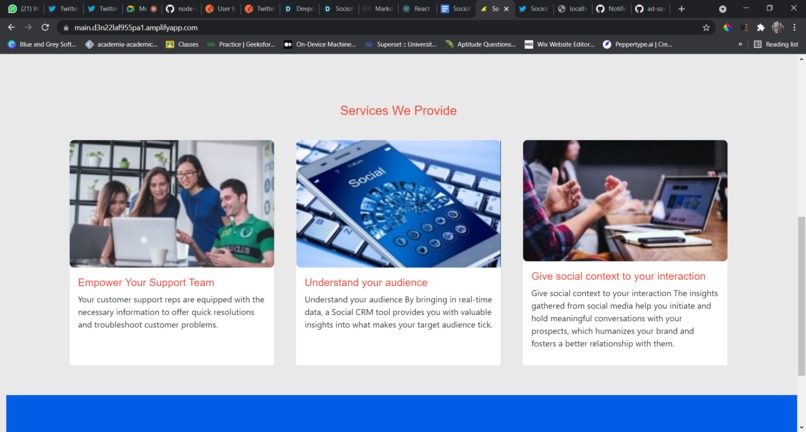
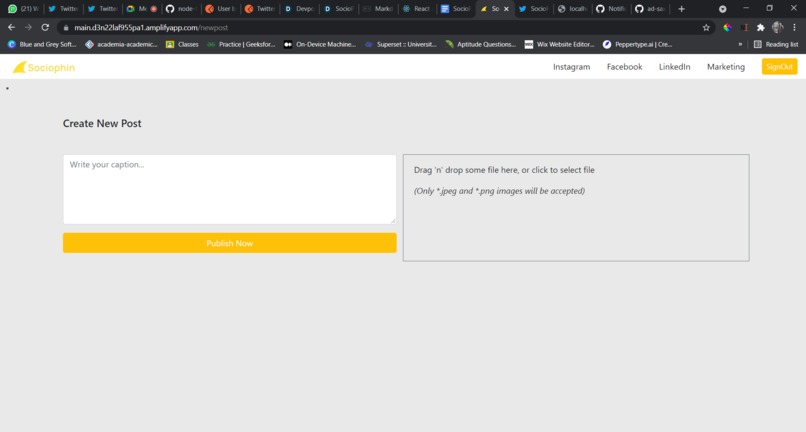
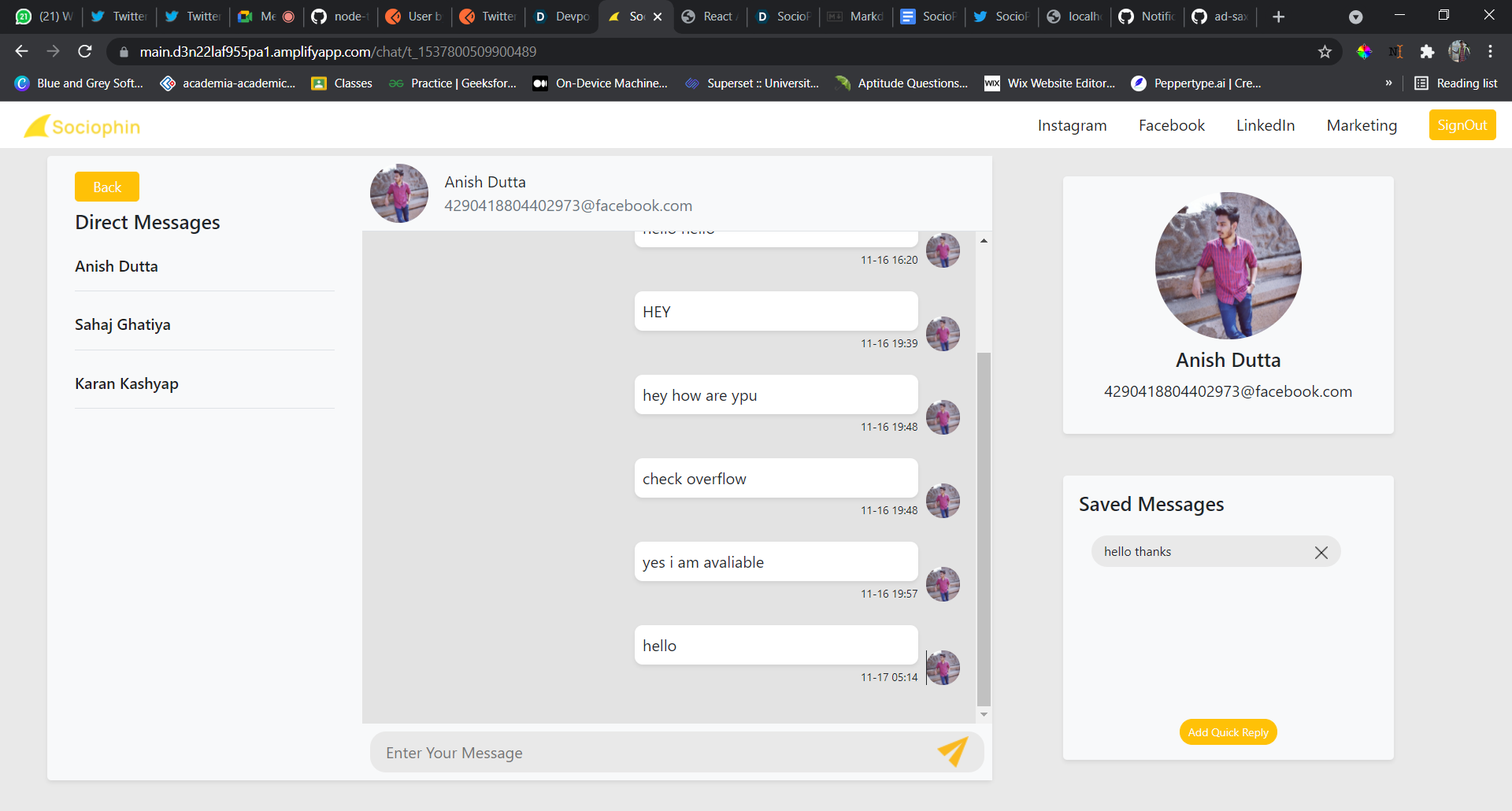
SocioPhin integrates social media platforms with customer relationship management (CRM) systems to provide insight into customer interactions with a brand, and to improve the quality of customer engagement To create powerful social network management for organizations to attract the right users leveraging technology at its best. As a result of our integration with Facebook and LinkedIn, we can provide our users with many benefits, including Direct Messages across social networks, and users are able to post and view their posts, not to mention view and reply to their comments.
How we built it
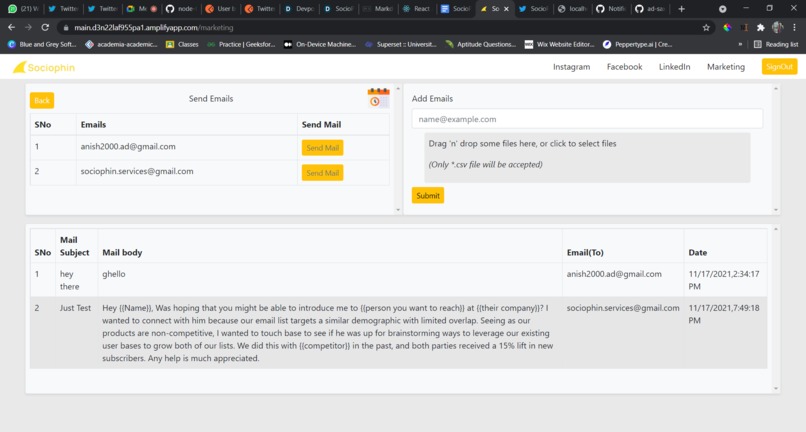
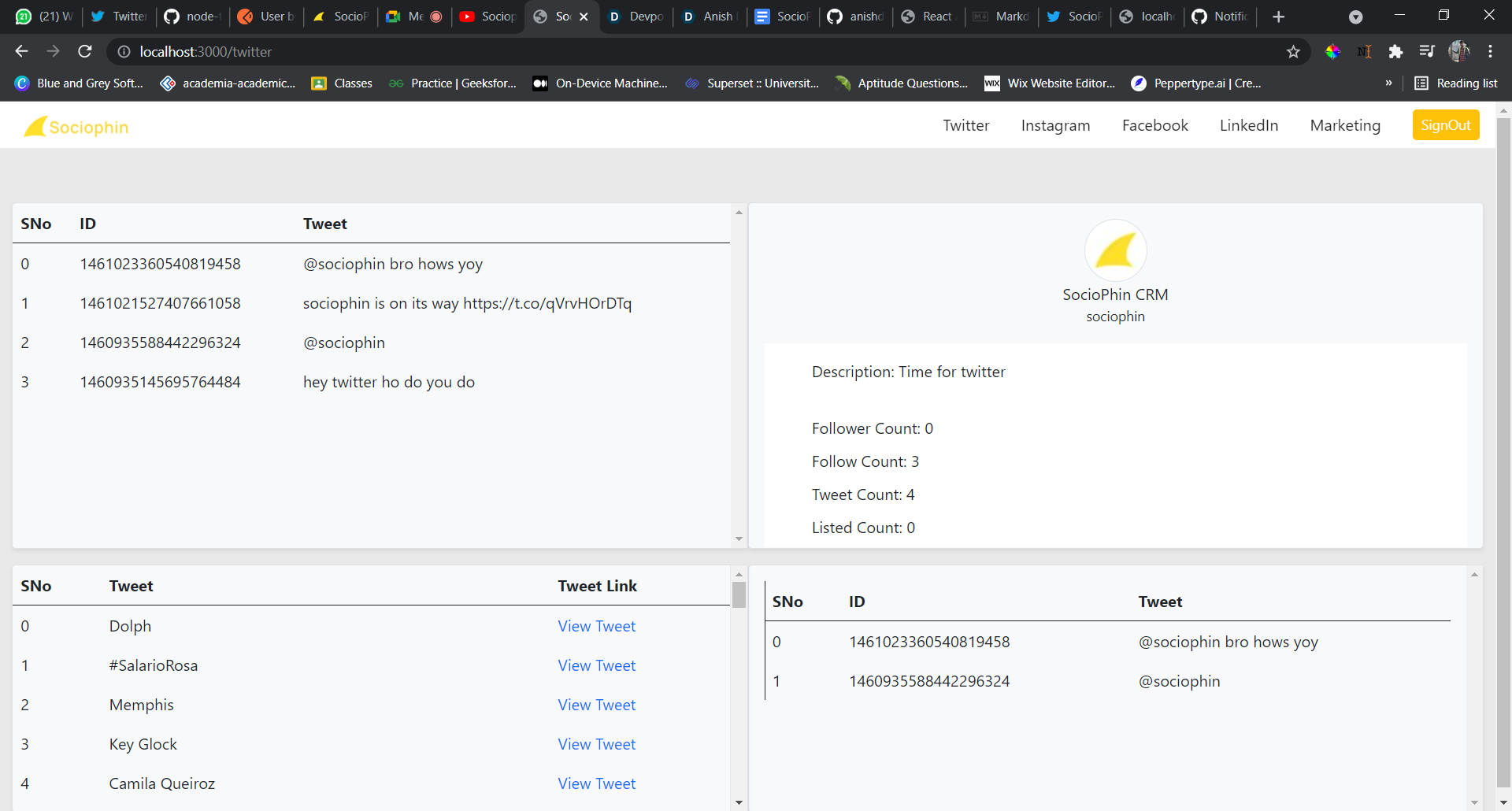
Front end: For the UI part we have used Bootstrap, HTML and CSS which is then converted into react components. Facebook graph APIs: We have used the Facebook developer graph tool for getting the endpoints for messenger and posts. Front end - backend integration: We have used Axios which is an NPM package for calling APIs and after that, we have used a few state management hooks provided by react.js i.e useState, useEffect and a very popular package Recoil for storing global states. Login: For the login part I used Facebook SDK. In the login method I set all the required permissions for the access_key and then storing the pageid and access_key in a recoil global state. Messenger: Messenger part was simple for integration, made the state management with props and react hooks. The API endpoints i.e the access_key and pageid were fetched from the global state. Posts: For the posts, the state management is the same as the messenger one. The only tricky part was the mapping of comments and replies but I managed to do that using nested maps which worked well. Backend: For backend we have used AWS RDS mySQL database and Node js to create APIs for different operations and S3 bucket to store the files. We also created a scheduling operation with Cron Node.js which triggers every second to check for queries matching the timestamp and sends the email to all the user if matches. We developed a backend with node.js and twitter v2 apis to get all the required apis for twitter endpoints. Deployment: We created a serverless architecture with AWS lambda, AWS API gateway and AWS S3 bucket. Demo Site: SocioPhin
Challenges we ran into
In spite of many challenges faced during the project, we were able to come up with the most suitable solutions, some of which related to Facebook graph API permission errors and Cors policy errors when integrating our APIs to the front-end.
Accomplishments that we're proud of
- Integration with multiple social media platforms.
- Replies to tags and comments from posts.
- Secure code and architecture with mobile encryption
- Sent cold mails to folowers with the automated mail service.
- Post content and analyze their reach on different platforms
What we learned
- We learned about facebook graph api's and developing facebook app.
- Twitter V1 and V2 Api's
- Serverless Architecture
What's next for SocioPhin
- Ad Campaigns Online business listings, geo-tagging, and ads are some of the many things we help businesses get started with.
- Customer acquisition Get to know your customers intersests and locations to help you channelize your content for better reach
- Social Media Followers Gain social media followers by using powerful tools in automation and analytics.





Log in or sign up for Devpost to join the conversation.