-
-
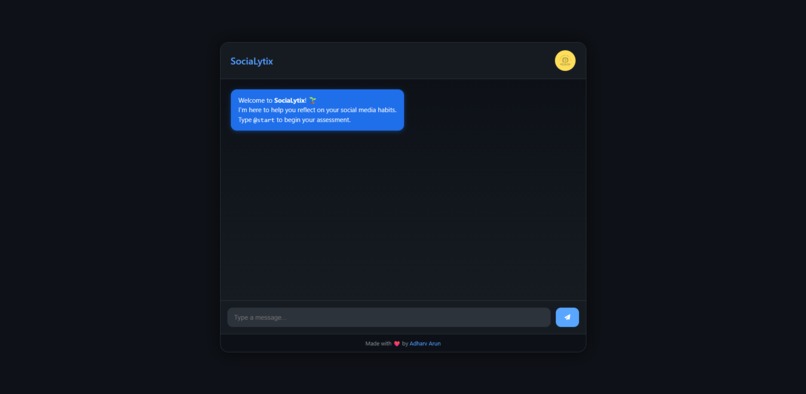
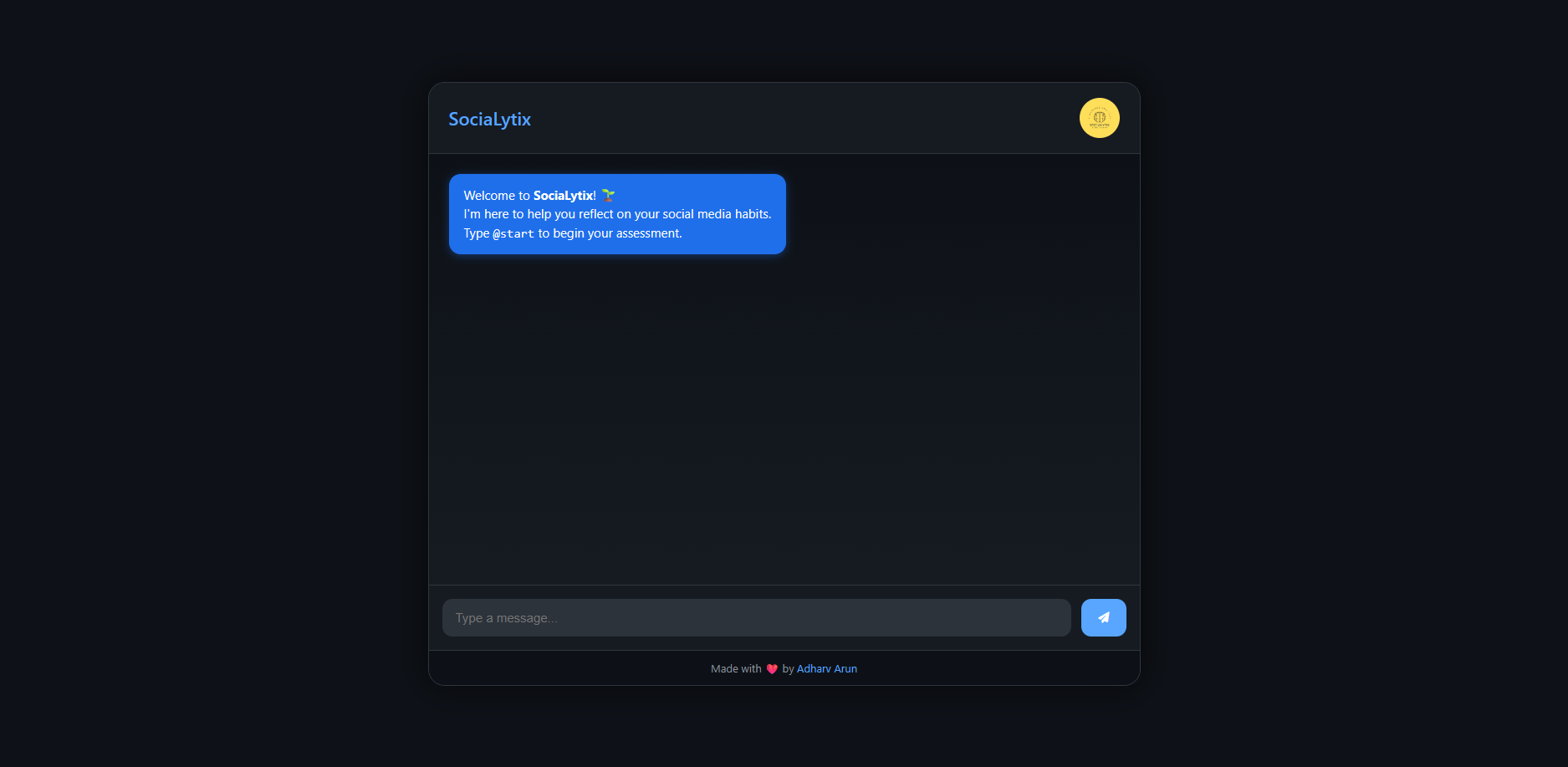
App Screen
Inspiration
Teens today spend hours on social media, but most tools only track screen time—not how it actually affects their wellbeing. Habits like late-night scrolling and constant notifications often go unnoticed until they impact mood, focus, and sleep. SociaLytix was built to help teens struggling with excessive scrolling better understand these effects.
What it does
SociaLytix analyzes social media usage and lifestyle patterns to estimate a Mental Wellbeing Score and Addiction Score, then classifies users into simple categories like Healthy, Moderate, or Unwell. It also provides personalized AI feedback to help users reflect on and improve their digital habits.
How I built it
We built a Flask-based web app with a chat-style interface using Socket.IO. User inputs are processed and cleaned using KNN Imputation, then passed into two Random Forest models for prediction. The outputs are translated into a wellness label and enhanced with AI-generated feedback using Google Gemini.
Challenges I ran into
- Converting subjective habits into meaningful data
- Handling incomplete and noisy inputs
- Balancing helpful insights without sounding diagnostic
- Making the experience feel natural and user-friendly
Accomplishments that I'm proud of
- Building a complete end-to-end system (input → prediction → feedback)
- Creating a conversational interface instead of a static form
- Turning raw data into actionable, human-readable insights
What I learned
- How to design ML systems that are actually useful to users
- The importance of human-centered AI in sensitive areas
- Combining traditional ML with generative AI effectively
What's next for SociaLytix
- Adding a visual dashboard for deeper insights
- Improving model accuracy with a larger dataset
- Deploying the app for real-world usage and feedback

Log in or sign up for Devpost to join the conversation.