-
-
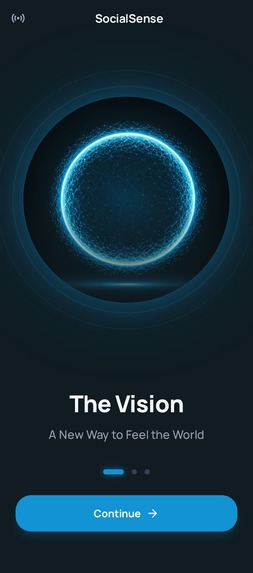
Onboarding: The Vision
-
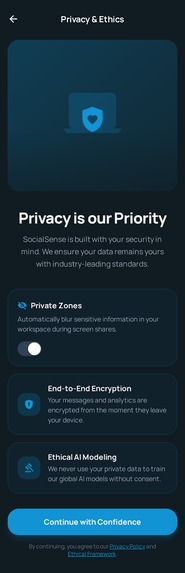
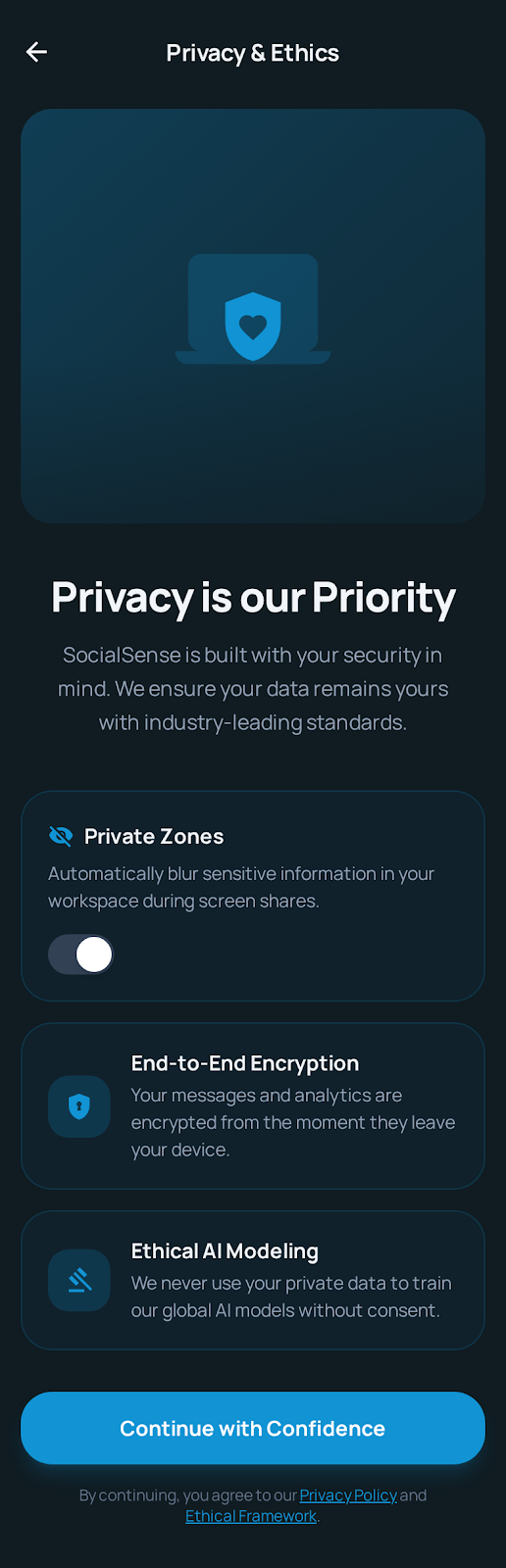
Onboarding: Privacy & Ethics
-
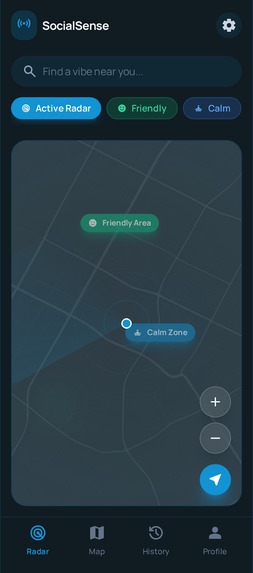
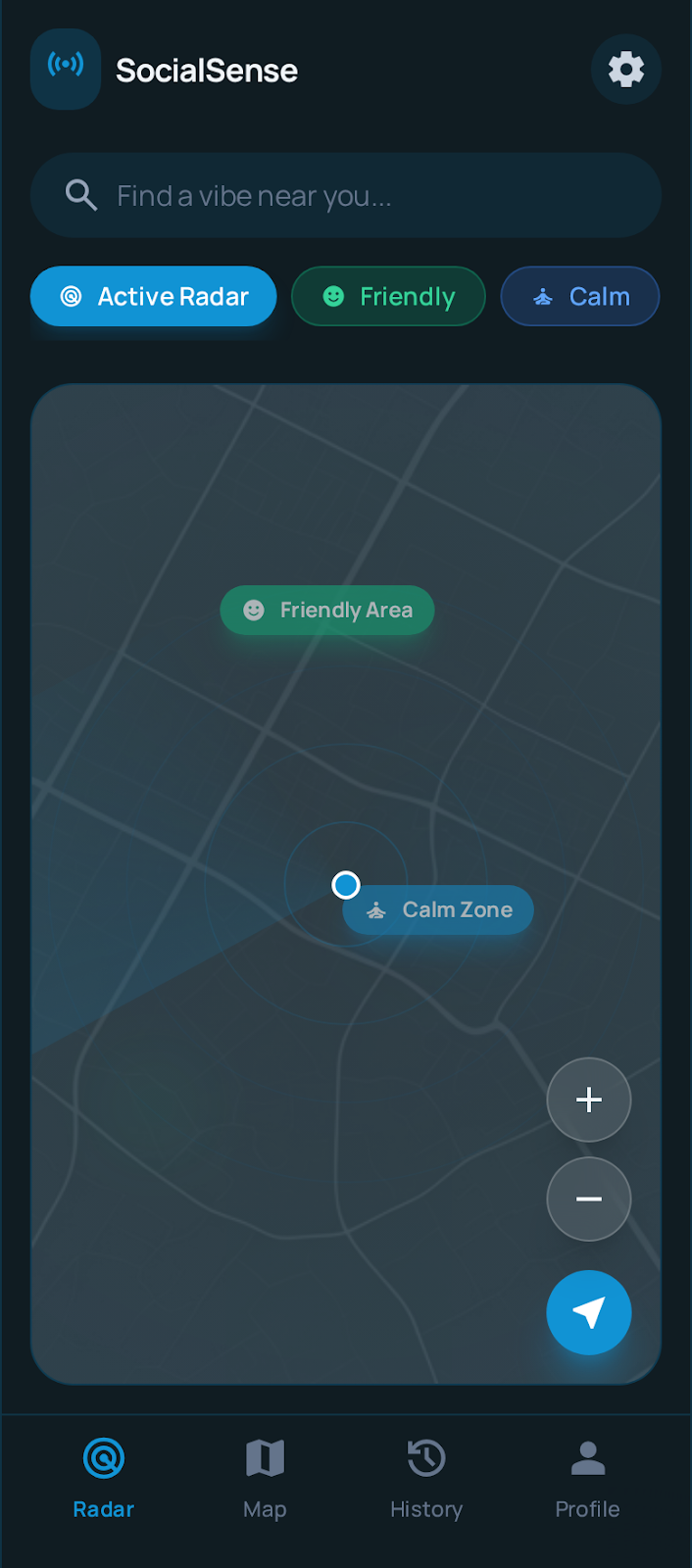
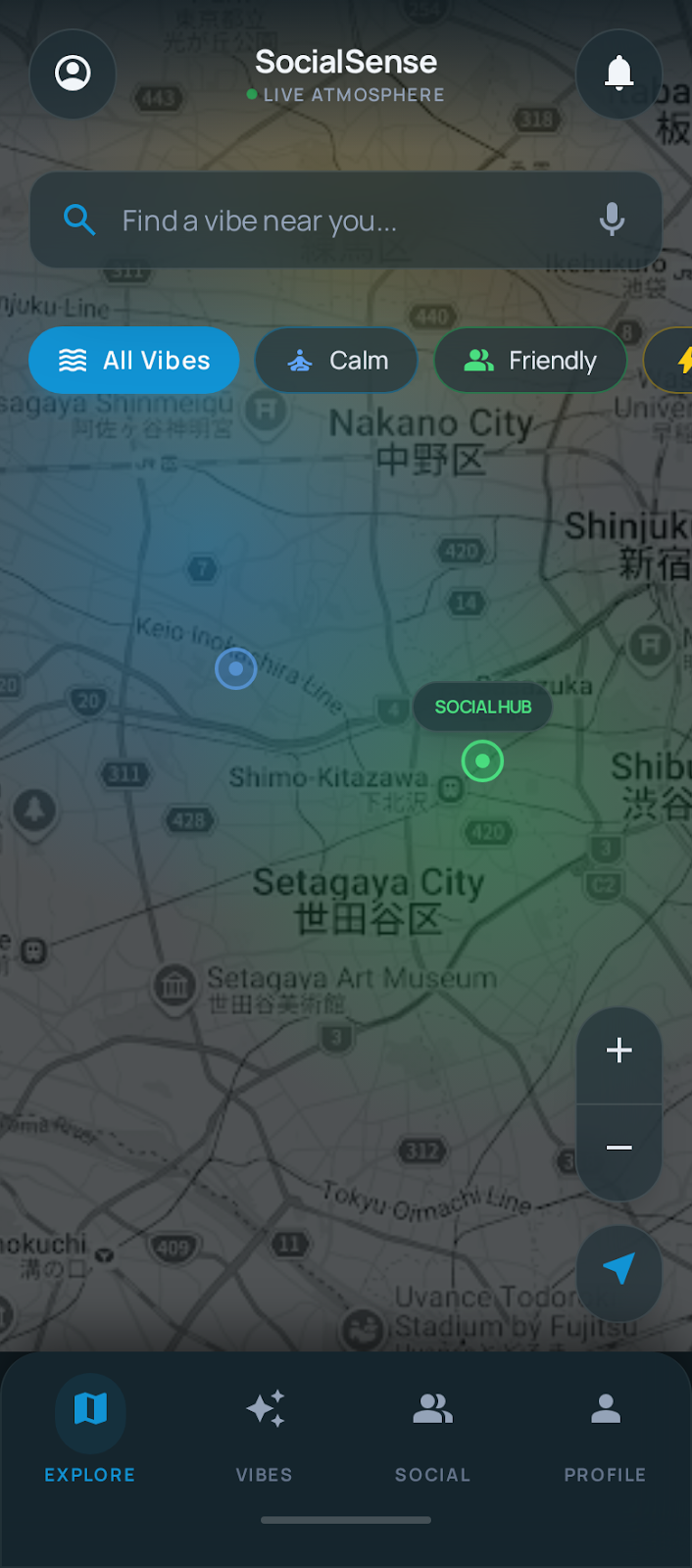
Real-Time Atmosphere Map
-
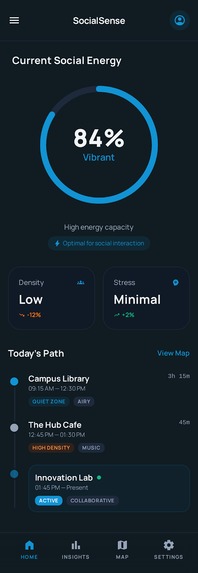
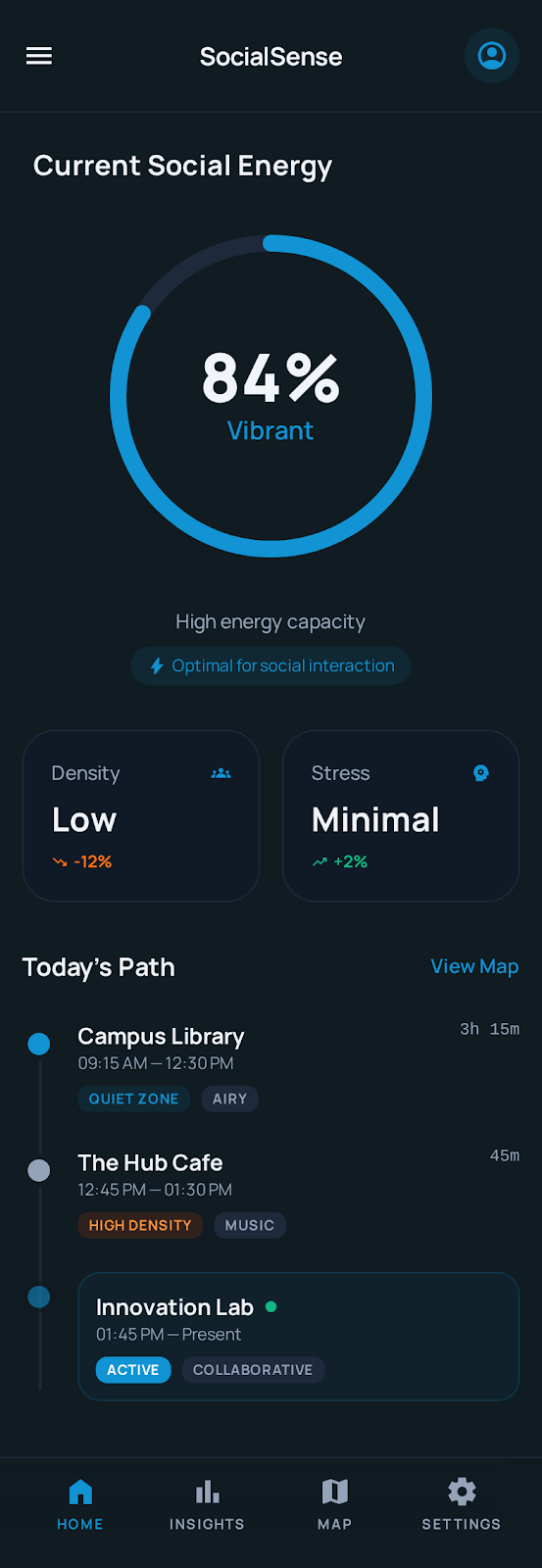
Home: Social Wellness Hub
-
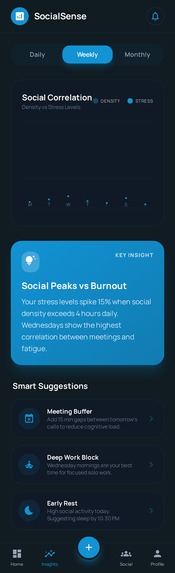
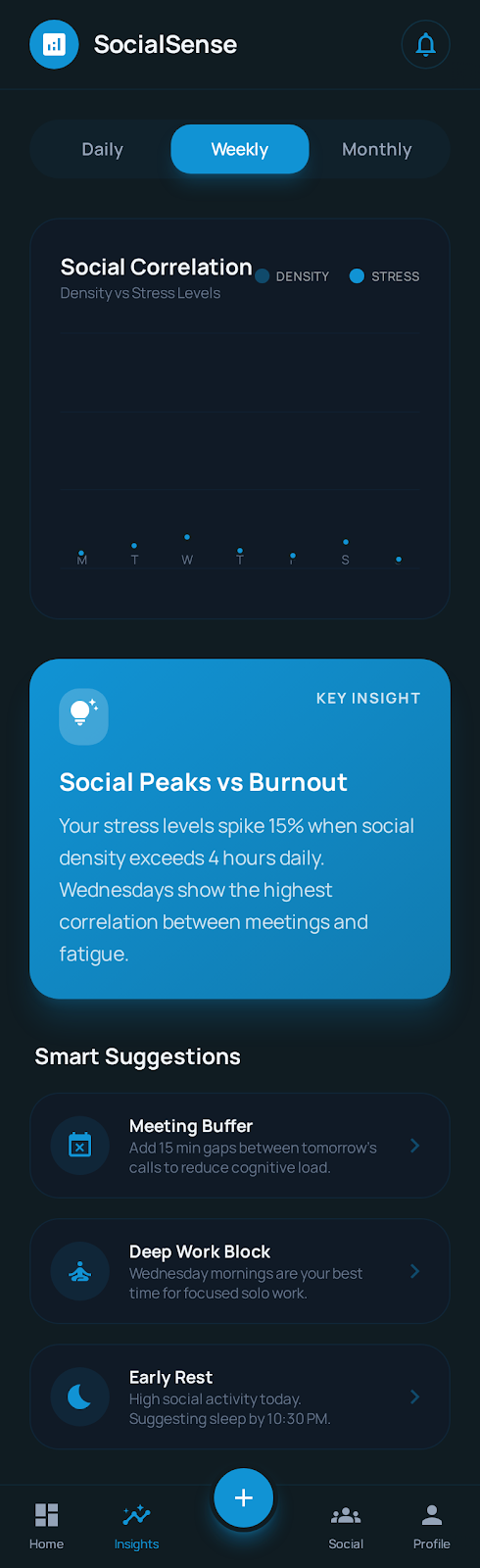
Social Wellbeing Insights
-
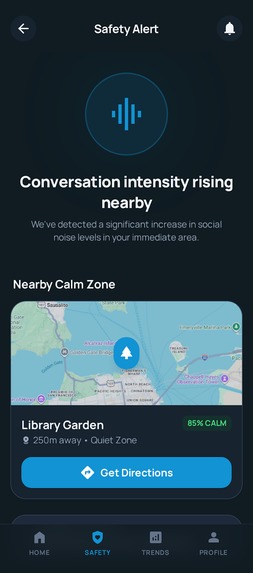
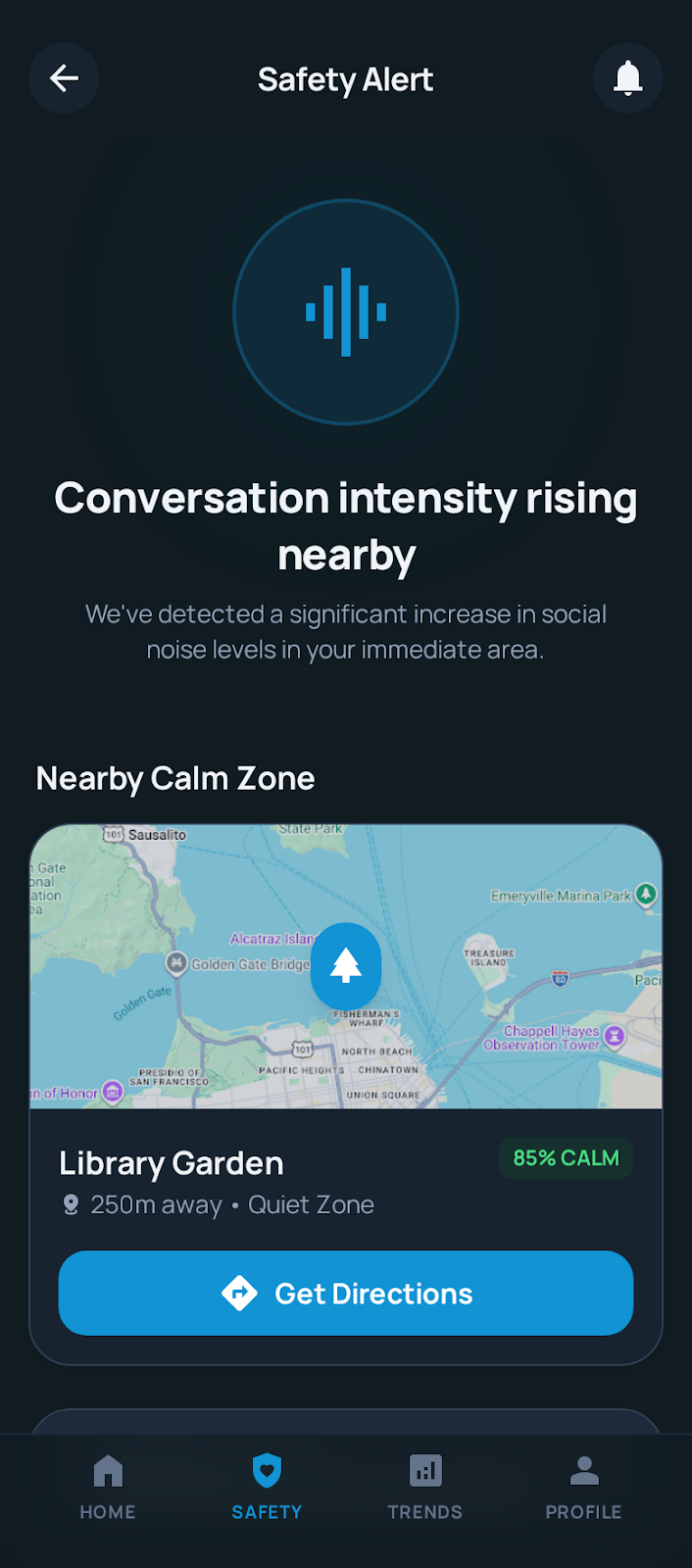
Safety Alert: Calm Support
-
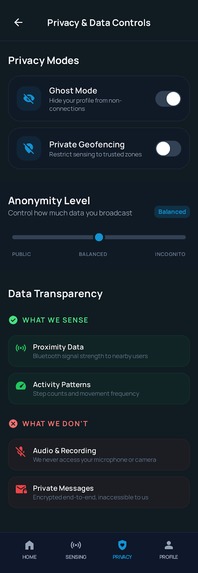
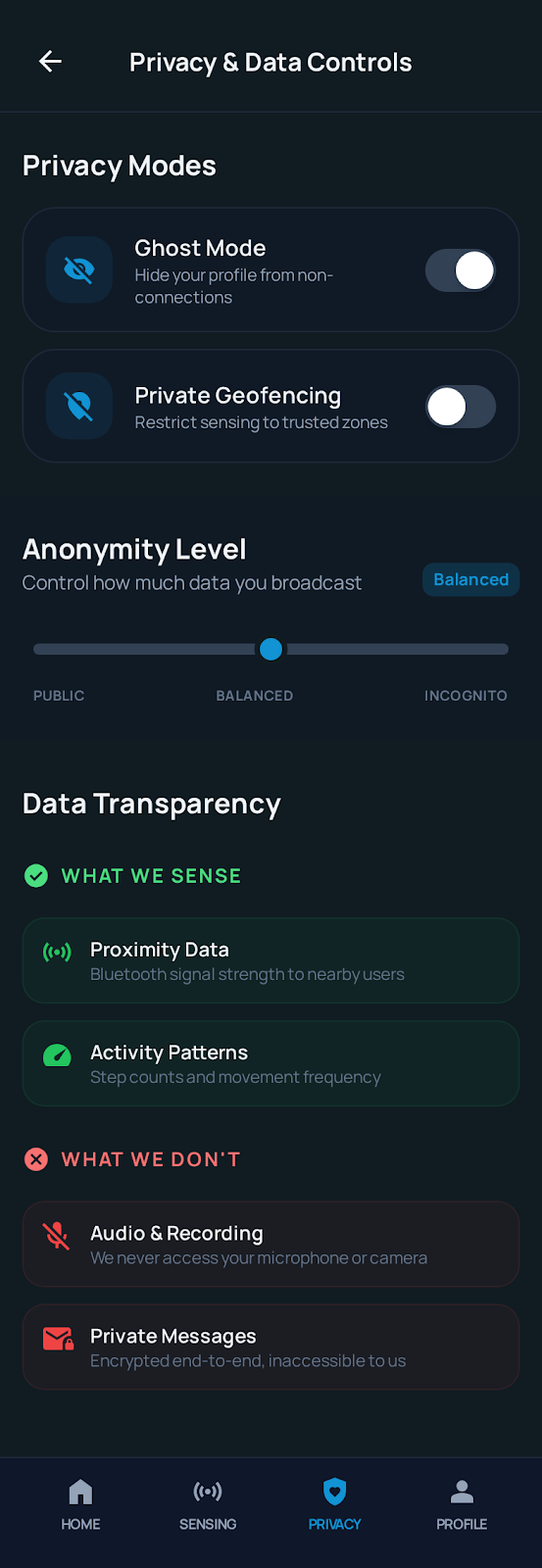
Privacy & Data Controls
-
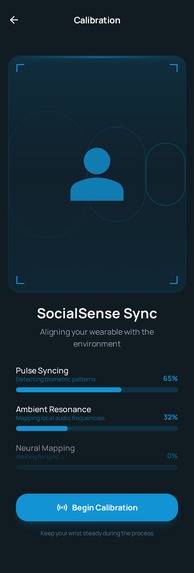
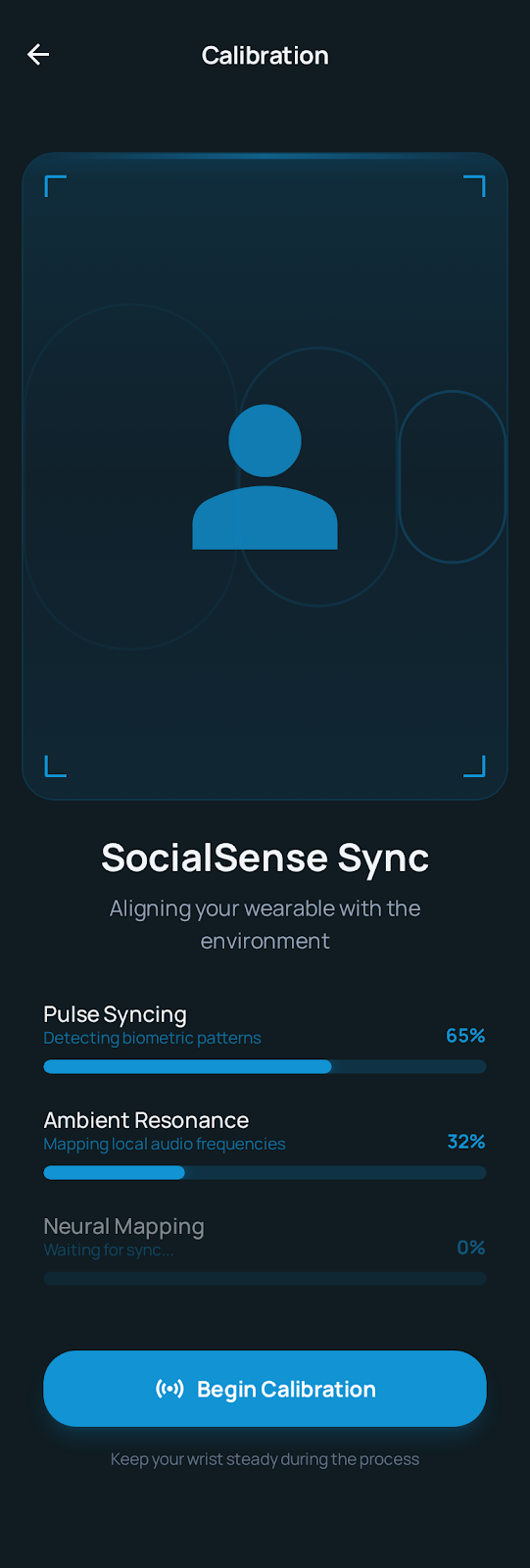
Wearable Calibration
-
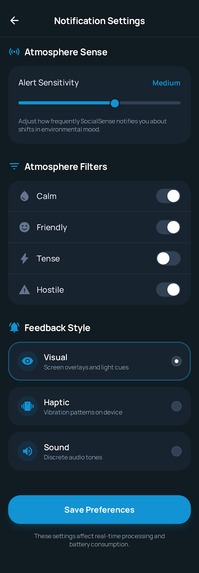
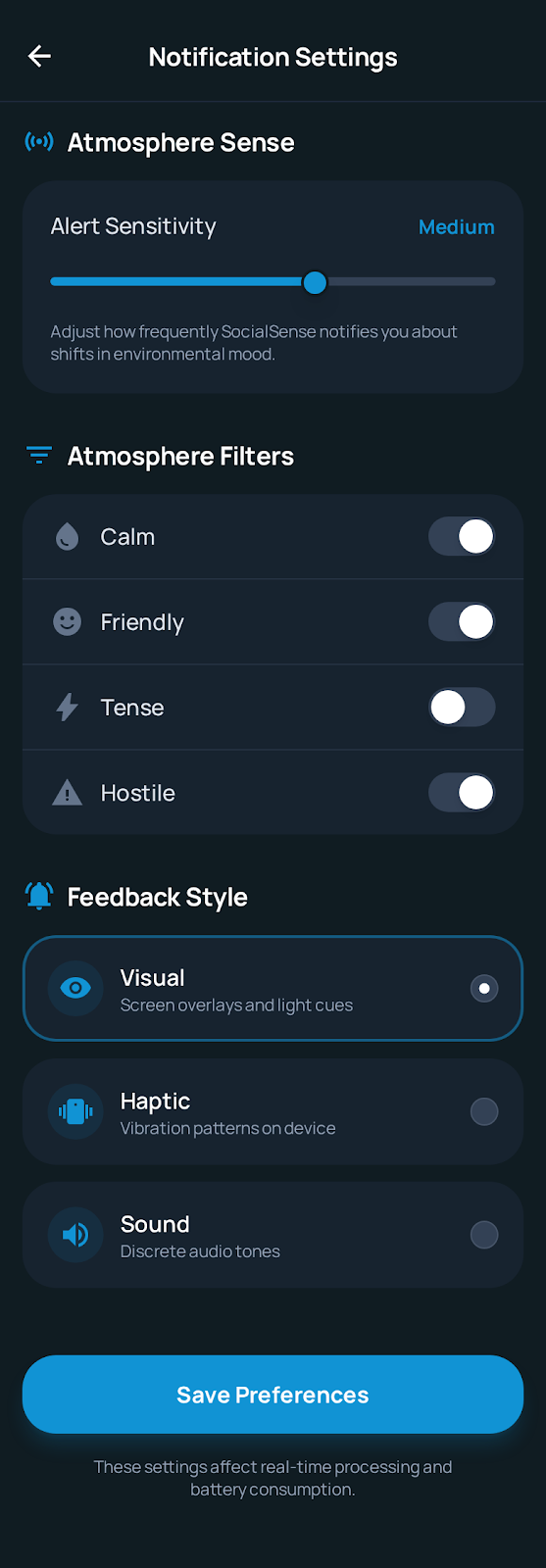
Notification Settings
-
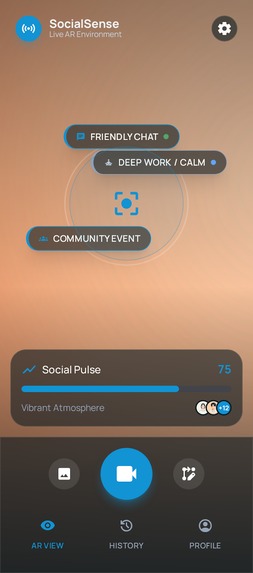
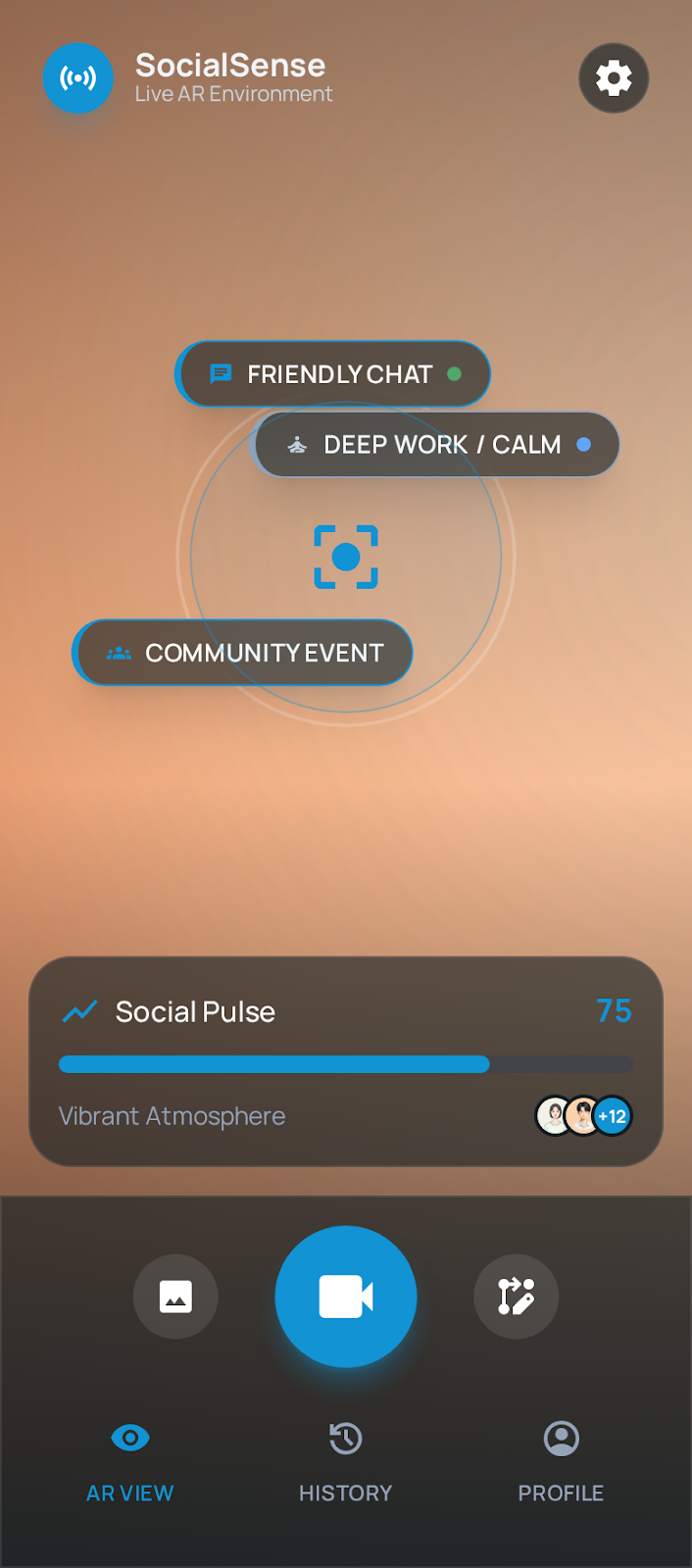
Detailed AR Atmosphere Overlay
-
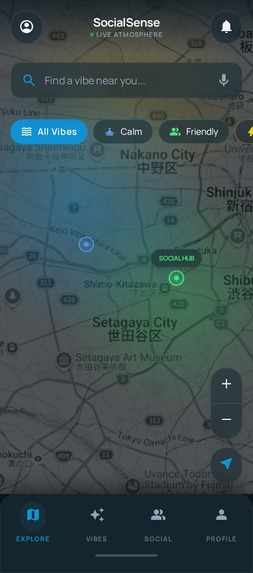
Real-Time Atmosphere Map
-
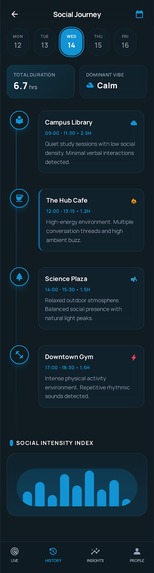
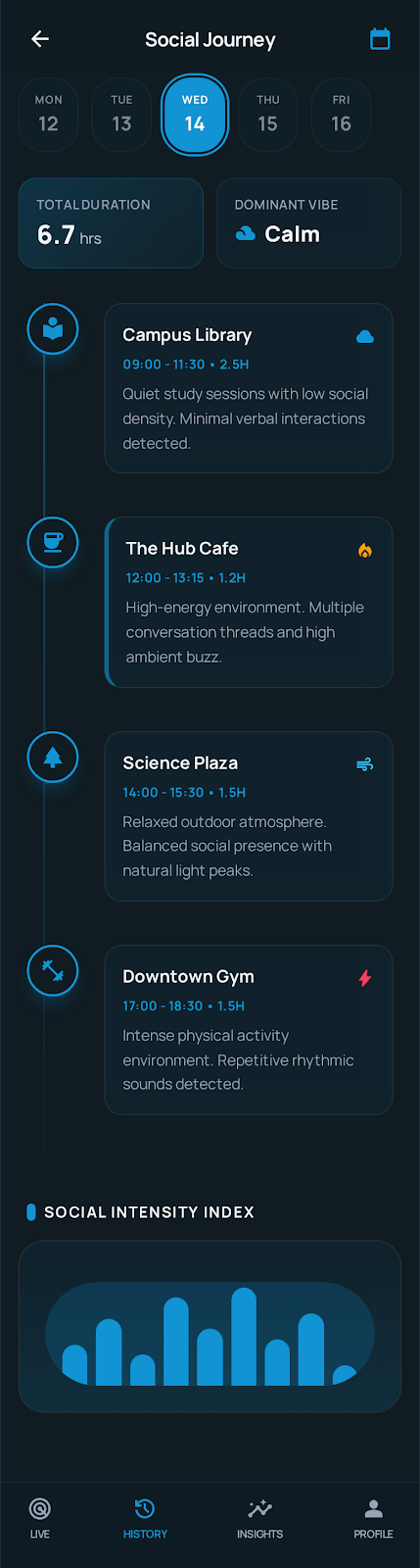
Social History
-
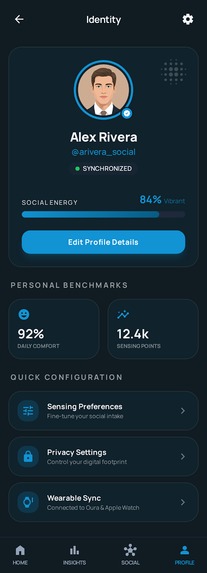
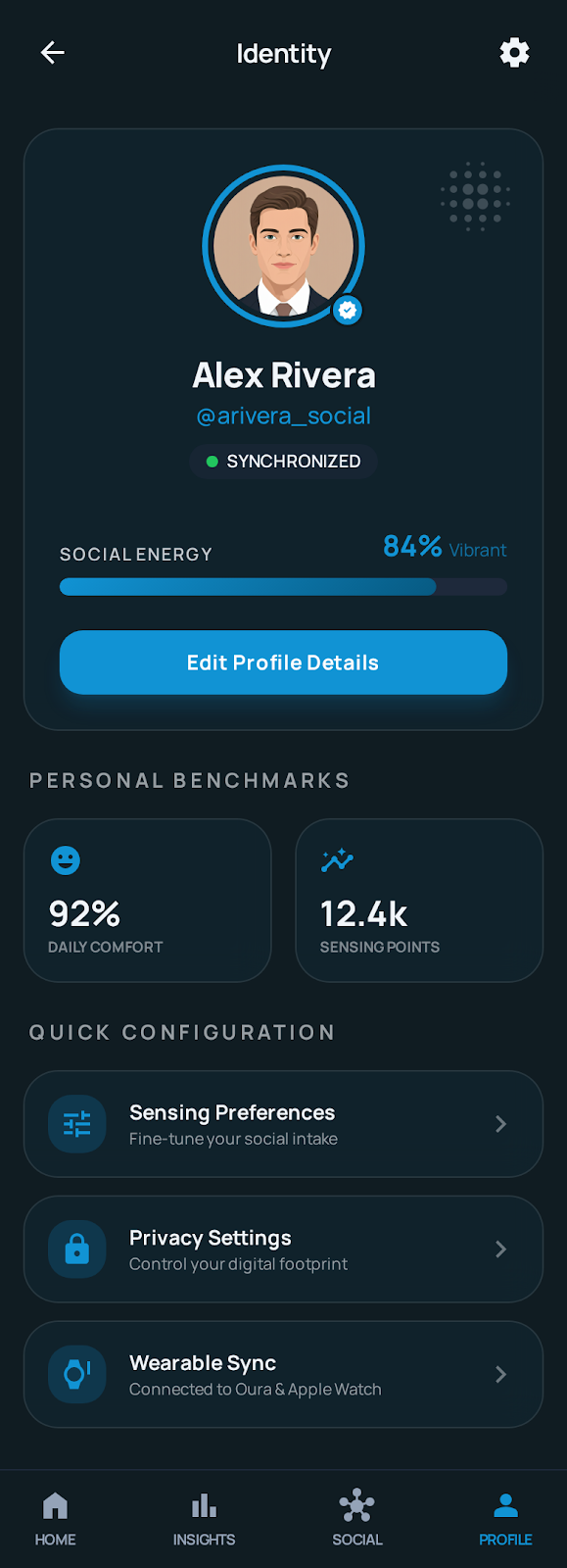
User Profile
-
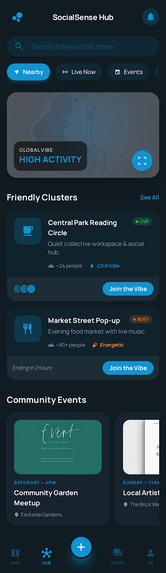
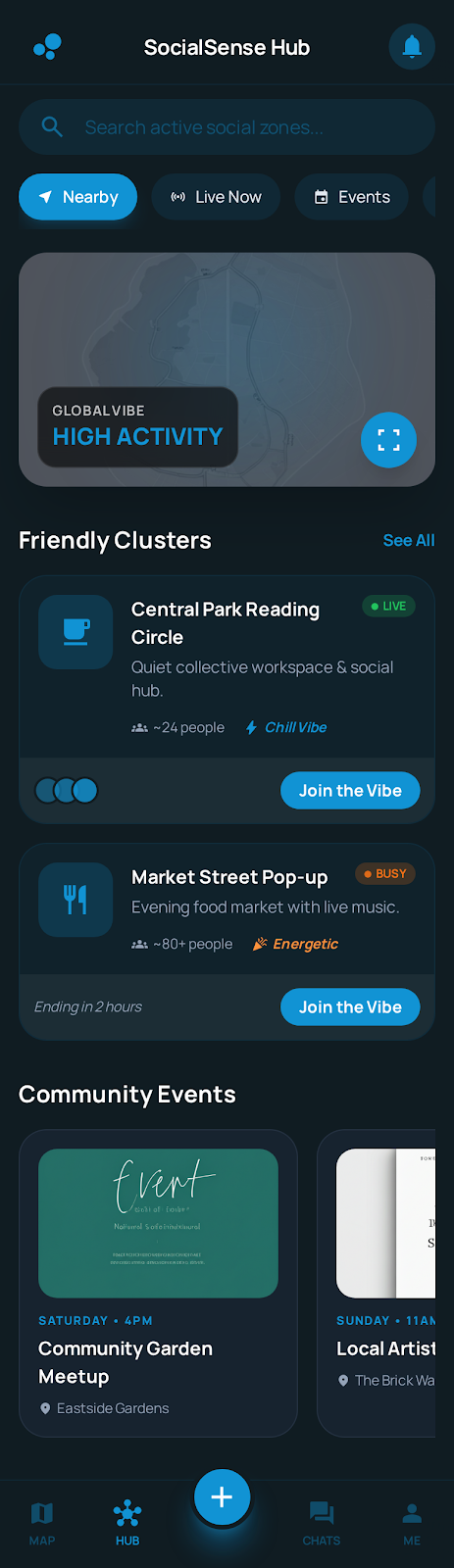
Social Hub
-
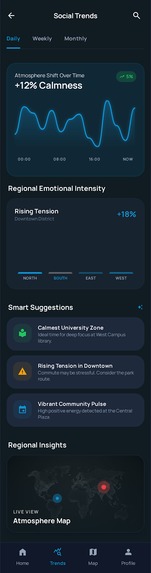
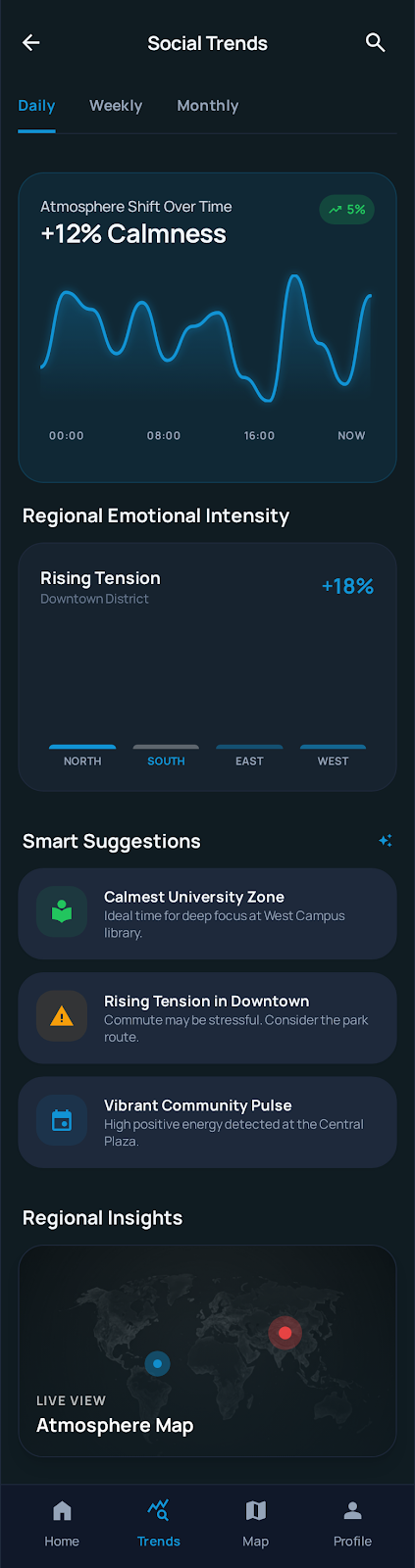
Atmosphere Trends
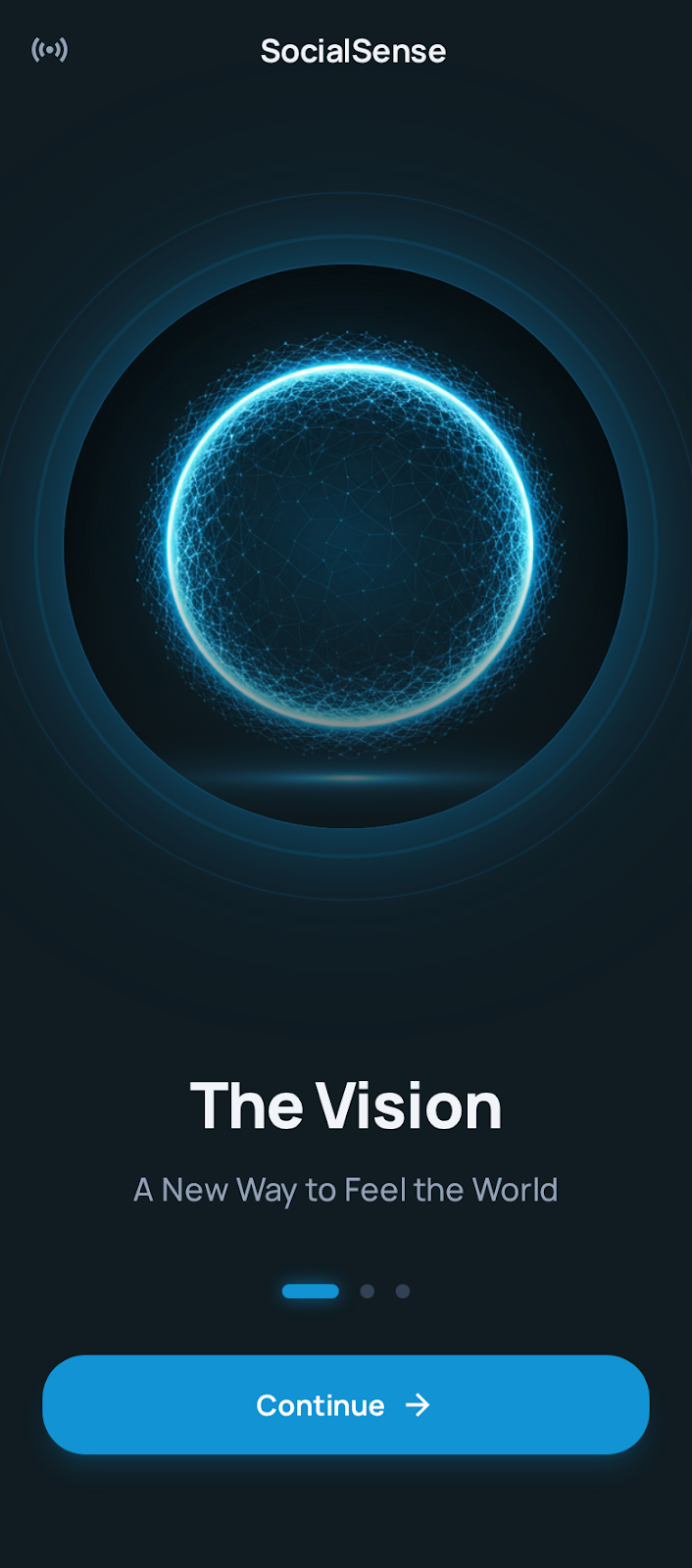
SocialSense
Perceive the Emotional Atmosphere Around You
Inspiration
Humans constantly try to interpret invisible social signals. When we walk into a room, we instinctively try to read:
- body language
- tone of conversations
- group dynamics
- emotional tension
But these signals are often subtle, ambiguous, or overwhelming. Many people especially those with social anxiety or neurodivergent conditions struggle to interpret them accurately.
The inspiration behind SocialSense came from a simple question: What if humans could literally perceive the emotional atmosphere of a space? => Just as early designers imagined interfaces for heart-rate monitors and step counters before wearable sensors existed, we imagined a future where technology could detect and visualize collective emotional signals in social environments. SocialSense explores the possibility of a new human sense: Social Atmosphere Awareness.
The Idea
SocialSense is a speculative wellness tool that detects and visualizes the collective emotional state of a social environment. Instead of relying only on intuition, users can see a subtle visualization of the emotional climate around them. The system interprets environmental signals such as:
- conversational tone
- voice intensity
- movement patterns
- interpersonal distance
- facial tension signals These signals are translated into an emotional atmosphere map that helps users navigate social environments more confidently.
The emotional states include:
- Calm
- Friendly
- Neutral
- Tense
- Hostile
Rather than overwhelming users with raw data, the interface presents this information through soft ambient visualizations and emotional heatmaps.
Target Users
SocialSense is designed for people navigating complex social environments, including:
- university students
- young professionals
- travelers in unfamiliar places
- individuals with social anxiety
- neurodivergent individuals who may struggle with social cues The goal is to help users feel safer, more aware, and emotionally comfortable in social settings.
Wellness Goal
SocialSense focuses on emotional and social wellbeing. By giving users a new layer of environmental awareness, the system helps them:
- reduce social anxiety
- identify stressful environments early
- find spaces where they feel comfortable
- make healthier social decisions Over time, the tool can help users understand which environments support their emotional wellbeing.
How the System Works
SocialSense imagines a future ecosystem composed of:
1. Wearable Sensor Device
A small wearable device called SenseNode collects environmental signals such as:
- vocal tone patterns
- conversational intensity
- spatial movement dynamics
- proximity between individuals These signals are interpreted to estimate the collective emotional state of a space.
2. Real-Time Emotional Heatmap
Users see a live emotional map of their surroundings. The interface represents emotional states using color gradients: |------------------------------------| | Color | Emotional Atmosphere | |---------|------------------------- -| | Blue | Calm environment | | Green | Friendly interactions | | Yellow | Rising tension | | Red | Potential hostility | |____|__________________|
This transforms social environments into an emotional landscape that users can perceive.
3. Augmented Reality Interface
When viewed through a phone camera or AR glasses, users can see subtle emotional overlays in real space.
Examples include:
- glowing calm zones
- clusters of friendly conversations
- warning signals for rising tension The visualization is designed to be ambient and non intrusive, supporting awareness rather than distraction.
Use Cases
Entering a Social Gathering A student with social anxiety enters a party. Instead of guessing the mood, SocialSense shows clusters of friendly interactions and identifies calmer areas of the room. This allows the user to approach conversations with greater confidence.
Workplace Meetings During a team meeting, the emotional atmosphere gradually shifts from calm to tense. SocialSense detects the rising stress levels and suggests a pause or break before the situation escalates.
Safety While Traveling A traveler enters an unfamiliar bar in a new city. The system detects aggressive conversational tones and sudden movement patterns. SocialSense alerts the user to potential hostility in the environment, helping them leave before the situation escalates.
Interface Design
The design philosophy focuses on ambient awareness rather than information overload.
Key interface elements include:
- Emotional heatmaps
- Subtle color gradients
- Environmental overlays
- Calm notification systems
Instead of overwhelming users with analytics, the interface behaves like a new sense layered onto reality.
Ethical Safeguards
A system that interprets emotional signals must prioritize ethics and safety. SocialSense includes several safeguards: Privacy Protection:- The system never identifies individual emotions. It only analyzes collective environmental signals.
Consent-Based Spaces:- Certain environments can disable sensing through privacy beacons, such as therapy offices or private meetings.
Misuse Prevention:- The system cannot be used for surveillance or employee monitoring.
Safety Protocols:- If a potentially dangerous situation is detected, the system can recommend safer areas or exit routes.
Challenges
Designing SocialSense raised several complex challenges. Interpreting Emotional Signals:- Human emotions are highly nuanced. Translating environmental signals into meaningful insights required careful abstraction and simplification.
Avoiding Information Overload:- Providing too much emotional data could increase anxiety instead of reducing it. We focused on calm, minimal visualizations rather than constant alerts.
Ethical Responsibility:- A tool that interprets social environments carries risks of misuse or misinterpretation. Designing strong privacy and ethical safeguards was essential.
What We Learned
This project pushed us to think beyond traditional app design. We explored:
- speculative design
- human sensory augmentation
- ambient computing
- ethical design in AI driven systems
Most importantly, we learned that designing for future senses requires imagining how humans might interact with information that has never been perceptible before.
SocialSense is not just a product concept it is an exploration of how technology could expand human perception and help people navigate social life with greater awareness and wellbeing.
Built With
- figjam
- figma


Log in or sign up for Devpost to join the conversation.