Inspiration
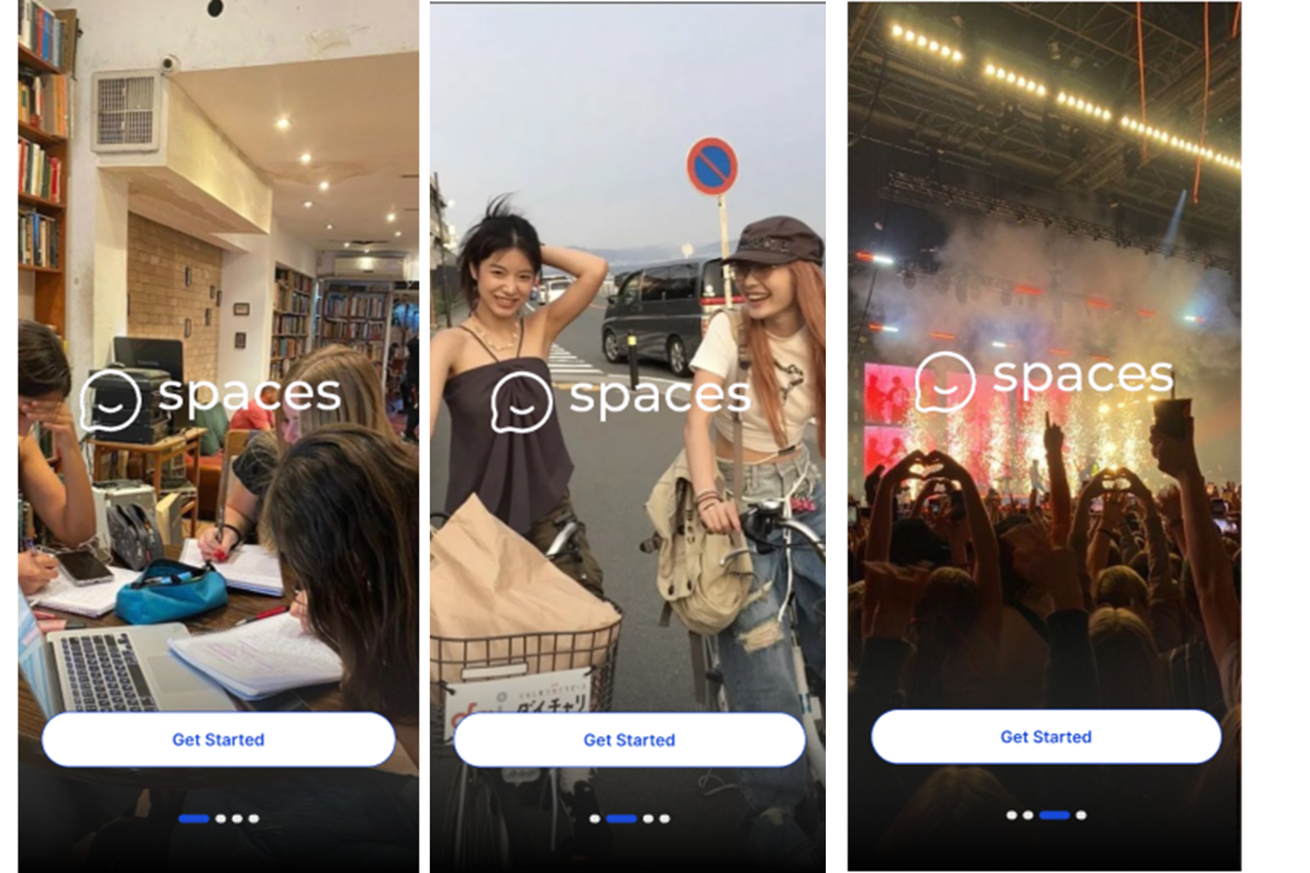
With the explosive growth of AI and the corresponding rapid changes in how we interact with the world around us, I think we can all feel a sense of uncertainty about the future ahead of us. Such uncertain times call for us to look back at history and anchor ourselves in the timeless truths of mankind, as they will continue to be the truths we can look towards as we head into the fog of the future. One such timeless truth is our need for human connection, regardless of how appealing they design your next AI boyfriend, nothing replaces sitting down and connecting with another human being. Despite this, younger generations are increasingly reporting feelings of isolation and disconnect from their peers. One significant factor contributing to this lack of connection is the disappearance of ‘third spaces’, which are defined as accessible, low-cost core settings for informal public life, offering connection, community, and sociability. Historically, this is where people would meet people their age and hang out, such as at a local community center. However, the disappearance of such spaces, along with increasing costs to visit spots like cafes, has made it increasingly difficult to meet and hang out with others.
What it does
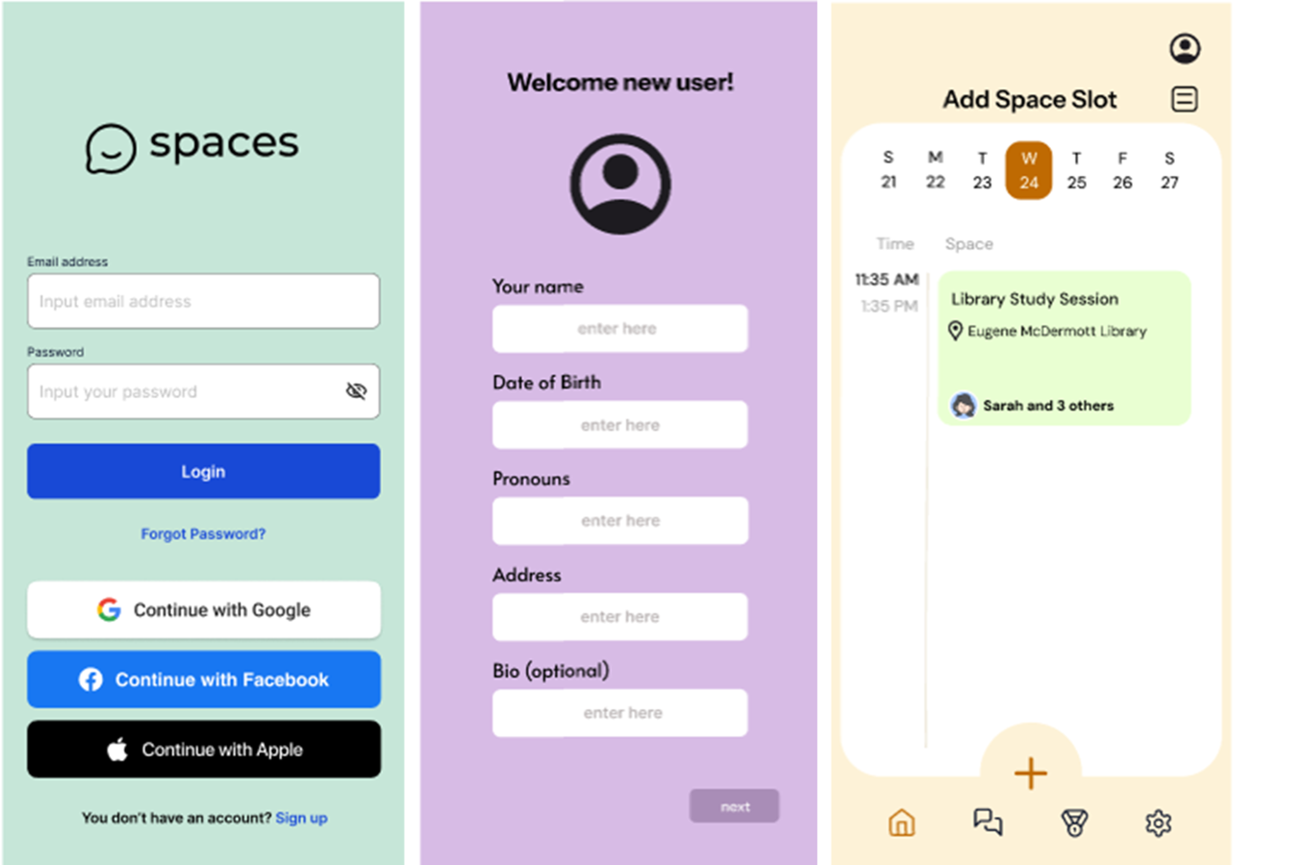
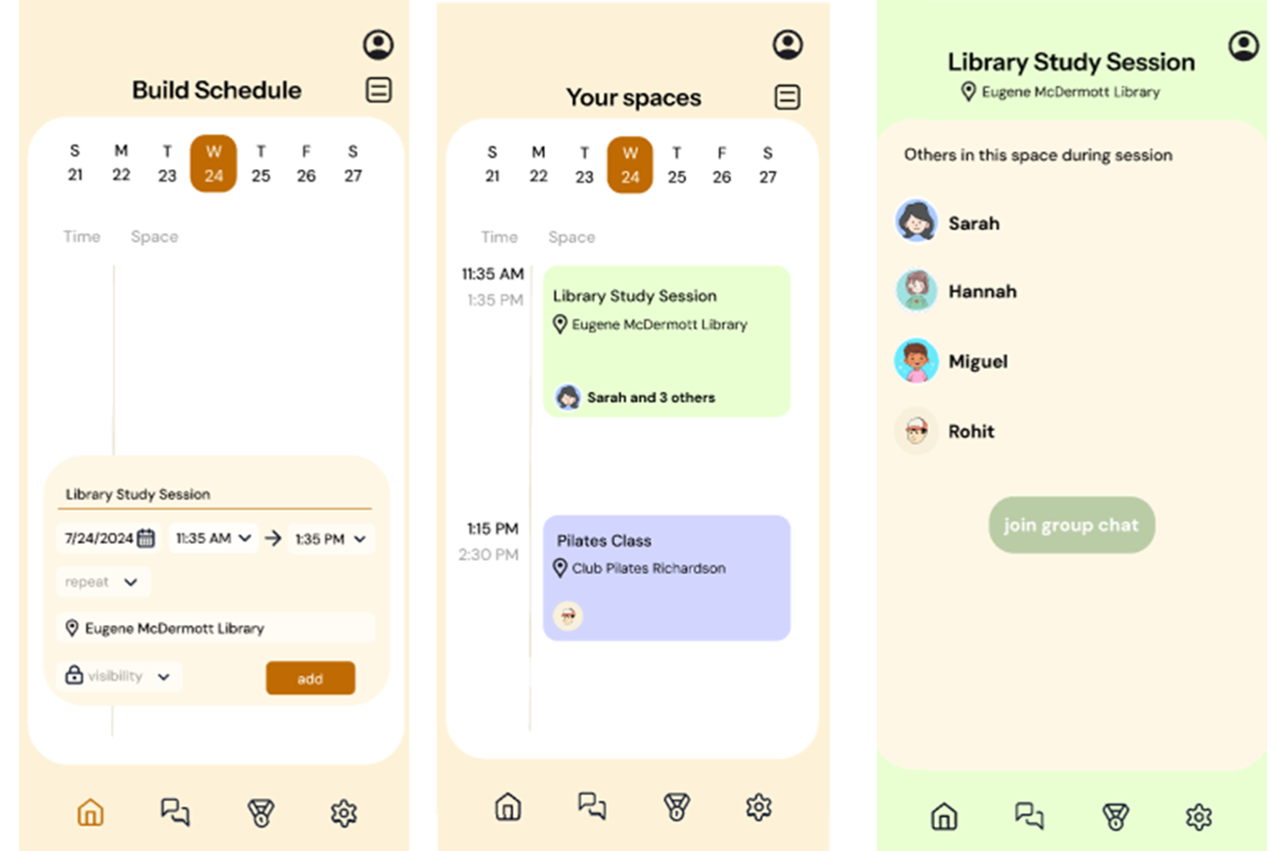
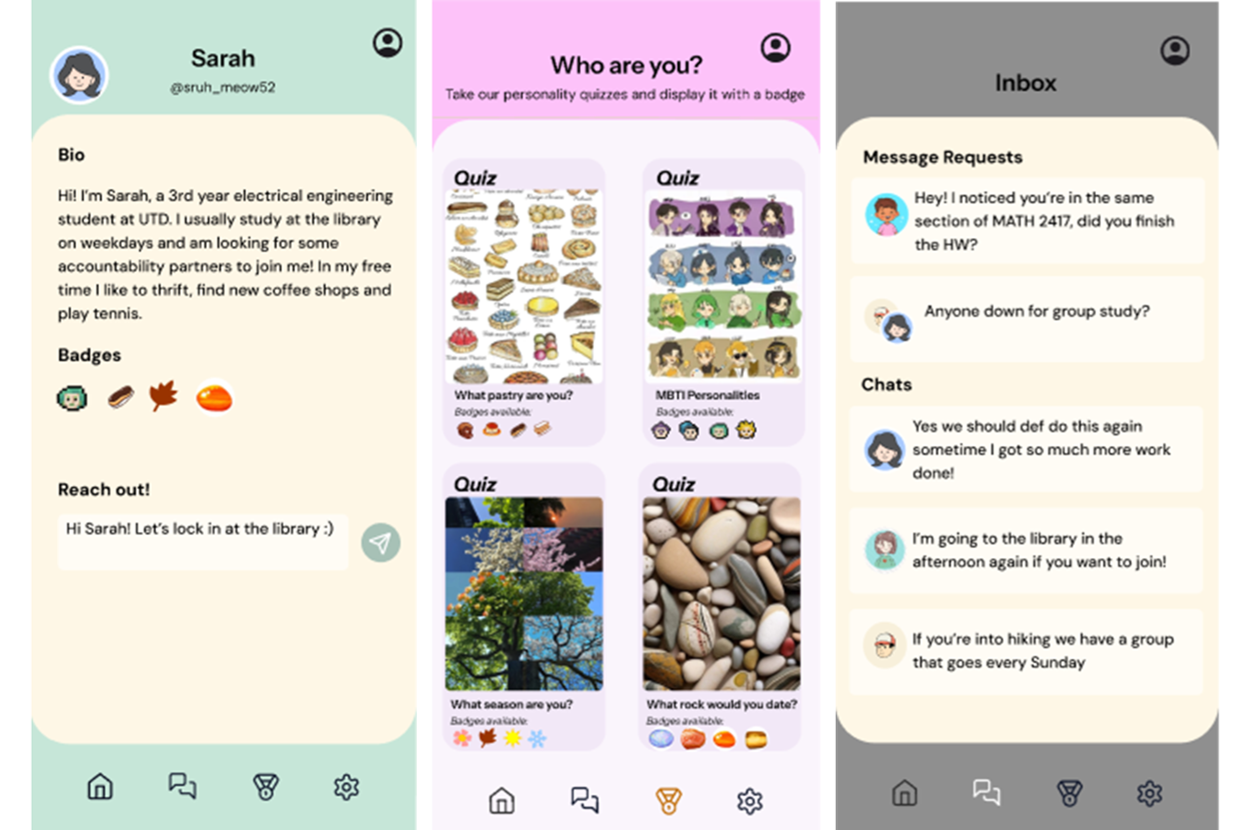
Our app’s aim is to help foster such third spaces for our users, in a convenient way around their schedule. The app allows you to input third spaces you visit regularly - like the gym, library, local cafe - and log it onto your schedule in the app, so you would mark your ‘space’ in the calendar, along with an approximate location of it. Once done, you can see other users whose schedules overlap and therefore will be at that space at the same time, and if you choose to make yourself visible at this space, they will similarly see your profile. To keep the focus on fostering authentic, in-person connections - and not superficial social media like impressions - we keep user profiles brief: just one profile picture to identify yourself, a brief bio, and badges, a new concept we developed for this app. To create a sense of familiarity, or a starting point for a conversation, we have brief personality quizzes in the app (similar to the classic Buzzfeed quizzes like ‘What Bread are you?’), which then earns you a badge based on your personality type, which you can display on your profile. This helps keep an identifier component to the profile to help users gauge who they want to connect with, while also making the profile-building process less intense and more fun. Once the user finds someone they share a third space with that seems like they’ll be a good match, they have the option of shooting them a message request, which leads to in-text chatting if accepted.
How we built it
There have been several attempts at friendship/socialization apps in the past, a popular example being Bumble BFF, but none have found huge success in fostering deep, sustained friendships. So we began our brainstorming approach there; why have those approaches failed? We focused particularly on our demographic, as younger groups are more likely to experience feelings of isolation from peers, and we felt we were able to understand this demographic the best since we are part of it. When we talked about our experiences with these apps, we agreed that the model felt a bit awkward. Most of these socialization apps mimic the dating app approach: you create an extensive profile with many pictures, which puts a lot of pressure to appear ‘cool’, and then you swipe left or right. After that, it is up to you to text the person, figure out your commonalities, find a time to meet up, and figure out a way to keep that friendship sustained - a LOT of effort.
We then reflected on our own deep friendships, how were they developed? After discussing, we found two clear patterns emerged: we had a common activity with this friend, and we were able to see this friend regularly, without it significantly impacting our regular routine. Some of our main examples were from high school, you’re forced to do the same activities around the same people every day, and that inevitably leads to some of the most enriching friendships we have experienced.
So to develop our app, we wanted to combine these ideas of the problems with past app and the patterns we saw in our friendships, how can we have repetitive exposure to people we share interests with, without it being too inconvenient? That's when we thought of revolving our app around the user’s existing schedule, and have them interact with the people who are already in the places they frequently visit. I think we all have the experience of recognizing the same people using a public space at the same time as you, your schedules line up. That could be the 5 pm regulars at the gym, or the Sunday morning readers at your local cafe. The problem isn’t that the third space doesn’t exist, but the tool to foster that connection at those third spaces seems to be missing. That’s why we wanted to develop our app to work around people's schedule, and use the repetitive exposure to others in the places they already frequent to strike up connections.
Once we had a fully fleshed-out idea, we drew out a low-fidelity design on a whiteboard, and after a few iterations, we began developing the design on Figma.
Challenges we ran into
Since we are all first-time hackers and novice coders, the main challenges we faced were related to the learning curve of the skills we had to use, such as Figma, Design Thinking, Flutter Flow. While it did take us time to learn new skills, we overcame these challenges through strong collaboration, learning new things together, and also teaching one another.
Since our coding experience is low, we were not able to fully develop a working prototype of our app, but we are so interested and passionate about our project that we have decided to continue meeting weekly to learn these skills together and keep building Spaces.
Accomplishments that we're proud of
I think for us the main accomplishment is getting through our first hackathon! We were very excited to come up with and develop a product we truly believe in and as our design came to fruition, our excitement kept growing. Other than that, I think a huge accomplishment which led to how well our final product turned out, is our team work. We may have been beginners, but everyone on the team was very respectful of each others ideas and eager to get as much done as possible, and that resulted in a product we are very happy with.
What we learned
-Crash course on Figma
-Design Thinking (UTA workshop)
-The stages of developing an app
-How every tiny gesture/step we take in the apps we use is a fully though out process that we often take for granted.
What's next for Spaces
We’re super excited to continue learning how to develop a fully functional app and will be continuing the development. Hopefully, we can have it available for UTD students to use soon!
Built With
- figma

Log in or sign up for Devpost to join the conversation.