Inspiration
Dating apps turn attraction into endless swiping on strangers, while the people we actually notice are in the same room. Acting on that spark in person means an awkward approach with no idea whether it is mutual. We wanted a lower-pressure way: a small, private gesture that only becomes anything if the other person makes it too.
What it does
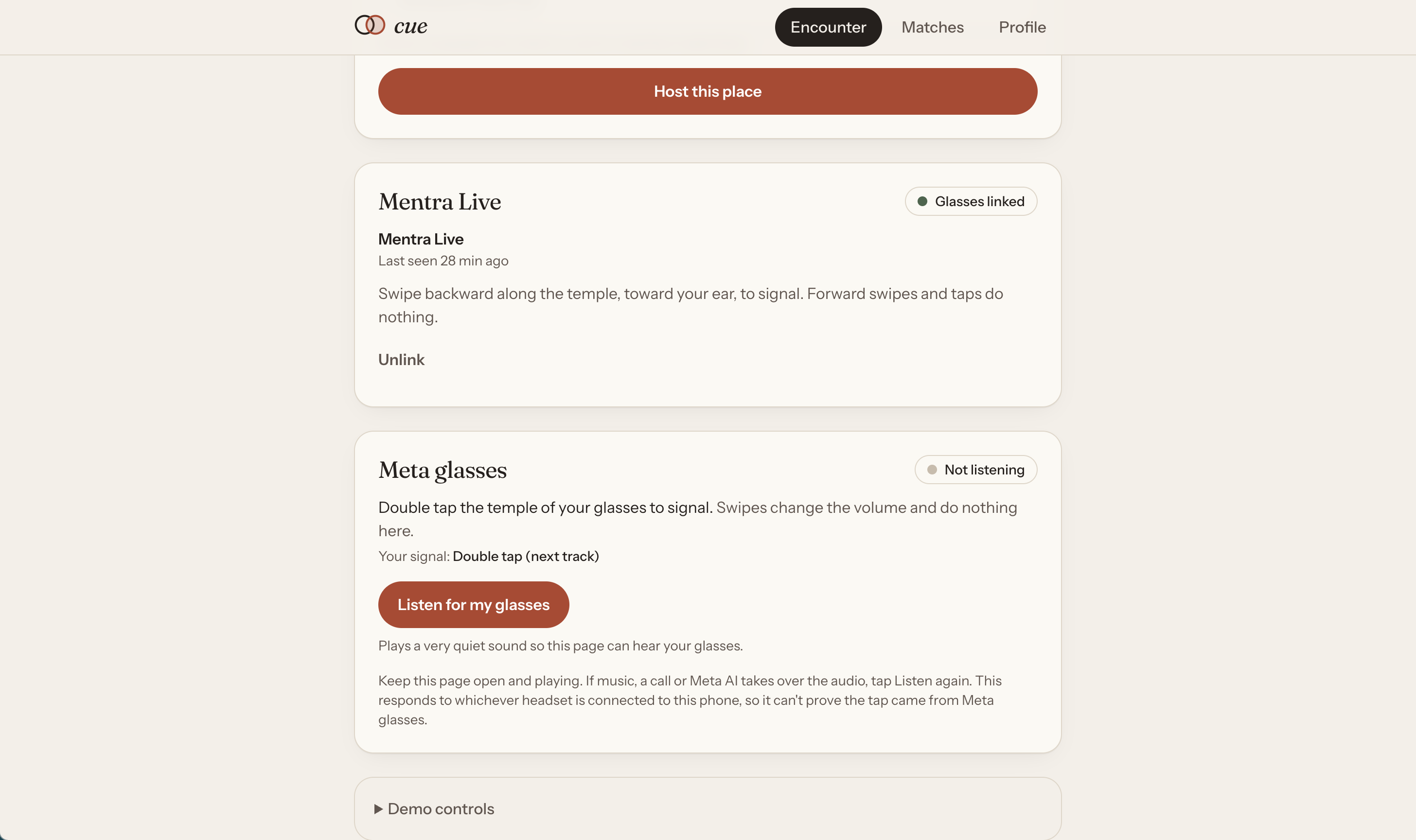
SocialEYES lets you show interest in someone nearby using a quick gesture on your smart glasses: like a swipe on Mentra Live, a double tap on Meta glasses, or a pinch on Snap Spectacles.
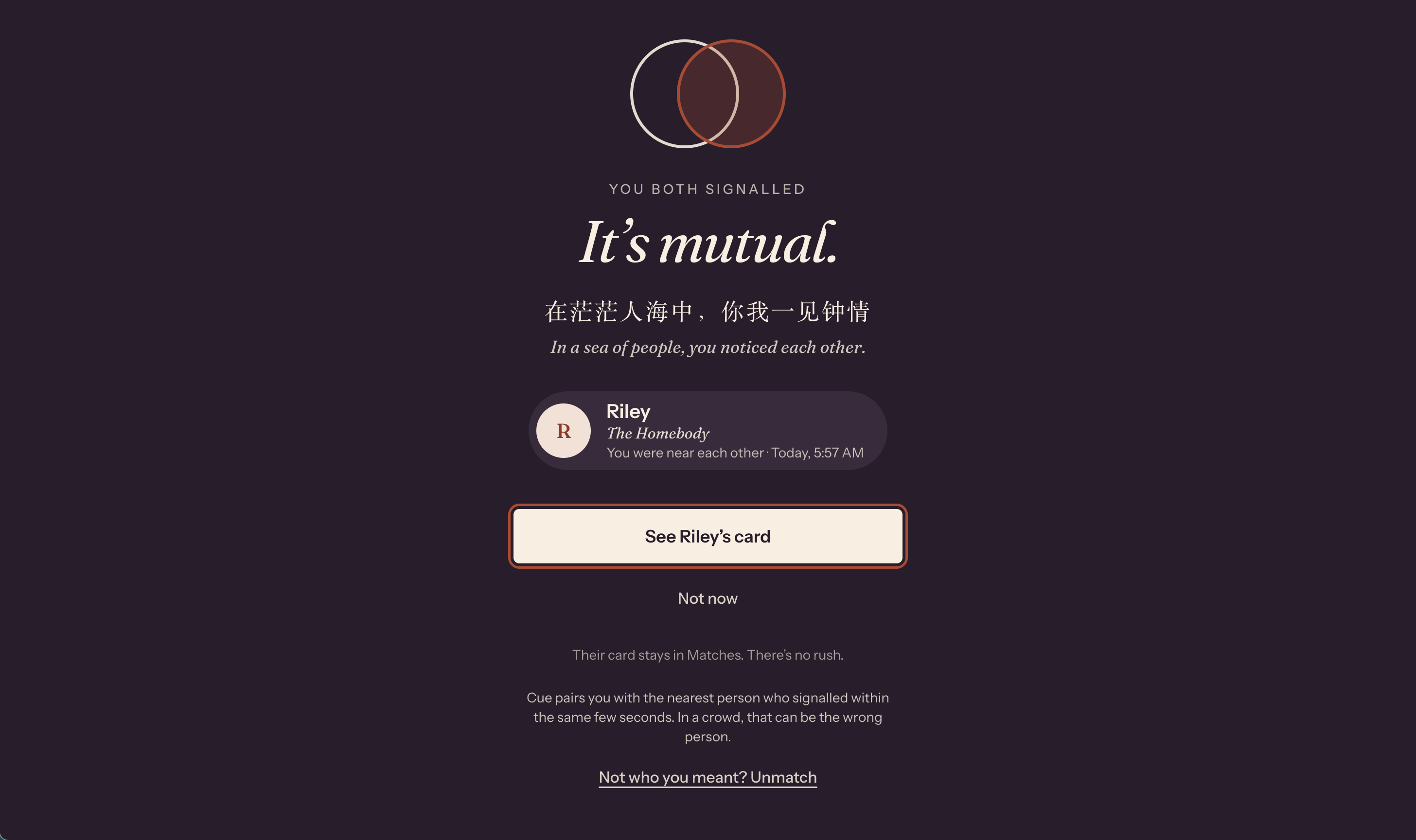
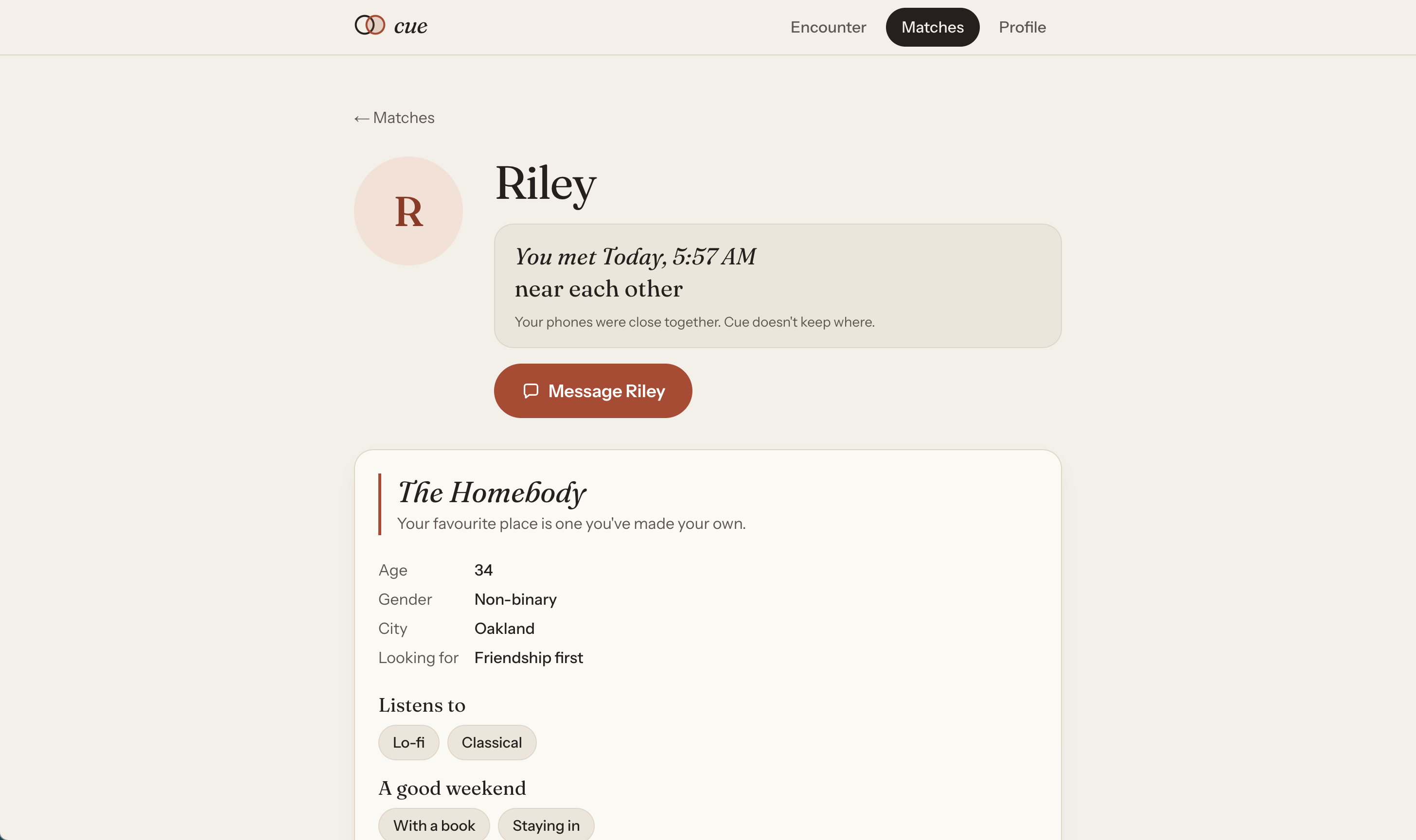
If you and someone nearby both signal each other within 15 seconds, you’ll match. You'll both see each other's profiles, unlock an in-app chat, and get an AI-suggested icebreaker based on things you have in common. If the other person doesn’t signal back, your interest stays completely secret and quietly disappears.
How we built it
Web app: Next.js and TypeScript in a pnpm monorepo, deployed on Vercel. Backend: Supabase for auth, Postgres and real-time updates. Matching runs in one atomic database function. Mentra Live: a MentraOS miniapp that reads the temple touch strip and sends the swipe to our API with a paired device token. Meta glasses: no native app; the web page listens for headset media commands through the Media Session API. Spectacles glasses: Shows Visual and uses Pinch to select. Works with Backend. AI: Claude generates the "Find common ground" opener from fields each person approved for sharing. Sound: custom audio cues play in the glasses when a signal is sent and when a match lands.
Challenges we ran into
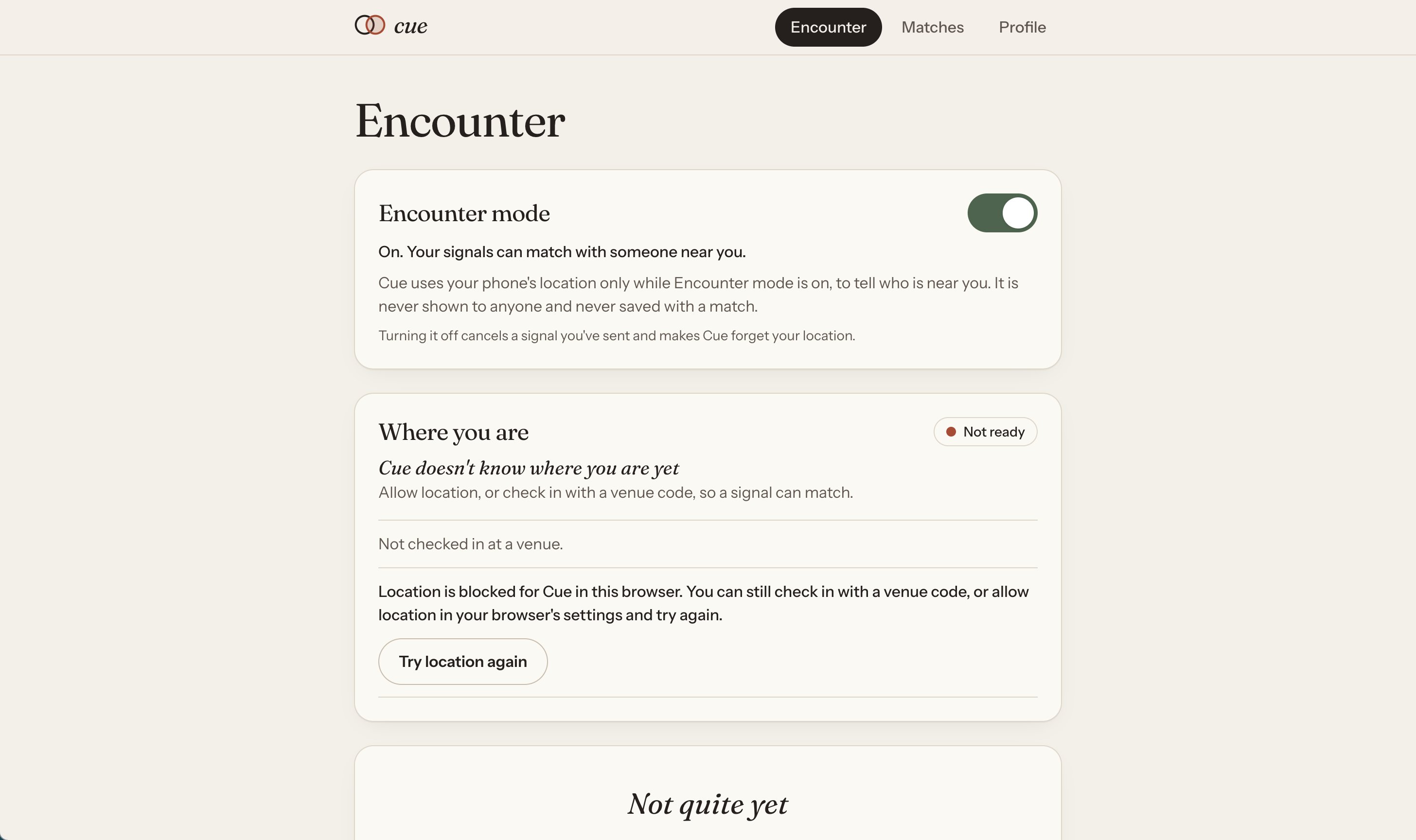
Mentra Live has no display, so all feedback had to be audio, and all setup had to happen on the phone. Getting a real swipe to the server took calibration. The gesture name had to be confirmed on the actual glasses, and calibration mode silently held back signals until we turned it off. Snap Spectacles had multiple difficulties in launching app due to wifi. Loaner glasses kept reconnecting to someone else's phone until we re-paired them. Venue Wi-Fi and hotspot switching kept changing the laptop's address and breaking the phone connection. Nearby signals do not prove who you meant. In a crowd, the app can match the wrong person, so we added an "unmatch" escape hatch.
Accomplishments that we're proud of
The ability to scale this application so everyone can find a match through supporting multiple Wearable devices A real backward swipe on real glasses reaches the server in about a quarter of a second and completes a match. One-sided interest stays invisible, and location coordinates never leave the server. Security is protected and claude never receives age, gender, ethnicity, or habits. The whole flow is covered by automated tests, including end-to-end browser tests.
What we learned
- We tested on the real hardware early; and pitched early to multiple people to build the best experience to find a match.
- With no screen, sound design is the interface.
- Privacy rules are easier to keep when they are enforced in the database, not the UI.
- Matching by proximity is a product problem as much as a technical one.
What's next for SocialEYES
Test the Meta glasses route and location matching on real phones, indoors and outdoors. Better ways to tell who someone meant in a crowded room. Background location and push notifications through a native app. Identity verification and stronger safety tools before any public launch.
Built With
- bun
- claude
- docker
- esbuild
- mentra
- next.js
- node.js
- playwright
- pnpm
- postgresql
- react
- supabase
- tailwind
- vercel
- vitest
- zod


