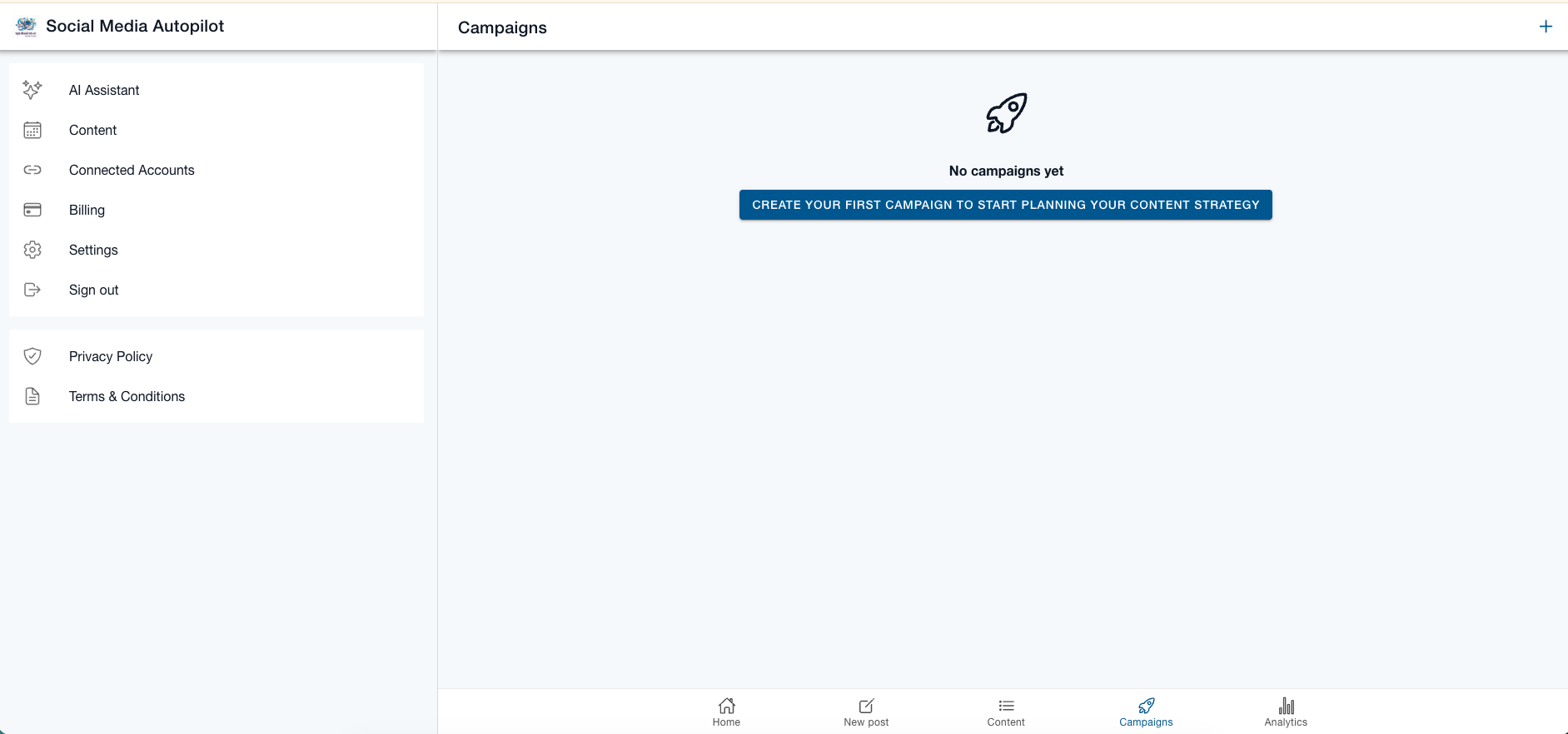
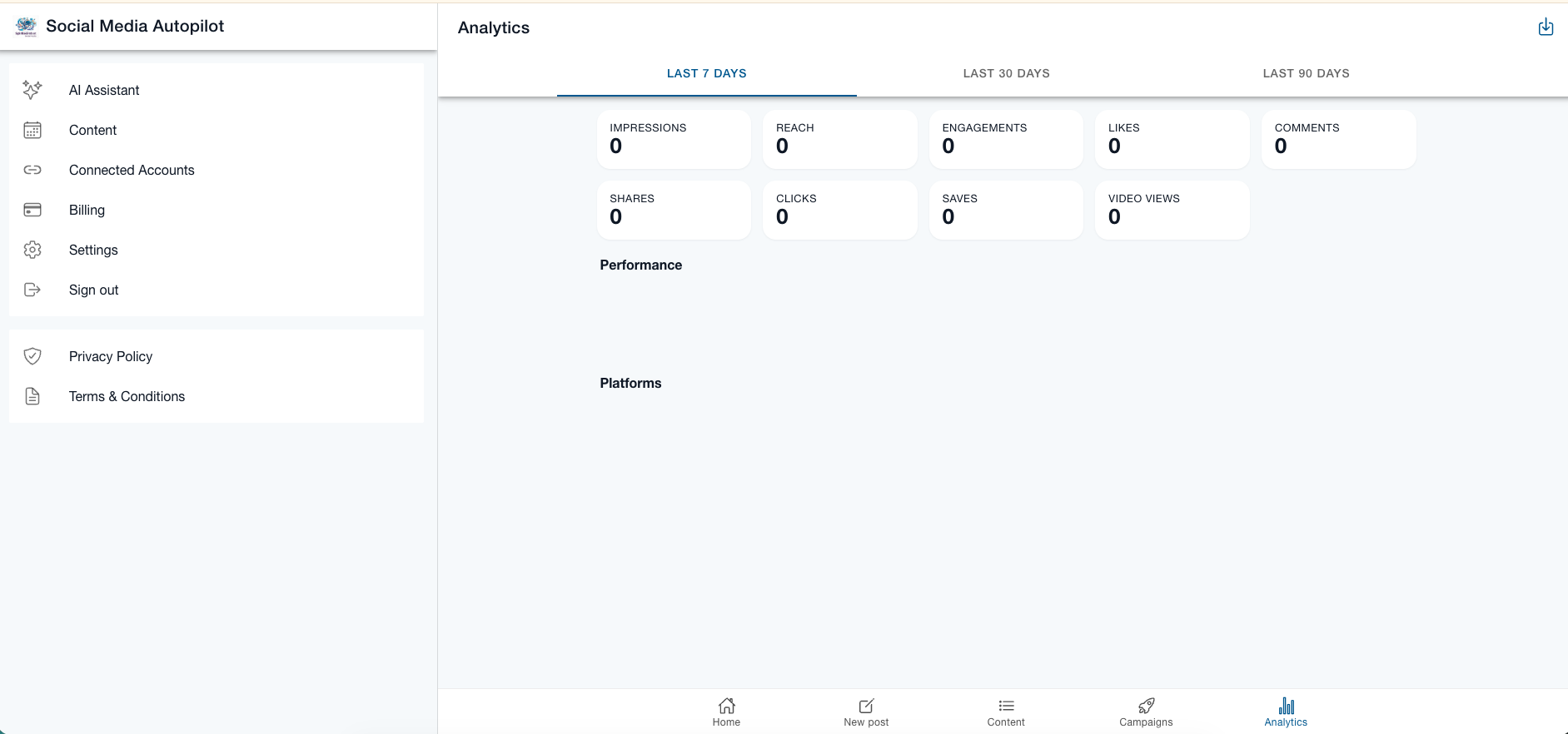
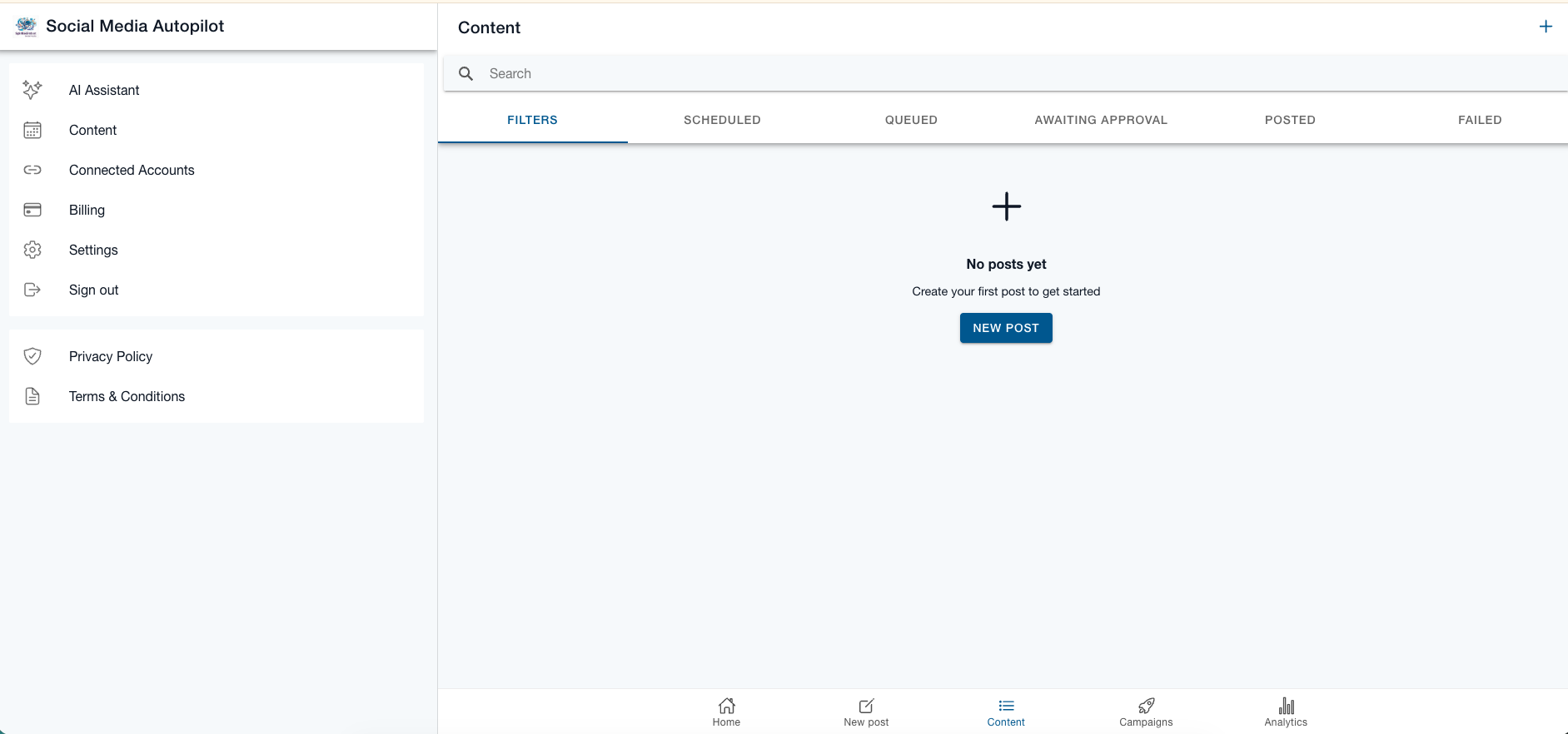
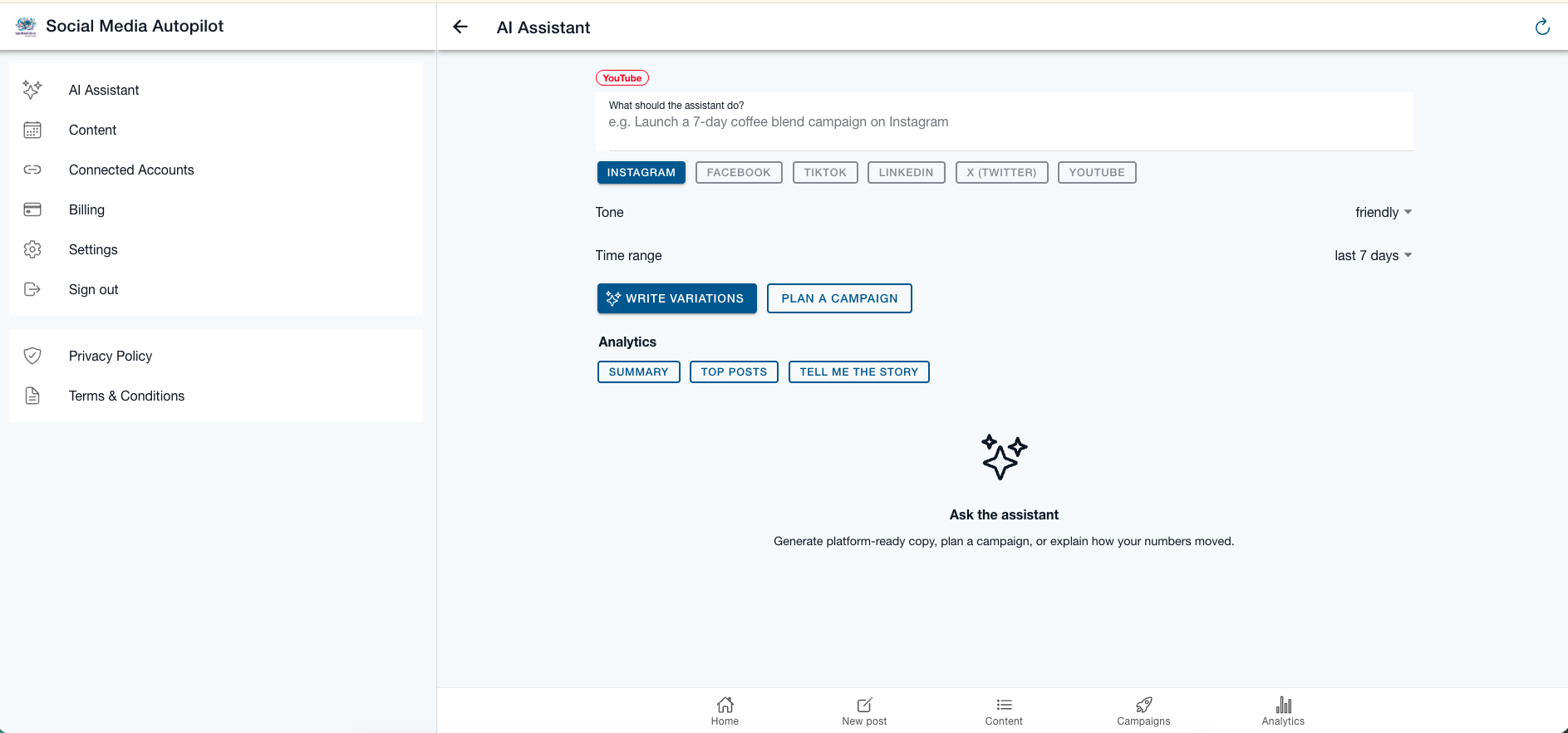
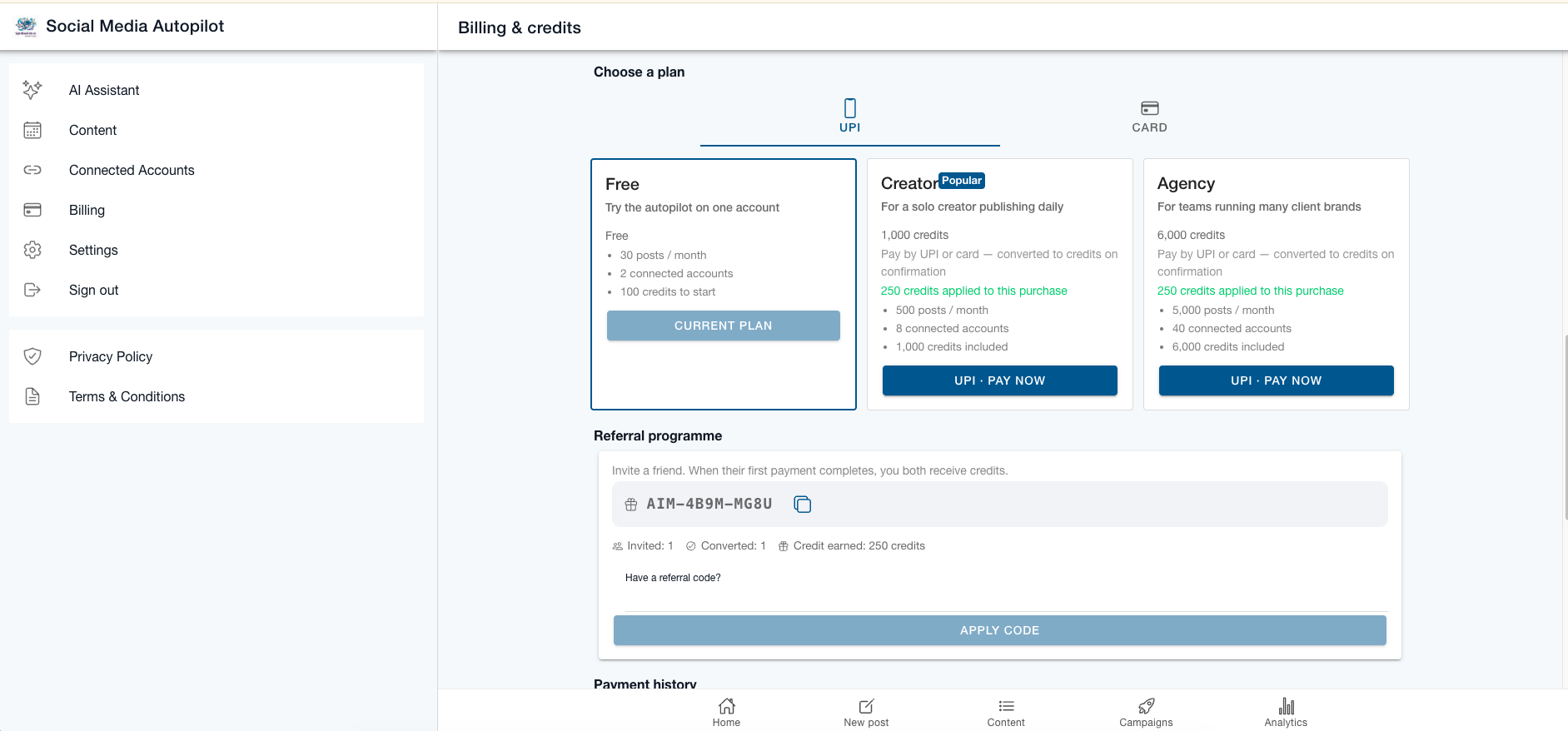
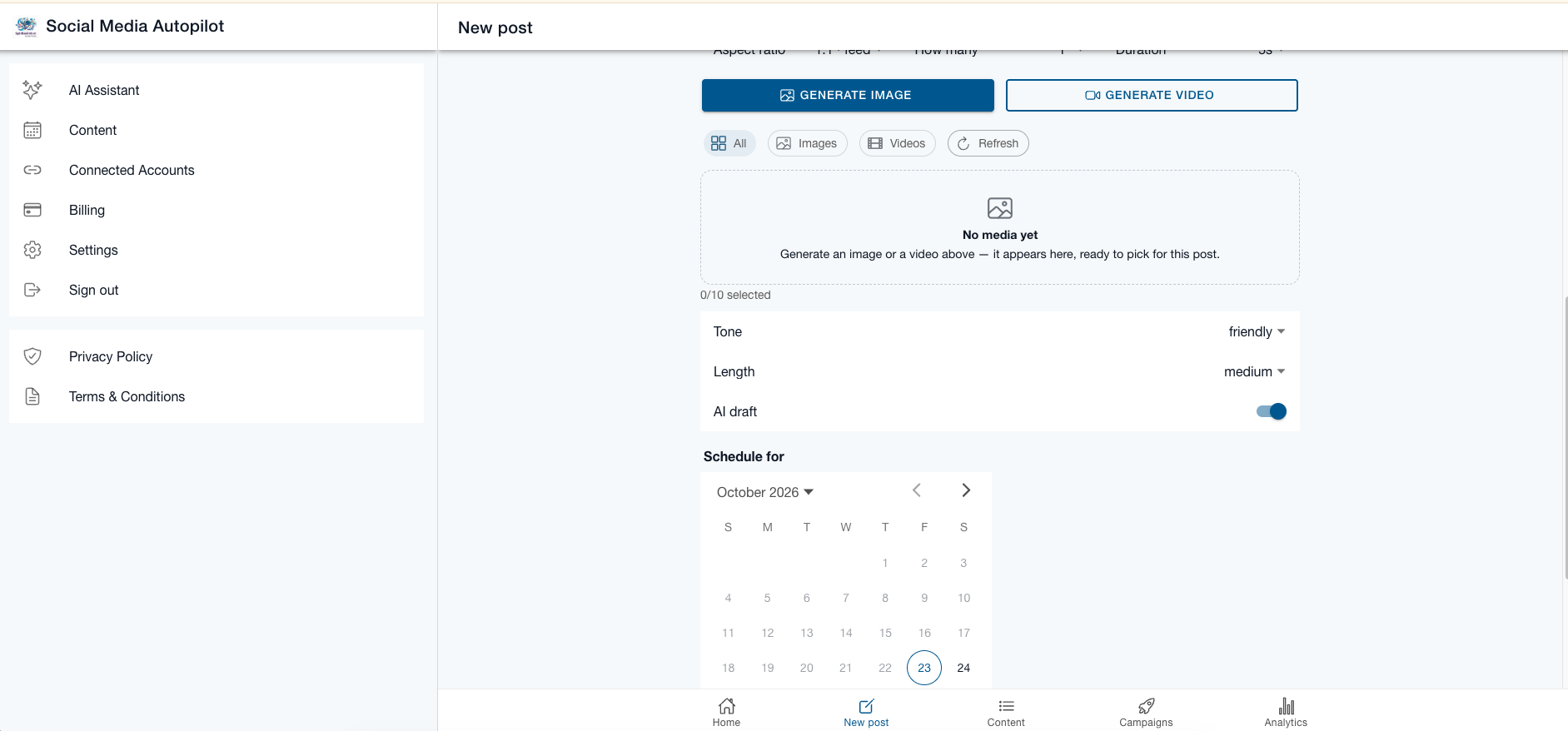
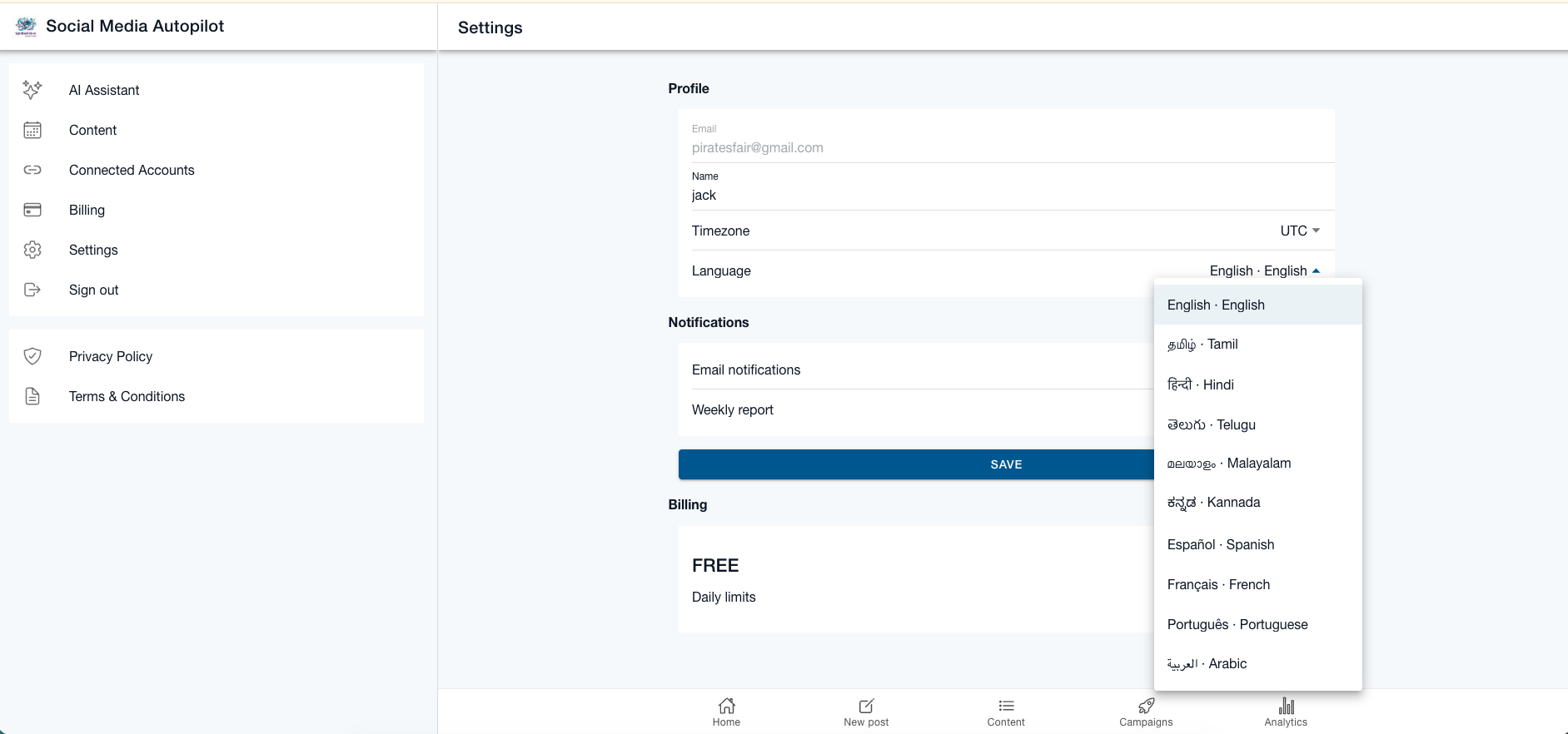
Social Media AutoPilot
Inspiration
Managing multiple social media accounts takes time, creativity, and consistent effort. Creators, entrepreneurs, and small businesses often struggle to plan campaigns, create engaging content, edit videos, and publish regularly across different platforms.
We wanted to simplify this process by building an AI-powered social media assistant that helps users move from an idea to publish-ready content with less manual work. Our vision is to make professional content creation and social media management more accessible, affordable, and efficient.
What it does
Social Media AutoPilot is an AI-powered platform that streamlines the social media content lifecycle—from planning and creation to scheduling, publishing, and performance tracking.
Key features include:
- AI Campaign Planning: Generate campaign ideas, content strategies, captions, and platform-specific copy.
- AI Image and Video Generation: Create visual content using AI models powered by GPU infrastructure.
- Multi-Platform Publishing: Manage content for supported platforms, including Instagram, Facebook, TikTok, LinkedIn, X, and YouTube.
- Content Scheduling: Organize publishing calendars and schedule posts to maintain a consistent online presence.
- Approval Workflows: Review and approve content before publishing.
- Analytics and Insights: Track content performance and use insights to improve future campaigns.
- AI Agent Integration: Provide tools through the Model Context Protocol (MCP) so compatible AI agents can interact with supported social media workflows.
- Business and Monetization Features: Support administrative management, payments, and referral workflows.
The goal is to bring multiple social media tasks into one streamlined workspace and reduce repetitive manual effort.
How we built it
We designed Social Media AutoPilot as a full-stack, modular application with a focus on automation, extensibility, and self-hosting.
- Frontend: Ionic React for a responsive interface and cross-platform application experience, including mobile support through Capacitor.
- Backend: Node.js for APIs, application logic, integrations, and workflow orchestration.
- AI Services: A dedicated Python-based AI worker for AI-related processing and media-generation jobs.
- GPU-Powered Generation: GPU infrastructure to run supported image and video generation models.
- Social Media Integrations: OAuth-based connections and platform APIs for supported publishing and account-management workflows.
- Background Processing: Asynchronous jobs and status polling to manage longer-running AI media generation tasks.
- MCP Integration: Expose supported application capabilities as tools for compatible AI agents.
- Deployment: A modular architecture designed to support self-hosted deployment and configurable infrastructure.
This separation allows the main application to manage user workflows while AI-intensive tasks run independently, making the system easier to extend and maintain.
Challenges we ran into
Building an AI-powered social media platform involves several technical challenges:
- GPU Resource Management: Image and video generation can be computationally expensive, so infrastructure cost, model loading, and GPU availability must be carefully managed.
- Long-Running AI Jobs: Media generation does not always finish immediately. We needed to account for asynchronous execution, job status tracking, and failures.
- Social Platform Integrations: Each social network has its own OAuth requirements, API permissions, publishing rules, and limitations.
- Reliable Automation: Automated workflows need clear status reporting, error handling, and safeguards to prevent failed or unintended publishing.
- Cost Efficiency: We aimed to design the system so that expensive AI workloads can be separated from regular application requests.
- Cross-Platform Experience: Delivering a consistent experience across web and mobile adds additional design and integration considerations.
These challenges helped shape a modular architecture that separates core application functionality from AI processing and external platform integrations.
Accomplishments that we're proud of
- Building a unified concept that connects AI content creation with social media management.
- Designing a full-stack architecture that separates the application backend from GPU-intensive AI workloads.
- Bringing campaign planning, content generation, scheduling, and publishing workflows into one platform.
- Exploring MCP integration to make social media automation accessible to compatible AI agents.
- Building with Ionic React and Capacitor to support a cross-platform application approach.
- Prioritizing a modular, self-hostable design that can evolve as AI models and social platform APIs change.
Our biggest accomplishment is turning the idea of a social media autopilot into a practical, extensible platform architecture.
What we learned
We learned that effective AI automation requires more than generating good text, images, or videos. A useful product must connect those capabilities to reliable workflows, platform integrations, user approvals, and clear feedback.
We also learned the importance of separating GPU-intensive tasks from the main backend, tracking long-running jobs, and designing integrations around the individual requirements of each social platform.
Finally, we recognized that automation should remain transparent and controllable. Users need the ability to review content, manage publishing workflows, and understand what the system is doing on their behalf.
What's next for Social Media AutoPilot
Our next goal is to make Social Media AutoPilot more intelligent, reliable, and accessible.
- Smarter AI Agents: Improve end-to-end campaign planning and automation through MCP-compatible tools.
- More AI Models: Expand image and video generation options, with a focus on quality and cost efficiency.
- Better Scheduling: Enhance publishing calendars, recurring workflows, and content organization.
- Deeper Analytics: Use performance data to recommend content improvements and future campaign ideas.
- More Integrations: Expand supported social platforms and improve integration reliability.
- Scalable GPU Infrastructure: Optimize model caching, job queues, and GPU usage to reduce generation costs.
- Team Collaboration: Enhance approval workflows and shared campaign management.
- Improved User Experience: Make setup, account connections, and content creation simpler for individuals and businesses.
Our long-term vision is to make Social Media AutoPilot a reliable AI-powered workspace where users can plan, create, manage, and optimize their social media presence with less repetitive work and more creative freedom.

Log in or sign up for Devpost to join the conversation.