-
-
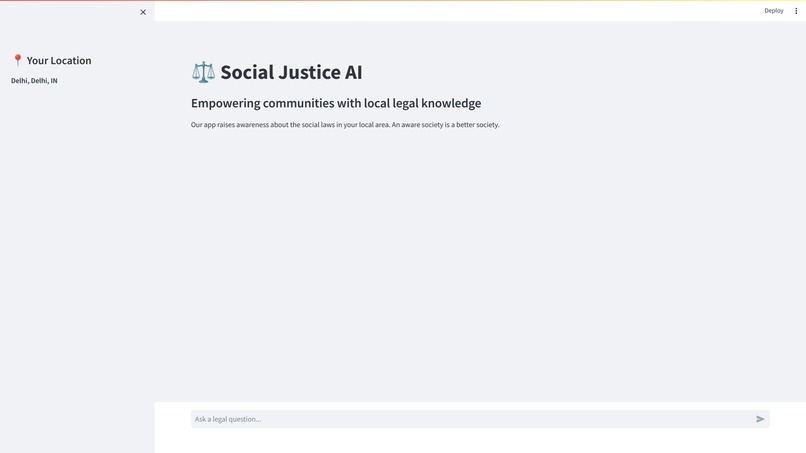
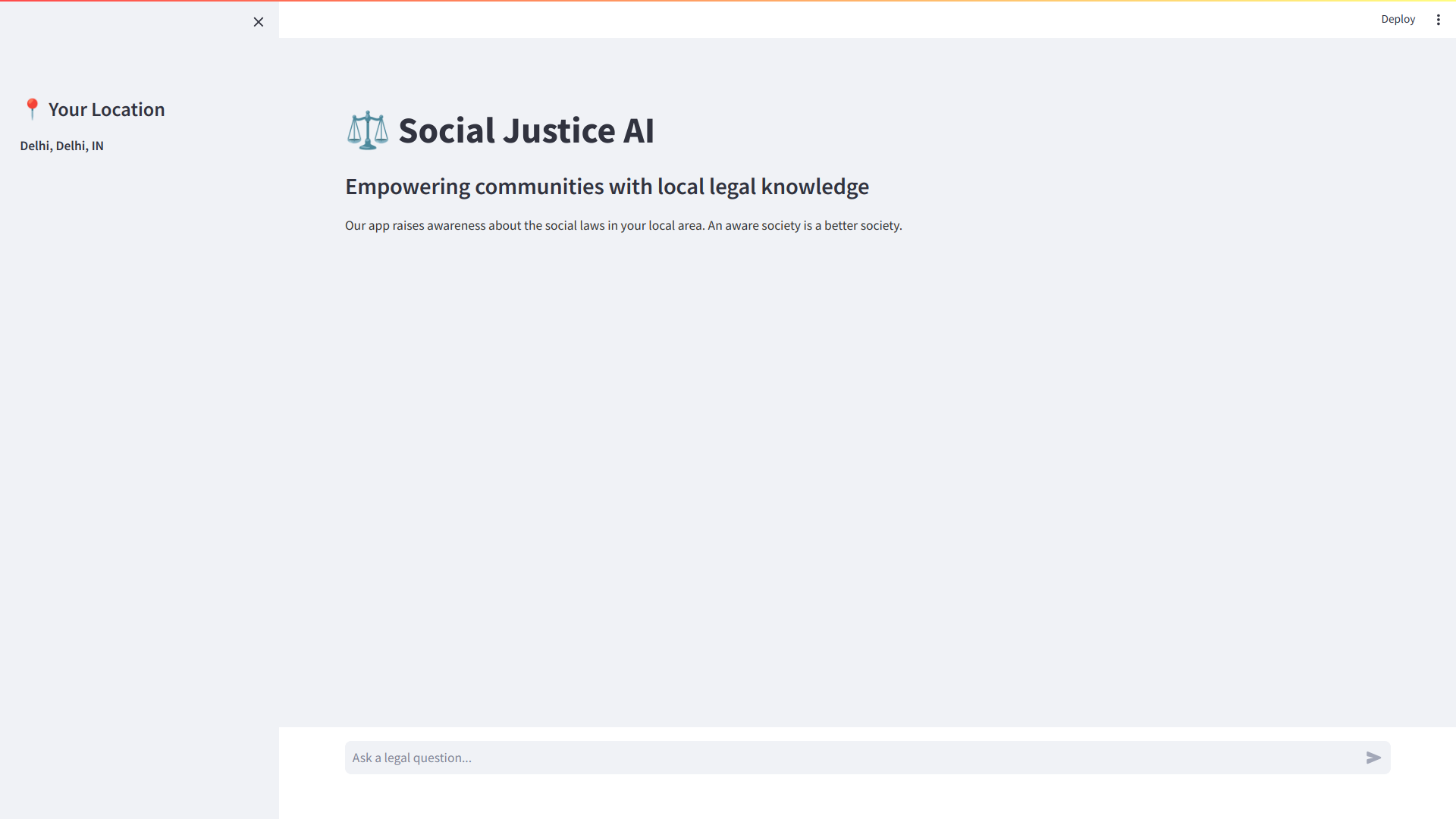
home screen
-
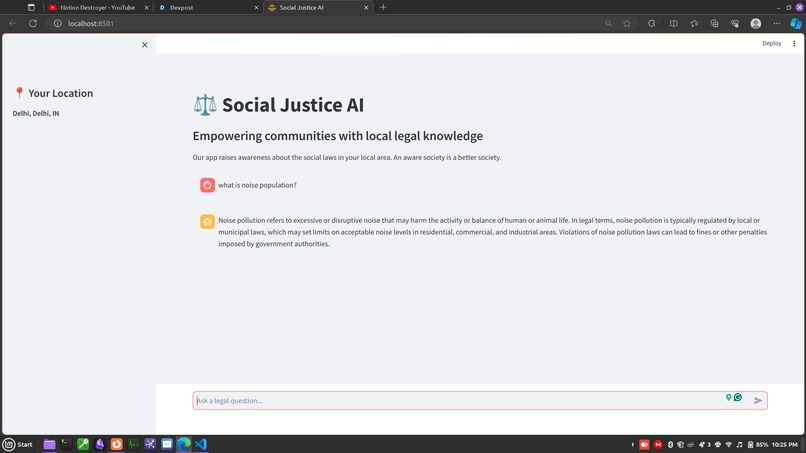
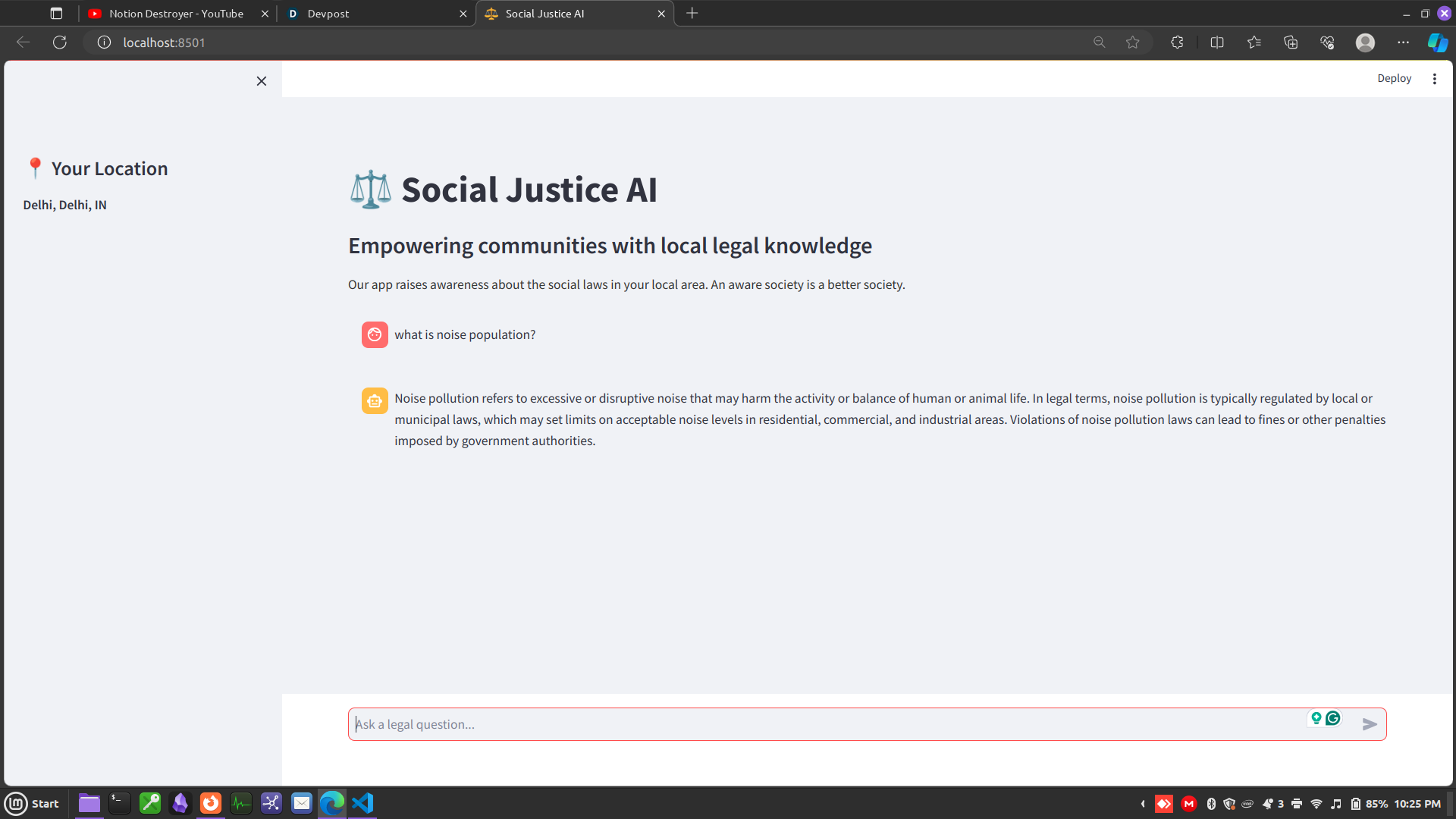
response
Inspiration
In today's fast-paced world, understanding and accessing local legal information can be a daunting task. Many people are unaware of their rights and the laws that affect their daily lives. This lack of awareness can lead to injustice and inequality. Inspired by the need to empower communities with accessible and relevant legal knowledge, we created Social Justice AI. Our goal is to leverage technology to provide everyone with the information they need to navigate the legal landscape confidently.
What it does
Social Justice AI is a user-friendly application that provides instant, location-specific legal information. By detecting the user's location, the app offers tailored responses to legal questions, helping users understand local laws and regulations. With an interactive chat interface powered by OpenAI's language model, users can ask legal questions and receive accurate, detailed answers in real time.
How I built it
The app was built using Streamlit, a powerful Python framework for creating interactive web applications. We integrated OpenAI's language model to handle user queries and provide relevant legal information. Geolocation is managed through the Geocoder library to ensure responses are specific to the user's location. The app's interface was designed with custom CSS for a modern and clean look, enhancing the user experience.
Challenges I ran into
One of the main challenges was ensuring the accuracy and relevance of the legal information provided by the AI. Legal language can be complex, and ensuring the AI understands and correctly interprets user queries is crucial. Additionally, integrating geolocation data accurately and handling various edge cases where location information might be unavailable or incorrect posed a significant challenge.
Accomplishments that I'm proud of
We are proud of successfully creating an application that makes legal information accessible and understandable to everyone. The seamless integration of geolocation and AI to provide tailored responses is a significant achievement. Moreover, the app's clean and intuitive design enhances usability, making it easy for users to get the information they need quickly and efficiently.
What I learned
Throughout this project, we gained valuable insights into working with advanced language models and integrating them into web applications. We also learned about the complexities of legal information and the importance of presenting it clearly and accurately. Additionally, the project provided a deeper understanding of user experience design and the importance of creating an intuitive interface.
What's Next for Social Justice AI
The next steps for Social Justice AI include expanding the database to cover more regions and legal topics, ensuring even broader access to legal knowledge. We also plan to enhance the AI's capabilities to handle more complex legal queries and provide even more detailed responses. Additionally, incorporating user feedback and continuously improving the app's design and functionality will be a priority. Finally, exploring partnerships with legal experts and organizations to further validate and enrich the information provided by the app will be a key focus moving forward.
Built With
- chatgpt
- openai
- python
- streamlit


Log in or sign up for Devpost to join the conversation.