-
-
Image_Detection
-
Video_Detection
Inspiration
We wanted places that naturally brought a number of people to be able to measure a way that they could measure how many people came across each other. This is important for cities in which residents have to commute with public transport. Being able to know how many people cross paths would allow them to know where to focus their efforts.
What it does
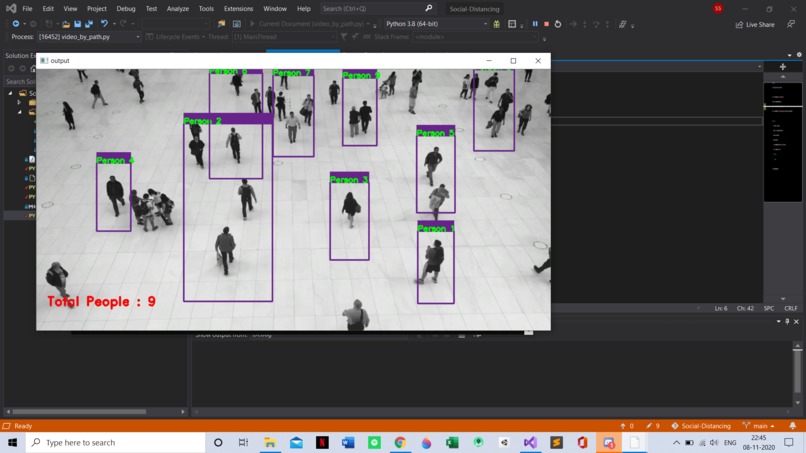
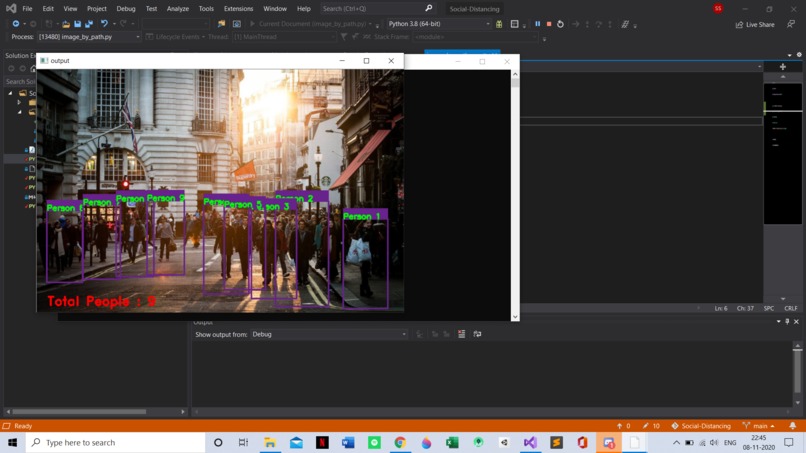
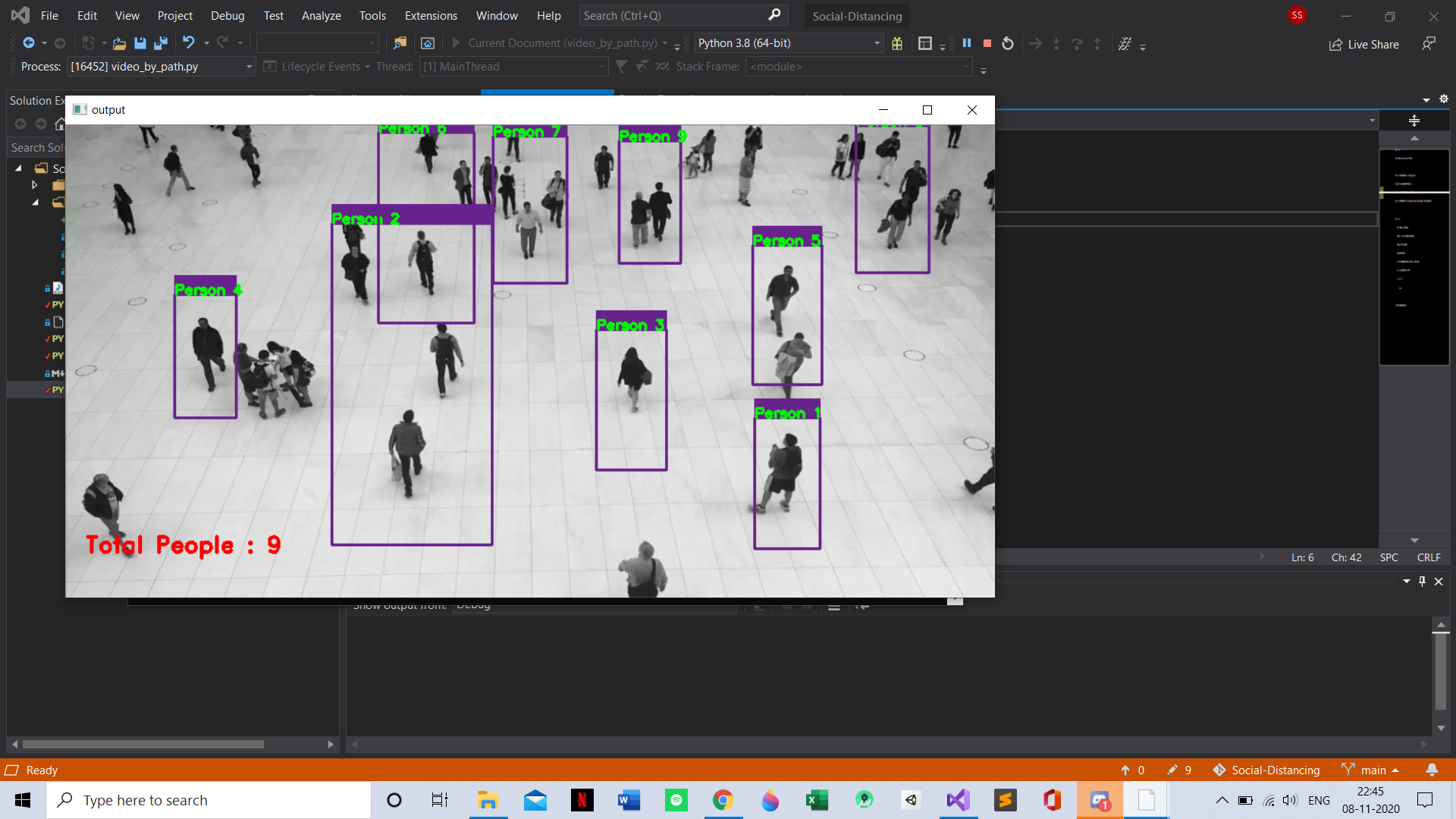
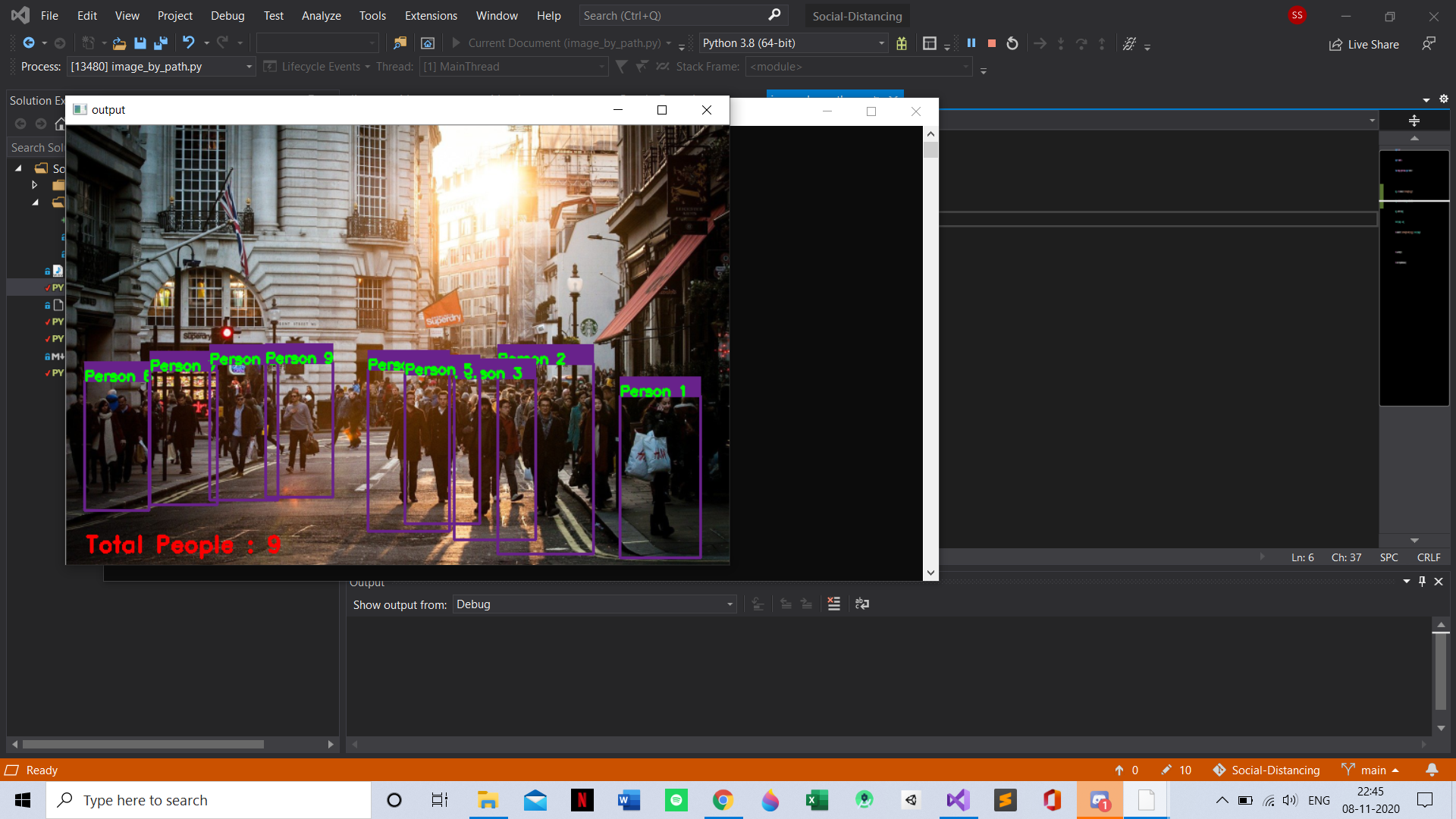
It allows Healthcare Providers and Local Authorities to gauge how many people are in a certain area via Camera Recognition and Artificial Intelligence. It can also recognize people from downloaded images and videos in the system.
How we built it
We used the OpenCV library to detect people in images. NumPy for creating arrays and imutils for image processing. The Watson Text to speech API is used for alerting with a popup when there are more than a certain number of people in the frame.
Challenges we ran into
We weren't able to import OpenCV 2 and imutils packages on IBM services but could install them. We opted for local development.
Accomplishments that we're proud of
We could build the project with python libraries and the IBM API within 24 hours and that's a great achievement for newbies to accomplish in such a small duration of time!
What we learned
We learned about the Histogram of Oriented Gradients algorithm that is used in identifying objects.
What's next for Social Distancing
Adding a feature for Bluetooth Low Energy beacon to further supplement the proximity measures.


Log in or sign up for Devpost to join the conversation.