-
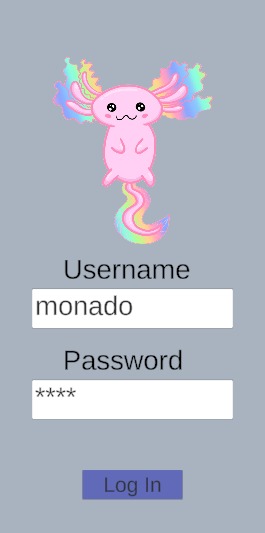
User Login Screen
-
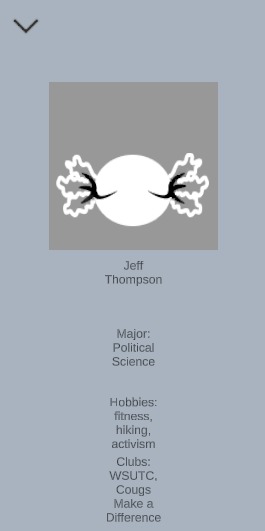
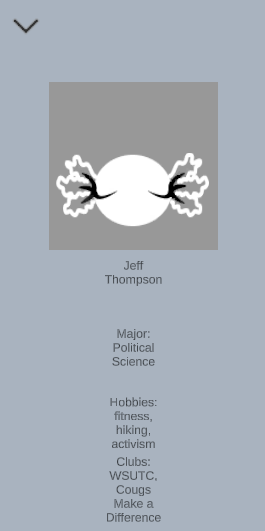
Deplaying user profile
-
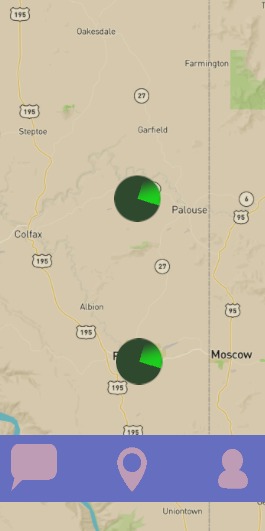
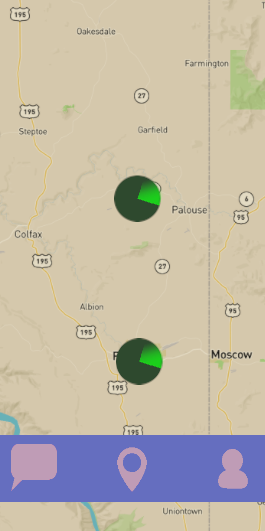
Map screen showing proximity of other users
Inspiration
College Campuses can be an intimidating place for new students. Especially for students who suffer from social anxiety, it can be tough to put yourself out there and meet new friends. Students often find it scary to walk up to people and start a conversation without knowing anything about each other, but what if there was a way an app could help break the ice?
What it does
Social Connections shows students just how many new friendly faces are around them by highlighting the profiles of nearby students who are happy to have a chat. Each user creates a profile with their name, hobbies, student organizations they're part of, major, and minor. When a student opens the app, the profiles of a few nearby students are displayed. Students can look around and wave hi to the other users in real life, or request to start an instant messaging conversation within the app. Being able to see common interests explicitly listed on a user's profile helps take a lot of the anxiety and guesswork out of a conversation, since users can skip the small talk and go straight to questions about each others' interests and backgrounds. Even if users don't feel comfortable having a conversation, being able to associate names and biographies to some of the anonymous faces they pass by every day can help assuage anxiety and start to turn a scary new campus into a dynamic new community.
How we built it
We started by using Figma to flesh out the app design and user story, as well as decide on the required features. The bulk of the app is written in Unity for the Android platform as Android is the most conducive to development on a condensed timeframe. User profile and location data is stored on each device in a SQLite database and the SQlite plugin for Unity is used to access and retrieve data. The Mapbox map API is used to generate the dynamic map which shows the location of other students.
Challenges we ran into
Unity development was more difficult than expected, and a substantial amount of time was spent troubleshooting dependencies, deprecated plugins, the Android location API, and general dead ends. There were also some hiccups getting SQLite to communicate with the Unity framework which required some modifications the db schema and queries.
Accomplishments that we're proud of
Having a functional mobile app! Most of our previous hackathon projects and development experience have been regular browser apps so it was really cool to try something new and build directly for mobile. The UI looks pretty close to our Figma mock ups and getting the dynamically adjustable map to work was a huge win.
What we learned
We learned what works and what doesn't work with Unity development, as well as a lot about SQL. The SQL functions didn't always work the way we expected and it took a bit of sifting to find the Unity Plugins we needed.
What's next for Social Connections
In the Future, we would like to explore using NFC and/or Bluetooth Near Field to generate a pop up notification whenever another user is near. We identified several Unity plugins which might be useful to implement the messaging feature, and with more time we would like to explore fleshing out this feature in greater detail. In order to grow the app into a scalable, deployable service there would also need to be a central SQL server and a method of cloning relevant data onto each device's local SQLite database.


Log in or sign up for Devpost to join the conversation.