-
-
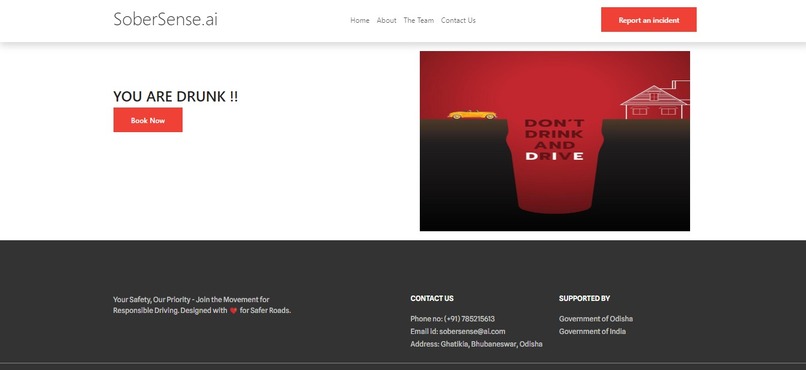
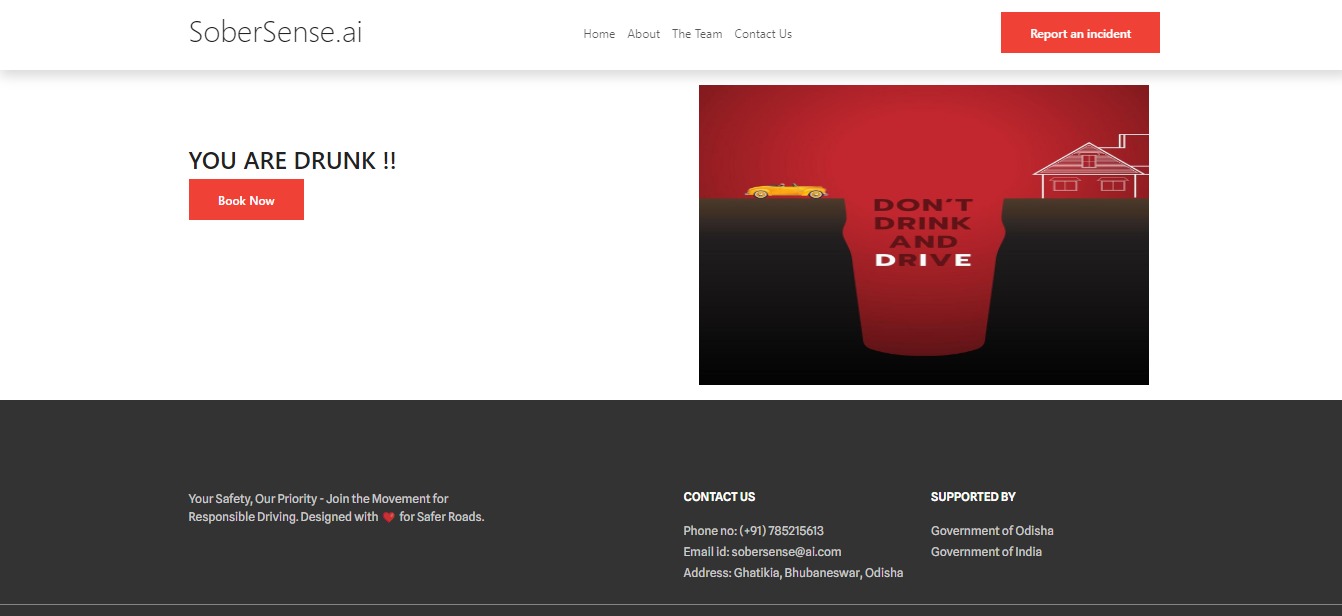
user is drunk
-
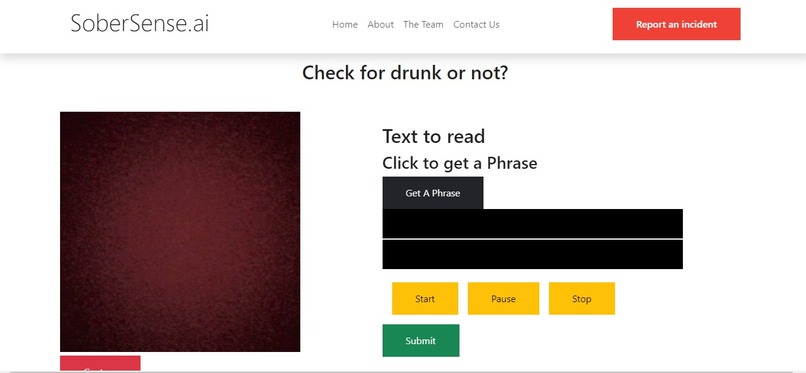
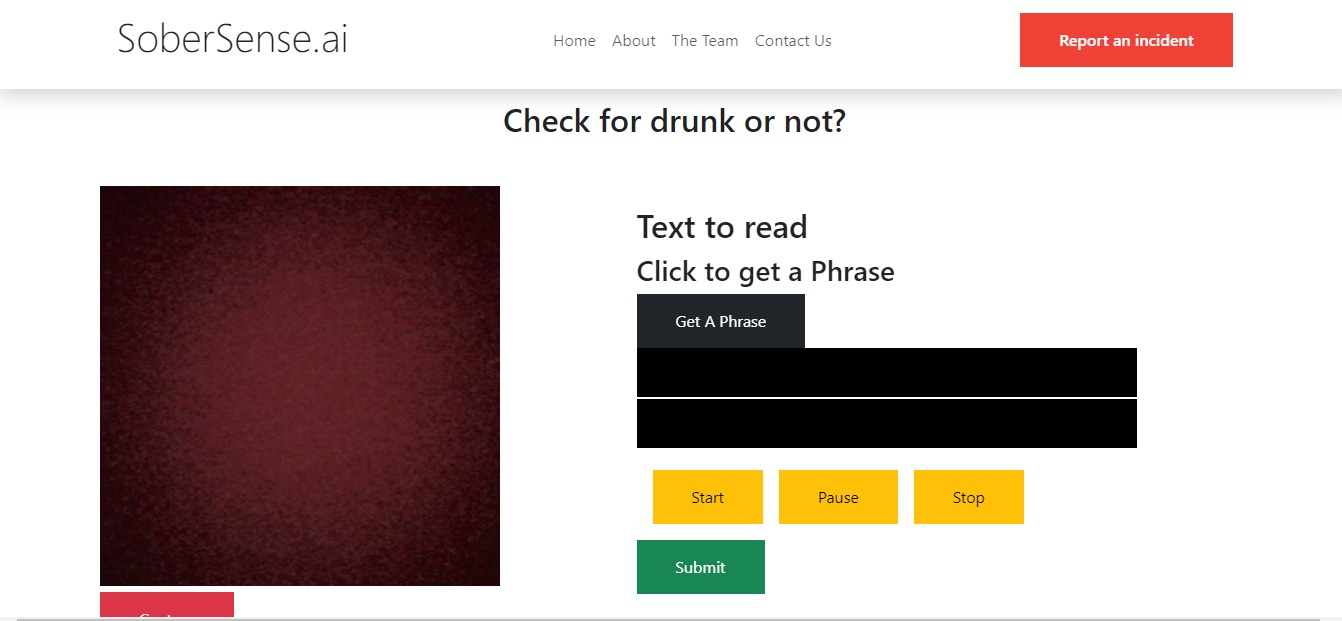
capture/test page
-
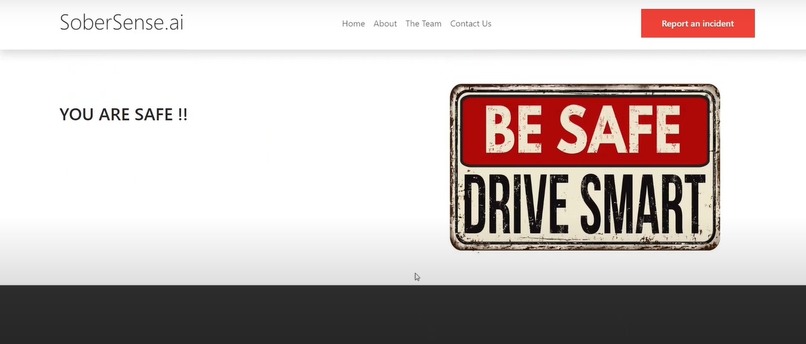
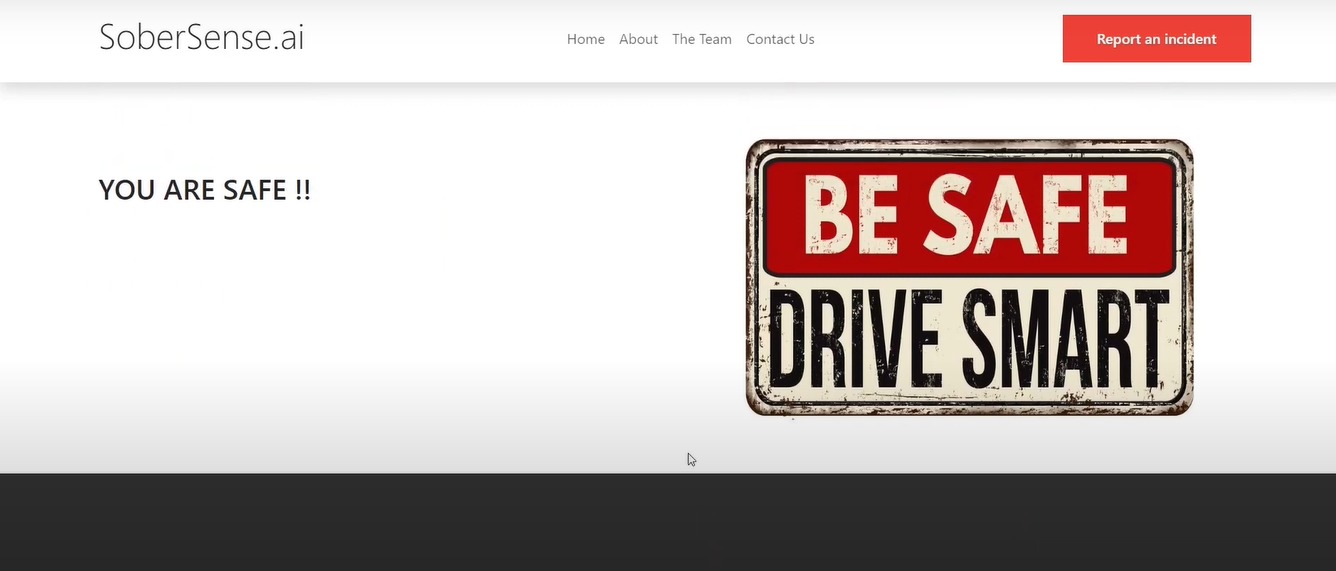
user is sober
-
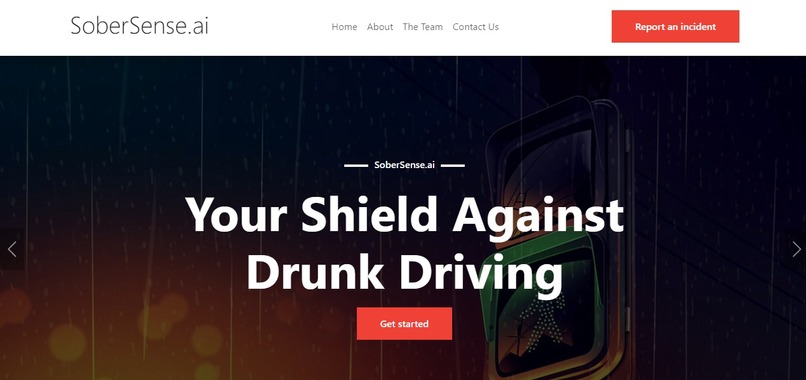
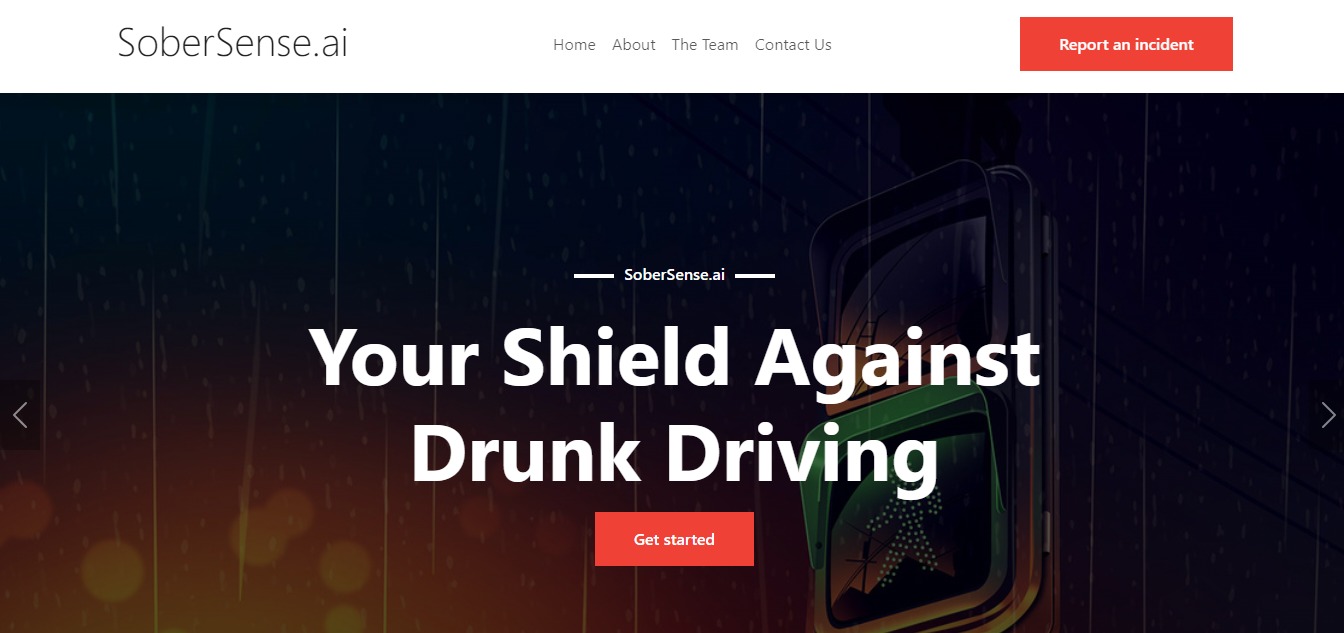
home page
-
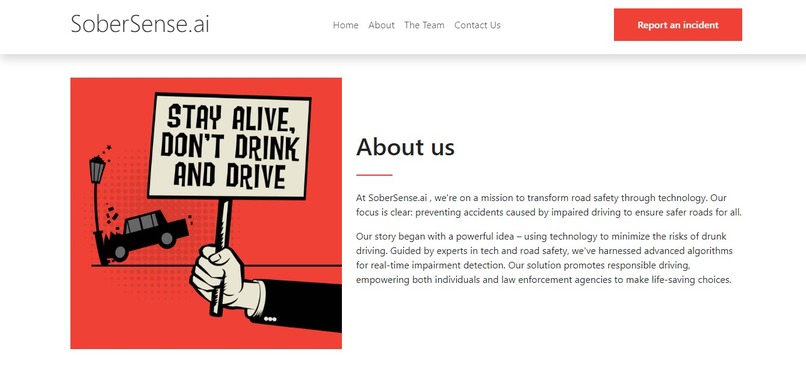
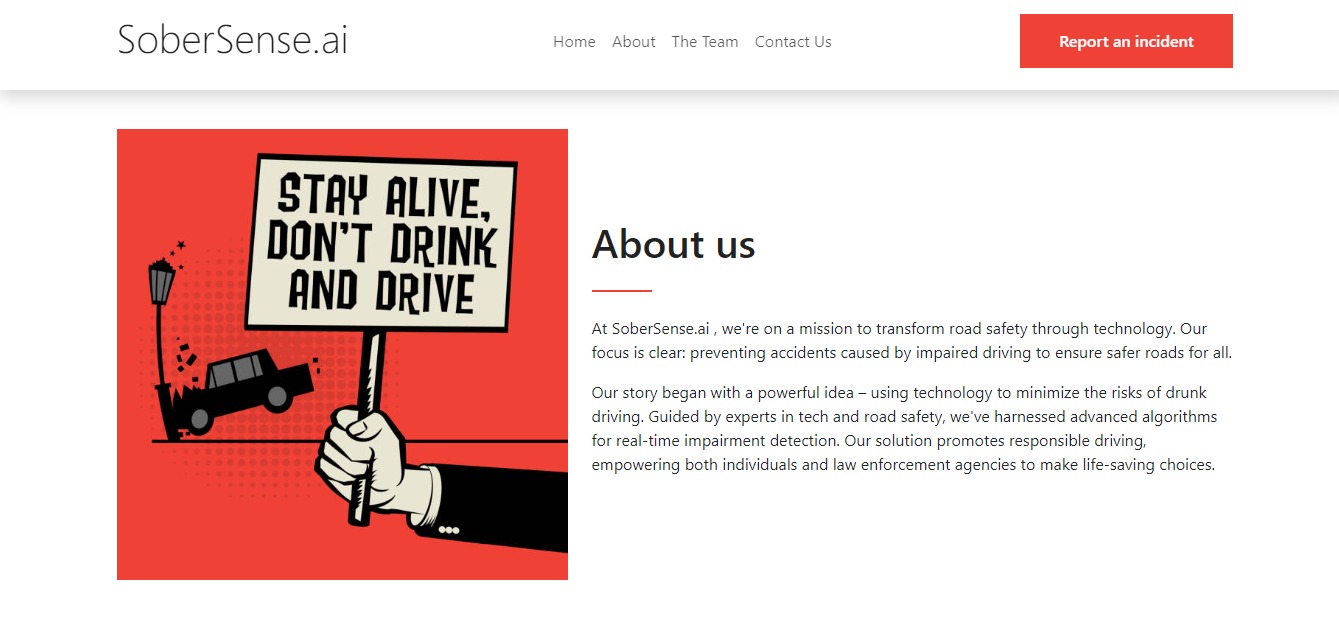
home page - about us
Inspiration
The inspiration for SoberSense.ai stems from the need to improve public safety and prevent accidents caused by impaired driving. Driving under the influence of alcohol or other substances is a major contributor to road accidents, injuries, and fatalities worldwide. Traditional methods of detecting impairment, such as field sobriety tests and breathalyzer tests, have limitations and may not always accurately determine a person's level of intoxication.
What it does
Sobersense.ai captures the face image of the user and gives it a piece of text to read. Based on the audio recorded and image captured, it detects whether the person is drunk or sober. And further, if the person is found to be drunk, it allows the user to book safer modes of transportation like cabs etc. (This feature is one of the future scopes of sobersense.ai )
Face Image Analysis: SoberSense.ai employs cutting-edge facial recognition and analysis techniques to evaluate subtle visual cues that may indicate a person's level of intoxication. It analyzes factors such as bloodshot eyes, droopy eyelids, flushed skin, and unusual facial expressions that are often associated with alcohol consumption.
Audio Recording Analysis: Sobriety often affects speech patterns and vocal characteristics. SoberSense.ai captures and analyzes audio recordings to identify changes in speech rate, slurred speech, altered pitch, and other vocal anomalies that could be indicative of intoxication.
Machine Learning Integration: The heart of SoberSense.ai lies in its machine learning models, which have been trained on extensive datasets comprising a wide range of sobriety levels. These models can accurately differentiate between sober and intoxicated states based on the patterns and features extracted from both facial images and audio recordings.
Real-time Assessment: SoberSense.ai provides real-time results, enabling quick and informed decisions. Whether it's for personal use, hospitality establishments, law enforcement, or other safety-conscious environments, SoberSense.ai helps in promptly identifying potential risks.
Privacy Considerations: SoberSense.ai prioritizes user privacy. It operates without storing or transmitting personal data, focusing solely on the analysis of visual and auditory cues related to sobriety. The system ensures that individual privacy is upheld while delivering valuable insights.
Promoting Responsibility: By accurately assessing sobriety levels, SoberSense.ai encourages responsible behavior and informed decision-making. It can be utilized in scenarios such as bars, parties, events, and even for personal awareness, helping individuals avoid risky situations and maintain their safety.
How we built it
- Bootstrap
- Javascript
- Figma
- React.js
- CSS3
- HTML5
- Vite
- Flask
- Torch
- Cnn
Challenges we ran into
- Giving real-time updates was challenging.
- Dataset was small so getting accurate model was very difficult.
Accomplishments that we're proud of
Innovative Technology Fusion: SoberSense.ai stands as a remarkable achievement in merging cutting-edge technologies—computer vision and audio analysis—to create a comprehensive solution for detecting a person's sobriety state.
Precise Sobriety Assessment: We take immense pride in developing a system that accurately discerns between drunk and sober individuals using a combination of facial feature analysis and audio cues. Our achievement in achieving a high level of accuracy reflects the dedication and expertise of our team.
Cross-Domain Expertise: The SoberSense.ai project showcases the interdisciplinary prowess of our team members, bringing together experts in computer science, machine learning, signal processing, and psychology to tackle a complex problem from multiple angles.
Real-World Applicability: Our accomplishments extend beyond the laboratory setting; SoberSense.ai has the potential to be a game-changer in areas such as road safety and public security, with practical implications for law enforcement, transportation, and beyond.
Data Privacy and Ethics: A noteworthy accomplishment is our commitment to data privacy and ethics. We've implemented stringent protocols to ensure the responsible collection, usage, and storage of sensitive data, setting a high standard for AI-driven projects in morally sensitive domains.
Continuous Learning Framework: SoberSense.ai is not a static solution but a dynamic one. We're proud to have established a learning framework that continuously adapts and improves over time, ensuring its effectiveness across diverse demographics and evolving scenarios.
Community Collaboration: Our project's success was made possible through collaboration with law enforcement agencies, medical professionals, and community organizations. This network strengthens our sense of accomplishment as we contribute to a safer and more responsible society.
Public Awareness and Education: SoberSense.ai has provided us with a platform to raise public awareness about the dangers of impaired driving and substance abuse. Our accomplishments extend beyond technology, empowering individuals to make informed decisions.
Recognition and Impact: Our contributions have been recognized in industry forums, academic publications, and media outlets. The positive impact of SoberSense.ai on public safety reaffirms our commitment to using AI for the greater good.
Inspiration for Future Endeavors: The SoberSense.ai project serves as an inspiration for future endeavors in leveraging AI and technology to address complex societal challenges. We're proud of the foundation we've built and are excited about the potential for further advancements.
What we learned
Multimodal Data Fusion: One of the most significant insights gained from the SoberSense.ai project was the power of combining multiple data sources - facial images and audio recordings. By fusing these two modalities, we achieved a more robust and accurate way of detecting whether a person is drunk or sober.
Feature Extraction and Representation: Extracting meaningful features from facial images and audio recordings proved crucial. Deep learning techniques played a pivotal role in identifying subtle cues such as facial expressions, bloodshot eyes, and speech patterns that could indicate intoxication levels.
Training Data Diversity: The project emphasized the importance of a diverse and comprehensive training dataset. Incorporating images and audio samples across various demographics, lighting conditions, and environments improved the model's ability to generalize and adapt to real-world scenarios.
Ethical Considerations: Developing an AI system that can detect intoxication raises ethical concerns. The project underlined the necessity of responsible deployment, emphasizing privacy protection, consent, and potential biases in the data.
Real-time Processing Challenges: Implementing real-time detection based on facial images and audio posed technical challenges. Optimizing the model's architecture and ensuring low-latency processing were crucial for creating a practical and usable solution.
Validation and Performance Metrics: Establishing rigorous validation procedures and performance metrics were vital for assessing the accuracy and reliability of SoberSense.ai. This involved comparing the model's predictions against ground truth data collected through controlled experiments.
Continuous Learning: The SoberSense.ai project reinforced the idea of continuous learning and improvement. Regularly updating the model with new data and refining the algorithms based on real-world user feedback were identified as key factors for maintaining accuracy and relevance.
Collaboration Across Disciplines: Building SoberSense.ai necessitated collaboration between experts in computer vision, audio analysis, data privacy, and user experience design. Effective communication across these disciplines was crucial for the project's success.
Potential Beyond Intoxication Detection: While the primary goal of SoberSense.ai was intoxication detection, the techniques developed could have broader applications. Similar multimodal approaches might be used for emotion recognition, health monitoring, and more.
Public Awareness and Education: The project highlighted the importance of public awareness and education about AI systems' capabilities and limitations. Transparent communication fosters user trust and responsible use of technology.
What's next for SoberSense.ai
Real-time Cab Booking: Enhance SoberSense.ai with the capability to seamlessly integrate with ride-sharing platforms, enabling users identified as drunk to conveniently book cabs directly from the application. This feature ensures the safety of both the user and the community by preventing intoxicated individuals from driving.
Location Services Integration: Integrate GPS and location services to provide accurate pickup and drop-off information for the booked cabs. This ensures that the cab drivers can easily locate and reach the user, even if they are in an unfamiliar area.
Safe Ride Recommendations: Implement an intelligent algorithm that not only detects the user's level of sobriety but also suggests suitable transportation options. This could include not only traditional ride-sharing but also alternative transportation methods like public transit or designated driver services.
Emergency Contacts Alert: Include a feature that allows users to pre-select emergency contacts. In case the user is identified as drunk and books a cab, the app can automatically notify their emergency contacts with details of the ride, ensuring an additional layer of safety.
Customized Preferences: Provide users with the ability to customize their cab booking preferences. This could include specifying preferred ride-sharing services, vehicle types, or any additional requirements, creating a personalized experience.
Integration with Sober Friends: Develop a feature that connects users with their sober friends' list, allowing them to quickly share their location and cab booking details with friends for added peace of mind.
Promotions and Discounts: Collaborate with ride-sharing companies to offer exclusive promotions or discounts for SoberSense.ai users who book cabs through the app. This incentivizes responsible behavior and encourages users to choose safe transportation options.
Reminder Alerts: Implement timely reminder alerts for users who have been identified as drunk, encouraging them to book a cab or use alternative transportation methods if they are planning to leave a venue.
Community Reporting: Enable users to report unsafe driving incidents encountered during their cab rides. This information can be used to enhance the safety and quality of the transportation services provided through the app.
Data Privacy and Security: Continuously prioritize data security and user privacy by implementing robust encryption measures and complying with relevant data protection regulations.
Multi-platform Compatibility: Extend SoberSense.ai to work seamlessly across various platforms, such as smartphones, tablets, and wearable devices, ensuring accessibility and usability for a wide range of users.
Feedback and Improvement Loop: Incorporate a feedback mechanism within the app that allows users to provide input about their cab booking experiences. This feedback loop can help identify areas for improvement and refine the service over time.


Log in or sign up for Devpost to join the conversation.