-
-
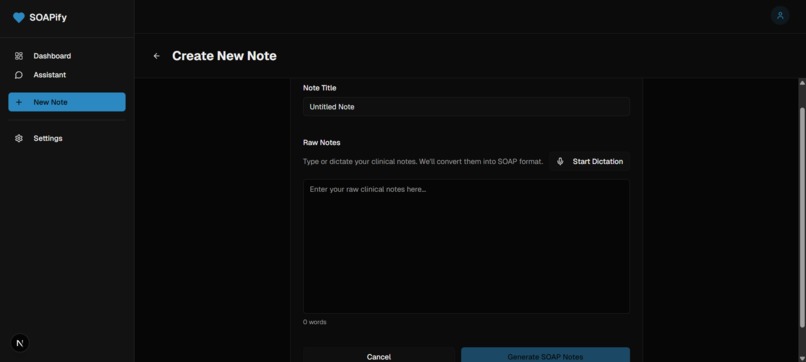
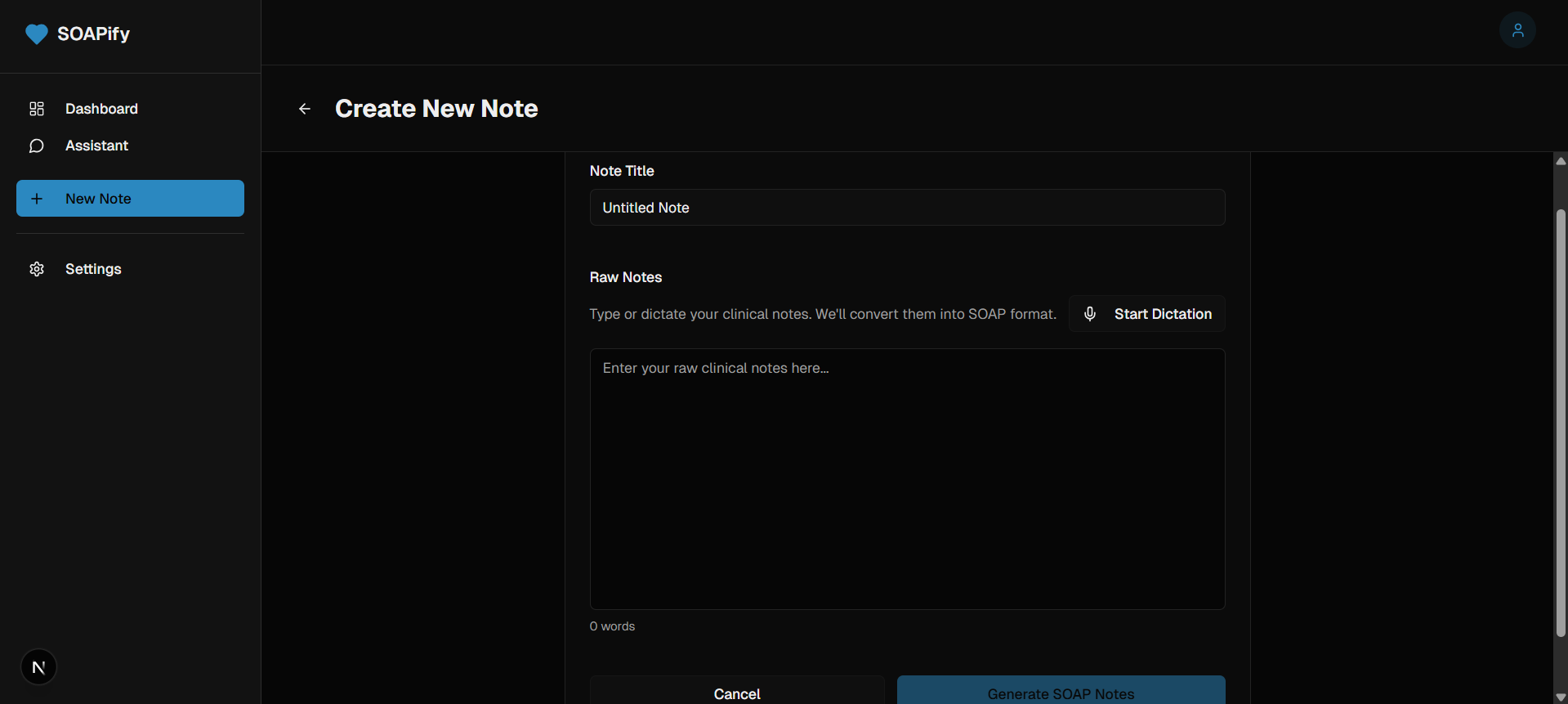
ask AI to generate soap notes through written words or through listening to a conversation.
-
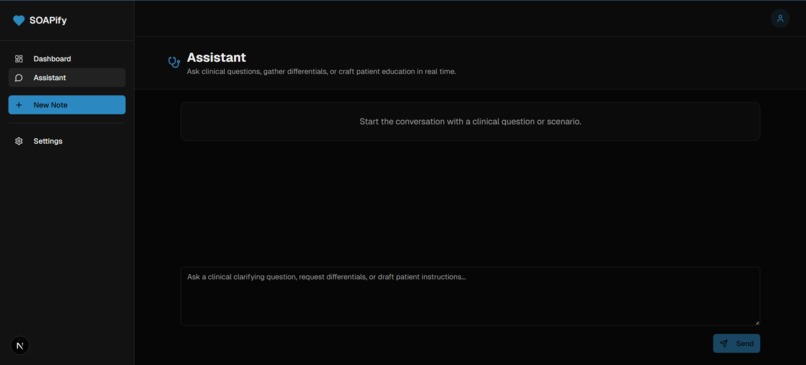
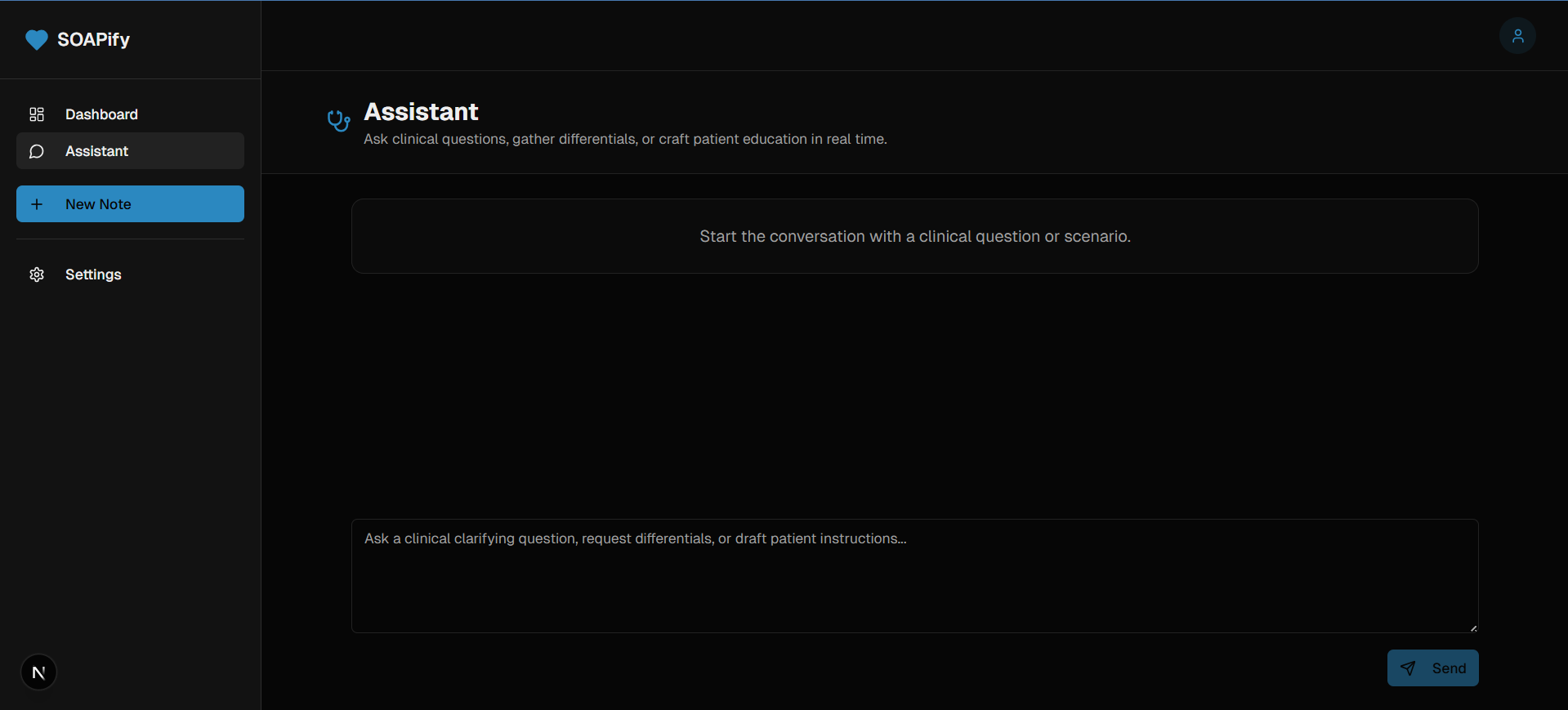
Chat assistant. Can answer medical help questions.
-
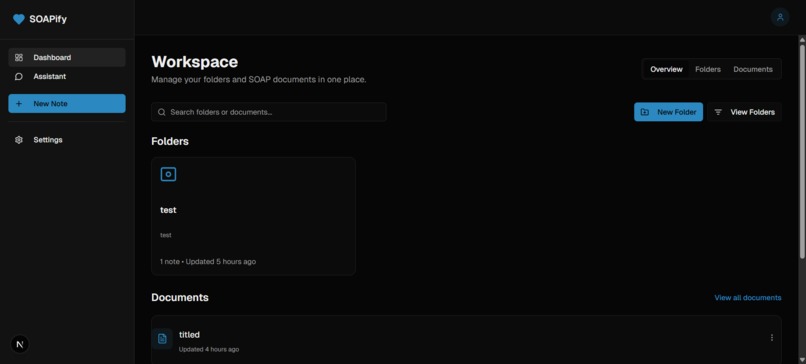
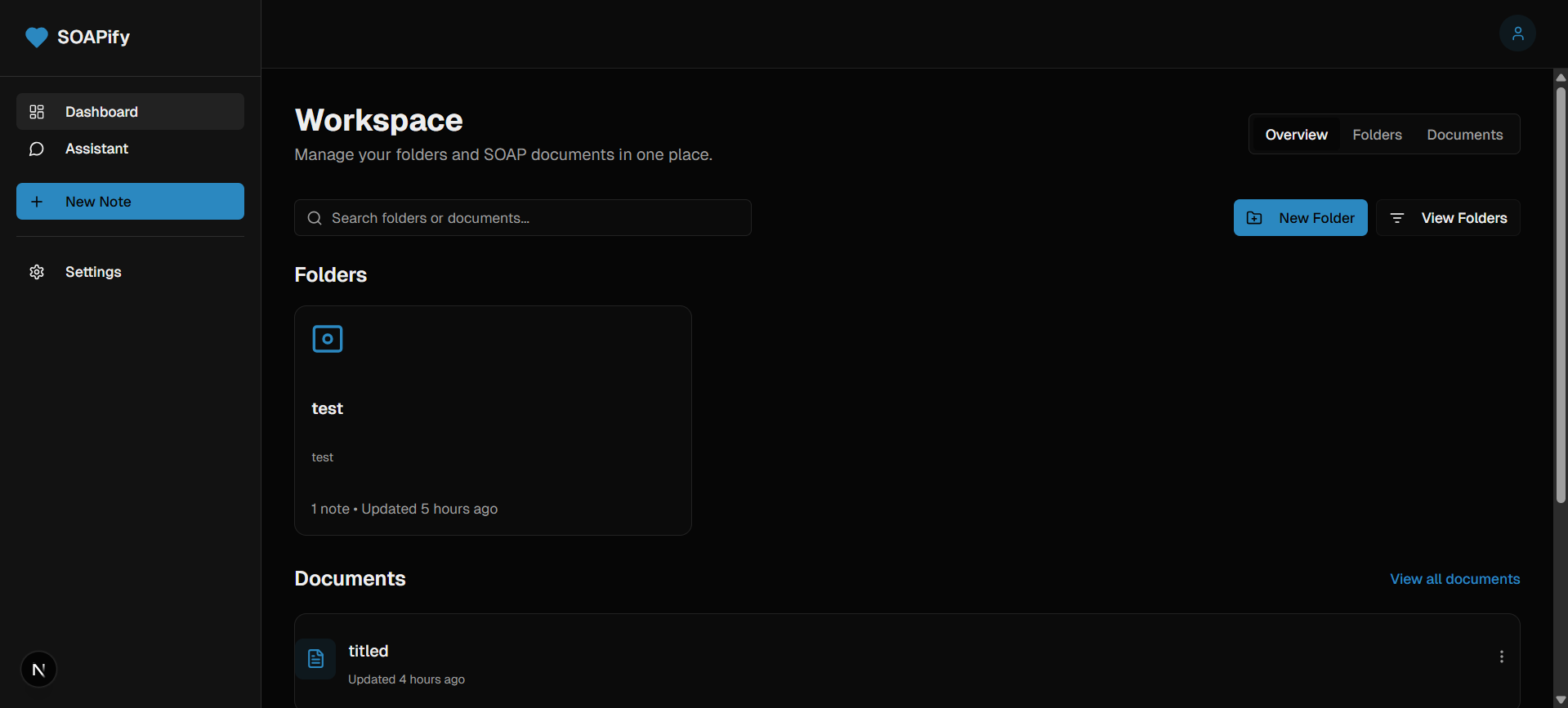
Dashboard/ Home screen. Includes all folders and documents. You can click on the folders and documents button for specifically each.
-
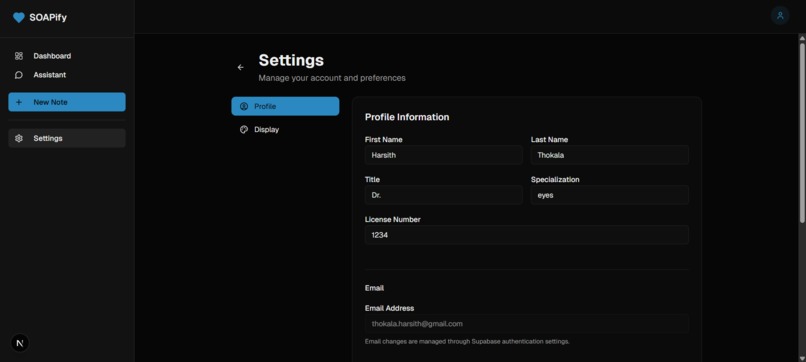
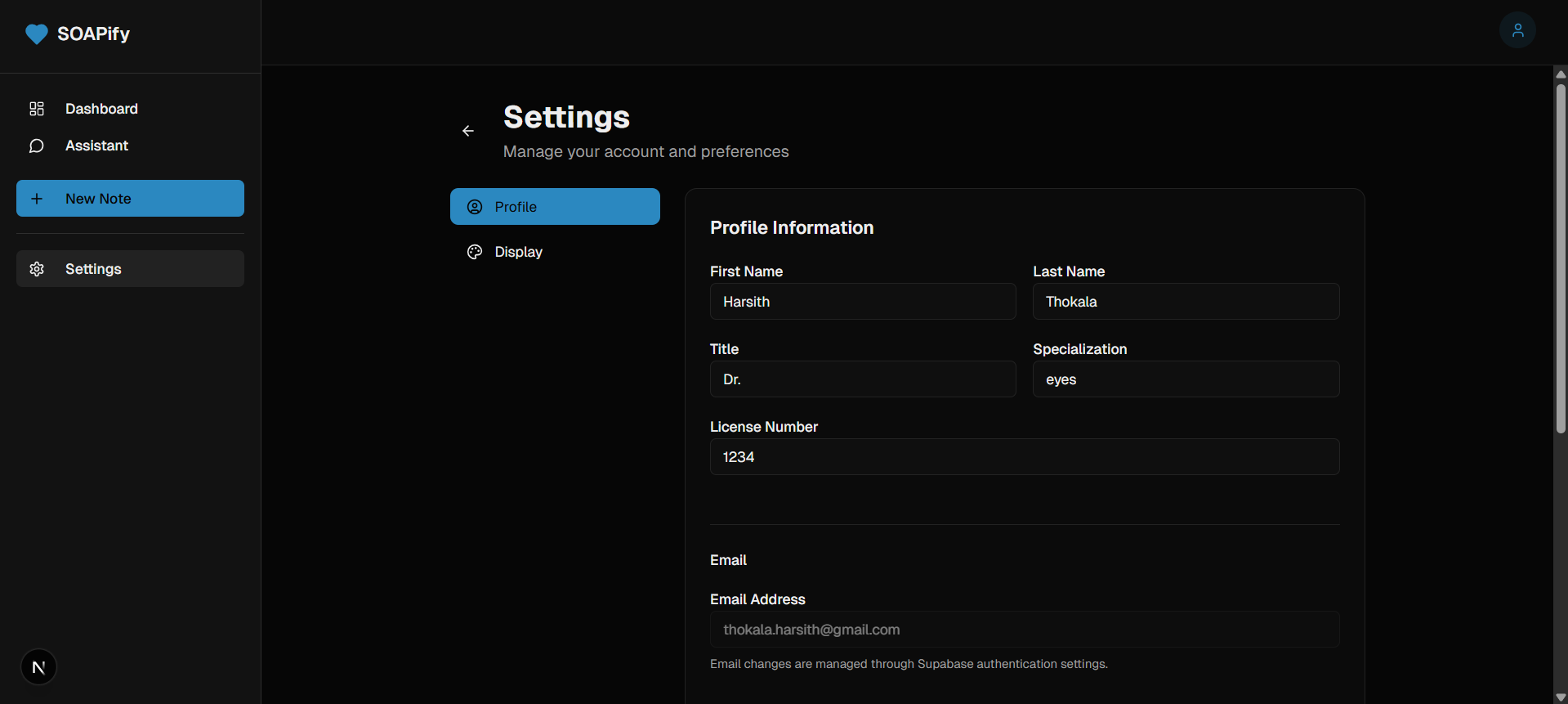
Settings, can describe yourself in the profile, can delete account and can change password.
-
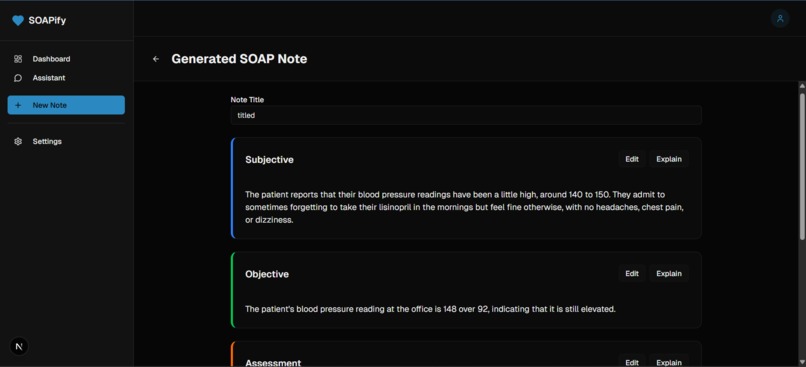
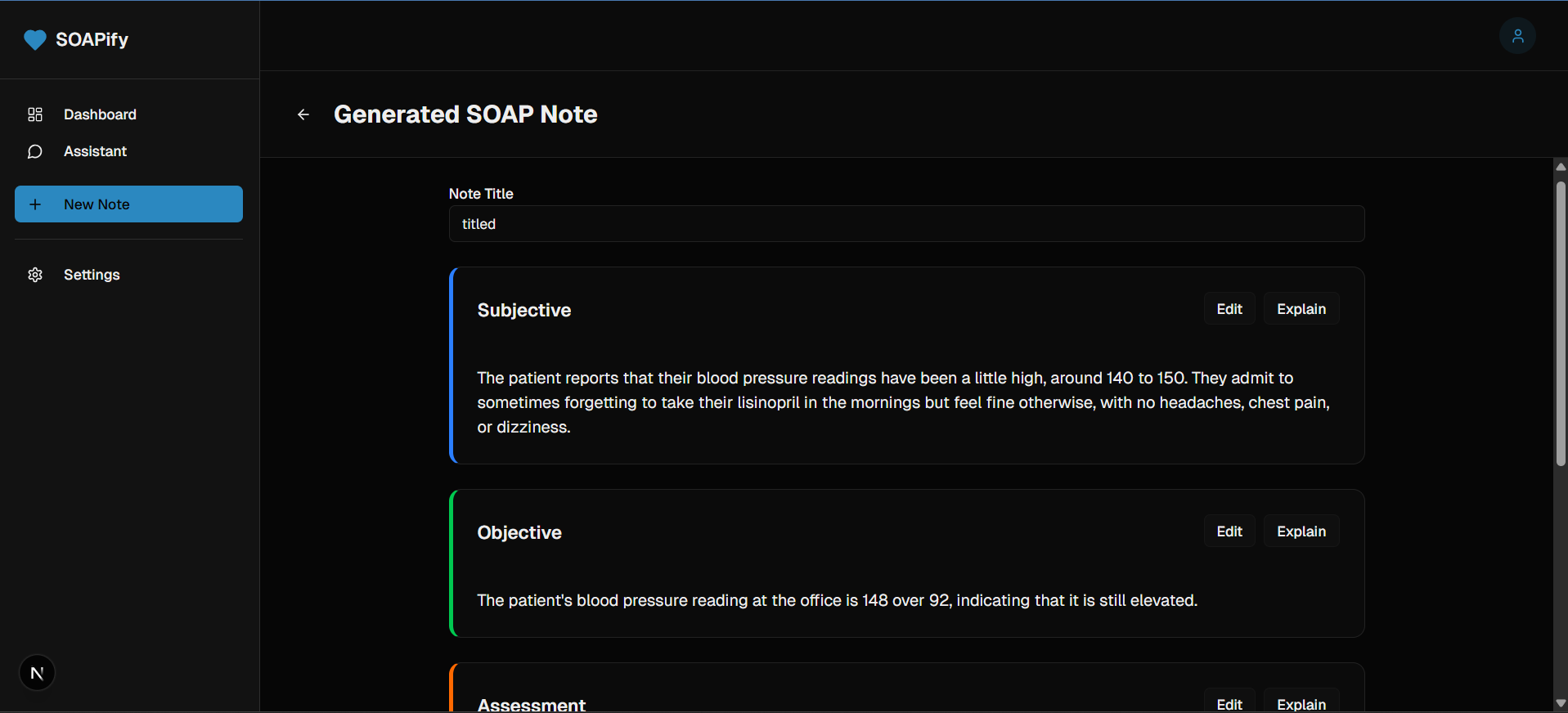
Example of a generated soap note.
-
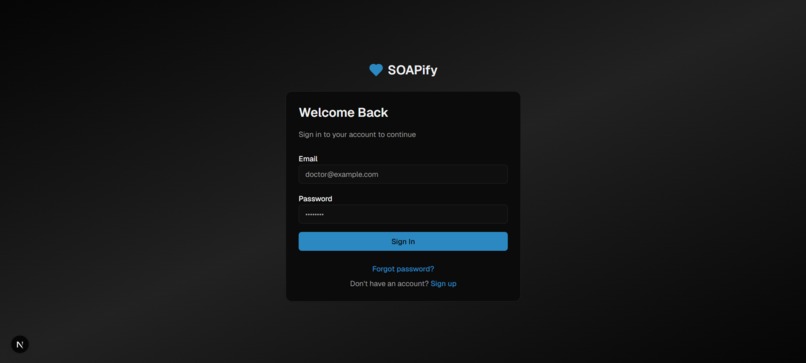
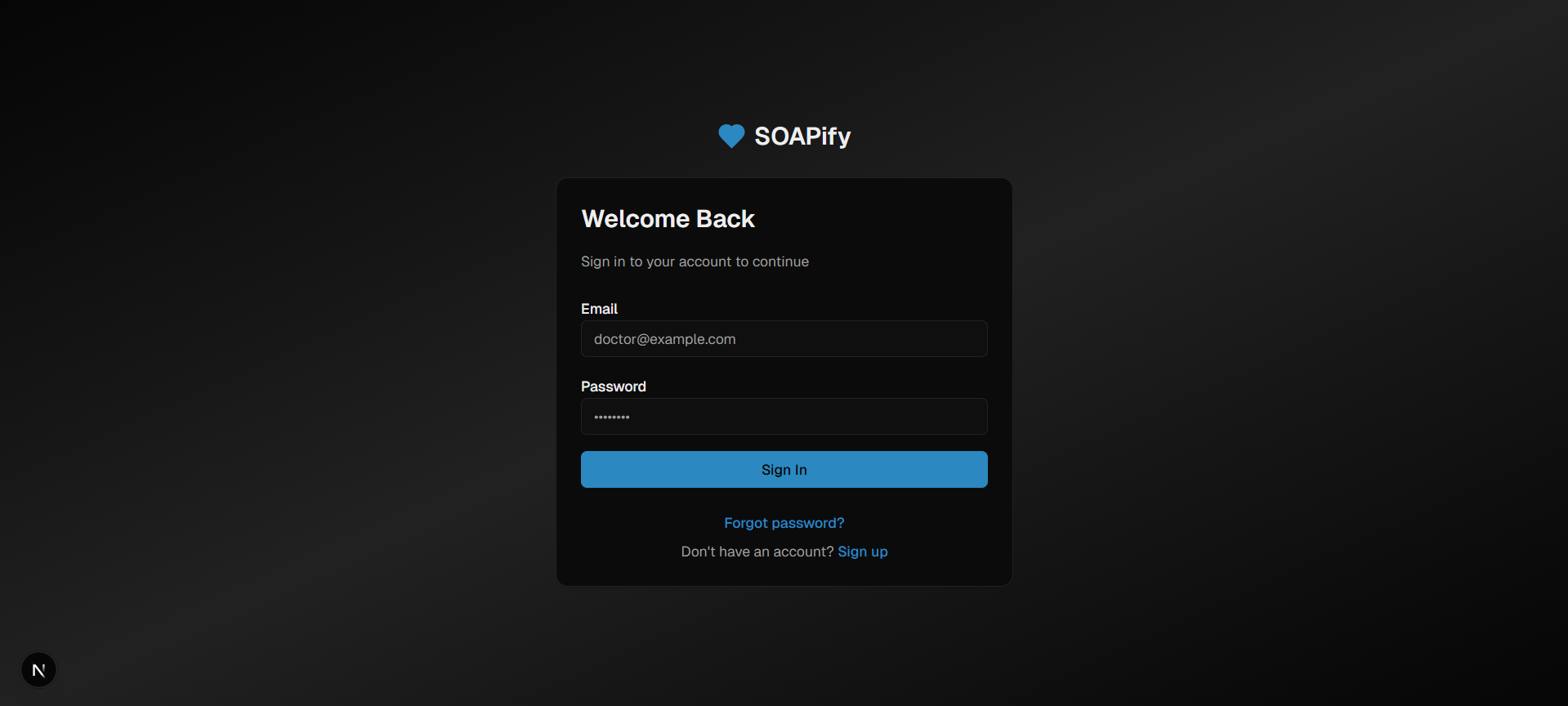
Login Page
-
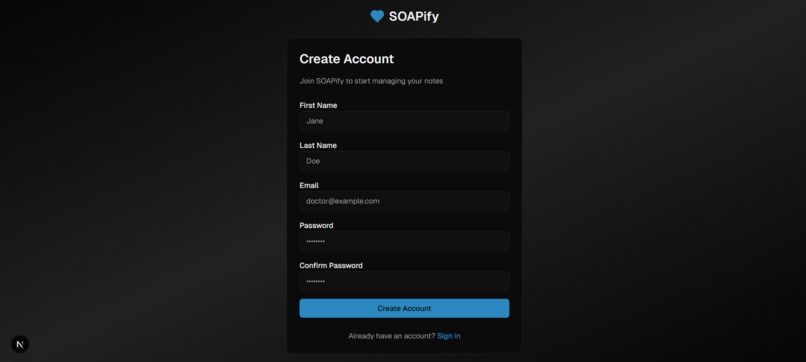
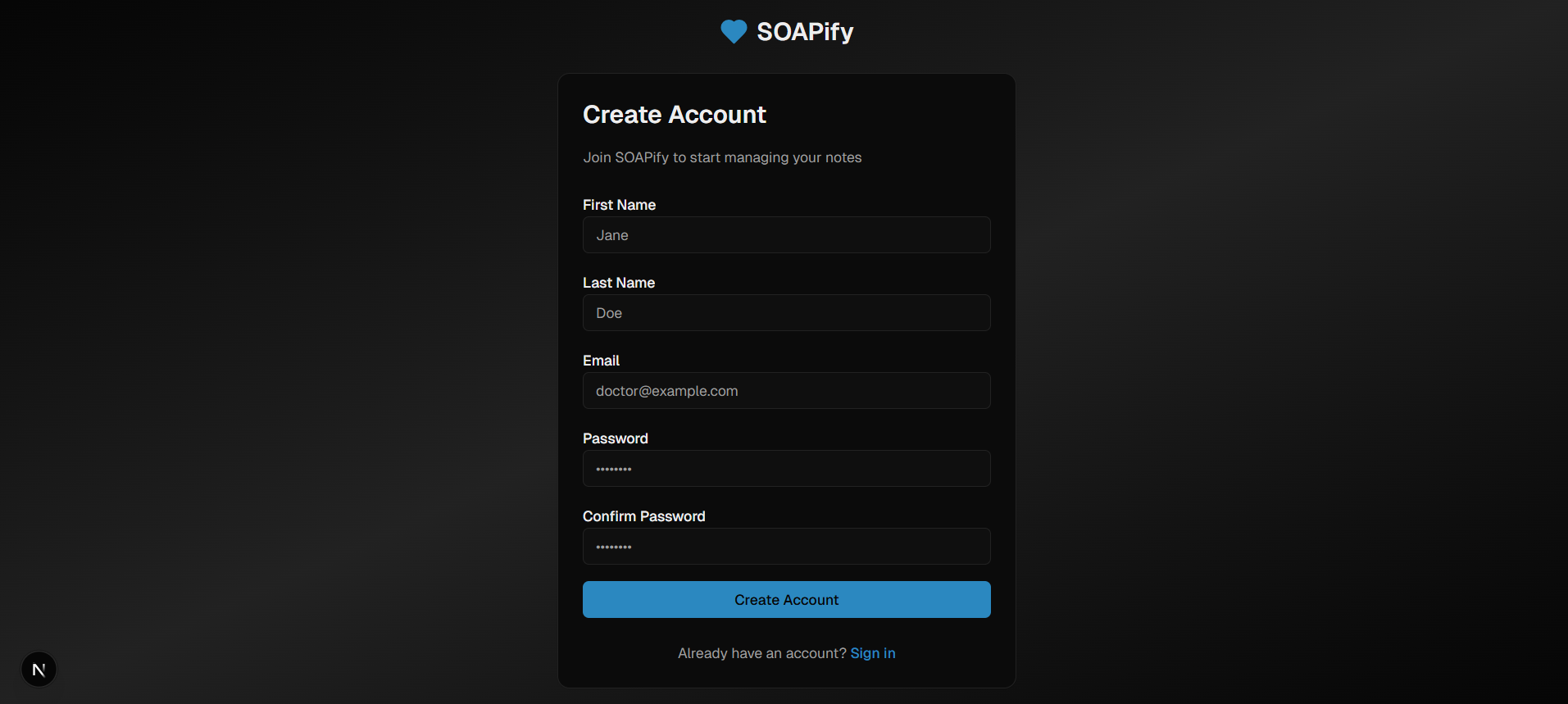
Sign Up Page
-
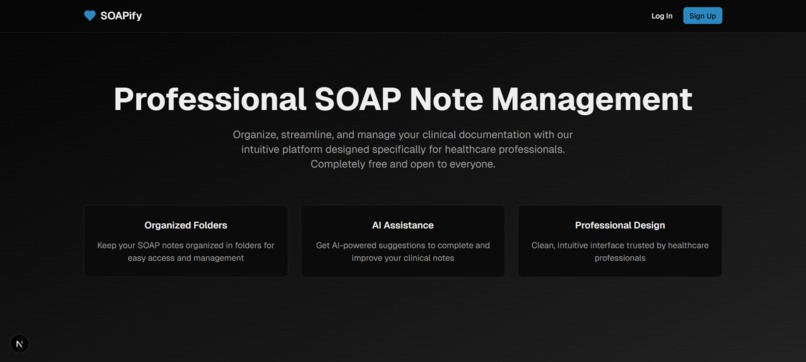
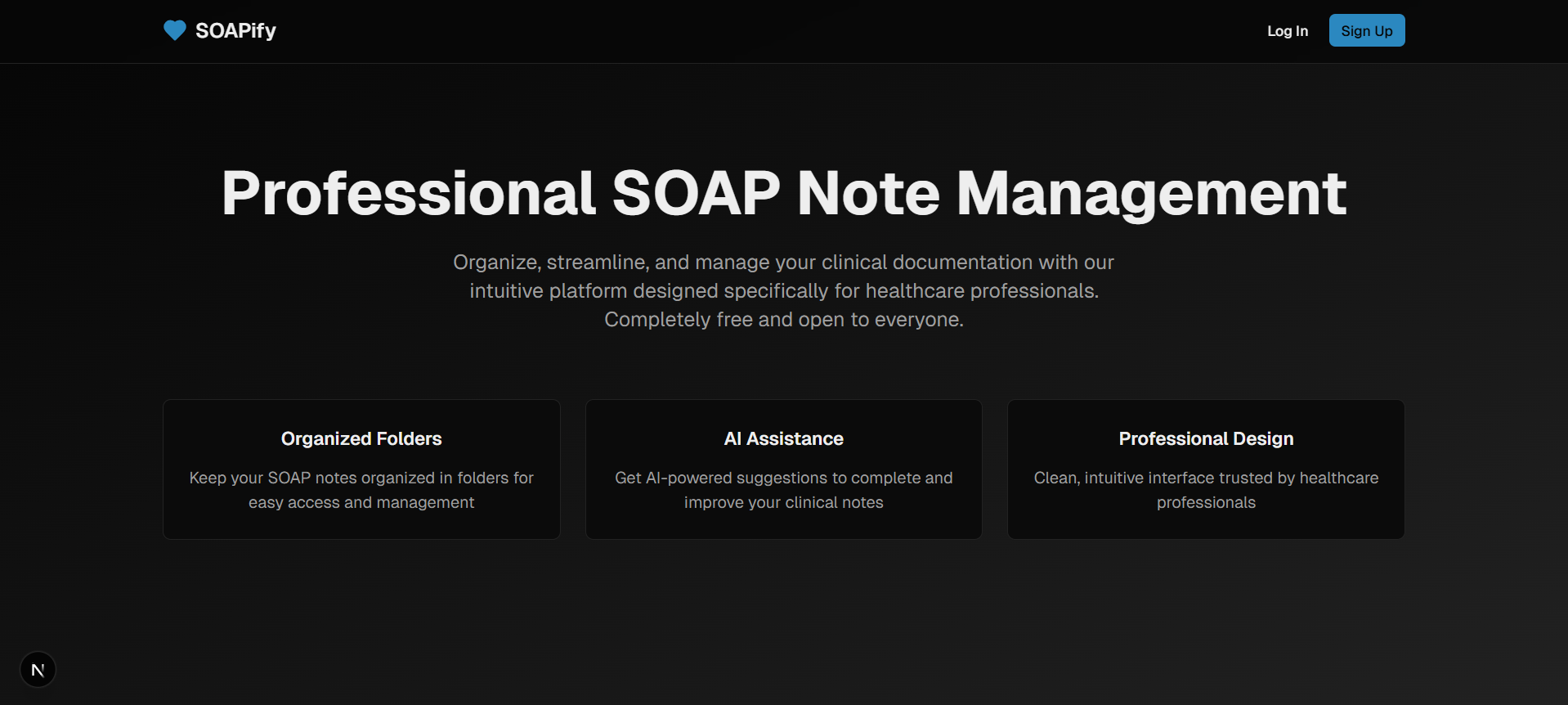
Landing Page
Clinicians spend hours typing notes after seeing patients. Our goal during the hackathon was to make that process easier for doctors by reducing the time they spend on documentation, especially on tedious soap notes. This is what inspired SOAPify, a multi-modal assistant that listens, writes, and explains clinical notes so doctors can stay focused on their patients rather than their keyboards.
SOAPify makes documentation effortless by combining voice and text input. Clinicians can type or dictate their encounter notes using a browser-based recorder powered by Whisper. Transcripts appear instantly in the editor, allowing quick edits or additions before generating structured notes. Then, GPT-4o mini transforms the narrative into organized Subjective, Objective, Assessment, and Plan sections. Even when some details are missing, the AI fills in a reasonable plan. Each section includes Edit and Explain buttons. “Edit” saves local changes, while “Explain” offers a concise rationale behind the AI’s reasoning.
To ensure privacy and reliability, we built a secure workspace using Supabase for authentication, database storage, and row-level security. The dashboard organizes folders, unfiled notes, and recent documents, making it easy to move, rename, or delete notes with automatic cascading. SOAPify also includes a clinical assistant chatbot, powered by the same GPT-4o mini model, that can answer quick clinical questions such as differentials, red flags, or patient counseling advice. The settings page lets users personalize the app with their name, title, and license, giving the interface a professional and familiar touch.
Throughout development, we learned how much multi-modal input changes clinician behavior. Voice dictation paired with typed edits helps capture nuance, while the AI takes care of structure. We also believe that the "explain" feature will build trust as it offers transparency into the AI’s reasoning. On the technical side, Supabase’s row-level security proved powerful but required thoughtful design, and we had to carefully balance latency and detail, tuning Whisper and GPT-5o mini for both speed and accuracy.
Building SOAPify wasn’t without challenges. Handling microphone permissions, chunked audio recordings, and transcription errors required multiple iterations and user-friendly fallbacks. We also refined our AI prompts to ensure every generated note included a complete and clinically sound plan. Finally, keeping user edits, AI-generated content, and explanations in sync demanded clear UI states and careful front-end design.
Our stack is built for reliability and scalability. We used Next.js and React for the frontend, styled with Tailwind CSS and shadcn/ui. Supabase handles authentication, the database, and secure storage. We integrated GPT-4o mini and Whisper for the AI features. The entire project runs on TypeScript, is hosted on Vercel, and managed through GitHub.
Looking ahead, we plan to evolve SOAPify beyond note generation by training specialty-tuned models for fields like cardiology, pediatrics, and psychiatry to provide even more context-aware recommendations.
SOAPify already delivers a multi-modal, explainable, and secure workspace for clinical documentation. By integrating richer medical context and domain-specific intelligence, we hope to bring it even closer to the clinician’s ideal digital scribe, one that listens, understands, and writes like a true partner in care.
Built With
- css
- javascript
- next.js
- openai
- postgresql
- react
- typescript
- whisper


Log in or sign up for Devpost to join the conversation.