Inspiration
Snow days. The first big snowfall, the race to build the best fort on the block, and the friendly snowball fight that follows. I wanted to bottle that feeling, and I noticed tower defense, one of mobile's most beloved genres, is almost always about guns, zombies, or armies. So I asked myself a simple question: what if tower defense were completely wholesome and non-violent? A game a kid and a parent would happily play together? And what if the resource you fought over was the snow itself, falling all around you?
What it does
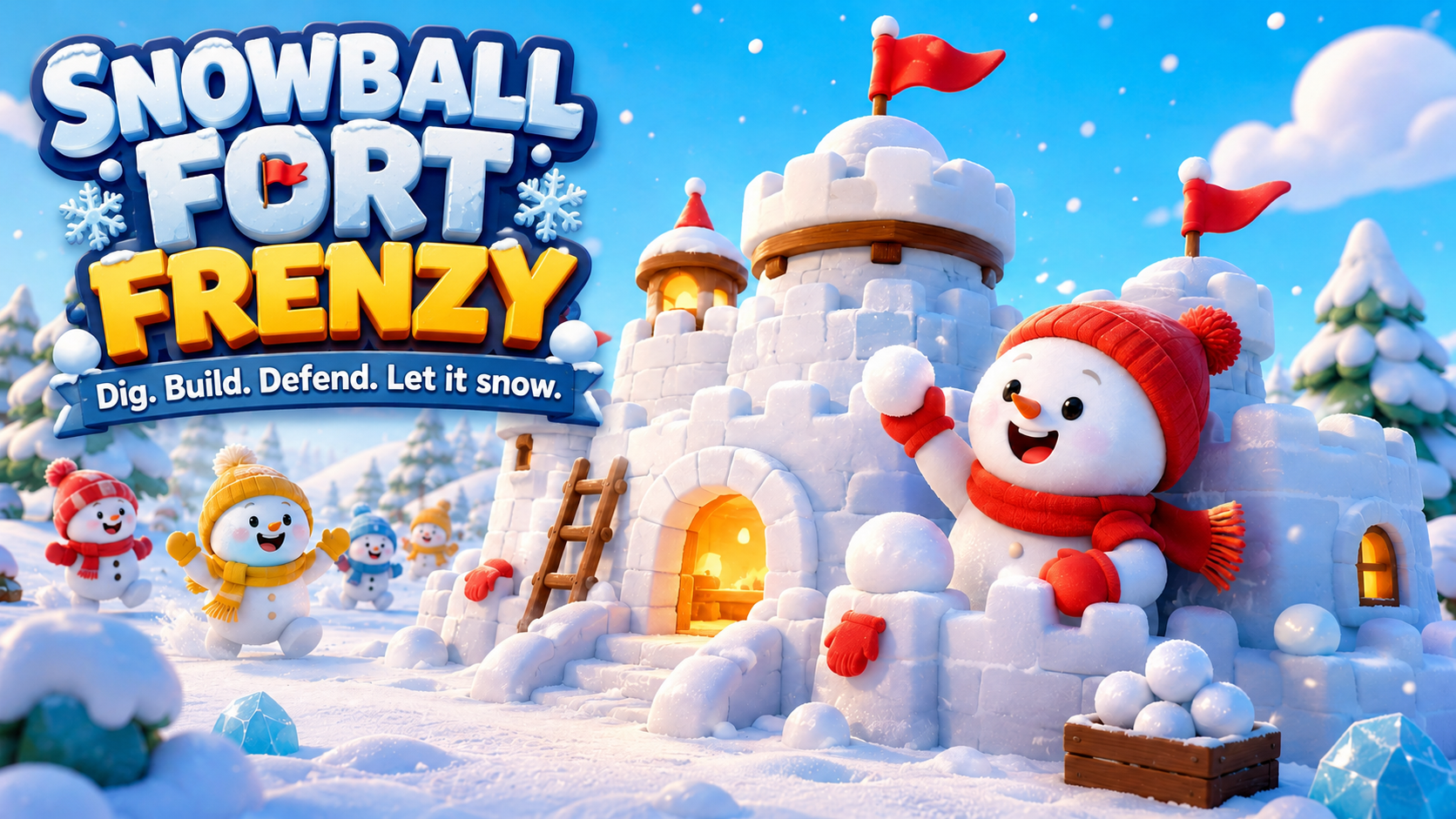
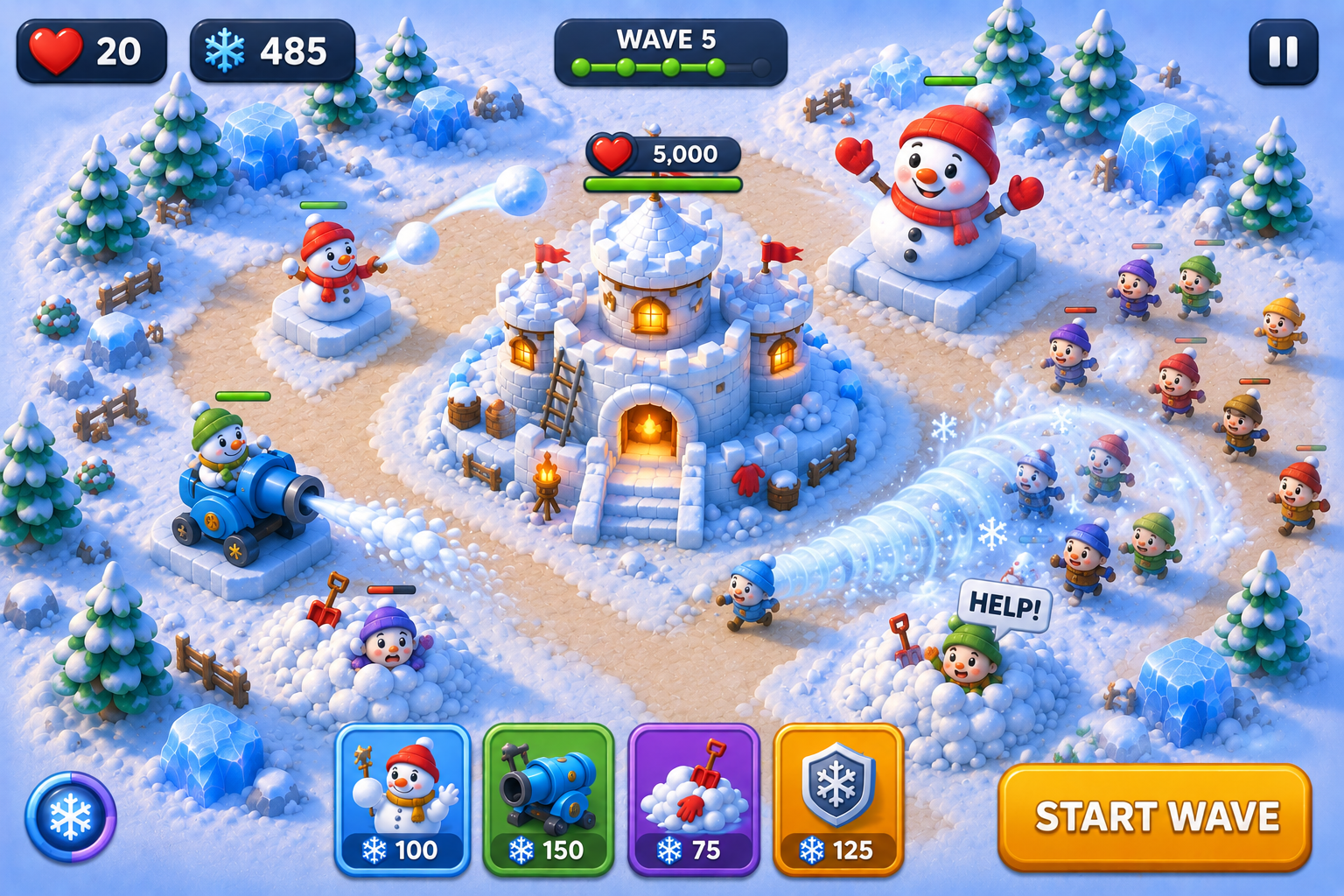
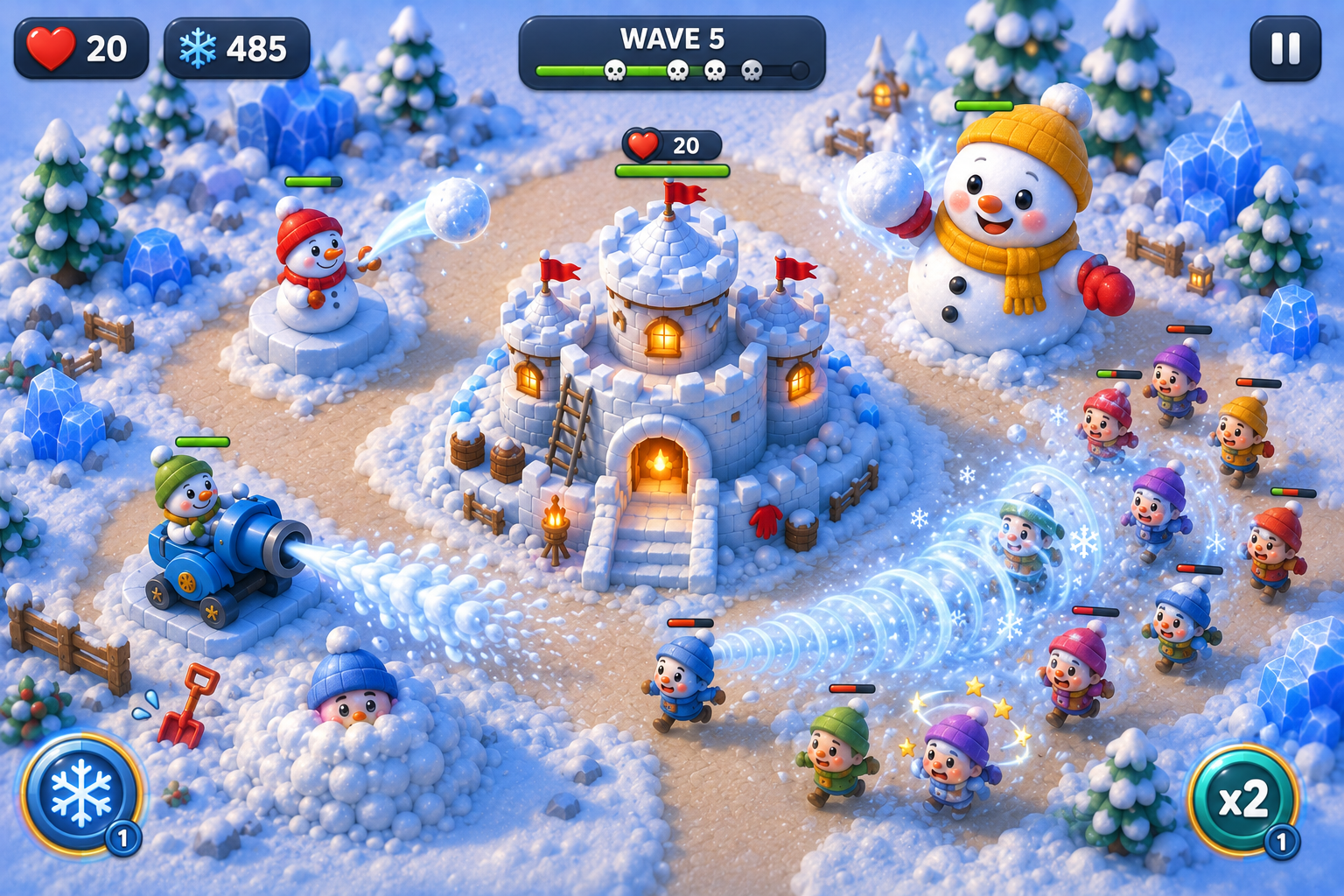
Snowball Fort Frenzy is a cheerful, kid-friendly mobile tower defense. It's always snowing, so you dig and pack snow into a team of snow-throwing defenders, and hold your fort against waves of rival kids who charge in for the world's friendliest snowball fight. Nobody gets hurt: a "splatted" kid just tumbles into a soft pile of snow and runs off laughing.
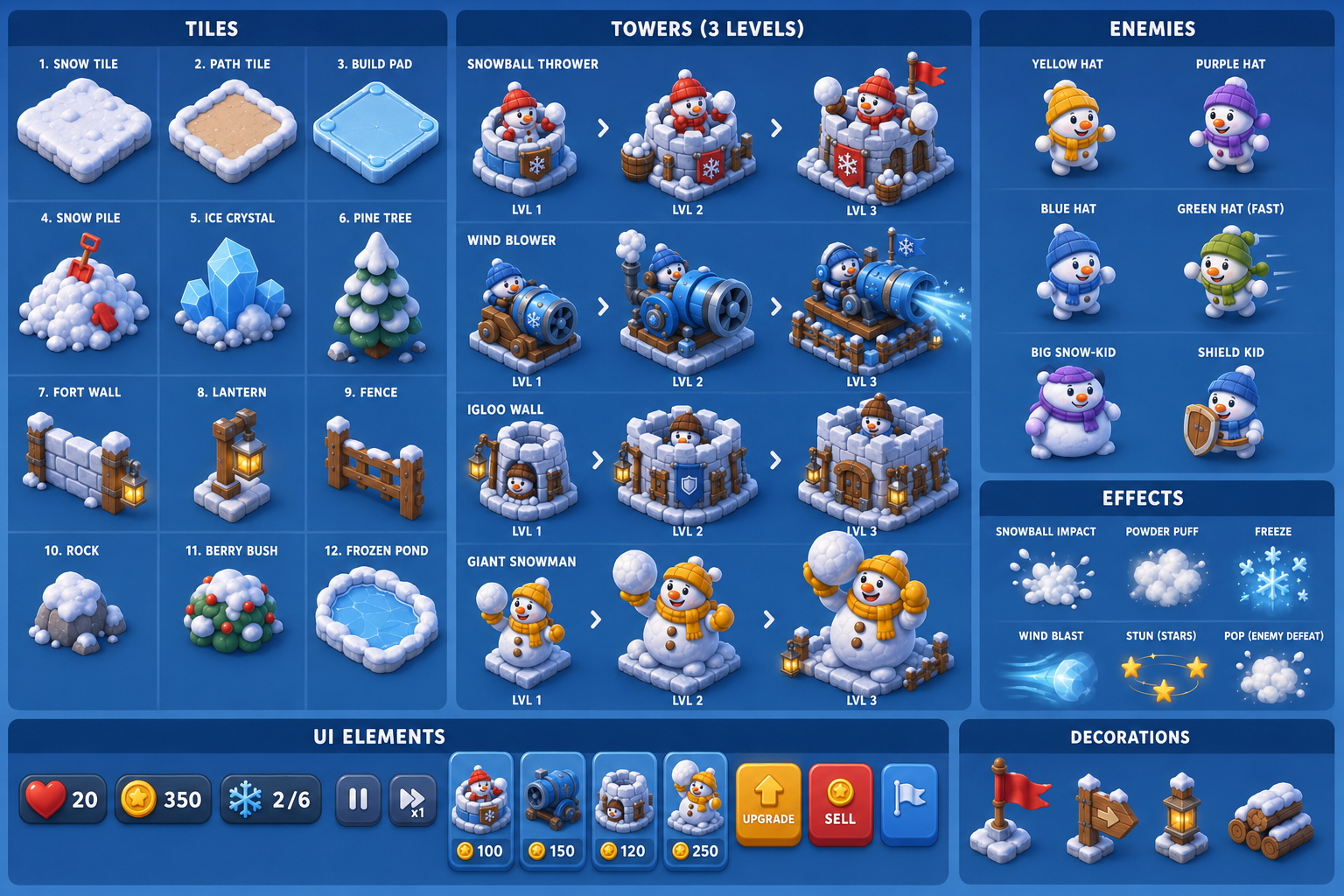
This entry is a complete pre-production design package: -a Game Design Document -a Player Journey Map of the first 15 minutes -a Visual Concept Package -a Production Plan
Four artifacts that tell one coherent story about a game that's ready to be built.
How I built it
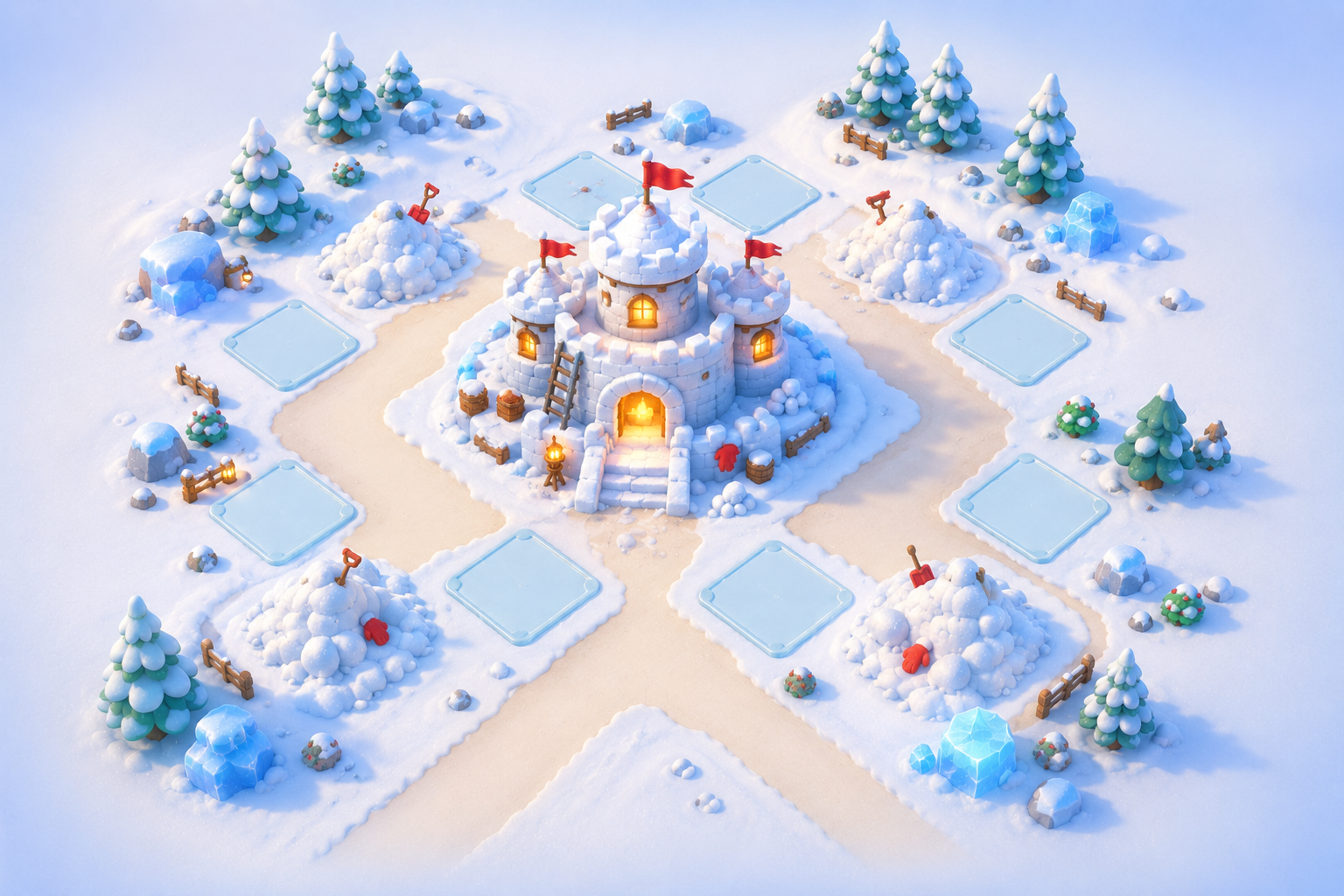
I designed it from the player outwards. First I locked a single, easy-to-learn core loop and one clean resoutant to pick up but still full of real decisions. Then I built the world's look as concept art and gameplay mockups to lock a consistent, toy-like winter style. I mapped the first fifteen minutes beat by beat, tracking not just what happens, but how it feels, and finished with a production plan grounded in what a mobile build actually needs, MVP first.
Challenges I ran into
Making a tower defense that's non-violent but still has real stakes was harder than it sounds, the tension had to come from clever planning, not from combat. I also had to fight my own instinct to over-complicate: the game lives or dies on staying simple enough for a kid to grasp in seconds while still giving strategic players a real decision on every wave.
Two artifacts stretched me the most: the Player Journey Map, which forced me to think about the player's emotions minute by minute rather than just listing features, and the Visual Concept Package, where getting every piece of art to feel like one cohesive game took far more iteration than I expected. The constant thread through all of it was coherence, making sure the design, the art, and the production plan never contradicted each other, so the whole package reads as a single, believable game.
Accomplishments that I'm proud of
A warm, instantly recognizable identity in a genre that rarely has one. A single resource that still creates a meaningful choice on every single wave. And a package that feels like one game, the words, the art, and the plan all line up.
What I learned
This was my first time treating a game as a full pre-production package rather than just an idea in my head, and putting it all on paper changed how I think. I learned how much a game's first 30 seconds matter, and how mapping a player's emotions over time reveals pacing problems you'd never catch from a systems list. And I learned that constraints are a gift: choosing one resource, one clear loop, and a kid-friendly tone made every other decision sharper and the whole design stronger.
What's next for Snowball Fort Let it snow.
The next step is to bring the core loop to life in Meta Horizon Worlds and put it in front of real players to confirm the simple question: is it fun? Once the dig-build-defend loop proves itself, I'll grow the game outward, the full defender lineup and the boss, three upgrade levels, and new snowy locations that each play a little differently. After that come the reasons to keep coming back: an endless Blizzard Mode with leaderboards, daily challenges, and collectible fort decorations. Further down the road, I'd love to add friendly 2-player co-op and visits to a friend's fort, turning one snowball fight into a whole neighborhood of them.
Built With
- claude


Log in or sign up for Devpost to join the conversation.