Inspiration
Sledding is one of the first ways most of us ever went fast. We wanted to combine this feeling of nostaglia, and turn it up to 11! Go downhill at incredible speeds, but be sure to not bump into any obstacles! We wanted to bring that feeling to VR without a single button to learn: your hands hold the brakes, your body leans into the turns, and the snow tells you how fast you are going. Sitting down also turned out to be a gift for comfort, because a seated rider on a sled has a steady frame in front of them, which is exactly what keeps speed in VR comfortable.
What it does
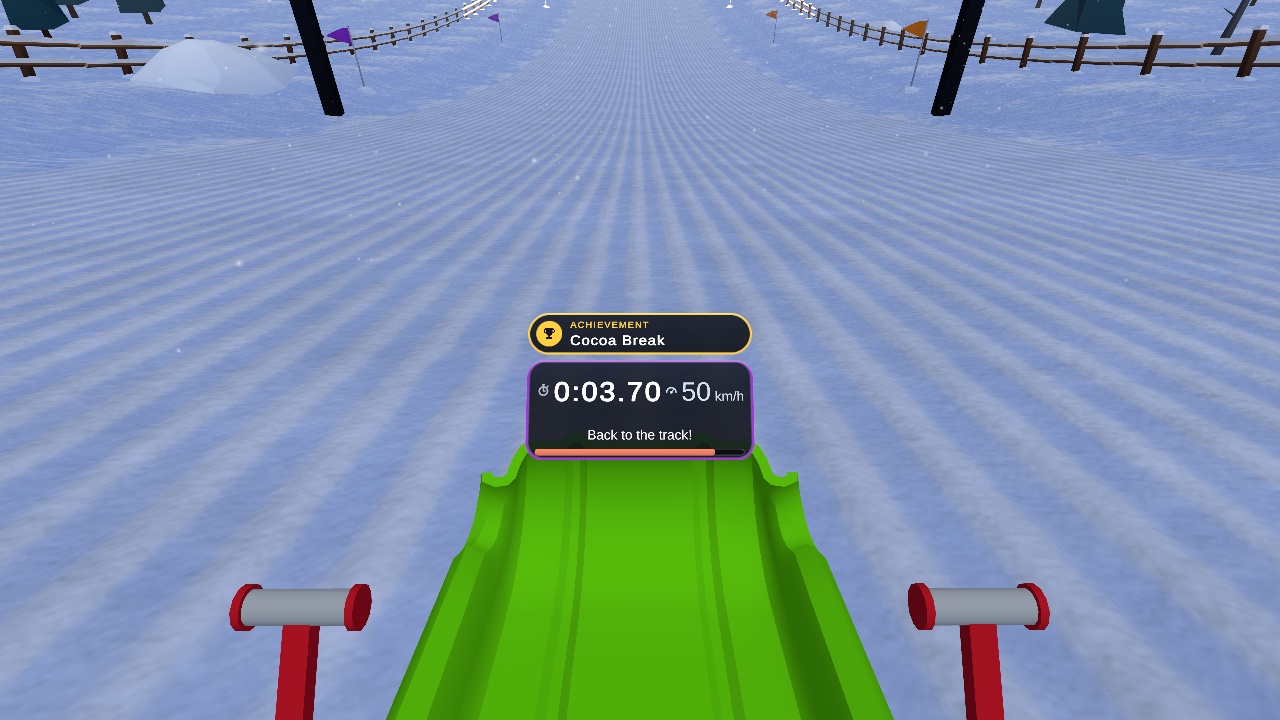
SnowRush is a seated VR sled race. You sit on a sled with a brake handle on each side. Pull one handle to steer, and both for a hard stop. Make sure to lean into corners to carve up to 60% sharper!
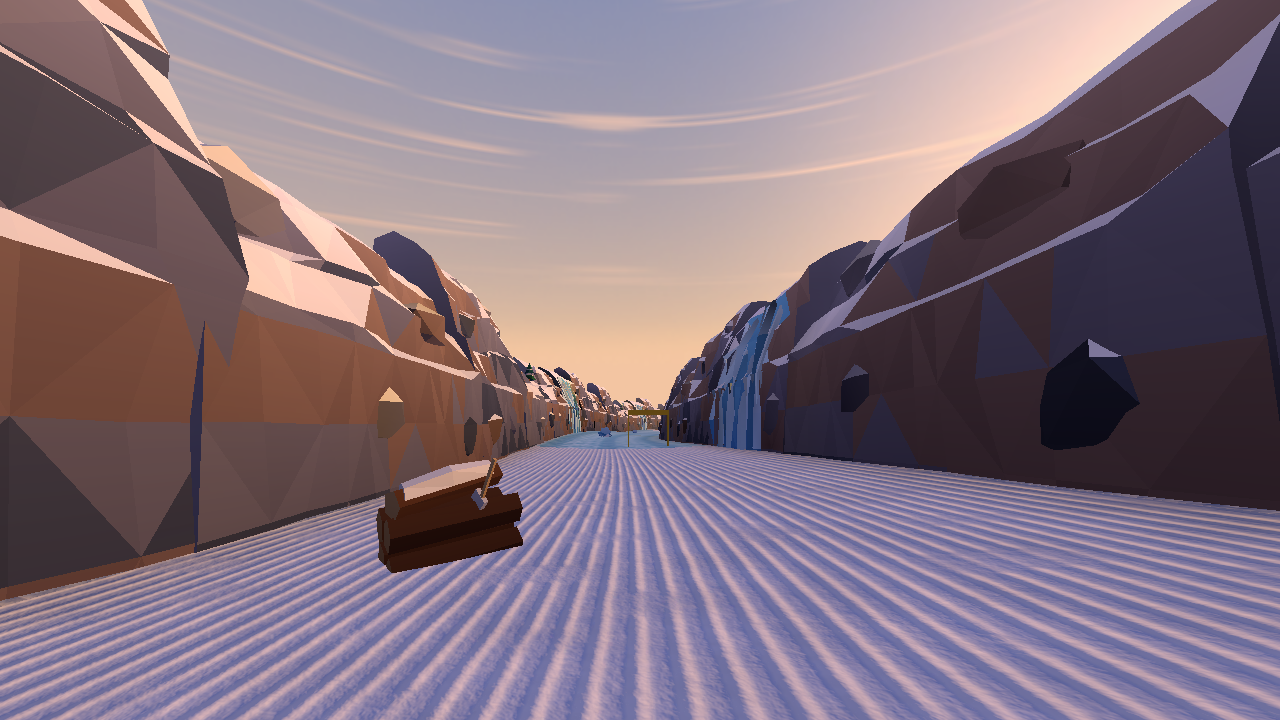
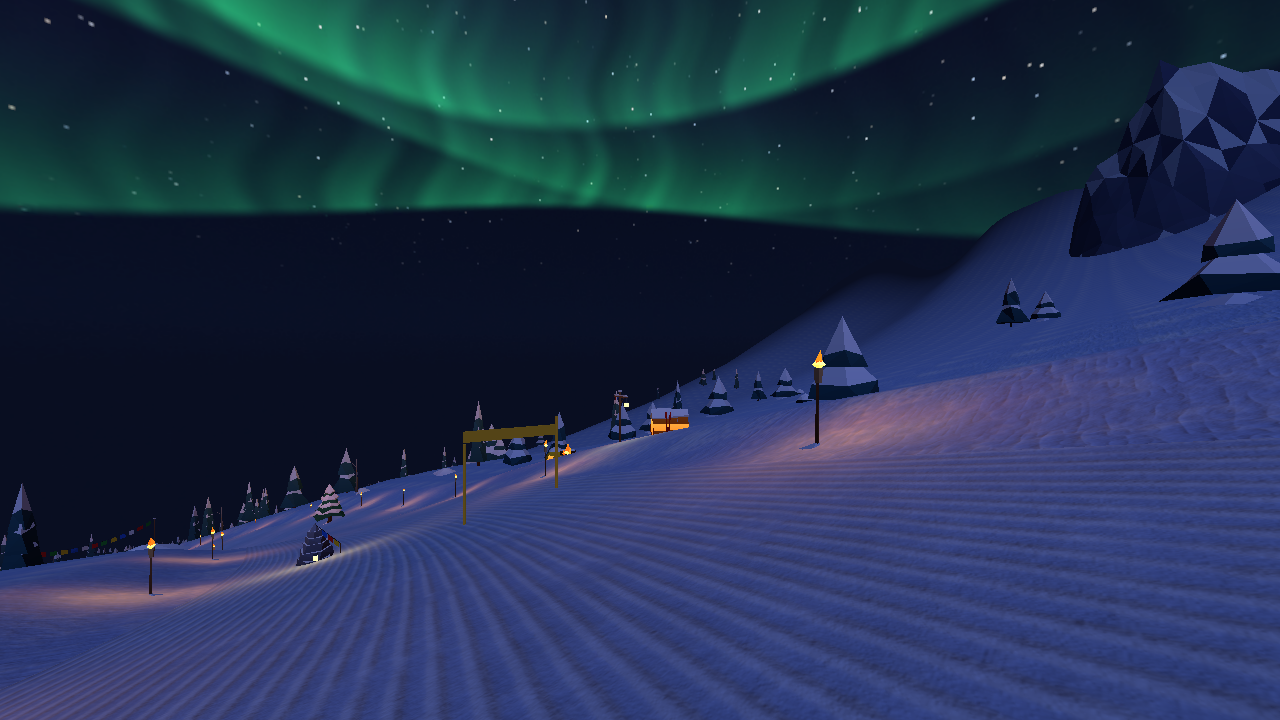
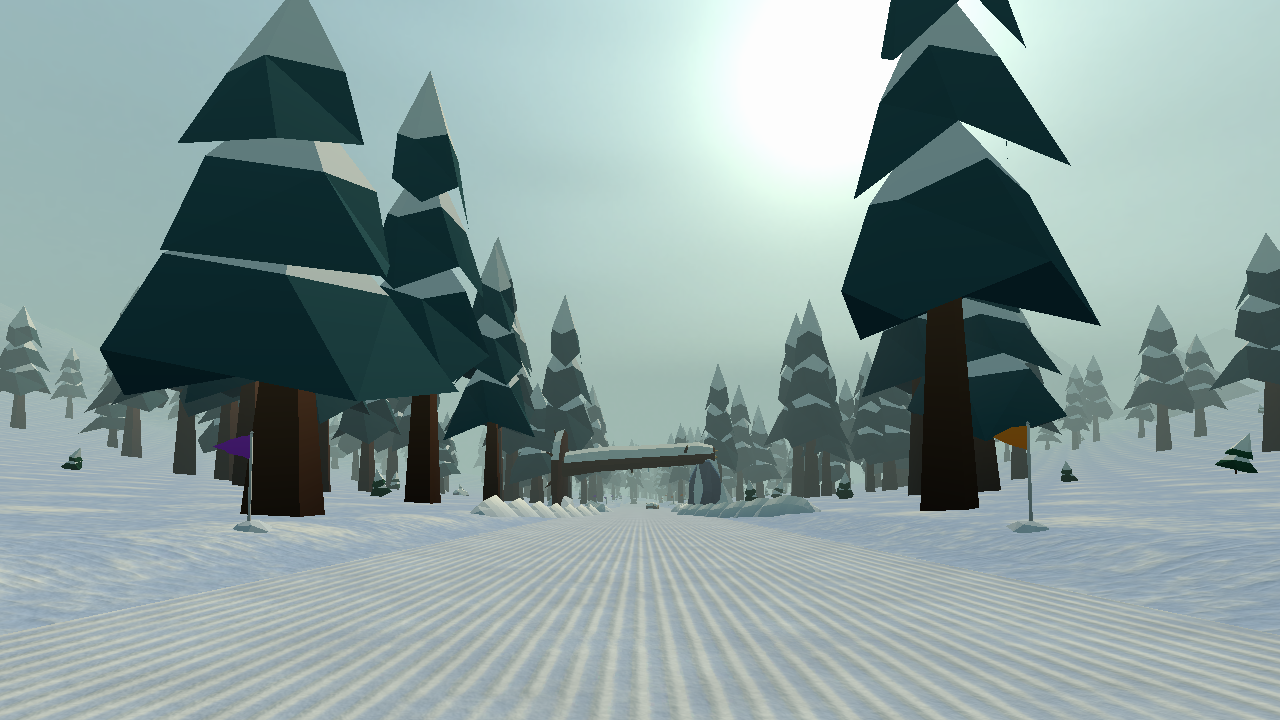
There are eight runs, each with its own place, light and twist:
- Kids Hill: a wide sweep, a pine slalom and a squeeze between two rocks
- Gully: a steep, narrow chute with bumps through the bends
- Long Drop: a long, fast run with three kickers
- Market Street: a village at dusk with alleys under 6 m wide
- River Run: a frozen river at golden hour, where you pick your line on the snow and hold it across the ice
- Torch Lane: a night run lit by torches and the aurora
- Old Growth: a forest of giant trunks to thread, and fallen ones to duck under
- Storm Face: one steep pitch in a storm, with an avalanche chasing you down
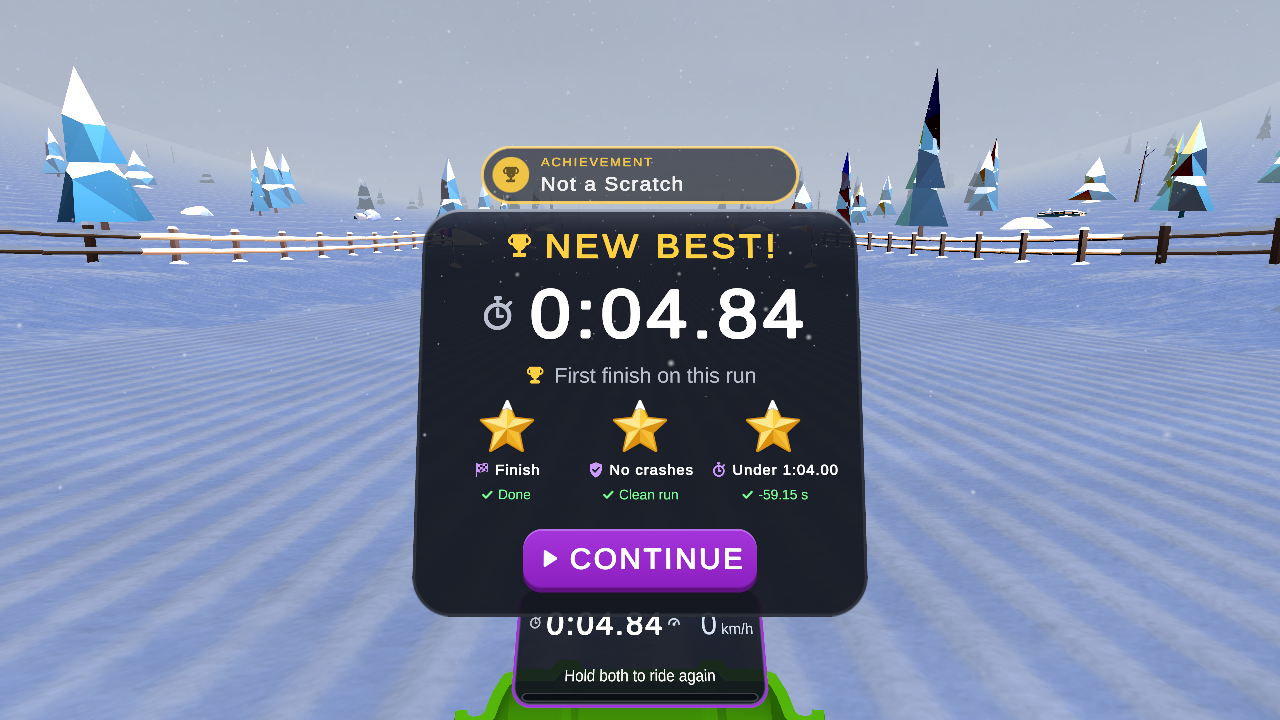
Each run takes about a minute and restarts instantly. Every run has three stars (finish, ride without hitting anything, beat the fast time), and there are 25 achievements to unlock.
How we built it
- Unity 6 with URP and OpenXR, using the XR Interaction Toolkit and XR Hands, so one project builds for Meta Quest and other OpenXR headsets from a single build window.
- Our own sled physics: gravity along the slope, rolling resistance and air drag, speed-dependent steering, banked bends, ice with low grip, walls that scrape off speed, and kickers with real airtime. No auto-steer: the handles and the slope are the only things that turn you.
- Levels generated from code. Each run is a layout script: a path, obstacle rows, ice and wall zones, props and a mood. A scene builder turns it into a playable scene, so changing a run is an edit and a rebuild, not an afternoon of dragging objects around.
- A test rider. A bot rides every run with the same physics as the player and checks that every obstacle is visible 2.5 seconds ahead and that there is always a clear line at least 3 m wide. It also sets the star times.
- Eight low-poly model kits (village, market, mill, summit, rescue, alpine, forest and mountain) created in Blender.
- Mobile-friendly lighting: one real-time light per run, baked lighting, painted skies and glow sprites instead of real-time lamps, so night runs full of torches stay fast on standalone headsets.
- 3D sound design: a hiss for each runner, wind from the direction of travel, and trees and flags that whoosh past in 3D, louder and higher the faster you go.
- AI coding agents (Claude Code) helped with the layout scripts, the model kit scripts, the validator and the tests, while we focused on design and on tuning the game feel.
Challenges we ran into
- Speed without nausea. We wanted real speed, not a gentle ride. The answers were a seated pose, a sled that stays in view as a stable frame, a vignette that closes in with speed and turn rate, and a sled model that lies flat on the snow instead of tilting with the view.
- Hands that can always grab. Pinch and grab gestures normally come from a runtime's hand interaction profile, but this limited the ways users can grab things. We wrote our own grab detection from the raw hand joints (a thumb-to-index pinch or a closed fist), so tracked hands can grab the brakes in any way..
- Ice that feels like ice and is still fair. On bare ice, steering drops to a quarter of its strength on snow and grip to 12%. That only works if you can read it, so the ice fades in over about 24 m and each sheet is placed so the line is chosen on the snow before it.
- Removing the steer assist. Early builds automatically steered you onto the track for easier playthroughs. Taking it out made the game much better, but every run had to be re-tuned so the levels.
- An avalanche that is scary but fair. It had to feel close without catching a decent rider, so the test rider rides Storm Face with hard braking at different moments to make sure only a real mistake gets you caught.
Accomplishments that we're proud of
- Steering a sled with your hands feels natural within seconds. People start by pulling the handles and simply get it.
- Eight runs that each feel like a different place, from a sunny kids' hill to a night under the aurora to a storm with an avalanche behind you.
- The sound. Hearing each runner under you and the trees whipping past does as much for the sense of speed as the visuals.
- A pipeline where every run is generated and checked by a bot rider, so a layout change is safe to make the day before a deadline (which we did plenty)
What we learned
- In VR, the controls should be objects in the world. A handle you can grab explains itself better than any tutorial screen.
- Small physical details sell speed: the snow in the air, a runner's hiss, a whoosh past your ear, a landing that sinks you into the snow.
- Comfort is design work, not a settings menu. Most of it came from the seated pose and the sled as a fixed frame.
- Generating content from code, and testing it with a bot, lets a very small team iterate on levels much faster than hand-placing them.
What's next for SnowRush
- Getting more levels to create a full game with level packs.
- Leaderboards per run and friend challenges, so you can beat a friend's time.
- Ghost races against your best run and your friends' runs.
- An arcade version: a physical sled with real handles, seat motion and rumble, driven by the same input code.
- A map editor for you to create your own maps using splines and prefabs.


