
Inspiration
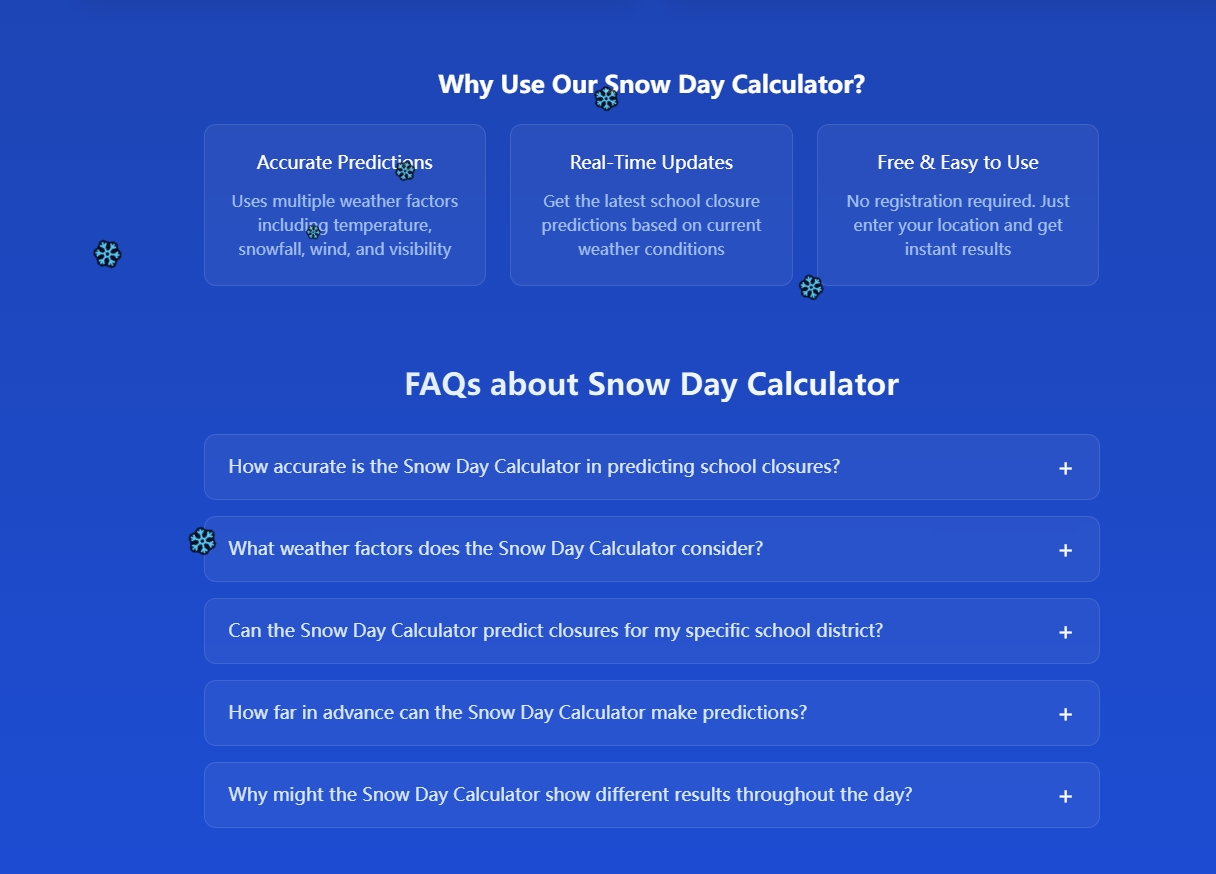
The inspiration for the Snow Day Calculator came from my childhood excitement about potential snow days. I wanted to create a tool that could help students, parents, and teachers predict the likelihood of school closures due to snow, blending technology with a bit of fun and utility.
What it does
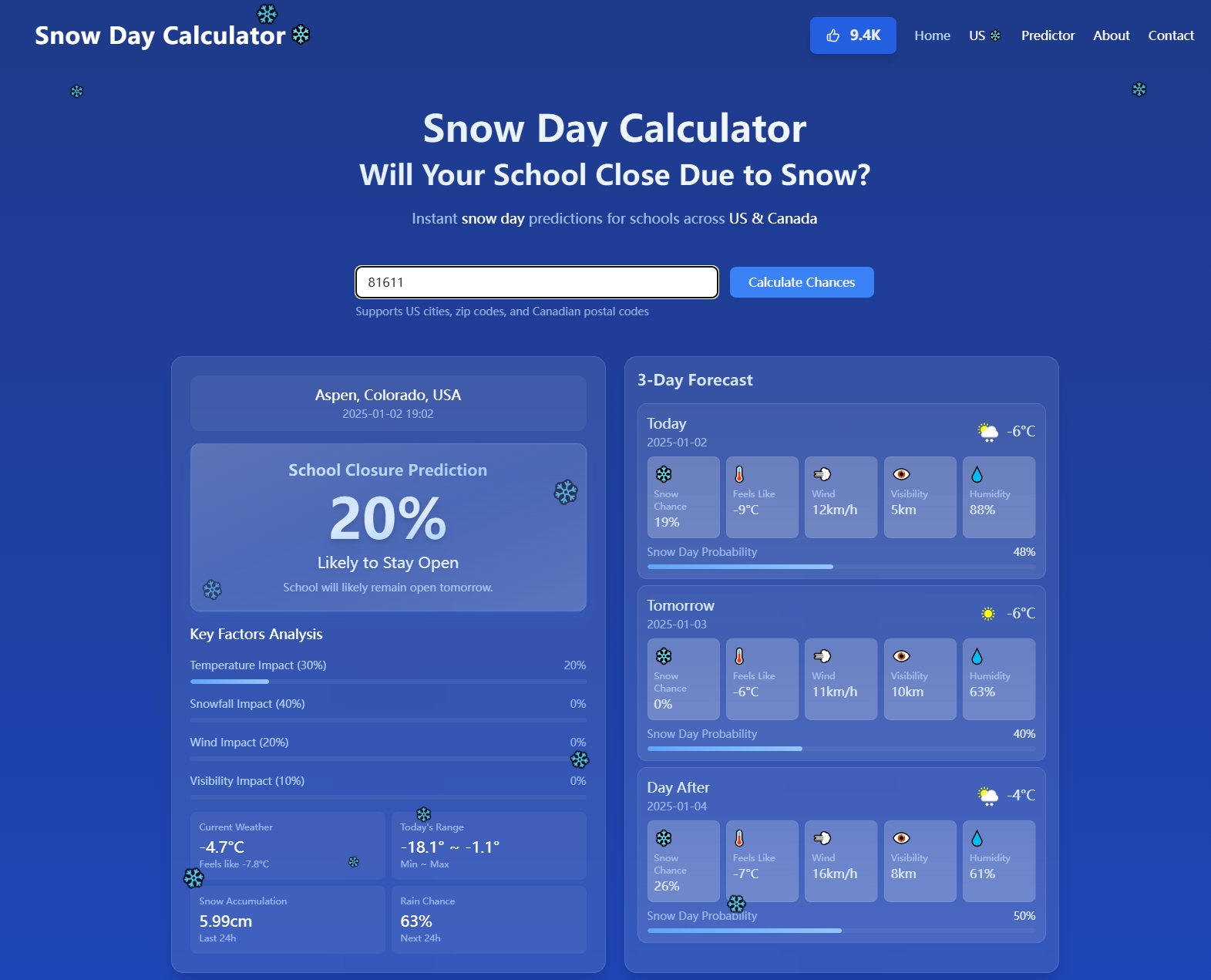
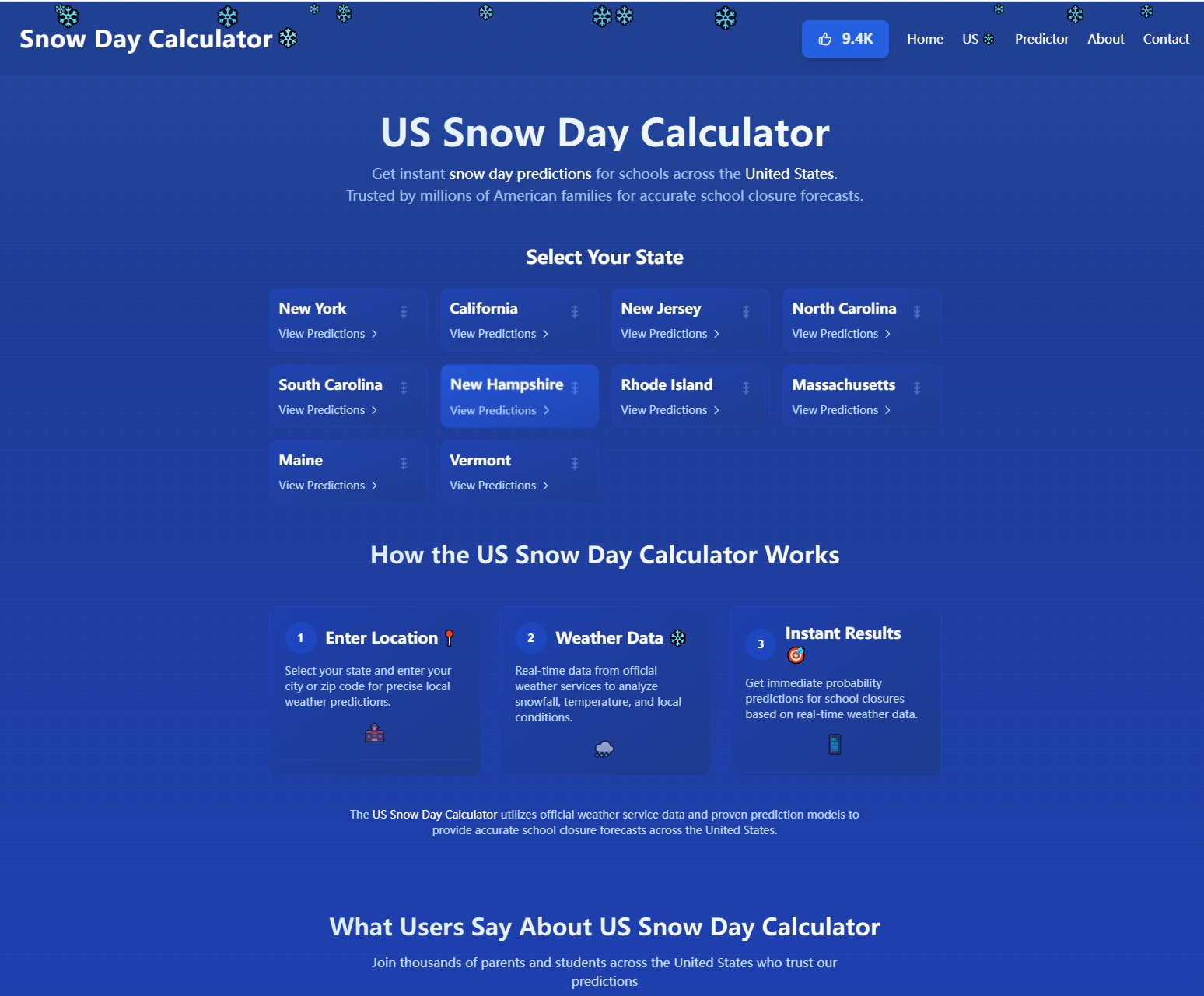
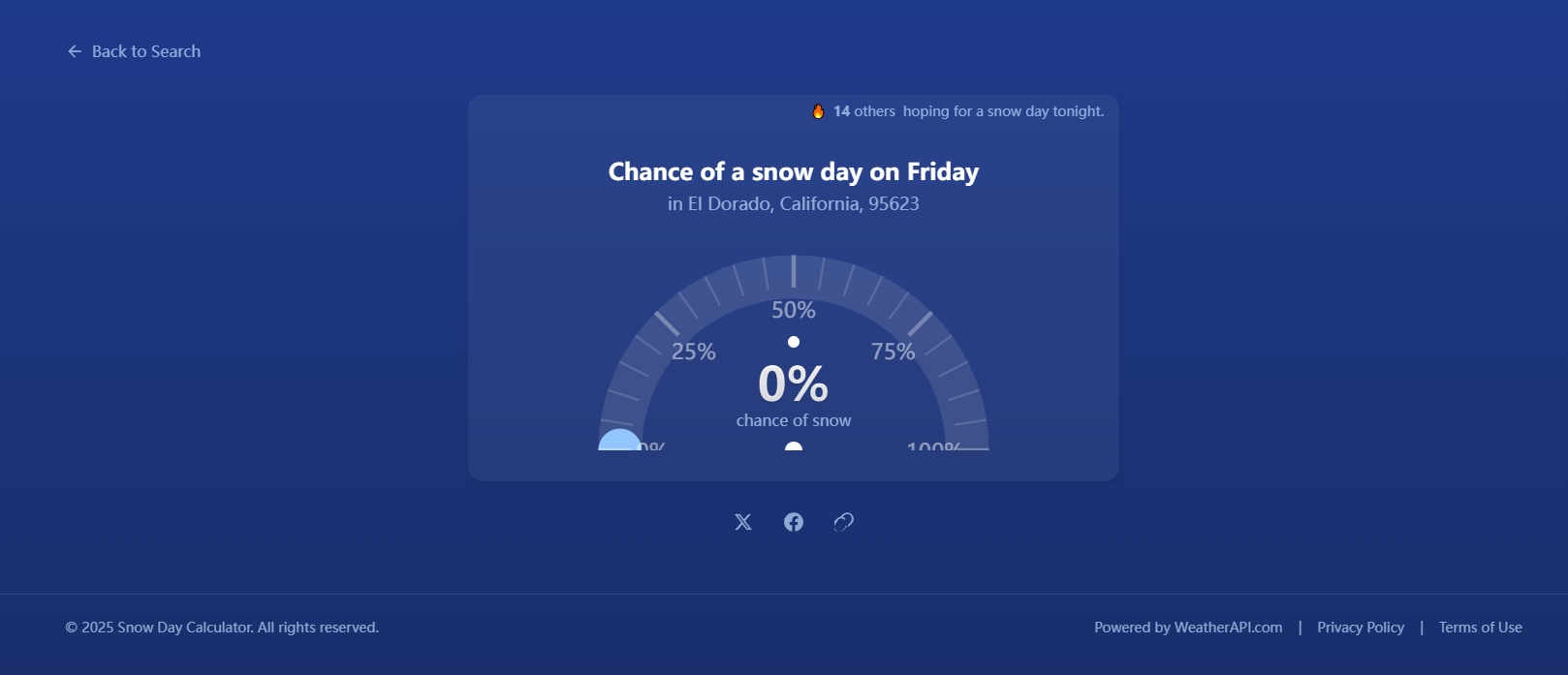
The Snow Day Calculator uses weather forecast data, historical snow closure patterns, and machine learning algorithms to estimate the probability of a snow day. Users input their location and some basic details about their school district, and the tool provides a percentage likelihood of a snow day.
How I built it
I built the Snow Day Calculator using the following technologies:
- Frontend: Built with Nuxt3 for a performant and modular structure and styled with TailwindCSS to create a responsive and modern design.
- Backend: Integrated APIs using Nuxt3's server routes to fetch and process data.
- Data Sources: Integrated weather APIs (e.g., OpenWeatherMap) to fetch real-time weather data.
- Machine Learning: Used a Python-based model to process historical snow day data and deployed it as a REST API for prediction integration.
- Hosting: Deployed the application on Vercel, leveraging its seamless Nuxt3 compatibility.
Challenges I ran into
- Handling dynamic server-side rendering (SSR) in Nuxt3 while ensuring smooth API integrations was a steep learning curve.
- Styling complex components in TailwindCSS required iterative design adjustments to maintain both responsiveness and aesthetics.
- Efficiently integrating Python-based machine learning predictions into the Nuxt3 framework demanded additional time for API optimization.
Accomplishments that I'm proud of
- Creating a responsive and fast application using modern web technologies like Nuxt3 and TailwindCSS.
- Successfully integrating machine learning predictions into the frontend for a seamless user experience.
- Ensuring the application performs well across devices and maintains accessibility standards.
What I learned
- How to effectively leverage Nuxt3's server routes and SSR for building dynamic and interactive applications.
- Advanced use of TailwindCSS for designing responsive, reusable UI components.
- Best practices for integrating external APIs and managing asynchronous data in Nuxt3.
What's next for Snow Day Calculator
- Improved UI: Enhance the user experience with more interactive and animated components using Nuxt3's transitions and TailwindCSS utilities.
- Mobile Optimization: Ensure the calculator is fully optimized for mobile users, leveraging TailwindCSS's responsive design features.
- AI Integration: Move the machine learning model entirely to serverless functions for faster and more scalable predictions.
- Localization: Expand the tool to support multiple languages and regional weather patterns, starting with popular regions prone to snow.
Built With
- nuxt3
- tailwindcss


Log in or sign up for Devpost to join the conversation.