-
-
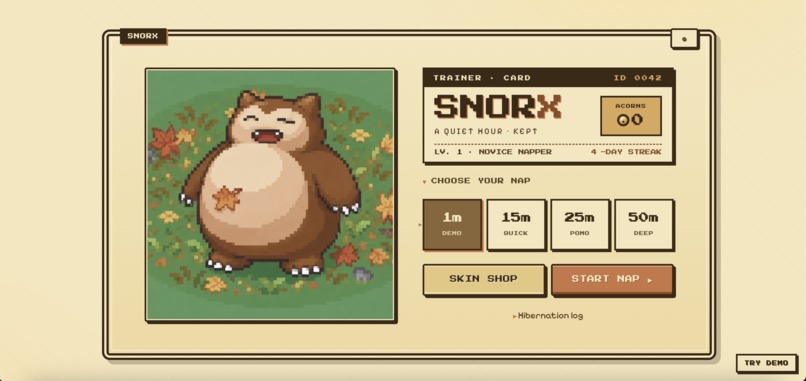
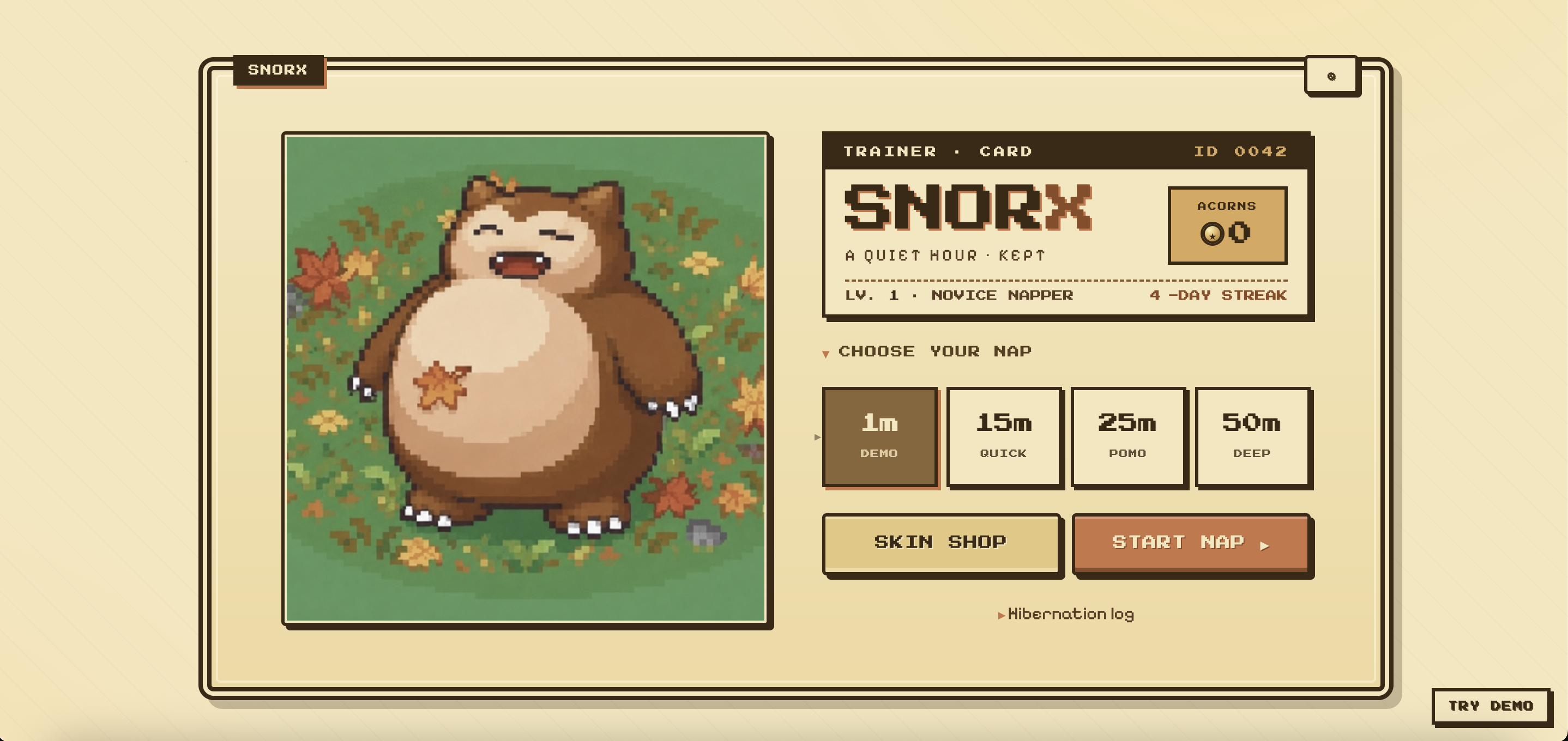
Onboarding page
-
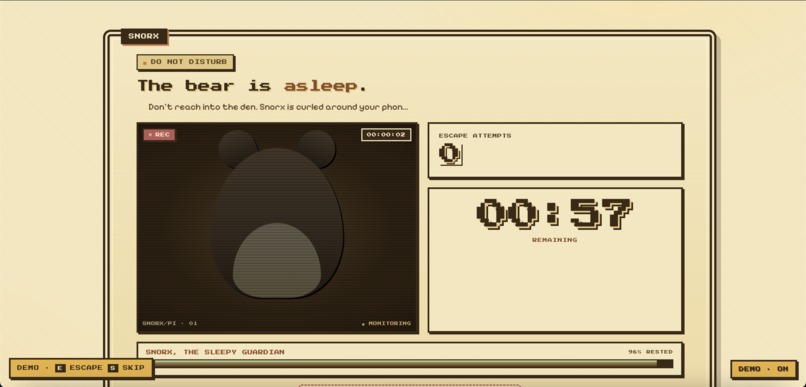
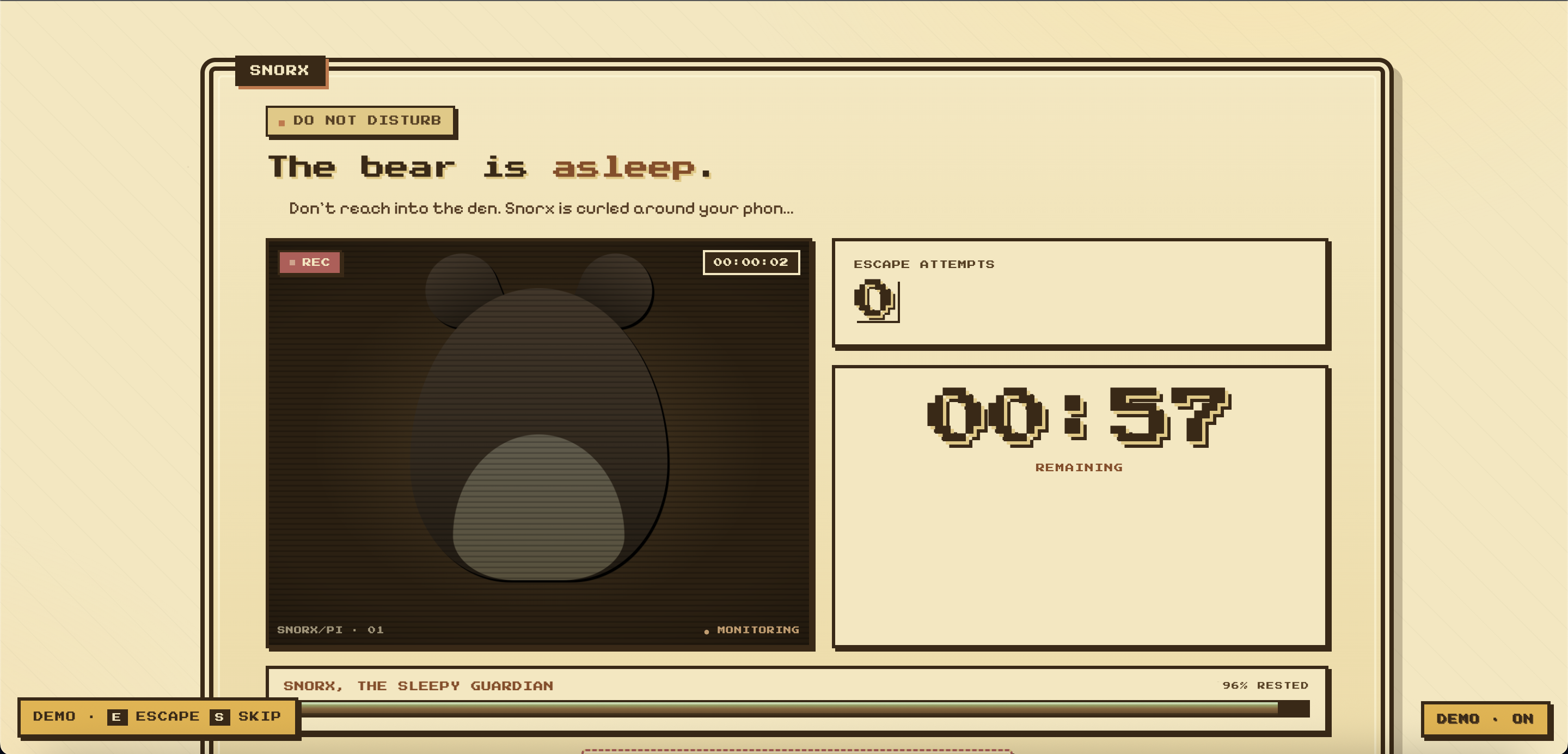
Timer Page
-
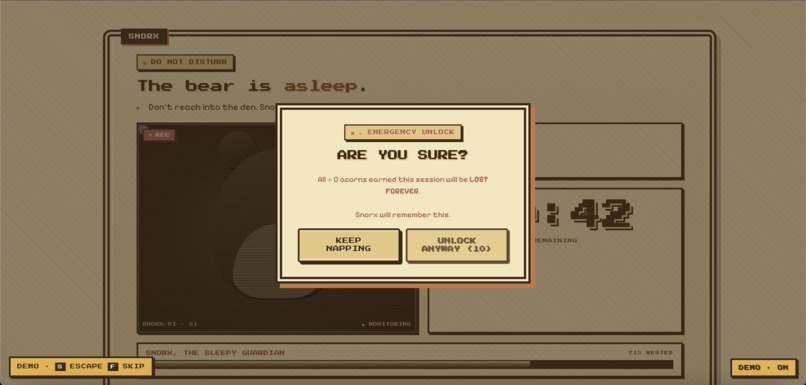
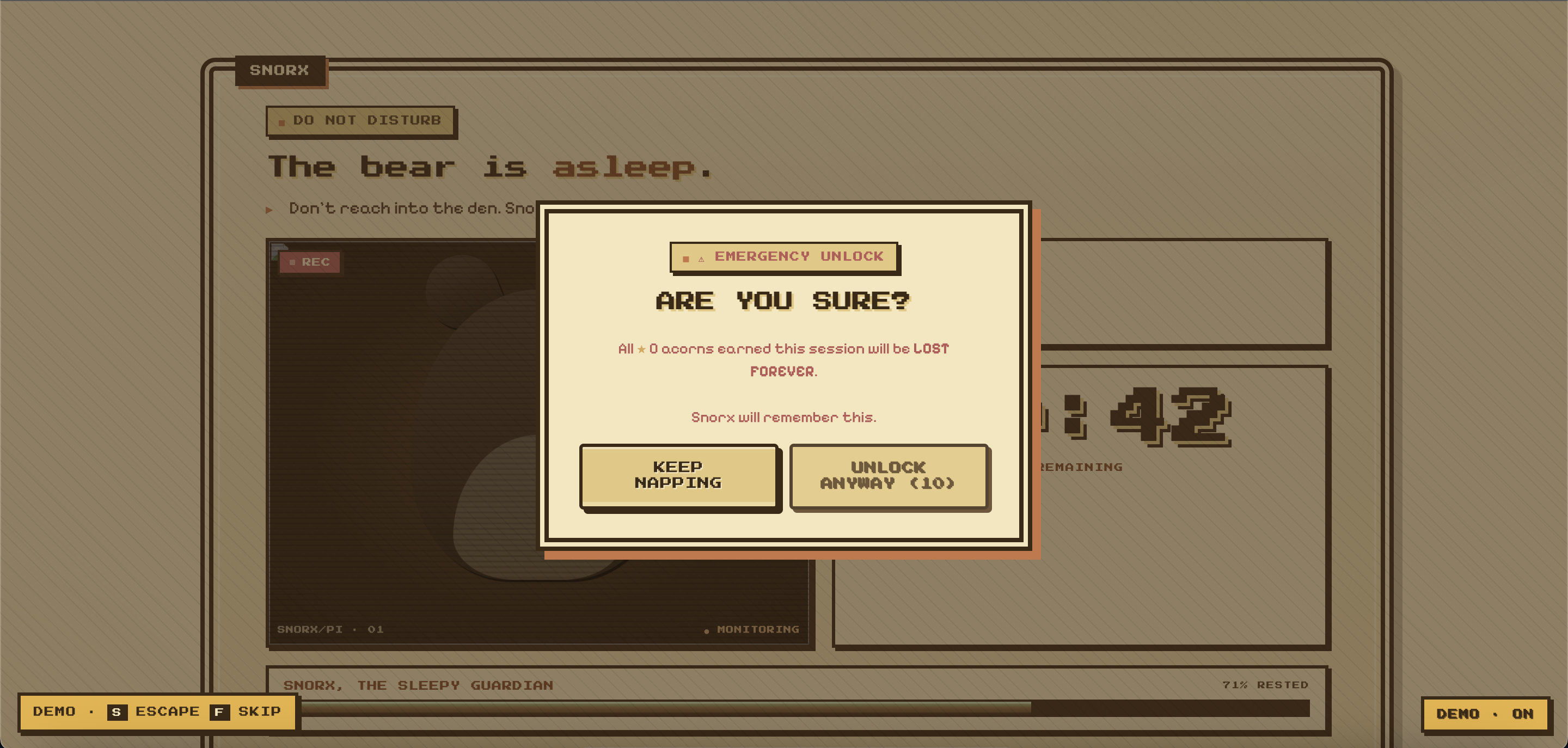
Emergency Quit?
-
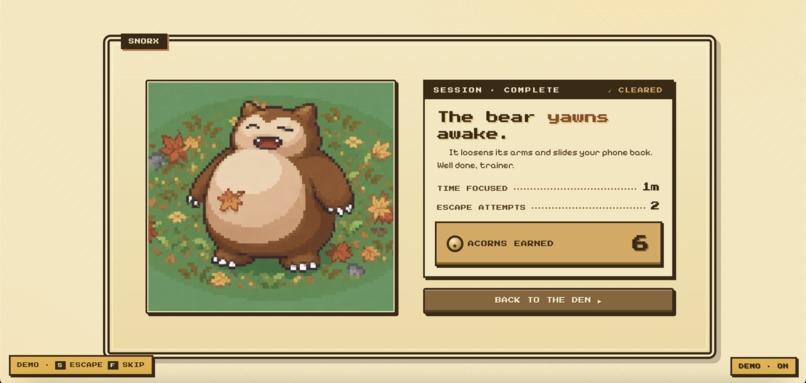
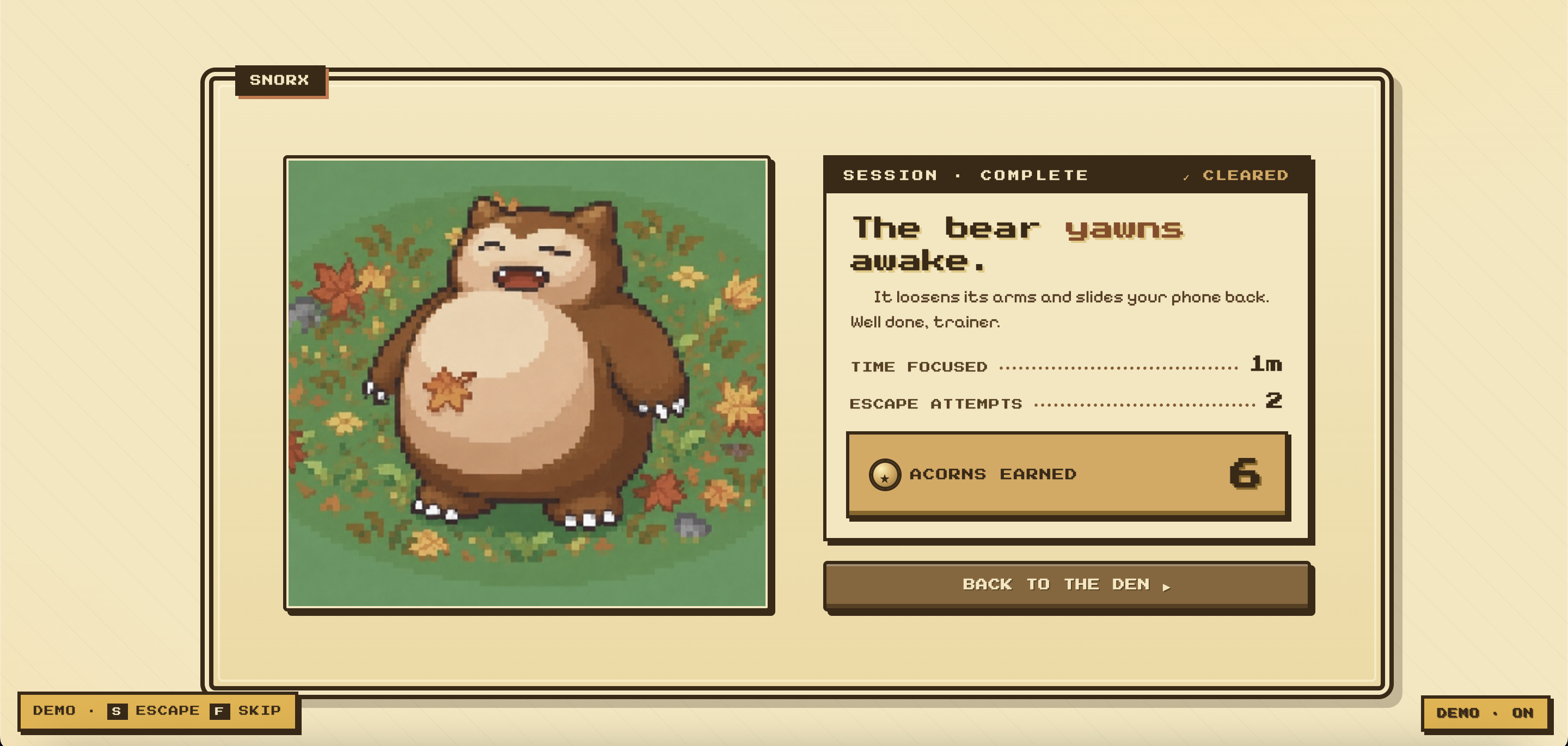
End screen
-
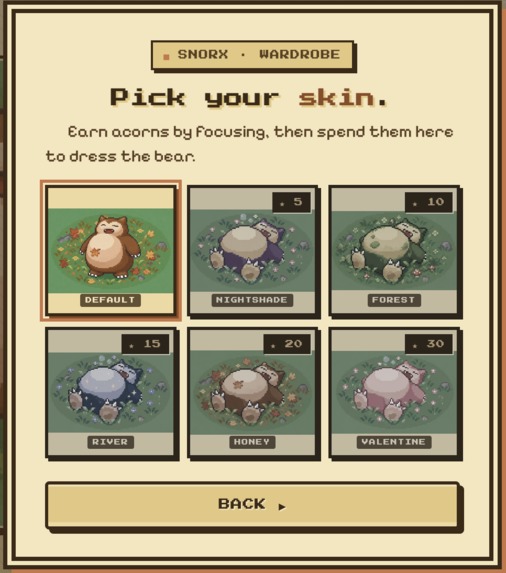
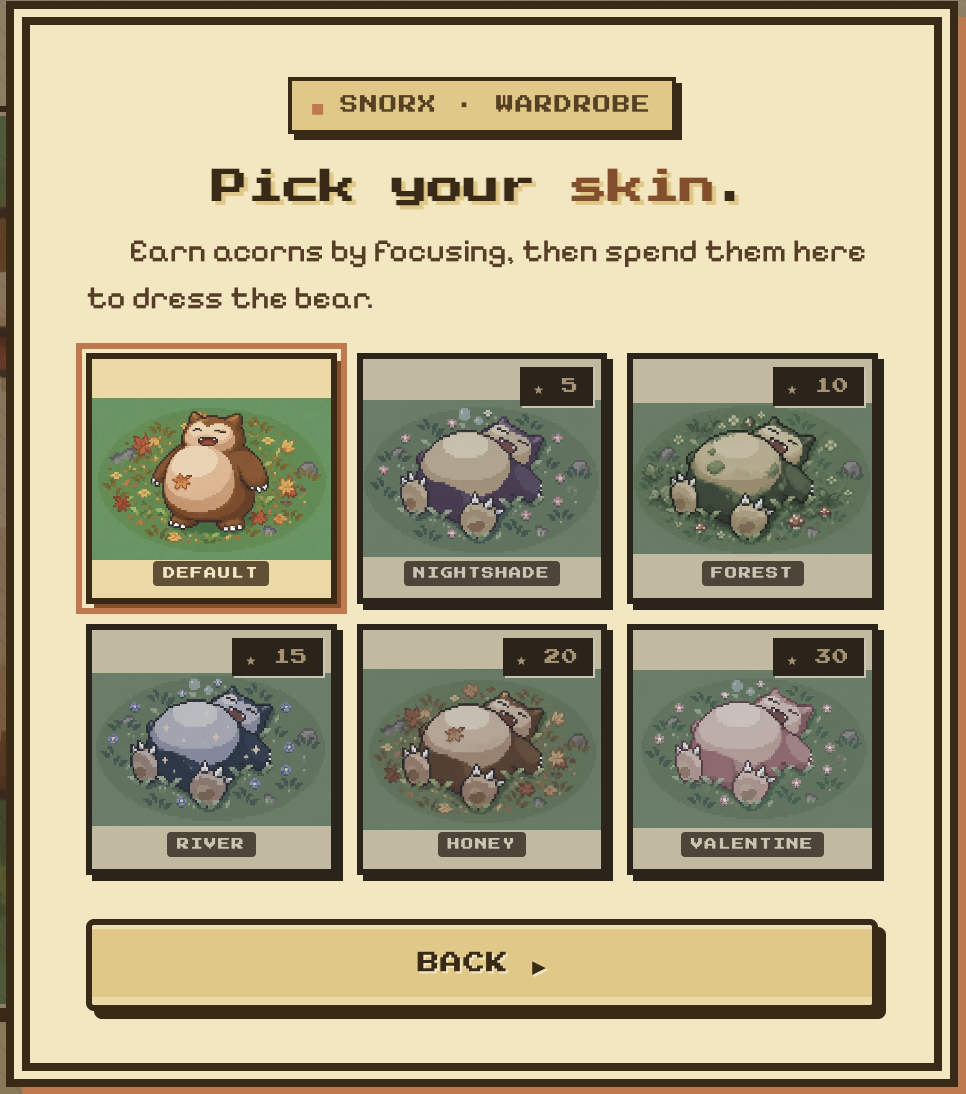
Skin Shop!
-
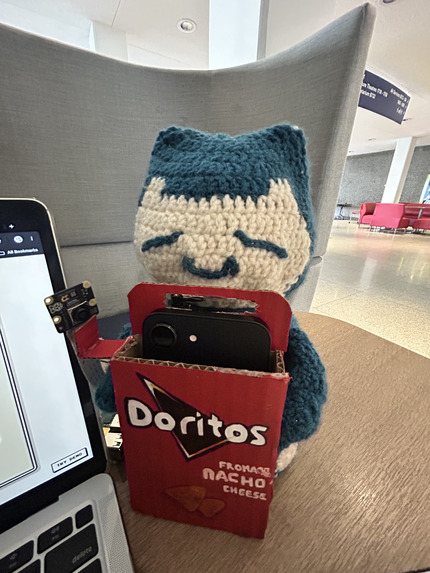
Figure
Inspiration
The average teen spends 7 hours a day on their phone. Do the math, by 80, that's over 10 years of life. Gone scrolling.
The problem isn't a shortage of screen time apps. It's that every one of them has an "ignore" button. The phone is policing itself, and the phone always loses.
We were also inspired by our school's phone hotel, a physical box where phones go during class, and you're marked absent if yours isn't in it. It works because there's no app to override. So we asked ourselves: what if locking your phone was physical, not digital? And what if the jail looked back at you?
What it does
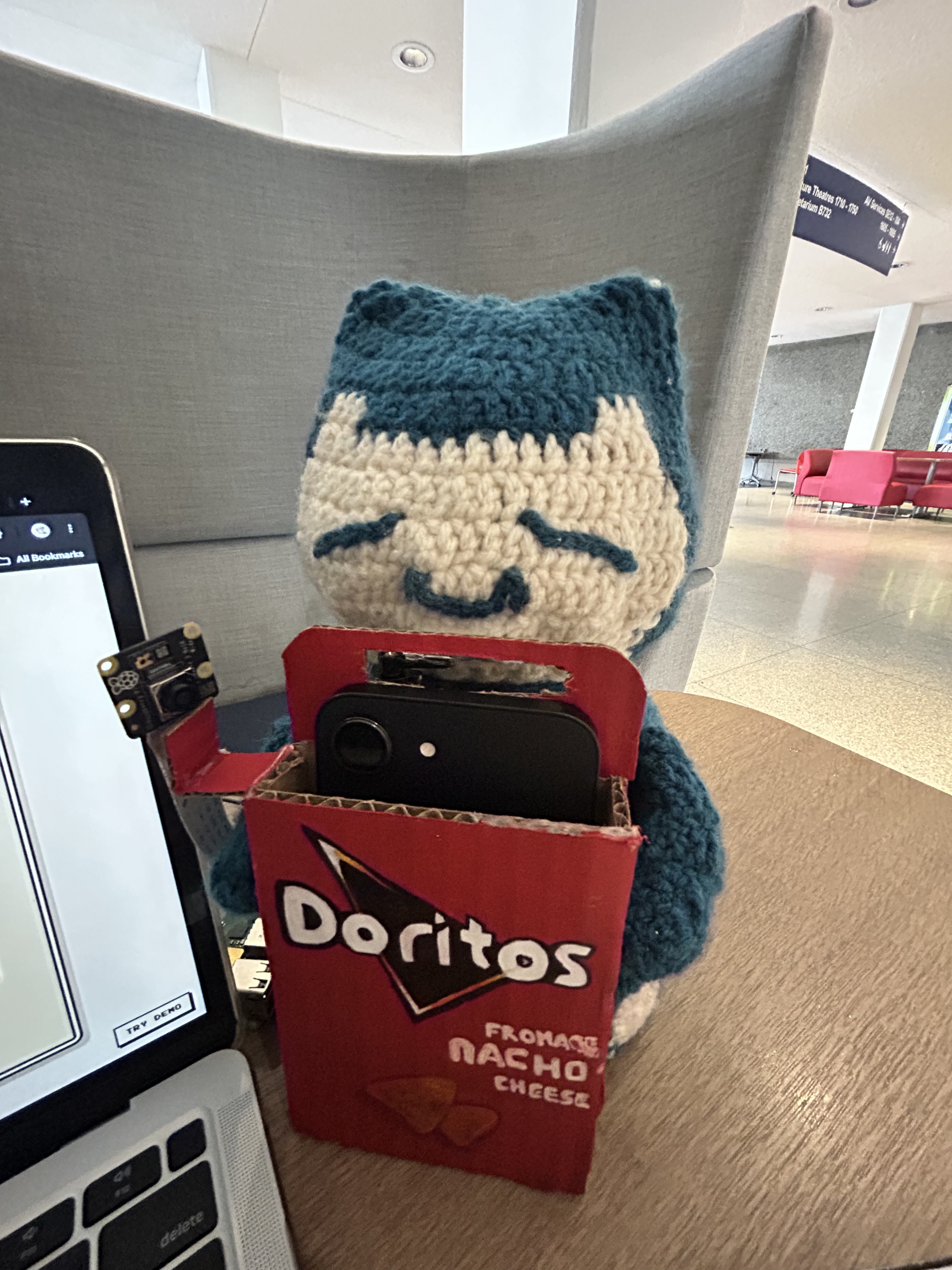
Snorx is a combination of both software and hardware. The Raspberry Pi in the Snorx is connected to a servo, webcam, placed on the crochet-snorlax figure.
You open the web app on your laptop, set a focus timer, and slide your phone into Snorlax. A camera inside confirms the phone is in place, and a servo swings shut to lock it. If you reach in to grab your phone early, Snorlax catches you on camera and plays a shame sound from your laptop. When the timer hits zero, Snorlax unlocks and you earn acorns, the in-app currency you spend on new skins. Focus longer, look better.
How we built it
A Raspberry Pi 4 runs a Flask + OpenCV server that controls one SG90 servo and streams the camera over MJPEG. A single vanilla-JS HTML page on the laptop talks to it over HTTP. Audio comes from ElevenLabs, stats persist in localStorage. No build step, no database, no cloud.
Challenges we ran into
The Raspberry Pi gave us hours of pain. SSH refused our password, host discovery on .local didn't work on BCIT's network, and we ended up resetting the password by editing userconf.txt directly on the SD card.
Once we got in, the venue WiFi blocked device-to-device traffic, so we switched to Ethernet direct between Pi and laptop and configured Internet Sharing on the Mac to bridge them.
Polishing the UI took over two hours of back-and-forth. We wanted minimal but warm, so Snorlax brown became the accent color and everything else got out of the way.
Crafting the snorx figure, by yarn took a significant amount of time but we endured through.
Accomplishments that we're proud of
We've wanted to ship a hardware-and-software project for a while. Most hackathon builds stop at the browser tab, software has gotten 100× easier in the last year, but hardware hasn't, because atoms still have to move.
We wanted to fight phone addiction with something you can hold, and somehow ended up with a crocheted Snorlax that eats your phone.
What we learned
We learned how a website actually talks to a Raspberry Pi, not magic, not "signals," but plain HTTP requests. Laptop asks, Pi answers. Same protocol that loads any web page. Once that clicked, the architecture stopped feeling intimidating and started feeling like LEGOs.
We also learned not to give up when the Pi wouldn't boot, when WiFi wouldn't connect, when crochet stitches came out wrong, when the camera saw nothing. We rebuilt each piece until it worked.
This project showed us how much more is possible when we stop treating hardware as out of reach. We have a list of follow-ups already.
What's next for SNORX
Standalone hardware. The biggest limitation right now is that snorx requires a nearby laptop to run the UI. We're prototyping a version with a small screen and battery directly on the device — no laptop, no setup.
Multiplayer focus sessions. Friends compete in shared focus blocks, see each other's acorn counts, send encouragement (or roast each other for short streaks).
Companion mobile app. For users who'd rather skip the laptop entirely, phone-out, app-on-secondary-device pattern.
Built With
- css3
- elevenlabs
- flask
- html5
- html5-audio
- http
- javascript
- localstorage
- mjpeg
- opencv
- picamera2
- pigpio
- python
- raspberry-pi
- rest-api


Log in or sign up for Devpost to join the conversation.