-
-
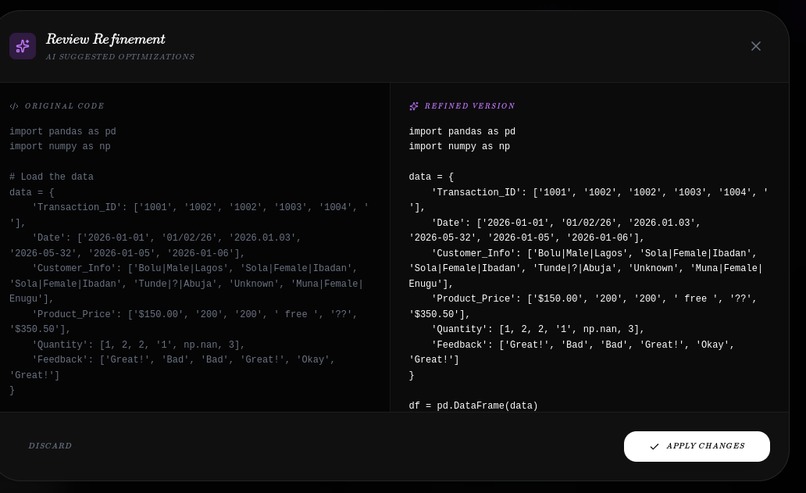
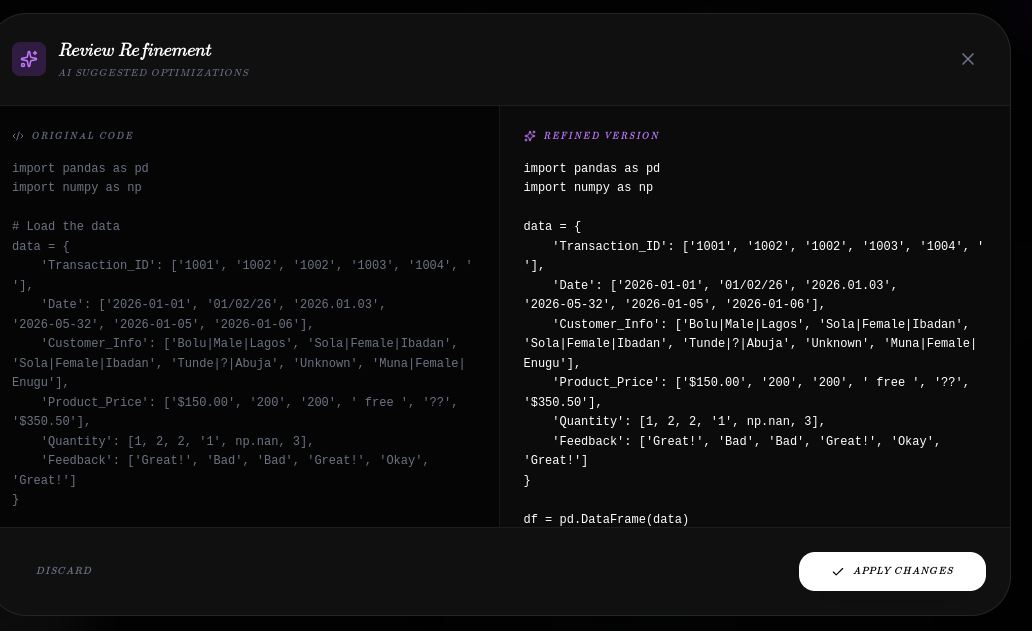
Smart Refinement: One-click AI optimization to ensure code follows strict production standards
-
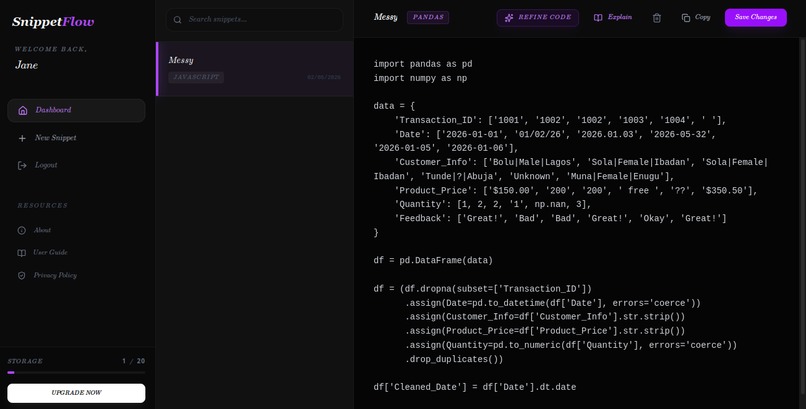
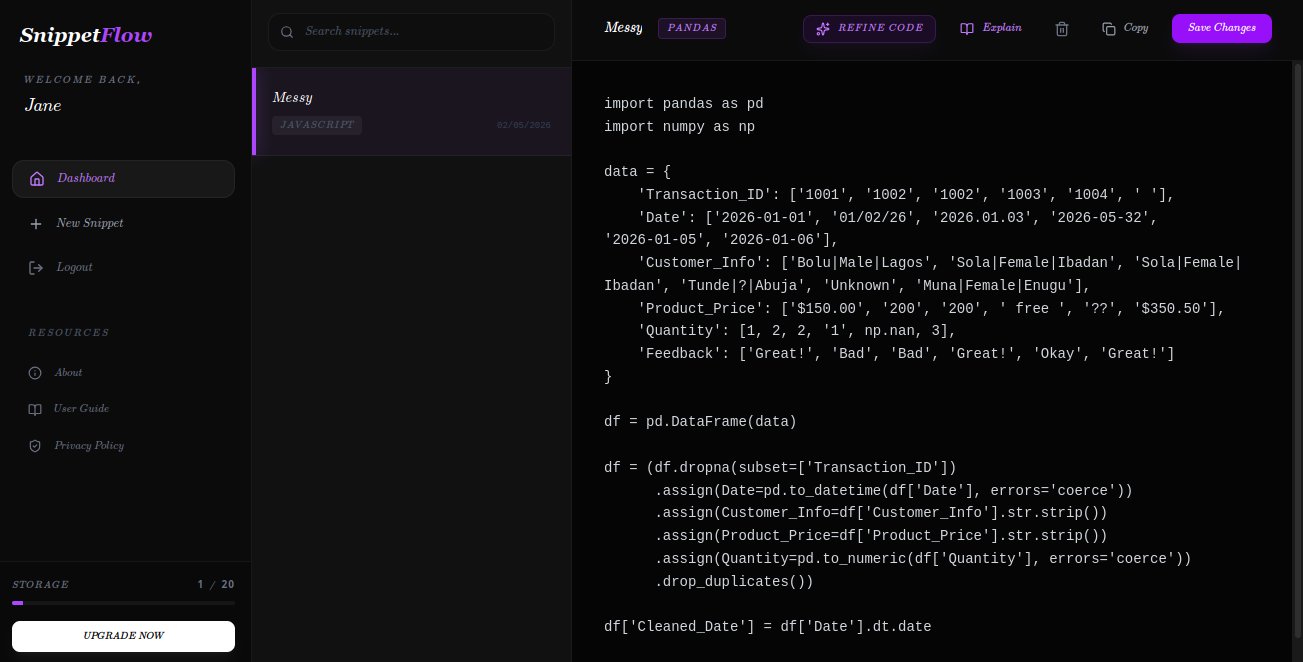
Centralized Code Intelligence: A high-fidelity dashboard for managing verified logic at scale
Inspiration
As AI becomes a daily part of the developer workflow, a new bottleneck has emerged: the "Verification Tax." We spend more time auditing AI-generated code for hallucinations and logic errors than we do writing it. I built SnippetFlow to bridge this trust gap creating a "verified" repository where code isn't just stored, but intelligently refined and deconstructed.
What it does
SnippetFlow helps developers clean, understand, and safely reuse AI-generated code. It allows developers to:
- Refine: Optimize code snippets for best practices in one click.
- Explain: Deconstruct complex logic into human-readable steps to eliminate guesswork. For example, a messy AI-generated React component with redundant hooks can be automatically simplified into cleaner, production-ready code with an explanation of every optimization.
- Organize: Securely store and categorize high-value, production-ready logic.
- Orchestrate: Use a multi-model failover system (Groq & Hugging Face) to ensure the platform is designed for high availability and resilient AI responses.
How I built it
The project is built on a modern, high-performance stack:
- Frontend: React 18 and Vite for sub-500ms interaction speeds.
- Backend: Supabase for real-time data and hardened Row-Level Security (RLS).
- AI Orchestration: A custom failover layer that switches between Groq (Llama 3) for speed and Hugging Face for reliability.
- Styling: Tailwind CSS with a focus on a high-fidelity "Linear-style" UI/UX.
Challenges I faced
The biggest challenge was architecting the AI Failover Logic. I had to ensure that if one API provider went down or hit rate limits, the user experience wouldn't suffer. Building the bridge between Groq and Hugging Face required careful handling of environment variables and state management to make the switch invisible to the user.
Accomplishments that I'm proud of
I’m most proud of creating an experience where AI refinement feels nearly instant. Developers can move from messy generated code to readable, production-ready logic in seconds without breaking workflow momentum.
What I learned
I learned the deep importance of Security-First development. When handling a user's proprietary code snippets, basic auth isn't enough. Implementing Supabase RLS taught me how to ensure complete data isolation so that every developer's "secret sauce" remains private.
For clarity, the demo video is visual-only. It demonstrates a real-time transformation from messy AI-generated code to refined production-ready code, followed by explanation generation and storage.
What's next for SnippetFlow
The roadmap includes a VS Code Extension to bring SnippetFlow directly into the IDE and a "Team Library" feature to help engineering teams share verified logic across their entire organization.
Built With
- groqai
- huggingfaceai
- javascript
- react
- supabase
- tailwindcss
- vercel
- vite

Log in or sign up for Devpost to join the conversation.