-
-
slide 1
-
slide 2
-
slide 3
-
slide 4
-
slide 5
-
slide 6
-
slide 7
-

slide 8
-
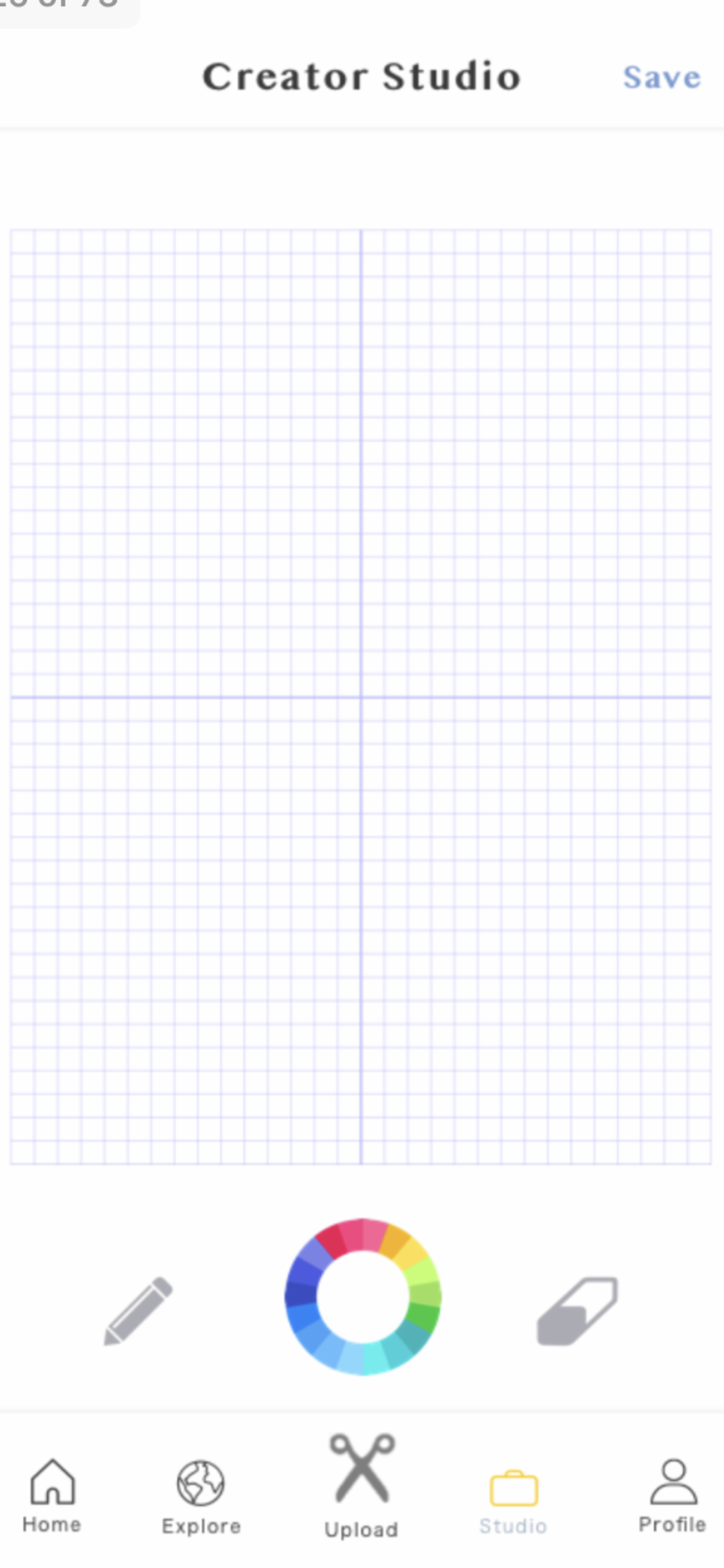
creator studio
-
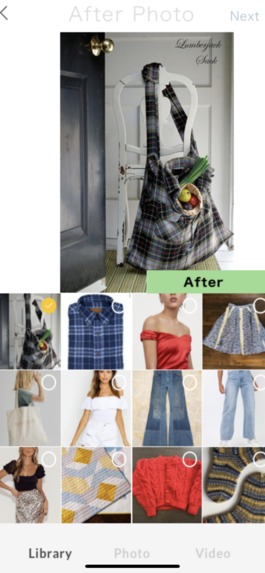
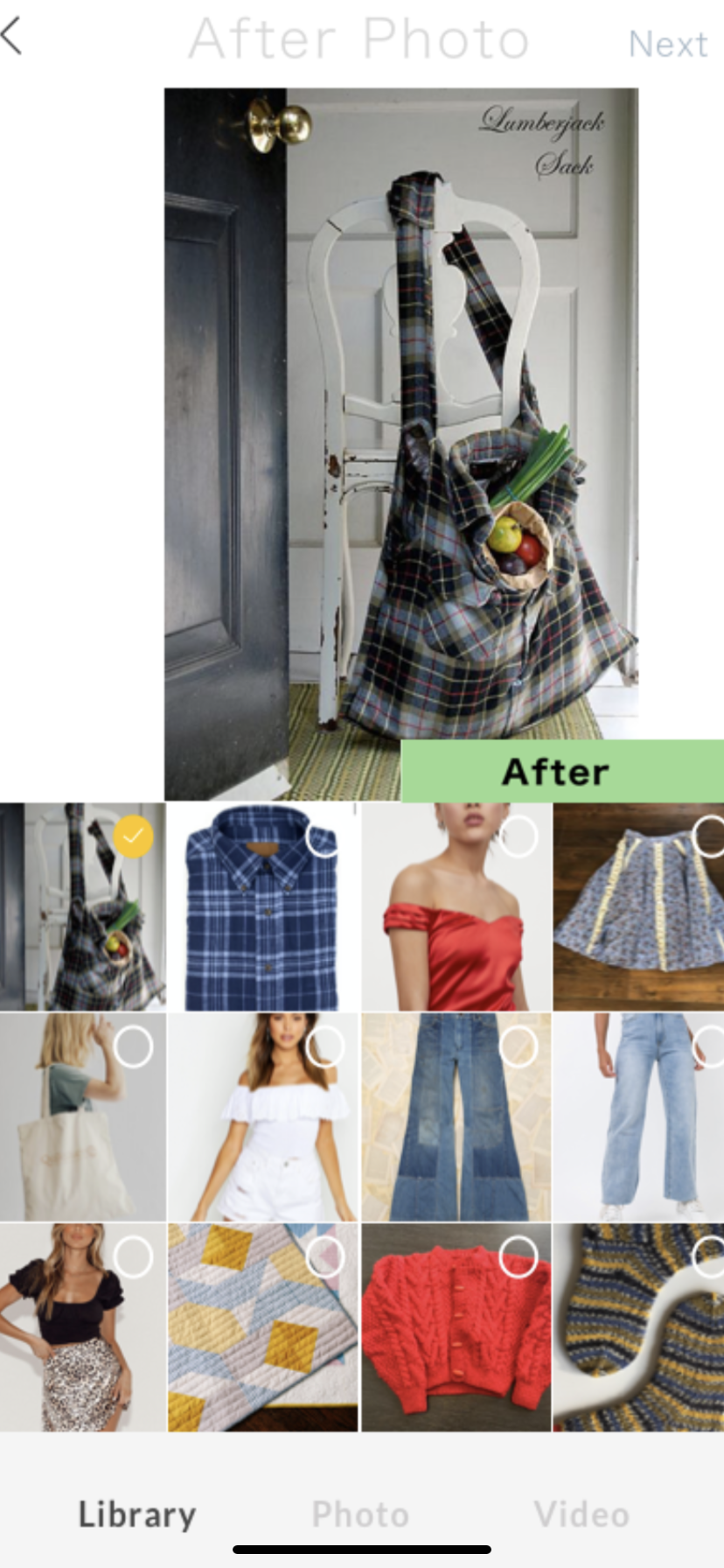
upload photo
-
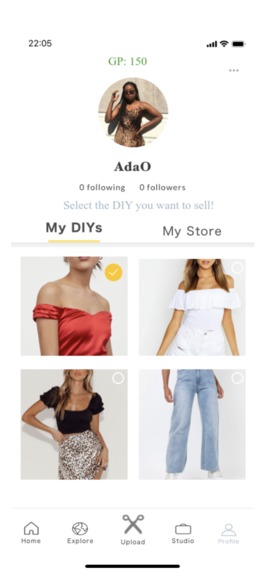
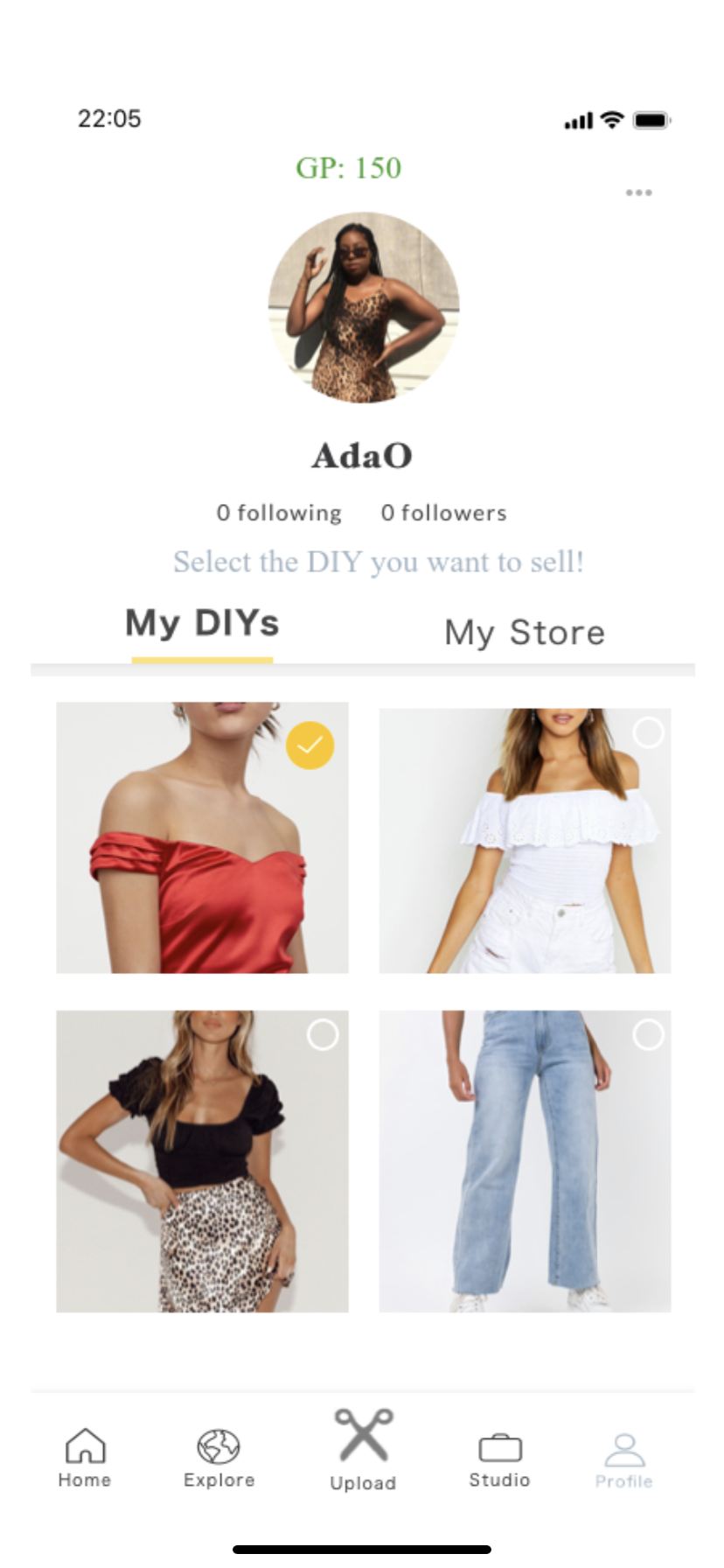
profile with green points on top
-
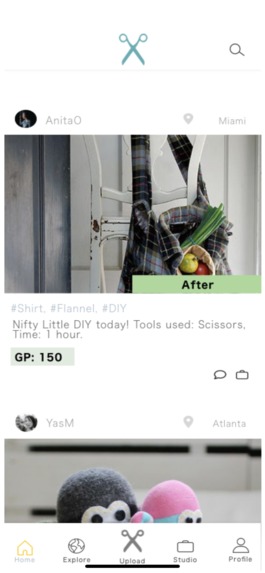
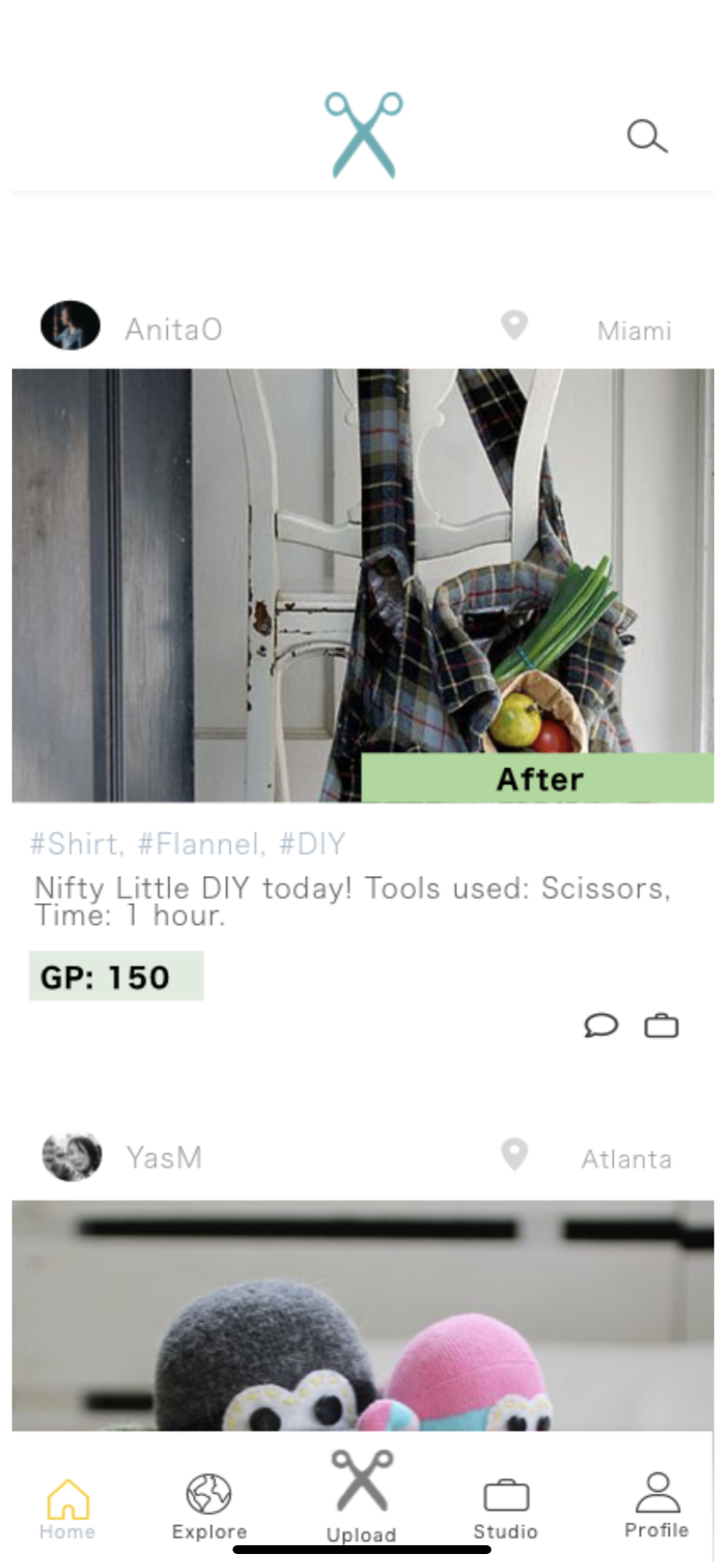
scroll though photos
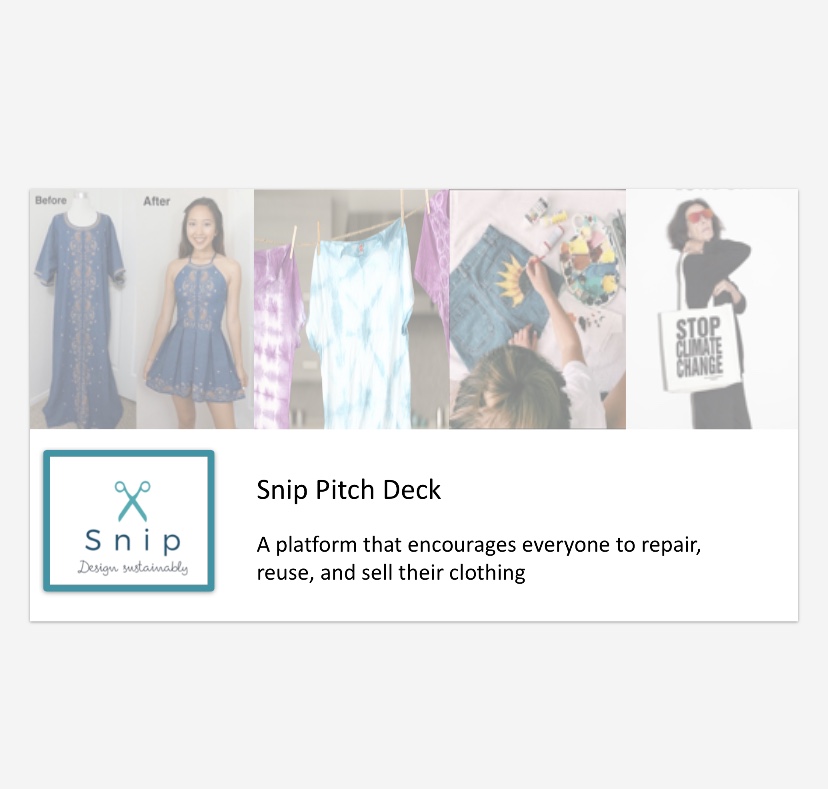

Overview
Why We Created Snip
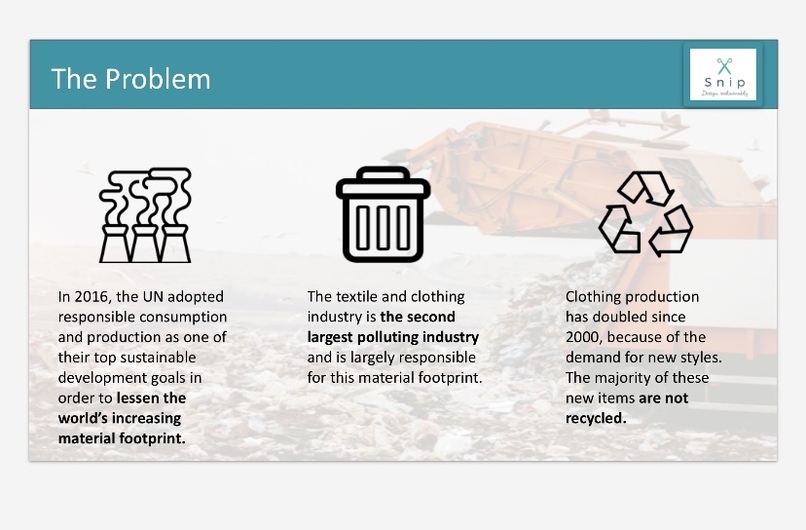
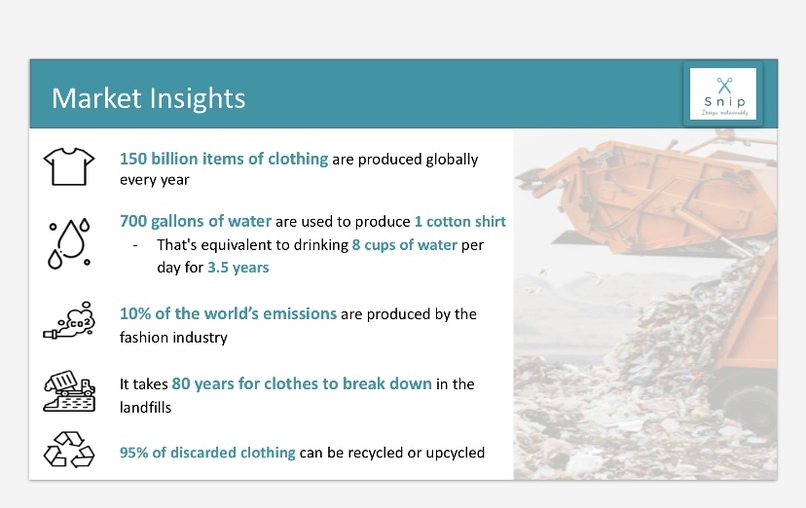
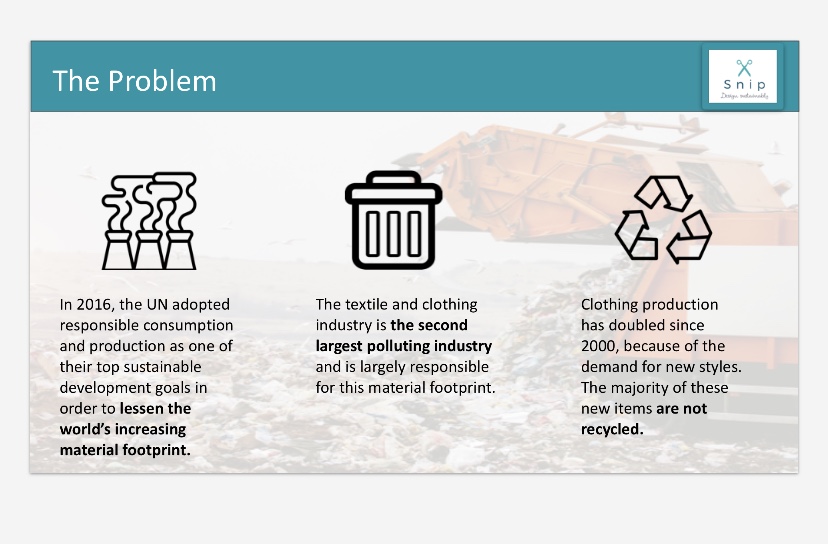
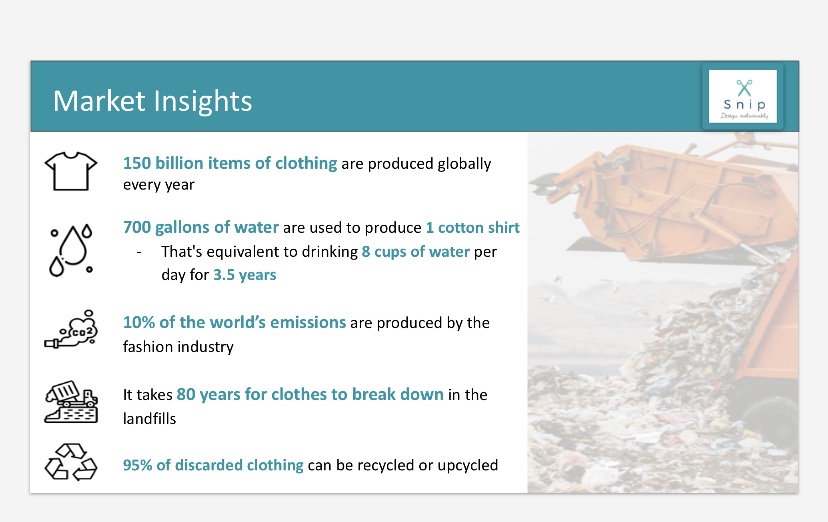
In 2016, the UN adopted responsible consumption and production as one of their top sustainable development goals in order to lessen the world’s increasing material footprint. The textile and clothing industry is the second largest polluting industry and is largely responsible for this material footprint. The textile and clothing industry’s negative impact is fueled by the public’s desire for fast fashion in order to meet changing trends. Clothing production has doubled since 2000, because of the demand for new styles. 85% of these produced clothing items are not recycled. Instead, these items are dumped in landfills, and this subsequently leads to more pollution.
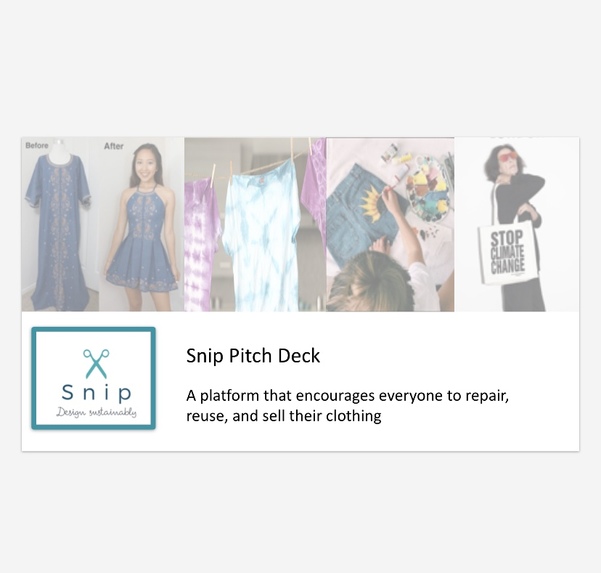
The Snip Team would like to help decrease the material footprint of the fashion industry by encouraging our user to upcycle their clothing. By upcycling clothing items, our users will throw away less clothing and hopefully purchase less clothing from unsustainable brands. Upcycling provides the Snip community with an outlet to creatively express themselves by revamping their clothing and participating in DIYs. Our marketplace feature will allow users to also resell their designs and thus ensure that clothing items are reworn.
While the Snip Team believes that upcycling can have a positive impact on our environment, we understand that much more action is needed in order to create large scale impacts. Our application includes a news feed feature in order to inform and empower our users to take action and unite to pressure fashion companies into adopting more sustainable practices. We believe that by disseminating educational articles on our platform our user will utilize this knowledge to enact real change.
How Snip Solves the Problem?
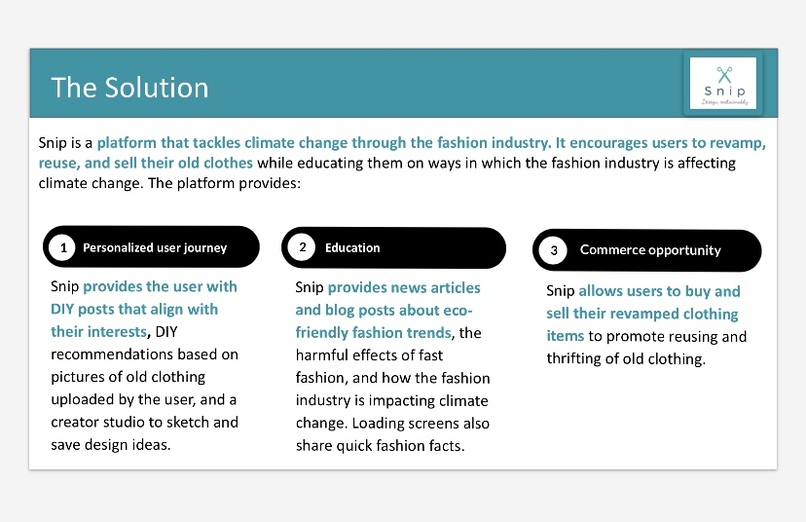
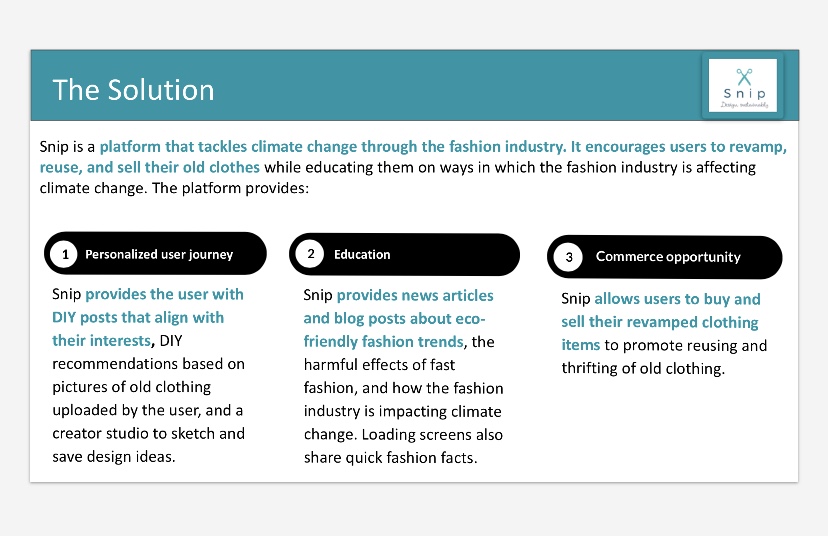
Snip is a platform that tackles climate change through the fashion industry. It encourages users to revamp, reuse or sell their old clothes while educating them on ways in which the fashion industry is affecting climate change. The platform provides: Personalized user journey- Snip provides the user with DIY posts that align with their interests, DIY recommendations based on pictures of old clothing uploaded by the user, and a creator studio to sketch and save design ideas.
Education- Snip provides news articles and blog posts about eco-friendly fashion trends, the harmful effects of fast fashion, and how the fashion industry is impacting climate change. Loading screens also share quick fashion facts.
Commerce opportunity- Snip allows users to buy and sell their revamped clothing items to promote reusing and thrifting of old clothing.
How is Snip Different from Competitors?
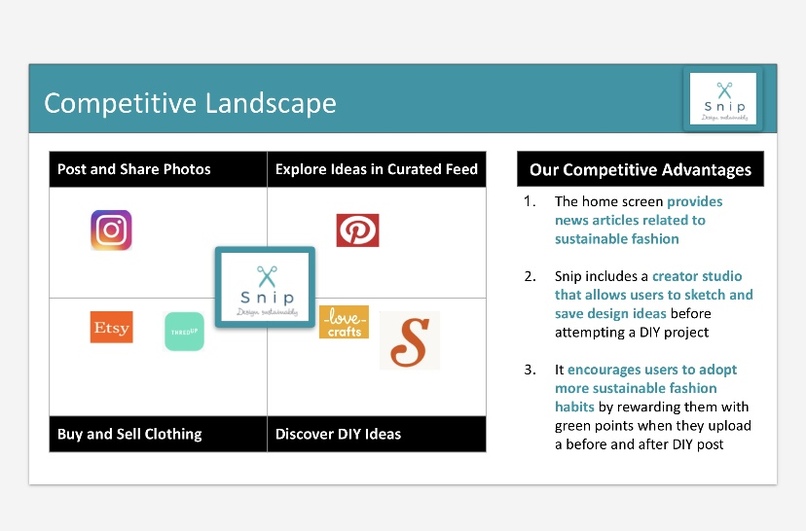
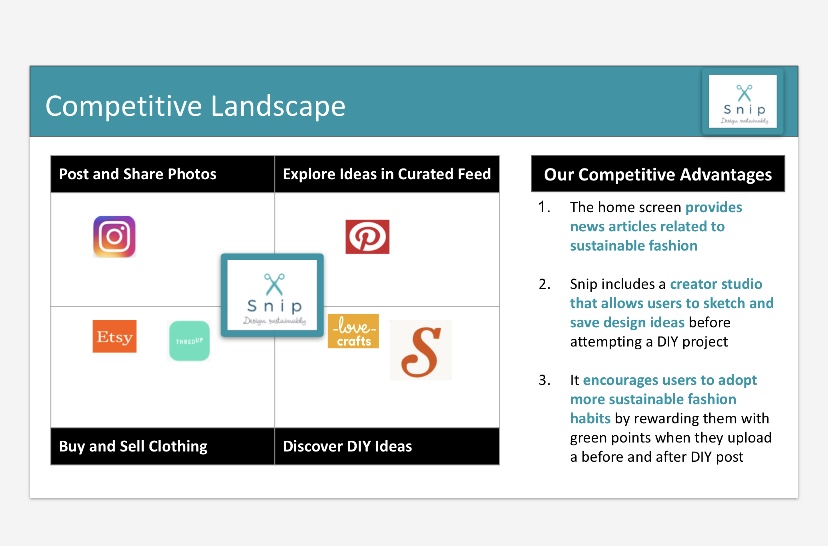
The Snip application does not have many direct competitors in the DIY/Crafts category. Our closest competitors do not have applications that are focused on sustainability, nor do they include as many features as the Snip application. Our closest competitors are: Pinterest, Love Crafts, Etsy, ThreadUp, and Snapguide. These applications allow users to engage with the DIY creations of others in some form but Snip is differentiated from these application in 3 distinct ways:
Snip’s platform is dedicated to educating users about the harms of fast fashion. Thus, the application includes a news feed that will regularly share articles about sustainability in the fashion industry.
Snip includes a creator studio that allows users to sketch and save design ideas before attempting a DIY project
It encourages users to adopt more sustainable fashion habits by rewarding them with green points when they upload a before and after DIY post
How It Works
Snip is a platform that tackles climate change through the fashion industry. It encourages users to revamp, reuse, and sell their old clothes while educating them on ways in which the fashion industry is affecting climate change. The platform provides:
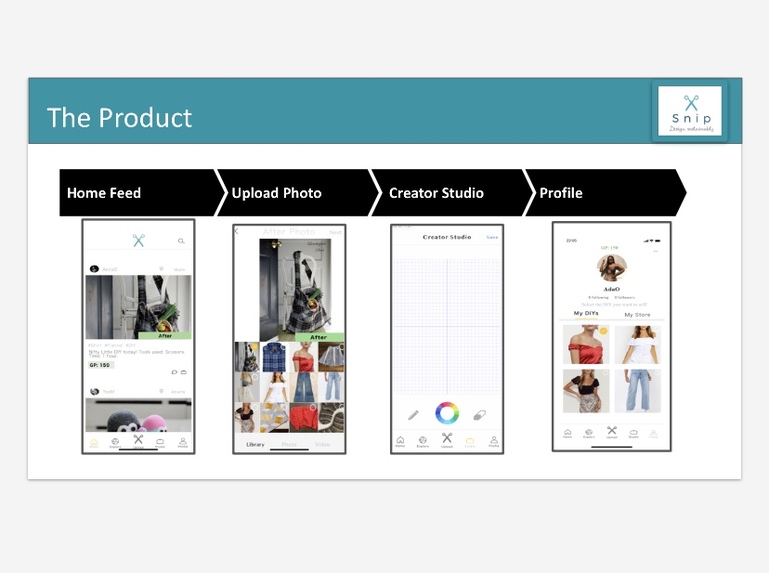
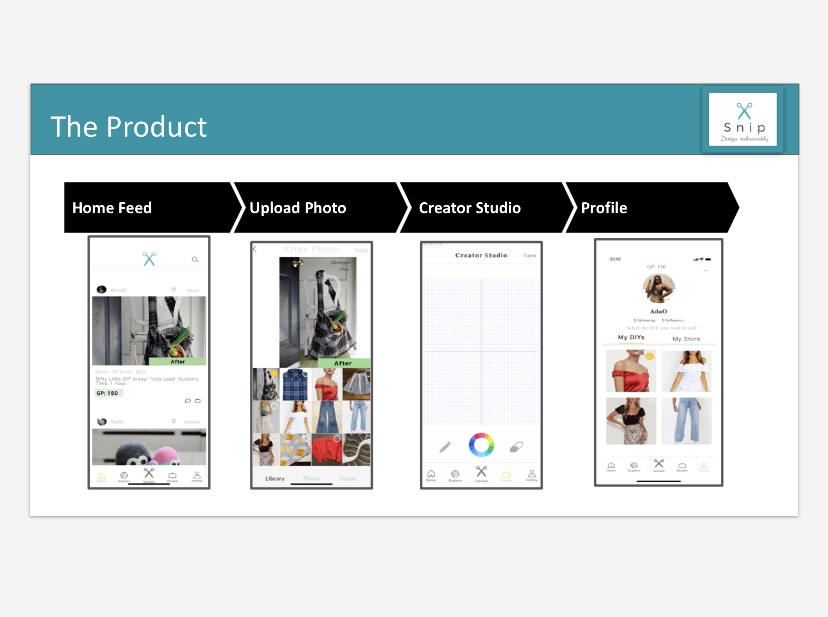
Snip provides the user with an Explore Page. This page will showcase DIY posts that align with their interests, and DIY recommendations based on pictures of old clothing uploaded by the user.
Snip also has an upload section where users can upload before and after photos of their DIY creation. These posts contain a photo of their revamped creation and a caption that includes instructions for other users that would like to recreate the look. After the user uploads the posts, their followers and other users will be able to comment on their picture and interact with them. This fosters a sense of community on the platform.
Each Snip user’s profile will include a section for their green points. These green points are earned as the user posts more creations on the application. These points are used to encourage users to continue to interact with the application.
Snip provides news articles and blog posts about eco-friendly fashion trends, the harmful effects of fast fashion, and how the fashion industry is impacting climate change. This news feed is located on the top of the Explore page. The application’s loading screens also share quick fashion facts for our users.
Snip allows users to buy and sell their revamped clothing items to promote reusing and thrifting of old clothing. Also, when a user clicks on another profile page, they can view the other’s users personal store and their posted creations.
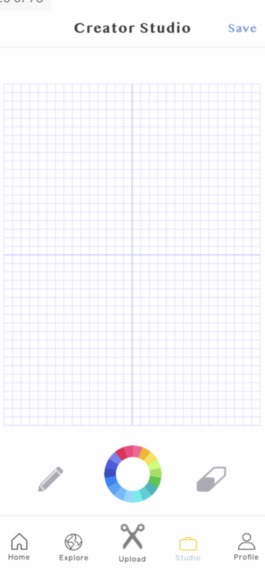
Snip’s application also includes a creator studio. This studio provides a space for users to sketch their designs and sample different color swatches and patterns before they begin to physically create their ideas.
How Snip Helps to Connect People Across Cultures
By allowing people all over the world to repurpose clothing and share their designs with others, Spin serves as a means for people to connect across cultures as they embrace one another’s culturally influenced fashion choices. Furthermore, it educates people on how different countries utilize sustainable fashion as a means to tackle climate change. Not only will the news feed include articles about the impact of the fashion industry on global climate change, it will also include blog posts from specific causes that highlight issues such as the relationship between fashion and the water crisis in Flint, Michigan and villages in South Sudan and East African, among others.
What are the Lessons that We’ve Learned
The Snip team has truly enjoyed creating this application, and we are looking forward to further developing this solution. We’ve learned many lessons while developing this platform:
We realized that we could create an application that leads to larger impact by including an educational component in our design. In the beginning, we were struggling to figure out how to create an application that would significantly decrease the material footprint of the fashion industry. Many ideas were proposed and later rejected because we were concerned about creating a large enough impact. The team includes an educational news article section in order to inspire our users to remain informed and take action. We did not think that a social platform was sufficient to create larger scale changes, and we realized that we could better impact our consumer by providing them with the proper tools to enact these changes.
We also learned about the importance of considering the user’s needs first. Before creating this application, we connected with individuals who enjoy revamping their clothing. This gave us great insight into what features we should include, and this allowed us to create the most user friendly design.
We also learned how to successfully utilize mentors and implement their advice into our design decisions. This hackathon experience provided us with a team of staff and company mentors. By pitching our ideas to these mentors, we were able to narrow down the application’s focus.
What is the Future of Snip?
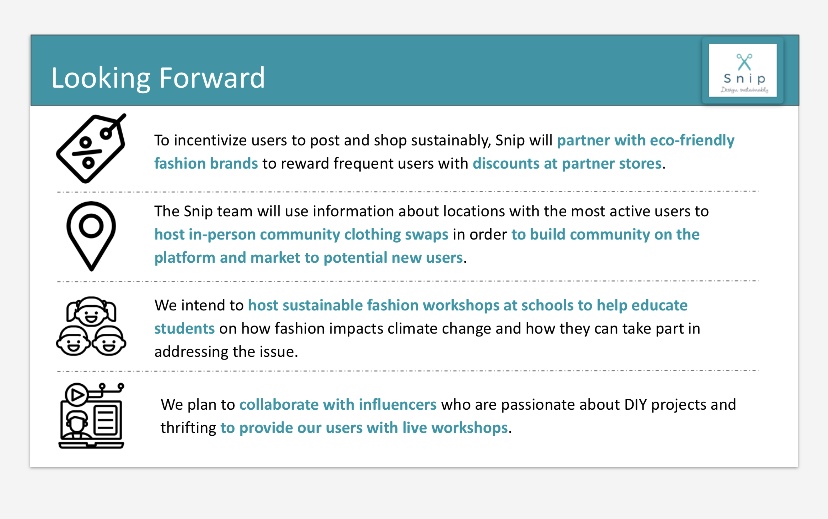
Snip has a lot of exciting long-term goals that will allow us to grow our user base and appeal to younger users. Our future plans include 4 strategies:
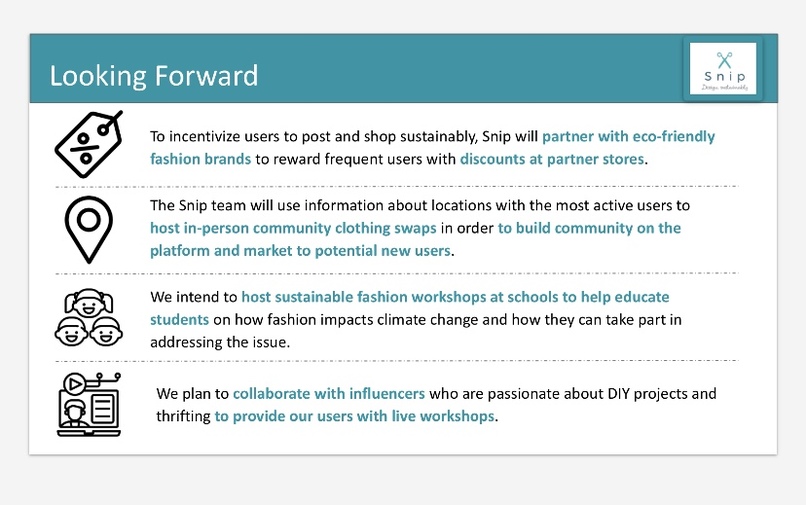
Over the next few months, the team plans to partner with eco-friendly and sustainable clothing brands to offer a rewards program that will provide frequent users (those who post a lot and have thus accumulated 50+ green points) with discounts at partner stores.
We plan to collaborate with influencers who are passionate about DIY projects and thrifting to provide our users with live workshops.
The Snip team will be using information about locations with the most active users and hosting in-person community clothing swaps to build community on the platform and help potential new users learn about Snip.
To appeal to younger users and help cultivate healthy and sustainable habits around fashion from a young age, Snip plans to host workshops at schools where we will educate them on how fashion impacts climate change and how they can take part in addressing the issue.





Log in or sign up for Devpost to join the conversation.