-
-
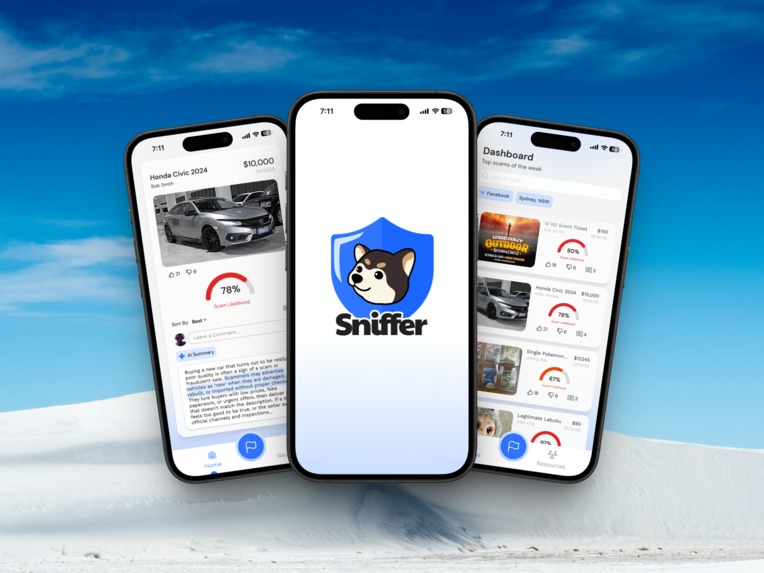
Sniffer Hero Image
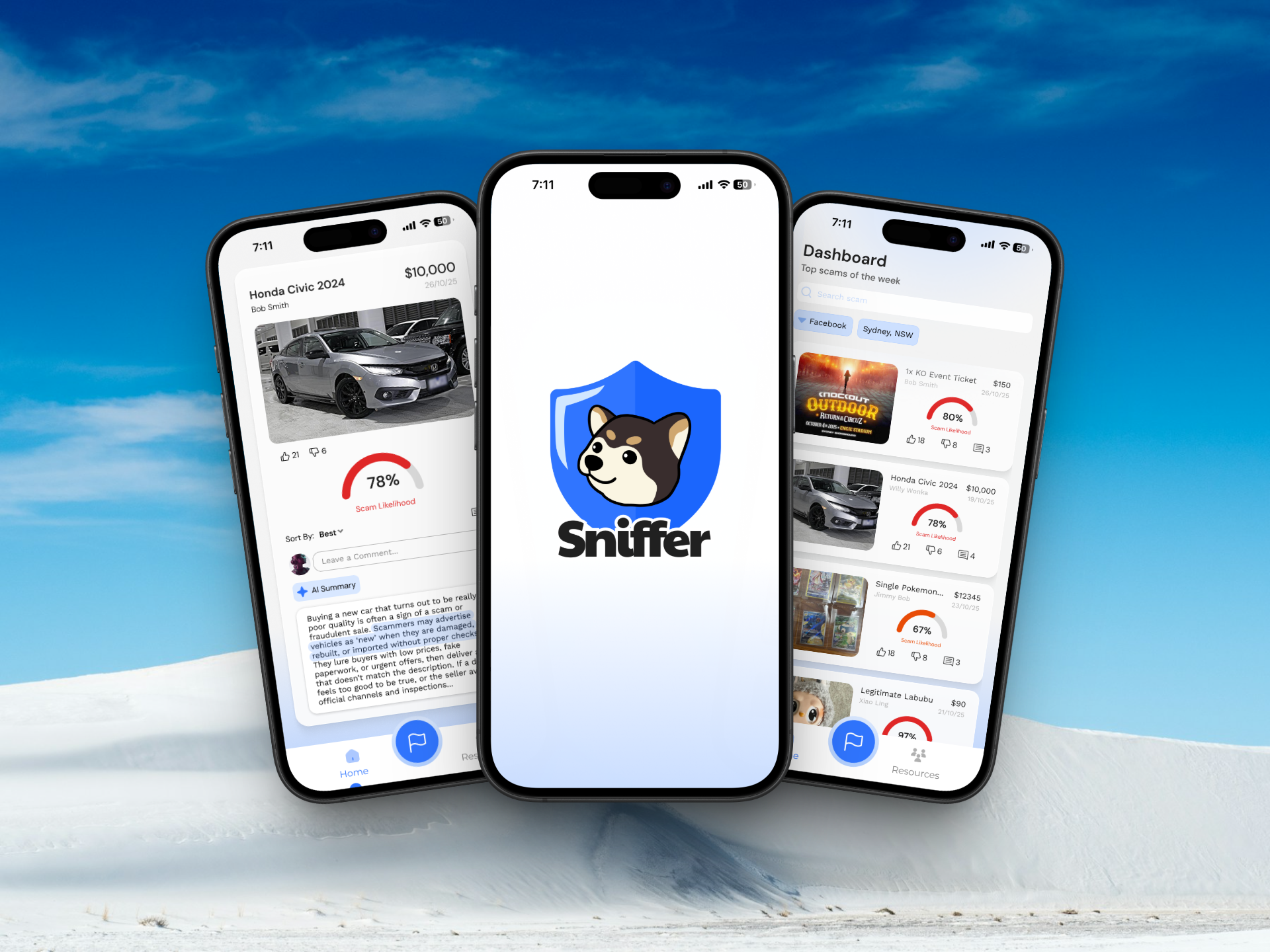
Inspiration
Our team was driven by a shared passion for protecting digital consumers, especially Gen Z, who are highly active online yet disproportionately exposed to scams. Australia ranks among the top 5 most scammed countries in the world, with banking and e-commerce fraud as major contributors. We believe scam prevention shouldn’t feel burdensome or disruptive, but rather a natural, seamless part of everyday digital experiences. This belief inspired us to develop a project that empowers young people to shop, bank, and interact online with confidence. Our goal was to design a solution that addresses the growing threat of scams and creates positive behavioural change, making scam awareness second nature for our generation.
What it does
As a team, we put our best collaboration and communication skills forward, working closely together to brainstorm, research, and develop our concept. Despite the pressure of the time limit, we learned how to efficiently divide tasks, manage our time, communicate with each other, and take care of each other throughout the project. We learned that every perspective matters, and more often than not, it helps reveal an idea’s gaps and how we could approach or diverge from another idea effectively.
How we built it
We began our project development process by staggering goals and deadlines for deliverables. We completed extensive secondary background research to identify key challenges in the broader problem space, and then spent the majority of our time with our peers for surveying, interviewing, and user testing to research Gen Z behaviours and attitudes. Armed with these insights, we refined a clear problem statement: How might we empower Gen Z to confidently spot and act against e‑commerce scams, making safer choices without sacrificing convenience or aspiration?
Based on this problem statement, we moved on to sketching initial ideas and concepts. These sketches were refined into low-fidelity prototypes, which we tested with users to gather feedback and identify areas for improvement. After incorporating the feedback, we developed high-fidelity prototypes that more accurately represented our final vision. This iterative process of user testing and refinement was crucial in shaping a solution that was not only effective but also user-friendly and engaging.
Challenges we ran into
The time limit and the brief being given at night were the two biggest challenges we faced. We found that creativity and unique ideas come when everyone fully understands the research and embraces creative blockages with patience. With only 24 hours to complete the project, we had to prioritise tasks and designate roles early to avoid wasting time. For our team, every team member walked into the Designathon not knowing what to expect, and several teammates had never worked together in any group projects prior to Designathon. This added an extra layer of difficulty as we had to learn on the go, get to know each other, and often rely on teamwork to overcome ideation struggles.
Despite these challenges, we are proud of what we accomplished in such a short amount of time. We find that this project is a representation of what we stand for and our ability to collaborate, brainstorm, create and deliver a project under pressure.
Built With
- figjam
- figma
- procreate


Log in or sign up for Devpost to join the conversation.