-
-
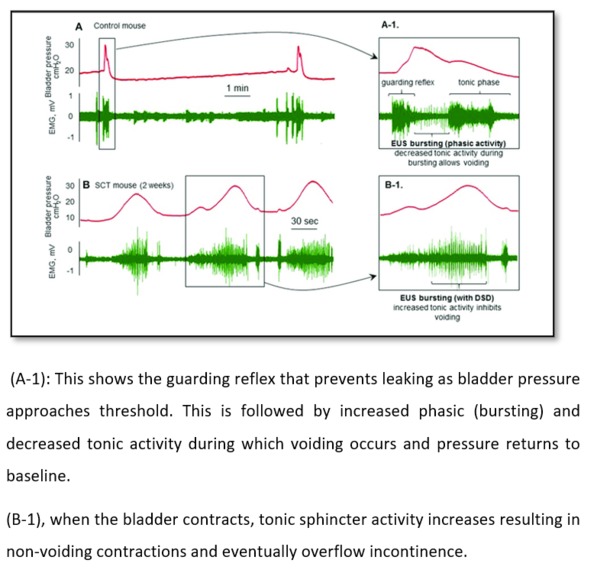
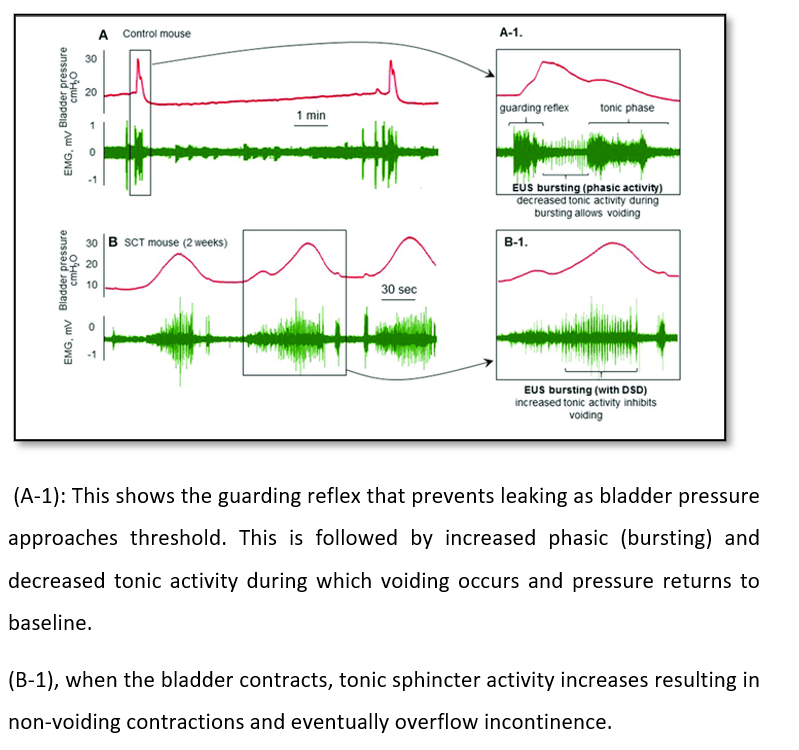
EMG result
Inspiration
After the age of 3, the involuntary loss of urine is socially stigmatizing, whether it occurs in grade school, at the office, during a bridge luncheon, on the golf course, or in the nursing home. Children and adults go to great lengths to deny and hide urinary incontinence, which can pose physical and psycho social impediments to the enjoyment of life. Incontinence is not a life threatening ailment but is overlooked so often. We have seen our own grandparents suffer from this. This stigma should be addressed before it gets too late. With age not only does the bladder walls weaken but our ability to discuss it also weakens. So, lets embrace incontinence without the fear of judgement.
Introduction
Damaged nerves may send signals to the bladder at the wrong time, causing its muscles to squeeze without warning. The symptoms of overactive bladder include: urinary frequency—defined as urination eight or more times a day or two or more times at night urinary urgency—the sudden, strong need to urinate immediately urge incontinence—leakage of urine that follows a sudden, strong urge to urinate. EMG tests to predict incontinence. Electromyography assessment of PFM consists of the use and interpretation of the surface EMG recording of a muscle Electromyography (EMG) is a diagnostic procedure that evaluates the health condition of muscles and the nerve cells that control them. These nerve cells are known as motor neurons. They transmit electrical signals that cause muscles to contract and relax. An EMG translates these signals into graphs or numbers, helping doctors to make a diagnosis.
Our workflow
This assistive technology makes use of EMG data as an input to predict incontinence. The EMG value is dependent on the pressure exerted by pelvic parasympathetic nerves , lumbar sympathetic nerves and pudendal nerves. Our algorithm predicts incontinence using age, sex, urethral closure pressure (cm H2O), leak-point pressure (cm H2O) and MVC_peak value from the EMG in micro volts as input parameters. Intrinsic sphincteric deficiencies identified by the Valsalva leak-point pressure ≤60 cm H20 measurement in the sitting position and/or a urethral closure pressure ≤20 cm H20 in the sitting position. Peak EMG amplitude in the 5 s MVC window for a healthy person is found to be ~ 97.6. Peak EMG amplitude in the 5 s MVC window for a incontinent person is found to be ~ 39.1.[1]
How we built it
The data set was synthetically created by the team (because of unavailability of datasets on this study). We used logistic regression, support vector machine and random forest to train our data. We deployed the logistic regression model in a web application. The back end of the web application was built using flask. The front end of this application was developed using HTML and CSS. The application is extremely user friendly.
Target Audience
This study includes non-diabetic elderly (above the age of 50) suffering from incontinence due to old age.
Challenges couldn’t stop us
We are a team of aspiring bio engineers with first hand knowledge of technical and biological aspects. However, we lack proficiency in a specific field. Despite the initial setback, we were firm on identifying a simple yet crucial problem statement that requires attention. Our passion for this topic allowed us to break through technical barriers. A specific data set with the parameters we required wasn’t available and following advice from our mentors we proceeded to create a synthetic data set. Due the obvious limitation of number of records in the dataset we couldn’t deploy it on more accurate algorithms like neural networks whose result shall hold substantial meaning. By employing SVM, random forest and logistic regression we were able to achieve an accuracy of 80% with the synthetic data.
Accomplishments that we're proud of
Despite the unavailability of data, lack of access to IoT resources (and three mental breakdowns!!) we stimulated and hypothesized a very doable hack – SneakPeakIntoLeak
What we learned
We dived into the field of neurology in depth and were able to channelize our knowledge of this field coupled with technology to come up with a hack for incontinence for the elderly. Most of all we learned to never give up and chase what inspires you.
What's next for SneakPeakIntoLeak
Our current model will require assistance from staff either in the hospital or nursing homes to help the elderly check their bladder health. In the future we aim to connect the sensor to our application so that real time values can be updated automatically. Weekly reports of EMG tests of bladder pressure would help keep incontinence in check reinforcing our belief in the track- “aging with resilience and resources”.
References
Scientific papers: [1] Koenig, I., Luginbuehl, H. and Radlinger, L., 2017. Reliability of pelvic floor muscle electromyography tested on healthy women and women with pelvic floor muscle dysfunction. Annals of Physical and Rehabilitation Medicine, 60(6), pp.382-386. [2] Yoshimura, N. and Chancellor, M.B., 2003. Neurophysiology of lower urinary tract function and dysfunction. Reviews in urology, 5(Suppl 8), p.S3. [3] Mellgren, A.F., Zetterström, J. and Nilsson, B.Y., 2006. Electromyography and pudendal nerve terminal motor latency. In Constipation (pp. 105-109). Springer, London. [4] Kiff, E.S. and Swash, M., 1984. Normal proximal and delayed distal conduction in the pudendal nerves of patients with idiopathic (neurogenic) faecal incontinence. Journal of Neurology, Neurosurgery & Psychiatry, 47(8), pp.820-823. [5] Chmielewska, D., Stania, M., Kucab–Klich, K., Błaszczak, E., Kwaśna, K., Smykla, A., Hudziak, D. and Dolibog, P., 2019. Electromyographic characteristics of pelvic floor muscles in women with stress urinary incontinence following sEMG-assisted biofeedback training and Pilates exercises. Plos one, 14(12), p.e0225647. [6] Vogel, S.L., 2001. Urinary incontinence in the elderly. Ochsner Journal, 3(4), pp.214-218.
Books: Vaginal surgery for incontinence and prolapse - Philippe E. Zimmern, Peggy A. Norton, François Haab and Christopher C.R. Chapple
Other links:




Log in or sign up for Devpost to join the conversation.