-
-
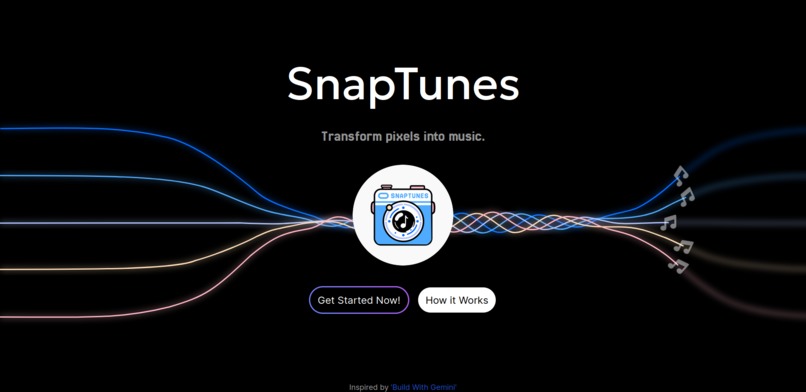
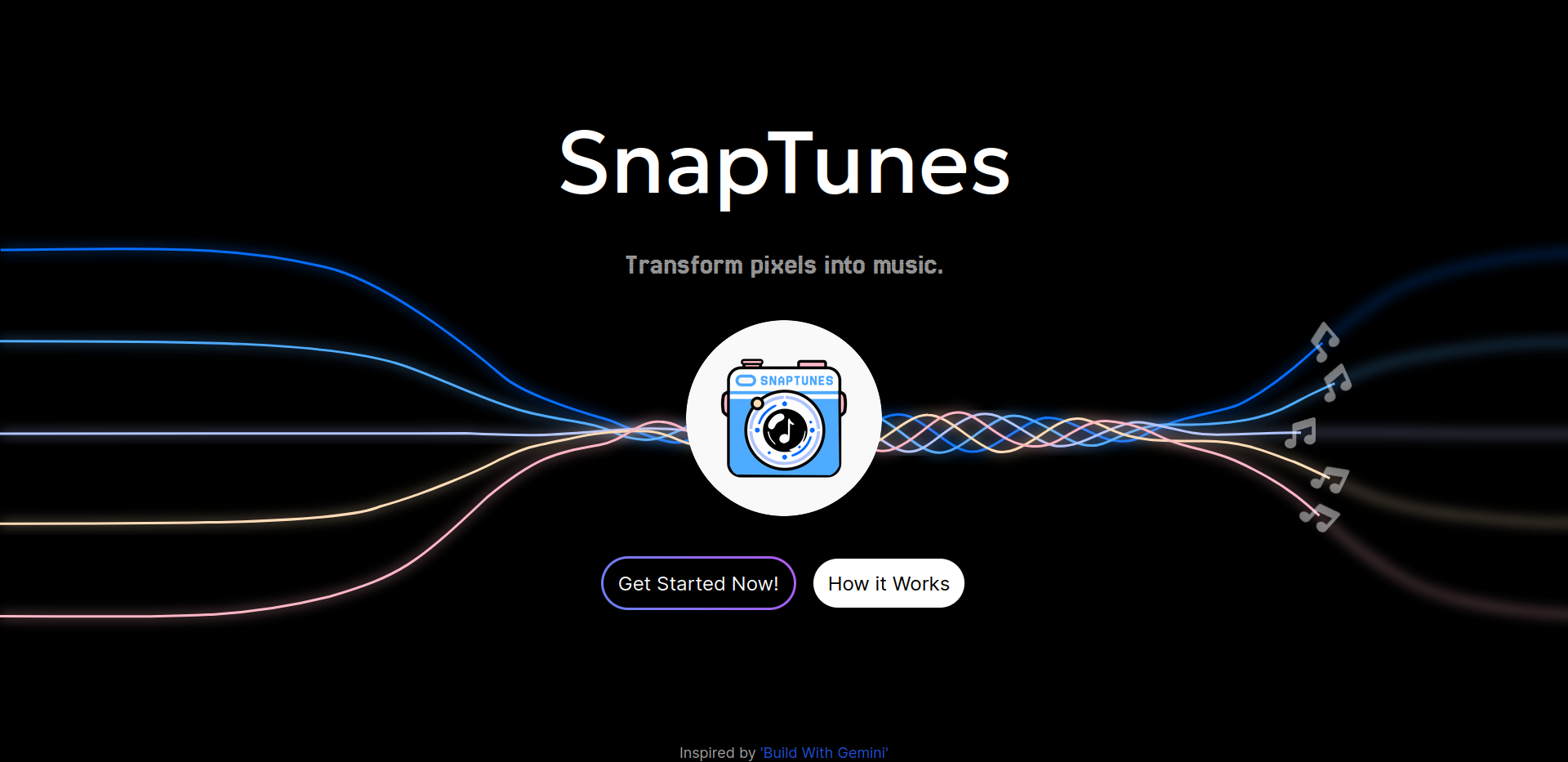
Landing Page
-
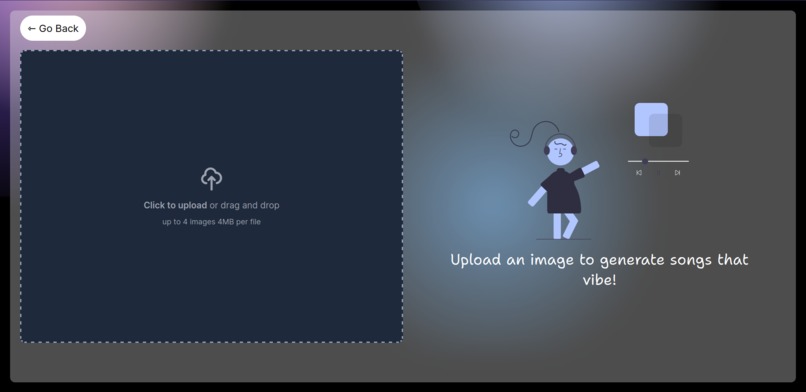
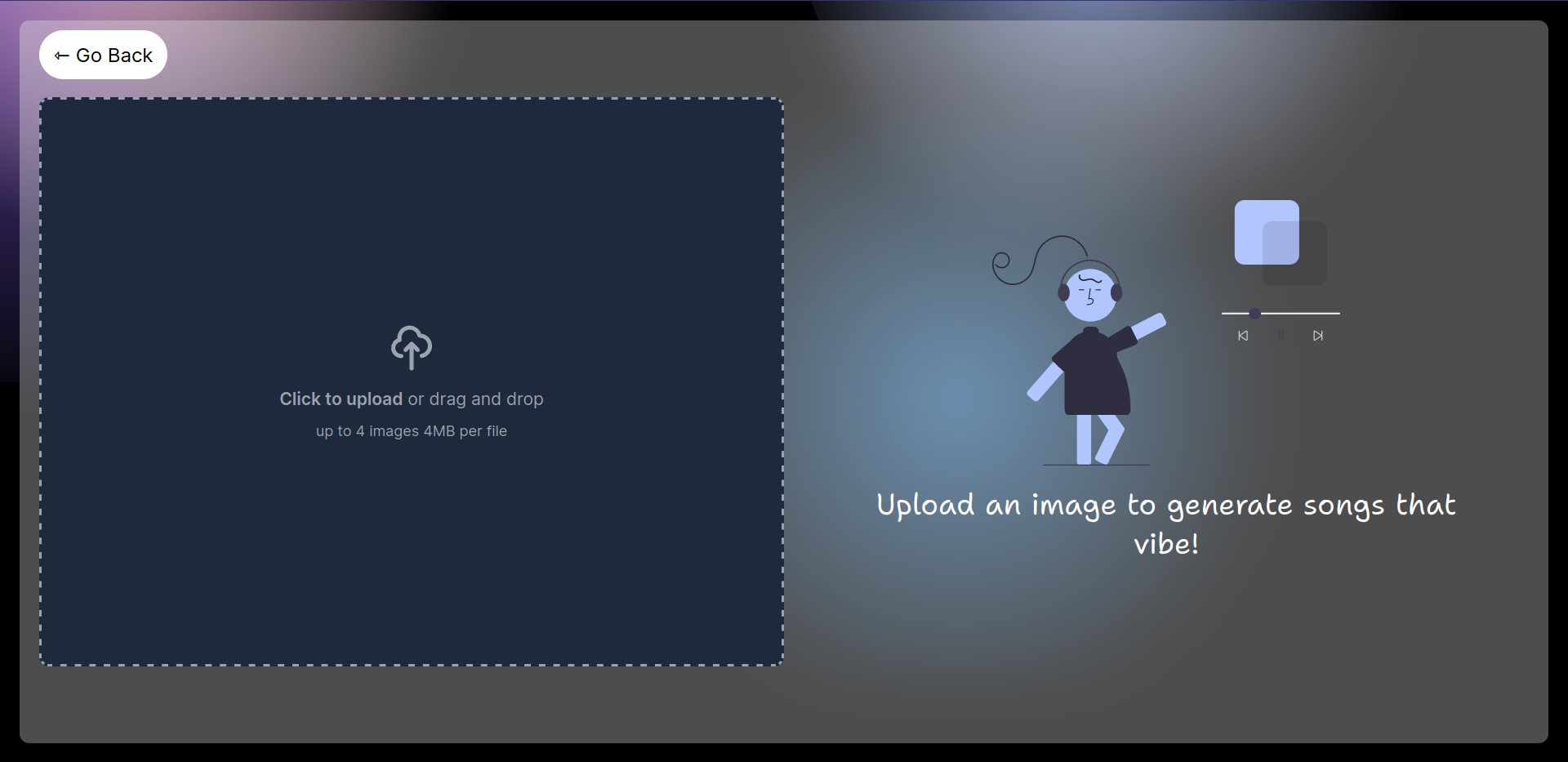
WebApp UI
-
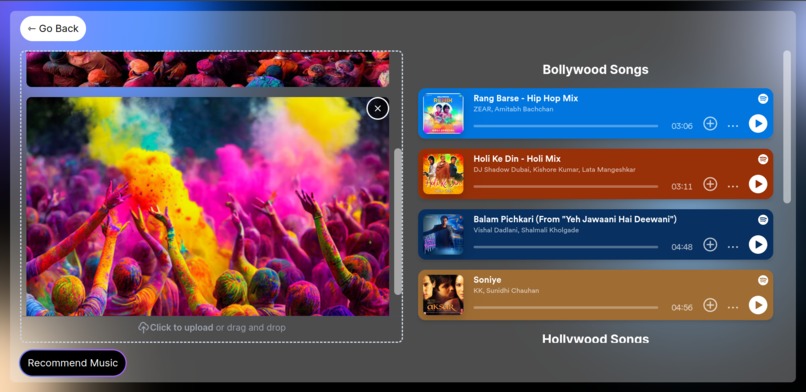
List of Bollywood songs for images of holi
-
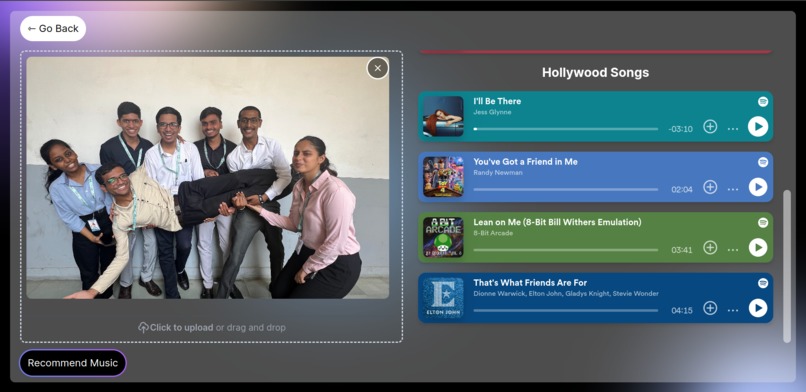
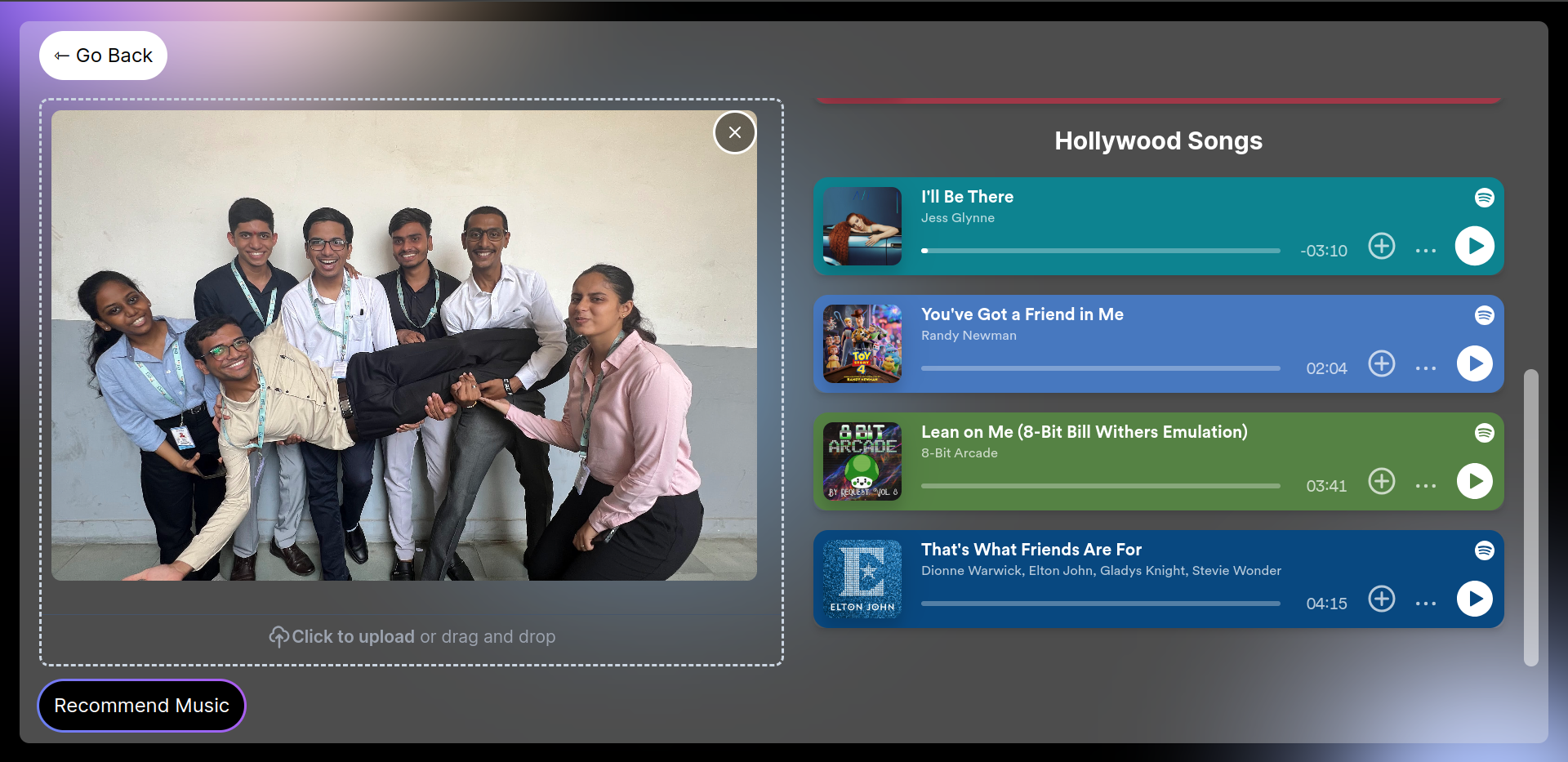
List of Hollywood songs for a picture of friends having fun

Inspiration
SnapTunes was born from a simple observation: my sister often spends quite a bit of time on Instagram, meticulously selecting the perfect songs to accompany her posts. Witnessing her dedication to finding just the right music sparked an idea: what if there was a way to streamline this process? This led to the inception of SnapTunes, a project aimed at seamlessly integrating photos and music to create personalized soundtracks for every moment. 🎵📸
What it does
SnapTunes is your personalized photo DJ! Upload your photos, and SnapTunes analyzes them to recommend the perfect Hollywood and Bollywood songs that match the vibe. It's like having a soundtrack tailored to your moments, making every photo-sharing experience more memorable and fun! 📸🎶
How we built it
SnapTunes is the result of countless hours of collaboration and innovation. Built on the robust foundation of Next.js 13, our team leveraged its flexibility and performance to bring our vision to life. The core of the project was of course the Gemini API, but we had to wrap it in a modern, sleek looking package. Framer-UI and Aceternity UI were instrumental in crafting a visually stunning interface, then within them, Gemini API added a layer of personalization, recommending songs based on the content of uploaded images. The Spotify API seamlessly integrated music into the user experience. Together, these technologies formed the backbone of SnapTunes, creating a platform where photos and music intertwine harmoniously. 🛠️🎶
Challenges we ran into
Like any project, SnapTunes had its fair share of challenges. Ensuring the responsiveness of the web application across various devices proved to be a daunting task, requiring careful attention to detail and extensive testing. Animations, while visually captivating, presented technical hurdles, like having to understand how SVGs work, and what their notations are, and how to edit with them, what Bezier curves were, etc. which required creative solutions. Working with Framer was also a new experience, so every component built using it was a challenge, trying to understand its tedious documentation. Integrating the Spotify API seamlessly into our platform posed another challenge, as we navigated the intricacies of authentication and data retrieval. However, through perseverance and collaboration, we overcame these obstacles, emerging stronger and more resilient. 💻💡
Challenges we ran into
Like any project, SnapTunes had its fair share of challenges. Ensuring the responsiveness of the web application across various devices proved to be a daunting task, requiring careful attention to detail and extensive testing. Animations, while visually captivating, presented technical hurdles that required creative solutions. Integrating the Spotify API seamlessly into our platform posed another challenge, as we navigated the intricacies of authentication and data retrieval. However, through perseverance and collaboration, we overcame these obstacles, emerging stronger and more resilient. 💻💡
What we learned
Building SnapTunes was not just about coding; it was a journey of exploration and discovery. We delved into the world of animations, experimenting with tools like framer-motion to add a touch of magic to our user interface. The Spotify API opened our eyes to the possibilities of dynamic content, allowing us to fetch song previews in real-time. Additionally, our foray into AI-driven song recommendations with the Gemini API introduced us to the complexities of machine learning algorithms and the importance of privacy and safety in AI applications. 🚀🔍
What's next for SnapTunes
1) Make the web application responsive for all form factors and convert into a PWA. 2) Add user centric features like history of recommended songs. 3) Add support for more film industry music.


Log in or sign up for Devpost to join the conversation.