-
-
Logo
-
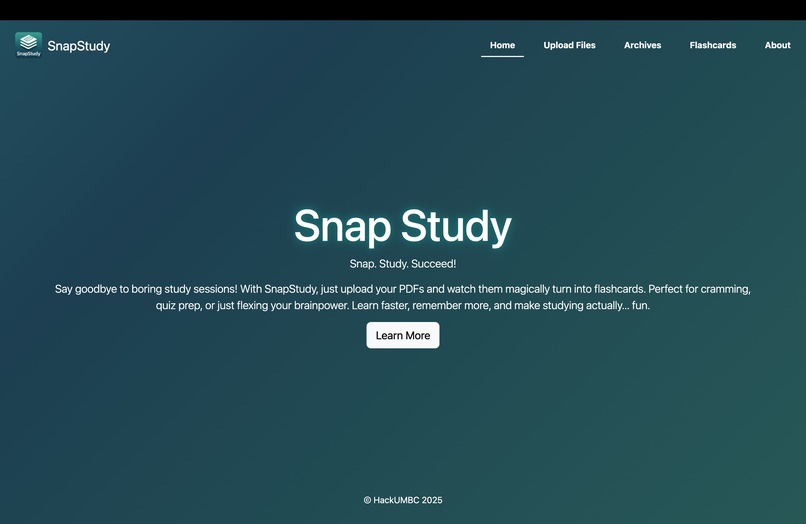
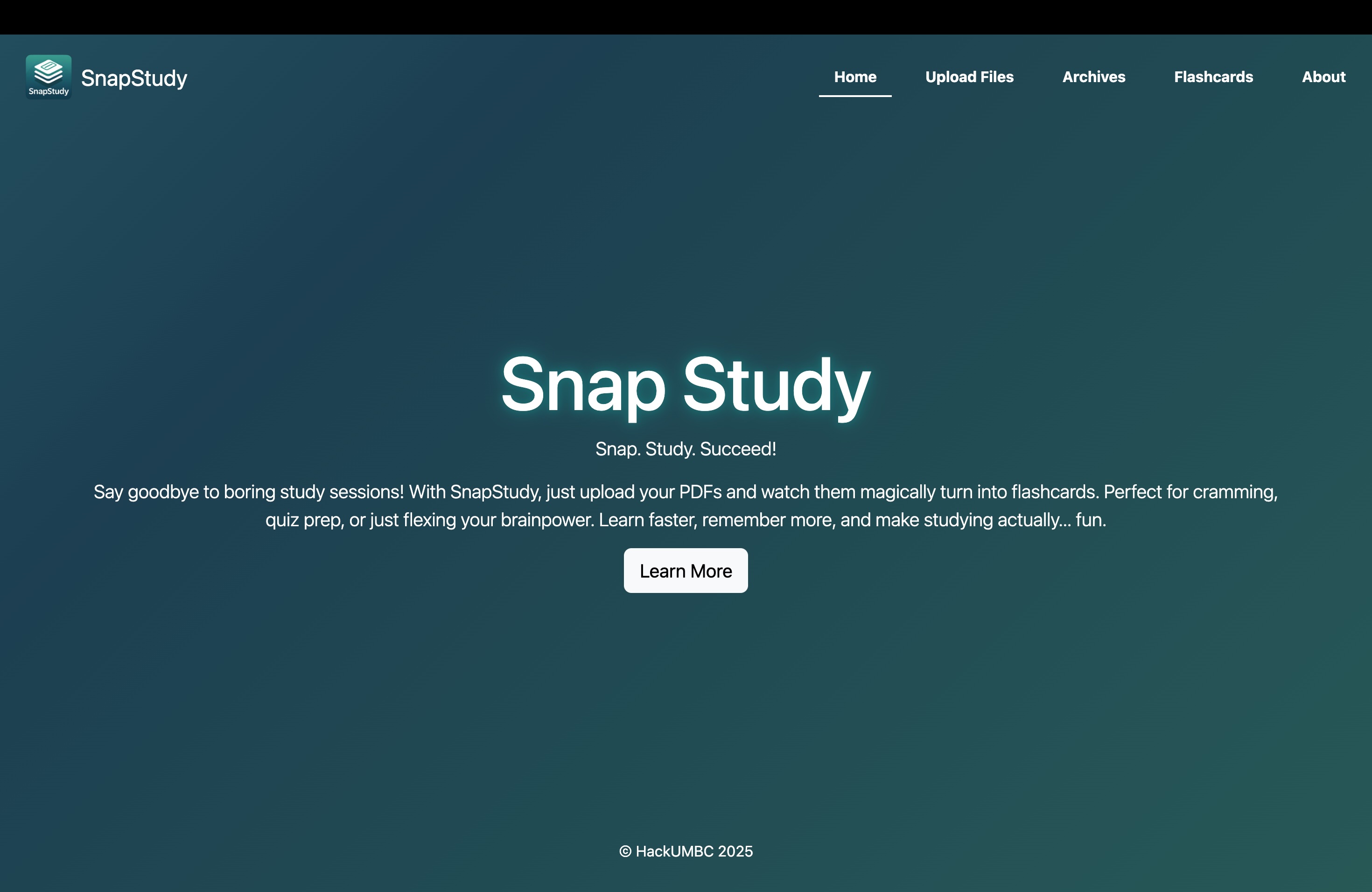
Welcome Page
-
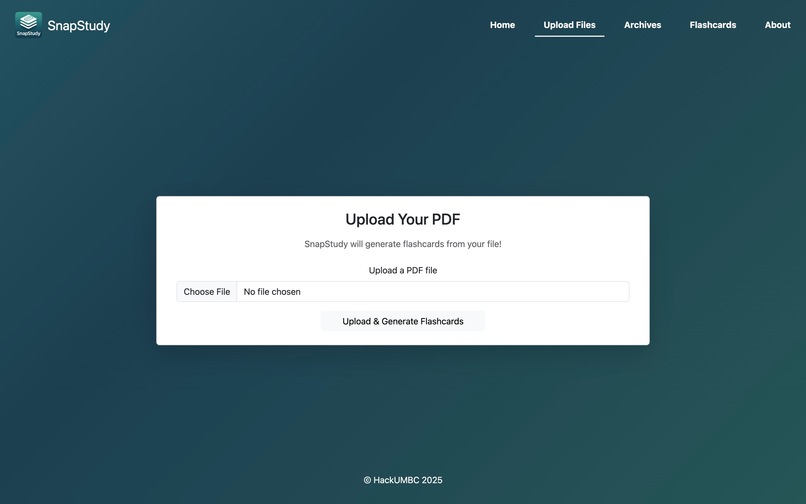
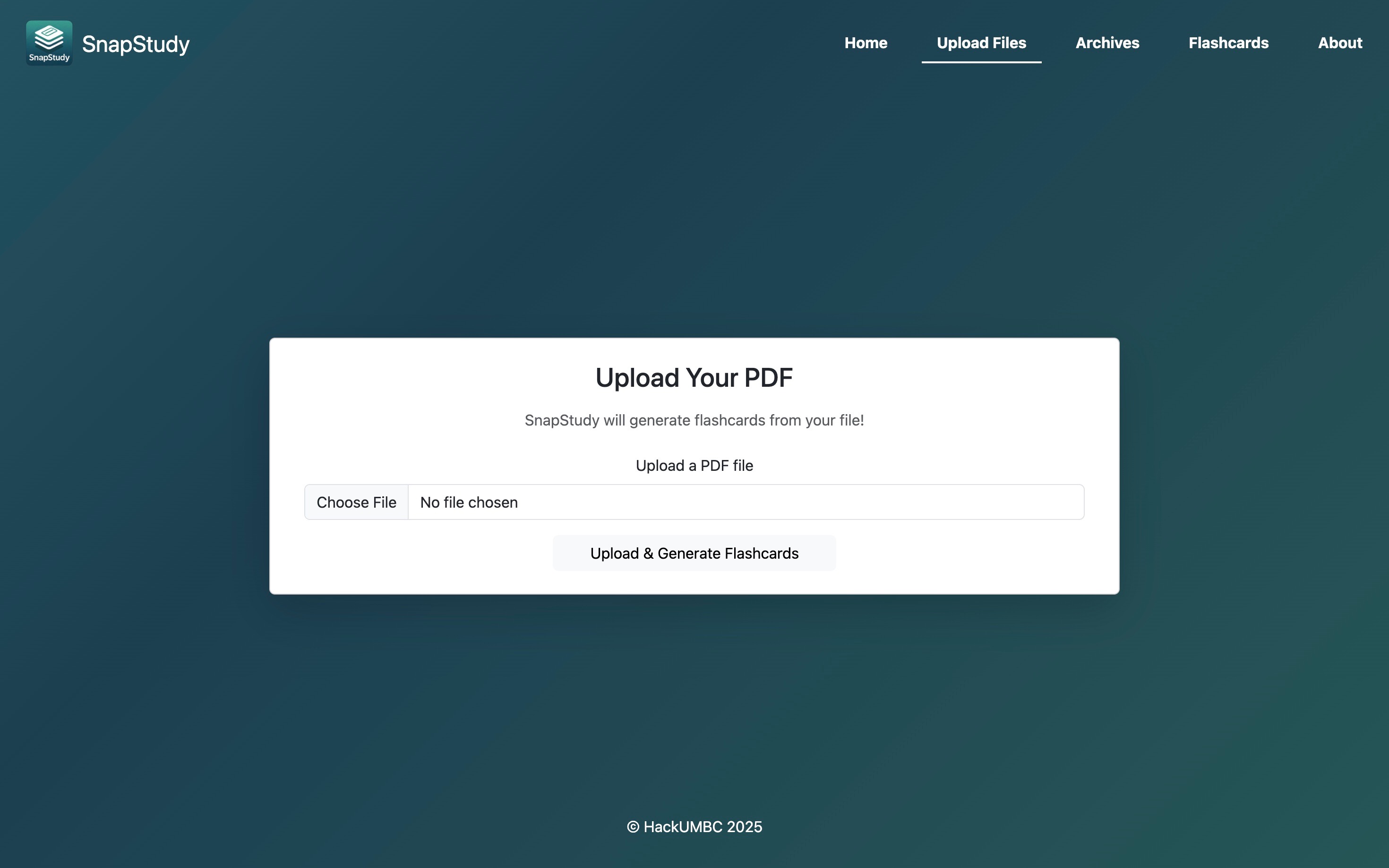
Upload PDF
-
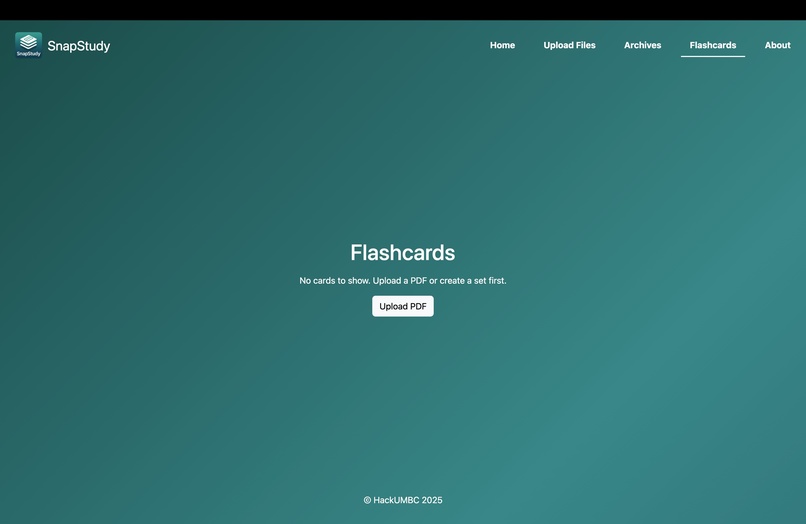
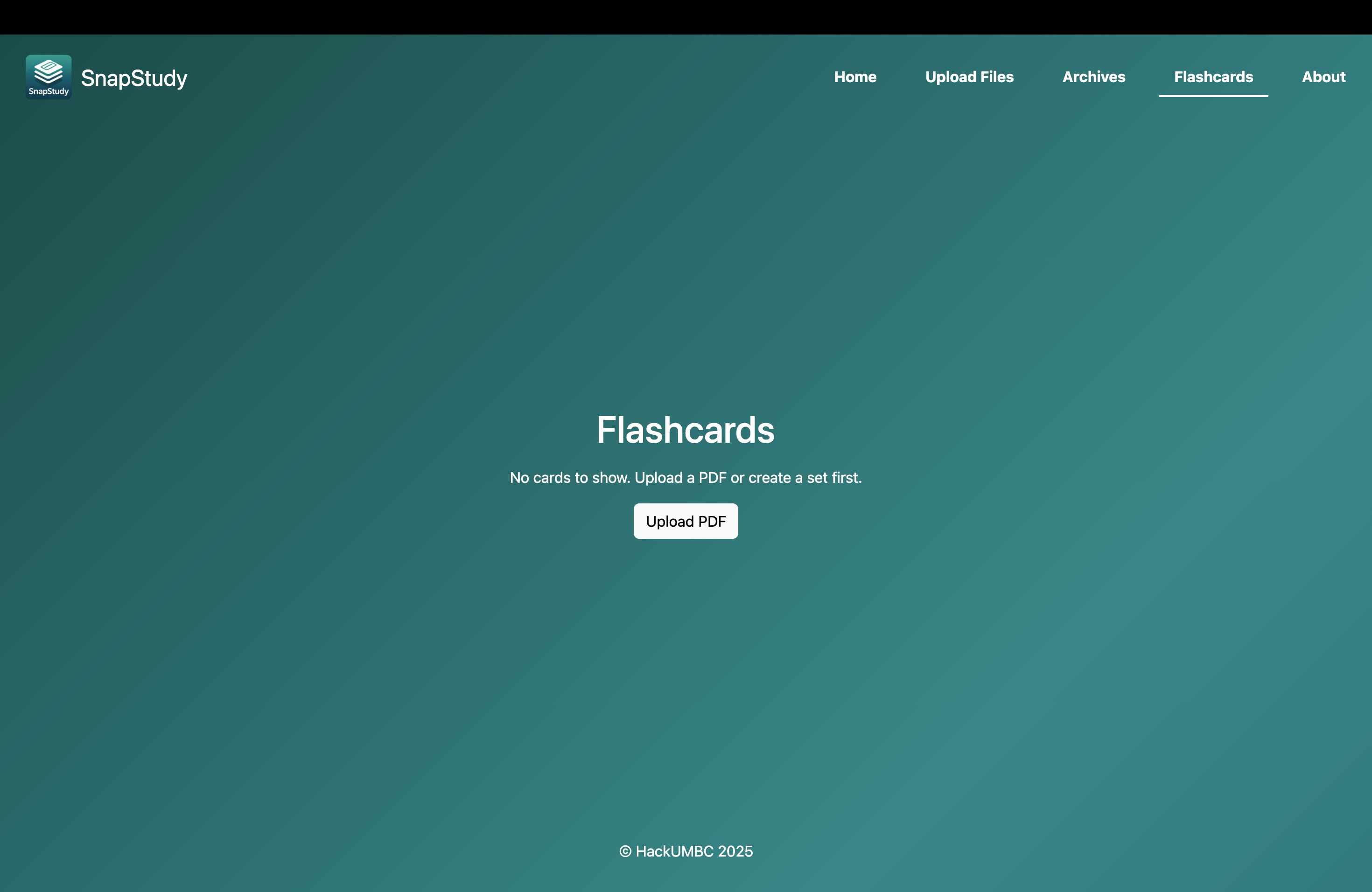
Flashcard Page
-
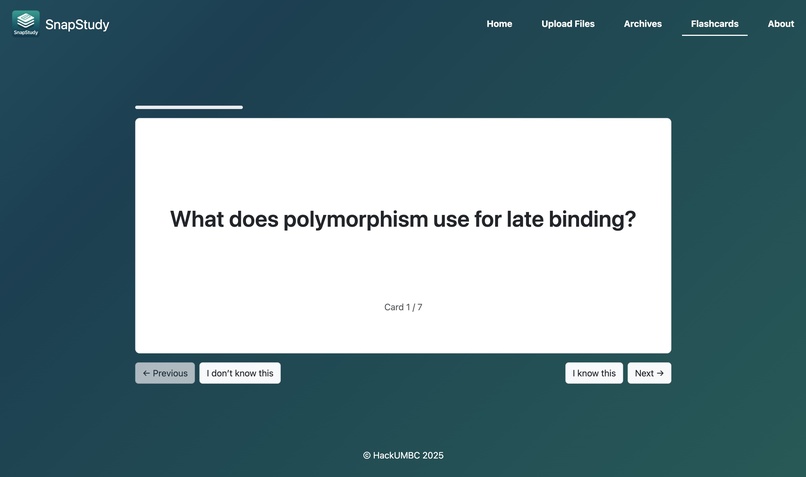
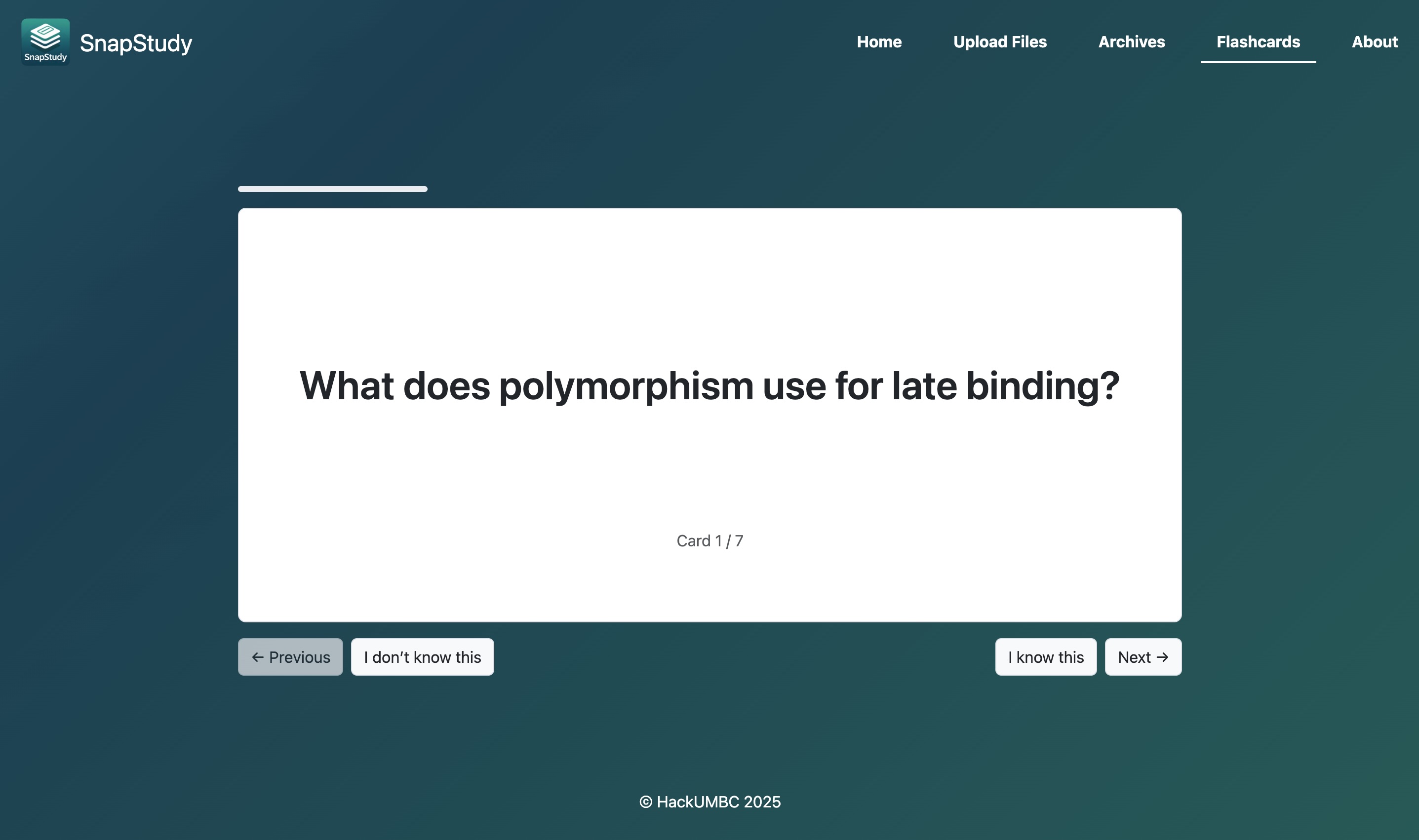
Active Flashcard
-
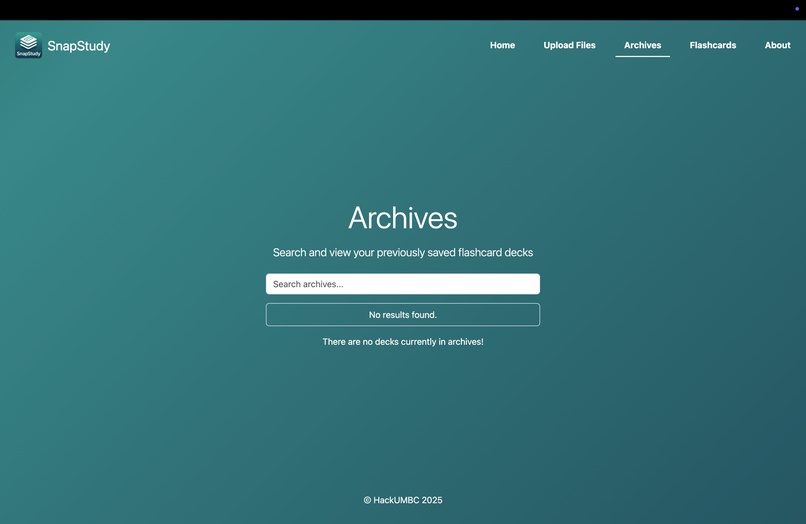
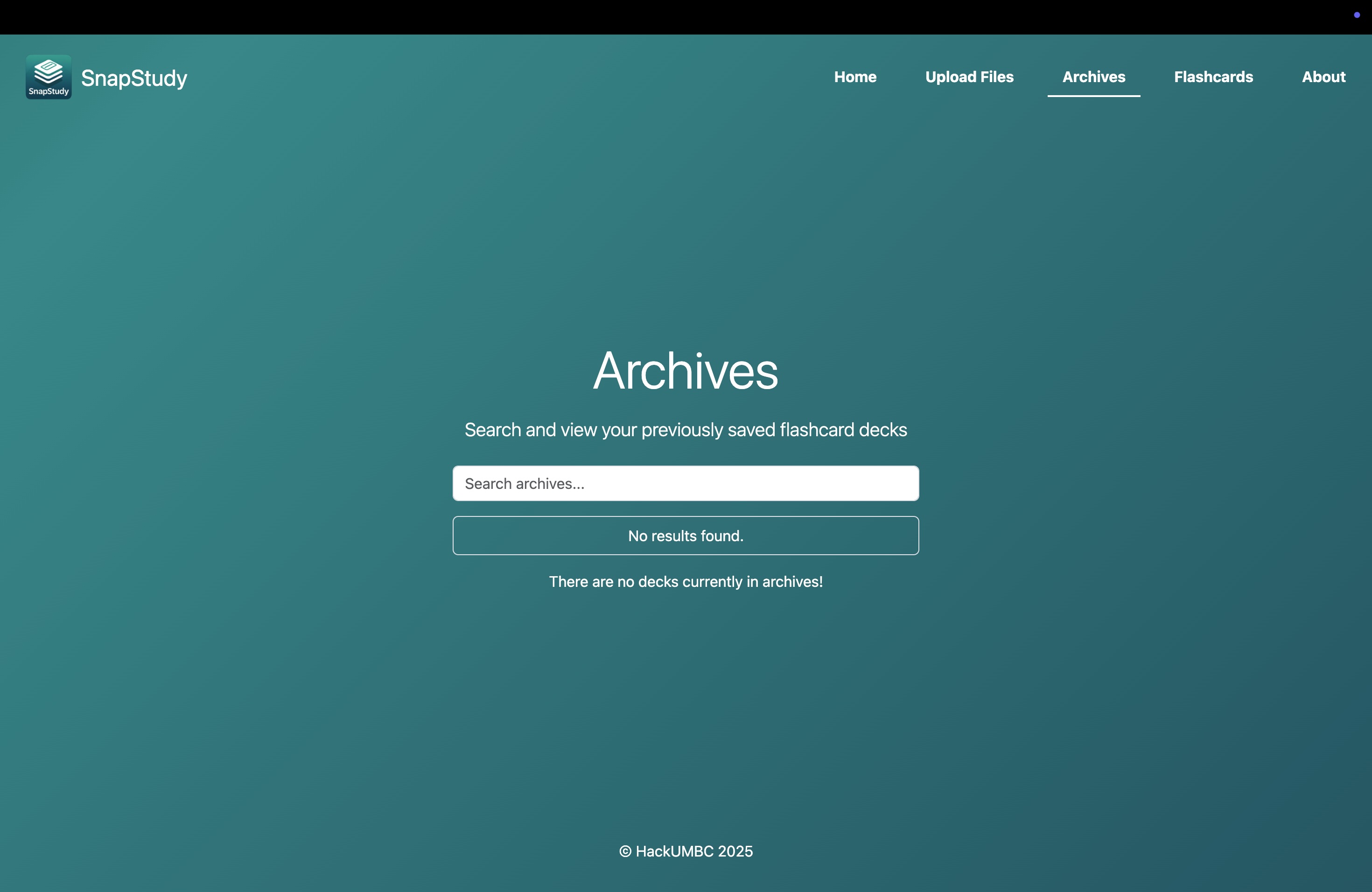
Archive Page
-
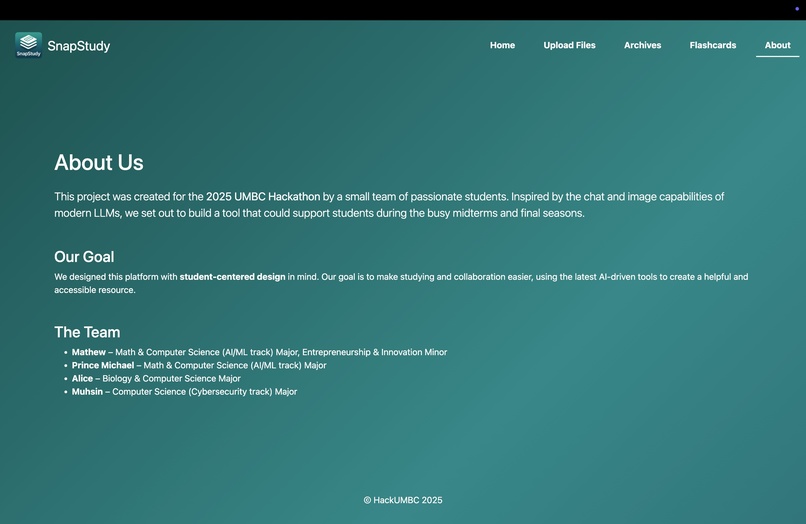
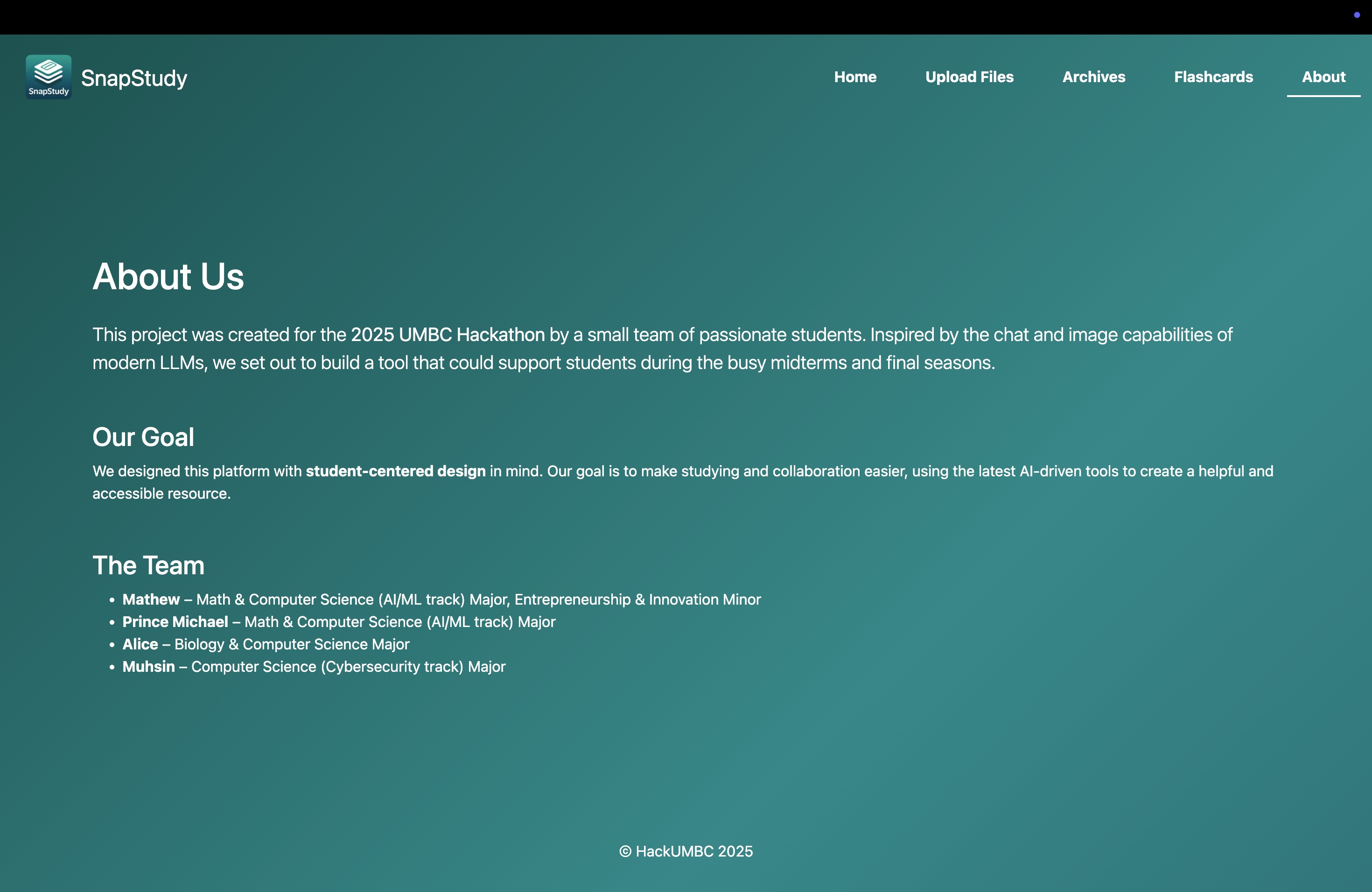
About Us
Inspiration
The idea for SnapStudy came during the hectic midterm season. With multiple exams stacked on top of each other, we realized how much time was being wasted making flashcards instead of actually studying. We wanted a way to turn notes and slides into study material instantly, so students could focus on learning instead of formatting.
What it does
SnapStudy takes uploaded notes or slides (like PDFs), extracts the key text, and automatically generates clean, tappable flashcards. Users can track their progress with a lightweight progress bar and mark whether they know or don’t know each card. At the end, they get a results page that shows which topics to review.
How we built it
We built SnapStudy with a fast React/Bootstrap frontend and a backend that handles file parsing and text extraction. The backend scrapes text from PDFs, then uses GenAI with carefully designed prompts to turn that content into question-and-answer flashcards. The frontend displays the flashcards with flip animations, progress tracking, and “know/don’t know” buttons.
Challenges we ran into
Designing the flashcards to work seamlessly on mobile was harder than expected. Linking the frontend and the backend took a lot longer than we thought. We underestimated how long it would take us to finish.
Accomplishments that we're proud of
We are proud that we have created something that we can actually use ourselves to study. We successfully scrape text from any pdf and transform it to usable study content. The prompt engineering with GenAi works smoothly.
What we learned
Throughout the process, we learned valuable lessons about teamwork, as dividing tasks and collaborating effectively made a big difference. We also discovered how small tweaks in prompt engineering could dramatically improve flashcard quality, gained hands-on experience with testing and file saving, and realized the importance of starting with the easiest test case first before scaling.
What's next for SnapStudy
Looking ahead, our next steps for SnapStudy include creating a fully optimized mobile version, adding audio features so users can hear flashcards read aloud, building smarter review support where GenAI provides simplified explanations when users get answers wrong, and giving each user a personalized link to easily share their flashcards with friends.


Log in or sign up for Devpost to join the conversation.