-
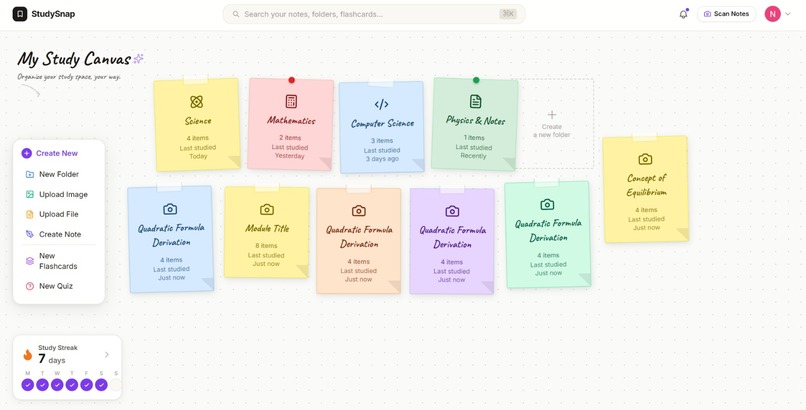
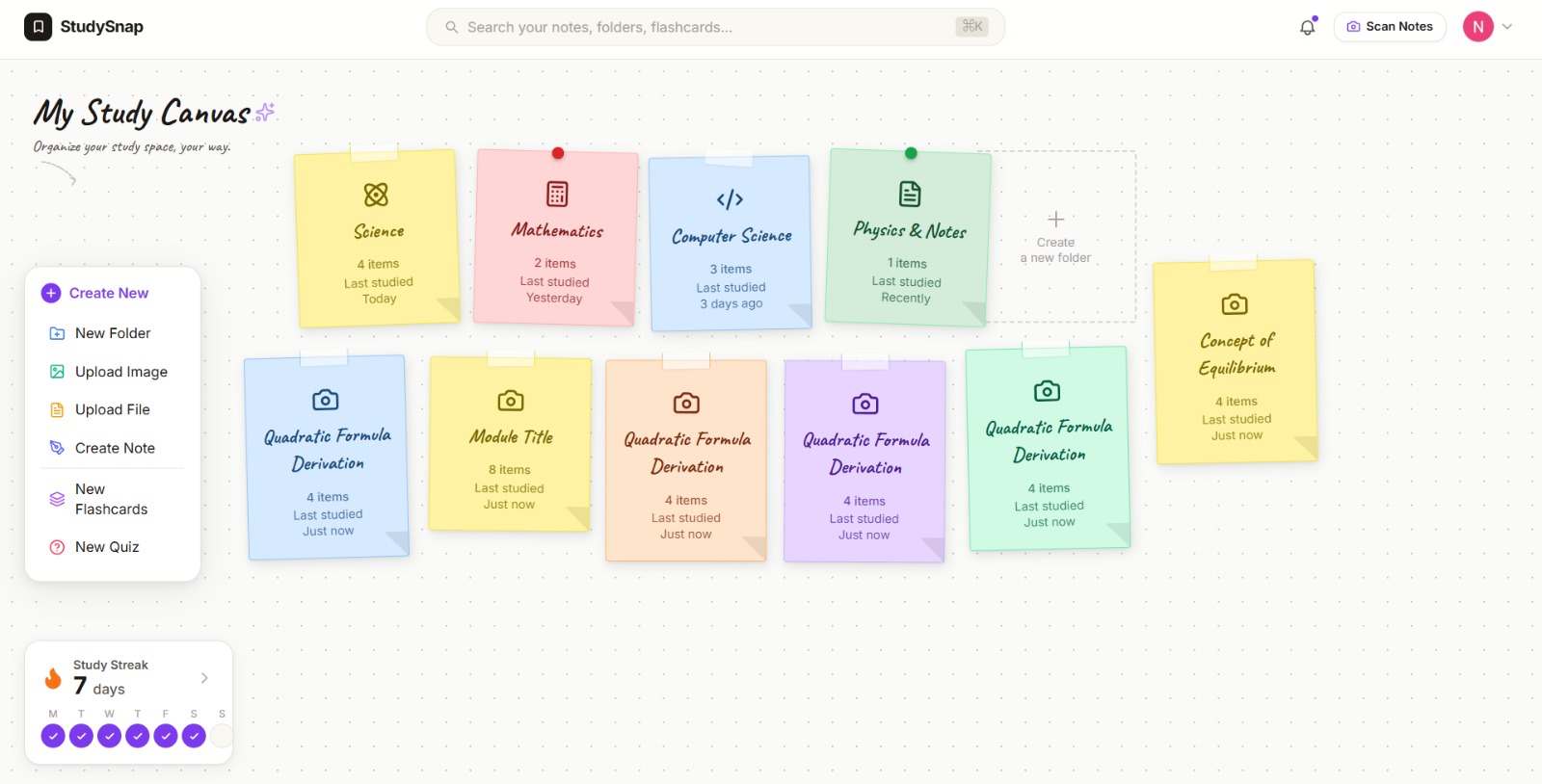
dashboard
-
Inspiration
Students waste hours manually creating flashcards while generic AI chatbots hallucinate answers that contradict their actual class notes. We wanted to fix both — instantly.
What it does
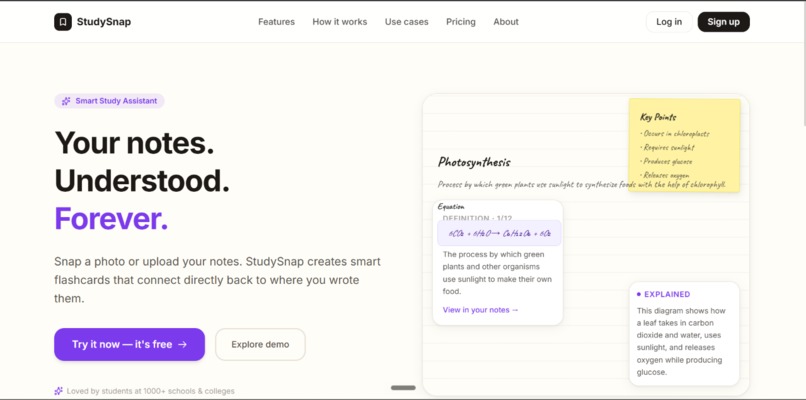
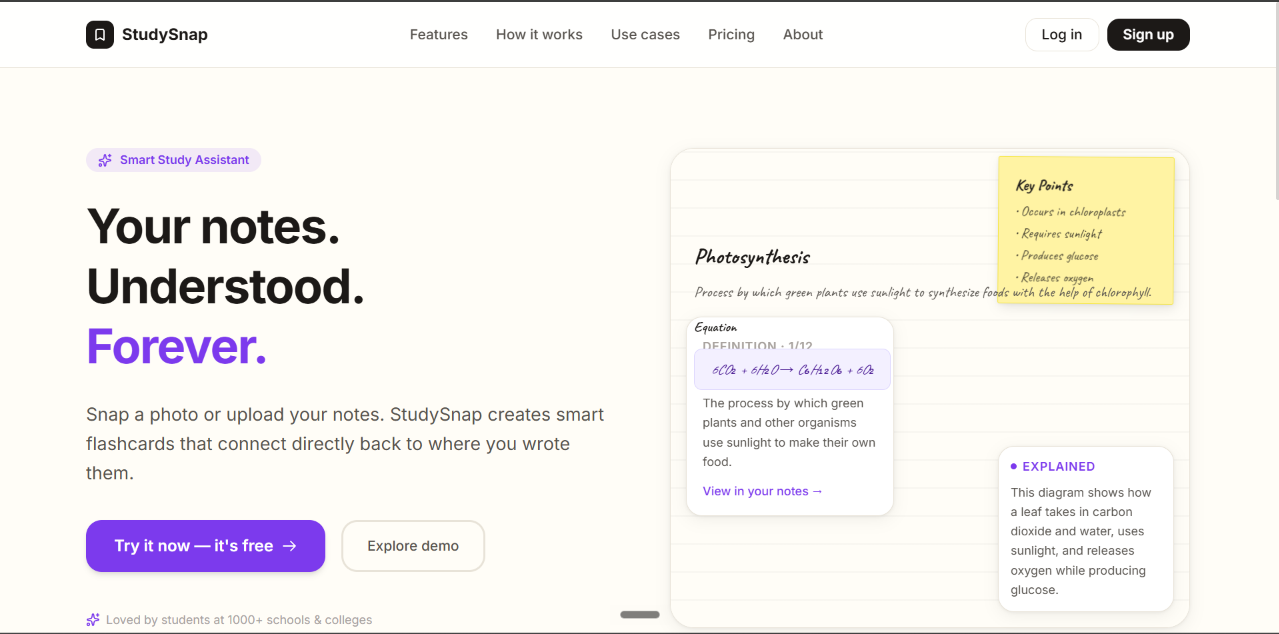
SnapStudy converts any handwritten note, PDF, or text file into type-aware flashcards, an adaptive quiz, and a RAG-powered chat assistant — all grounded strictly in the student's own uploaded notes. Zero hallucinations. Zero manual effort.
How we built it
- Frontend: React 18 + Vite + Tailwind CSS, deployed as a PWA on Vercel
- Backend: Node.js + Express with 5 dedicated AI endpoints
- AI: Google Gemini API —
gemini-3.5-flashfor unified single-pass note ingestion (OCR + flashcard generation in 1 API call),gemini-3.5-flash-litefor real-time RAG chat and remediation - Database: Supabase Postgres (JSONB regions + cards) + Supabase Storage bucket for note images, with Firebase fallback
- Hallucination control: Strict JSON schema enforcement (
responseMimeType: application/json,temperature: 0.2) + note context injection in every prompt
Challenges we ran into
- Reducing Gemini API calls — solved by merging region detection + card generation into a single unified prompt (2–3× fewer calls)
- Preventing LLM hallucinations — solved by injecting OCR'd note text as a bounded context block and physically cropping note regions with Sharp.js for grounded remediation
- Multi-key rate-limit management — built an automatic API key pool failover system across 6+ keys
Accomplishments that we're proud of
- Zero hallucinations by architecture — the RAG chat literally cannot answer outside the student's notes
- Single-pass ingestion reducing API overhead by 50–67% per upload
- Full PWA — installable, offline-capable, works on any device including $50 Android phones
- Supabase integration with Row Level Security ensuring complete data isolation per user
What we learned
- Prompt engineering at
temperature: 0.2withresponseMimeType: application/jsonis the most reliable way to eliminate LLM drift - Client-side HTML5 Canvas compression (80–90% size reduction) is critical before any multimodal API call
- RAG grounding is only as strong as the quality of the retrieved context — OCR region structure matters enormously
What's next for SnapStudy
- Spaced repetition scheduling based on quiz session history already stored in Supabase
- Teacher portal to share note decks with entire classrooms
- Multi-language handwriting support and LaTeX formula rendering
- Analytics dashboard showing which concepts students struggle with most
Built With
- ai
- api
- app
- css
- firebase
- gemini
- html5
- javascript
- lucide-react
- multimodal
- node.js
- postgresql
- progressive
- rag
- react
- rest
- supabase
- tailwind
- vercel
- web
- workbox

Log in or sign up for Devpost to join the conversation.