Inspiration
The idea for SnapStudy came from my desire to create an efficient and engaging way to study and learn new concepts. While there are plenty of flashcard apps available, I wanted to build something more intuitive, flexible, and user-friendly, allowing for a customized and immersive study experience.
What it does
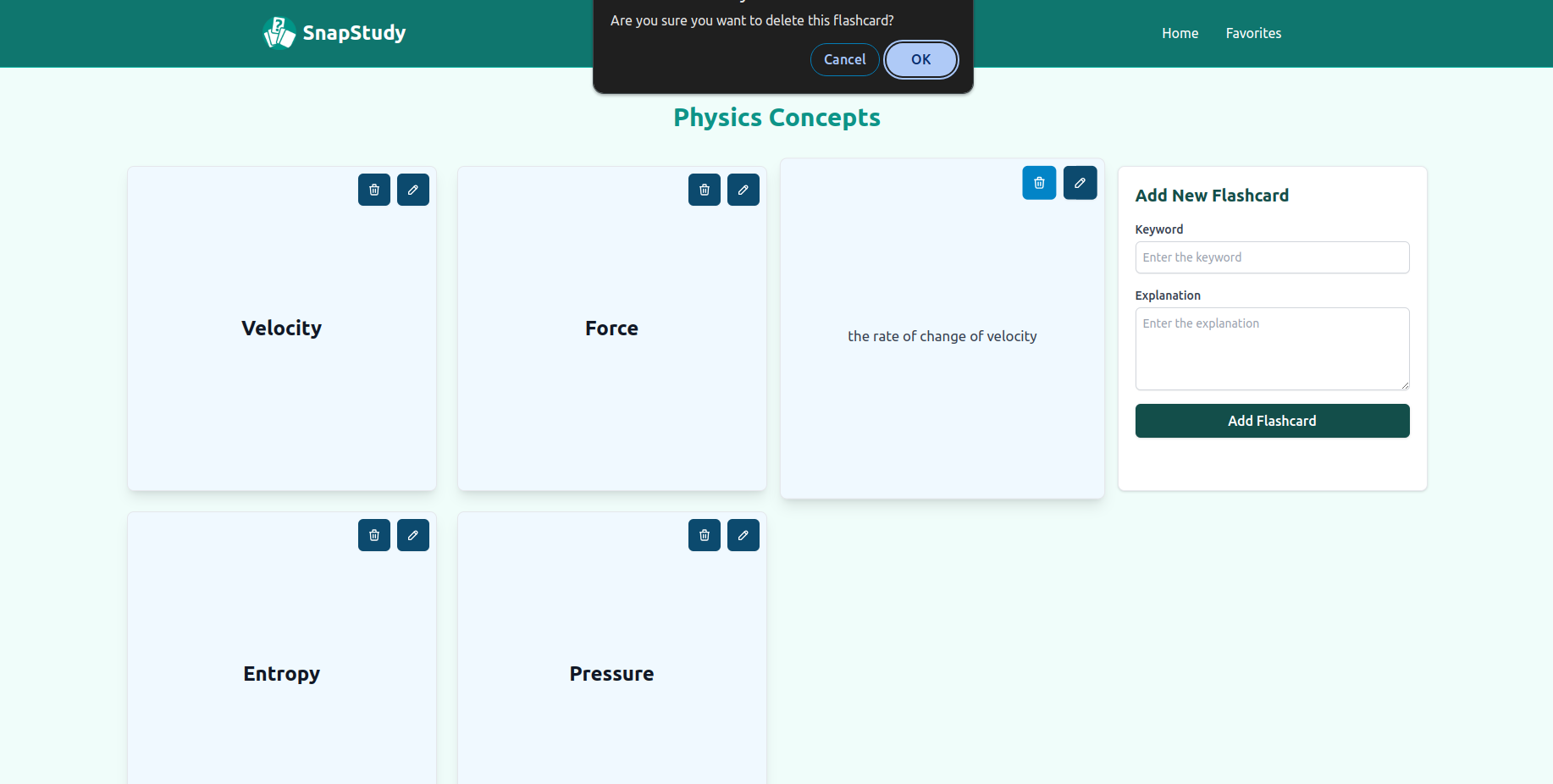
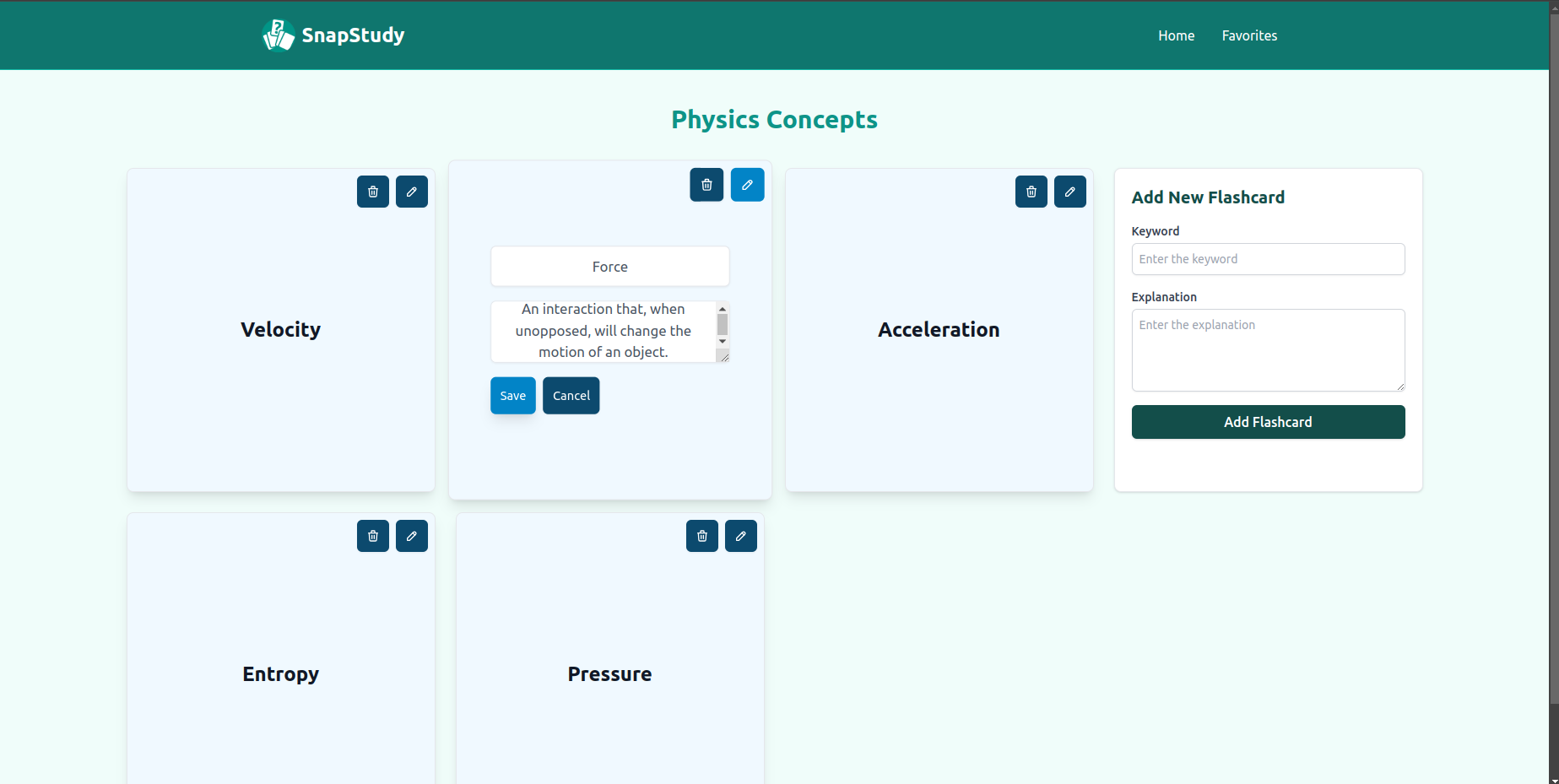
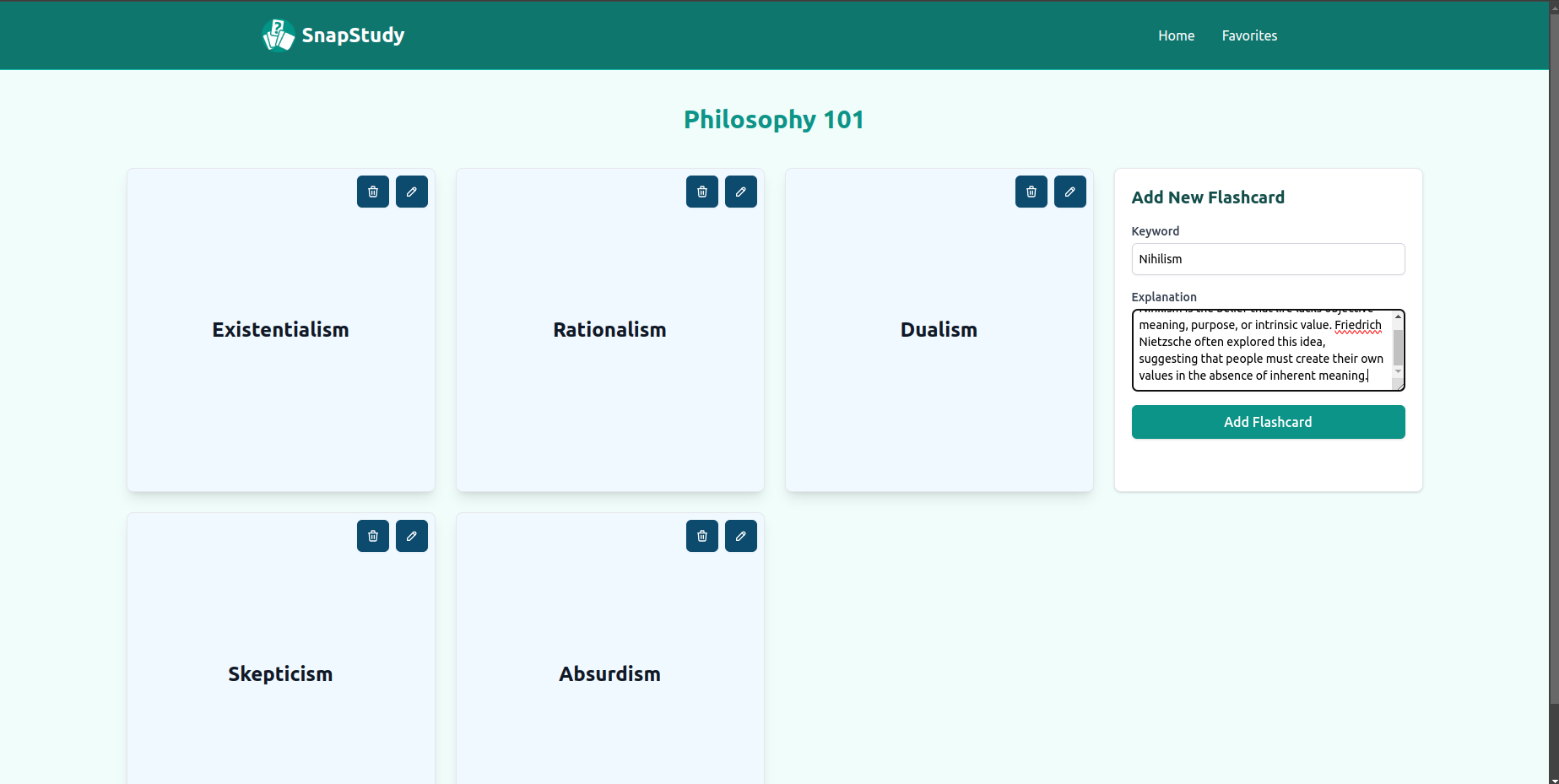
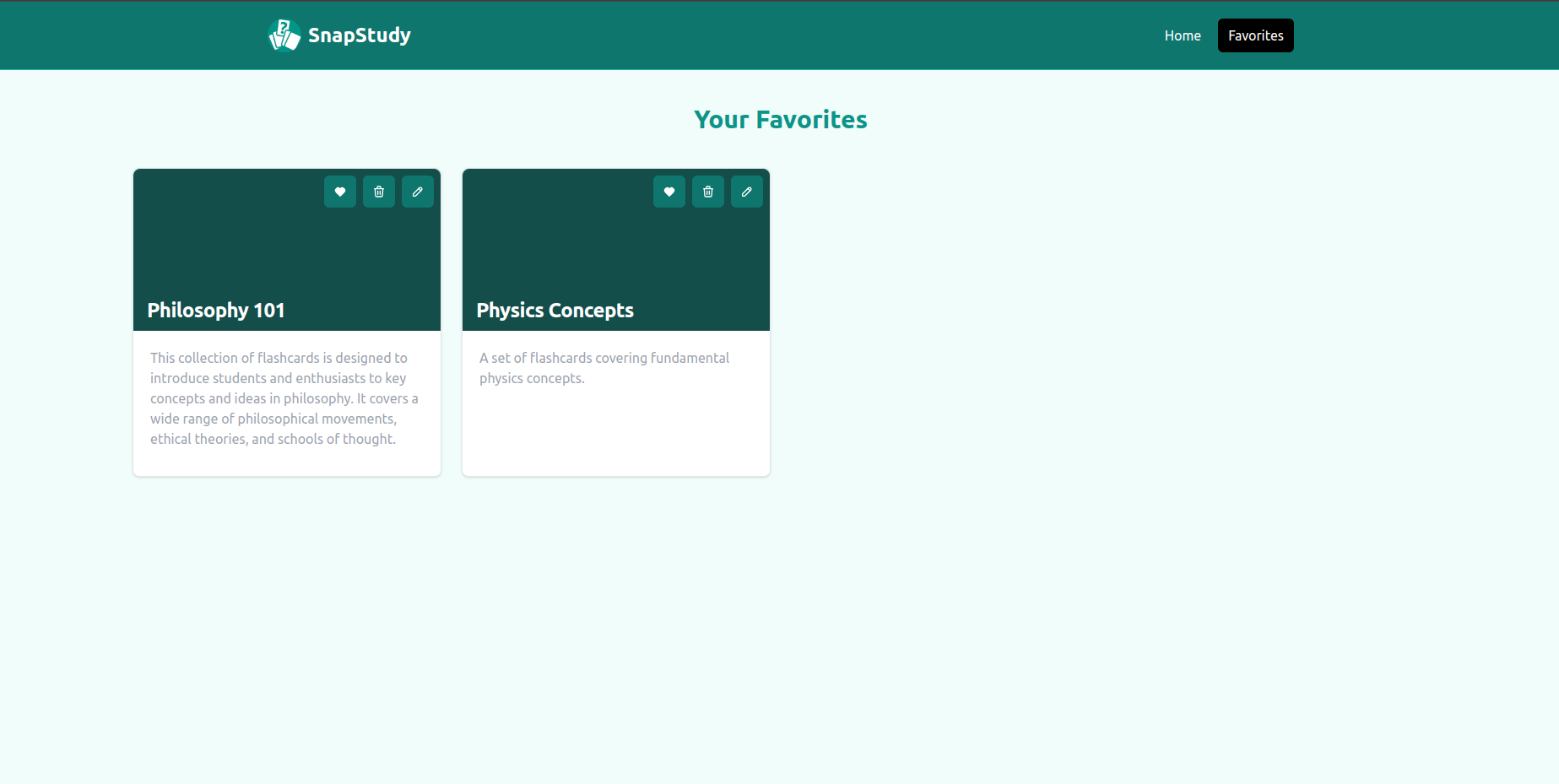
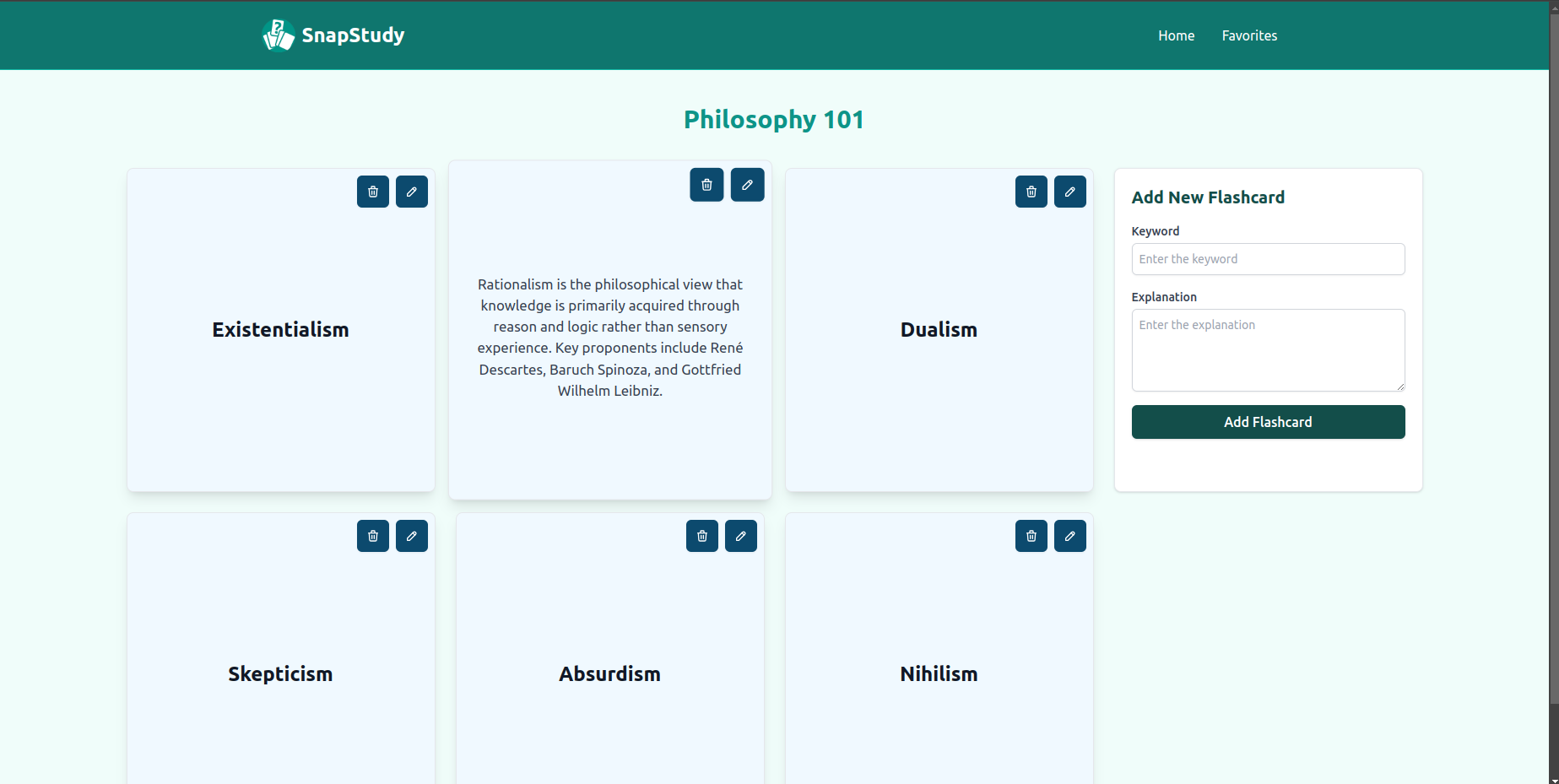
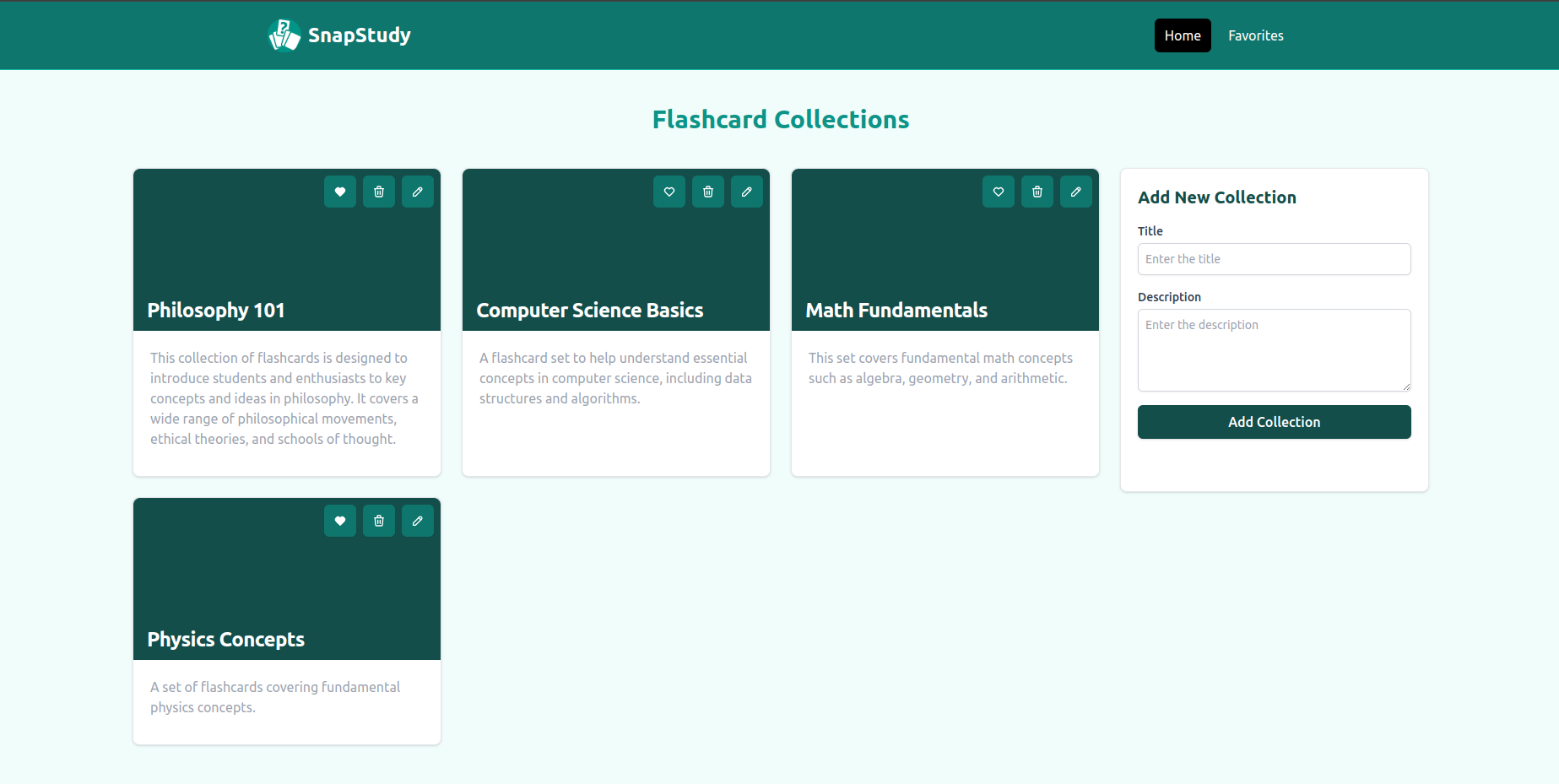
SnapStudy is a web-based flashcard app that enables users to create and review digital flashcards. The app offers a simple, clean interface where users can easily create new flashcards with text or images, and organize them into decks. Features like tagging, filtering, and searching allow for better organization and more targeted study sessions.
How I built it
I built SnapStudy using the MERN stack, leveraging React for the frontend, Node.js and Express for the backend, and MongoDB for data storage. This tech stack was chosen for its flexibility, scalability, and support for modern web applications. Mongoose was used to handle database interactions, and React hooks made the frontend dynamic and responsive.
Challenges I ran into
One of the main challenges I faced was balancing simplicity with functionality. I wanted SnapStudy to be user-friendly yet powerful enough to meet the diverse needs of students. At first look it seemed simple enough but implementing features like filtering and tagging in a way that kept the UI uncluttered was tricky. Since this app is not hosted and runs locally, ensuring smooth installation and operation across different environments was also a hurdle.
Accomplishments that I'm proud of
I'm proud of successfully building a fully functioning flashcard app on my own. Creating an intuitive UI and ensuring a seamless experience from creating cards to studying them was a key accomplishment. The ability to handle complex flashcard organization while keeping things simple is something I’m particularly proud of.
What I learned
This project taught me the importance of careful planning, particularly in managing both the frontend and backend. I gained a deeper understanding of React, Node.js, and MongoDB, and learned how to build a full stack application that is easy to install and use locally. Working on every part of the project solo also helped me sharpen my problem-solving skills and deepen my understanding of the MERN stack.
What's next for SnapStudy
While SnapStudy is currently designed for local use, my next goal is to refine it further and potentially deploy it online. I’m also considering adding more features like spaced repetition and collaborative study options. As I receive feedback, I plan to continue improving the app, making it an even more powerful study tool for learners.
Built With
- express.js
- jsx
- mongodb
- mongoose
- node.js
- react-router-dom
- react.js
- redux
- tailwindcss

Log in or sign up for Devpost to join the conversation.