-
-
SnapSpark logo.
-

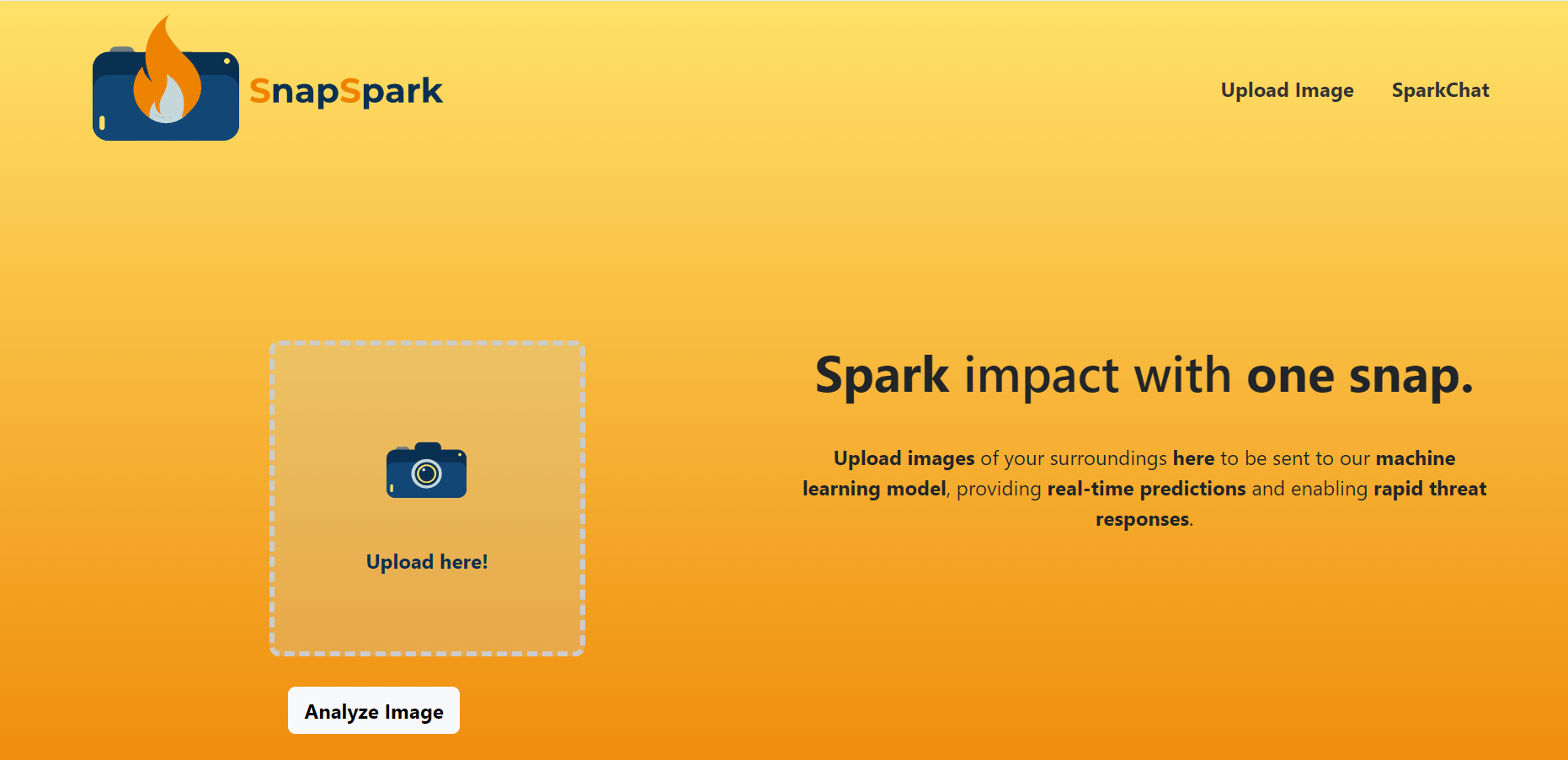
Users can upload images which are then fed to the ML model.
-
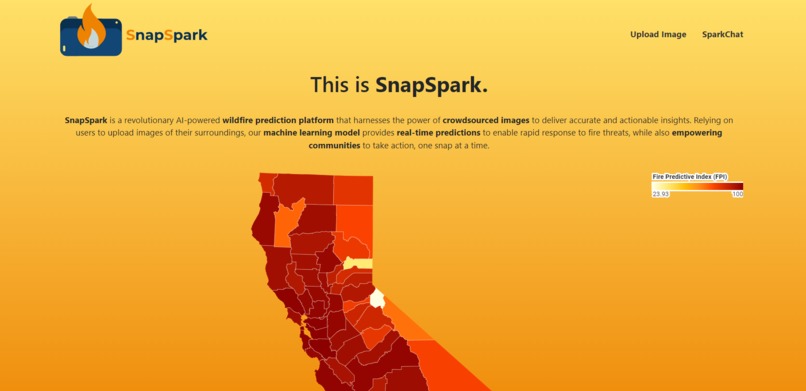
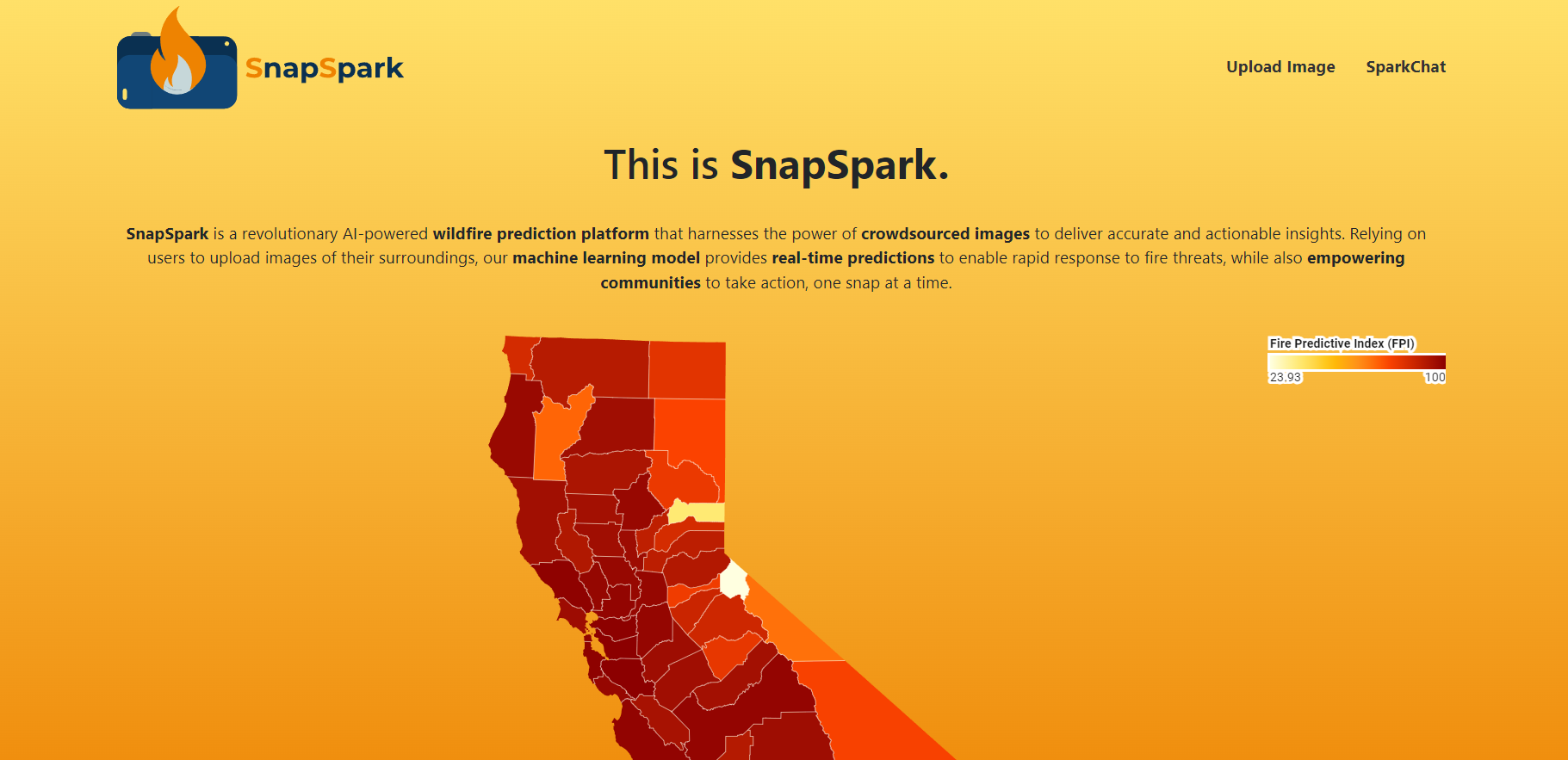
SnapSpark Dashboard with our interactive map.
-
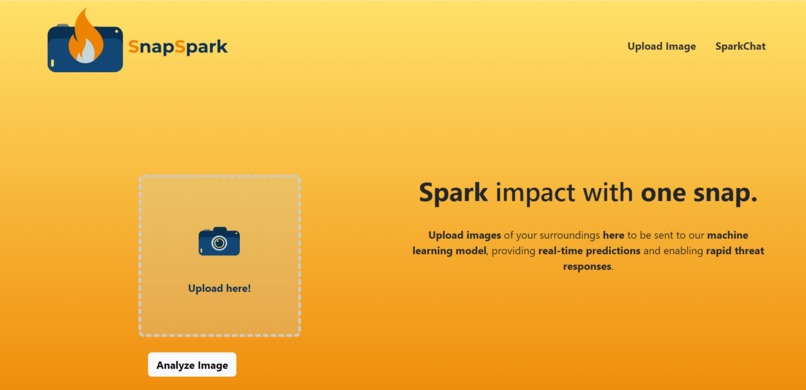
Image upload page which then sends photos to the ML model.
-
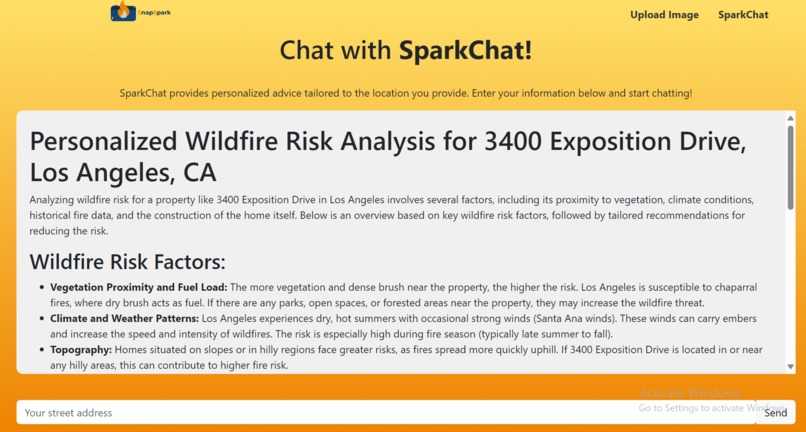
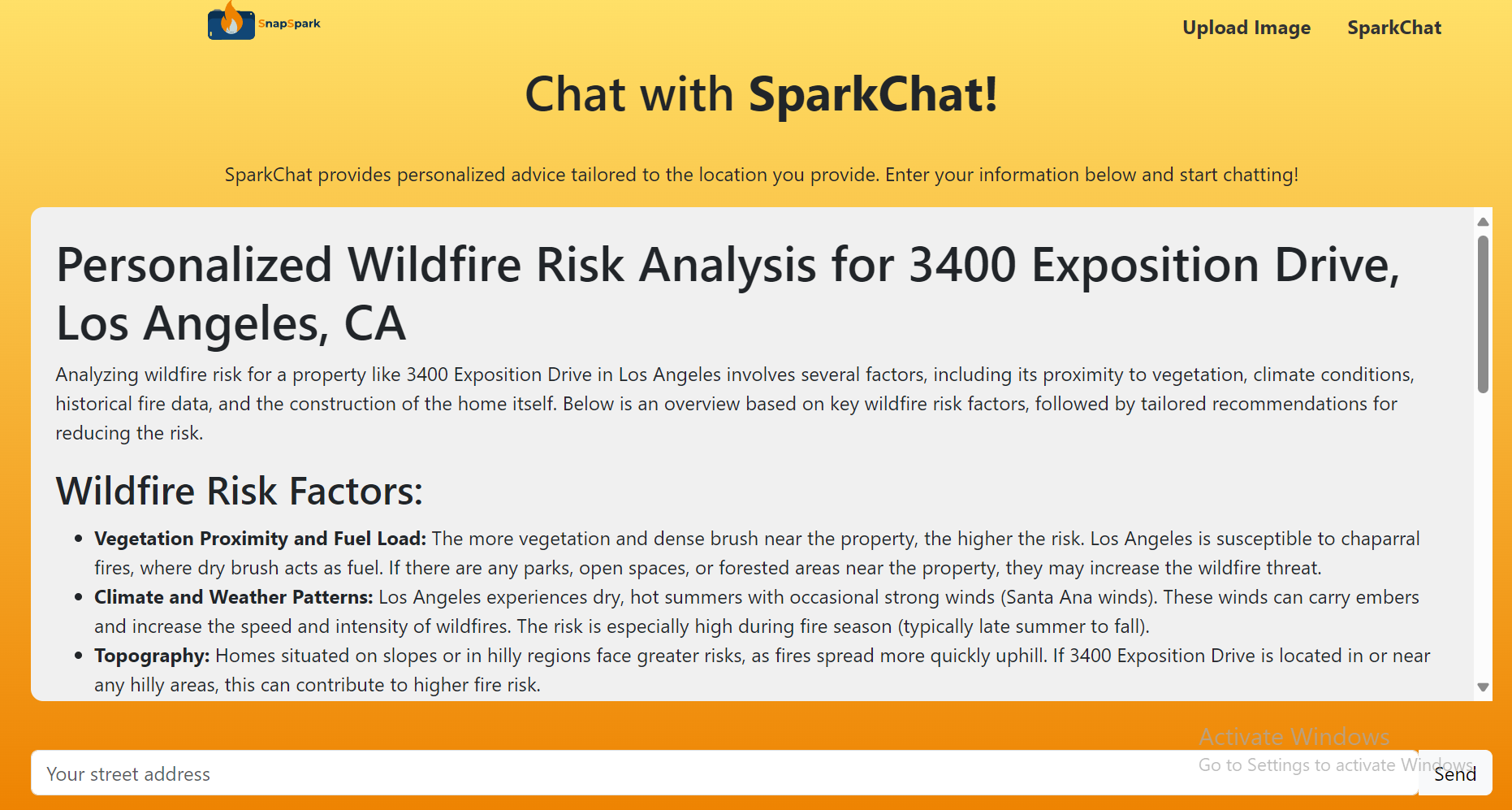
SparkChat, a built-in LLM to address wildfire-related inquiries.

Inspiration
Wildfires ravage 4-5 million km² of land globally, releasing 339+ million tons of CO₂ into the atmosphere. Climate change is only accelerating the impact of wildfires, threatening the safety of our homes and communities.
We wanted to build a tool that brings people and communities together to empower them to make a difference in preventing and predicting wildfires.
What it does
SnapSpark is an AI-powered wildfire prediction platform leveraging multimodal crowdsourced data. The web app empowers users to submit images of their surroundings and collect on-device data. Our advanced machine learning image analysis is combined with weather and environmental data, enabling rapid identification and response to emerging fire threats before they begin. SnapSpark makes it easy for anyone, anywhere, to be part of the solution, helping to protect people, property, and the environment.
How we built it
SnapSpark's uses a three-pronged AI/ML approach in predicting wildfires:
- Roboflow is used for image analysis
- Tune analyzes weather and ground statistics
- On-device manages on-device barometer measurements and runs the Explainable AI for the analysis
We developed a novel wildfire risk scale called the Fire Prediction Index (FPI). FPI calculates the arithmetic mean of image, weather, and on-device data to provide the most accurate prediction possible.
We started by building the backend of our project using FastAPI. We used MongoDB as our database management system, which provided us with a robust and reliable way to store and retrieve data. We also used Docker to containerize our application, ensuring that it could be easily deployed and scaled.
For the frontend, we chose Bootstrap to create a visually appealing and user-friendly interface. We wrote the client-side logic using TypeScript, which allowed us to communicate with the backend and provide a seamless user experience. We also created a simple HTTP server using Go to host the frontend locally.
Challenges we ran into
We had struggles trying to find a good idea. As this was all of ours' first hackathon, we had no clue about how to manage our project phases, time, as well as which frameworks to take advantage of. At the same time, we also wanted to attend workshops and go on "side quests". We would also really like to thank Mack 🐐🐐🐐, our mentor, for helping us with so many aspects of our project, keeping us on track to making a feasible product! Huge huge shout out to Joy and Eunsoo for recommending FastAPI for us, it was extremely helpful!!
Accomplishments that we're proud of
We were really able to an idea that we were proud of and also resonated with us. Members of our team come from areas that are threatened by wildfires. Each of us also have our own unique experiences with wildfires that we were able to bond over.
What we learned
We learned a lot of new frameworks like Retool and really helpful APIs such as Roboflow and Tune. We also learned how to collaborate as a team under a strict time deadline, and a lot about project management. Our Saturday all-nighter was really a time to remember...a lot of brainrot, coffee cravings, giggling and the quote: "Less yapping, more tapping!"; we truly learnt a lot about ourselves and each other.
What's next for SnapSpark
We want to add more features and explore more APIs to make the app deployable across many interfaces.


Log in or sign up for Devpost to join the conversation.