-
-
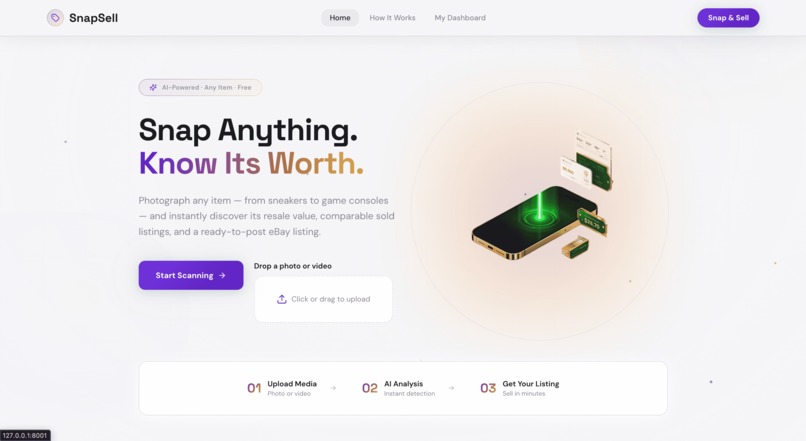
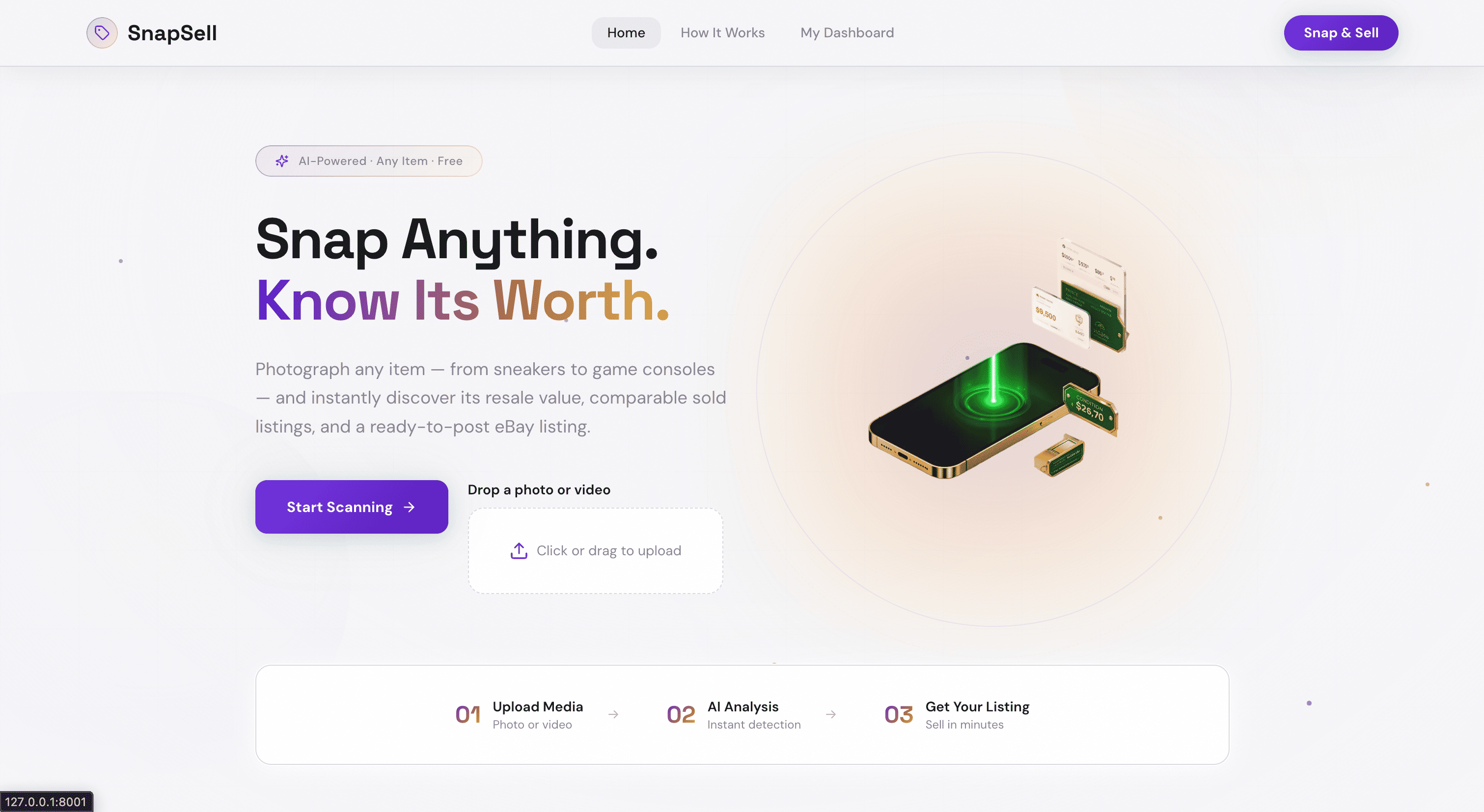
Home Page
-
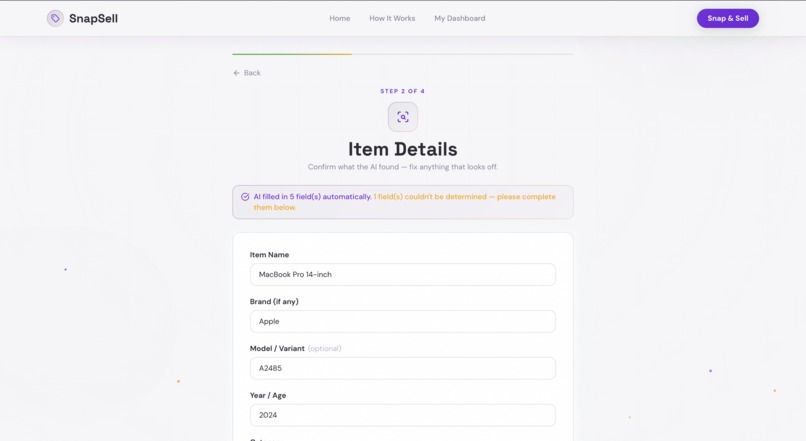
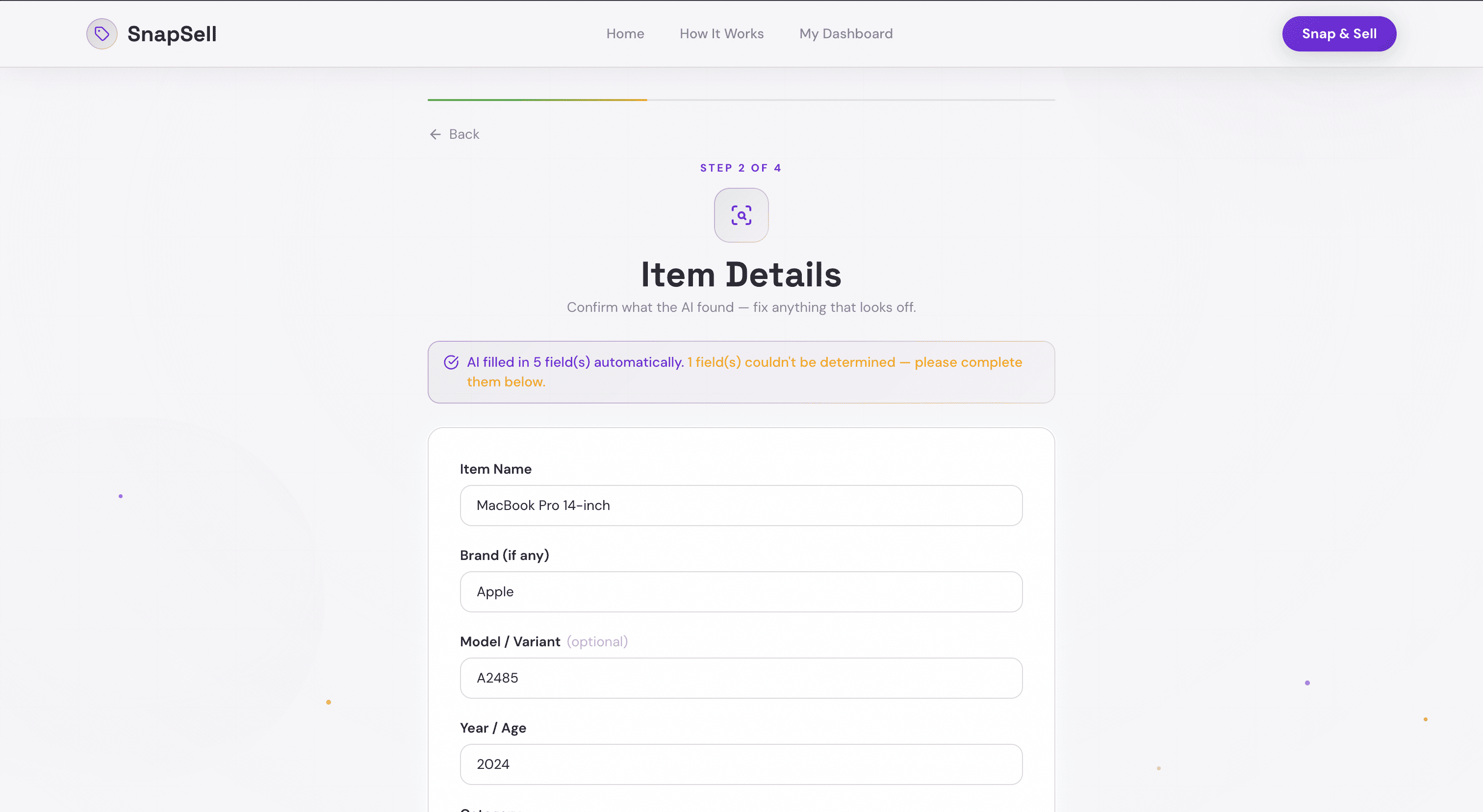
Device Identification
-
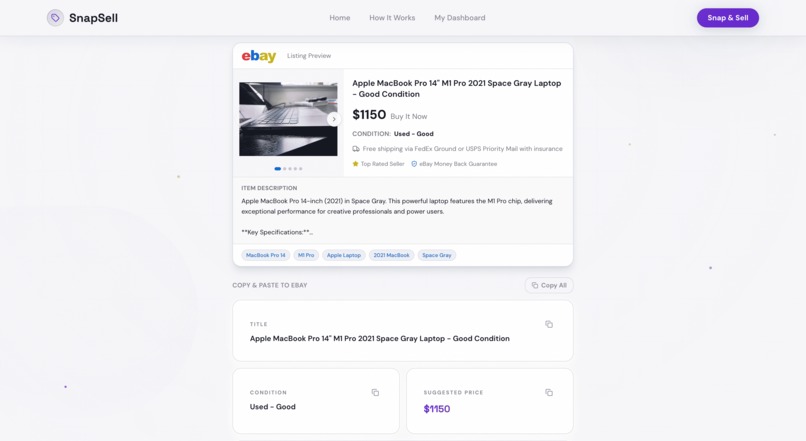
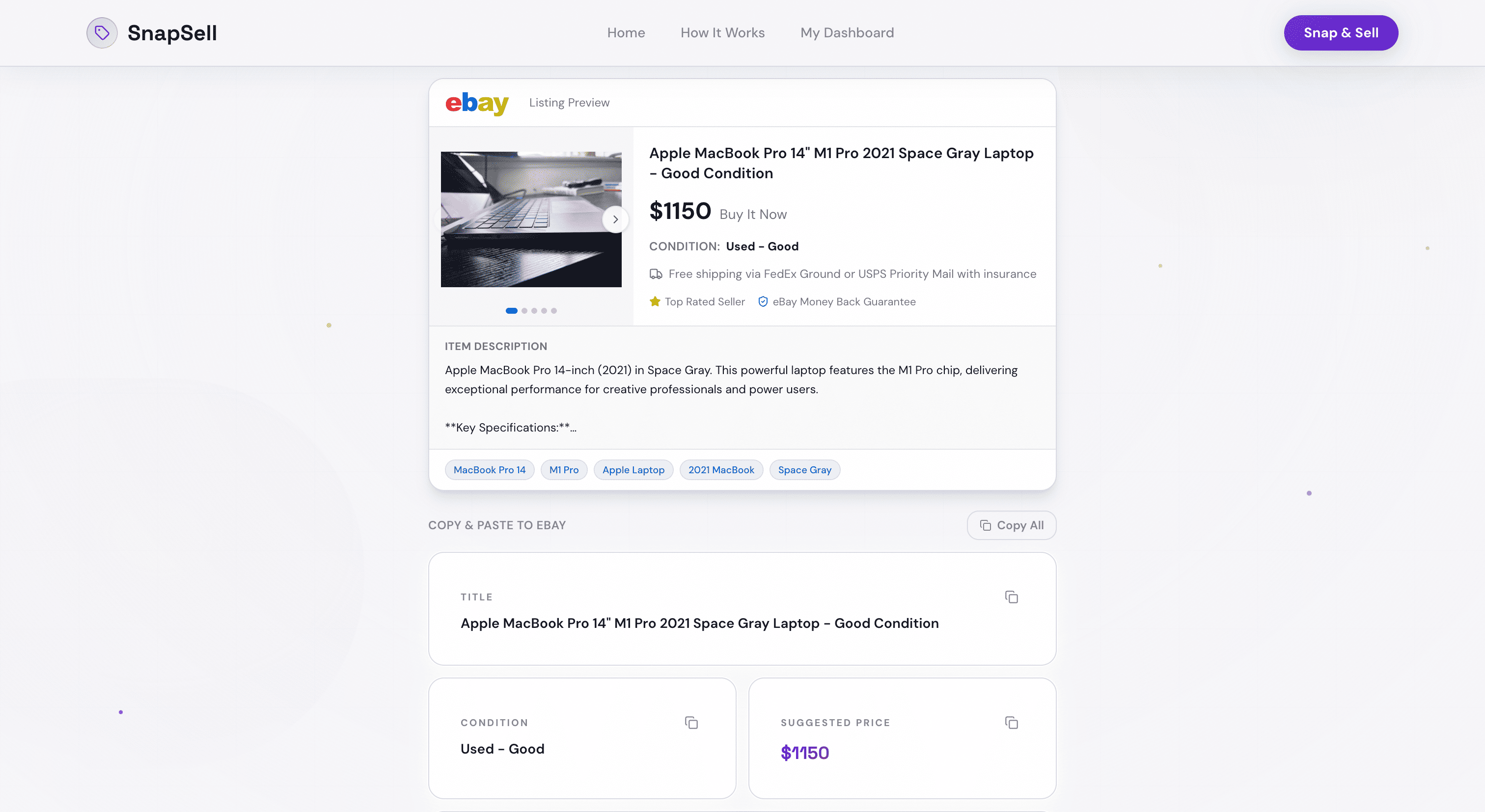
Generated Ebay Listing
About the Project
SnapSell is an AI-powered resale assistant that turns a few photos of an item into a practical resale plan. A user uploads images, SnapSell identifies the product, estimates its current market value, compares it against eBay listings, and generates a ready-to-post eBay listing with a title, description, suggested price, and shipping recommendation.
Inspiration
The idea for SnapSell came from a simple problem: most people have valuable unused items sitting around, but listing them for resale takes effort. You have to identify the exact model, understand the condition, research comparable prices, decide whether it is worth selling, and write a listing that buyers will trust.
SnapSell was built to make that process feel instant. Instead of asking users to become resale experts, the app uses AI vision and marketplace data to help them answer the question:
$$ \text{Should I sell this, donate it, trade it in, or recycle it?} $$
The project is also motivated by sustainability. Giving an item a second life can reduce waste, especially for electronics, where reuse often has a meaningful environmental benefit.
What I Learned
Building SnapSell taught me how important it is to design AI workflows around uncertainty. Resale pricing needs honesty more than confidence, so SnapSell marks details as certain, likely, or unknown and lets users confirm missing information before pricing the item.
I also learned that marketplace data can be messy. Listings may include accessories, parts-only items, inflated prices, or unrelated products. SnapSell filters out obvious mismatches and compares the item against more realistic resale examples.
How I Built It
SnapSell uses a React/Vite frontend and a FastAPI backend. The frontend guides users through uploading photos, confirming item details, reviewing valuation results, and generating a listing. The backend handles image analysis, marketplace comparison, and listing generation.
The main pipeline works like this:
- Upload item photos.
- Use Claude vision to identify the item and condition.
- Ask the user to confirm uncertain details.
- Analyze resale value using AI and eBay market data.
- Generate an eBay-ready listing.
At a high level, SnapSell estimates value using:
$$ \text{Estimated Value} = f(\text{item}, \text{condition}, \text{demand}, \text{comparables}) $$
Instead of returning one exact price, it gives a range:
$$ \text{Value Range} = [\text{low estimate}, \text{high estimate}] $$
Challenges
One challenge was getting consistent structured output from AI responses. The backend prompts ask for raw JSON only, and the app includes logic to extract valid JSON even if the response is not perfectly formatted.
Another challenge was pricing. Resale value is rarely exact, so SnapSell needed to balance AI judgment with real marketplace data. A range is more honest than a single number because it gives users room to choose between selling quickly or listing higher.
Image handling was also tricky. Uploaded images need to be resized before analysis, and eBay images sometimes need to be proxied so they display correctly in the browser.
Outcome
SnapSell became a complete scan-to-sale experience: upload an item, understand what it is worth, compare the market, and leave with a listing that is ready to post. The project combines computer vision, marketplace research, prompt engineering, and frontend product design into one practical resale tool.

Log in or sign up for Devpost to join the conversation.