-
-
snapscript
Inspiration
The inspiration behind SnapScript stemmed from the desire to streamline the process of learning and studying. With the increasing digitization of education, there's a growing need for tools that can enhance the accessibility of educational resources. We envisioned a platform that could simplify the conversion of images containing educational content into easily digestible and searchable text-based PDFs. By integrating optical character recognition (OCR) technology with advanced text generation capabilities, we aimed to create a powerful tool for students to efficiently convert visual information into actionable study materials.
What it does
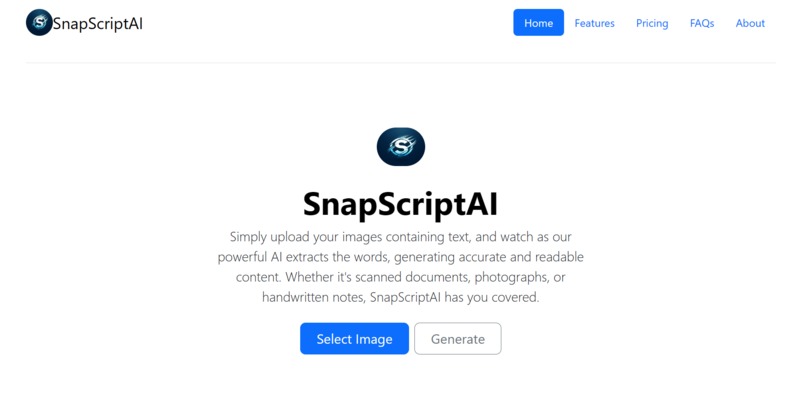
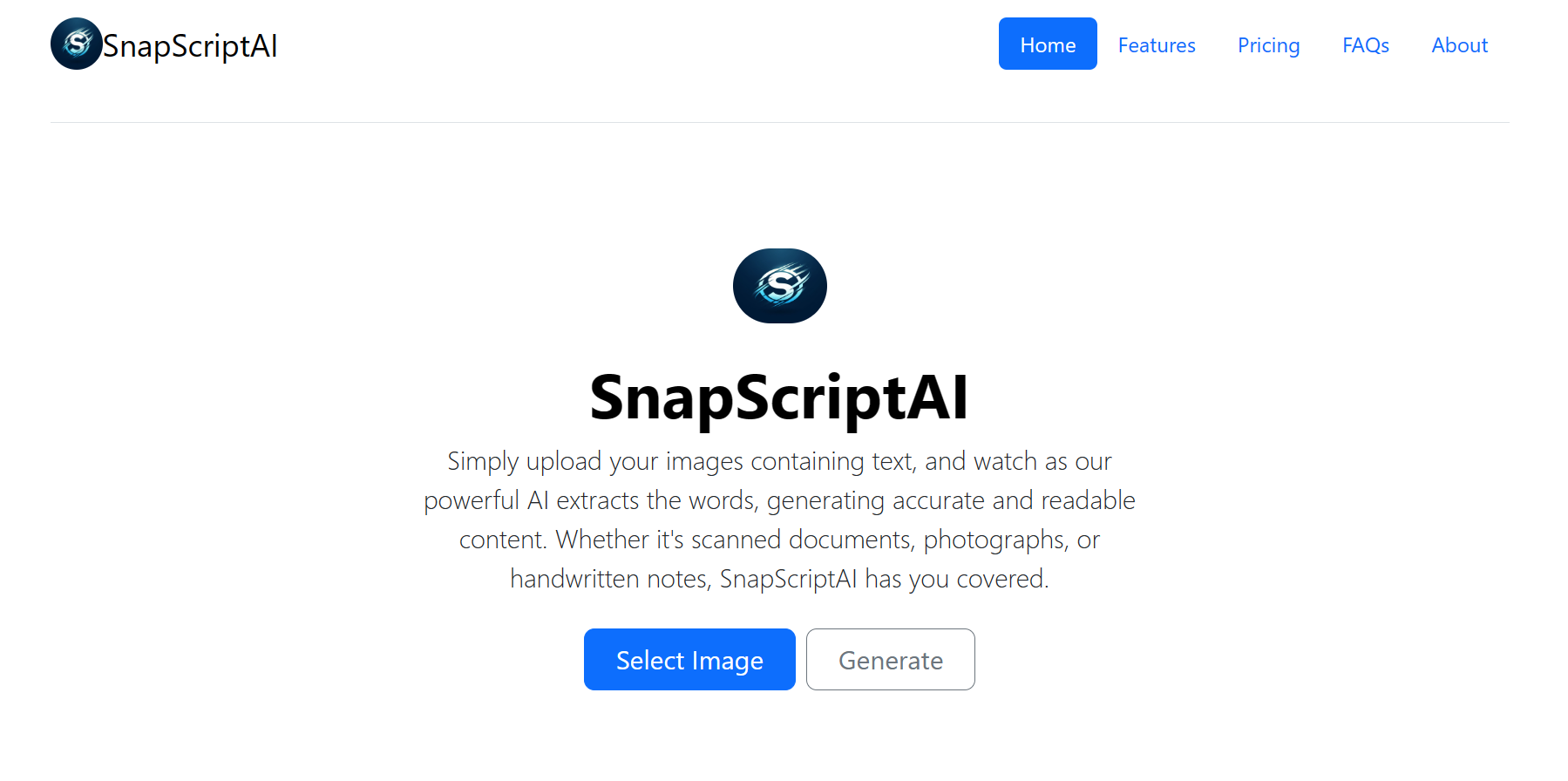
SnapScript is a web application designed to facilitate the conversion of images into PDFs with associated text and notes. Users can upload images of educational content, such as textbook pages, lecture slides, or handwritten notes, to the platform. The application then utilizes Tesseract OCR engine to extract text from the images. Subsequently, the Gemini API is employed to generate additional contextual information and notes based on the extracted text. The final output is a PDF document containing both the original image and the corresponding text-based content, enriched with additional notes generated by the Gemini AI. Additionally, SnapScript features a chatbot powered by the Gemini API, providing users with instant assistance and clarification regarding the content of the generated PDFs.
How we built it
SnapScript was developed using a combination of modern web technologies and APIs. The frontend of the application was built using HTML, Bootstrap, and JavaScript, ensuring a responsive and user-friendly interface. We utilized webpack for module bundling and managing dependencies. Node.js served as the backend runtime environment, enabling server-side processing and communication with external APIs. The core functionalities, including image processing, text extraction with Tesseract OCR, text generation with the Gemini API, and chatbot integration, were implemented using JavaScript.
Challenges we ran into
Throughout the development process, we encountered several challenges that tested our problem-solving skills and perseverance. One major challenge was optimizing the OCR and text generation processes to handle various types of images and produce accurate results consistently. We also faced difficulties in integrating and synchronizing the different components of the application, particularly the communication between the frontend, backend, and external APIs. Additionally, ensuring the scalability and performance of the application while hosting it on GitHub posed technical challenges that required careful consideration and implementation.
Accomplishments that we're proud of
Despite the challenges we faced, we're proud to have successfully developed SnapScript, a robust and innovative tool for students. One of our key accomplishments is the seamless integration of OCR technology and AI-powered text generation, providing users with comprehensive and insightful study materials. We're also proud of the intuitive user interface and the inclusion of the Gemini-powered chatbot, which enhances the accessibility and usability of the platform. Moreover, hosting SnapScript on GitHub reflects our commitment to open-source development and collaborative innovation, allowing users worldwide to benefit from our creation.
What we learned
The development of SnapScript provided us with valuable insights into various technologies and techniques, as well as the challenges inherent in building complex web applications. We gained hands-on experience with OCR technologies, API integration, and frontend and backend development practices. Additionally, collaborating on a project of this scale enhanced our teamwork, communication, and problem-solving skills. We also learned the importance of user feedback and iterative refinement in the development process, continually improving the functionality and usability of the application based on user input.
What's next for SnapScript
Looking ahead, we envision several potential avenues for further enhancing SnapScript and expanding its capabilities. One direction is to improve the accuracy and efficiency of the OCR and text generation processes through advanced machine learning algorithms and training data augmentation. Additionally, we plan to incorporate more advanced natural language processing (NLP) techniques to enhance the quality and relevance of the generated notes and text-based content. Furthermore, we aim to introduce features such as collaborative editing and sharing of PDFs, allowing users to collaborate on study materials seamlessly. Continuously refining the chatbot functionality and expanding its knowledge base will also be a focus area to provide users with even more personalized and helpful assistance. Ultimately, our goal is to evolve SnapScript into a comprehensive and indispensable tool for students worldwide, empowering them to learn more effectively and efficiently.

Log in or sign up for Devpost to join the conversation.