Inspiration
Building blocks are one of the most natural things to do with your hands — and the least natural thing to do with a controller. We wanted a VR game where your bare hands are the whole interface: reach out, grab a brick, line it up, let go, and it snaps. Then we asked what happens when you put that feeling into a party: friends (or bots) in the same plaza, building, racing and bonking each other with whatever they just built.
What it does
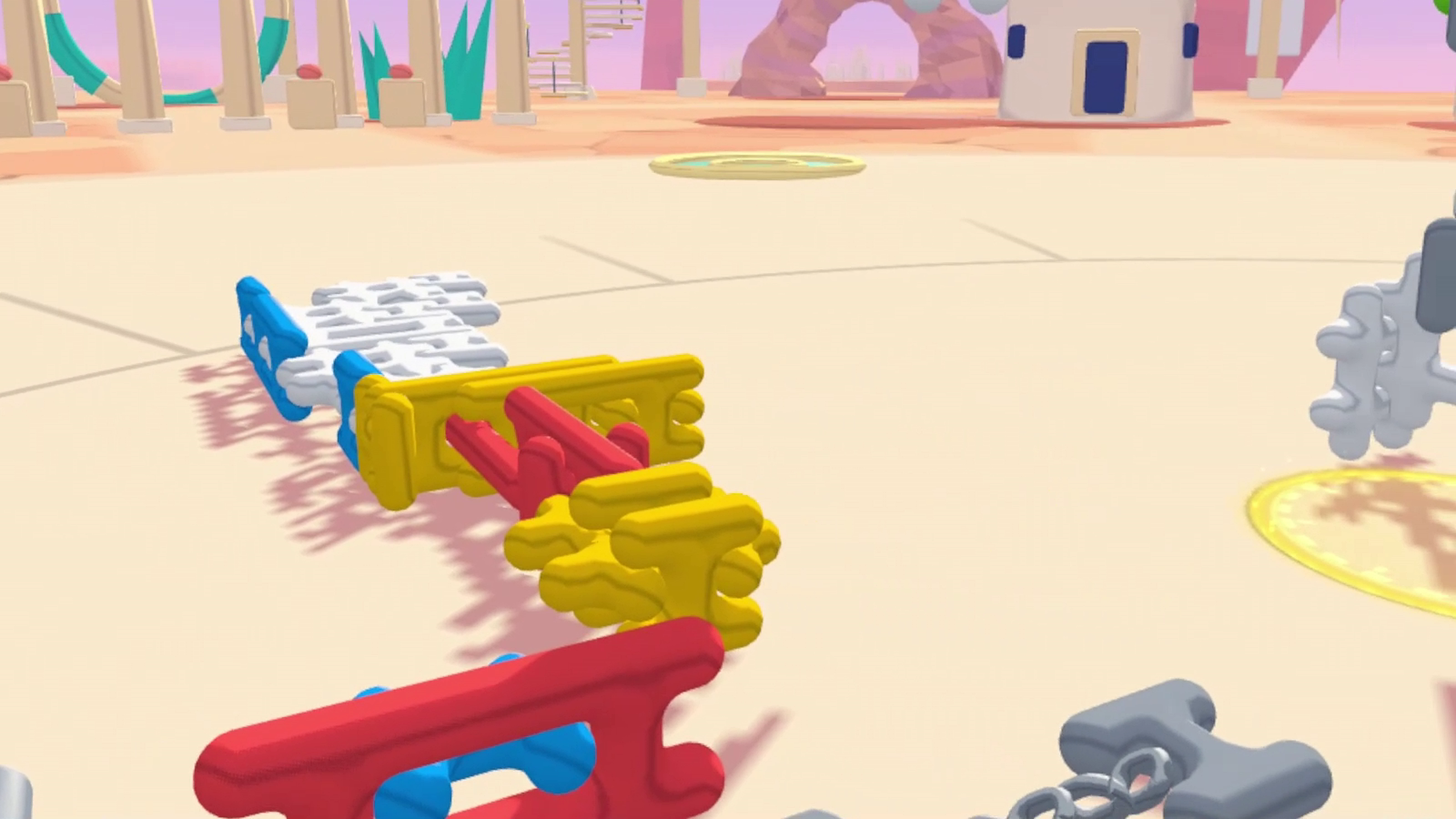
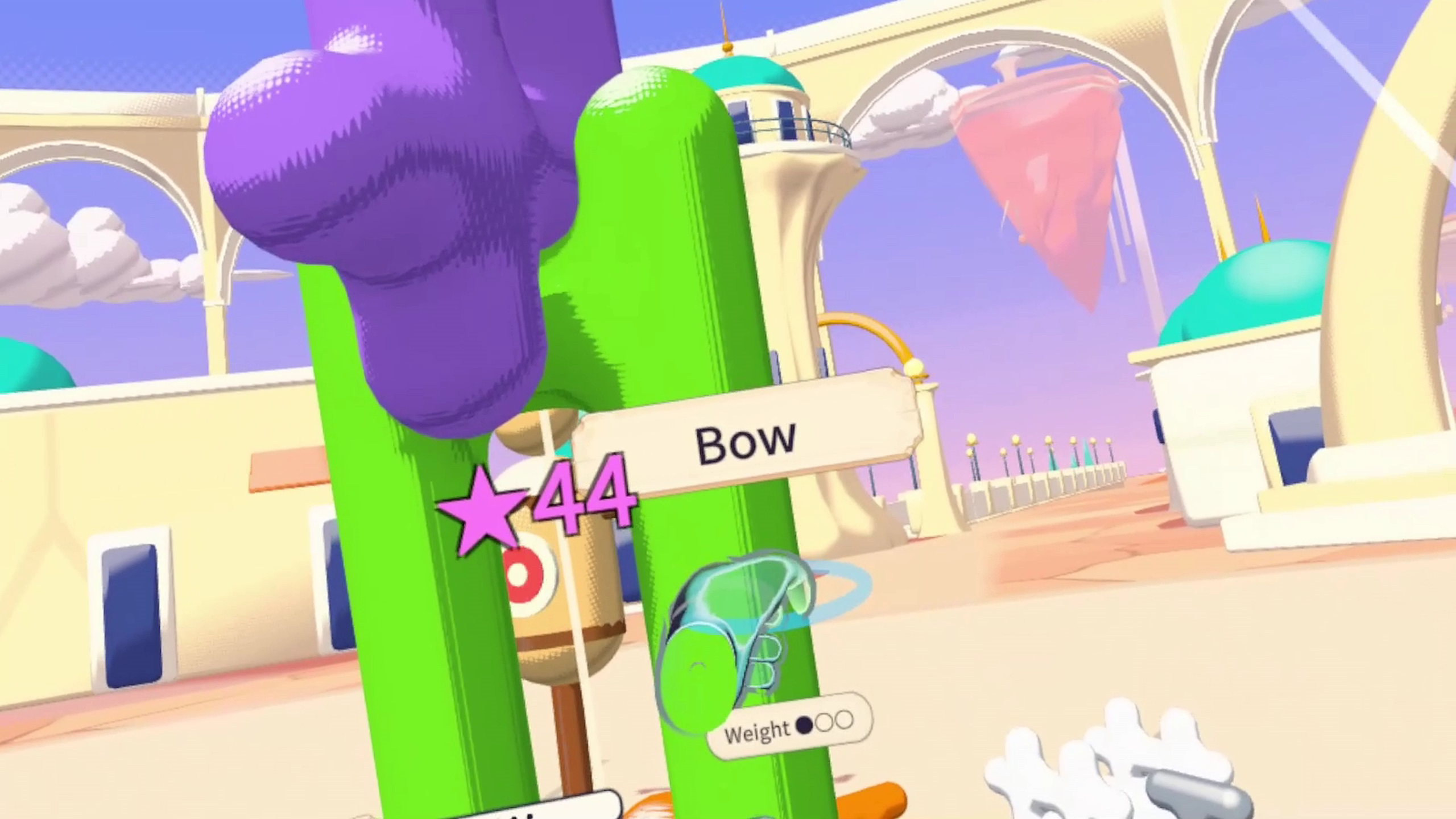
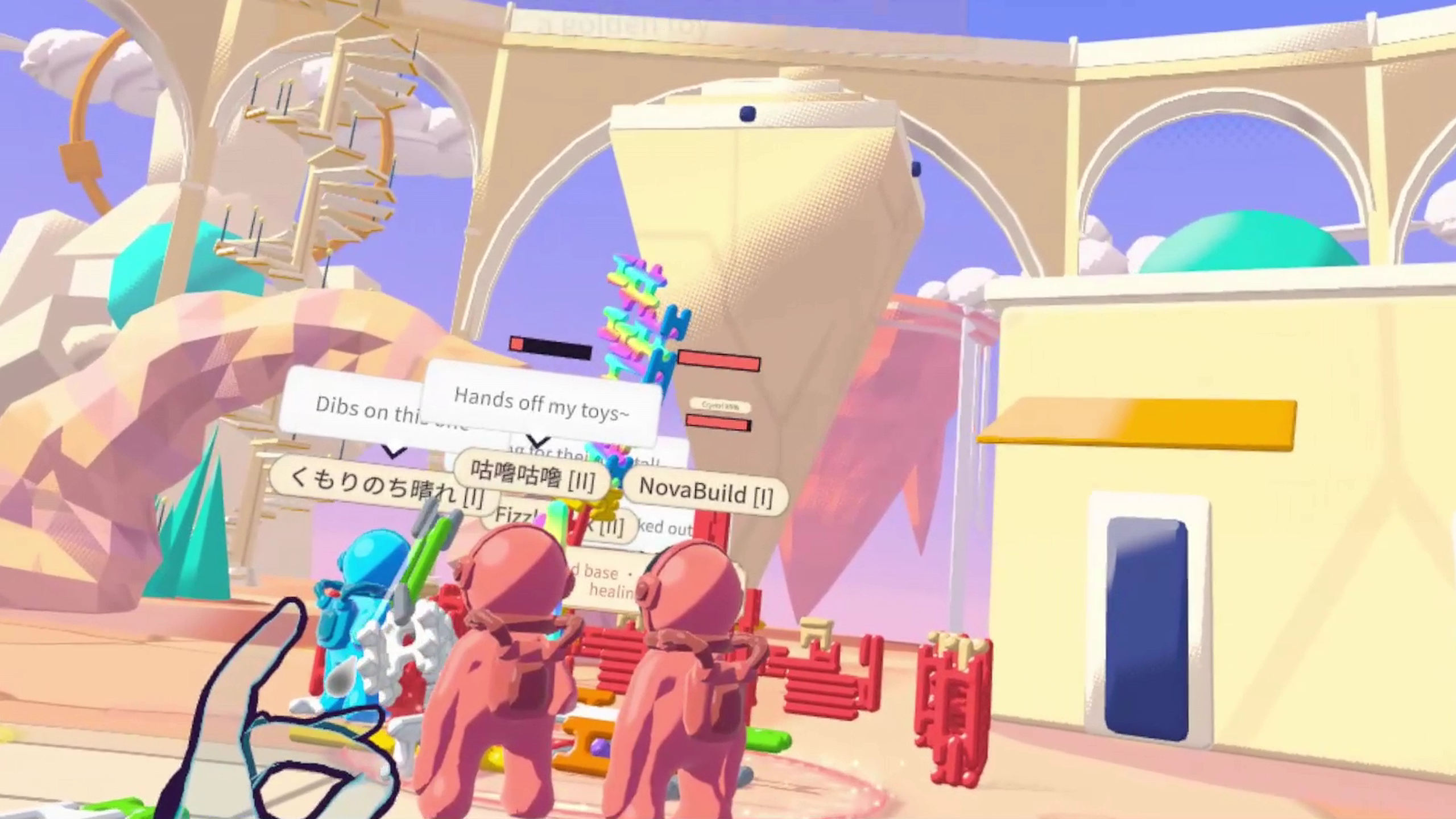
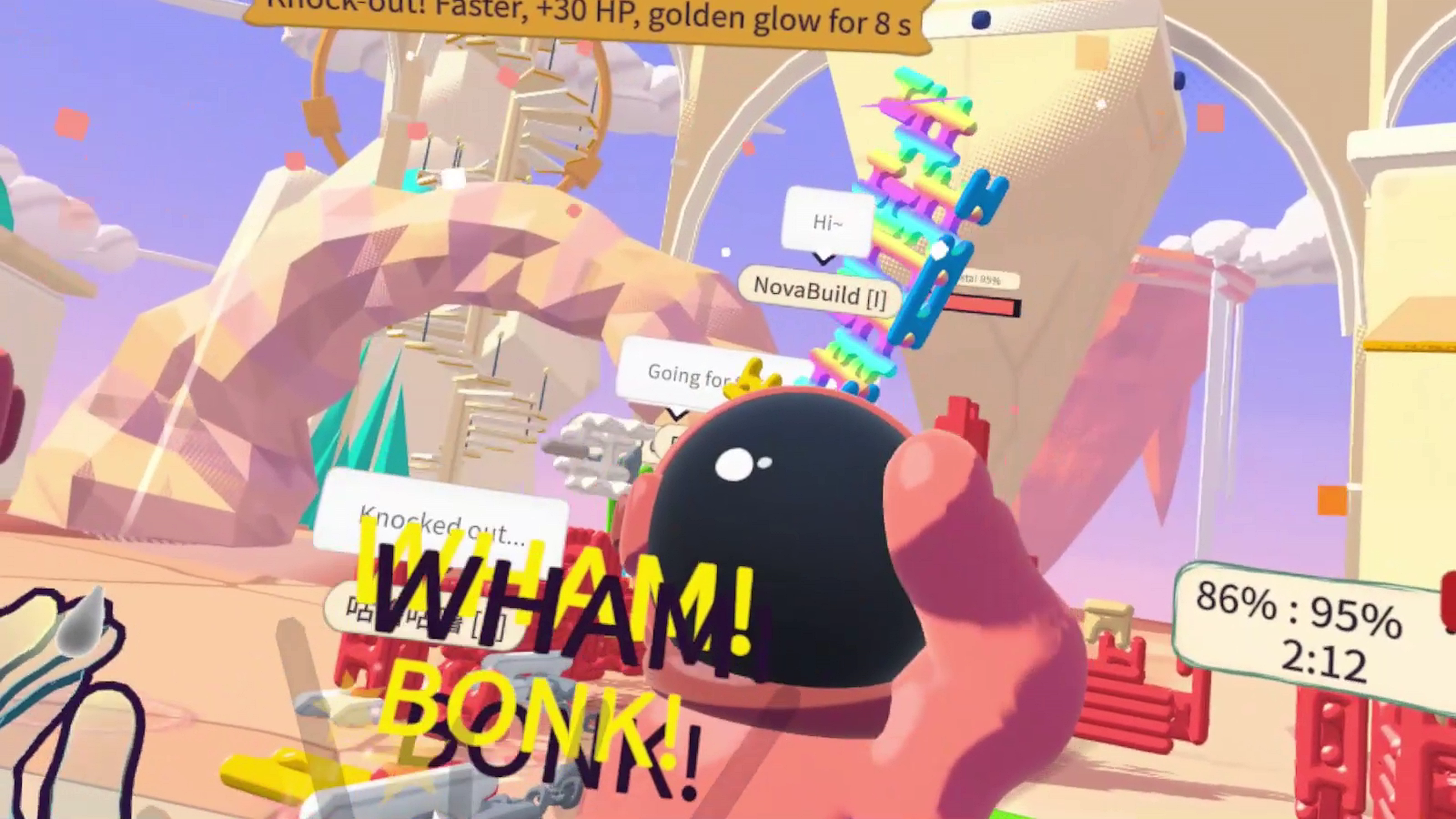
Snappy Planet is a hands-first building party game for Meta Quest 3, set in a hand-drawn comic-style desert town on an alien planet. No controllers are needed at any point.
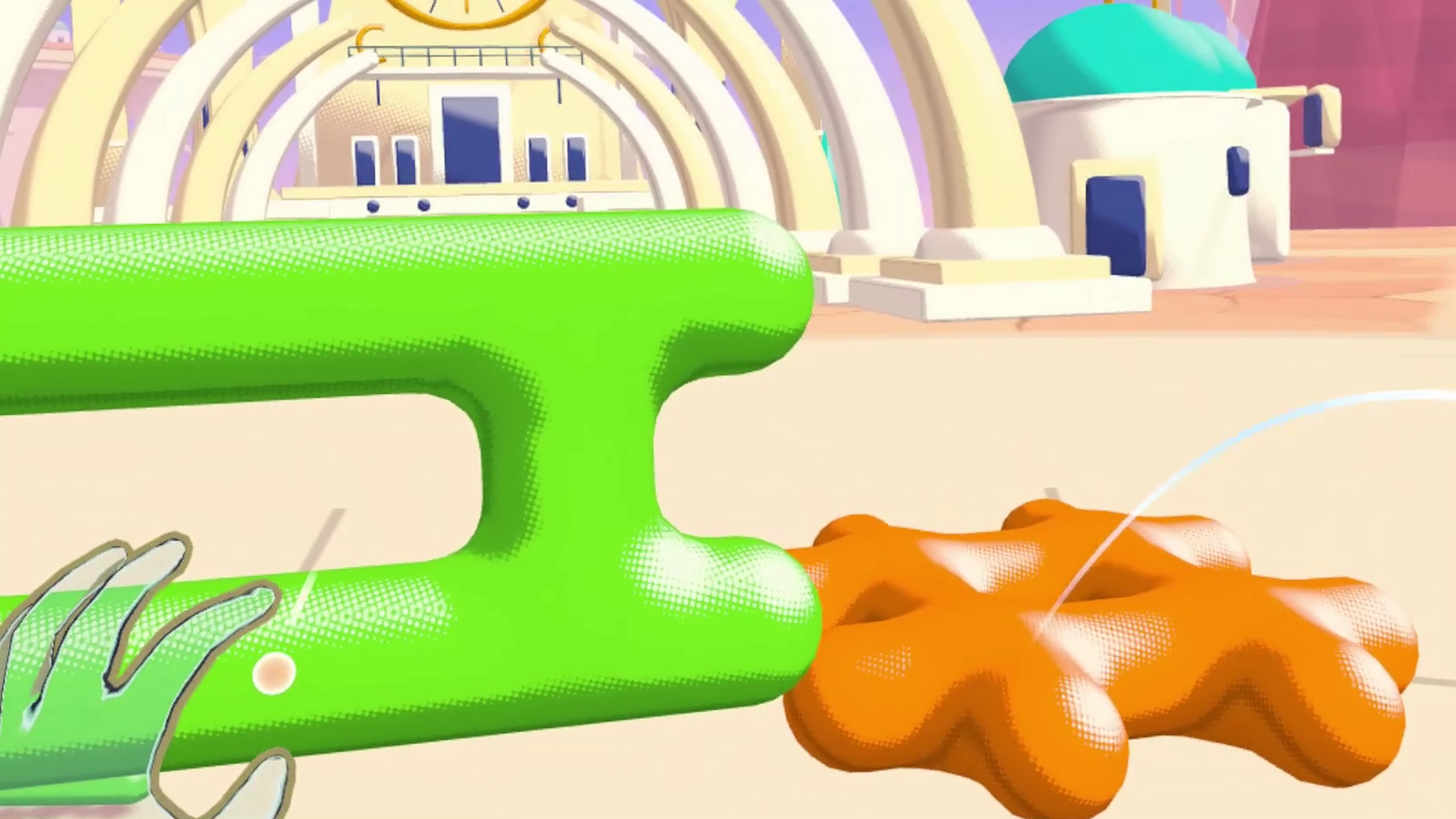
- Grab, snap, pull apart. Pick up any brick, release it near another one and it snaps into place. Grab a build with both hands and pull to split it. Bricks have real gravity.
- Memory Build – study a model, watch it vanish, then rebuild it from memory over five rounds. You may peek, but only a limited number of times.
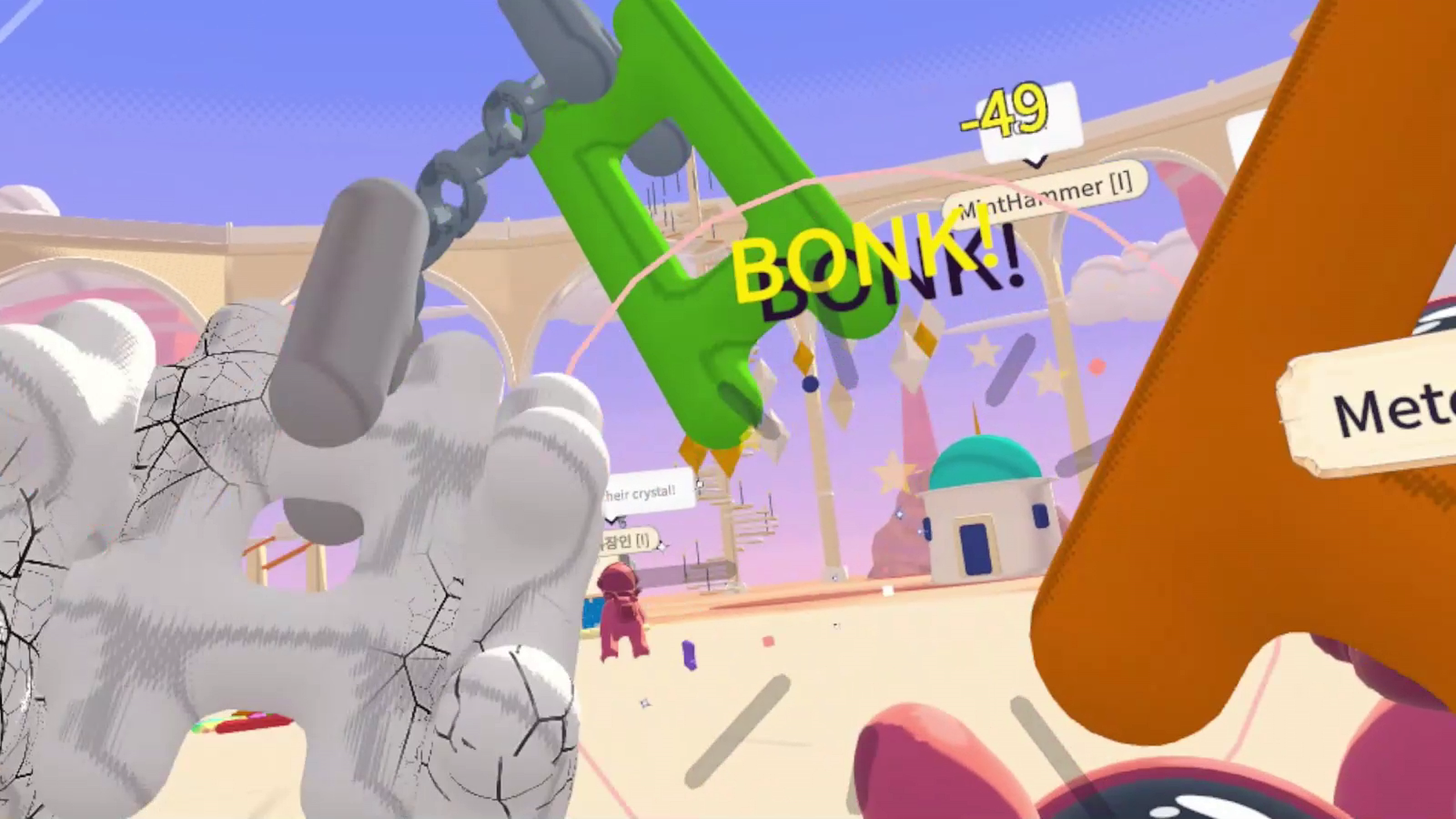
- Brick Brawl – team battle with a 3-minute build phase. There are no pre-made weapons: you snap your own swords, bows and flails out of bricks, fortify your base wall and defend your crystal. Best of three.
- Color Rain – bricks fall from the sky; everyone has a color and races to assemble their own pieces into one build.
- Free Workshop – take building commissions, earn stars and level up.
- Online rooms for up to 8 players, with voice and text chat, plus AI bot players that join when you are alone, so every mode is playable solo.
- Progression – a player rank built from match score and knockouts, with rank-up rewards that carry over between sessions.
- A 15-step hands-only tutorial that teaches grabbing, snapping, swinging and charging by doing, not by reading.
How we built it
- Unity 6 with Unity OpenXR: Meta, XR Hands and the XR Interaction Toolkit for hand tracking on Quest 3.
- A custom snapping system: a brick only snaps if you release it within 2 seconds of picking it up, so holding a brick never causes accidental merges. Two-handed pull detection handles splitting.
- Hand gestures for movement: walking/teleport and a thumb–middle-finger tap to jump, so players never need a controller.
- Networking: peer-to-peer rooms over Epic Online Services, with Unity Relay as fallback, a host-authoritative room protocol, attacker-side hit detection and compact state snapshots (network messages trimmed to about 1/5 of the original size).
- Bots: a utility-AI framework with personalities that gather bricks, craft weapons, defend the base and play alongside real players in the same room.
- Performance on Quest 3: fixed foveated rendering, quality tiers, and sleeping/freezing of resting bricks. On device we measured about 72 FPS with 100 resting bricks and above 67 FPS while 300 bricks fall.
- Localization: in-game text in 11 languages (English by default).
- Original upbeat electronic soundtrack and a hand-drawn art style made for this game.
Challenges we ran into
- Making snapping feel intentional. Early versions merged bricks while you were still holding them. The "release-to-snap within 2 seconds" rule fixed it.
- Physics vs. performance. Hundreds of bricks with gravity on a standalone headset needed a lot of work: freezing resting bricks, LOD for remote avatars and slimmer network updates.
- Weapons made of bricks. Since there are no dedicated weapons, the game has to recognise what you built (a long bar with a guard is a sword, a chain with a weight is a flail, and so on) and sync it across the network.
- Teaching without text. Hand-tracking players do not know where to look or what gesture to make, so the tutorial was rebuilt several times around short, physical tasks.
Accomplishments that we're proud of
- The whole game, from the first menu to the end of a match, works with hands only.
- Weapons, forts and tools are all player-built out of the same bricks.
- Bots and real players share one room, so a match is fun whether you are alone or with seven friends.
What we learned
Hand tracking rewards generous, forgiving interactions. Clear visual feedback (hover, snap preview, haptic-like sound and particles) matters more than precision, and every rule that protects the player from accidental actions makes the game feel better.
What's next for Snappy Planet
- More playtesting on Quest with several headsets, and tuning the feel of every mode.
- Turning the remaining prototype modes (ark building, tower climbing, bridge building, night defense, relay building) into full game modes.
- Global leaderboards and Meta platform integration (system-menu reporting, Meta identity).
- Target launch: Meta Horizon Store, 2027 (TBD).

