-
Snappy
-
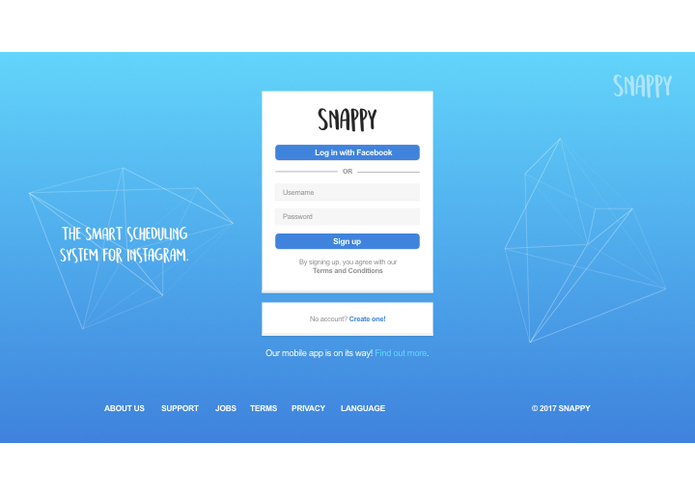
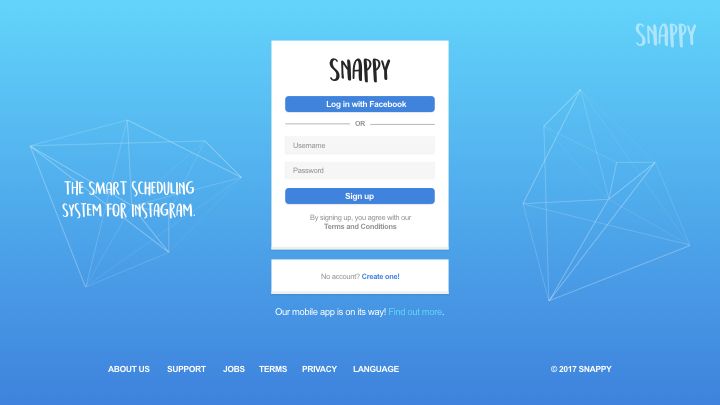
Snappy Login Screen
-

Instagram Login Screen
-
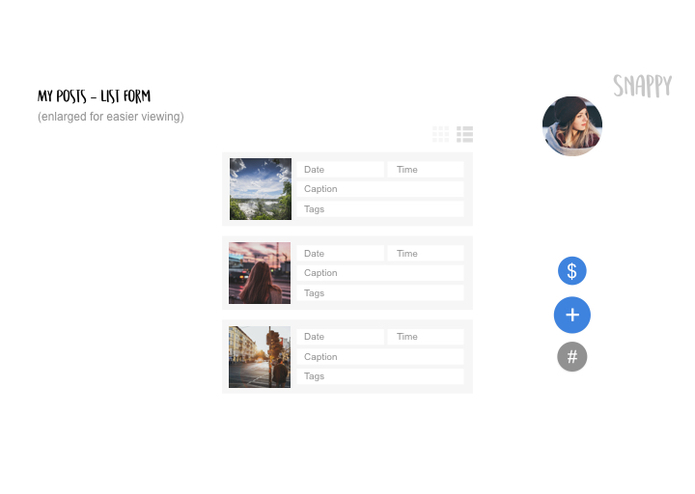
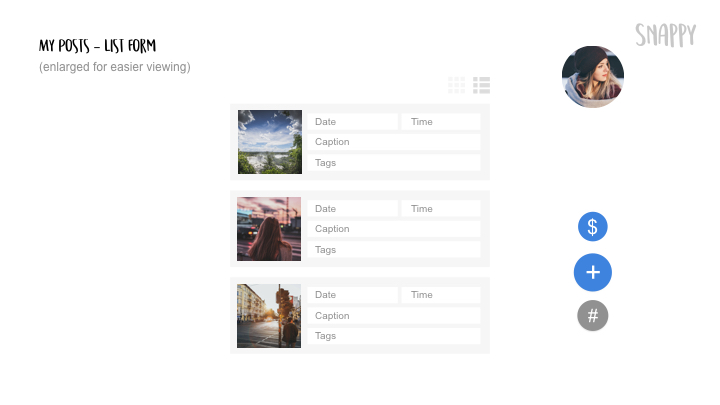
Dashboard
-

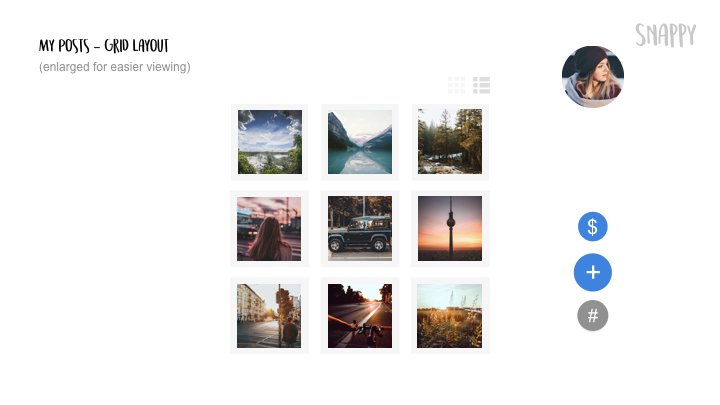
Dashboard Alternate View
-
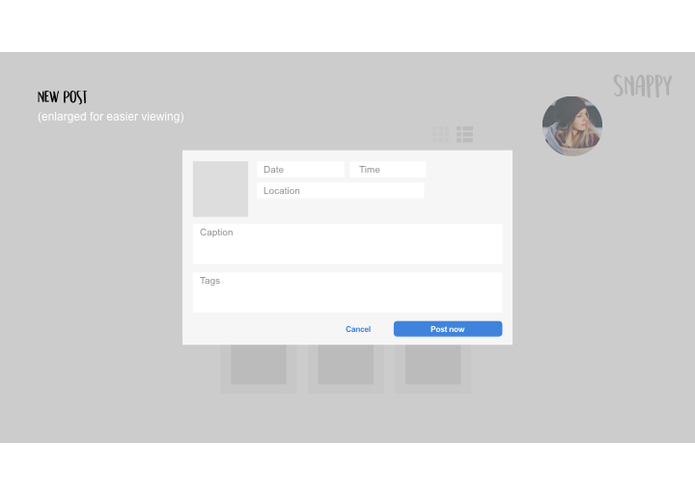
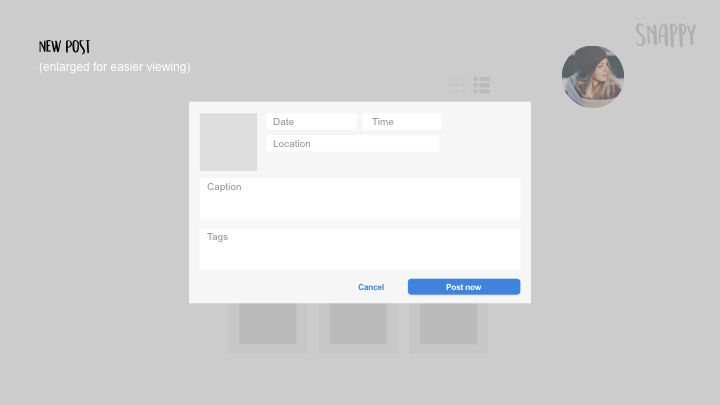
Post Options
-
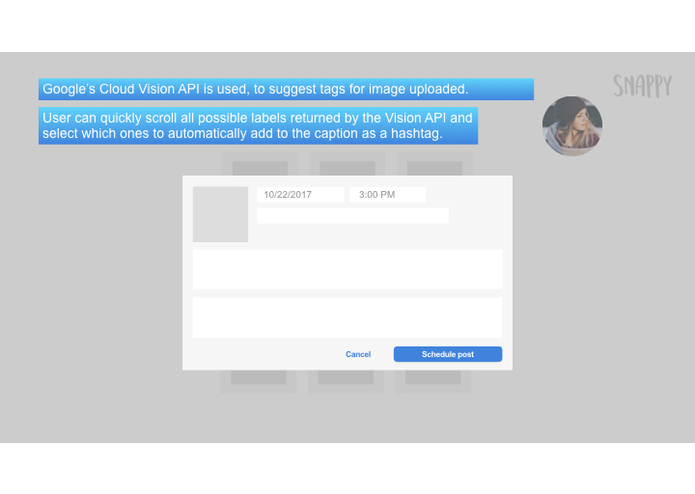
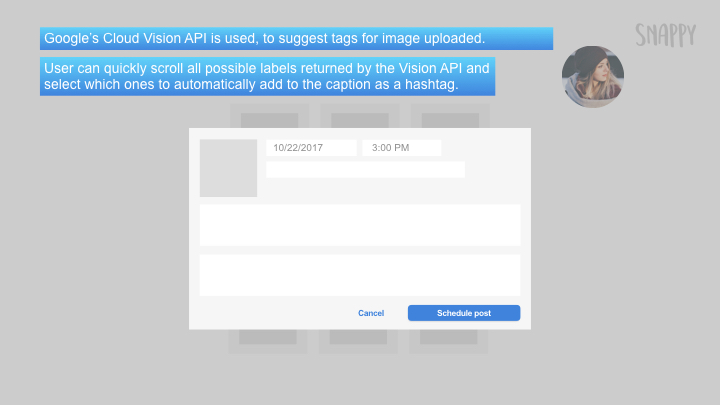
Cloud Tag
-
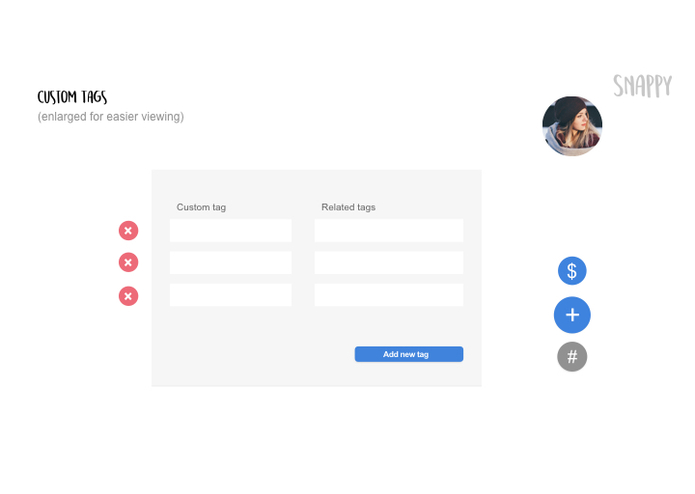
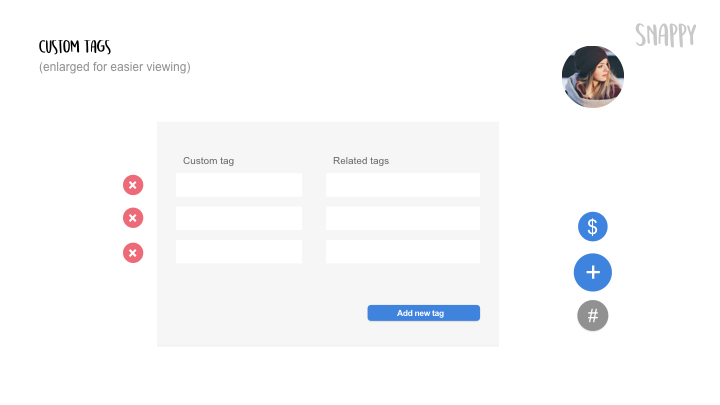
Custom Tags
-
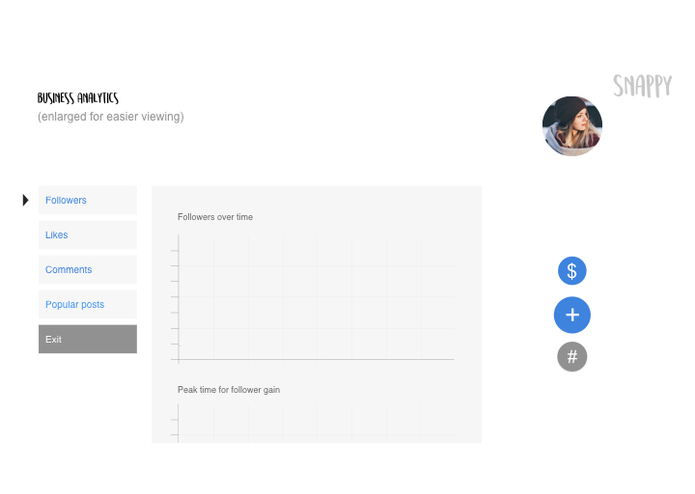
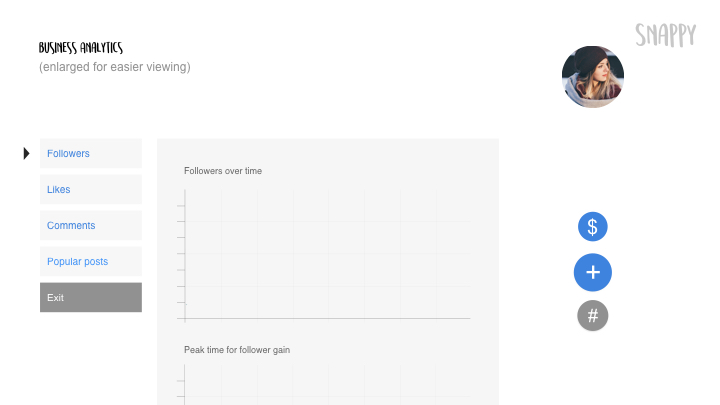
Business Analytics
-
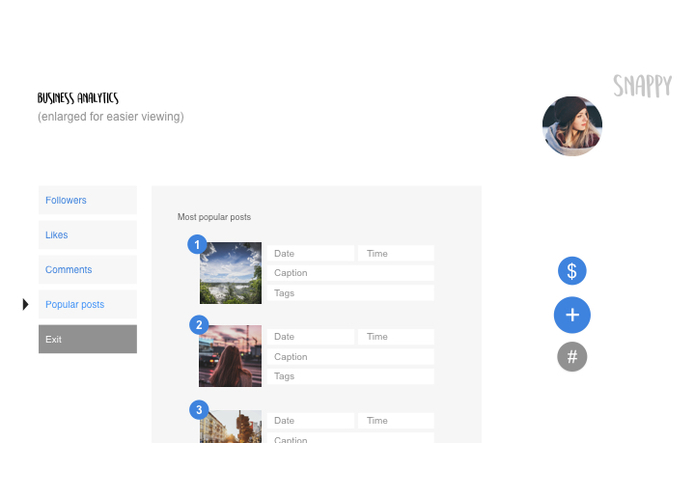
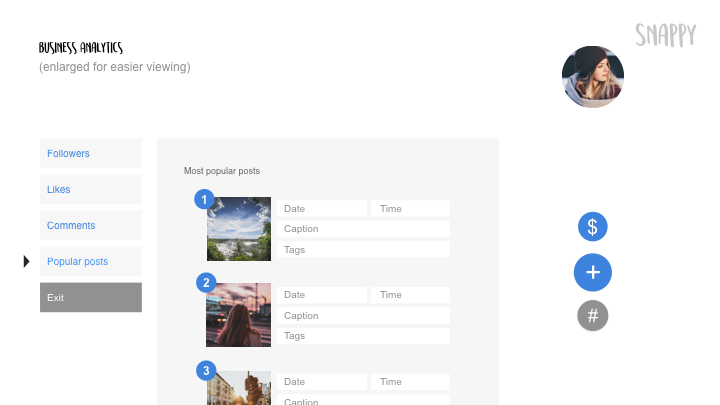
Most Popular Posts
-

Creators



Inspiration
As digital marketing is taking over traditional marketing, it is important to have an online presence to stay competitive. We wanted to create a social media marketing management system to help businesses save time by scheduling social media post specifically starting with Instagram. There are other tools that do the same thing already but we wanted to understand how to connect with Instagram’s API and understand how the post is sent and uploaded via the backend since their official API doesn’t support posting we had to do some digging and revere engineering. We also wanted to use the power of Google’s Cloud Vision API to provide useful information for the image uploaded. Our platform will also give insight and analytics reporting to suggest ways to improve their online presence. We looked at the process of drafting posts and felt like more could be achieved by the features of scheduling tools to increase the quantity of posts while ensuring no compromise in quality. Snappy started off as the simple idea of being a tool for businesses to schedule and draft posts for Instagram and grew into a smarter assistive tool to ensure larger audience outreach and more affordable solution for early-stage startups.
What it does
Snappy allows businesses to schedule in advance to release Instagram posts relating to their business. This will allow the user to set up multiple posts in advance and have them released at any time, thus maintaining constant interaction with their customers through a very popular social media outlet.
How we built it
We used a framework called Flask to set up our backend connection to a mySQL database on an ubuntu server. To provide tag suggestion we send the image to be tagged to Google’s Cloud Vision API and retrieve a list of tags back to display to the user. To post images we looked at some open source scripts created by the community and modified it to fit our needs since Instagram’s official API does not have the ability to create a new post. The front-end of our product was built with a mix of HTML5, CSS3, and JavaScript. Bootstrap was used in combination with custom CSS stylesheets in order to precisely design our website. Jinja, a template engine for Python (commonly used with Flask), was implemented into our HTML templates to comply with our back-end.
Challenges we ran into
It was difficult to deploy our website on a server due to the time constraints of this hackathon. For this reason (and a few others) we decided to demo our website through powerpoint instead of through the actual web application. While the majority of the web application was programmed before the deadline, there was no easy way to upload it to a working domain.
Accomplishments that we're proud of
Overcoming many styling bugs as a result of using bootstrap for the first time was annoying but worth it. Incorporating users in the database also proved to be challenging but feasible. This was the first hackathon for some of the members of the Snappy team which was very exciting!
What we learned
We learned that in order for a product to be viable and effective, it needs to be able to sustain cash flow. At first, we did not have much of a plan for making money from Snappy, but as we progressed, we realized that income would be needed to market and distribute the service. We now see that since Snappy has features that are unique and increase its value proposition over that of other services, it is reasonable to ask businesses to pay a fee to use it. We also learned about the scope of considerations required in order to design an effective user interface. There needed to be easily recognizable and accessible features for each function, and we had to think carefully about how the placement of specific features would impact the user experience.
What's next for Snappy
Our next steps will be finalizing the details of the website, finding a more stable hosting platform, and expansion into the business analytics field. Ideally, we will be able to provide companies with useful, accurate data that can help them to better interact with their Instagram following.


Log in or sign up for Devpost to join the conversation.