-
-
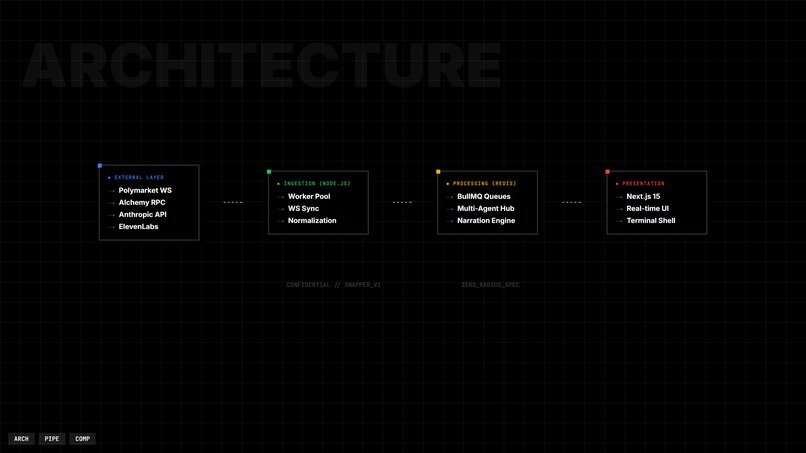
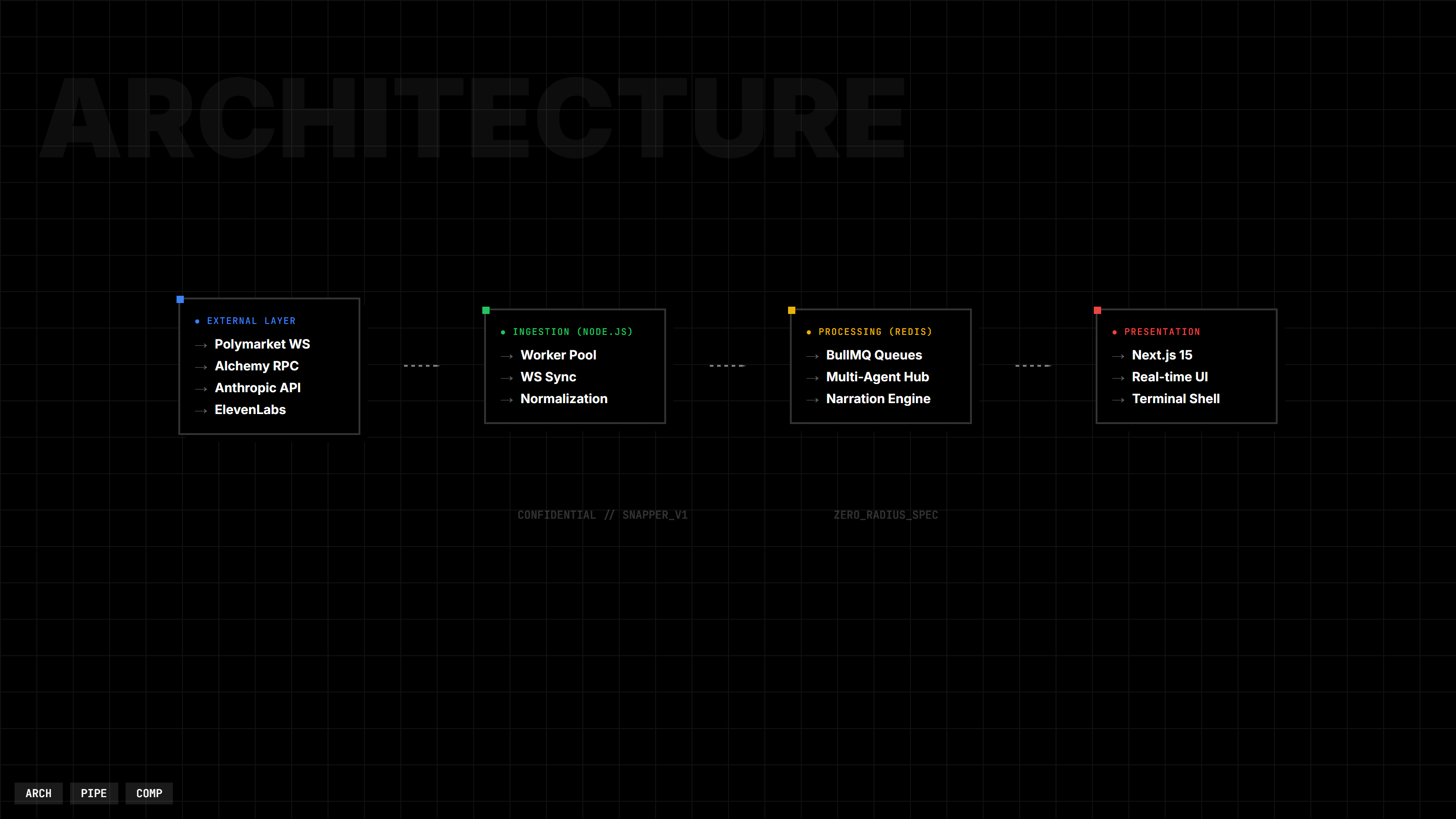
Our 4-layer stack: External data feeds, Node.js ingestion, BullMQ orchestration, and a real-time Next.js 15 terminal.
-
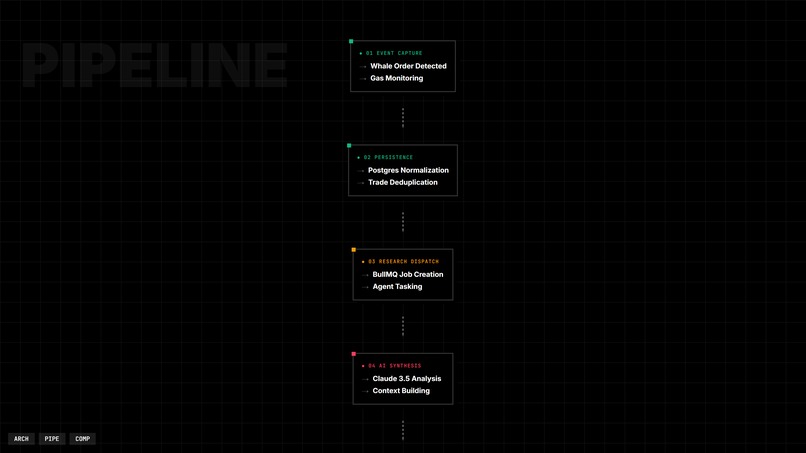
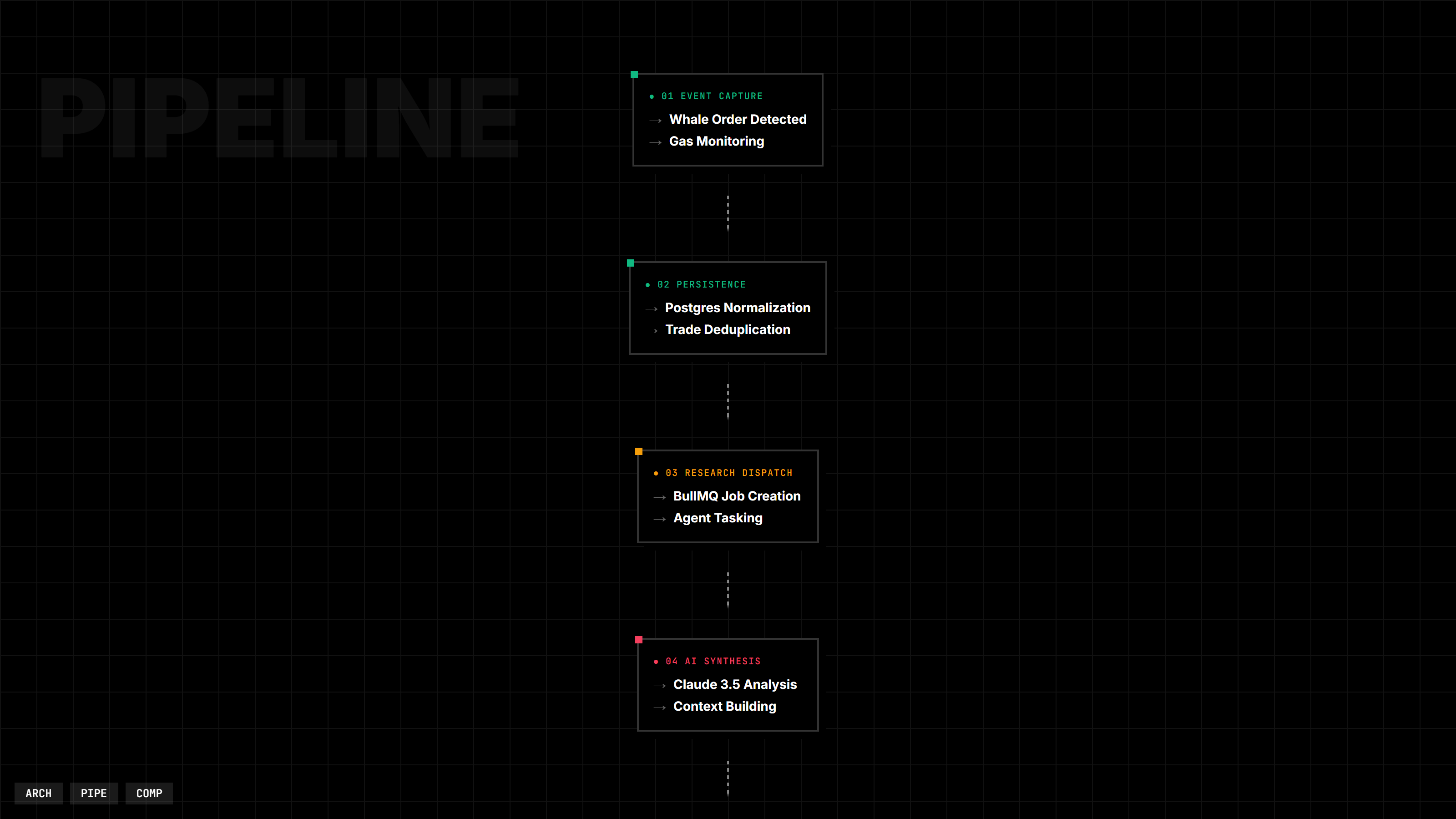
High-velocity intelligence: turning raw PolyMarket WebSockets into synthesized AI research briefs using Claude 3.5.
-
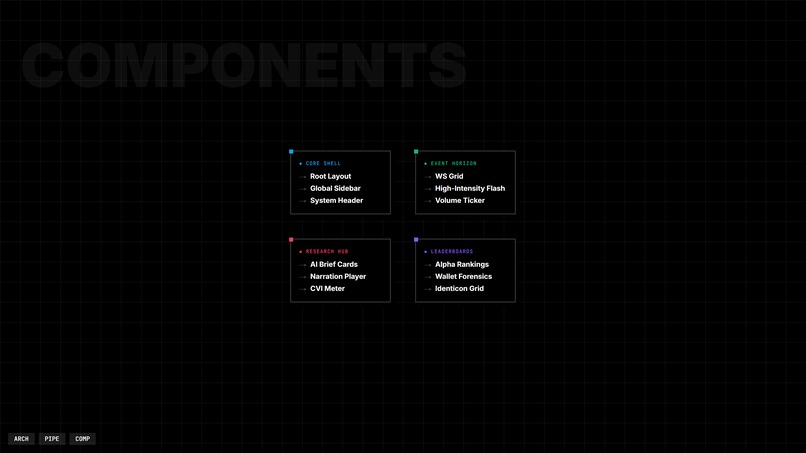
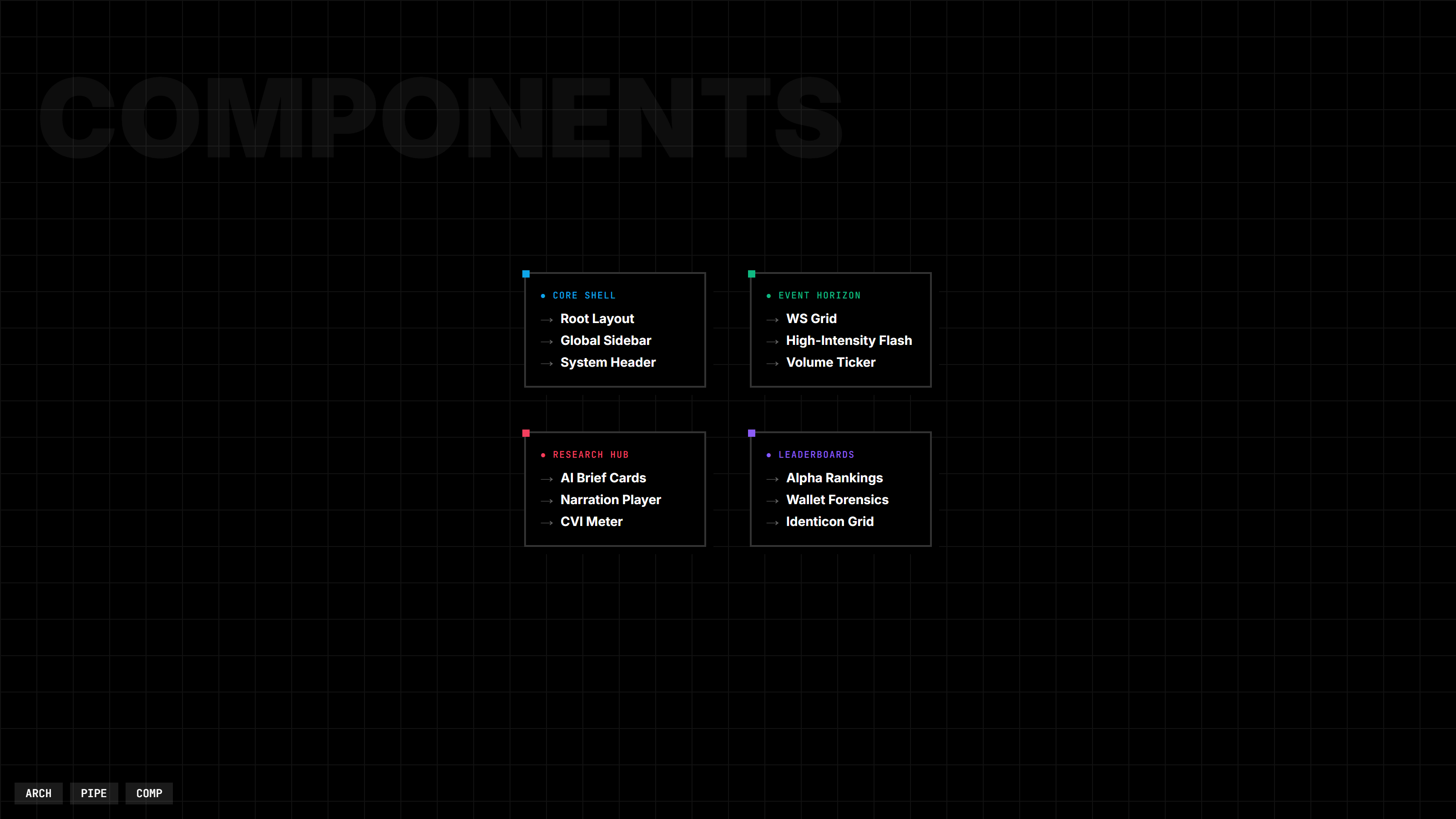
High-density UI breakdown: Event Horizon ticker, Alpha Rankings forensics, and the autonomous multi-agent Research Desk.
-
Inspiration
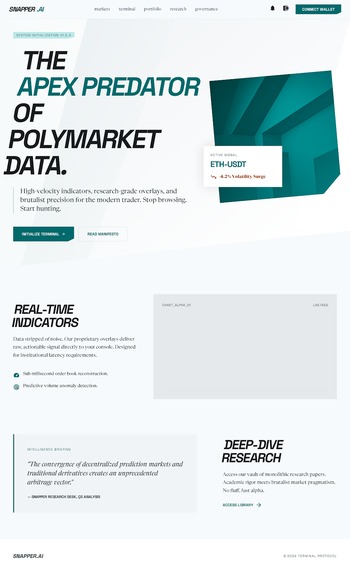
Prediction markets like Polymarket generate incredible volumes of alpha, but analyzing whale movements, insider trading patterns, and sudden market shifts typically requires a fragmented setup of block explorers, disparate news feeds, and disconnected spreadsheets. We wanted to build Snapper—a high-density, brutalist-styled PolyMarket trading terminal that centralizes advanced wallet forensics, real-time alerting, and autonomous multi-agent research into a single, zero-radius interface.
What it does
Snapper is a real-time PolyMarket insider-trading scanner and analytics hub. It features:
- Event Horizon: A live WebSocket-backed feed tracking significant "Whale" entries and real-time CLOB (Central Limit Order Book) updates.
- Multi-Agent Research Desk: Automatically analyzes flagged whale trades using LLMs to generate rich contextual briefs, utilizing live market news and sentiment.
- Alpha Rankings: A public leaderboard ranking the most profitable or suspicious wallets on the network.
- Public Backtesting & Analytics: Provides capabilities to backtest historical insider/whale labels to calculate precision and recall on our heuristics.
- Email & Narration Alerts: Sends push email notifications for critical wallet movements and utilizes ElevenLabs to generate real-time audio narration for autonomous briefs.
System Architecture
The Snapper ecosystem is divided into four critical layers:
| Layer | Components | Description |
|---|---|---|
| External | Polymarket, Alchemy, Anthropic, ElevenLabs | Data feeds, RPC nodes, and AI/Audio inference. |
| Ingestion | Ingest Worker (Node.js) | High-frequency polling and WebSocket synchronization. |
| Processing | Jobs Worker (BullMQ) | Multi-agent research, narration generation, and alerts. |
| Presentation | Web App (Next.js 15) | Real-time dashboards and terminal interface. |
Data Ingestion & Research Pipeline
- Whale Entry Event: Captured via Polymarket WS.
- Persistence: Trade data normalized and stored in Postgres.
- Queueing: Research job dispatched to BullMQ (Redis).
- AI Research: Multi-agent flow synthesizes trade context using Claude 3.5.
- Real-time Broadcast: Update emitted to the web client for instant UI refresh.
Frontend Component Architecture
| Module | Core Components | Key Features |
|---|---|---|
| Core Layout | Root Layout, Header, Sidebar | Global navigation and system status. |
| Live Feed | Event Horizon, Data Table | Real-time whale tracking with zero-radius design. |
| Leaderboard | Alpha Rankings, Address/Identicon | Wallet forensics and performance sorting. |
| Research Desk | AI Briefs, Sparklines, Cards | Synthesized market intelligence and trend visualization. |
How we built it
The application is structured as a powerful monorepo containing three core nodes: a Next.js 15 App Router web client, an ingest-worker, and a jobs-worker.
- Backend Pipeline: Built with Node 20, TypeScript (Strict), Postgres 16, and Redis 7. We use BullMQ as the message broker between our ingest poller and downstream research queues.
- Blockchain & Market Data: Real-time ingestion using Polymarket's CLOB WebSocket, Gamma API polling, and Alchemy for direct Polygon mainnet forensic queries on wallets.
- AI & Multi-Agent Logic: Powered by the
@anthropic-ai/sdk(Claude 3.5 Sonnet & Claude 3 Opus) to deeply analyze trade contexts, structure market research, and evaluate positional advantages. - Frontend: A strict, brutalist UI focusing on raw data capability, utilizing responsive component architecture without sacrificing the high-density grid requirements of elite traders.
Challenges we ran into
Building a unified state and ensuring low-latency updates across our micro-architecture was complex. Handling the unyielding firehose of WebSocket data from Polymarket required careful rate-limiting, deduplication, and transactional durability using BullMQ to ensure our AI research desk wasn't overwhelmed. Additionally, cross-referencing on-chain wallet movements with off-chain order book IDs required building robust custom heuristics and mapping protocols.
Accomplishments that we're proud of
- Establishing a reliable, real-time Event Horizon that instantly flags whale activity as it hits the chain.
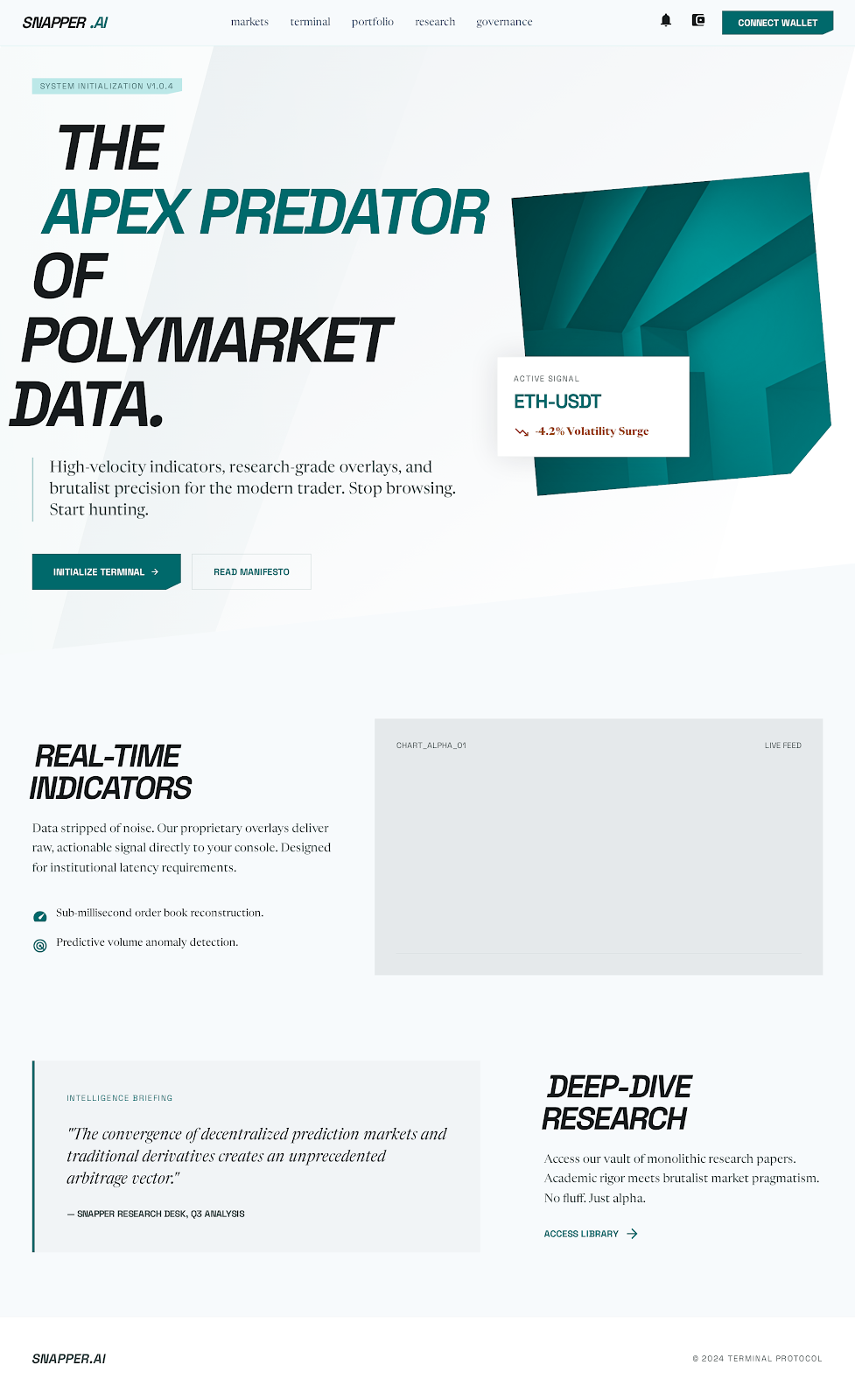
- Designing our brutalist "Snapper" interface—staying true to our zero-radius, high-performance design specifications without sacrificing the high-density grid requirements of elite traders.
- Successfully integrating the multi-agent AI pipeline to not just alert users to a trade, but present them with a completely synthesized research brief seconds later.
What we learned
We gained profound insights into the mechanics of handling high-frequency on-chain data synchronization with modern SSR frameworks like Next.js. We also refined our prompt-engineering and multi-agent AI flow, learning how strict contextual bounding could prevent hallucinations when summarizing highly sensitive financial metrics.
What's next for Snapper
We plan to significantly expand the Wallet Forensics module to map out complex Sybil clusters across various Polygon protocols. Furthermore, we are iterating on the internal backtesting engine to allow standard users to plug in custom heuristic parameters to dynamically adjust real-time alert sensitivity. Ultimately, we envision Snapper expanding beyond Polymarket to all major evm-based decentralized exchanges.
Built With
- docker
- fly.io
- next.js
- node.js
- pnpm
- postgresssql
- react18
- recharts
- redis
- render
- turborepo
- viem
- vitest
- websockets
- zod

Log in or sign up for Devpost to join the conversation.