-
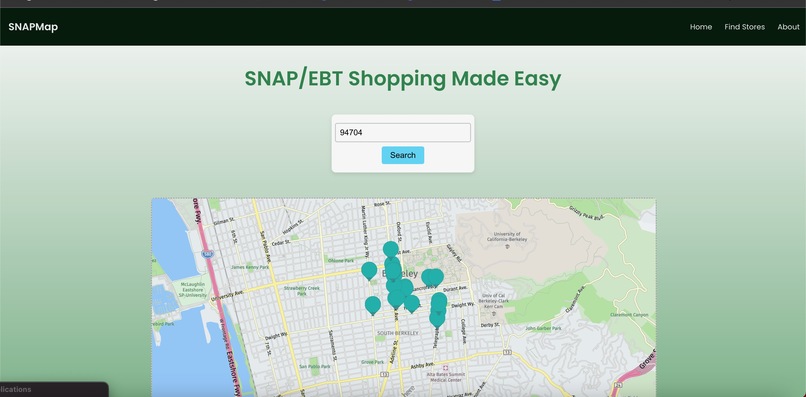
SNAPMap's Home Page
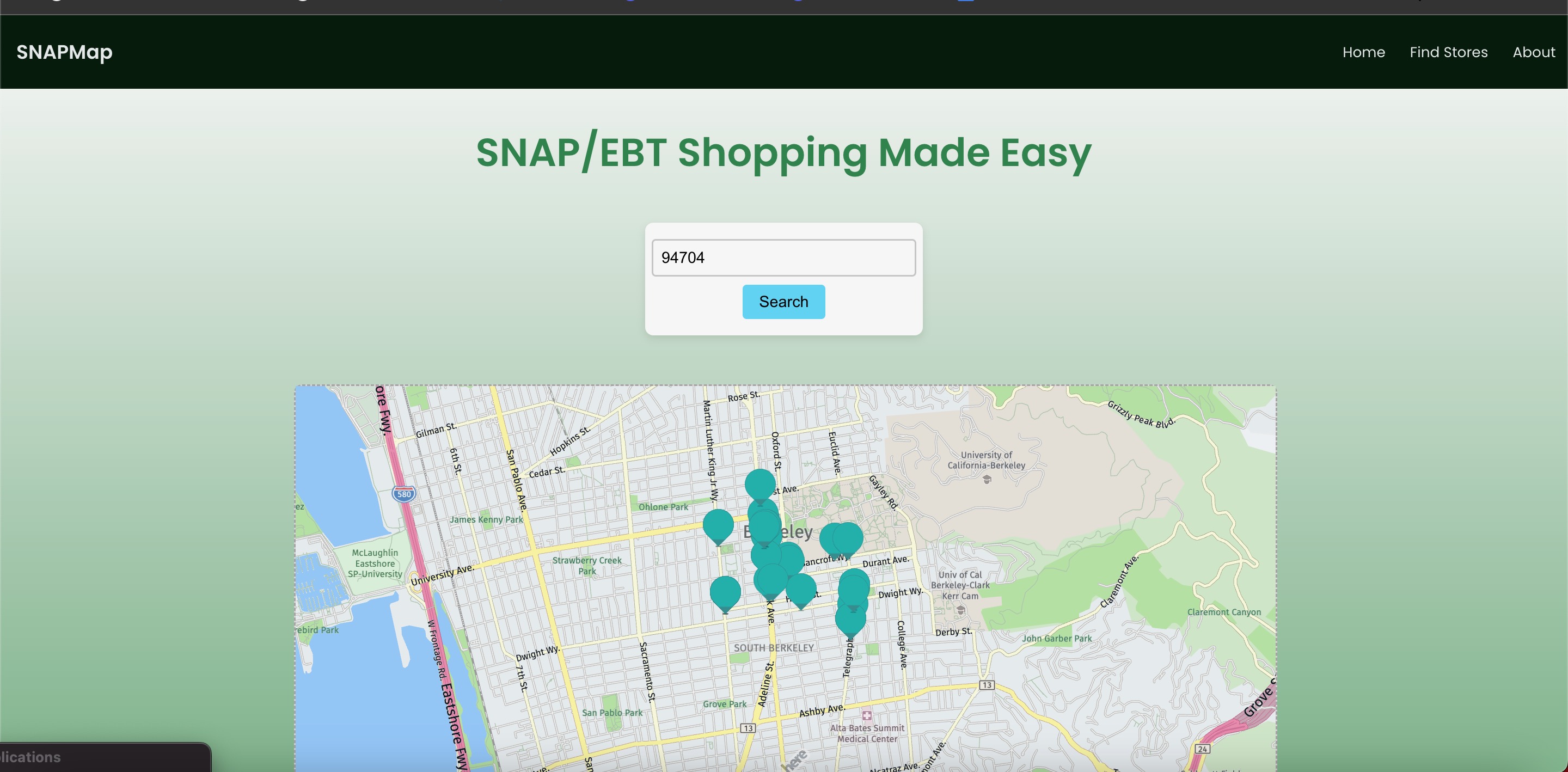
Inspiration:
The inspiration behind SNAPMap came from the need to improve accessibility to essential services for low-income communities who rely on SNAP and EBT benefits. Finding stores that accept these benefits can be challenging, especially in underserved areas with little tech access. SNAPMap aims to make this process easier by providing a simple, user-friendly solution for these communities to quickly locate nearby grocery, convenience, and food stores that accept SNAP and EBT across the U.S.
What it does:
SNAPMap helps users find grocery, convenience, and food stores across the U.S. that accept SNAP and EBT benefits. The app allows users to input a zip code and filter by store type, such as convenience stores, grocery stores, or supermarkets, to find locations near them. The interactive map visualizes the stores, making it easy to see where they can shop using their benefits. By providing this information in a user-friendly format, SNAPMap simplifies the process of locating SNAP/EBT-friendly stores, ensuring that users can easily access the food they need in their community despite economic and time hardships.
How we built it:
We built SNAPMap using a combination of Python for backend development and data handling, and JavaScript for the interactive map. We sourced the dataset of SNAP and EBT-accepting locations from the United States Department of Agriculture (USDA) and used geocoding services to map them accurately. For the frontend, we used a clean, responsive design to ensure easy navigation. The filter functionality allows users to input their zip code and select the type of store they’re looking for, making the experience personalized and efficient.
Challenges we ran into:
One of the main challenges was managing a large dataset and ensuring its accuracy and performance within the app. We also faced challenges in connecting the back-end which was written with JavaScript and the front end which was written with Python. Additionally, implementing a robust filtering system that provides accurate results without overwhelming the user with too many options required careful planning and testing.
Accomplishments that we're proud of:
One of our proudest accomplishments is creating an intuitive and accessible tool that has the potential to make a real impact for individuals and families relying on SNAP/EBT benefits. We successfully built an app that is easy to navigate, allowing users to quickly find stores that meet their needs based on location and store type—making sure accessibility is no longer a barrier. We’re also proud of the seamless integration of our interactive map and filtering features, which required handling a large dataset while ensuring a smooth user experience. Despite initial challenges, we were able to implement a user-friendly interface that works well without compromising on functionality or speed. Overall, we’re proud that we turned an idea into a functional, impactful app that addresses a real need in underserved communities.
What we learned:
Throughout this project, we learned a lot about the complexities of mapping large datasets, working with geolocation tools, and managing user input for effective data filtering. We also learned how to ensure that a front end and back end can communicate with each other despite being written in different languages. Additionally, we gained valuable insight into the importance of clean data, usability, and providing a seamless user experience, particularly for audiences that may not be tech-savvy.
What's next for SNAPMap:
Looking ahead, we plan to expand SNAPMap’s features by introducing meal planning ideas based on the food available at stores that accept SNAP and EBT. Users will be able to see suggested meal plans tailored to their dietary preferences and the types of stores they’re searching for. By integrating data on available food items, SNAPMap could provide budget-friendly, nutritious meal options that align with SNAP benefits, making the shopping experience even more convenient and empowering users to make informed decisions about their food choices—-and making life easier for communities disadvantaged with economic and time constraints.

Log in or sign up for Devpost to join the conversation.