Inspiration
SNAPi started with our son, Elio.
After months of stomach problems, low energy, and doctor visits, we finally learned that Elio had celiac disease. Having an answer was a huge relief, but it also changed our everyday life as a family.
We learned how to keep him safe at home, but the hardest part was letting him go places without us. School, birthday parties, camps, a friend's house, restaurants then suddenly we had to trust someone else to understand something that had become so important to us.
We found ourselves having the same conversations over and over: explaining what he could eat, why even a small amount of gluten mattered, and how easily cross-contact could happen. And every time we left him, there was always that little worry: Did we explain everything? Will they remember? What if they're unsure and we're not there?
When we talked to other parents of kids with celiac disease and food allergies, we realized they carried many of the same worries.
That's why we created SNAPi. We wanted the information we know by heart as Elio's parents to be there with him, even when we can't be.
More about us: https://www.instagram.com/p/DVoPob6jbRH
What it does
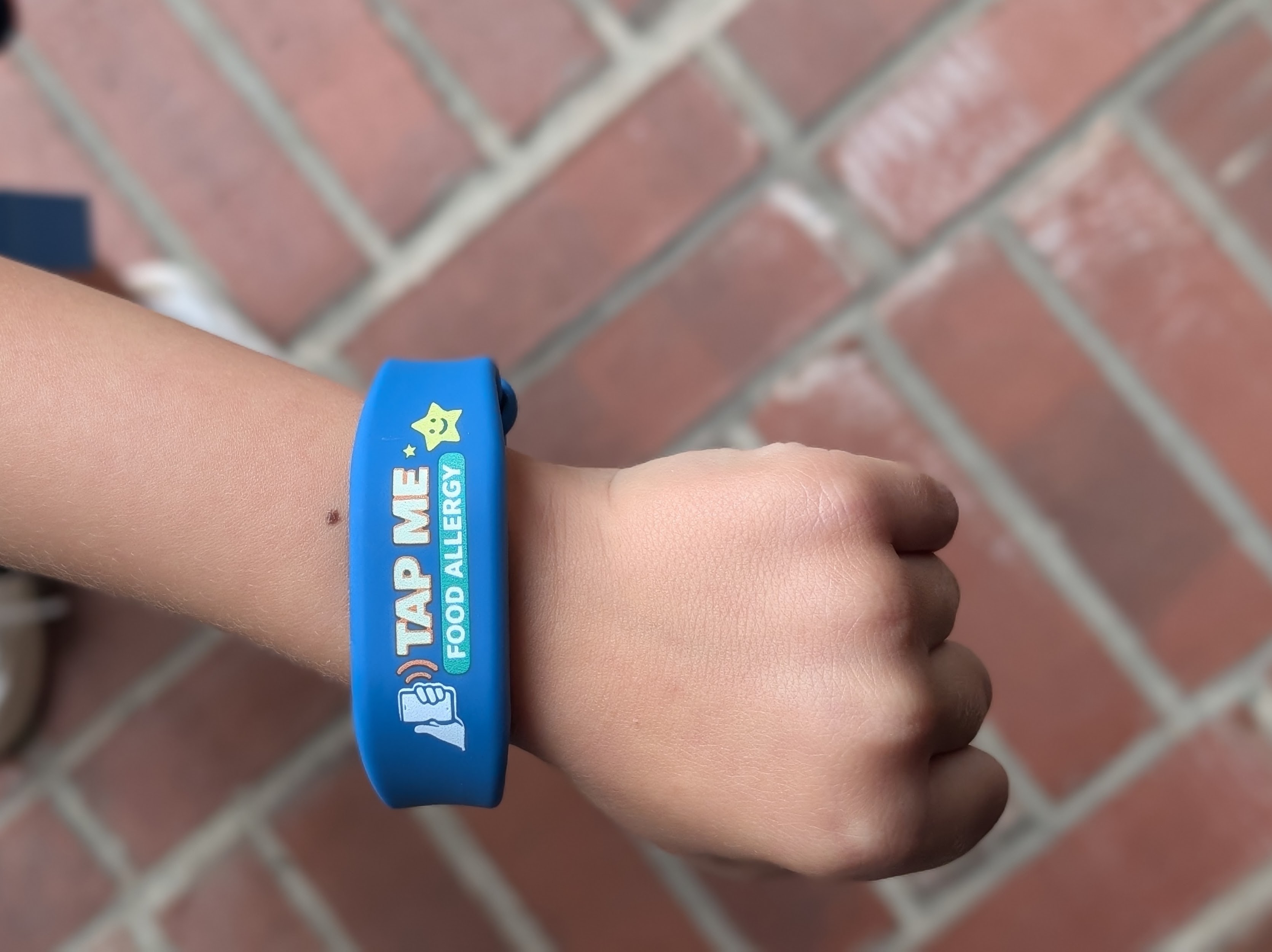
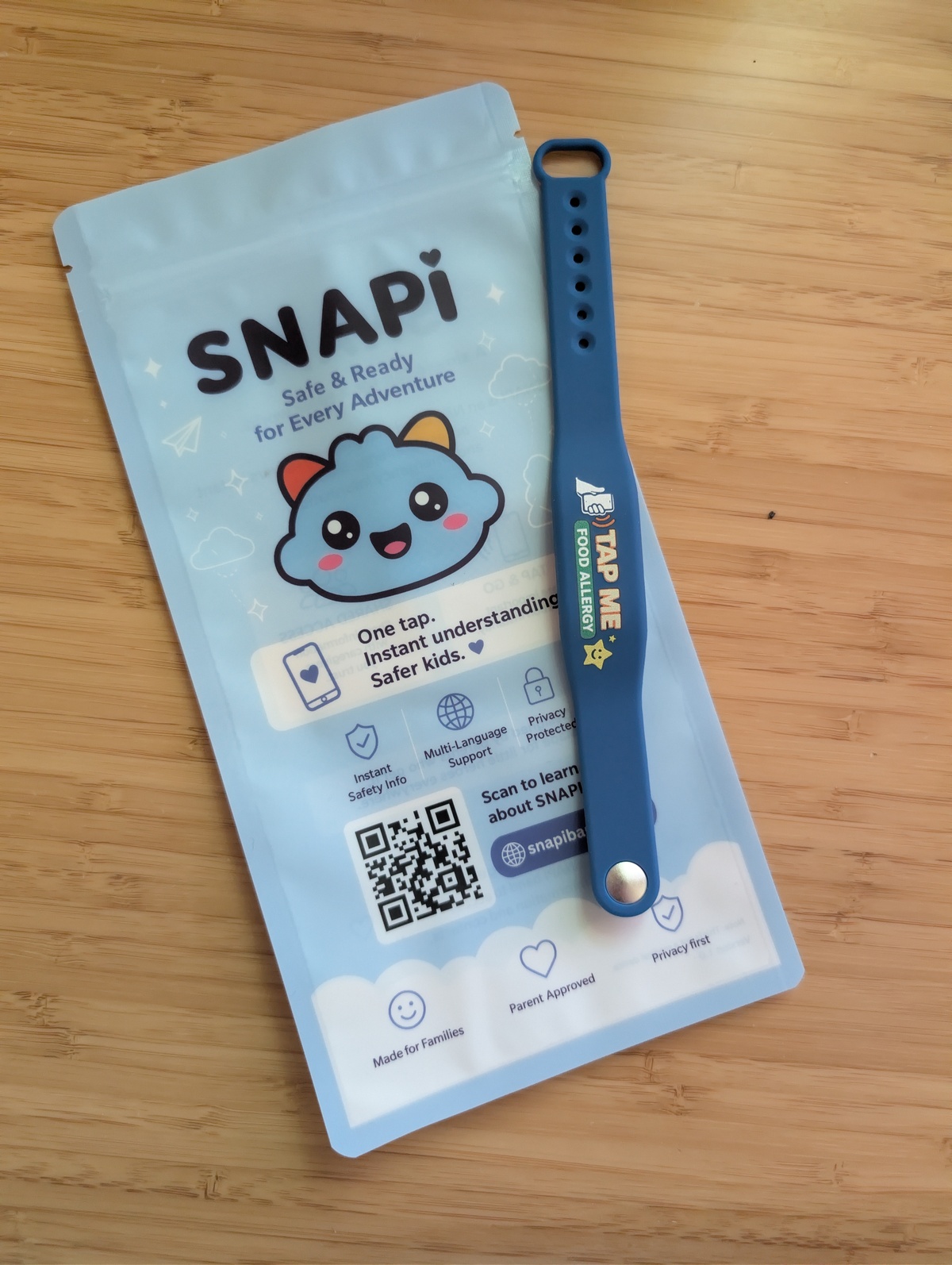
SNAPi is an AI-powered, NFC bracelet that links to a child's personalized safety profile.
With a simple tap from any smartphone, caregivers can instantly access:
- Medical condition
- Safe and unsafe foods
- Cross-contact warnings
- Emergency instructions
- Parent contact information
- AI-powered caregiver guidance
- Multiple language support
Instead of repeating the same information every time a child changes caregivers, parents create one profile that travels with the child.
How we built it
Our multidisciplinary team combined customer research, product and interface design, software development, AI integration, and business strategy to build and validate SNAPi.
We:
- Conducted parent surveys and interviews to validate the problem and identify the information caregivers need most
- Designed an NFC-enabled wearable experience that connects caregivers to each child's safety profile
- Built the child safety profile and caregiver interface
- Developed an AI assistant that provides personalized guidance based on the child's profile and caregiver questions.
- Evaluated existing competitors, pricing, and market opportunities
- Developed a scalable business model for both families and institutions
Challenges
Product Challenge One of our key product challenges was determining what information caregivers needed most and how to present it quickly enough to be useful in real-world situations.
Through interviews and surveys, we learned that parents consistently prioritized: -Safe and unsafe foods -Cross-contact risks -Emergency instructions -Parent contact information
These findings shaped both the interface and the information hierarchy so caregivers can quickly find the most important information during stressful situations.
Technical Challenge
What we learned
Our customer research reinforced that the problem is not about just storing a child's medical information, it is making the right information understandable to whoever is caring for the child. Parents need a solution that can move with their child across school, activities, travel, restaurants, and other caregiving environments without requiring them to repeatedly explain the same safety information.
What's next for SNAPi - AI Powered Child Safety Bracelet
Our initial focus is children ages 3–14 with celiac disease and food allergies, where caregiver transitions create an immediate need for clear, accessible safety information.
Next, we plan to validate SNAPi with a larger group of families, refine the AI guidance and caregiver experience, and explore partnerships with schools and other organizations responsible for children's care.
Also expand the platform NFC everywhere - since bands might not be suitable for everybody, we plan to expand to other physical devices, keychains, stuffies, stickers.
Longer term, the platform could expand to support additional conditions such as diabetes, epilepsy, asthma, and other medical needs where critical information must travel with a child.
Our long-term vision is to create a universal caregiver communication platform that helps families share critical safety information wherever children go.


Log in or sign up for Devpost to join the conversation.