-
-
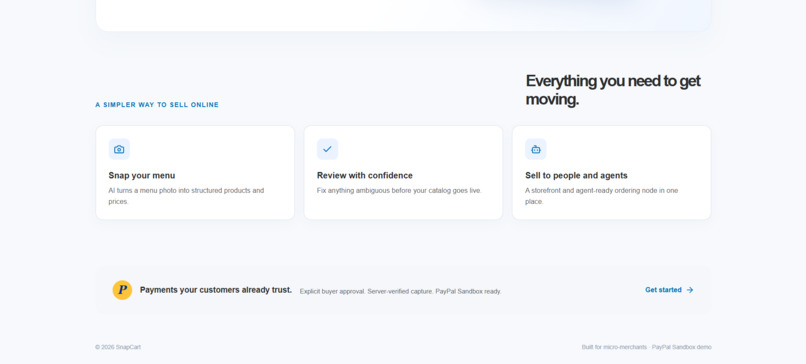
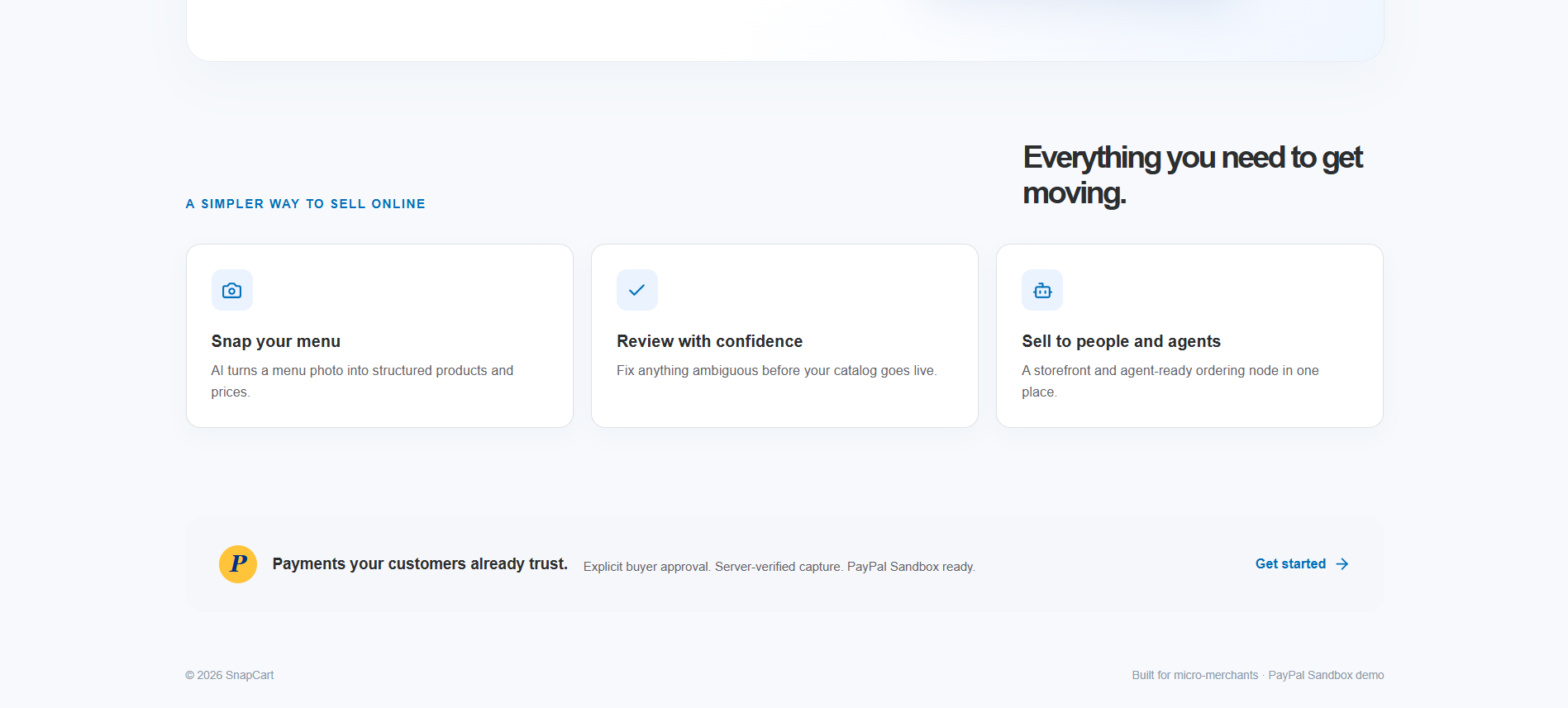
Landing page and about cards
-
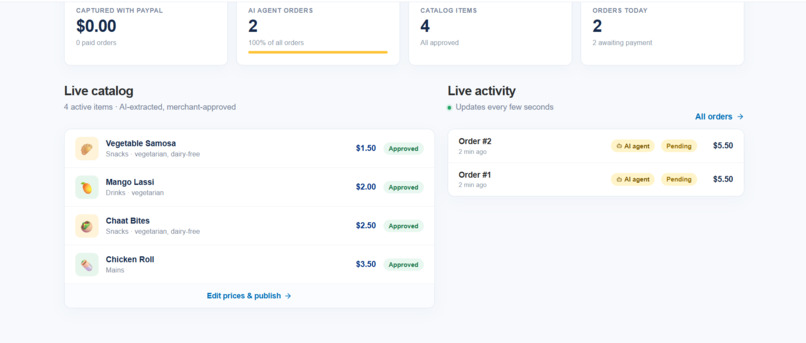
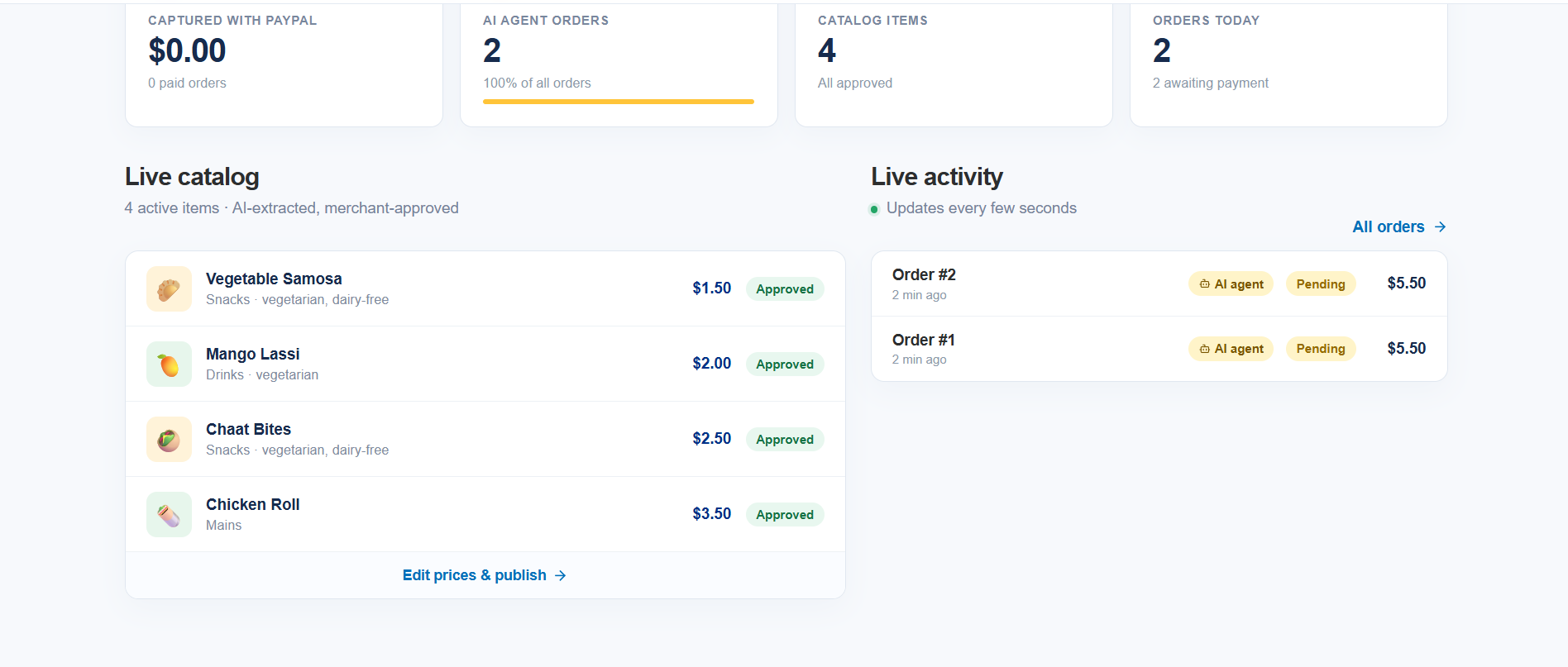
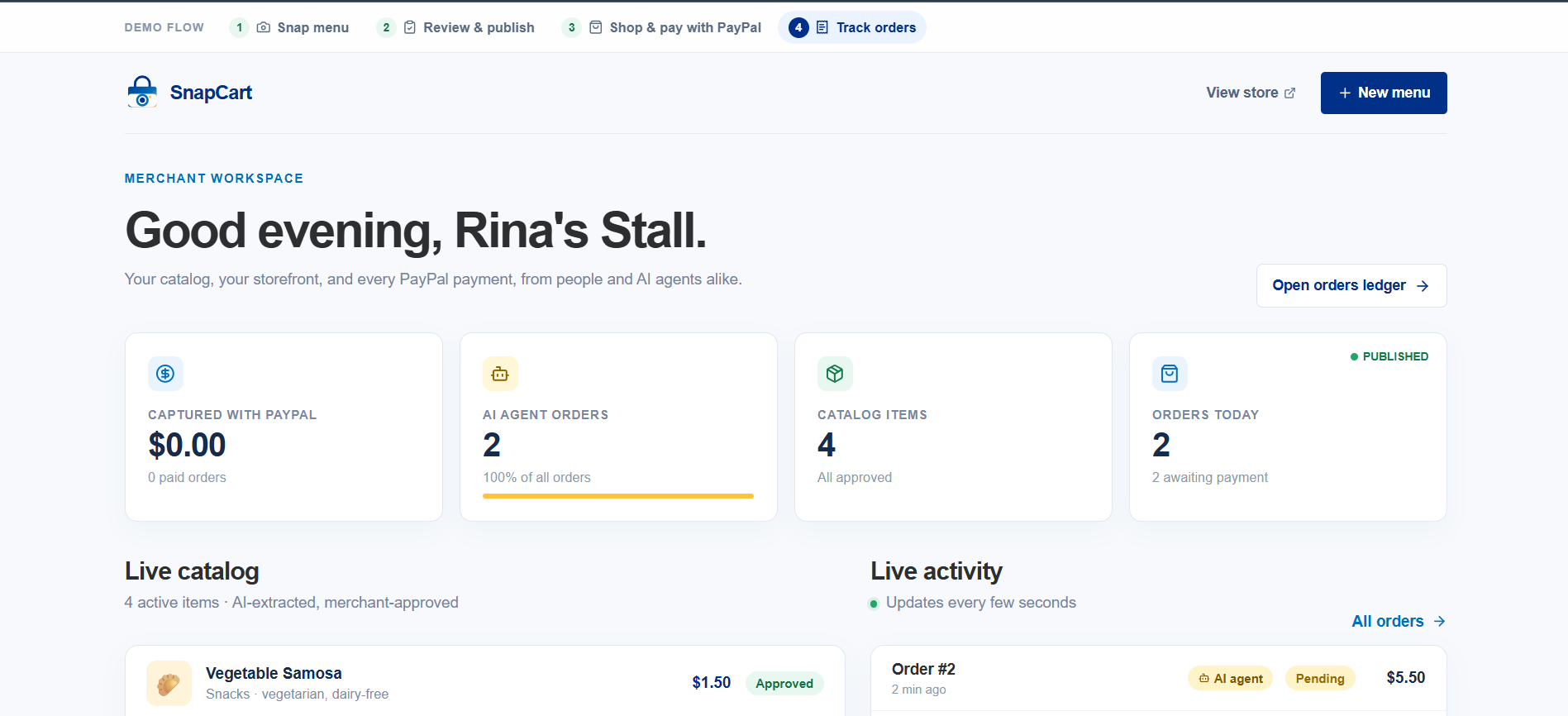
Stall Dashboard
-
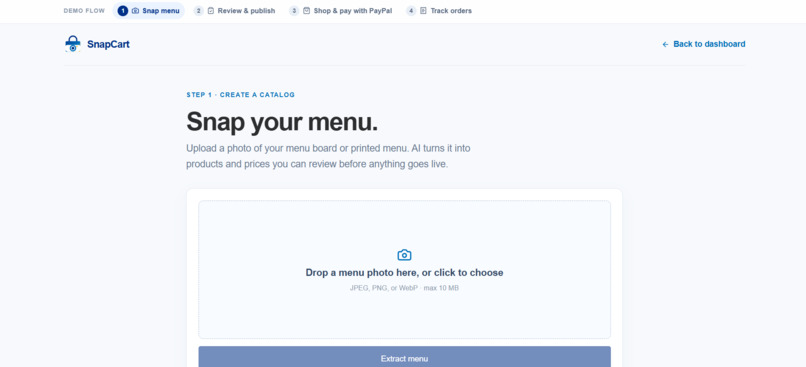
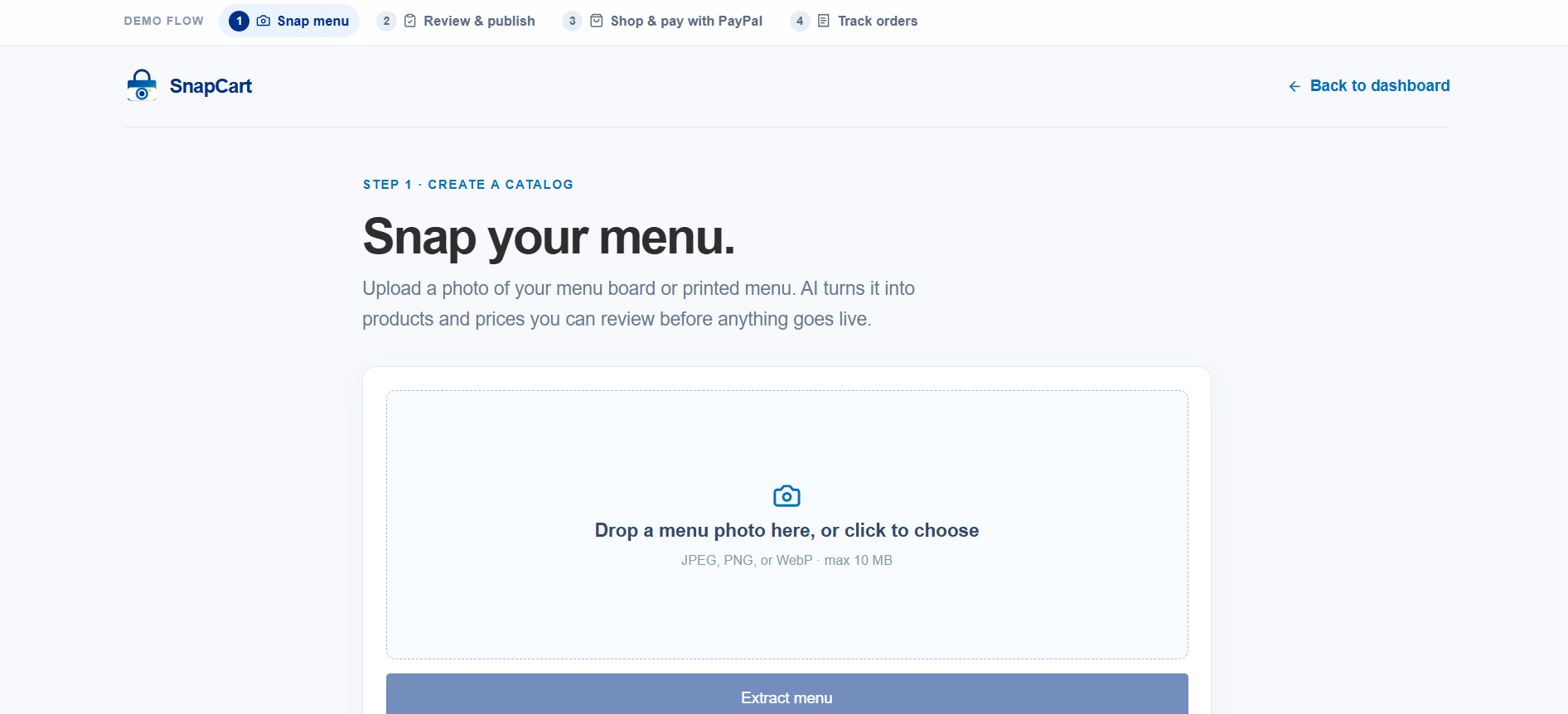
Menu extraction tab
-
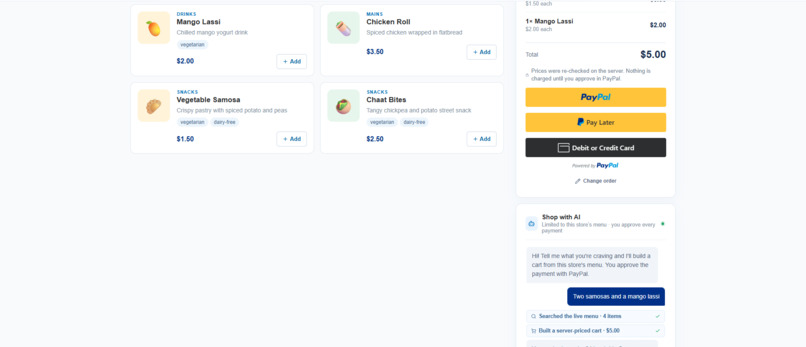
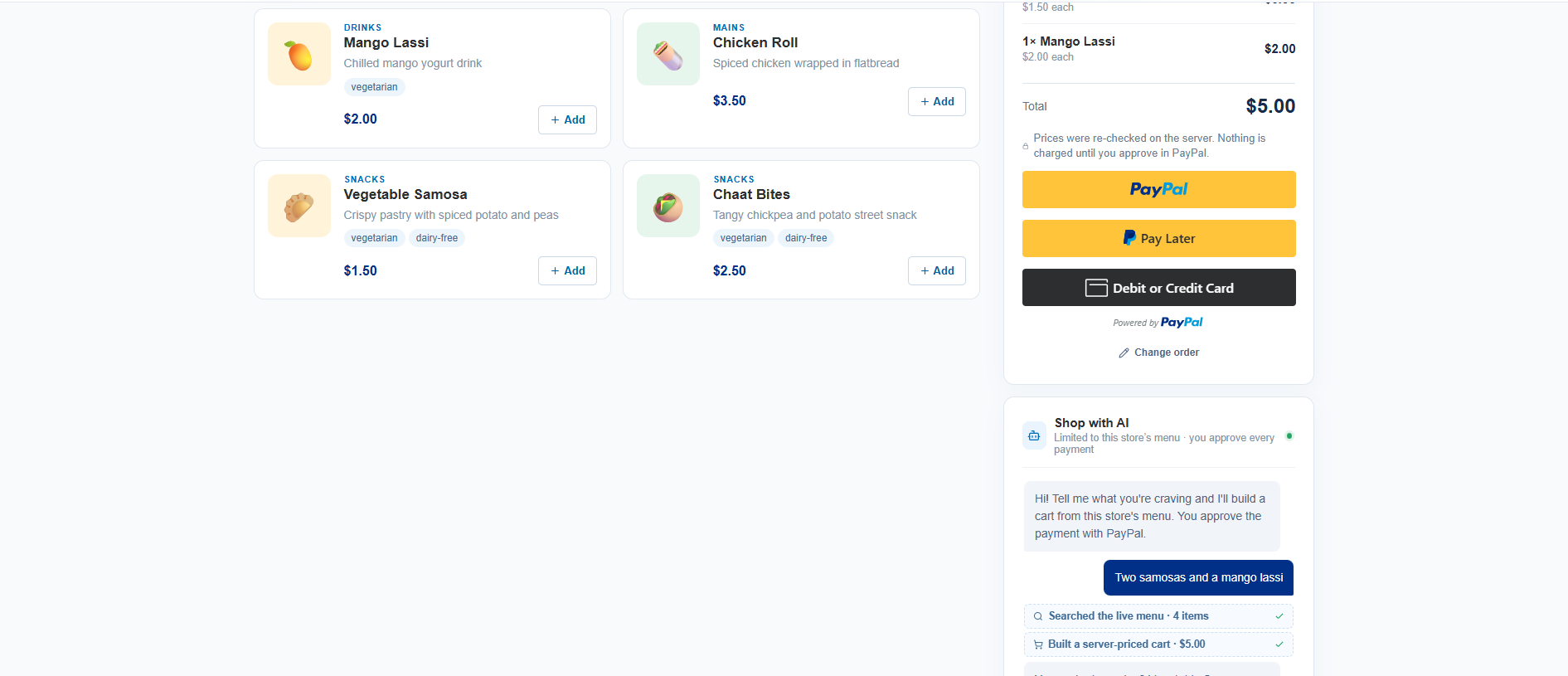
Paypal checkout view
-
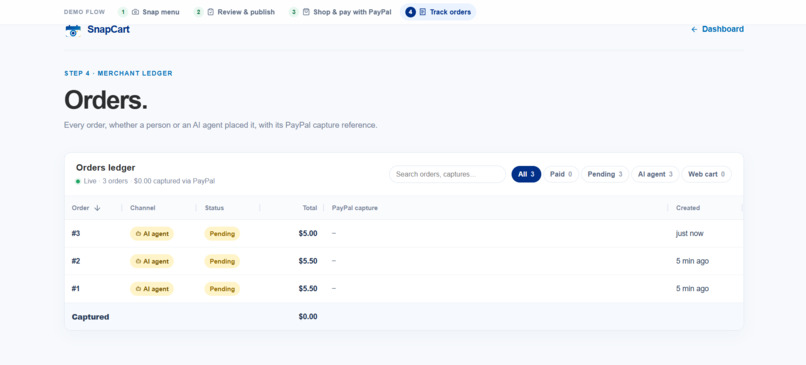
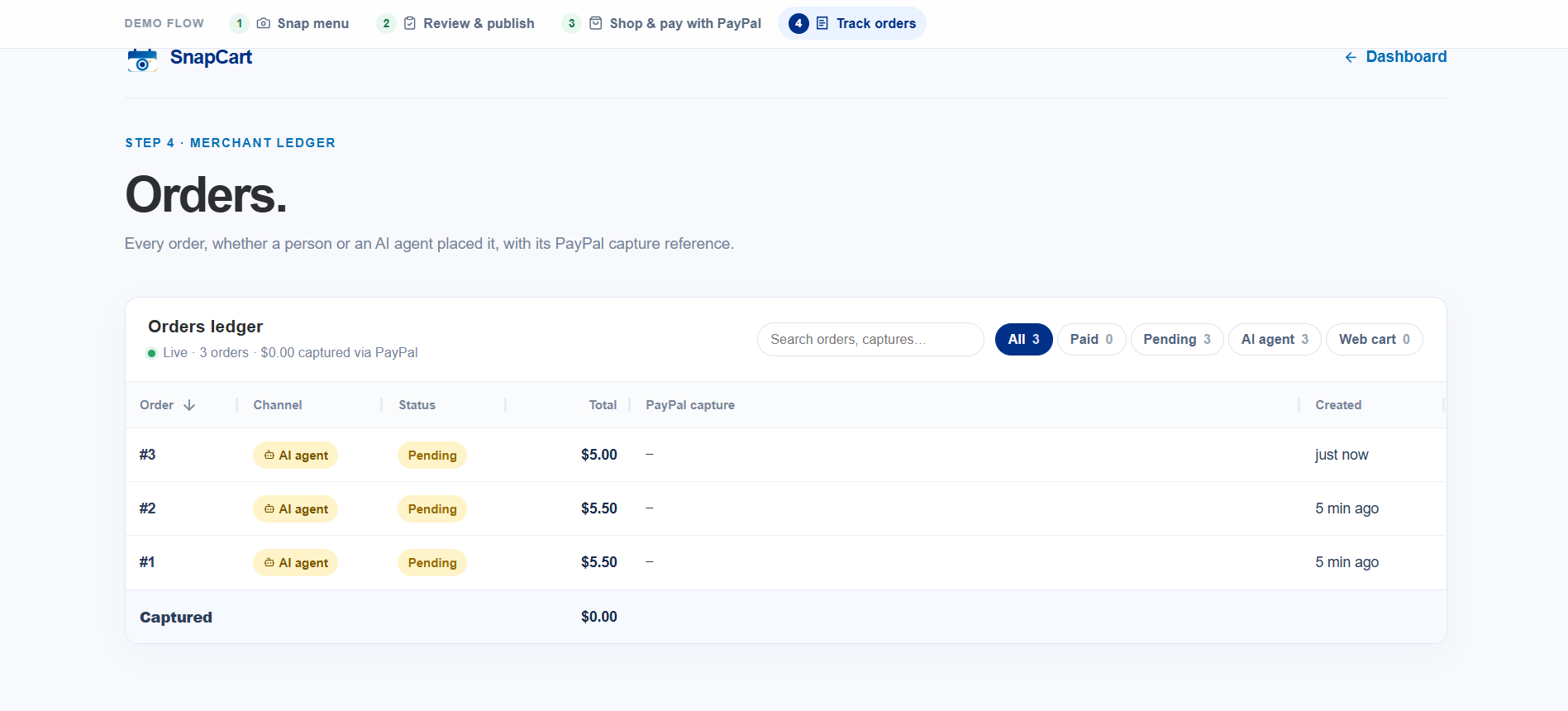
Order history tab
-
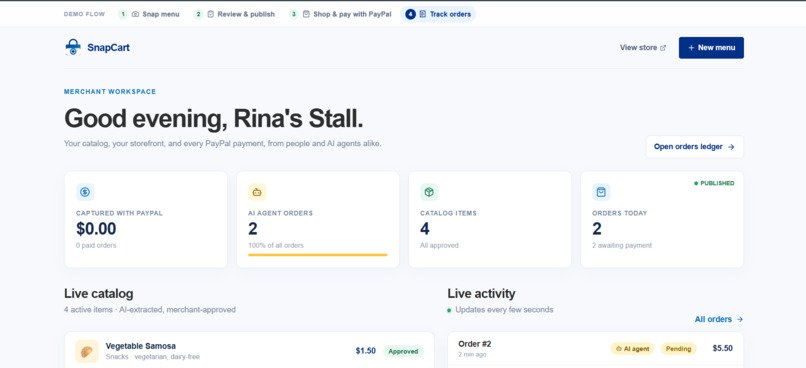
Stall Dashboard
-
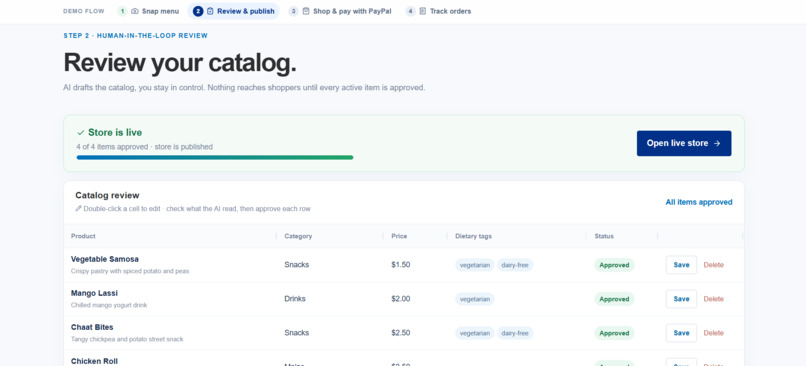
Menu review tab
-
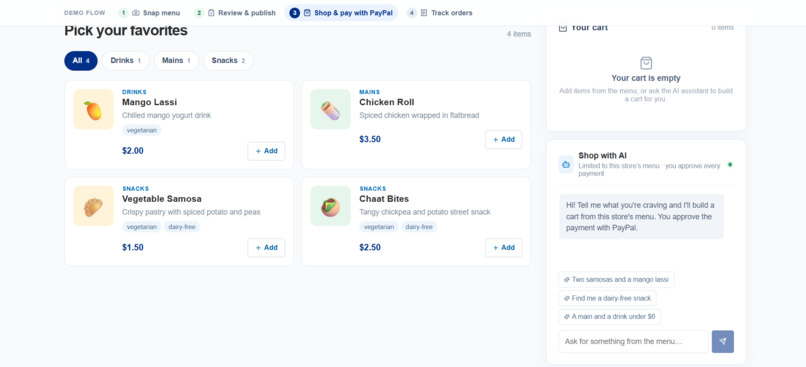
Store menu and AI chatbot for ordering
-
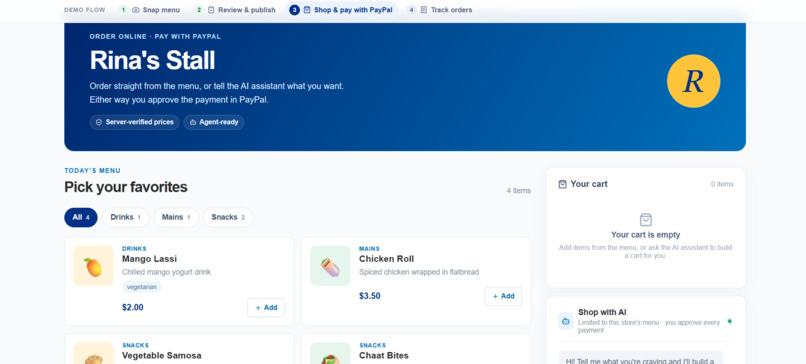
Store view
-
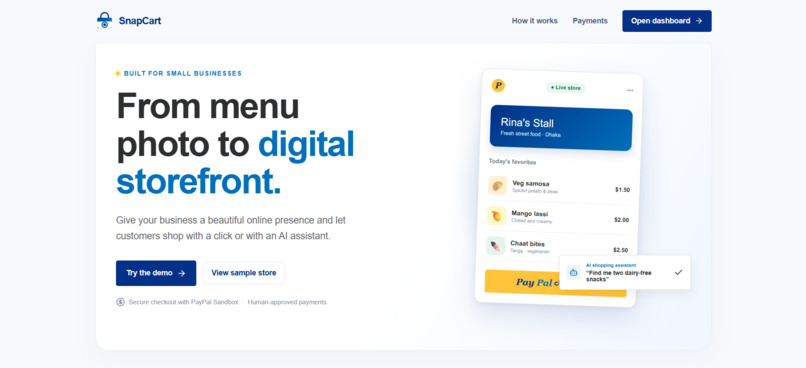
Landing page and hero section
SnapCart Project Story
Inspiration
During our internship at a fintech company in Bangladesh, we saw firsthand how strongly fintech companies compete to acquire small merchants. Many of these businesses have great products but limited access to technology, making it difficult for them to gain visibility or accept digital orders.
That experience inspired us to build SnapCart. We imagined PayPal as more than a payment provider: it could help small business owners enter the technology-driven economy, make their products easier to discover, and grow their businesses. At the same time, SnapCart could help PayPal reach and support a large community of small merchants.
What it does
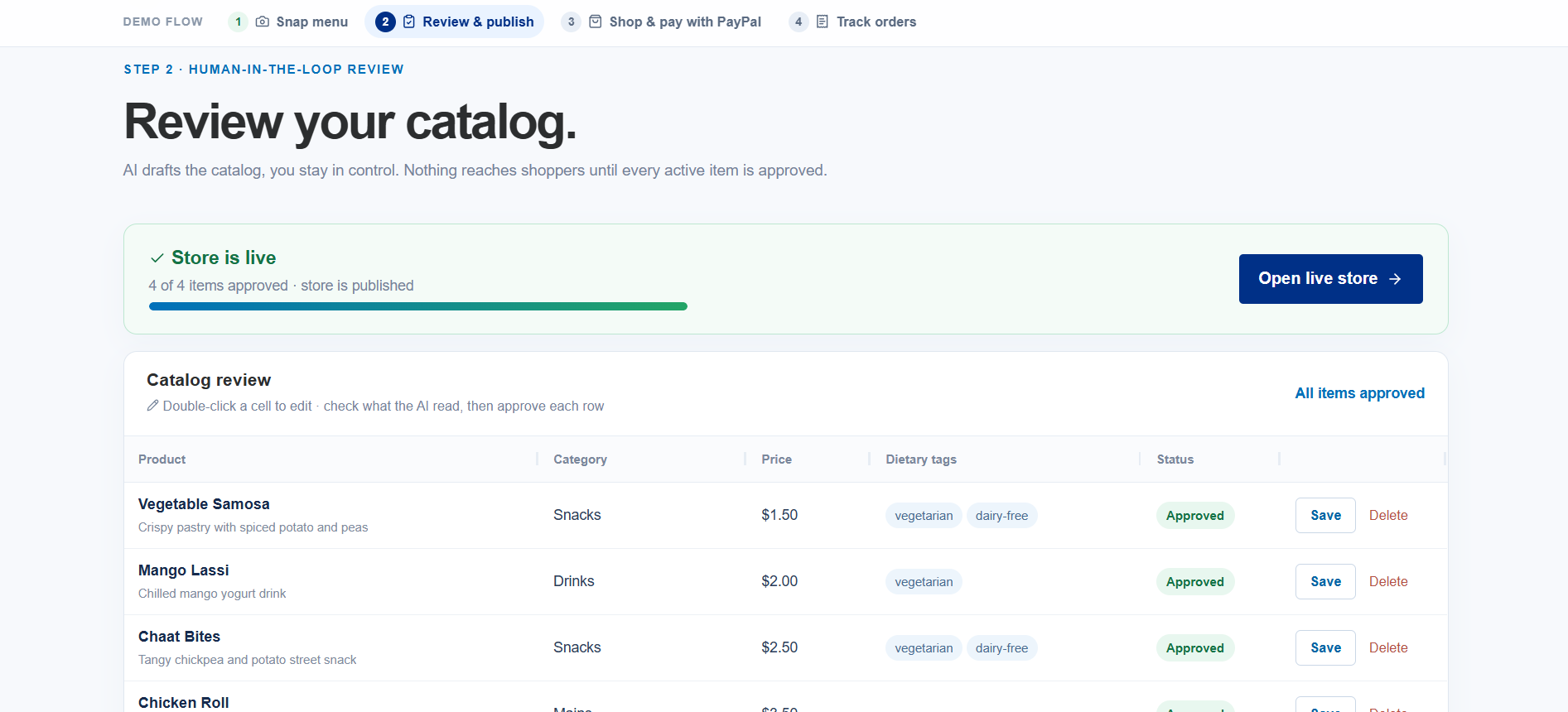
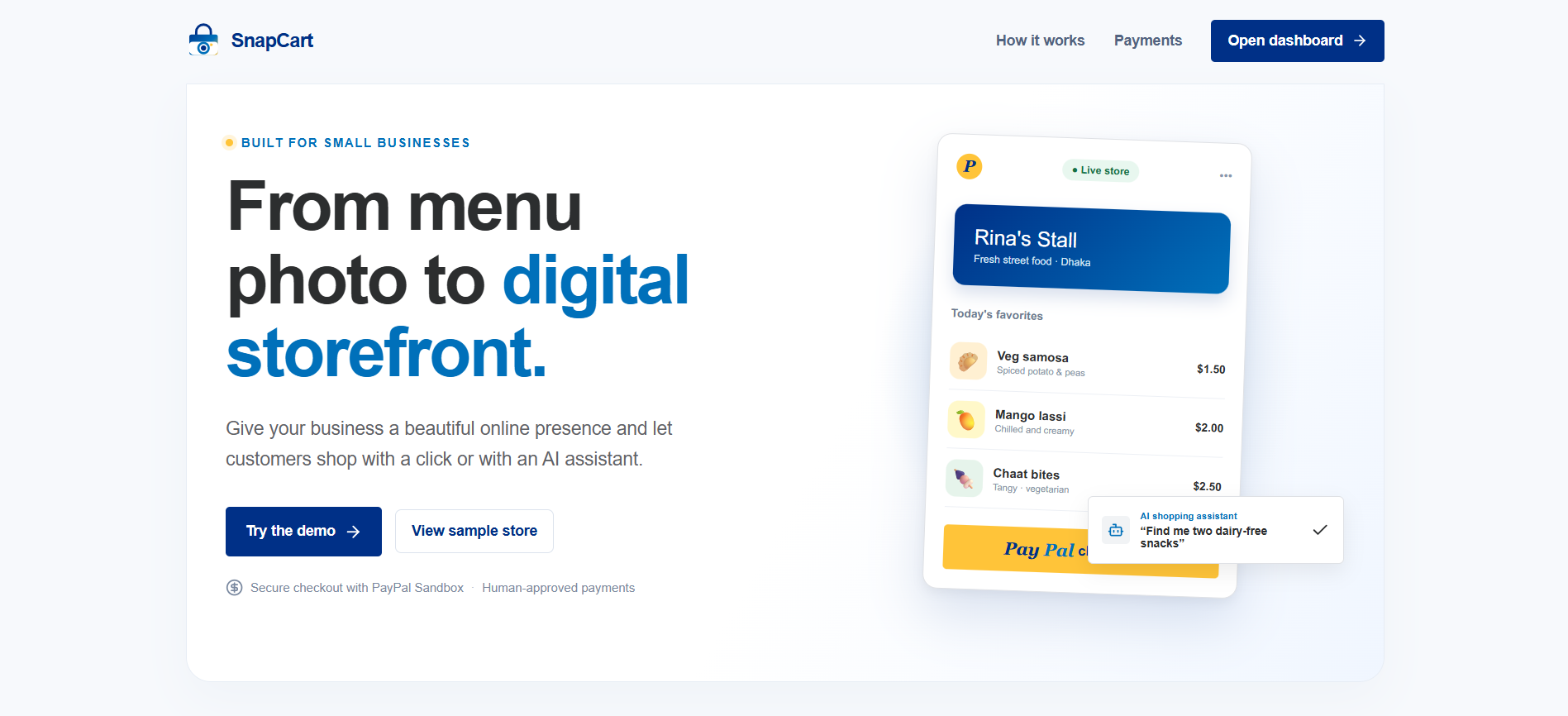
SnapCart turns a photo of a paper menu into a PayPal-ready online store. A merchant uploads a menu image, AI extracts the products and prices, and the merchant reviews and approves the results in an editable AG Grid interface before publishing.
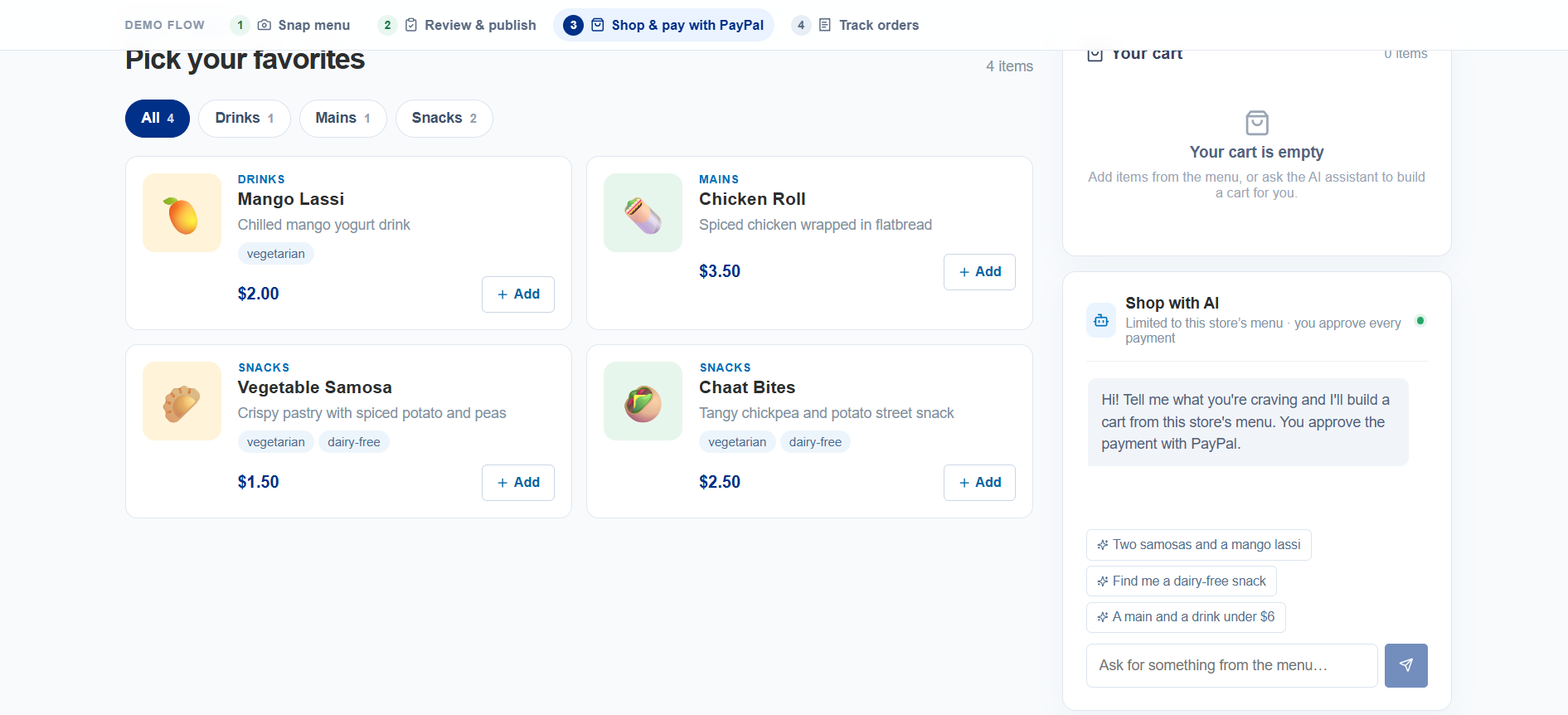
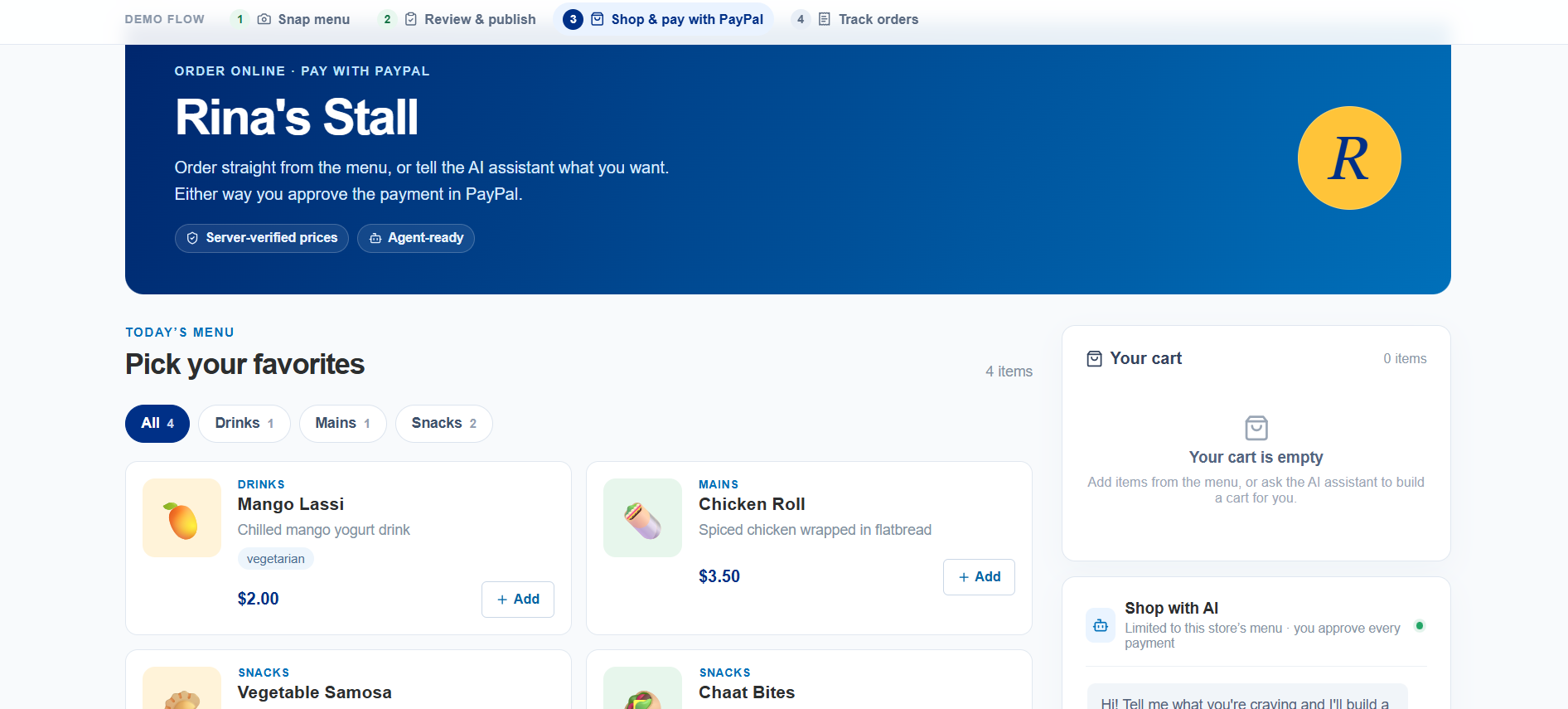
Customers can browse the store, use an AI shopping assistant, or place an order through an external AI agent connected through MCP. Every order is priced by the server and completed through PayPal Checkout, keeping the human buyer in control of the payment.
How we built it
We built SnapCart as a full-stack application with a Next.js frontend and a FastAPI backend. The backend uses SQLite and SQLAlchemy for data management, while AI services handle menu extraction and conversational shopping assistance. We used an MCP server to make SnapCart stores accessible to external AI agents.
PayPal Orders v2 and the PayPal JavaScript SDK power checkout. The server recalculates every total and verifies the captured amount before marking an order as paid. We also integrated AG Grid for the merchant catalog review workflow and the live order ledger, giving merchants a practical way to correct AI-generated data and track sales.
Challenges we ran into
The biggest challenge was accessing PayPal's developer tools. Since PayPal is not currently available in Bangladesh, we could not create a developer account or generate sandbox API keys locally. One of our teammates had to contact his cousin in the United States, who helped us obtain the credentials needed to develop and test the PayPal Checkout integration.
Working with AI-generated menu data was another challenge. We had to design the workflow so that unclear or incorrectly extracted information would not be published automatically. This led us to build a review-and-approval step that keeps the merchant in control of their catalog.
Accomplishments that we're proud of
This was the first global hackathon for one of our team members, which made participating a meaningful accomplishment regardless of the final outcome. We are proud that we turned an idea inspired by our experience in Bangladesh into a working product with a complete merchant-to-checkout flow.
We are also proud of successfully integrating AG Grid, a sponsor tool that both of us used for the first time. We used it to create an editable catalog review experience and a searchable, filterable order ledger that make the application more useful for real merchants.
What we learned
We learned how important it is to keep humans involved when AI interacts with business-critical data. AI can accelerate catalog creation and help customers shop, but merchants should be able to review the results and payment amounts should always be validated by a trusted server.
We also learned how to integrate PayPal Checkout, build tool-based AI workflows, expose functionality through MCP, and adopt a new data-grid technology in a short development cycle. Most importantly, the project showed us how technology and payments can work together to make digital commerce more accessible to small businesses.
What's next for SnapCart
Next, we would add merchant authentication, PayPal partner onboarding, and direct payouts so each merchant can operate their own account securely. We would also improve menu extraction for more languages and image conditions, add richer analytics and inventory features, and expand the MCP capabilities while maintaining strict server-side pricing and human approval for payments.
Built With
- ag-grid
- agentic-commerce
- ai-agents
- computer-vision
- fastapi
- groq
- llm
- mcp
- next.js
- oauth-2.0
- paypal
- paypal-checkout
- paypal-sandbox
- python
- qwen
- react
- render
- rest-api
- sqlalchemy
- sqlite
- typescript
- webhooks