-
-
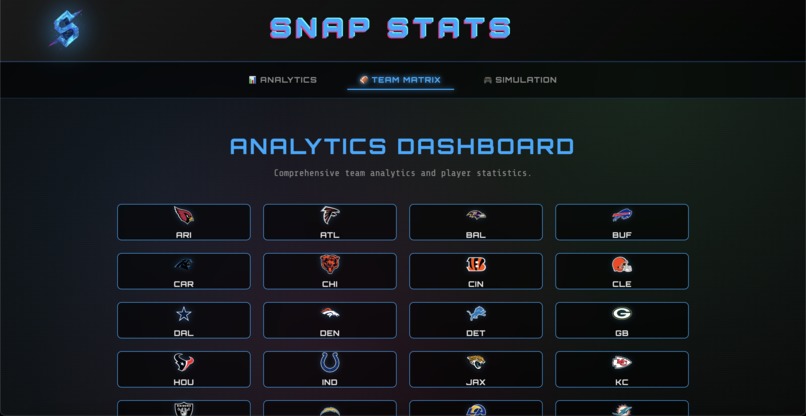
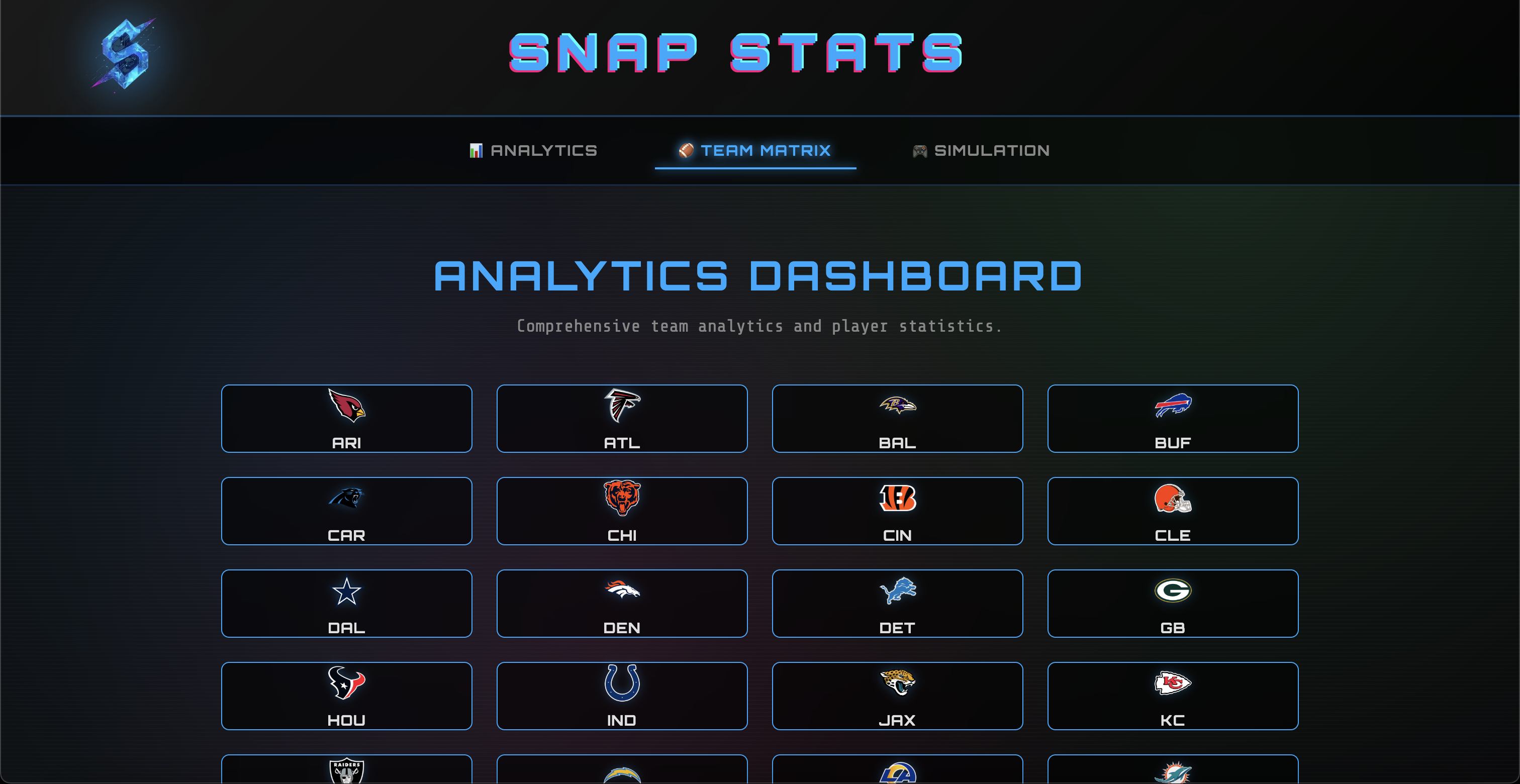
Team Matrix (Overview)
-
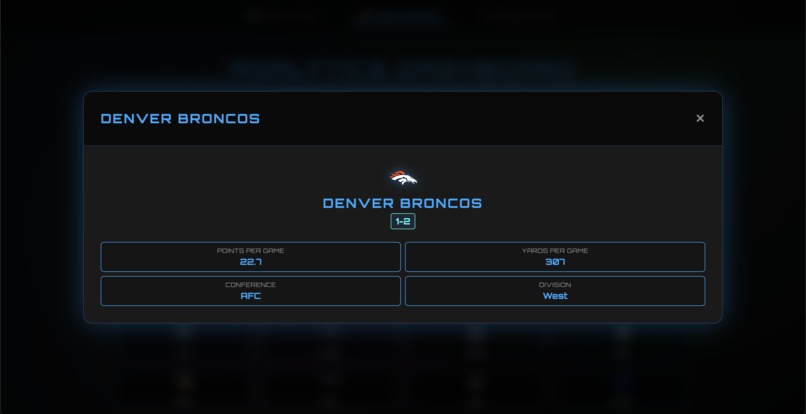
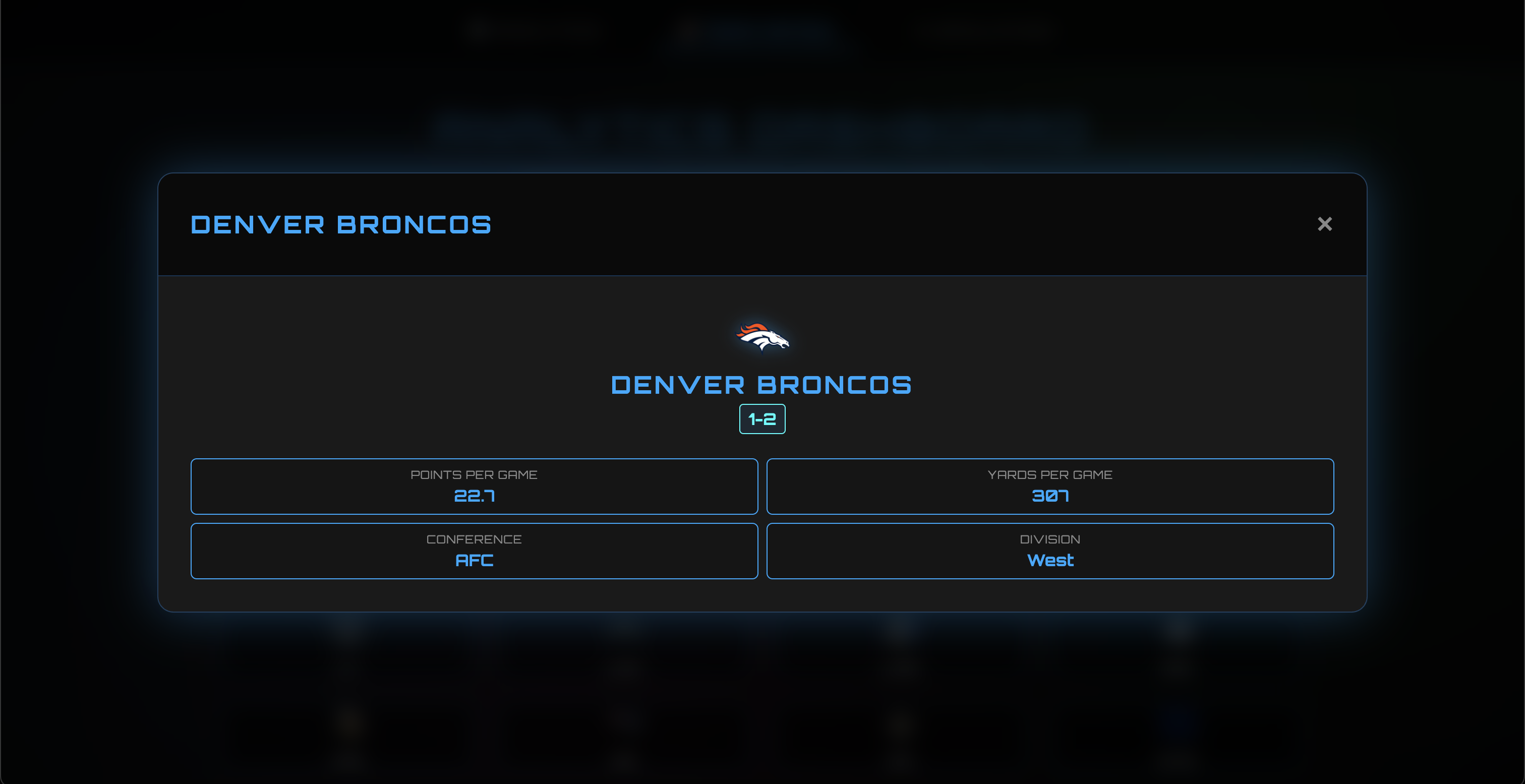
Team Matrix (Selected)
-
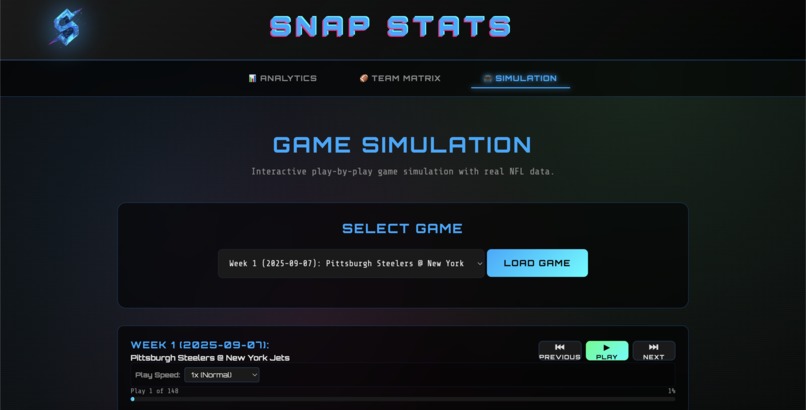
Play-By-Play (Top)
-
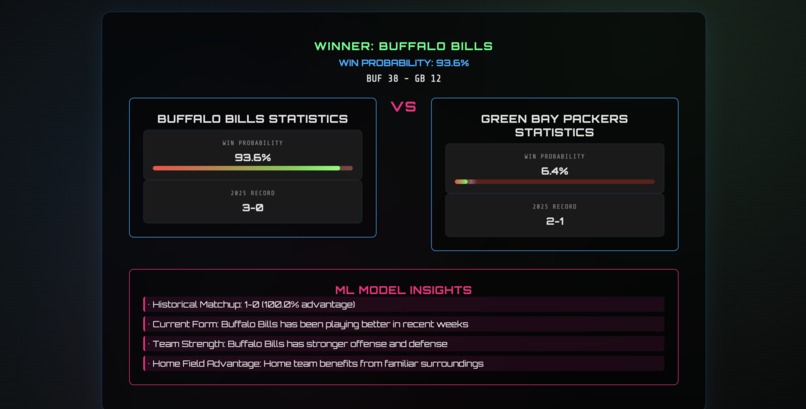
Predictor (Bottom)
-
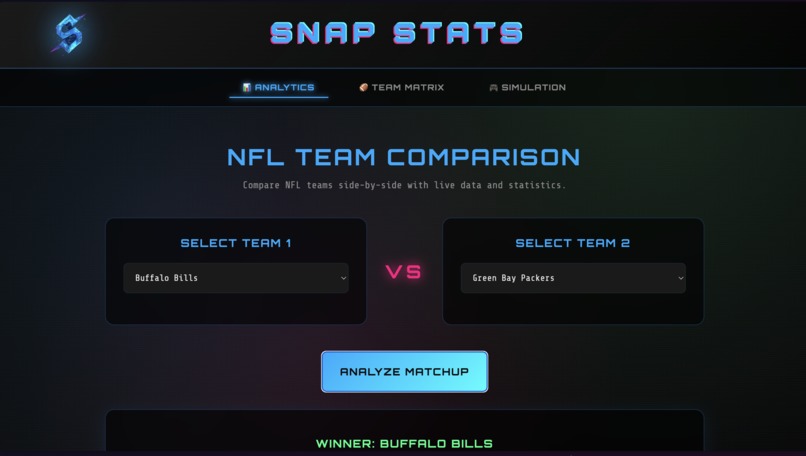
Predictor (Top)
-
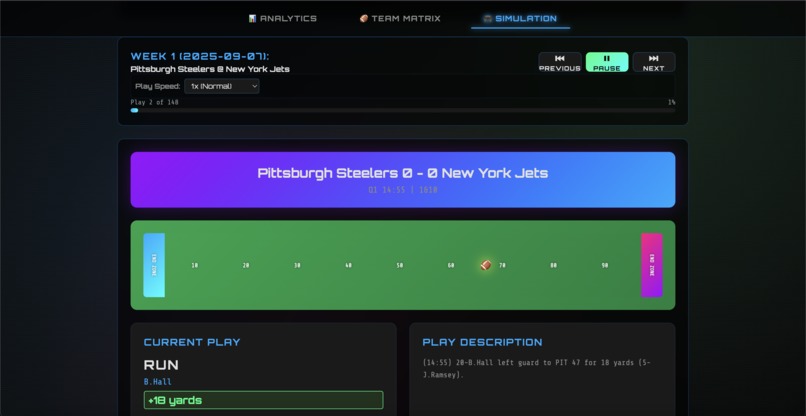
Play-By-Play (Bottom)


Inspiration
Sports fans often turn to ESPN or similar sites for NFL data, but the information is fragmented, overwhelming, and purely descriptive. There’s no built-in way to compare two teams head-to-head with predictions or confidence scoring. We wanted to make a tool that simplifies this experience, one platform where fans can get insights, predictions, and interactive simulations without digging through endless stats pages.
What it does
Our project is a comprehensive NFL analysis and prediction dashboard for the 2025 season. It provides:
- AI-powered predictions: Compare any two teams and see predicted winners, final scores, confidence levels, and key matchup advantages.
- Team analytics dashboard: Explore detailed statistics for all 32 teams, including points per game, team record, and yards per game.
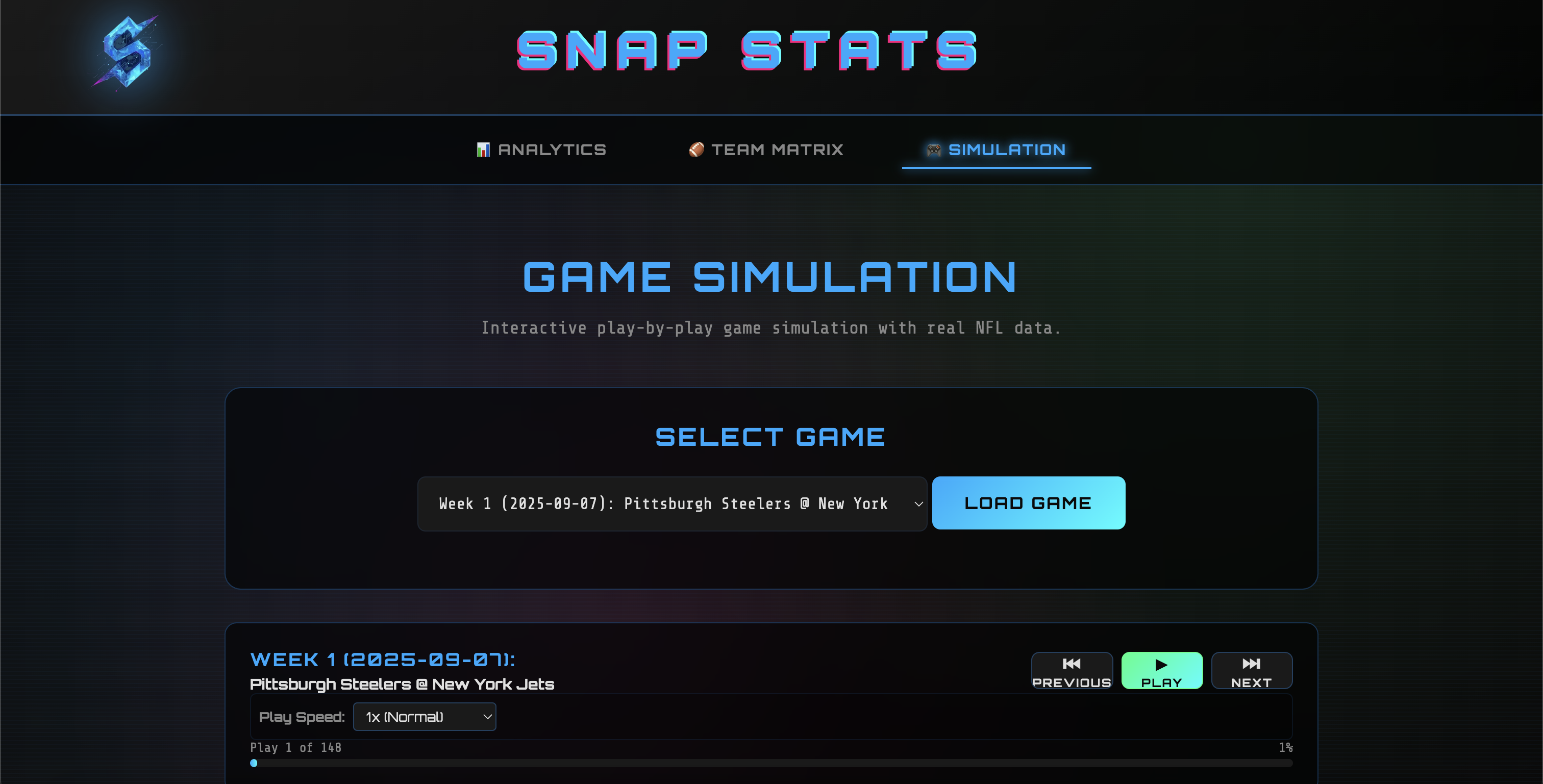
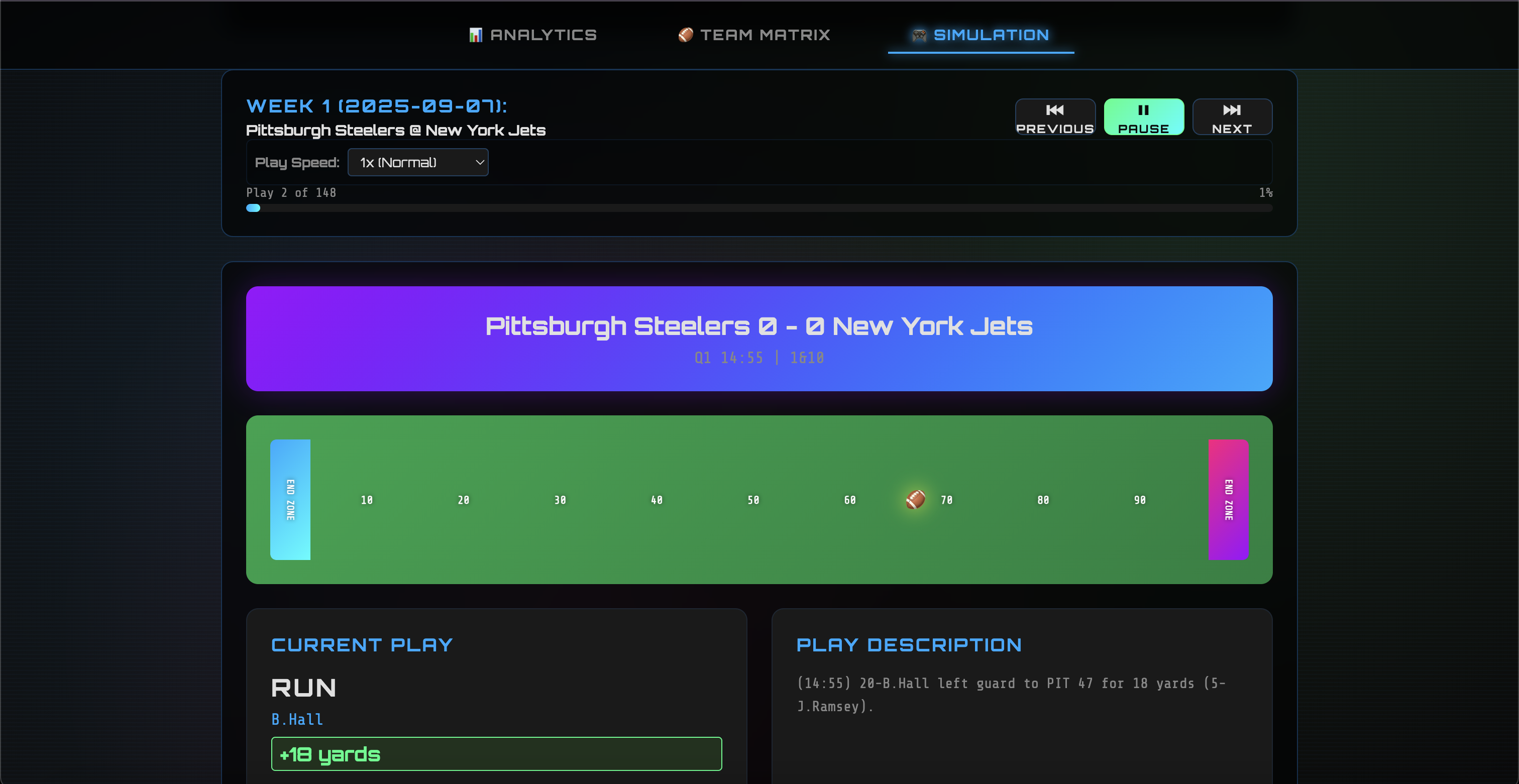
- Play-by-play simulation: Watch 2025 NFL games unfold with real player data, ball position, and interactive playback controls.
- Real-time integration: Data stays fresh with automated
espn apiandnflreadpyupdates and caching.
Essentially, it transforms raw NFL stats into clear, predictive insights and engaging visualizations.
How we built it
- Backend: Flask server handles
espn apiandnflreadpycalls, caching, and data cleaning. - Prediction model: A machine learning system trained on historical NFL data from 2021-2023, tested against data from 2024, and now predicting all current matchups between teams weighted by offensive strength, defensive performance, head-to-head performance, home field advantage, recent streaks and many more. Outputs include win probabilities, score predictions, confidence scores, and reasoning for predictions.
- Frontend: Built with HTML, CSS, and JavaScript for responsive design.
- Play-by-play engine: Processes
espn apiandnflreadpyplay-by-play data into a dynamic simulator that visualizes each snap, down, and yard gained in real time.
Challenges we ran into
- Training the prediction model: Balancing statistical rigor with hackathon time constraints was tough. We had to carefully weight historical data while still delivering interpretable results.
- Data parsing:
espn apiandnflreadpyprovides a lot of raw play-by-play detail, which required custom parsing and error handling to structure correctly. - Performance trade-offs: Ensuring real-time updates while caching effectively to avoid repeated heavy data pulls.
- UI complexity: Combining analytics, predictions, and simulations into one interface without overwhelming the user.
Accomplishments that we're proud of
- Building a working ML-powered prediction system that produces realistic outcomes with confidence scores.
- Developing a full 2025 analytics dashboard that covers all 32 NFL teams in detail.
- Creating an interactive play-by-play simulator that enhances fan engagement with real game data.
- Delivering a clean, modern user interface that simplifies complex stats for casual fans.
What we learned
- How to apply ML techniques to live sports data and make predictions interpretable for fans.
- How to structure and optimize
espn apiandnflreadpyplay-by-play data for analysis and visualization. - The importance of presenting advanced analytics in a way that feels fun and approachable, not overwhelming.
- How collaboration and rapid prototyping helped us achieve a full end-to-end product in a short timeframe.
What’s next for Snap Stats
- Expanding beyond the NFL to other leagues (NBA, MLB, NCAA).
- Training the ML model with deeper datasets (player-level stats, injury reports, weather factors).
- Adding fantasy football integration so users can project player impacts on outcomes.
- Building a mobile app for on-the-go predictions and simulations.
- Enabling social sharing features, where users can compare predictions with friends or communities.


Log in or sign up for Devpost to join the conversation.