TRACK ONE: Waiting Rooms
Inspiration
Waiting is something we all experience. Whether it's on commutes, in lines, or between tasks, it often feels unproductive and like a waste of time. Most people default to passive scrolling, which provides quick distraction but little lasting value. We were inspired to rethink waiting not as lost time, but as an opportunity for discovery. What if your everyday surroundings could become an engaging yet educational game?
What it does
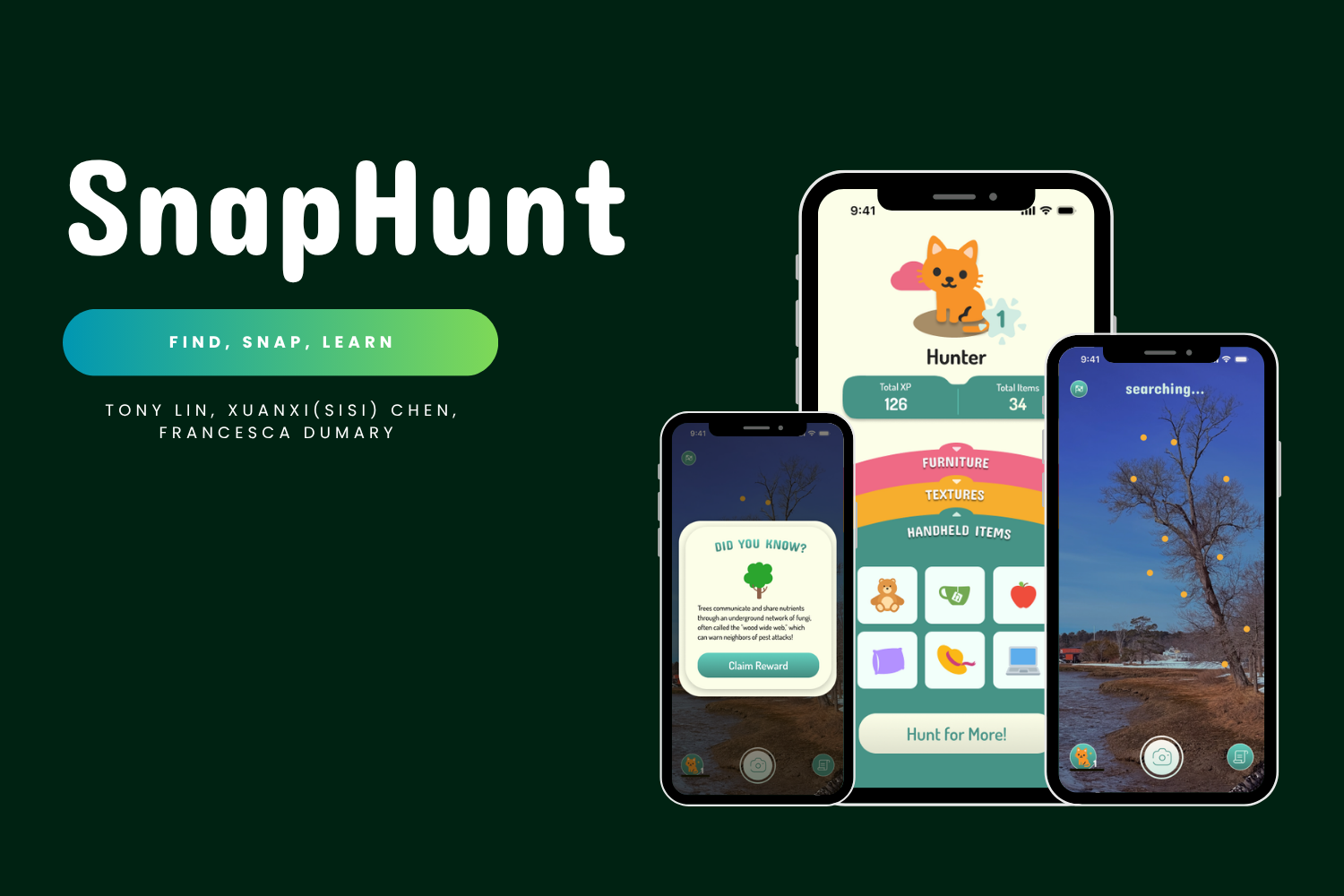
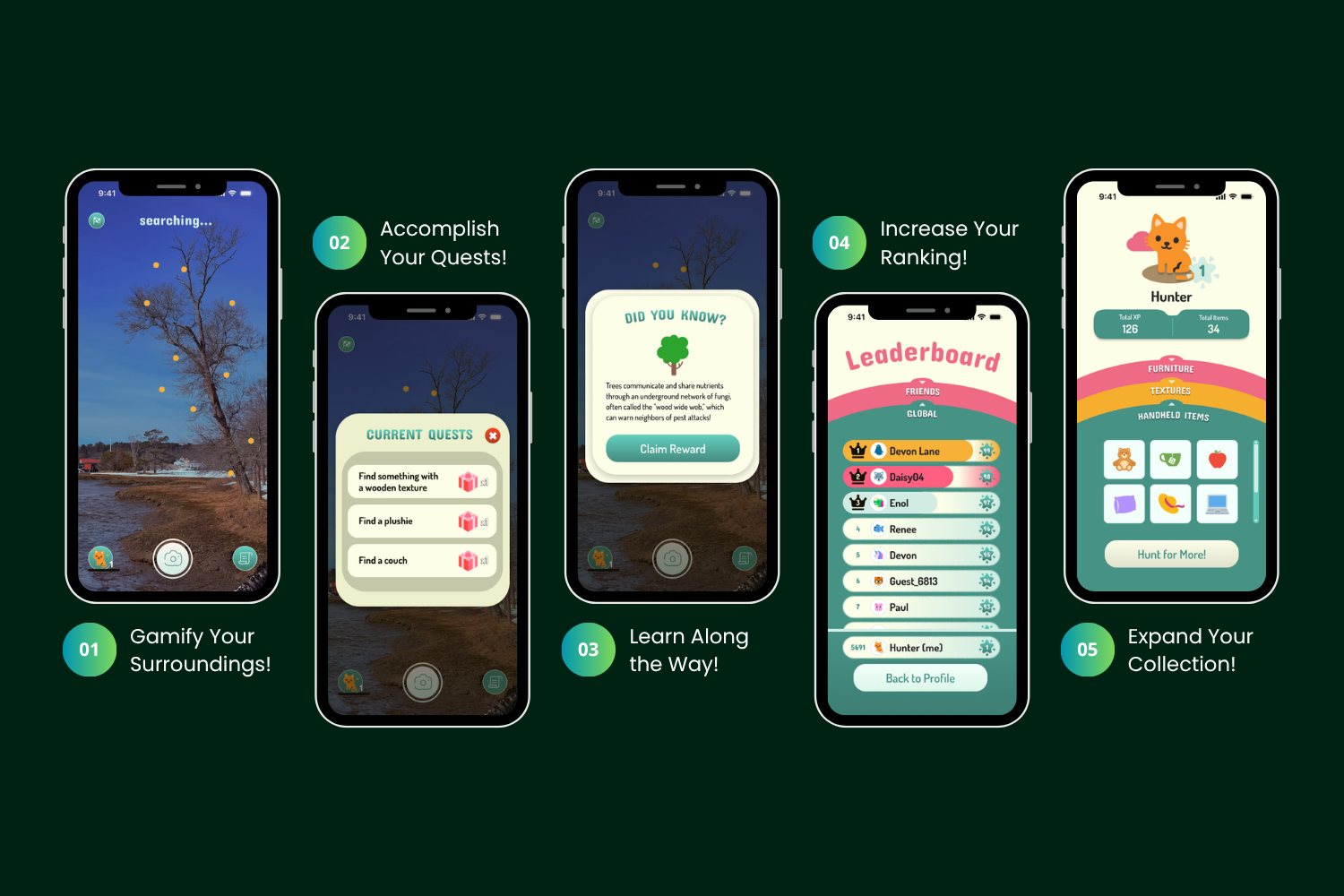
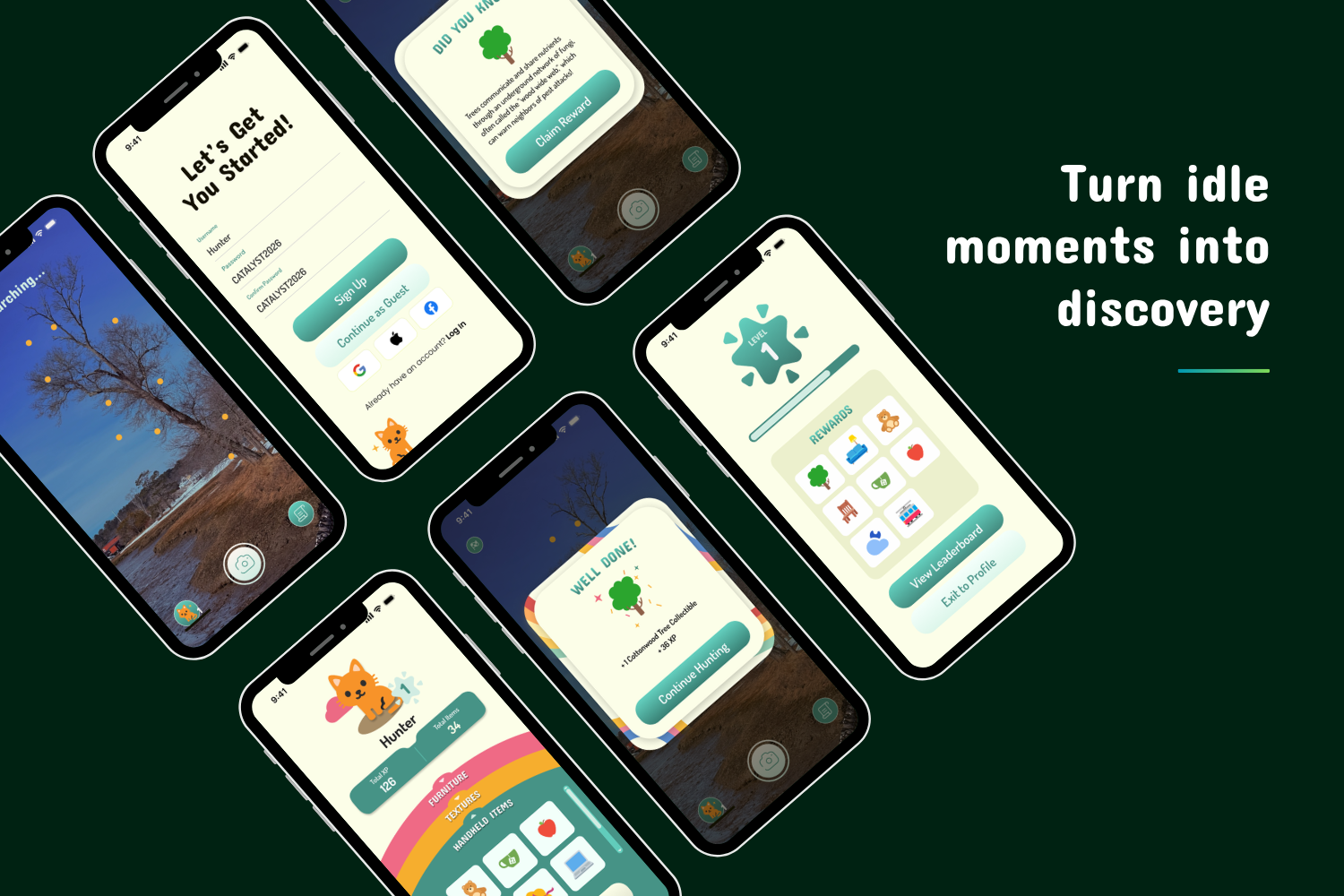
- Users receive prompts to find real-life objects around them
- They photograph them using the app's camera
- The objects unlock fun facts and collectibles
We designed SnapHunt around a simple loop: Find→Photograph→Learn→Reward→Repeat
How we built it
We followed a structured design thinking system:
- First, we identified waiting as an undervalued moment.
- Next, we explored ways to connect digital media with the real world.
- Then we outlined the user flows and wireframes for the app.
- Afterward, we defined our brand identity using a moodboard, typography, and color palette.
- Finally, we built high-fidelity designs in Figma with a focus on usability.
Challenges we ran into
One of our biggest challenges was maintaining quality within a limited timeframe. We aimed to create an experience that felt intuitive and quick, while also delivering visually polished graphics. Ultimately, these constraints pushed us to prioritize depth over breadth, focusing on a few well-crafted flows rather than many unfinished features.
Accomplishments that we're proud of
We created a clear and cohesive concept across three distinct modes:
- Strong alignment between problem, idea, and execution
- A polished, consistent UI system
- A realistic and engaging demo-friendly experience
What we learned
- A strong product starts with a clear problem definition
- User flow clarity matters more than feature quantity
- Designing for real-world context is more complex than expected
- Constraints can actually improve focus and quality
What's next for SnapHunt
- Integrate real AI object detection
- Add personalization based on the user’s waiting habits
- Incorporate a multiplayer mode with deeper social features
- Expand collectible systems and progression mechanics
What is the problem your solution addresses?
Waiting is often unproductive and mentally draining, leading people to default to mindless scrolling. Whether someone is commuting, standing in line, or taking a break, these moments are typically lost time that could instead be engaging, meaningful, and deeply rewarding. Existing solutions fail to bridge users with their surroundings. Instead, users are entrapped in their digital world, leaving everyday moments feeling wasted.
Why did you pick this solution, and how does it address the problem?
We designed SnapHunt to transform passive waiting into active search by using the real world as the game environment. By inspiring users to find and photograph objects around them, the app creates a simple, rewarding cycle of discovery and learning. All in all, SnapHunt shifts the experience of waiting from passive consumption of their devices to active exploration of the world around them.
Built With
- figma

Log in or sign up for Devpost to join the conversation.