Inspiration
Hunted Apple started from a simple question: what if the player is not the snake, but the apple? Reversing that classic role made the game immediately more playful and tense.
We also wanted the AI element to feel meaningful. Instead of making the snakes simply faster, we made the player faster and designed the snakes to win through behavior and priorities. They go after nearby apples, attack each other, and become increasingly aggressive toward the player as fewer snakes remain.
What it does
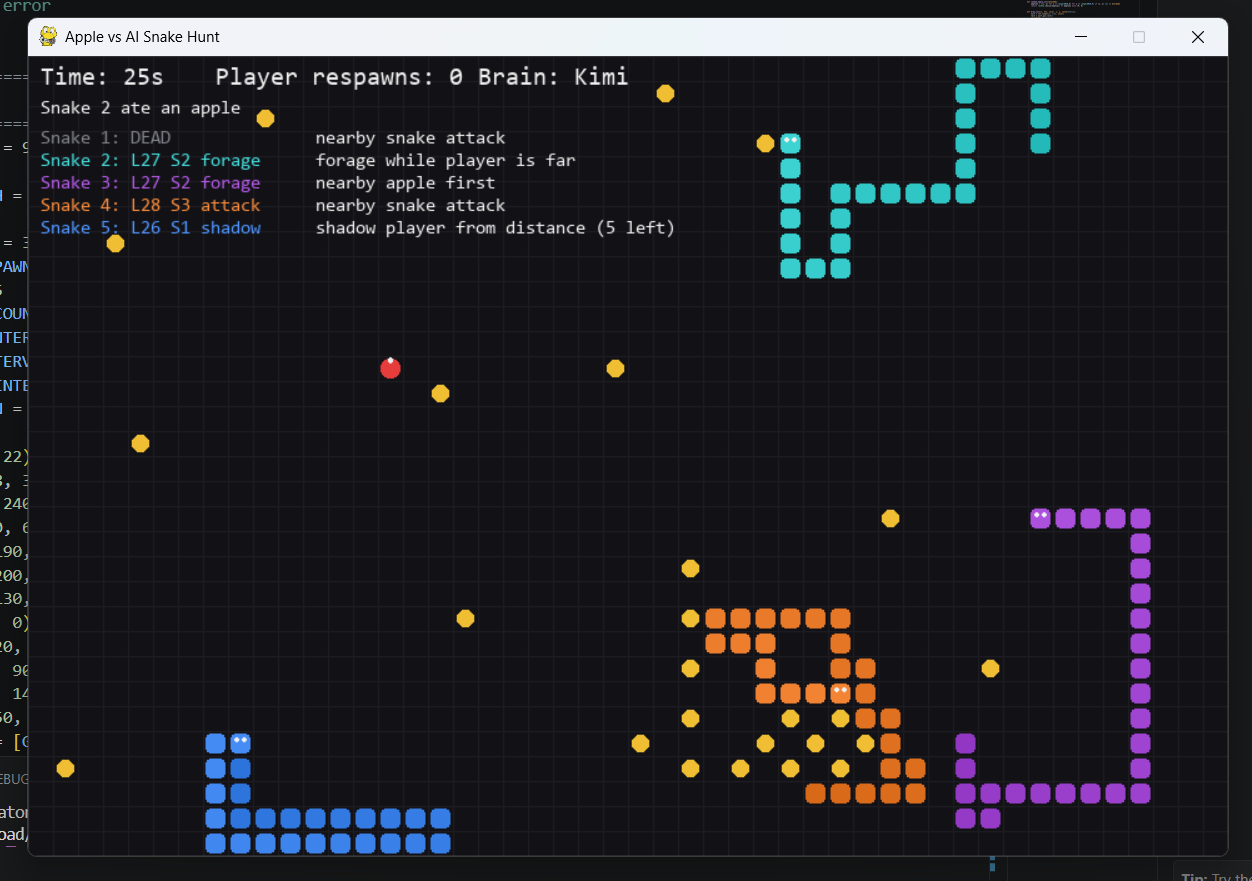
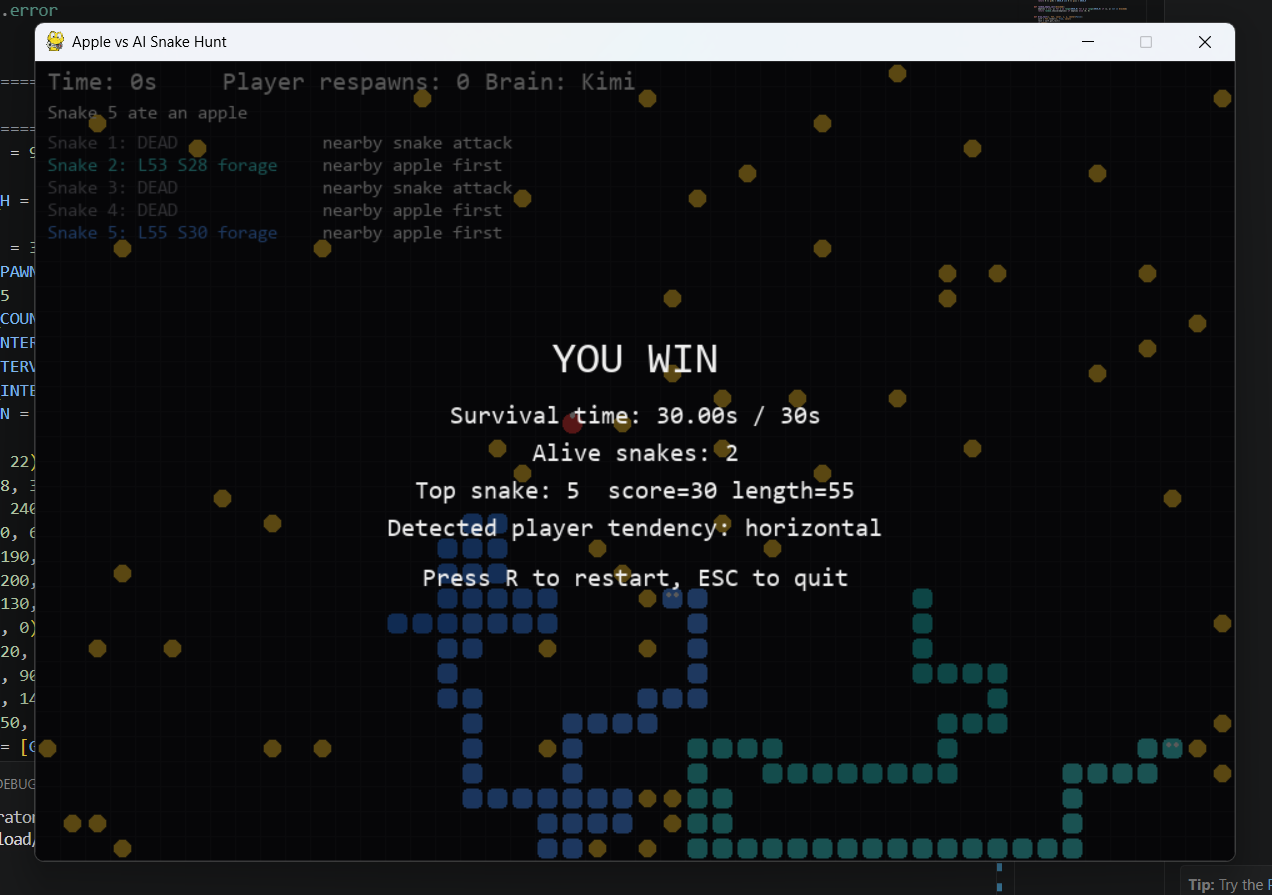
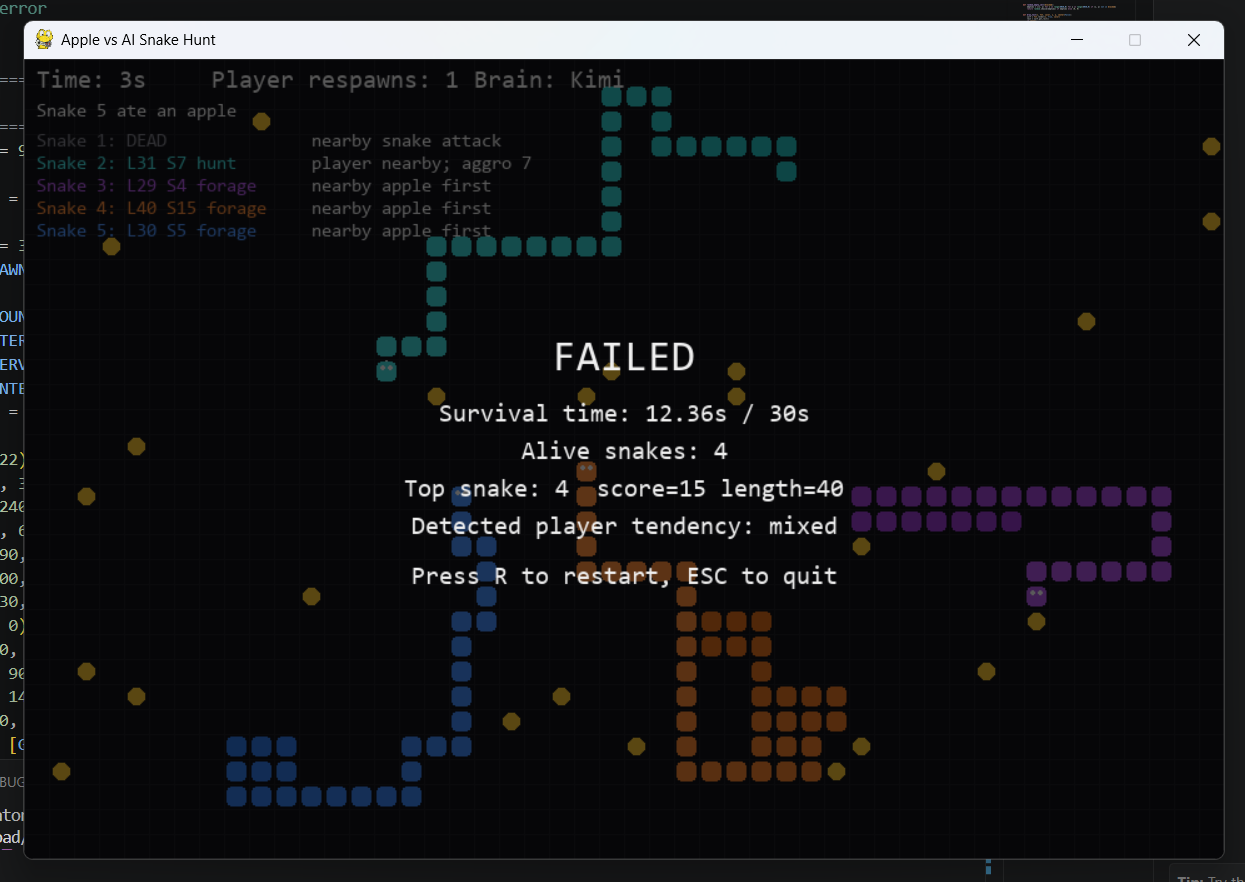
Hunted Apple is a 30-second survival game where the player controls an apple in an arena with five snakes and multiple food apples. The goal is simple: stay alive until the timer reaches zero.
At the beginning, the snakes are more distracted by nearby food and by fighting each other. As the number of surviving snakes drops, their attention shifts toward the player, making the late game much more dangerous. This creates a changing difficulty curve and a more dynamic AI-driven experience.
How we built it
We built Hunted Apple in Python using Pygame for rendering, timing, input, and the game loop. The snakes use layered decision logic instead of one fixed behavior. Each snake evaluates nearby apples, enemy snakes, and the player, then chooses what to prioritize based on distance and game state.
We also experimented with AI-integrated behavior design so the game would feel more strategic rather than purely mechanical. On the presentation side, we simplified the interface so the game stays visually clear and easy to understand.
Challenges we ran into
The main challenge was balance. If the snakes were too fast, the game felt unfair. If they were too weak, the AI did not feel important. We solved this by making the player faster, while giving the snakes more strategic priorities and stronger late-game aggression.
Another challenge was making five different snakes interact in a way that felt chaotic but still readable. We had to tune their behavior so they would fight, forage, and hunt in a way that stayed interesting for the player.
We also spent time simplifying the UI and removing extra information so the game experience felt cleaner and more focused.
What we learned
We learned that AI in games becomes more interesting when it changes decision-making, not just difficulty. We also learned how simple priority systems in multi-agent environments can create emergent behavior that feels surprising and alive.
Most importantly, we learned that a familiar game idea can feel new again when AI is used to create tension, competition, and adaptation.

Log in or sign up for Devpost to join the conversation.