-
-
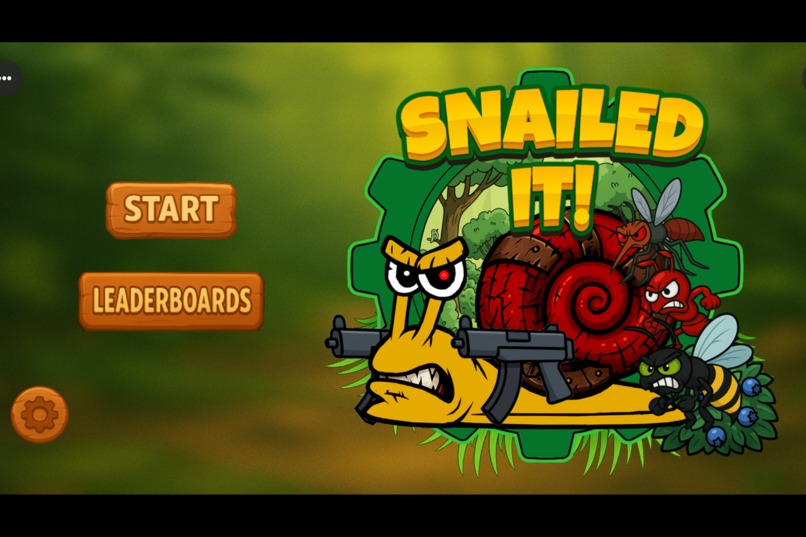
Title Screen
-
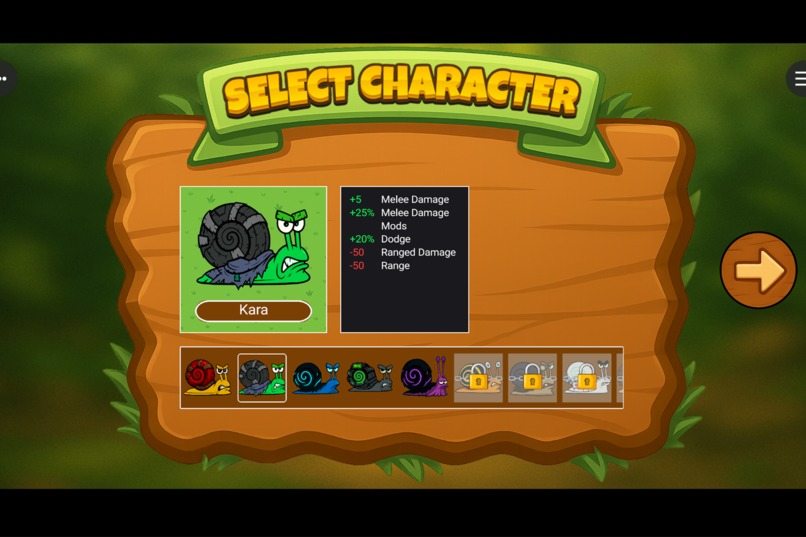
Character Select Screen
-
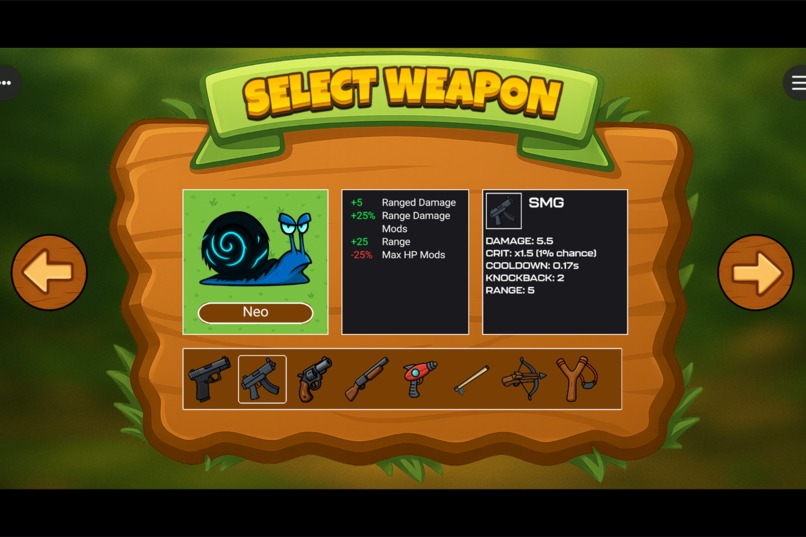
Weapon Select Screen
-
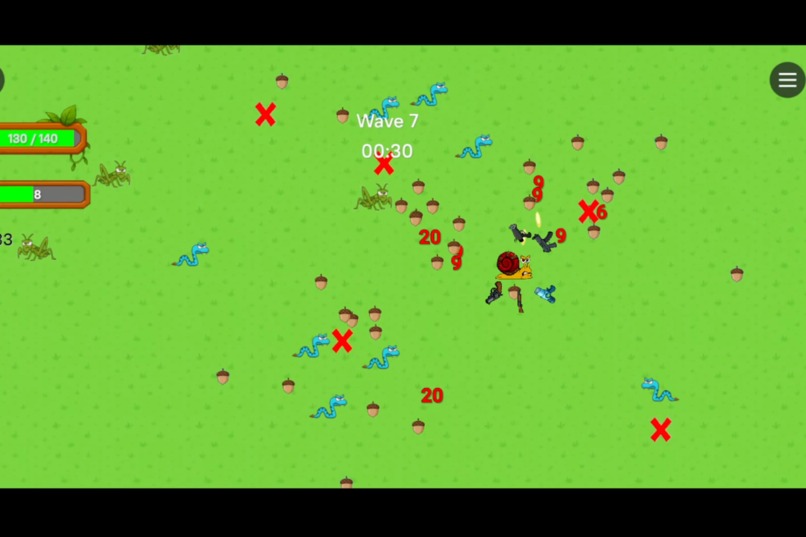
Action in the Arena
-
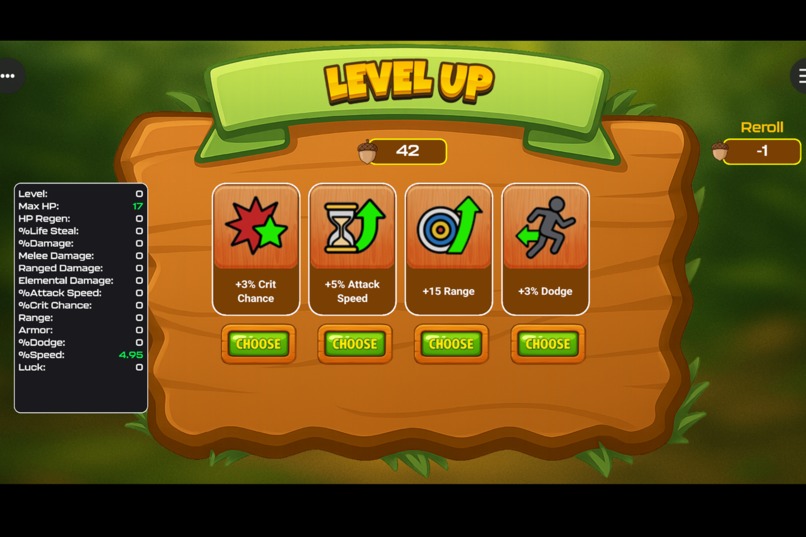
Level Up Screen
-
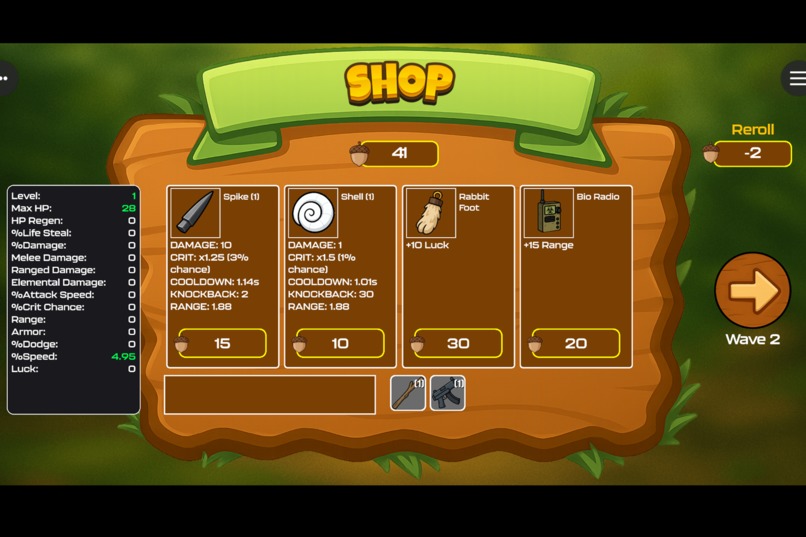
Shop Screen
-
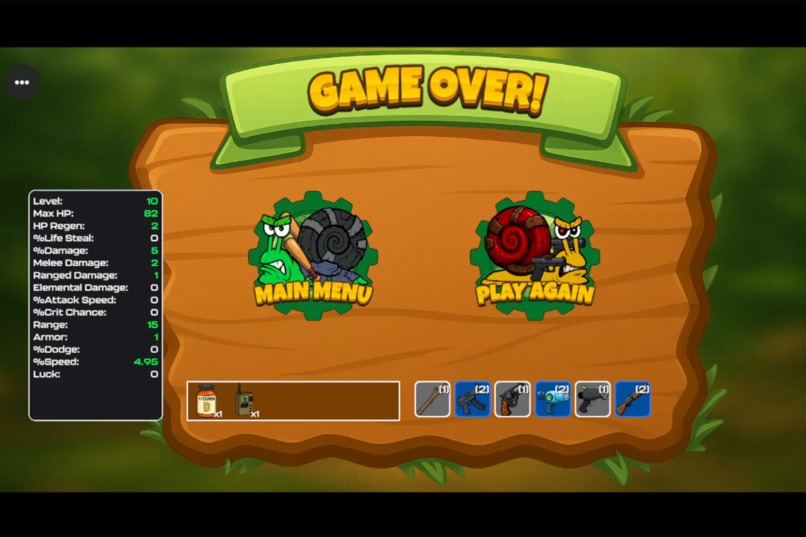
Results Screen




Inspiration
The inspiration for Snailed It! comes from the breakout bullet-heaven genre defined by titles like Vampire Survivors, Survivor.io, Archero, and Brotato, games that combine deceptively simple controls with explosive on-screen chaos and fast decisions. These games distill action down to its purest form: constant movement, rapid upgrades, and the thrill of barely surviving overwhelming odds.
What it does
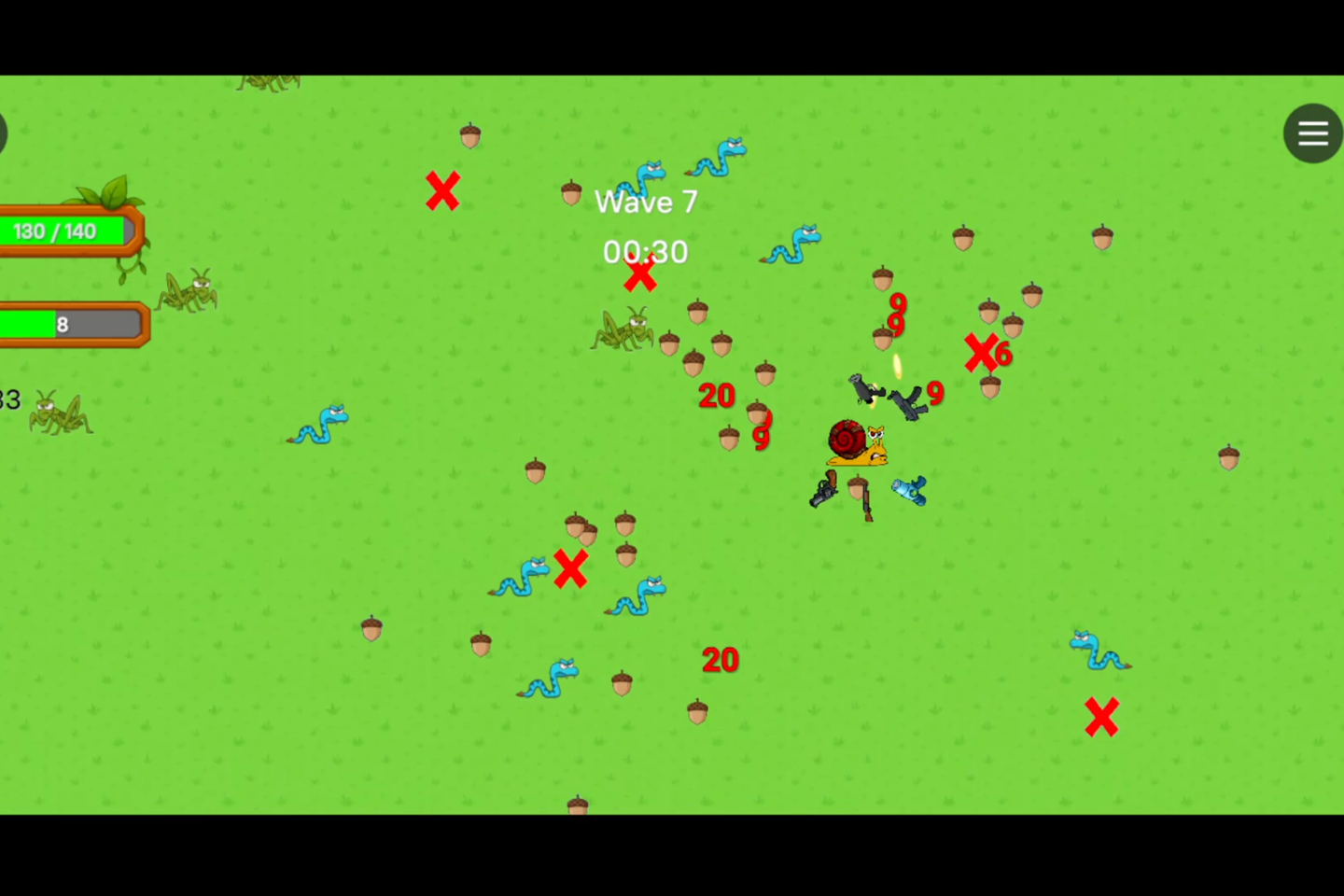
Snailed It! is a mobile-first bullet-heaven arena roguelite built inside Meta Horizon Worlds, designed from the ground up for fast, intuitive touch gameplay. Players control a snail hero of their choosing to fight through 20 escalating waves of ruthless creatures as they defend their garden.
The game combines auto-combat, strategic itemization, and player-driven builds into a satisfying 5–10 minute gameplay loop. Each run begins with a single weapon and a base character perk, then quickly branches into dozens of possible builds through weapons, items, and upgrades.
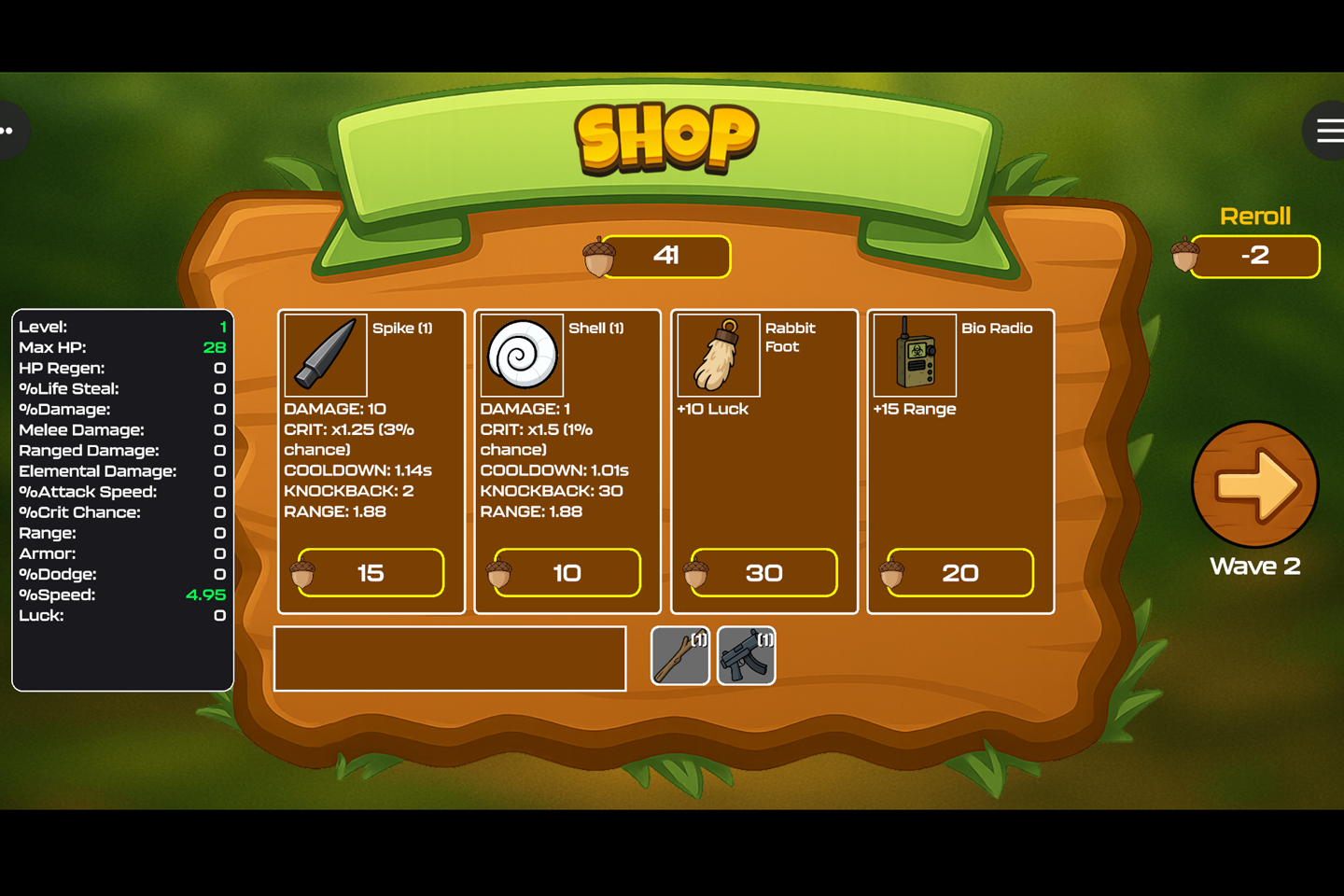
During waves, players collect Acorns dropped by enemies. Between waves, Acorns are exchanged for weapons and items in the shop. Builds can become wildly unique, high-speed melee snails, crit-focused ranged snails, elemental crawlers, defensive tanks, etc. Each snail hero offers a different starting perk and signature item, encouraging experimentation and replayability.
How we built it
Snailed It! was built inside Meta Horizon Worlds using a combination of the platform’s scripting tools, custom assets, and our team’s collaborative pipeline.
We started with a Proof of Concept and developed it into a fully functional prototype: top-down camera, auto-targeting, enemy AI, wave spawning, and core movement tuned for mobile touch controls. This gave us the backbone of gameplay and allowed us to iterate quickly on enemy density, pacing, and performance.
All characters, items, weapons, and enemies were structured through a set of shared stat databases that feed directly into the gameplay logic. This allowed us to balance weapons and upgrades effectively while rapidly expanding the content pool. Our artist produced bespoke 2D icons, character and enemy silhouettes, and stylized UI elements to reinforce readability on mobile displays.
Challenges we ran into
Balancing a bullet-heaven game inside Horizon Worlds was definitely a challenge. A bullet-heaven / roguelite demands dozens of enemies on screen, multiple weapon projectiles, frequent stat calculations, and dynamic wave scaling, thus, balancing visual chaos with performance was one of the biggest technical puzzles we encountered.
Designing and tuning reliable mobile-first controls was also a bit of a challenge. Top-down shooters traditionally depend on tight analog or keyboard controls. Translating that into a touch-first Horizon experience required multiple iterations on joystick responsiveness, auto-aim behavior, and screen space placement for small devices. We tested on multiple phones to find a sweet spot between precision and simplicity.
Accomplishments that we're proud of
Despite an extremely condensed development window, we’re proud of how much we were able to build, refine, and polish in such a short period of time as a new team working together for the first time. We leaned into our strengths and managed to create a surprisingly deep, fully playable bullet-heaven experience that pushes Horizon’s mobile capabilities.
We also managed to integrate a large variety of content in a scalable, database-driven way. With dozens of weapons, items, enemies, and character attributes, establishing a clean internal data pipeline early on allowed us to prototype fast and balance even faster. Our team communicated constantly, iterated aggressively, and adapted quickly to feature changes and system refinement.
Most importantly, we’re proud that this project was truly collaborative. Everyone contributed across disciplines to help shape the final product. For a such a short sprint, we built something we love, and we’re excited to share it!
What we learned
Working on Snailed It! taught us a great deal about both game development and the Horizon ecosystem. We learned to think about ergonomics, thumb reach, UI clarity, and player pacing in ways that only emerge when building for mobile from the ground up. We learned that database-driven weapons, items, and enemy systems drastically reduced iteration time, early investment in flexible systems paid off enormously.
We found that clear division of responsibilities, shared documentation, and consistent updates were essential to finishing our submission on time. Choosing snail as heroes wasn’t just fun, it simplified art direction, informed item and weapon names, and gives game a charm that players can connect with immediately. Overall, Snailed It! pushed us to think smarter, build faster, and collaborate more effectively than ever before.
What's next for Snailed It!
Our plans include expansion of the playable characters and make them available via different unlock methods. We also plan to add other features like an in-world economy, shop, daily login reward, and quests to rewards the players. We also plan to expand on play modes. Allow for player to select difficulty, endless mode, and possibly a campaign mode; as well as introduce seasonal content (maps, enemies, and limited time rewards). Additionally, save and showcase player codex to include stats of the latest run and overall game progress. Lastly, move the remaining of our UI to Noesis.
Built With
- audacity
- blender
- noesis
- photoshop
- typescript


Log in or sign up for Devpost to join the conversation.