-
-
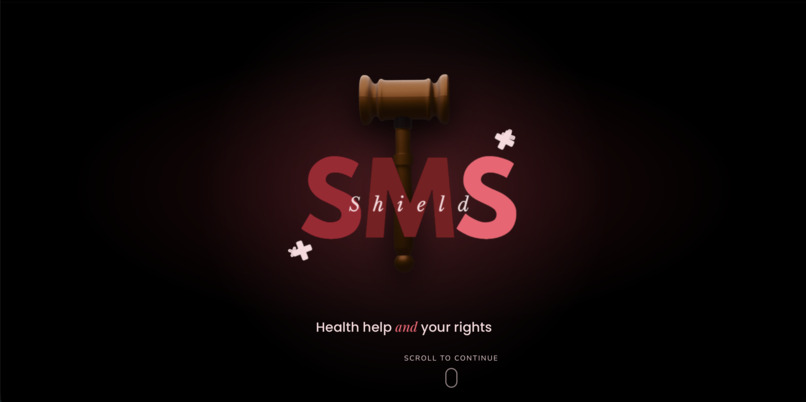
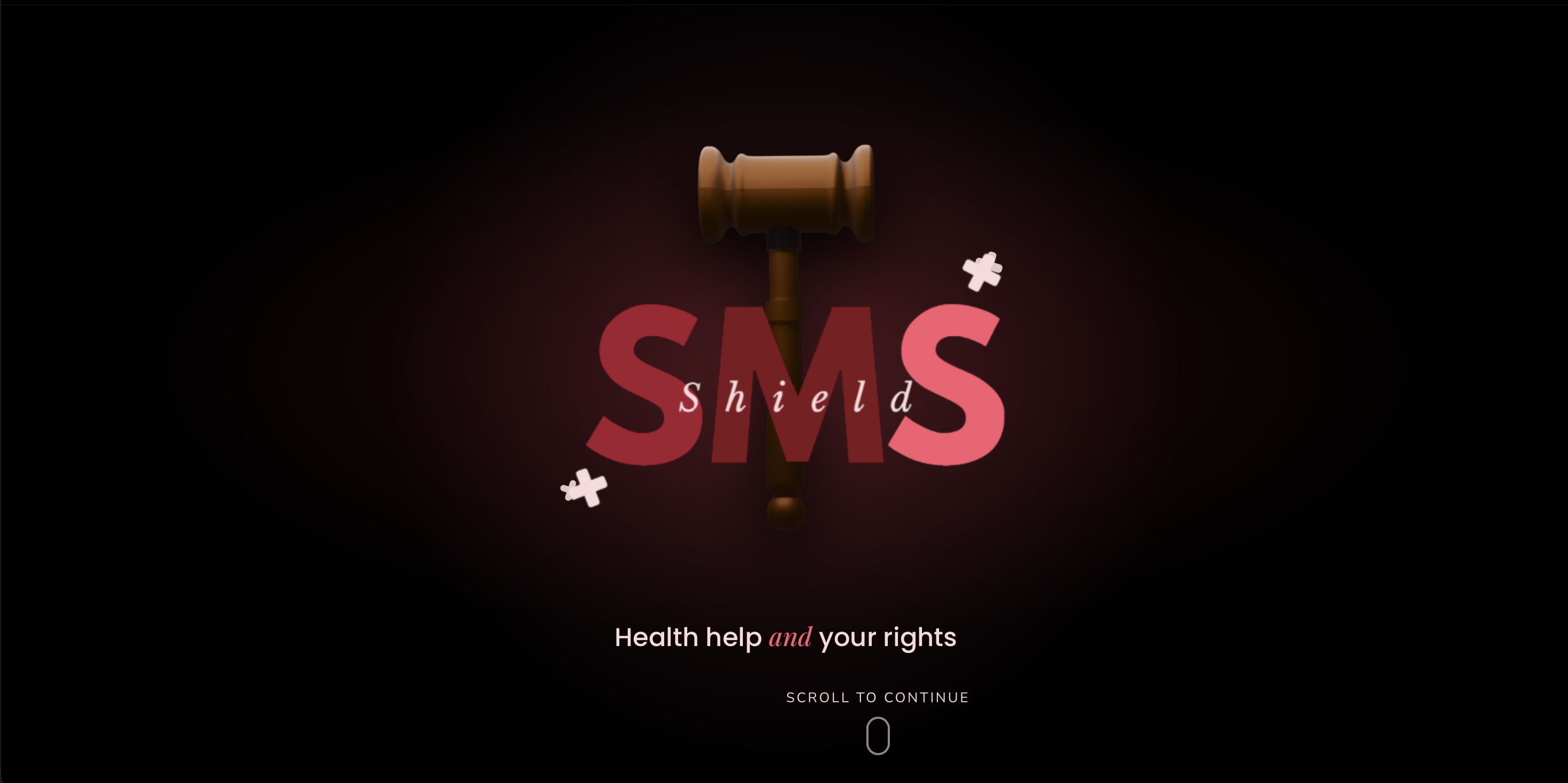
Enter Screen
-
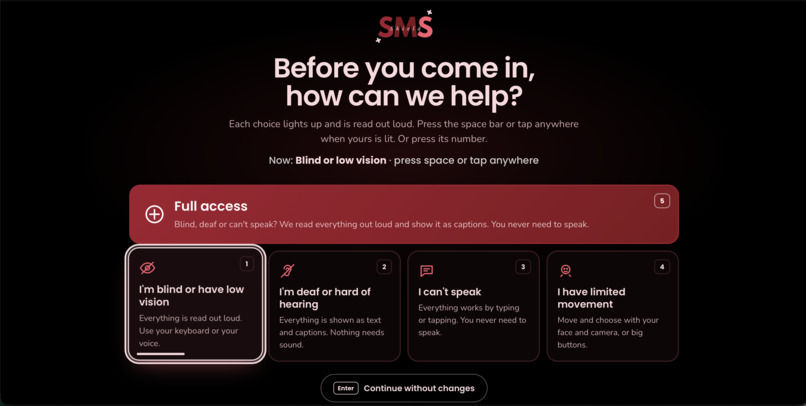
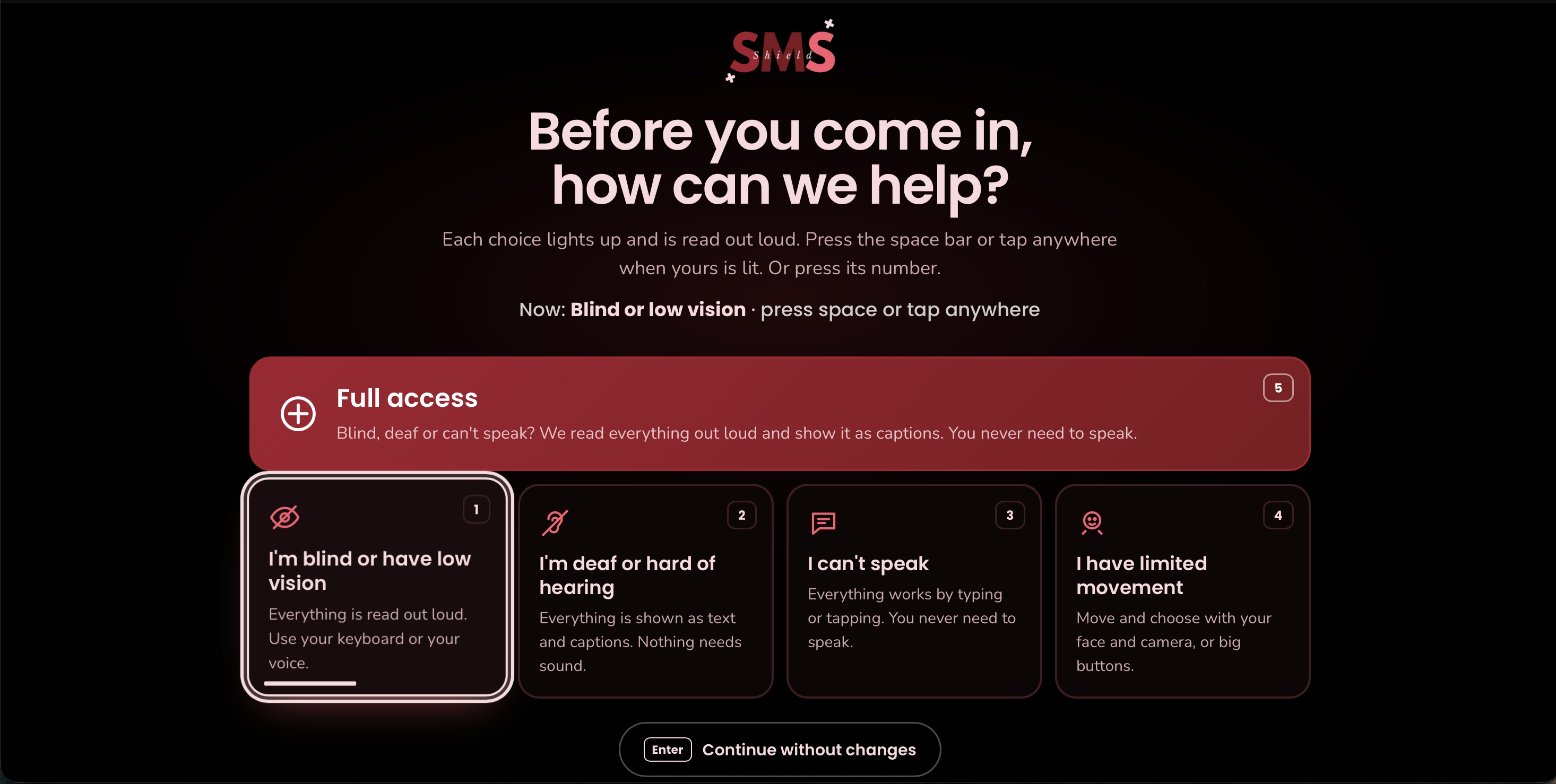
Page to choose disability option
-
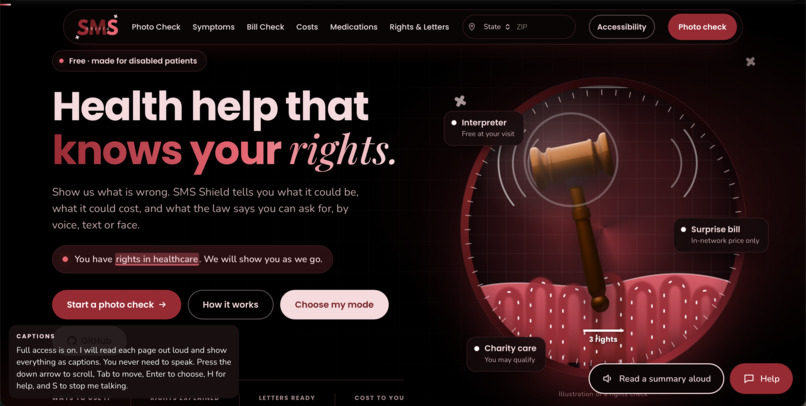
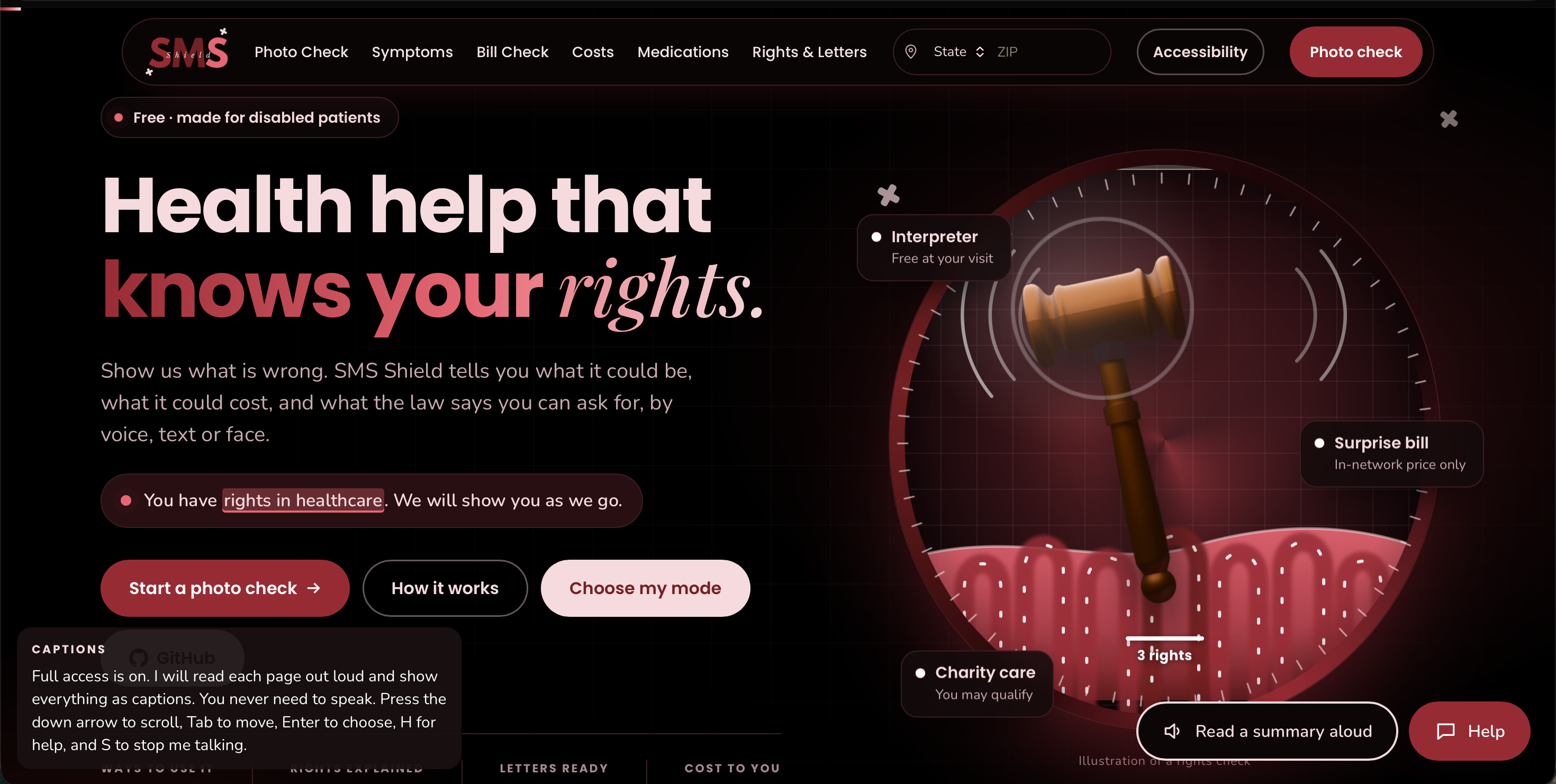
Home Page
-
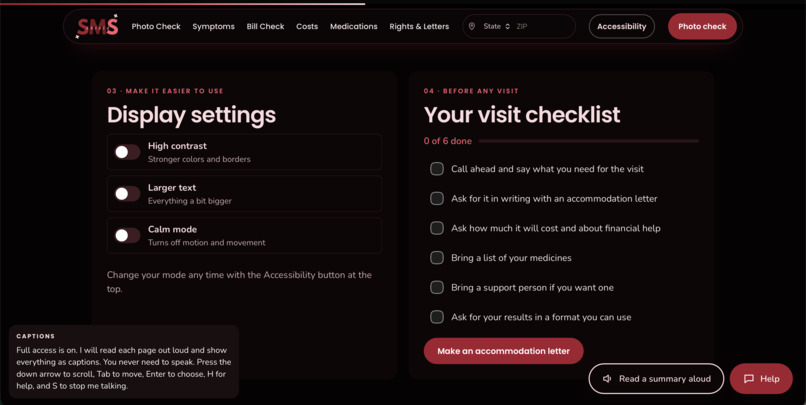
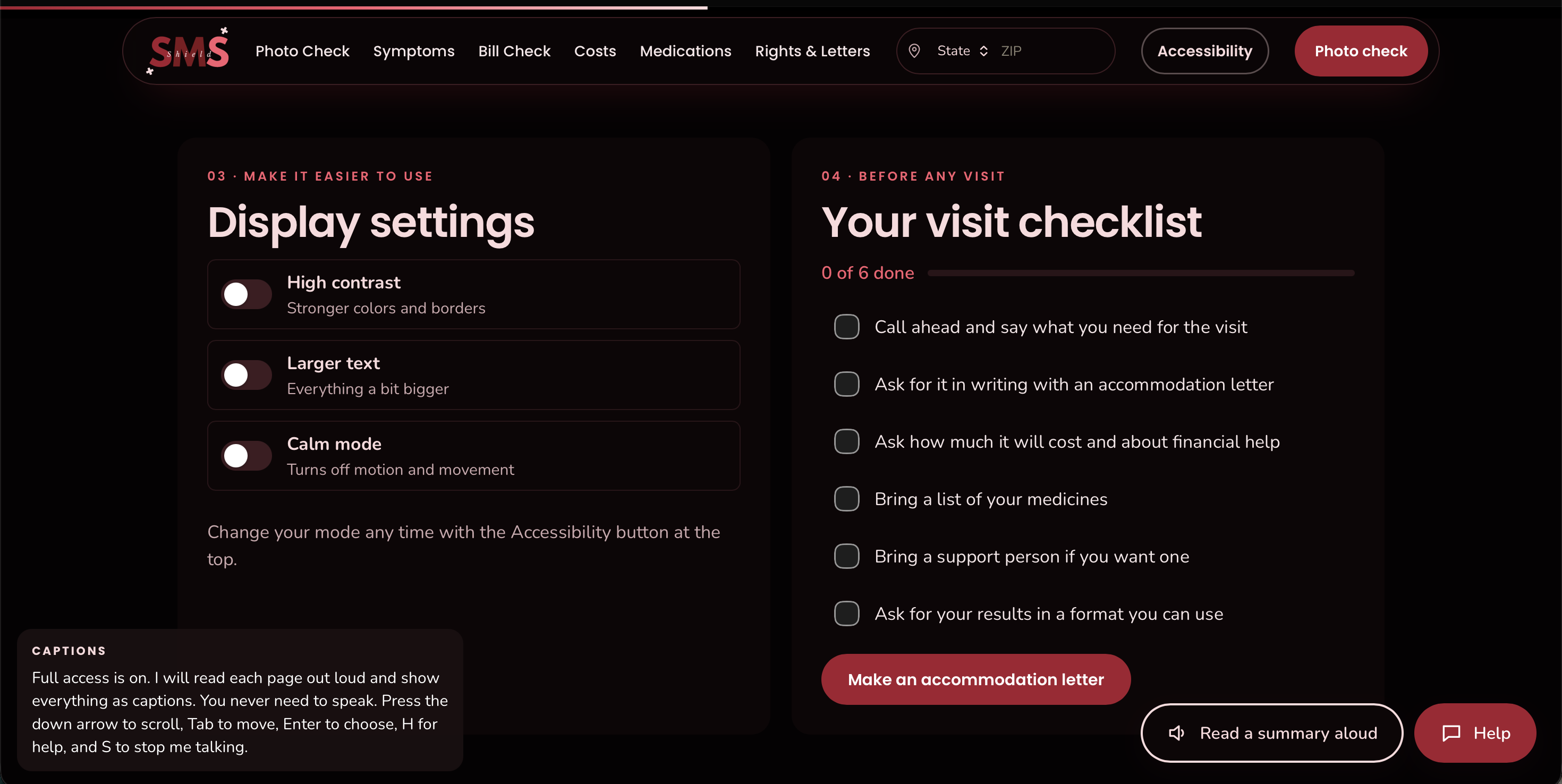
Display Options
-
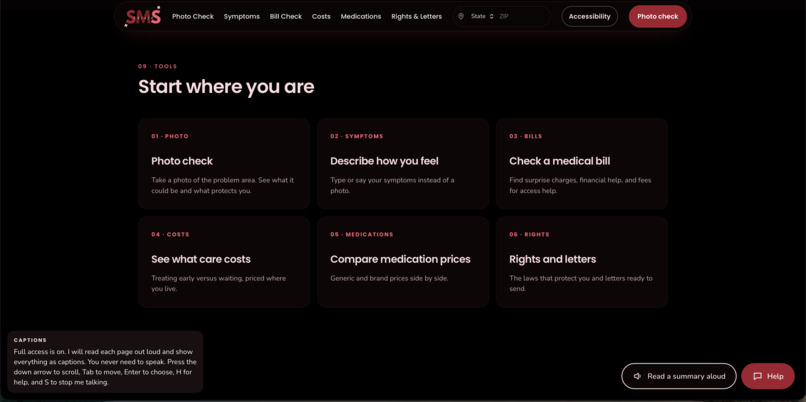
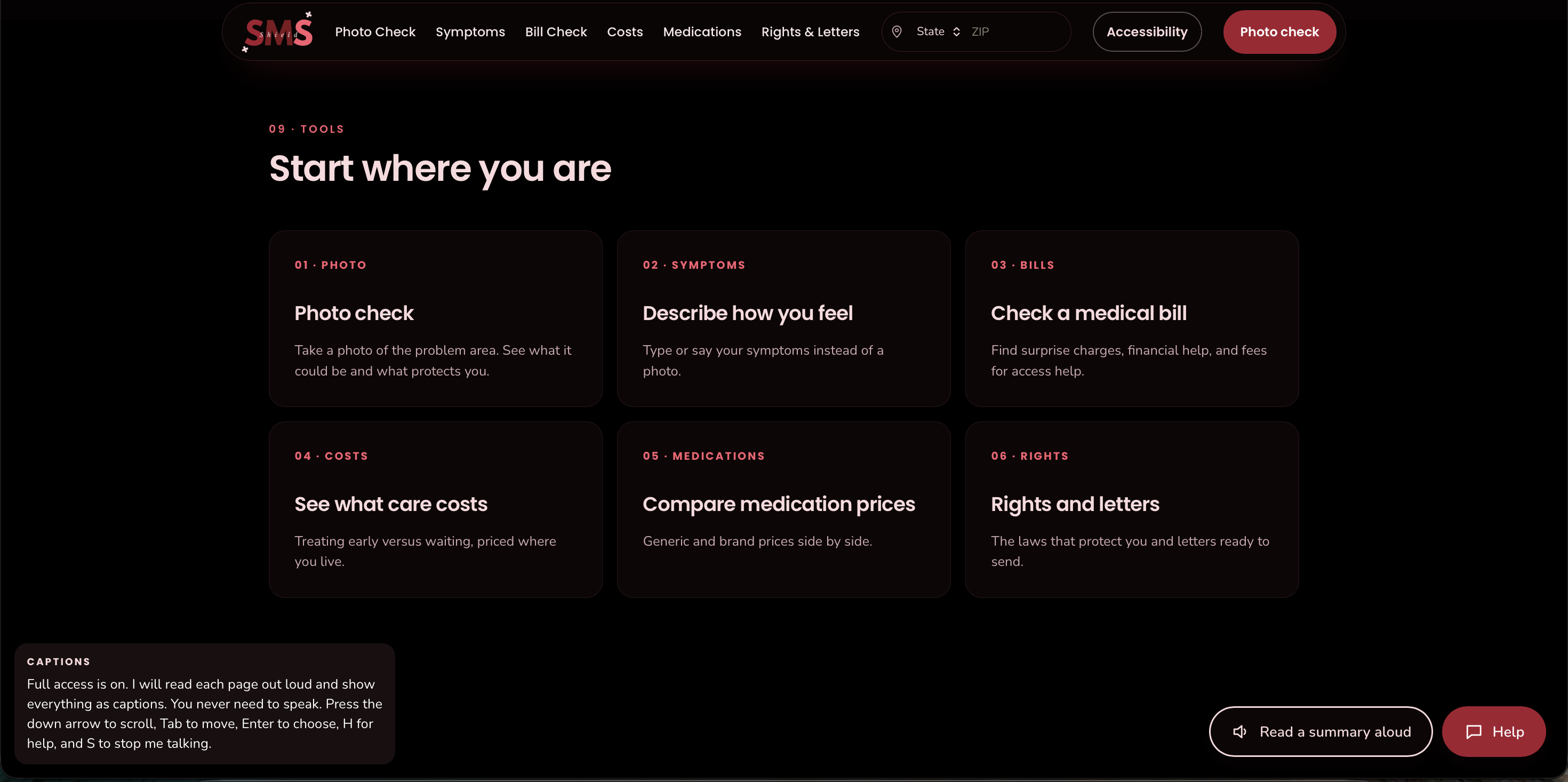
Tools Section
-
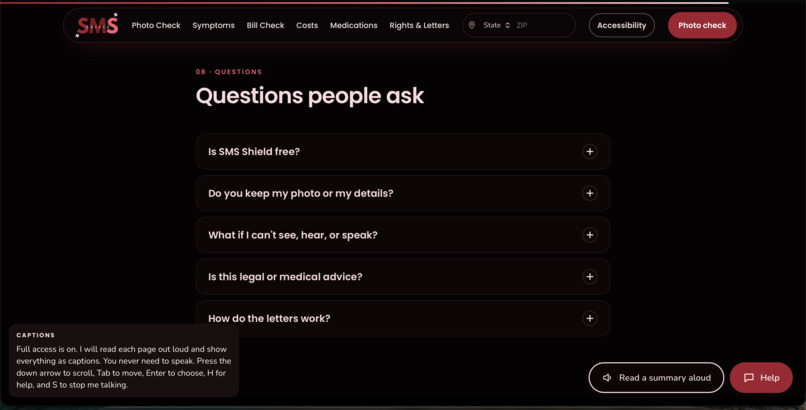
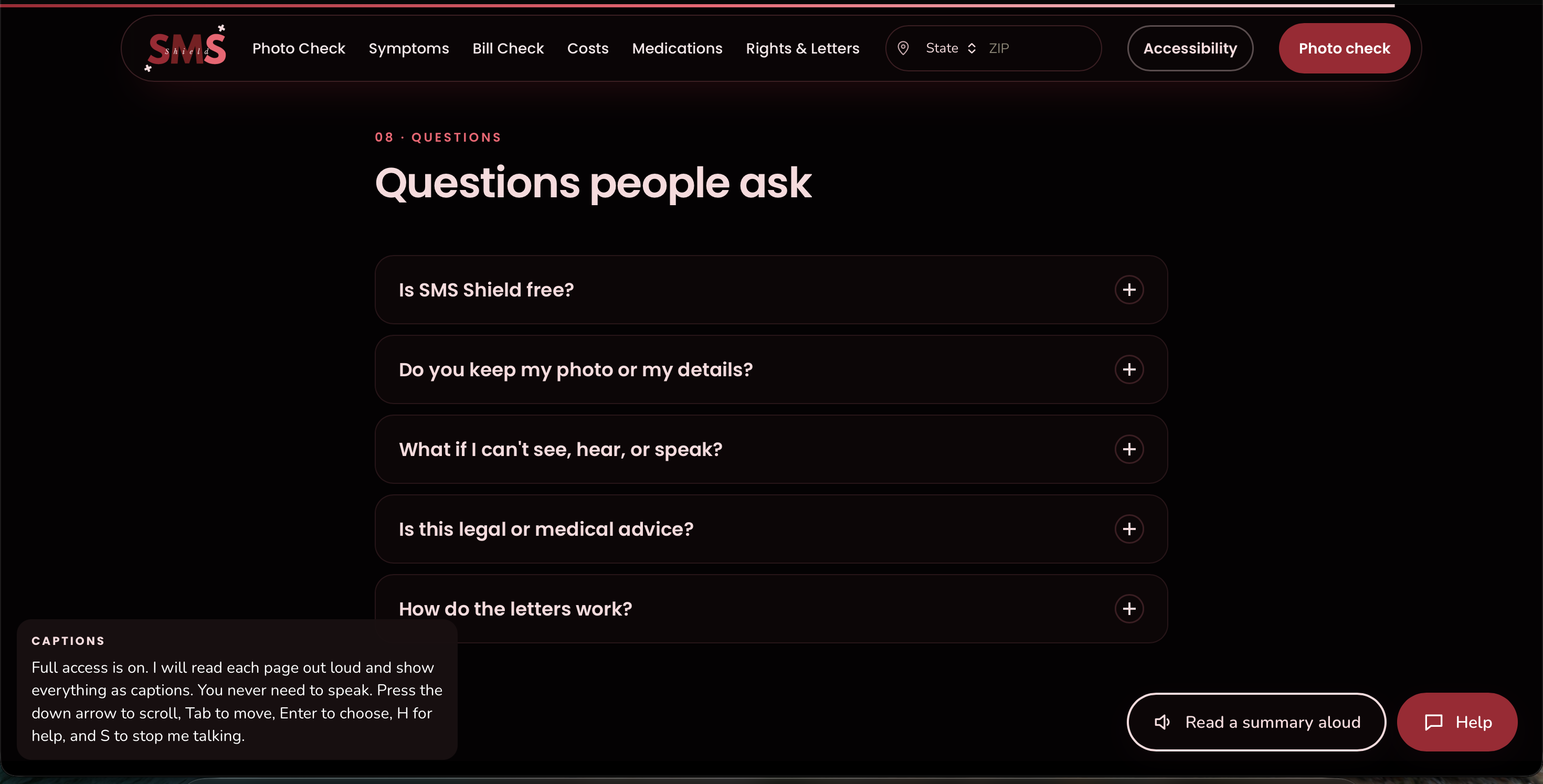
FAQ Section
-
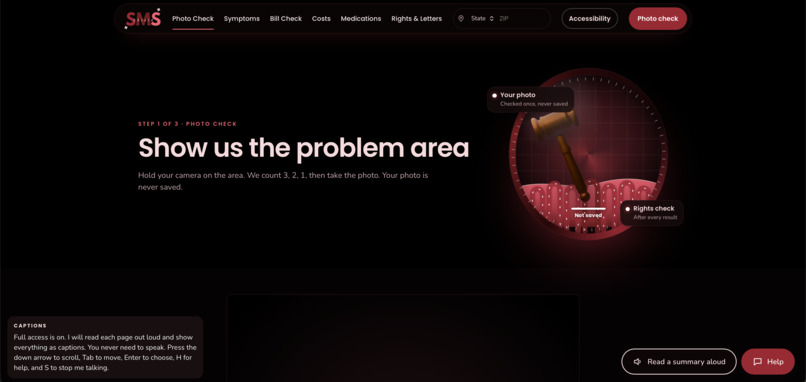
Photo Check 1/2
-
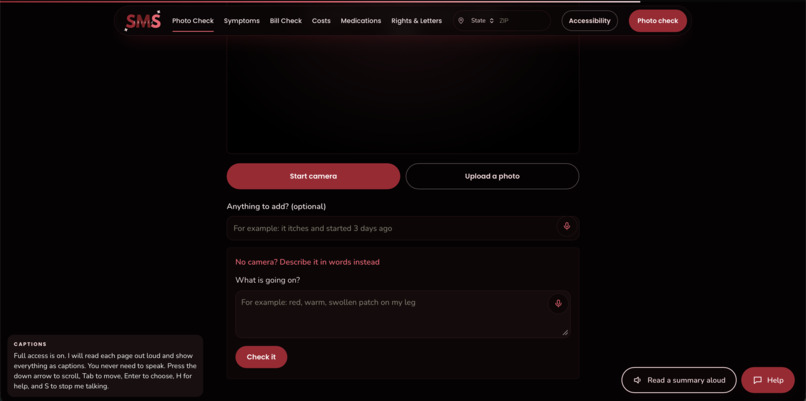
Photo Check 2/2
-
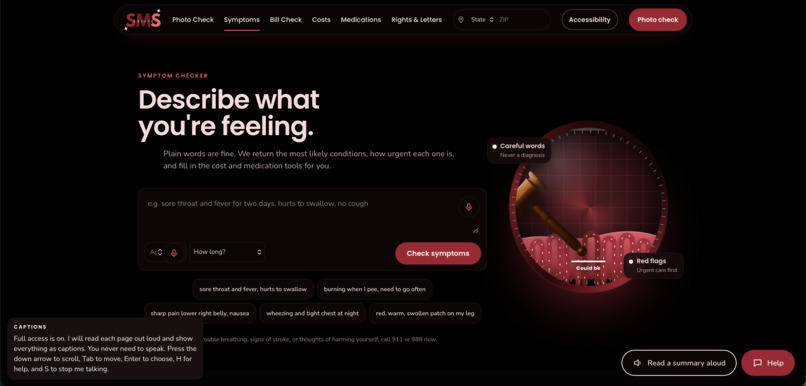
Symptoms Page
-
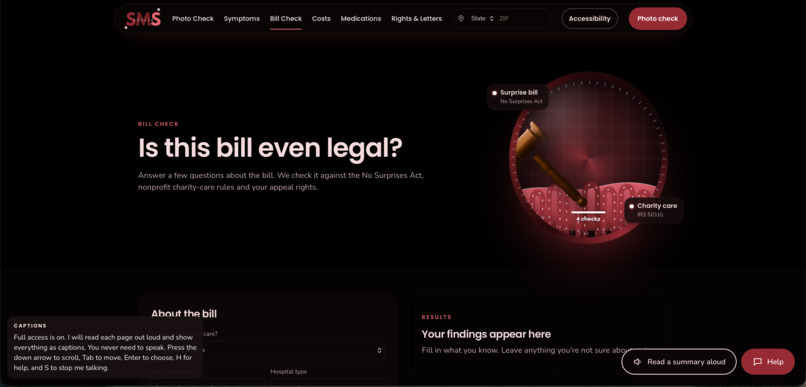
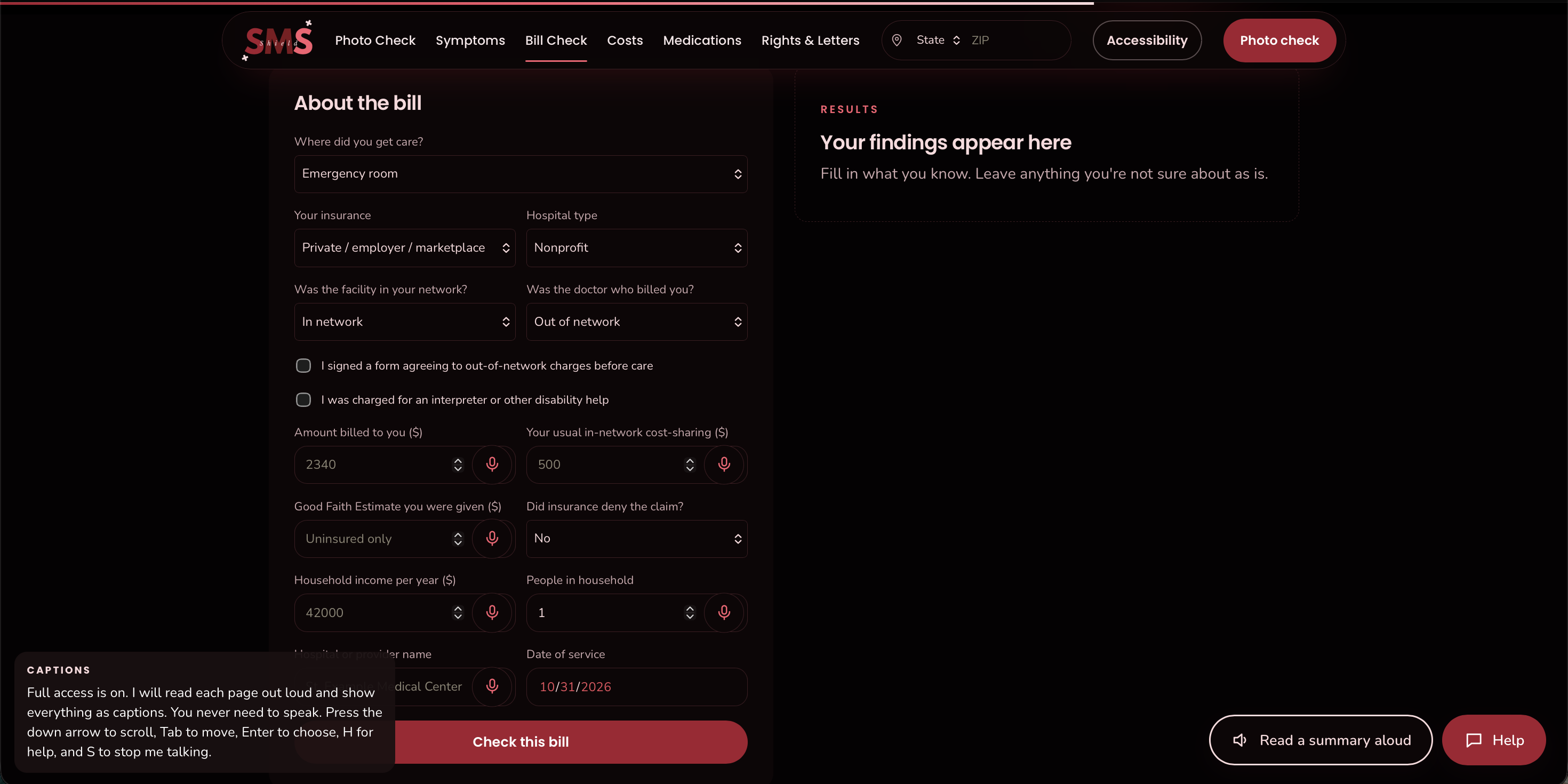
Bill Check 1/2
-
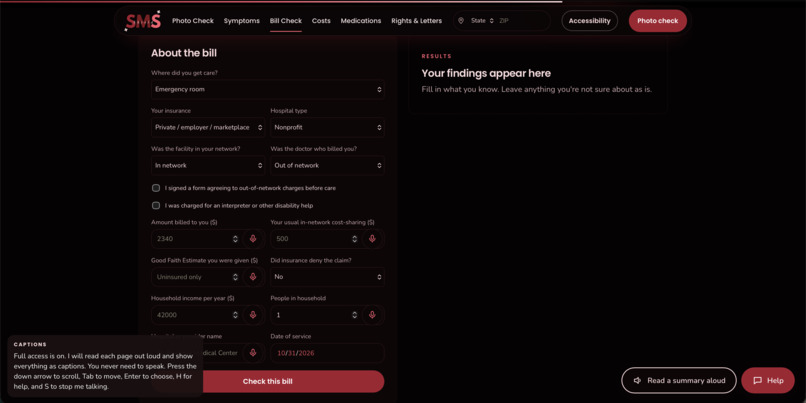
Bill Check 2/2
-
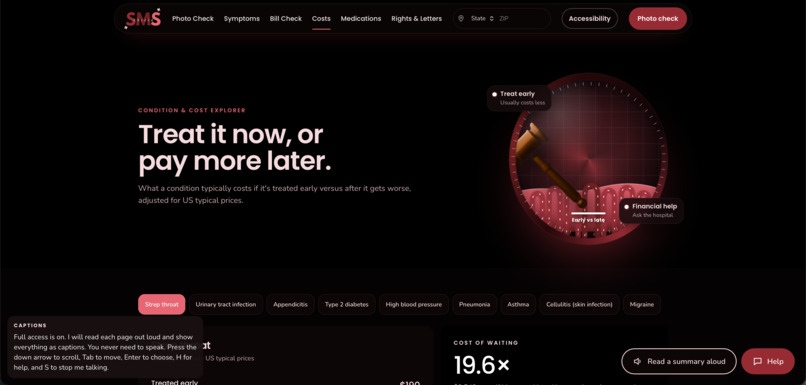
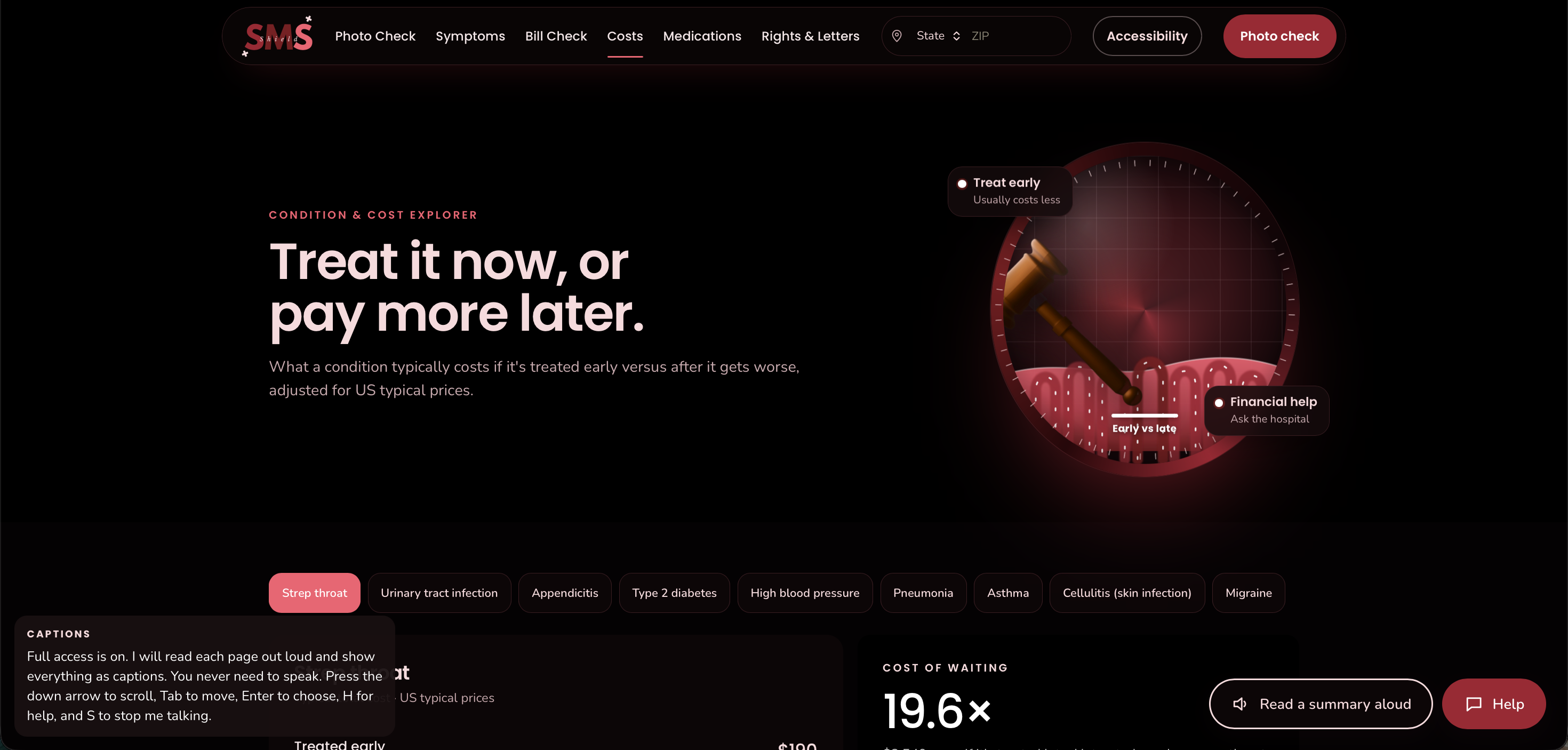
Cost Page
-
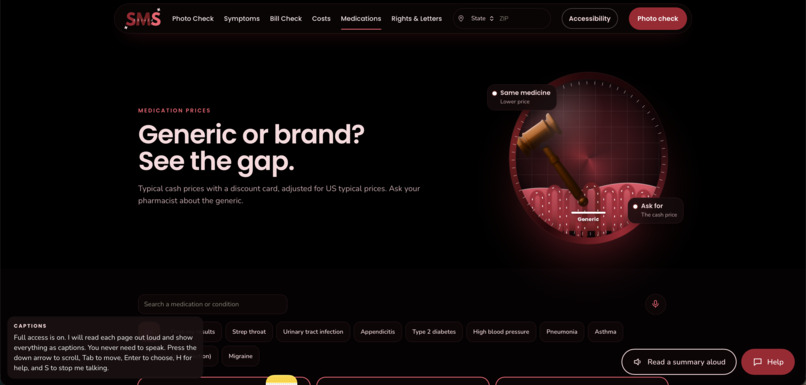
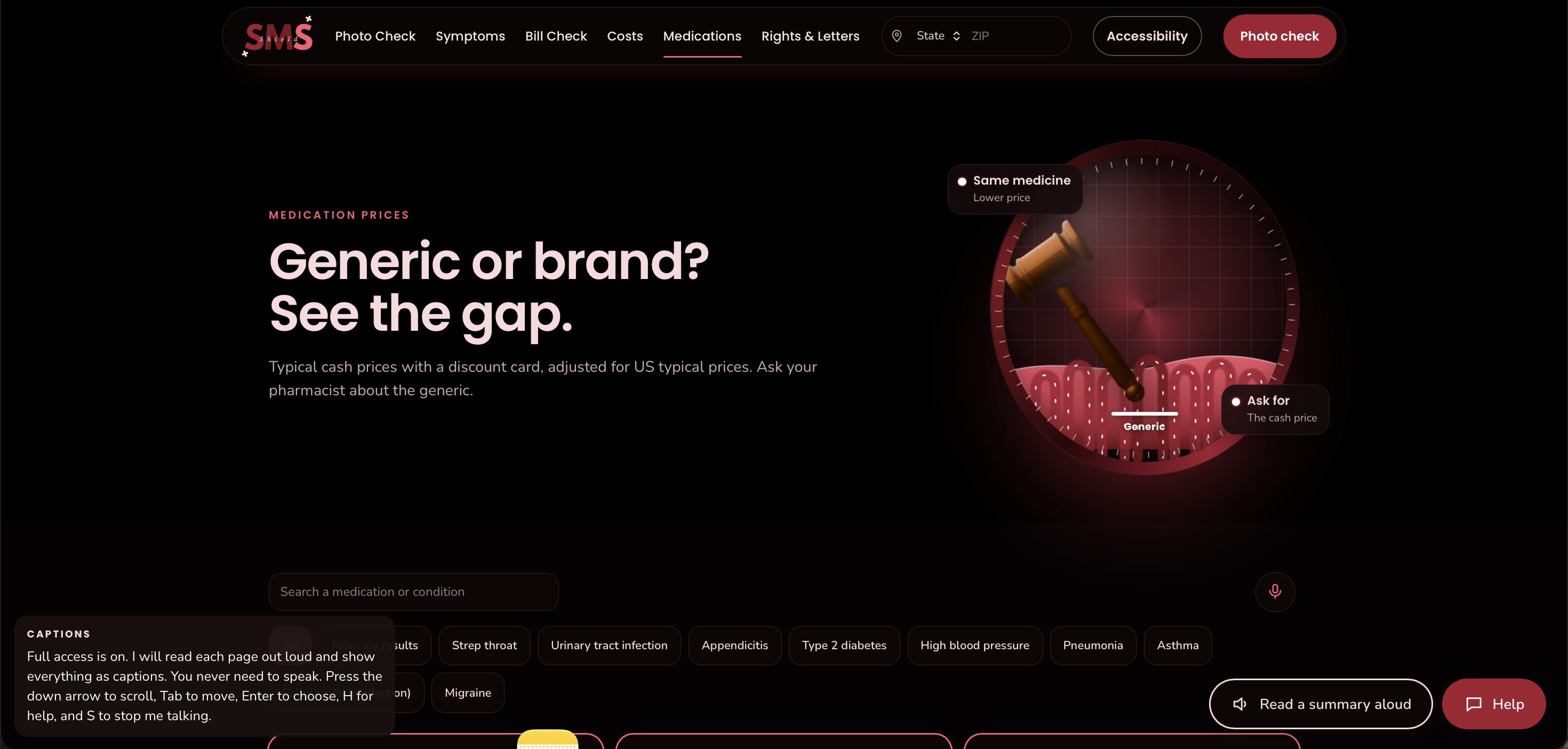
Medication Page
-
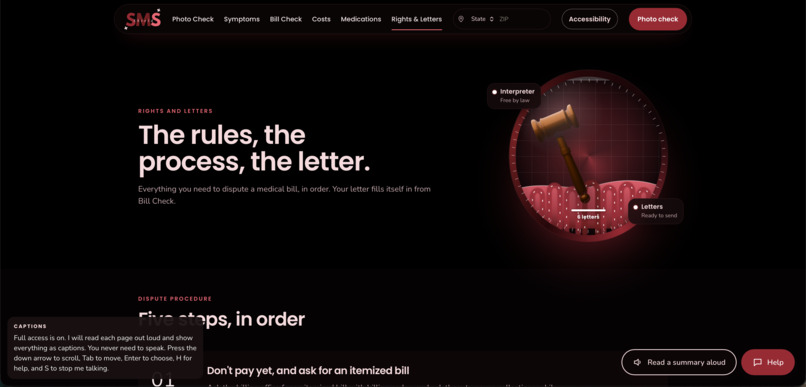
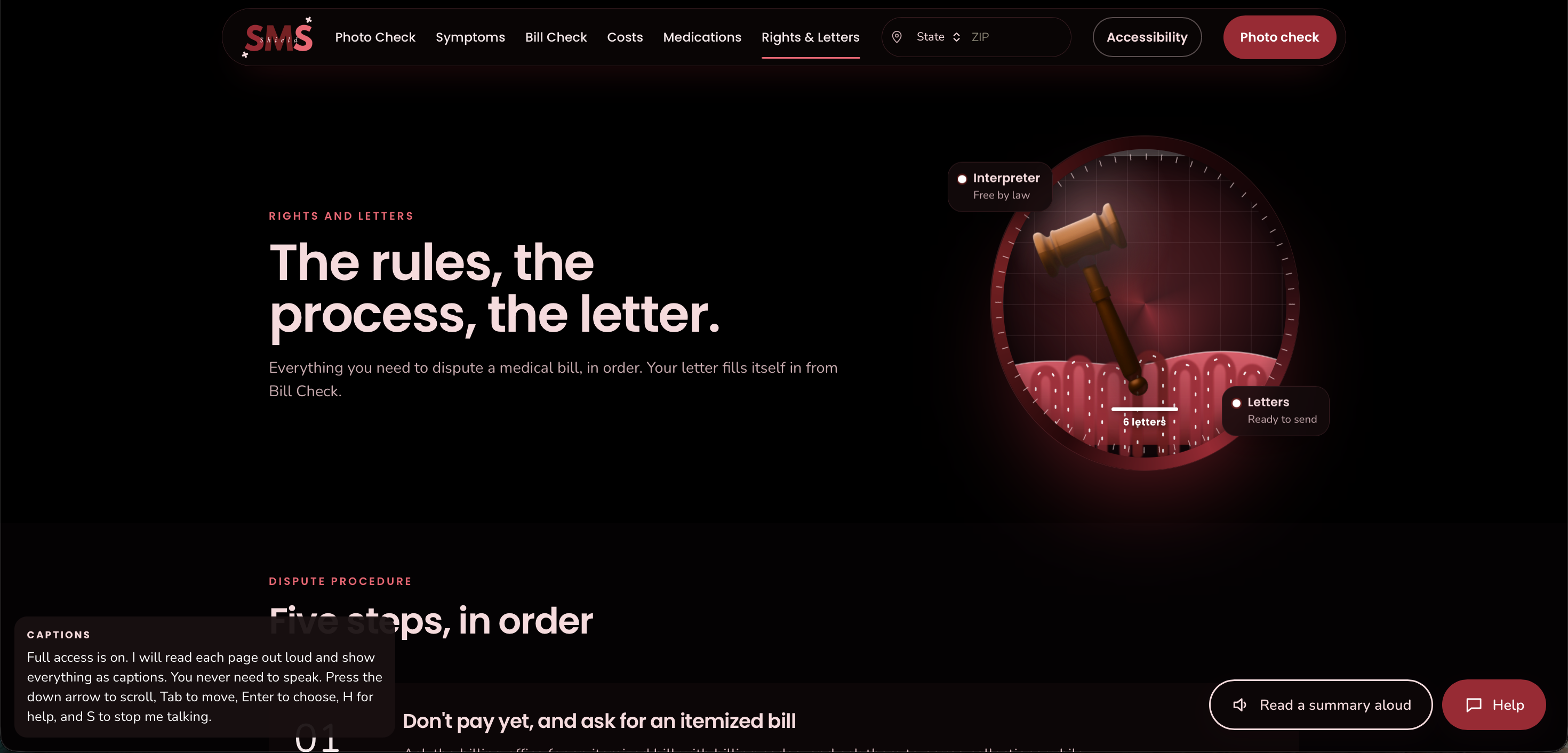
Rights & Letters Page
Inspiration
Healthcare should be accessible to everyone, yet millions of Americans face barriers when seeking medical assistance. According to the CDC, over 70 million American adults live with a disability, while medical debt continues to create financial challenges for families nationwide. We realized that individuals who are deaf, blind, nonspeaking, or have limited mobility may face additional difficulties communicating symptoms, understanding treatment options, and advocating for their legal rights.
This inspired us to create SMS Shield, an AI-powered platform designed to bridge the gap between healthcare accessibility, affordability, and patient empowerment. Our goal was to ensure that no disability, financial barrier, or lack of legal knowledge prevents patients from understanding their healthcare options.
What it does
SMS Shield combines medical guidance, financial assistance, and patient-rights education into one accessible platform.
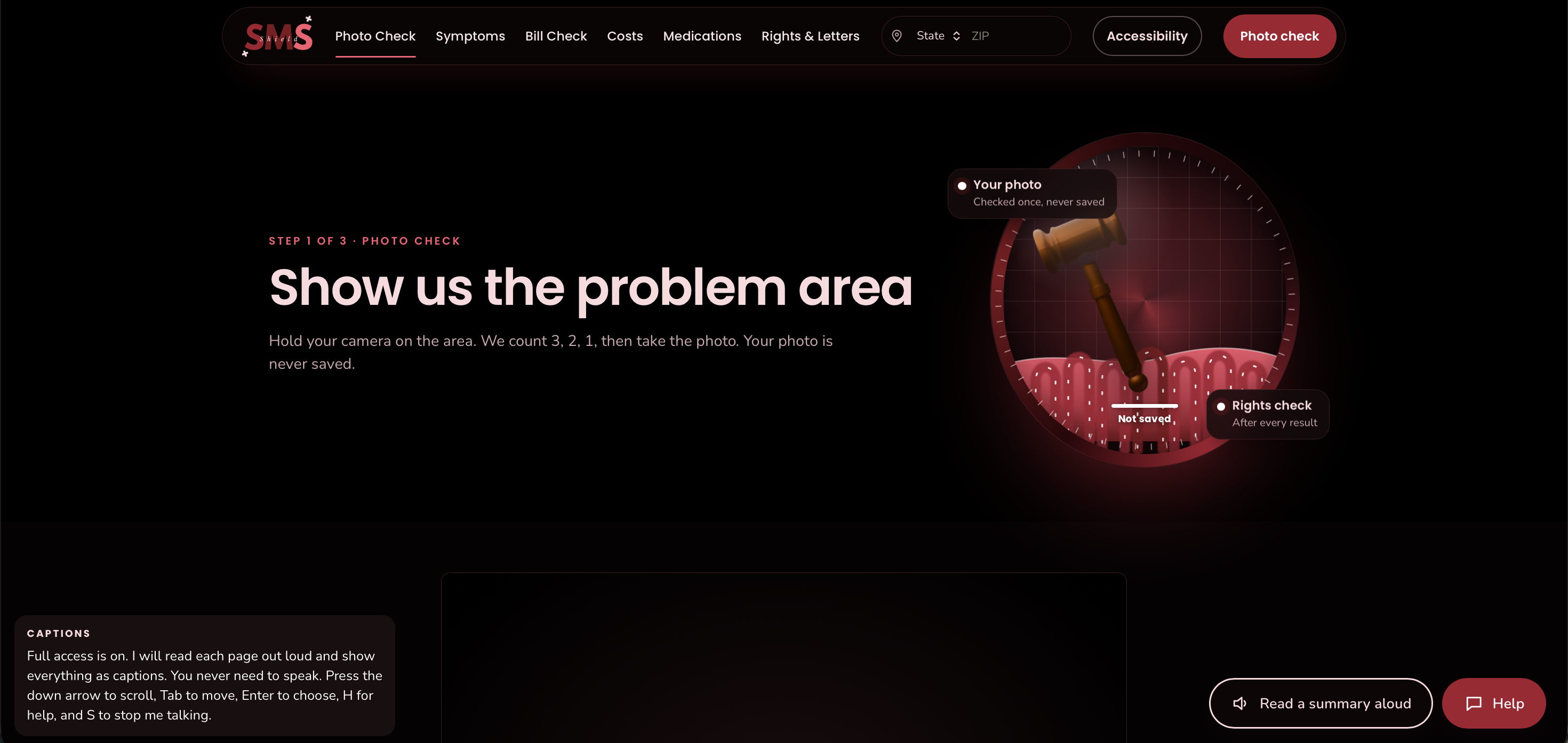
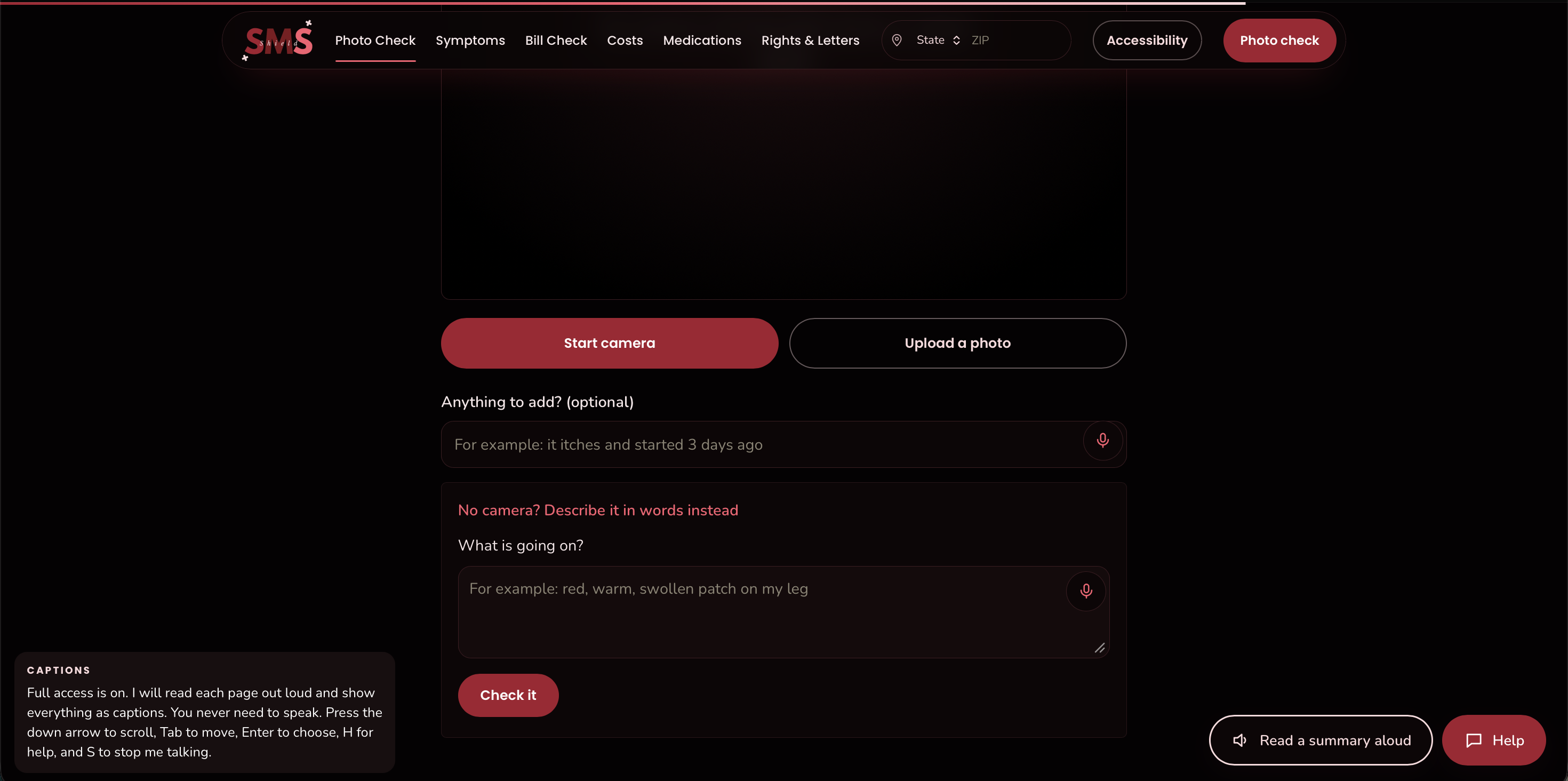
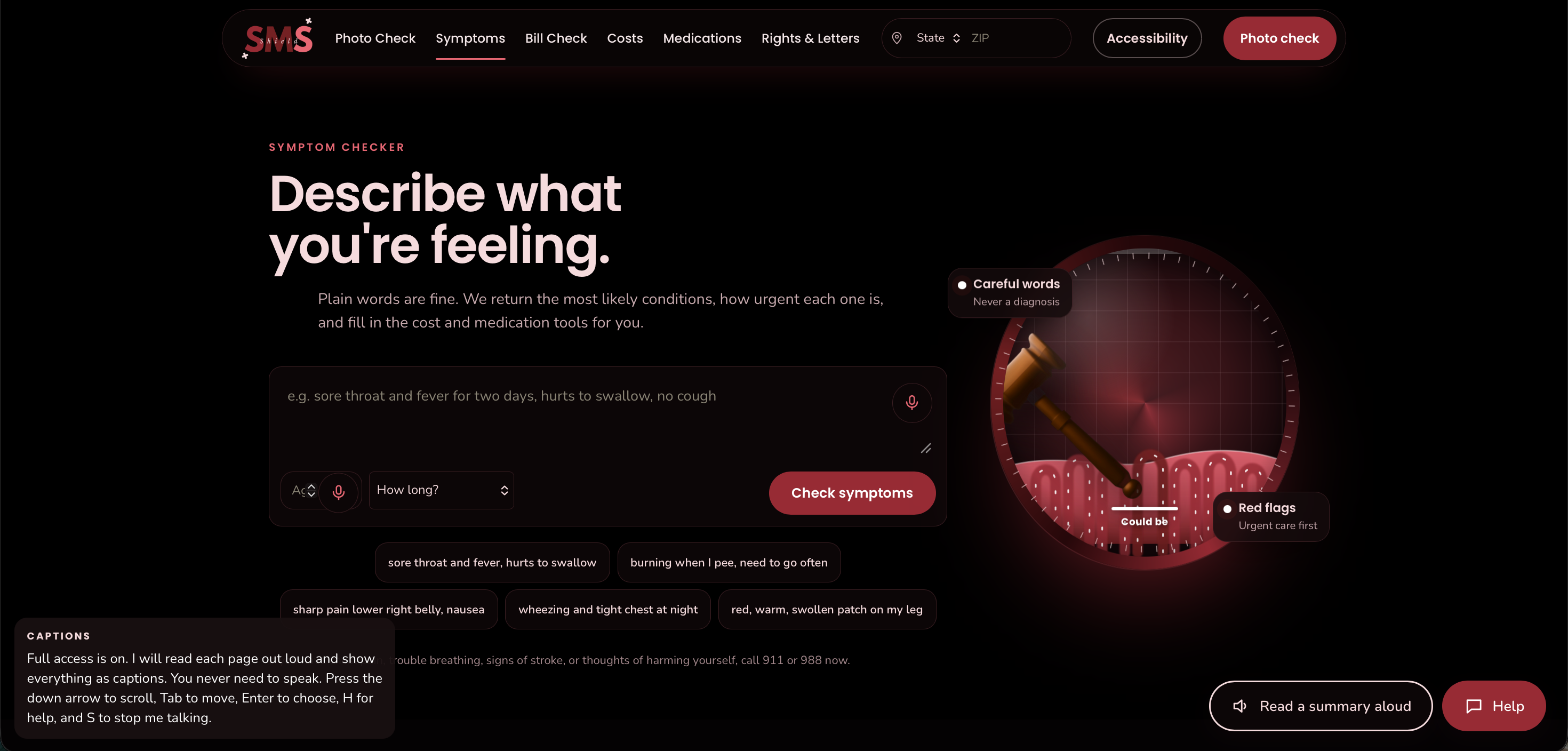
Users can describe symptoms through voice or text, upload photographs of visible medical concerns for AI-assisted analysis, and explore potential treatment options. Specialized accessibility modes accommodate individuals with visual, hearing, speech, and mobility disabilities, including hands-free facial navigation, spoken guidance, and customizable display settings.
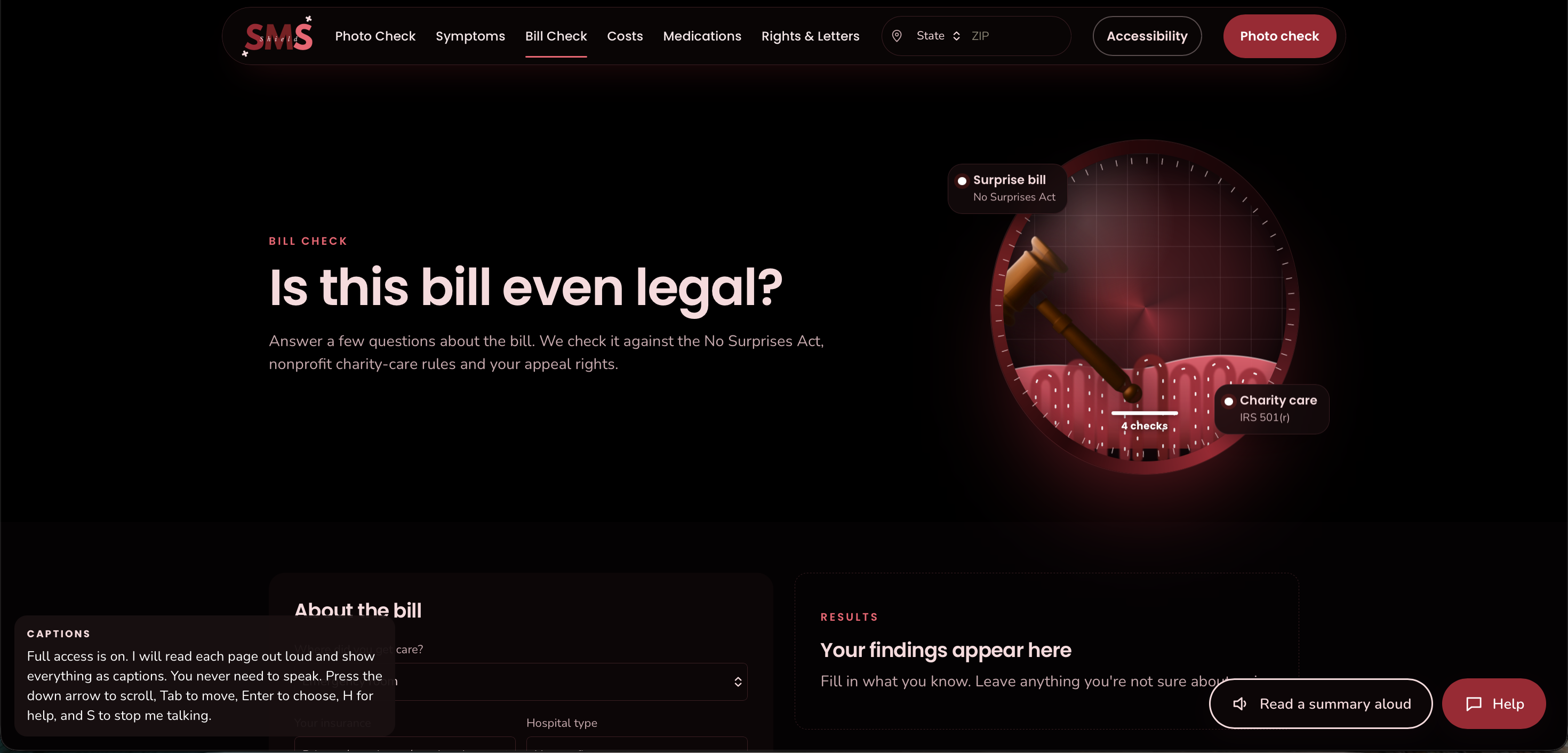
Beyond symptom analysis, SMS Shield helps patients identify potentially unlawful medical charges, explore hospital financial assistance, compare estimated treatment and medication costs, and understand protections under laws such as the ADA, No Surprises Act, and Section 504 of the Rehabilitation Act.
Our personalized letter generator also helps users prepare medical billing disputes, insurance appeals, and disability accommodation requests.
How we built it
We built SMS Shield with plain HTML, CSS and JavaScript and no framework, so every page loads fast even on an old phone. We designed for accessibility first. Every screen works with just a keyboard, screen readers get proper labels, and there are options for high contrast, larger text and a calm mode with no motion. A small Node.js and Express server sits behind the site so our API keys never reach the browser. If any service goes down, the site falls back to built-in answers or the browser’s own voice instead of breaking. It’s deployed on Vercel. Groq powers our chatbot and photo check. The prompts make sure the AI always says “could be,” never diagnoses, and flags when to get urgent care. ElevenLabs gives the site one calm voice that reads everything aloud, and it powers a microphone on every text box. Hands-free mode uses MediaPipe face tracking right in the browser, so you can move around by turning your head, and the camera feed never leaves your device. The heart of the project is our legal layer. It’s one shared file that both the site and the chatbot use, covering the ADA, Section 504, Section 1557, free interpreters, service animals, surprise-bill protections, charity care and insurance appeals. Every rule is in plain words with a real citation, and anything we couldn’t confirm is labeled a general principle. It also fills in six ready-to-send letters with the user’s details. We’re proudest of the first screen. Since we can’t know who’s visiting, each option lights up and is read aloud in turn, and you just press space or tap anywhere when yours comes up. Someone who can’t see, hear or speak can get in on their own. Photos and recordings are never saved, and the whole design is built around our logo’s pinks and reds.
Challenges we ran into
One of our biggest challenges was designing a platform that genuinely addresses different disabilities rather than offering a single accessibility solution. Features that benefit blind users may not serve deaf or nonspeaking individuals, requiring us to rethink how users interact with every part of the website.
Another challenge involved translating complex healthcare laws into understandable, situation-specific guidance. Medical billing protections vary depending on insurance coverage, hospital classification, financial circumstances, and other factors. We needed to structure our system to identify potentially relevant rights without presenting uncertain results as guaranteed legal conclusions.
We also had to balance AI functionality with medical safety, accessibility, privacy, and an intuitive user experience.
Accomplishments that we're proud of
Our proudest accomplishment is transforming SMS Shield from a simple medical billing and symptom-checking tool into an inclusive, AI healthcare platform which was designed to empower individuals with disabilities. We developed multiple accessibility modes, including voice assistance for visually impaired users, text-based communication for deaf and nonspeaking individuals, and hands-free facial navigation for people with limited mobility.
We're especially proud of integrating medical guidance, financial assistance, and legal protections into one connected experience. Rather than only listing various healthcare laws, SMS Shield helps patients identify protections relevant to their circumstances and generate personalized dispute letters, insurance appeals, and disability accommodation requests.
Another major achievement was implementing AI photo analysis, symptom checking, and interactive cost comparisons while maintaining an accessible, user-friendly interface.
Above all, we're proud that SMS Shield addresses a meaningful real-world challenge: making healthcare information more accessible, affordable, and actionable for people who are often overlooked by traditional healthcare systems. Our greatest achievemen is the potential it has to help patients confidently advocate for their health, finances, and rights.
What we learned
Developing SMS Shield taught us that innovation is not simply about creating advanced technology, but about making that technology genuinely useful and accessible to the people who need it most.
We strengthened our understanding of AI integration, frontend and backend development, conditional programming, accessibility-centered design, and healthcare regulations.
Most importantly, we learned how interconnected medical accessibility and financial security can be. Understanding a diagnosis is only one part of navigating healthcare; patients must also understand their treatment options, expenses, and legal protections.
SMS Shield represents our vision of a healthcare experience where patients are empowered not only to seek care, but also to understand their rights and confidently advocate for themselves.
What's next for SMS Shield
Our next goal is to commercialize SMS Shield and transform it into a widely accessible healthcare technology platform that empowers individuals both inside and outside traditional medical settings.
We plan to integrate more precise medical technologies, including digital microscopes, advanced imaging systems, and AI-powered diagnostic support, allowing users to capture and analyze medical concerns in greater detail. By combining accessible software with innovative medical hardware, we hope to expand SMS Shield's capabilities beyond basic symptom analysis and provide more reliable information to patients who may face barriers accessing traditional healthcare facilities.
Additionally, we aim to develop SMS Shield into a user-friendly mobile application, making its accessibility features, medical guidance, financial assistance tools, and patient-rights resources more convenient to use anywhere, at any time.
We also envision collaborating with hospitals, healthcare professionals, and medical technology companies to improve accuracy, validate our technology, and expand its reach.
Ultimately, our vision is to make SMS Shield a commercially scalable, affordable, and inclusive healthcare solution that bridges the gap between advanced medical technology and everyday patients, regardless of disability, financial background, or access to healthcare facilities.
Built With
- aria
- css3
- elevenlabs
- elevenlabs-speech-to-text
- elevenlabs-text-to-speech
- express.js
- getusermedia
- git
- github
- google-fonts
- gpt-oss-120b
- groq
- html5
- intersectionobserver
- javascript
- mediapipe
- mediarecorder-api
- node.js
- qwen
- svg
- vercel
- wcag
- web-speech-api
- webgl

Log in or sign up for Devpost to join the conversation.