Inspiration
Most vaping trackers can tell you when someone vapes or how many puffs they take, but they don't tell you how much nicotine they actually consume. I wanted to close that gap.
The idea behind SmokePal was to create a small device that could estimate nicotine intake without requiring specialized vaping hardware or expensive chemical-analysis equipment. I also saw an opportunity to make nicotine consumption easier to track for people trying to reduce their use. Instead of having to quit nicotine cold turkey, users could monitor their intake and gradually work toward lowering it.
What it does
SmokePal is a compact device that attaches to an existing vaping device and measures characteristics of each inhalation.
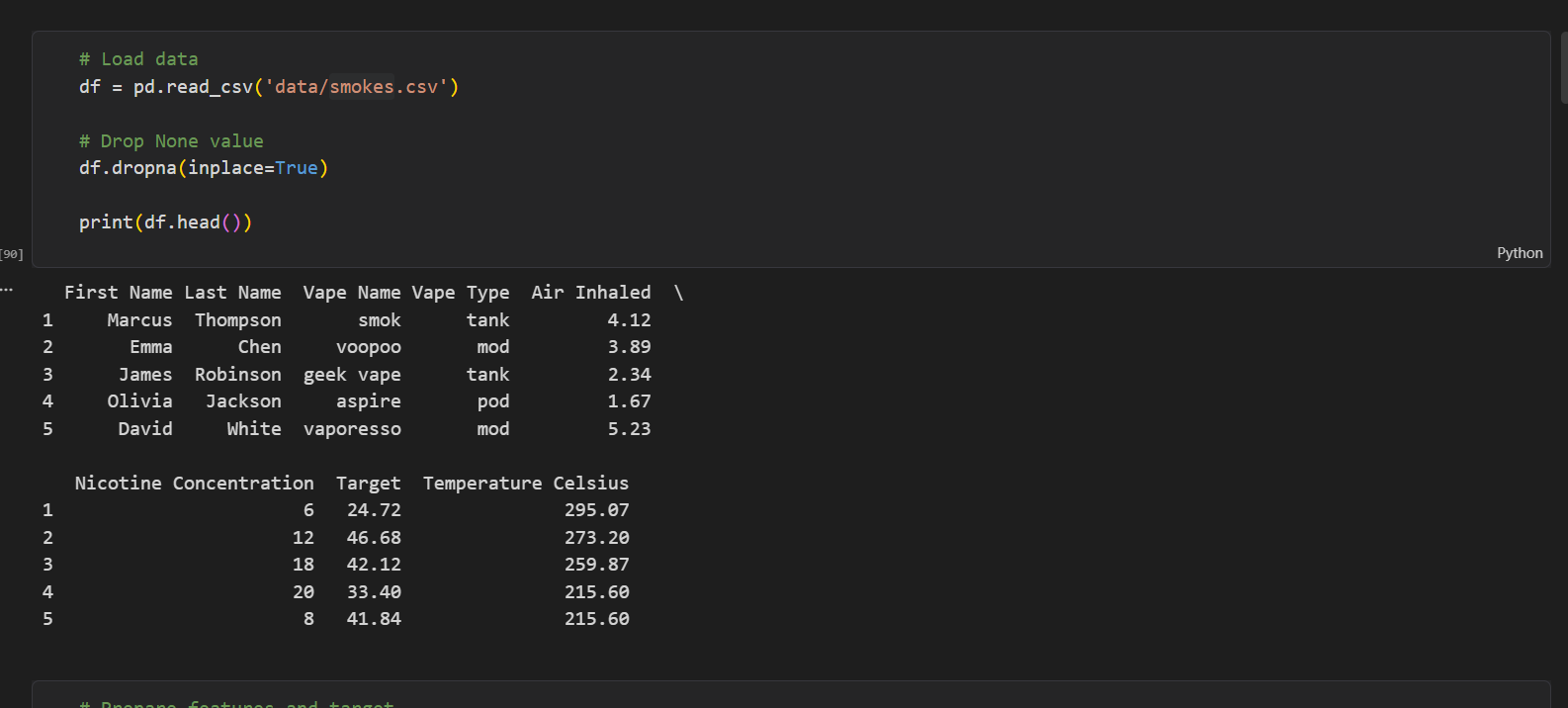
It uses differential pressure and temperature sensing to capture inhalation measurements. Those measurements are provided to an AI model that estimates the amount of nicotine inhaled per puff. The system can then track cumulative nicotine intake over time.
The goal is to turn something that is normally difficult to quantify—how much nicotine someone actually inhales—into a measurable number.
How I built it
I combined embedded hardware, sensors, data collection, and machine learning into one system.
The device collects pressure and temperature measurements during an inhalation. I use these measurements to characterize the inhalation and provide the resulting data to a machine-learning model trained to estimate nicotine intake.
The system was designed around a snap-on form factor so that it can work with existing vaping devices without requiring users to purchase or modify specialized hardware.
Challenges I ran into
One of our biggest challenges was connecting real-world sensor measurements to nicotine intake. Inhalations aren't perfectly consistent, and factors such as pressure, temperature, airflow, and inhalation duration can vary from puff to puff.
I therefore had to focus on collecting useful data and determining which measurements could provide meaningful information to the AI model. Building a system that works outside of a controlled laboratory environment was significantly more difficult than simply training a model on clean data.
I also had to balance the hardware design with our goal of keeping the device small, simple, and practical.
Accomplishments that I'm proud of
I'm proud that I was able to combine hardware and AI into a single system capable of estimating nicotine intake rather than simply detecting whether a vape was used.
I also built the project around the idea of making quantitative nicotine tracking accessible without requiring specialized vaping hardware or bulky chemical-analysis equipment.
Most importantly, I created a foundation that can be expanded as I collect more data and improve the model.
What I learned
This project taught us that building an AI system for the real world is very different from training a model on a clean dataset. The quality and consistency of the data are just as important as the model itself.
I also learned how to connect sensor data, embedded hardware, and machine learning into a complete pipeline rather than treating each component as an isolated project.
What's next for SmokePal
The next step is to collect substantially more real-world data and improve the AI model's accuracy and reliability across different vaping devices, users, and inhalation patterns.
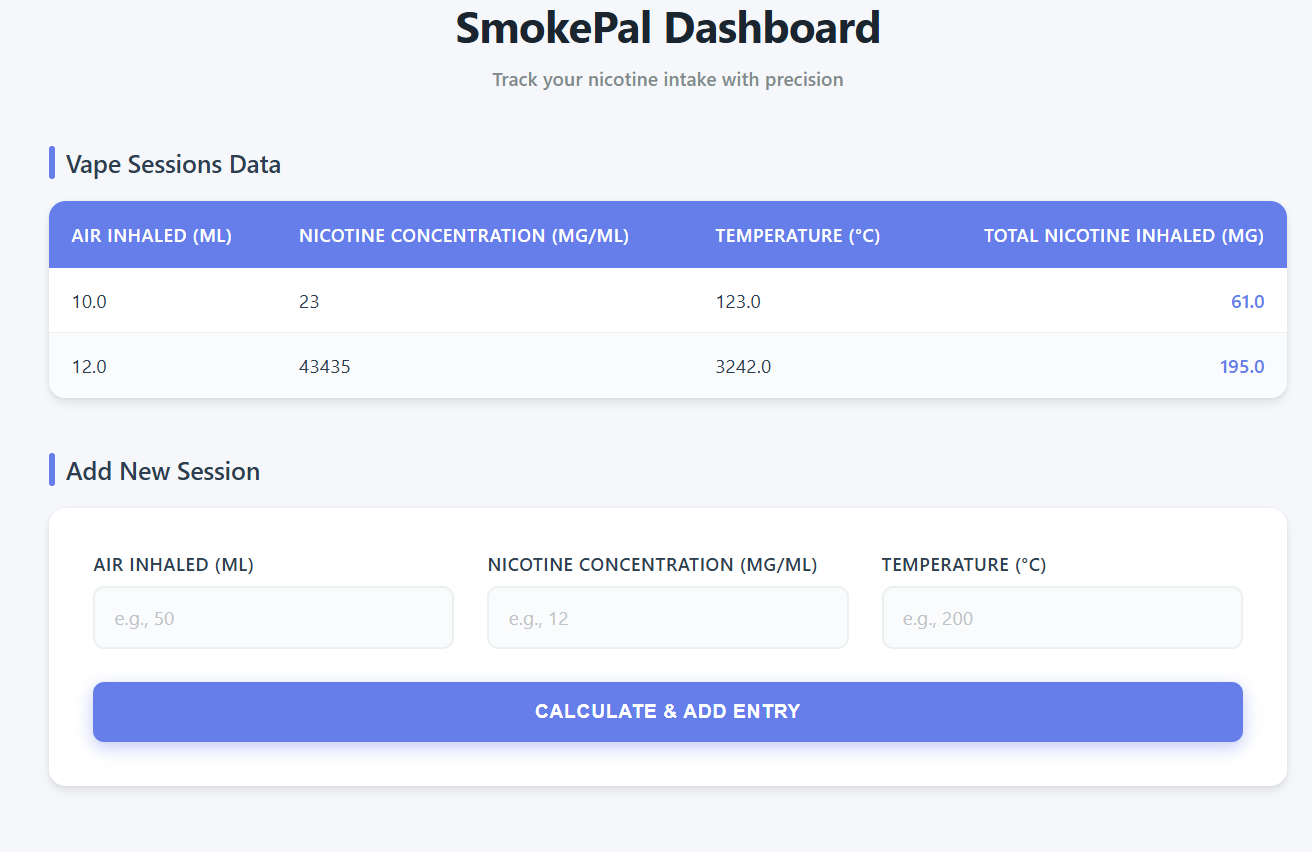
I also want to improve the device's size and usability and eventually provide a dashboard that allows users to track nicotine intake over time.
Longer term, SmokePal could become a tool for people trying to reduce their nicotine consumption by giving them quantitative feedback on their usage. Instead of simply knowing that they vape, users could see how much nicotine they are estimated to consume and use that information to gradually reduce their intake.


Log in or sign up for Devpost to join the conversation.