-
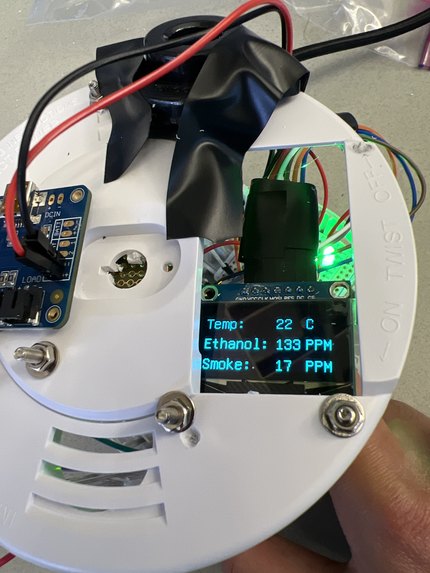
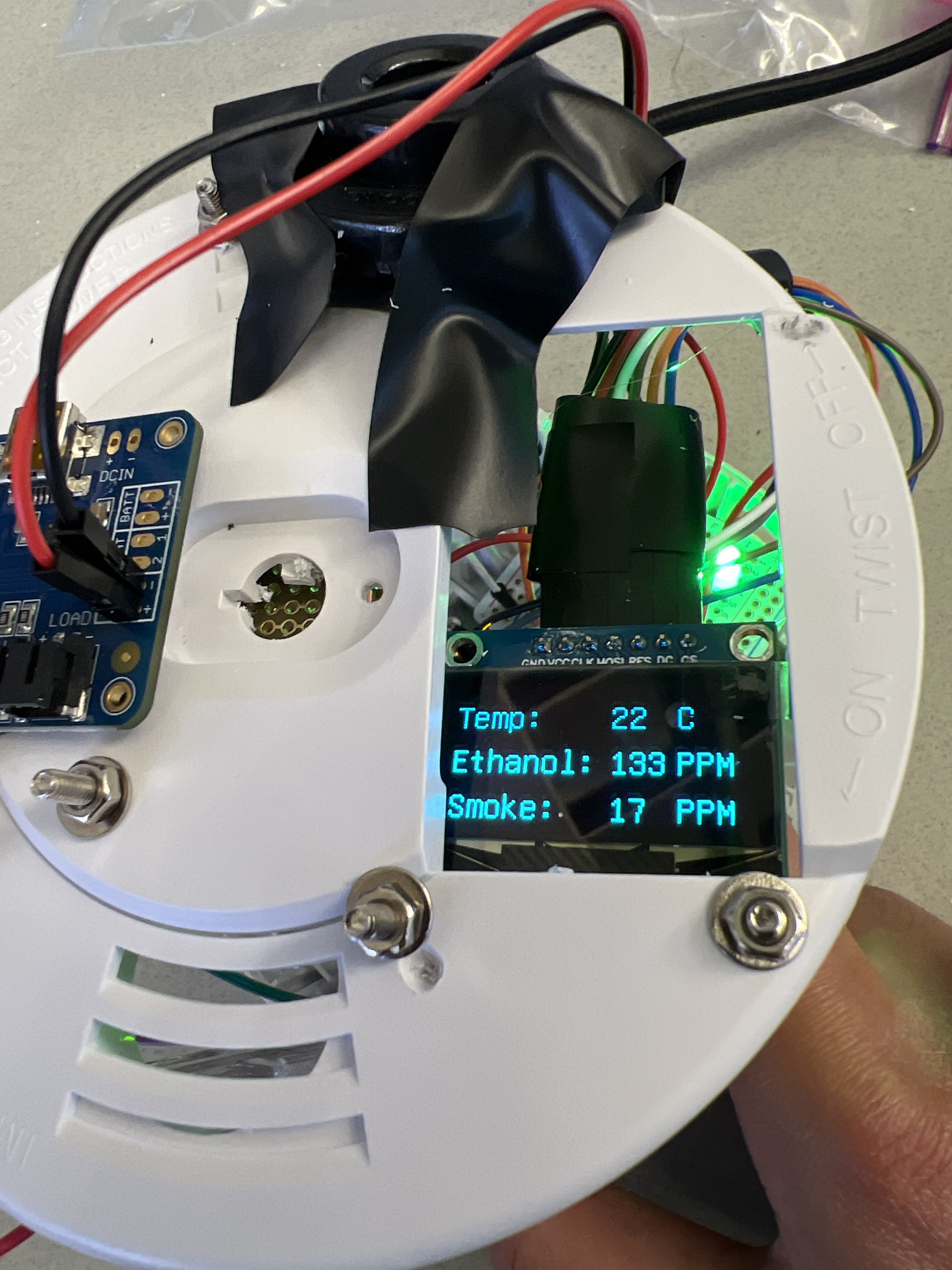
How the OLED screen looks like on start-up
-
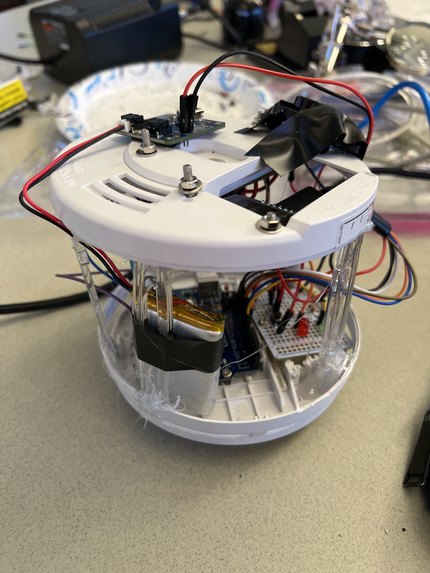
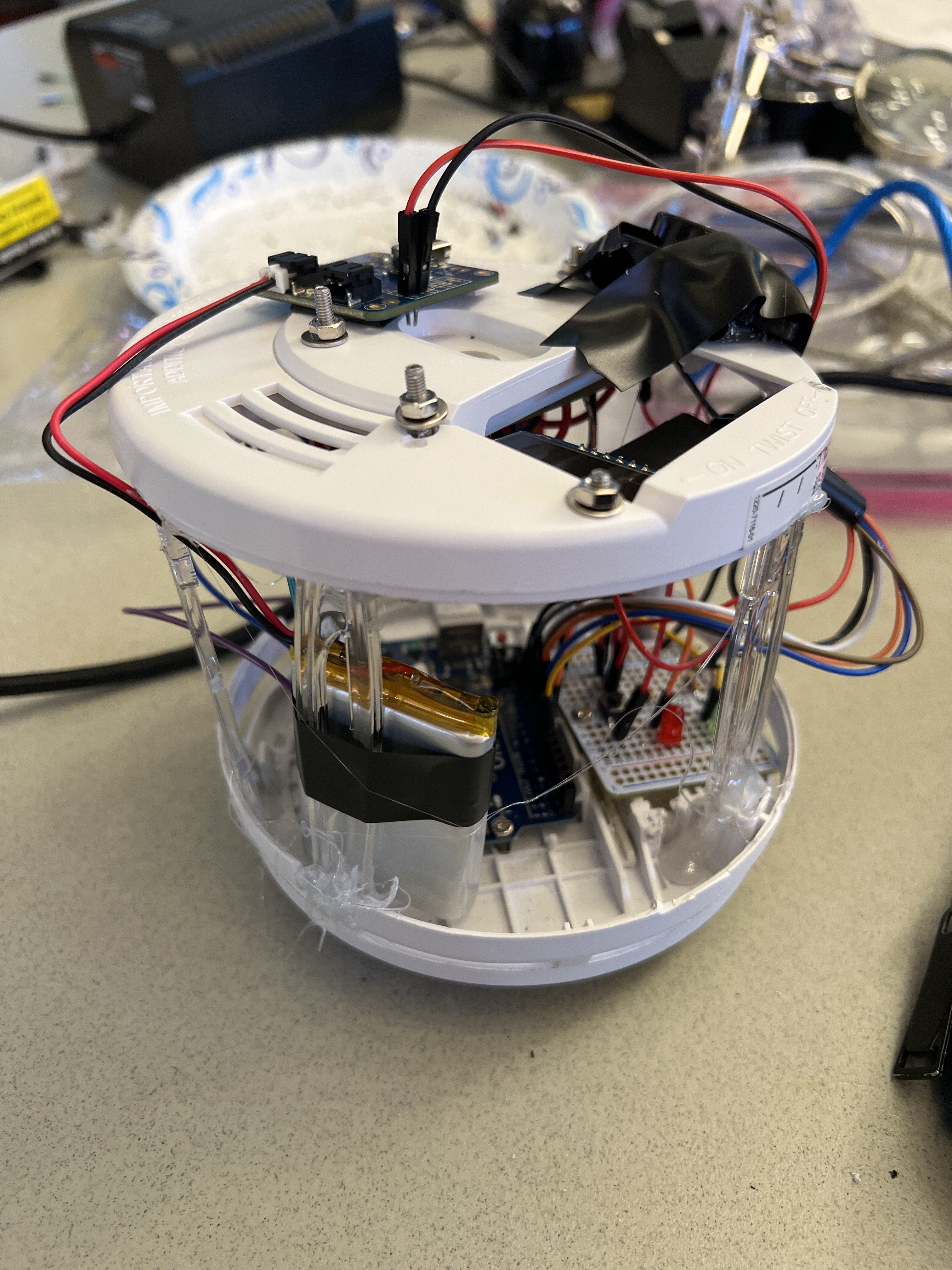
A picture of the device when not in use
Inspiration
Say goodbye to the old, janky, and inaccessibly placed smoke detectors. With our device, you can monitor temperature, smoke, and ethanol levels in the air all at once. No more worrying about your loved ones with delicate health conditions inside the house while you try to make a bonfire in your garden on a starry winter night. Our device helps the user keep track and alerts them of unhealthy levels of ethanol and smoke levels in the vicinity.
What it does
It is a light, compact, and easy-to-handle device which lets the user know of their surrounding temperature as well as ethanol and smoke concentrations in the air. It can either used with a battery input or tethered to a USB to minibus connector and then to a plug, which means it is portable or can be placed at a fixed location. It displays live values of smoke and ethanol in the air in ppm and temperature in degrees Celsius.
How we built it
We first designed the schematic circuit diagram for the device and planned out the port mapping for the pins on the board and the sensors. To build the actual device, we started off with the bread and butter of all embedded circuits, the breadboard (pun intended), and connected the sensors to the relevant ports as we had planned in our circuit diagram, which involved extensive soldering and wire-cutting. We then used scrap plastic frames to make a frame customized to fit our device. On the software side, we used C/C++ to code it in a way that it alerts the user visually and audibly using distinct colored LED's and a buzzer when the ethanol and/or smoke concentrations go above the latest recommendations of the CDC. To minimize power usage, it activates each sensor every three seconds which keeps the user updated with the values in a cyclic fashion on the OLED display.
Challenges we ran into
During initial testing, we noticed that some digits didn't seem to "print" clearly on the OLED screen. It turned out we were updating the values at a higher frequency than the refresh rate of the screen itself. So we optimized the code to refresh the values less frequently (you don't/can't really read off 5 updated values in 1 second from any screen).
On the hardware side, we did not actively consider the voltage and current limits on (we only did enough to make sure nothing got fried) and hence the three sensors weren't getting enough power to function at the same time. So, we made sure that the power consumption came from the lithium polymer battery since it provides ample current.
What's next for Smokaholic-Monitor
So far, we understand that there are ways to make the device even more compact and robust using more tailor-made frames, and there is potential for it to use wireless abilities to record data to another monitor placed remotely to allow real-time tracking without physical presence.


Log in or sign up for Devpost to join the conversation.