-
-
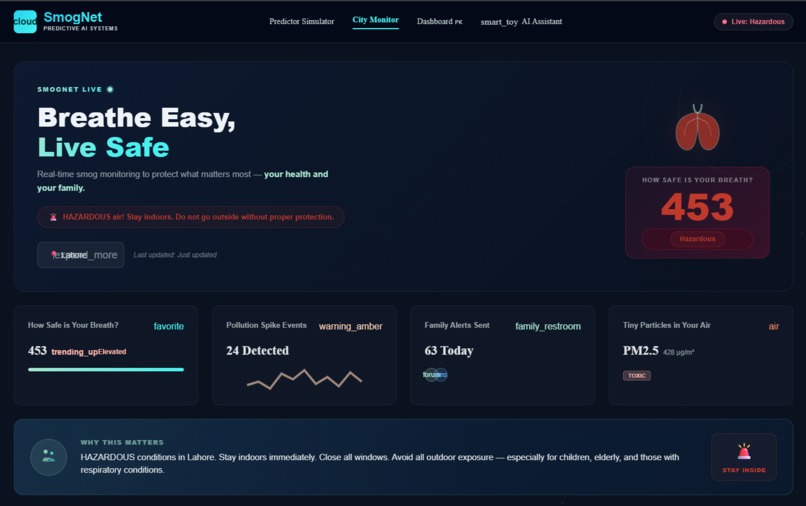
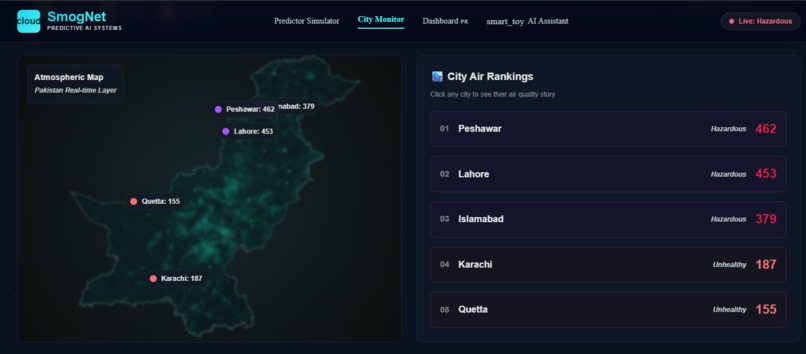
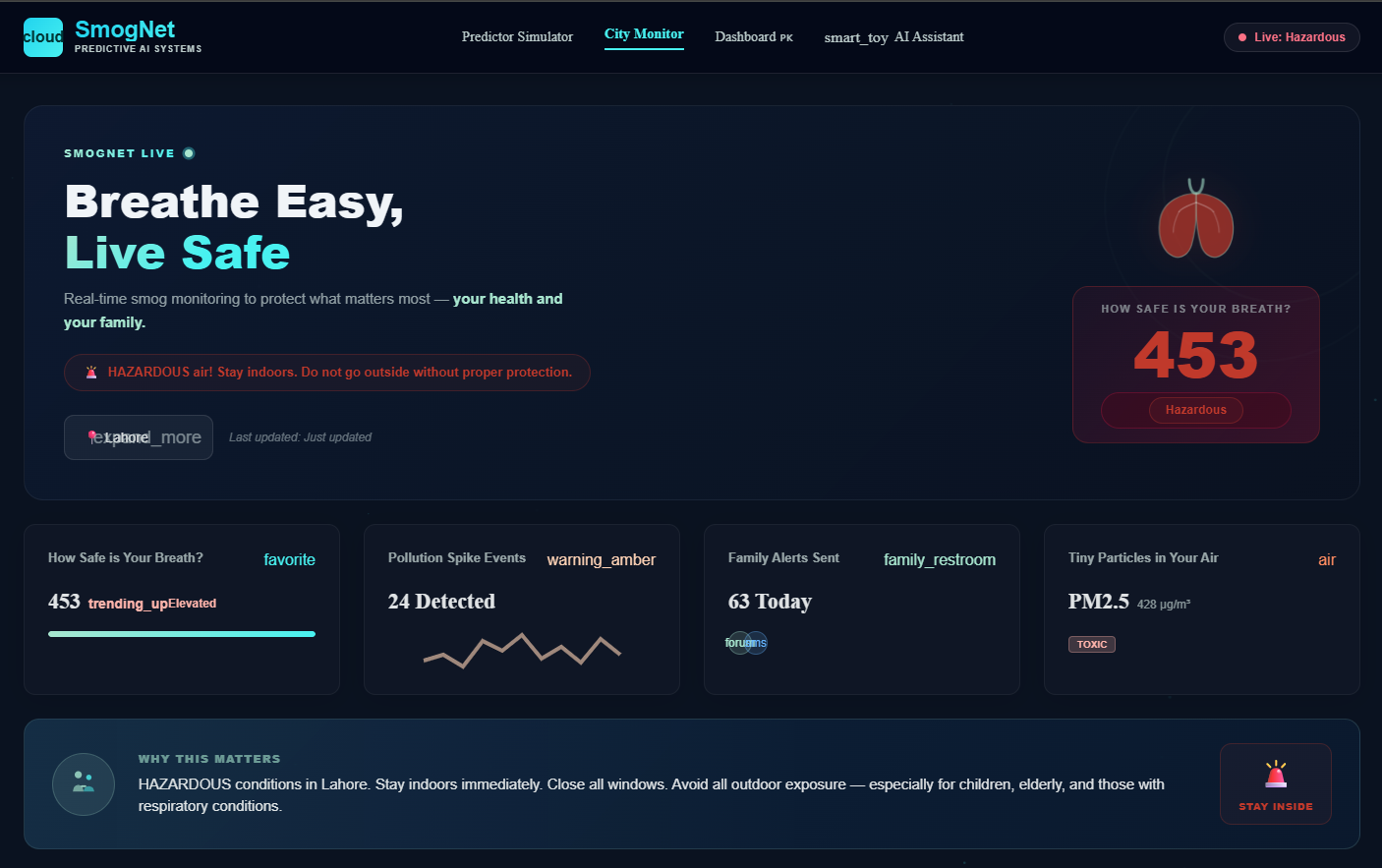
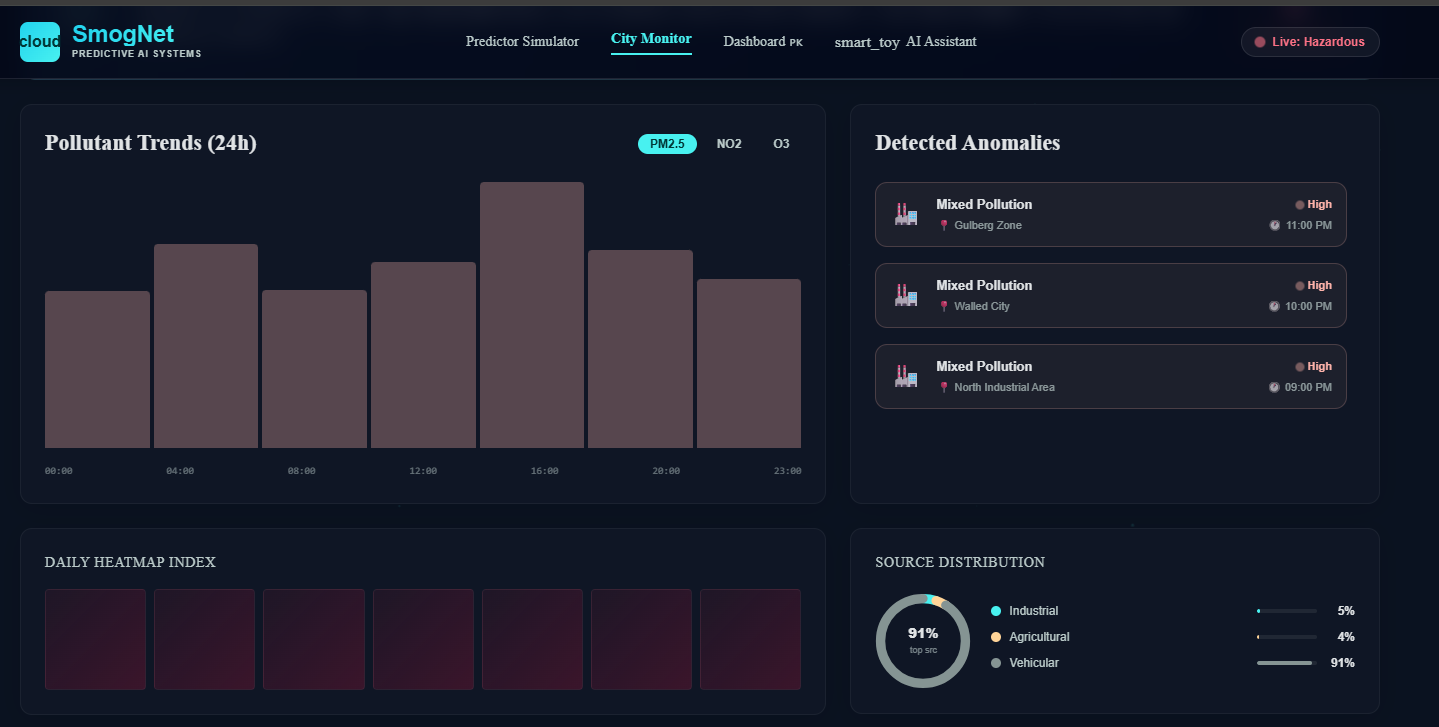
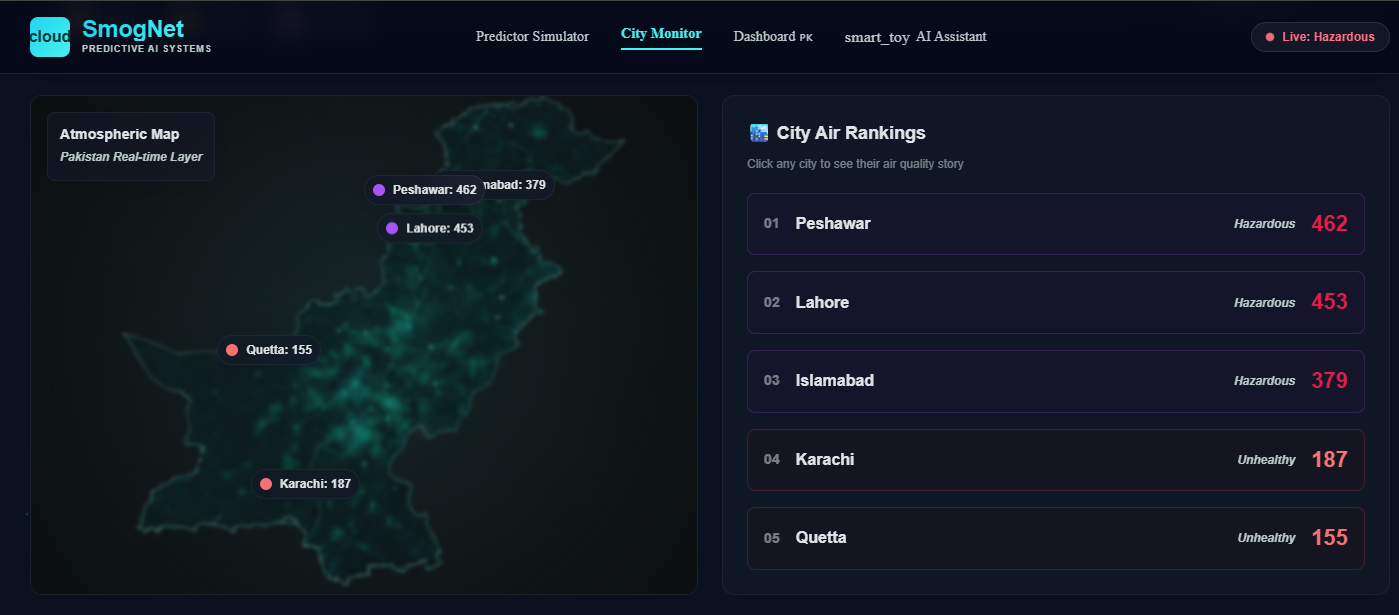
City Moniter
-
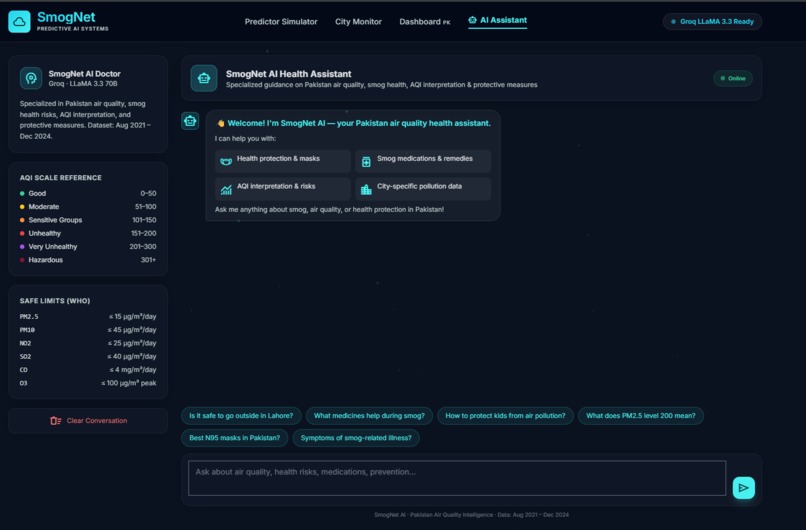
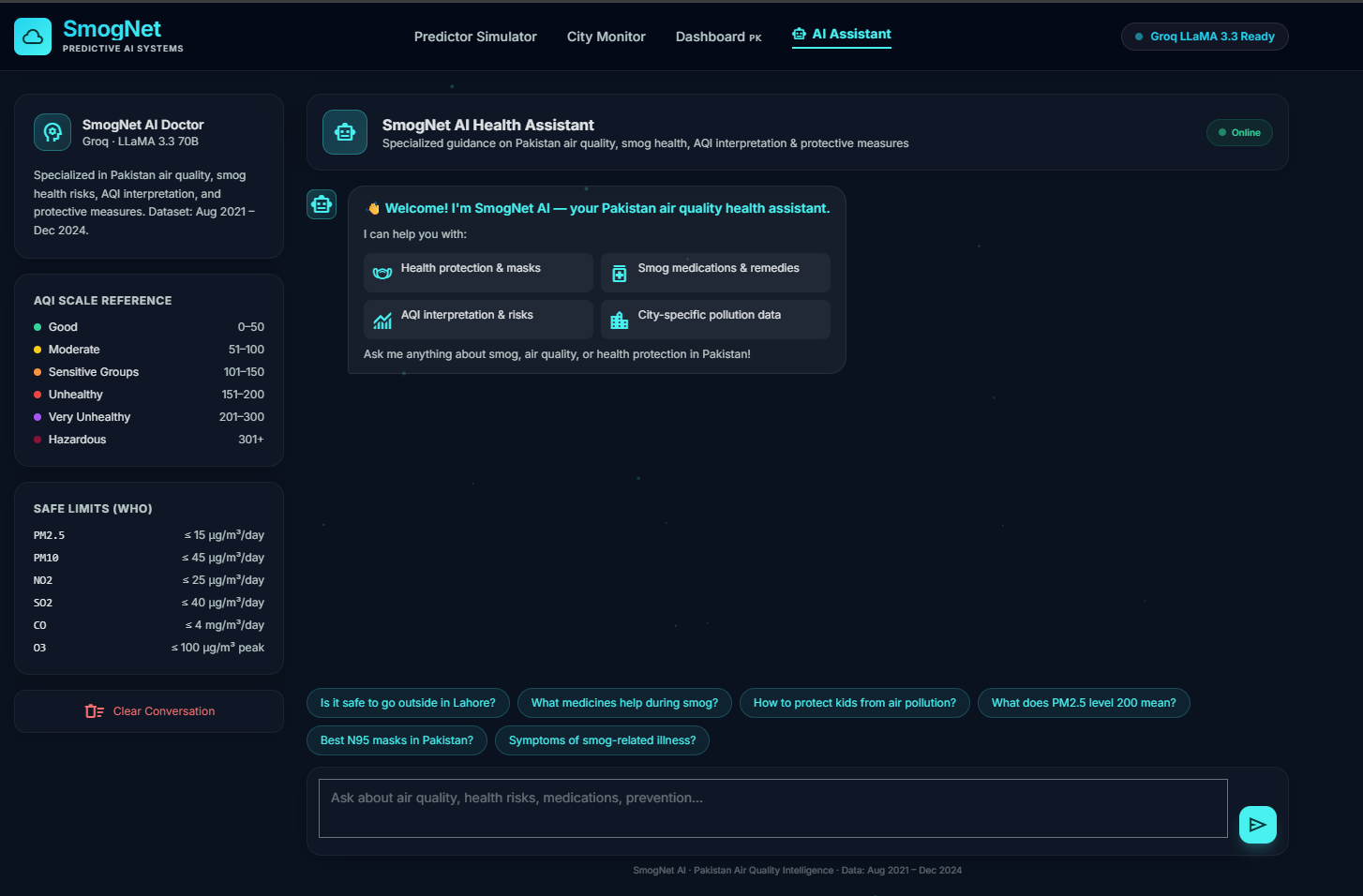
Ai Assistant
-
-
-
SmogGuard
Inspiration
Air pollution and smog have become serious environmental and health challenges in Pakistan, especially during winter seasons. Millions of people suffer from breathing problems, allergies, and other health issues caused by poor air quality.
Our team wanted to create a smart and accessible solution that not only monitors pollution levels but also helps people take preventive actions in real time. The idea behind SmogGuard was to combine Artificial Intelligence, IoT, and data analytics to build an intelligent environmental monitoring and awareness platform.
What it does
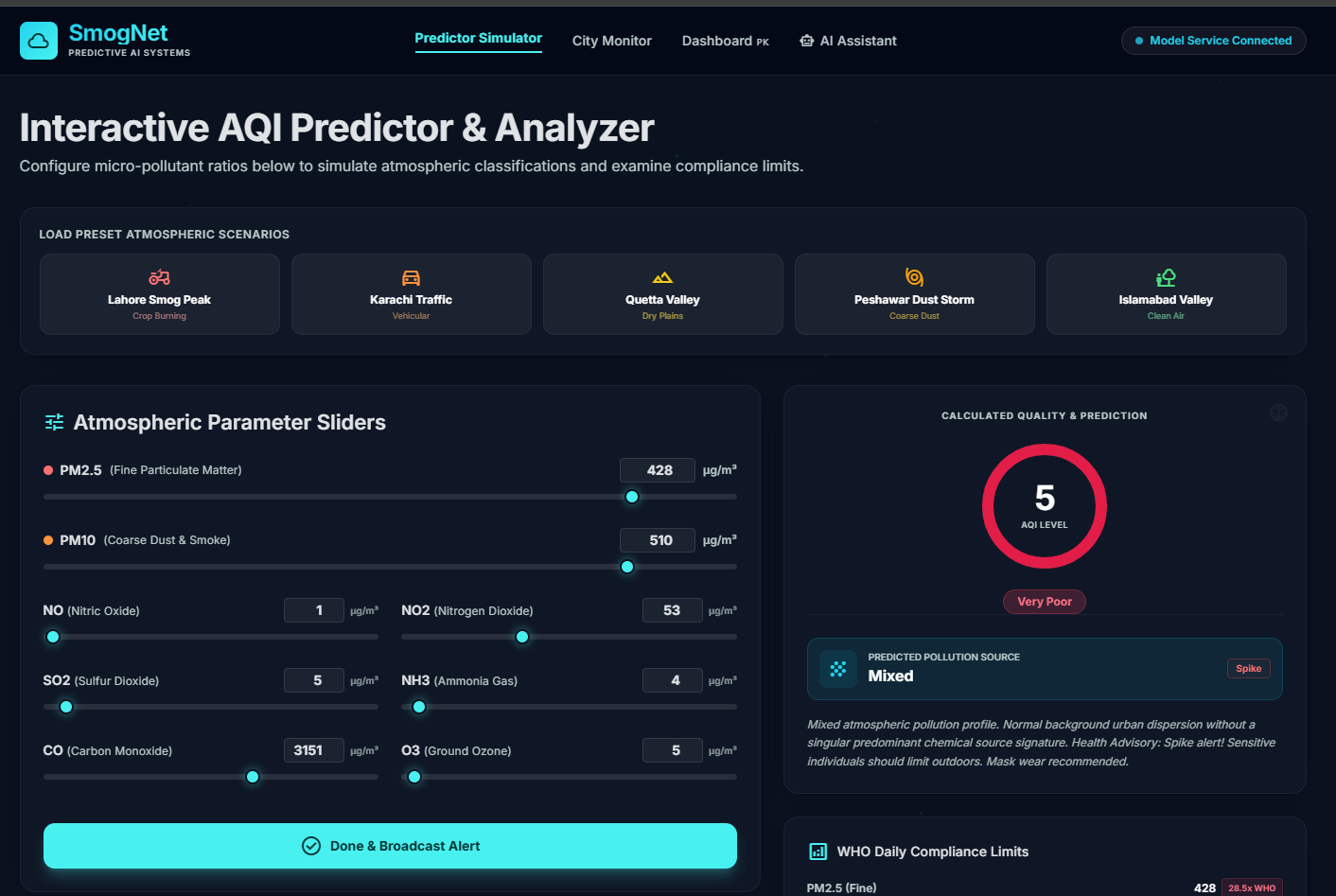
SmogGuard is an AI-powered air quality monitoring and prediction system designed to help communities, organizations, and individuals respond to pollution effectively.
Key Features:
- Real-time air quality monitoring
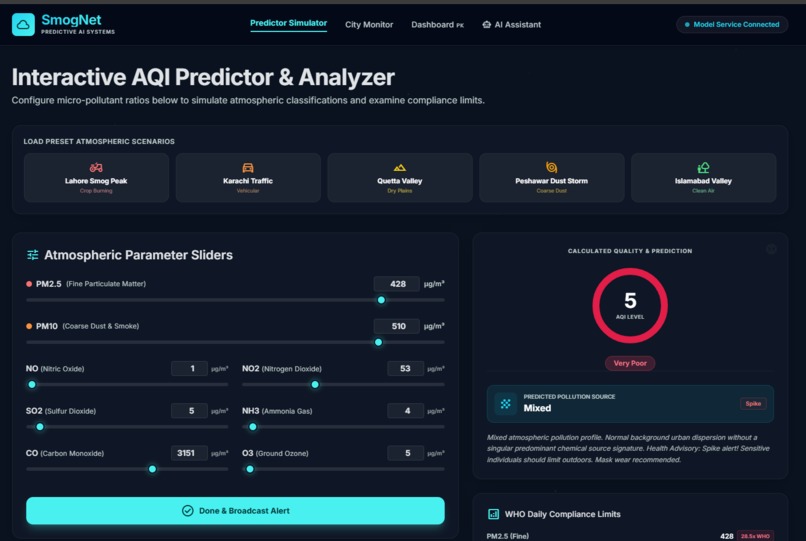
- AI-based pollution prediction
- Health and safety recommendations
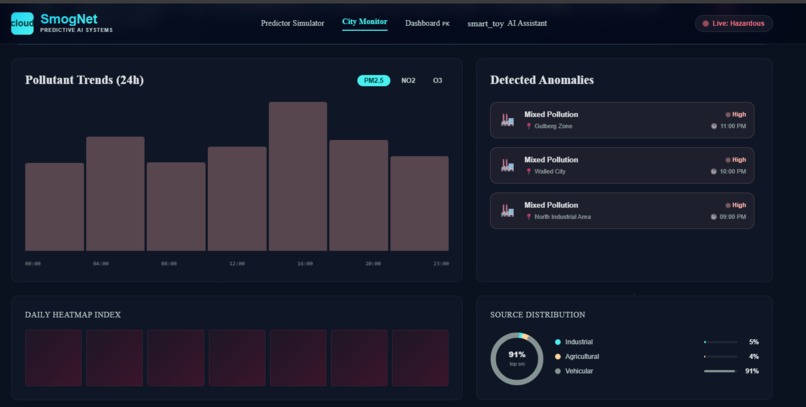
- Interactive dashboard with pollution insights
- Smart alerts and notifications
- Data visualization and reporting
- IoT sensor integration for environmental data collection
The system helps users understand pollution trends and take precautionary measures before conditions become dangerous.
How we built it
We developed SmogGuard using a combination of modern technologies and AI tools.
Technologies Used:
- Python for backend development and machine learning
- Flask for API and server-side integration
- Machine Learning Models for pollution prediction
- IoT Sensors for collecting environmental data
- HTML, CSS, JavaScript for frontend interface
- SQL Database for storing sensor and user data
- SMTP/Twilio APIs for notifications and alerts
Development Process:
- Collected and analyzed pollution-related datasets
- Trained machine learning models for prediction
- Designed the frontend dashboard
- Integrated IoT-based sensor readings
- Connected backend APIs and alert systems
- Tested the system with simulated environmental conditions
Challenges we ran into
During development, we faced several technical and practical challenges:
- Finding clean and reliable environmental datasets
- Handling real-time sensor data integration
- Improving prediction accuracy of AI models
- Managing API communication between modules
- Time limitations during the datathon
- Coordinating multiple components within a limited timeframe
Despite these challenges, teamwork and problem-solving helped us successfully complete the project.
Accomplishments that we're proud of
- Successfully developed a working AI-powered pollution monitoring system
- Integrated IoT, AI, and real-time alerts into one platform
- Presented an innovative environmental solution at SmogNet Datathon 2026
- Secured 2nd Position among competing teams
- Built a project with real-world impact and scalability potential
What we learned
This project helped us gain valuable experience in:
- Team collaboration under pressure
- Real-world AI and IoT integration
- Building scalable backend systems
- Data analysis and machine learning workflows
- Problem-solving during rapid development cycles
- Presenting technical ideas effectively
We also learned how technology can contribute to solving environmental and public health problems.
What's next for SmogGuard
We plan to improve SmogGuard by adding:
- More accurate AI prediction models
- Mobile application support
- Advanced real-time analytics
- GPS-based pollution heatmaps
- Integration with government and public health systems
- Wider IoT sensor deployment
- Community reporting and awareness features
Our goal is to transform SmogGuard into a scalable smart environmental platform that can help cities monitor and reduce pollution more effectively.


Log in or sign up for Devpost to join the conversation.