-
-
-
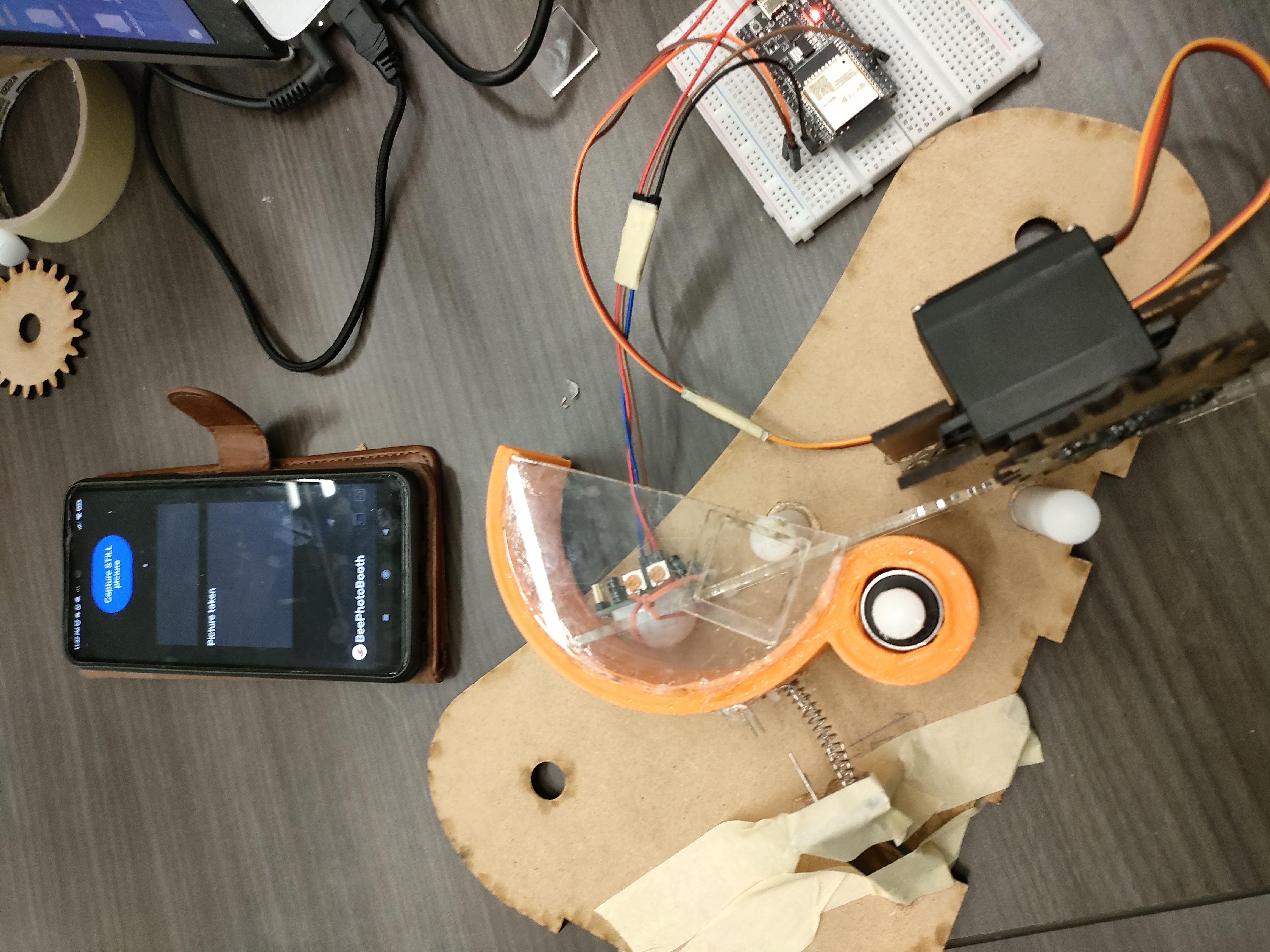
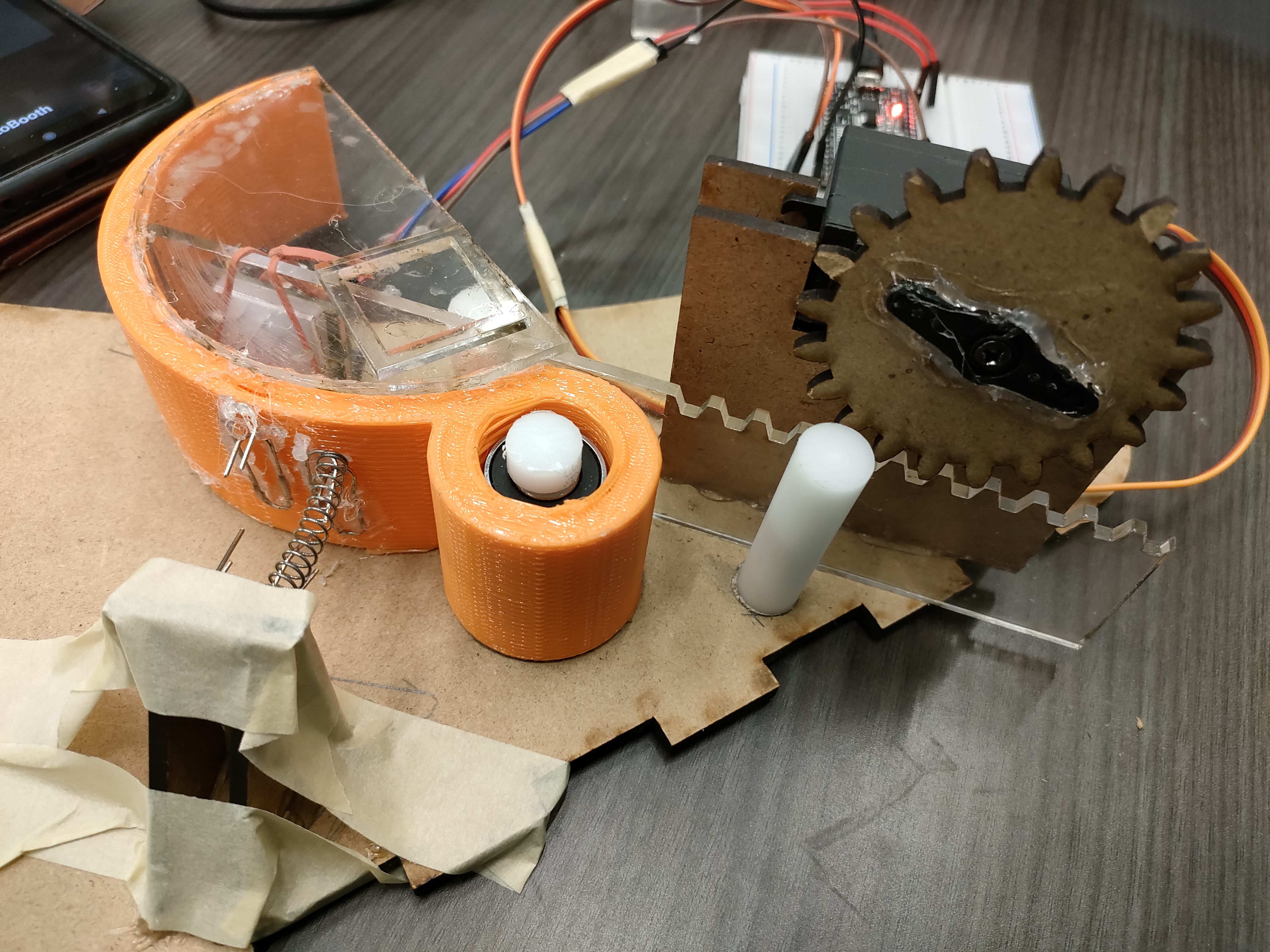
Overview 1
-
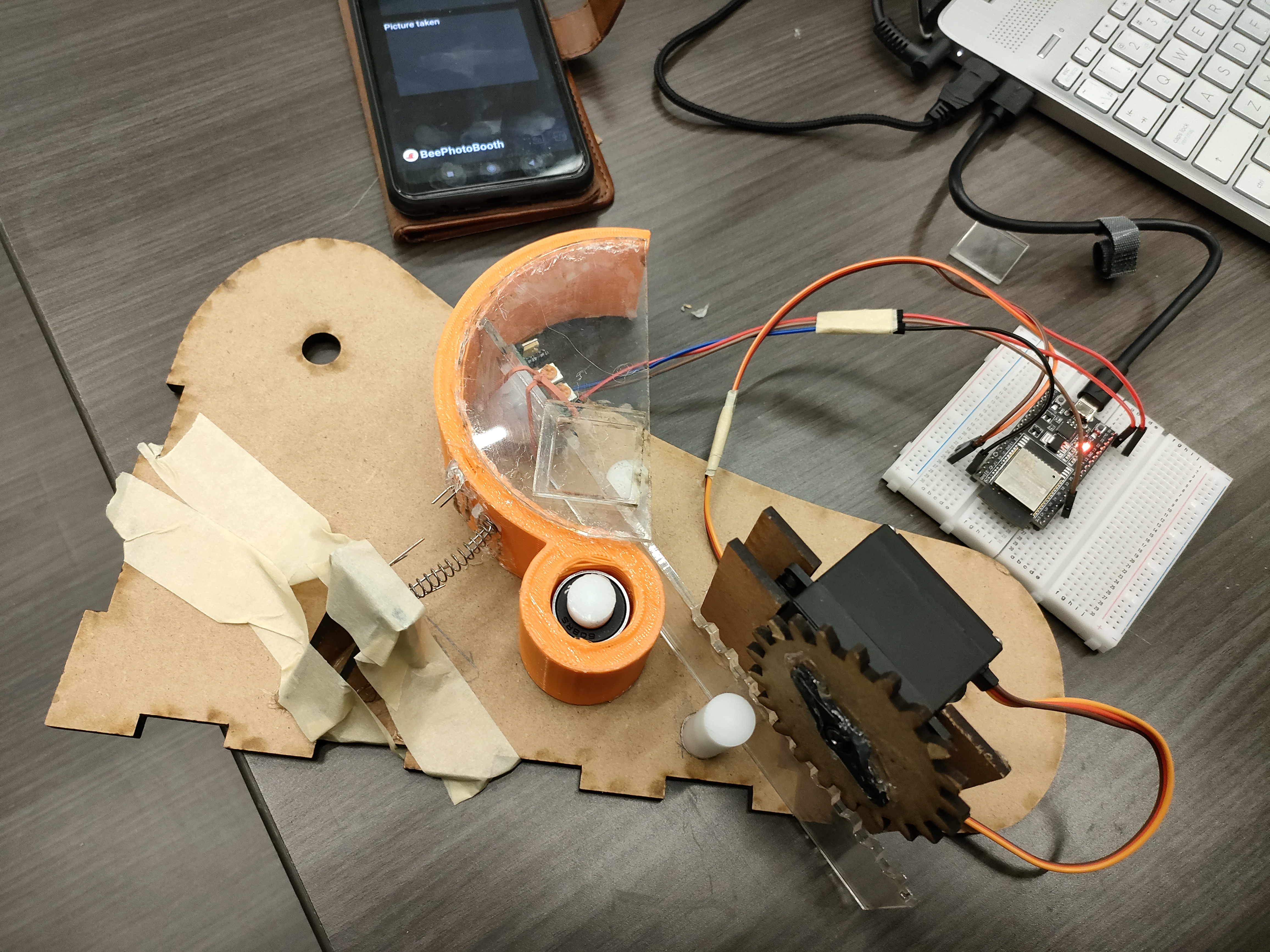
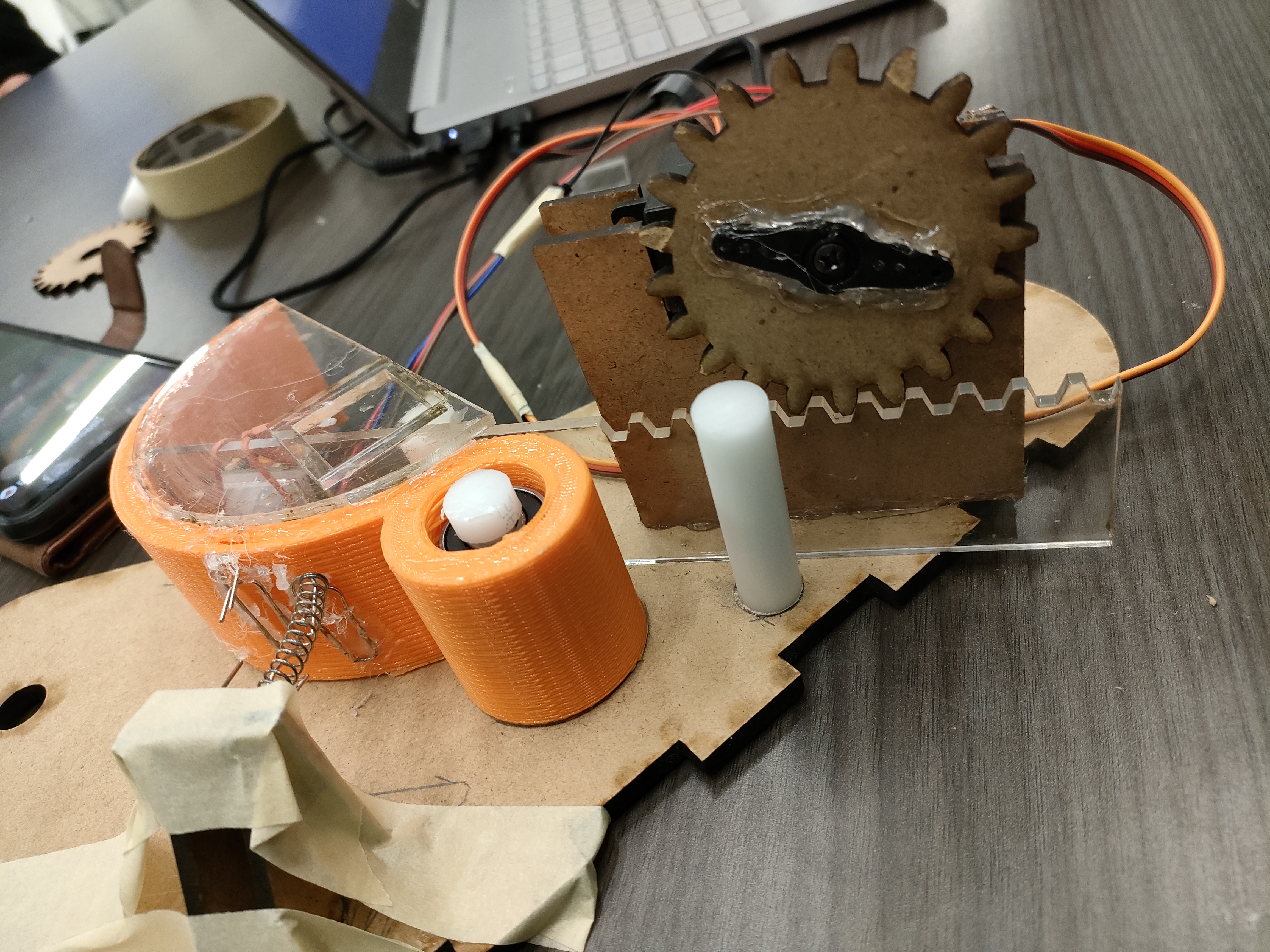
Overview 2
-
Motor and Chamber 1
-
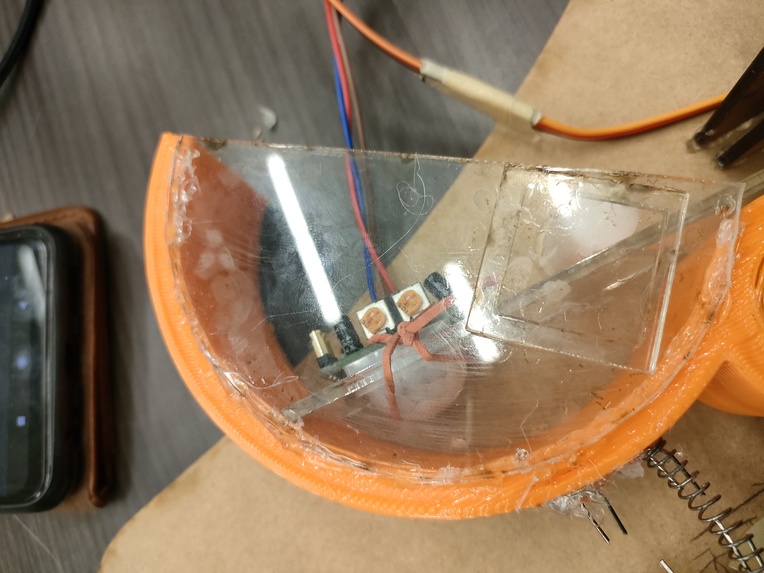
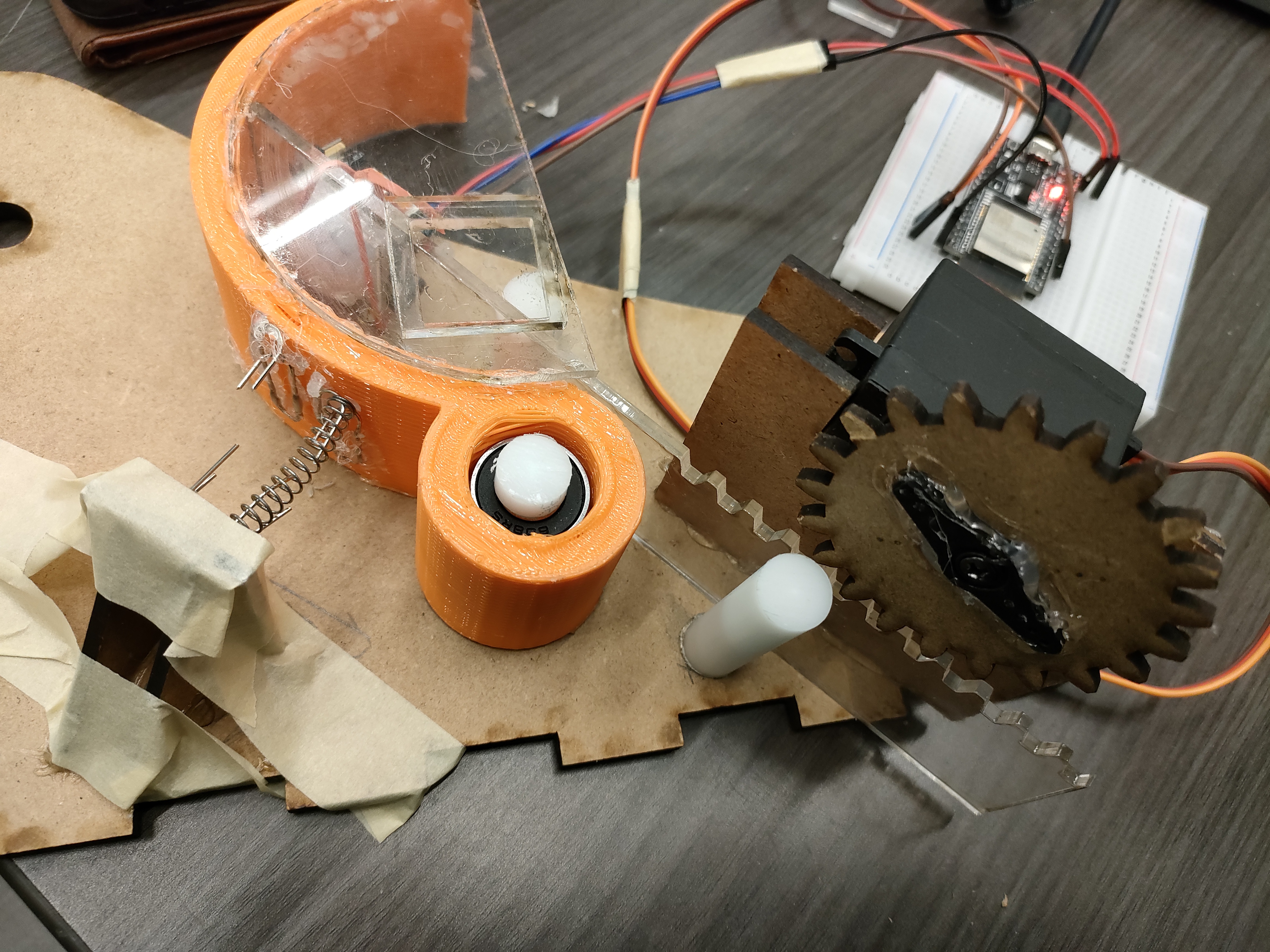
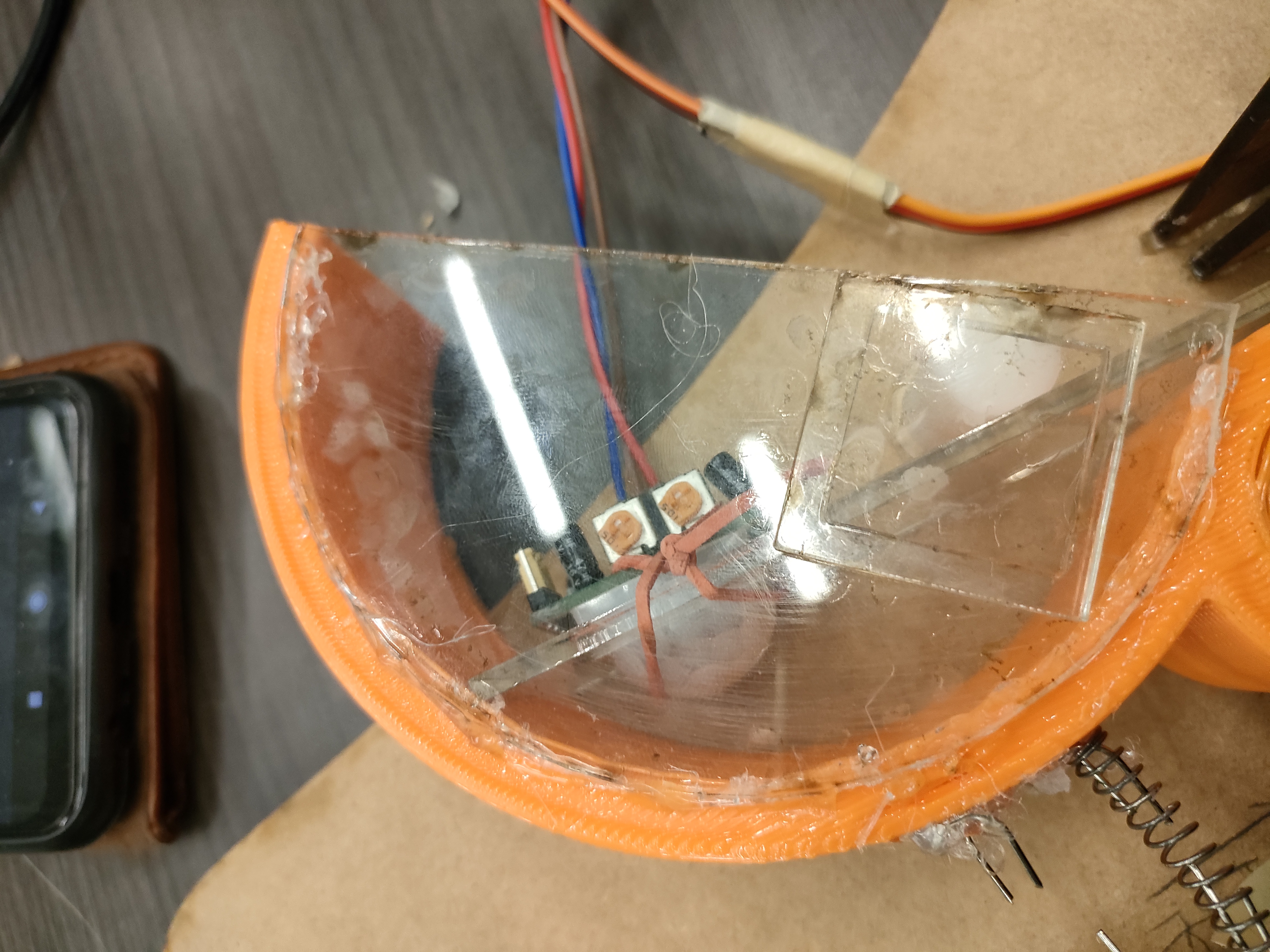
Chamber close-up
-
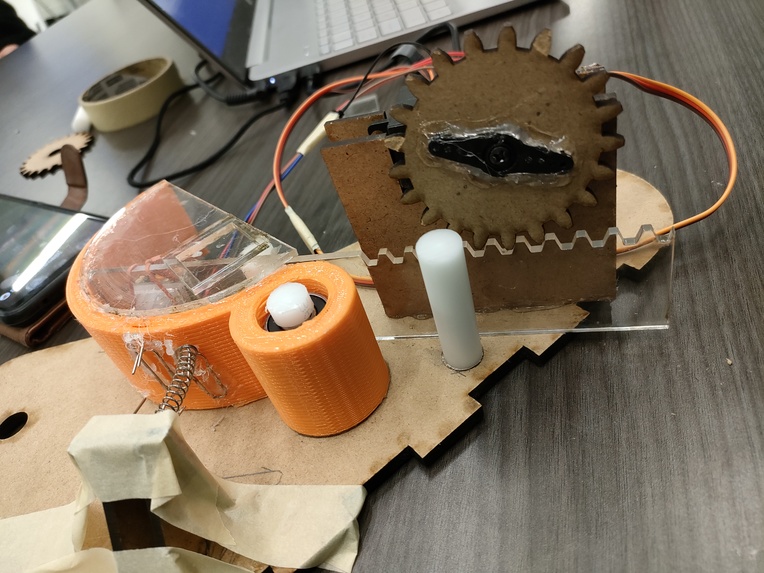
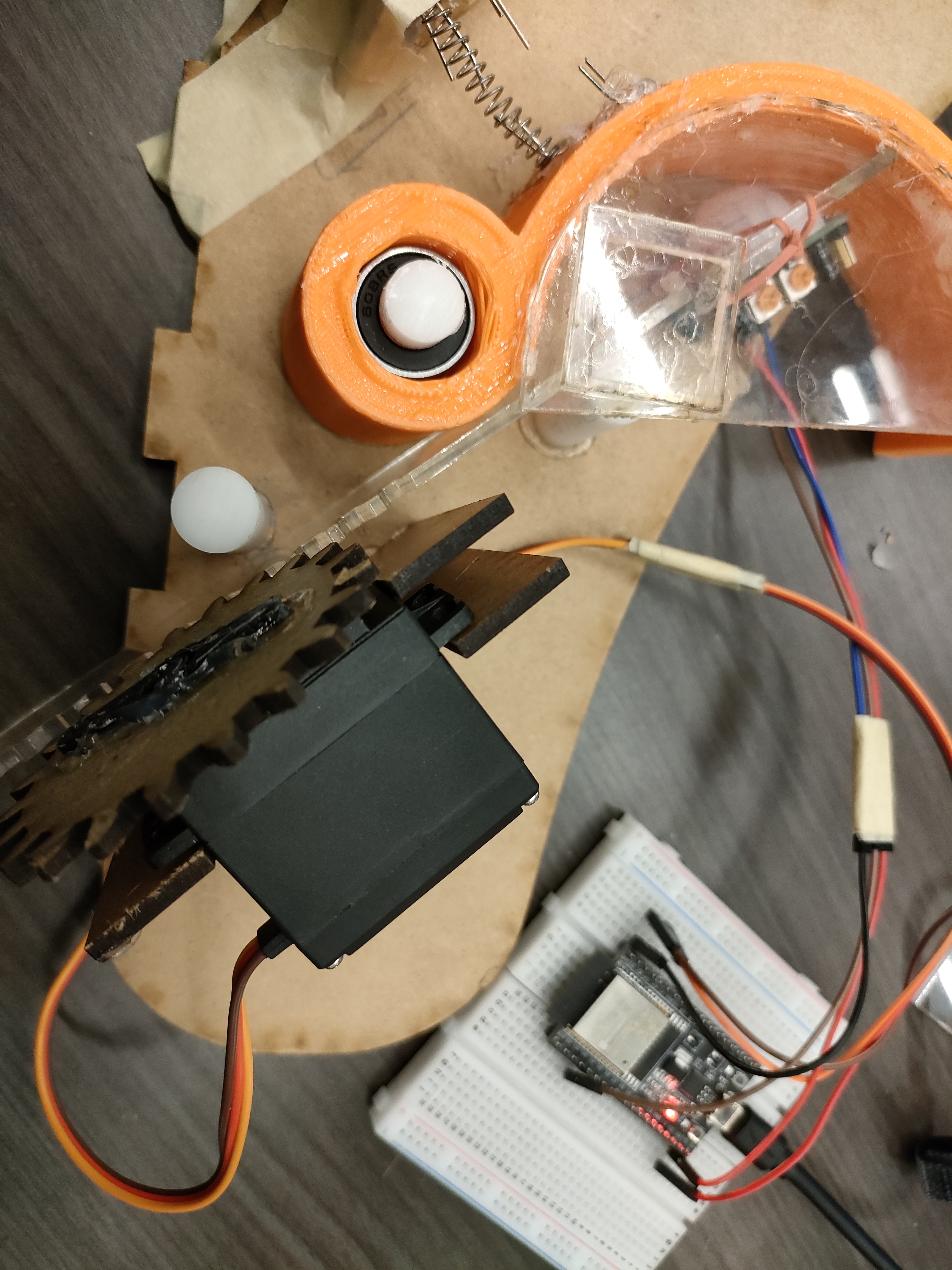
Motor
-
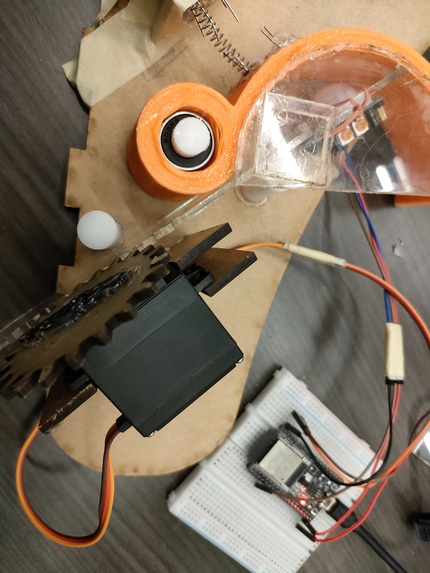
Close-up 2
-
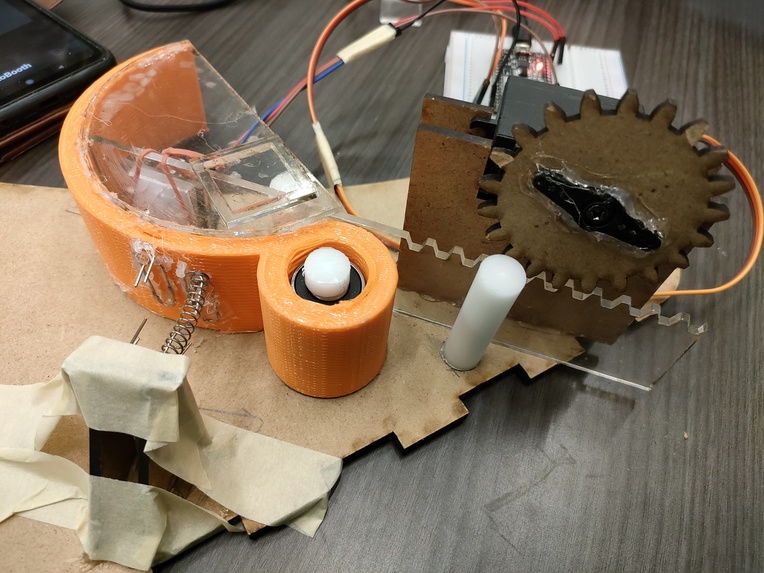
Motor and Chamber 2
-
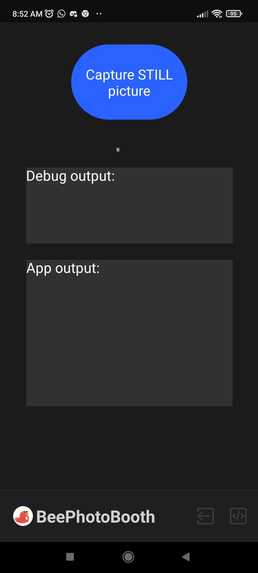
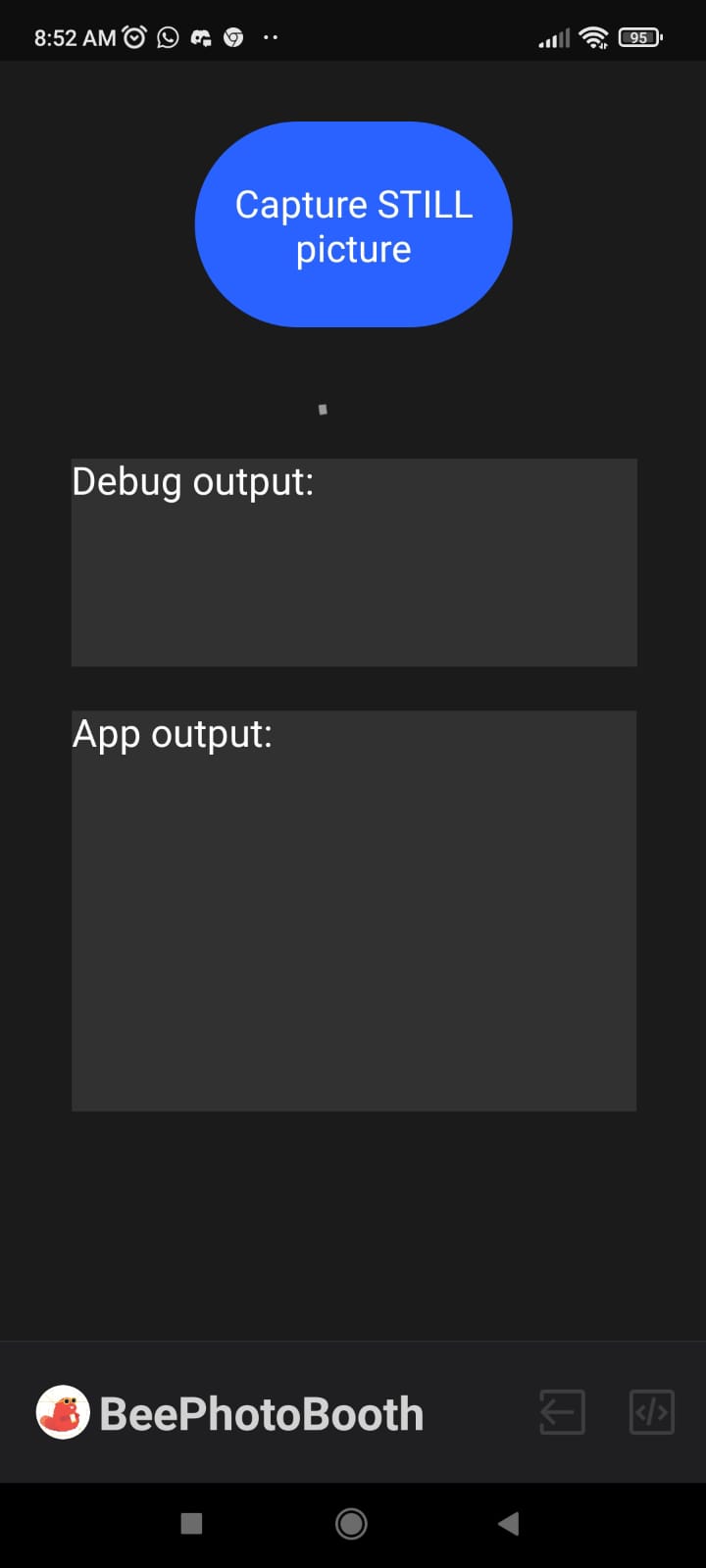
App's initial screen
-
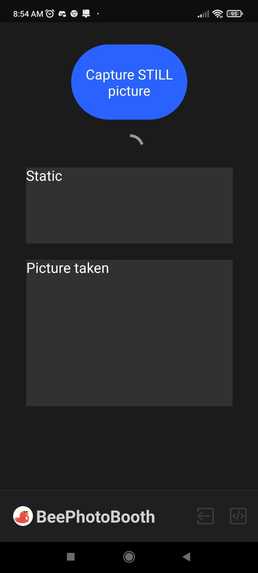
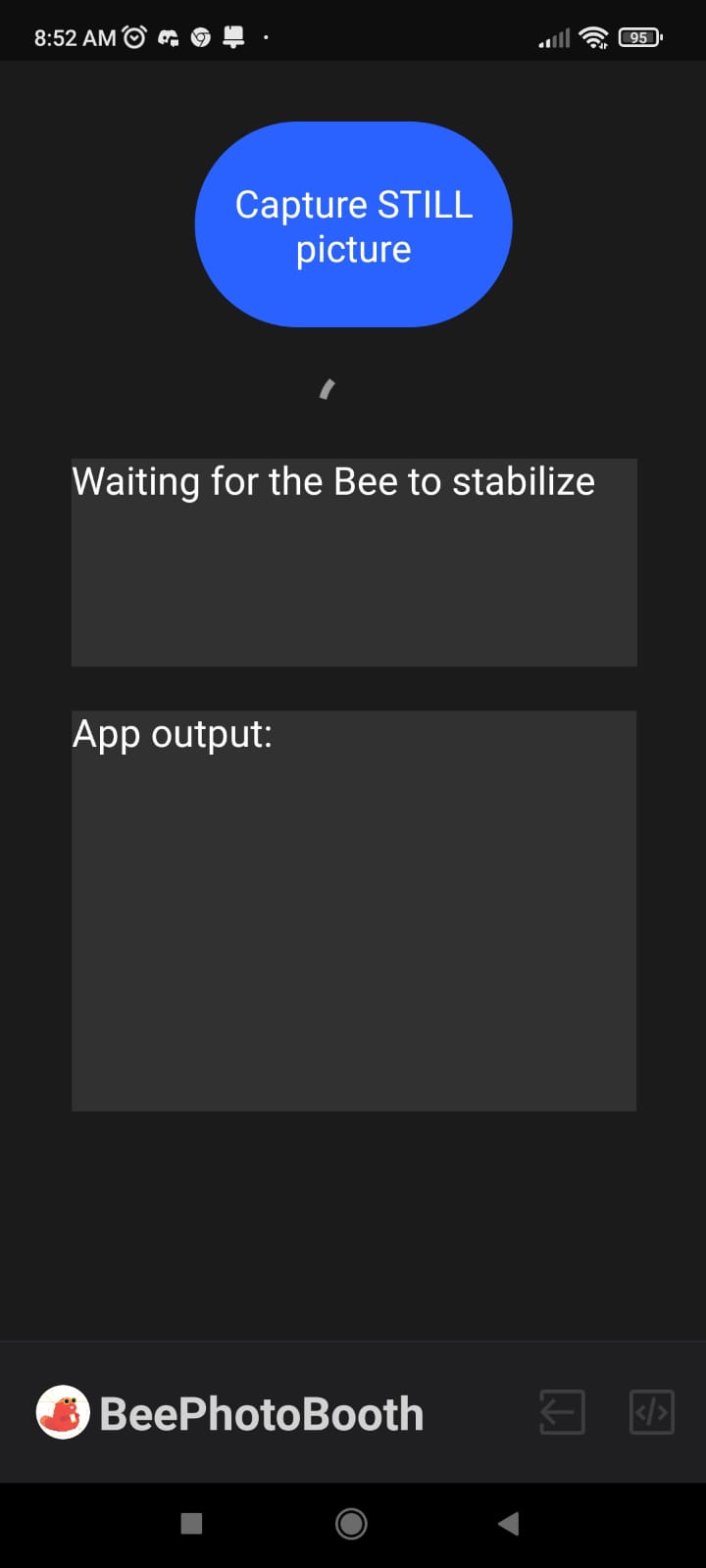
App screen after clicking the capture button
-
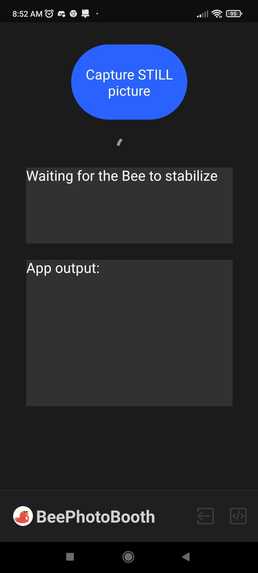
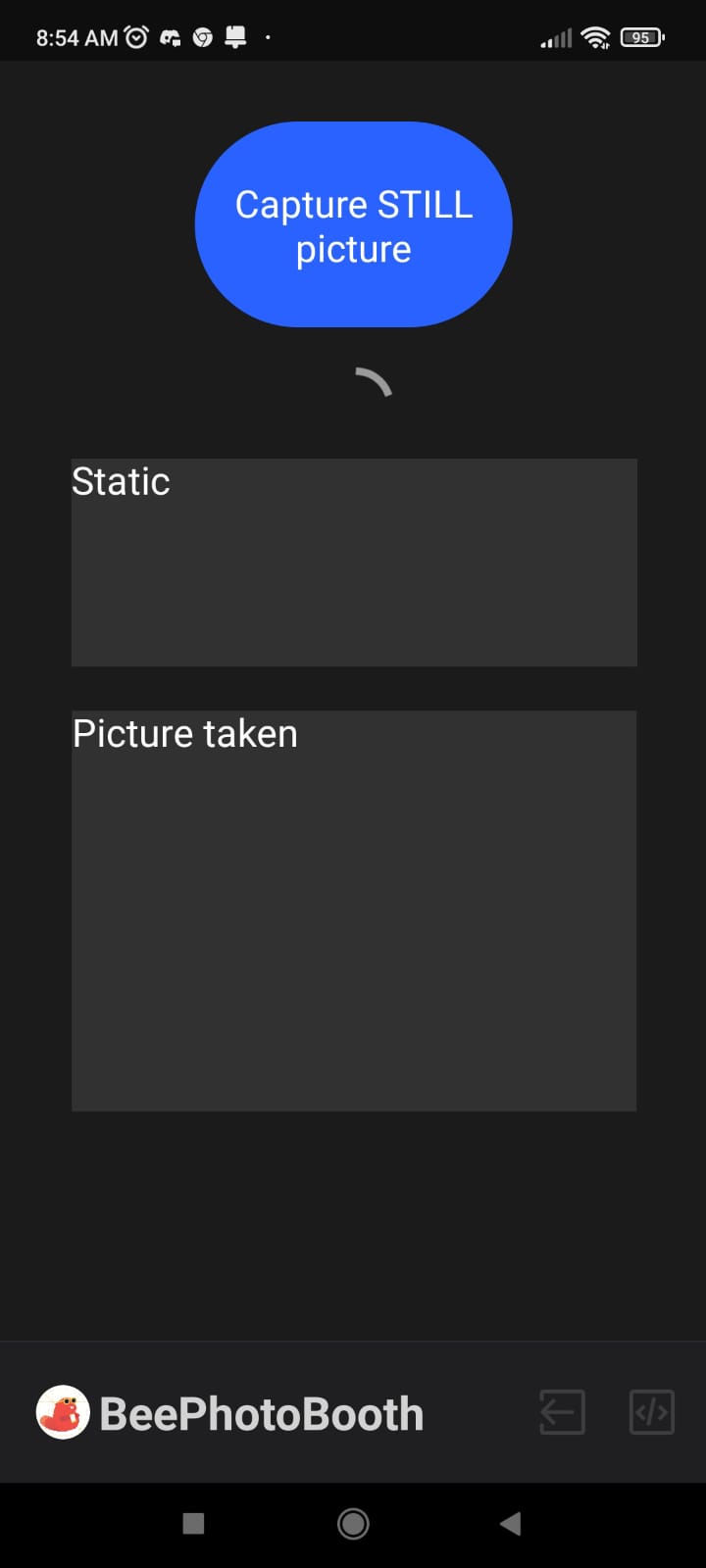
App screen after taking the picture
-
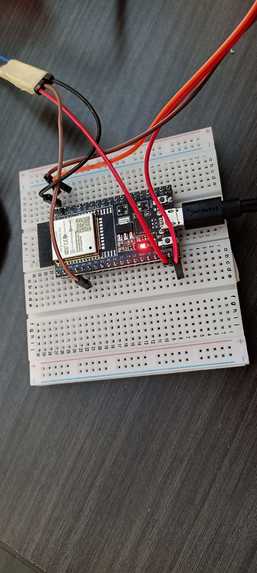
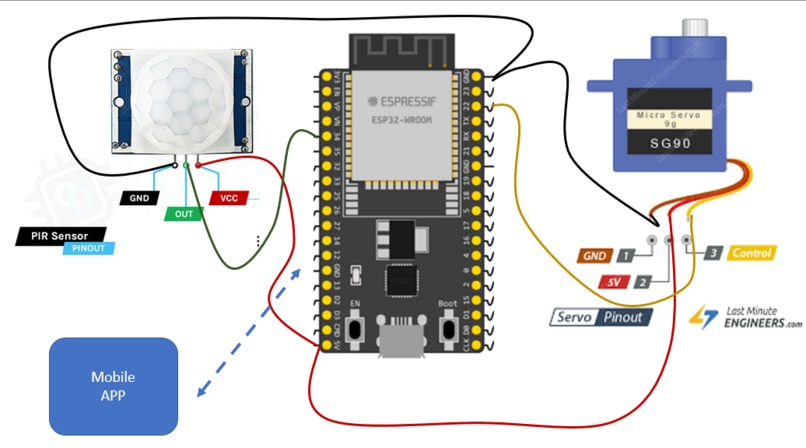
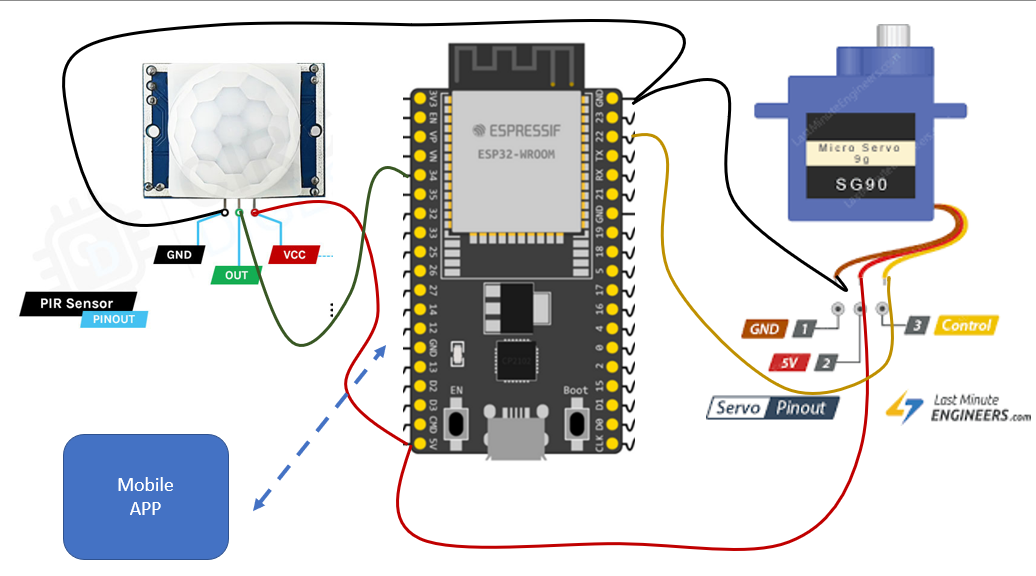
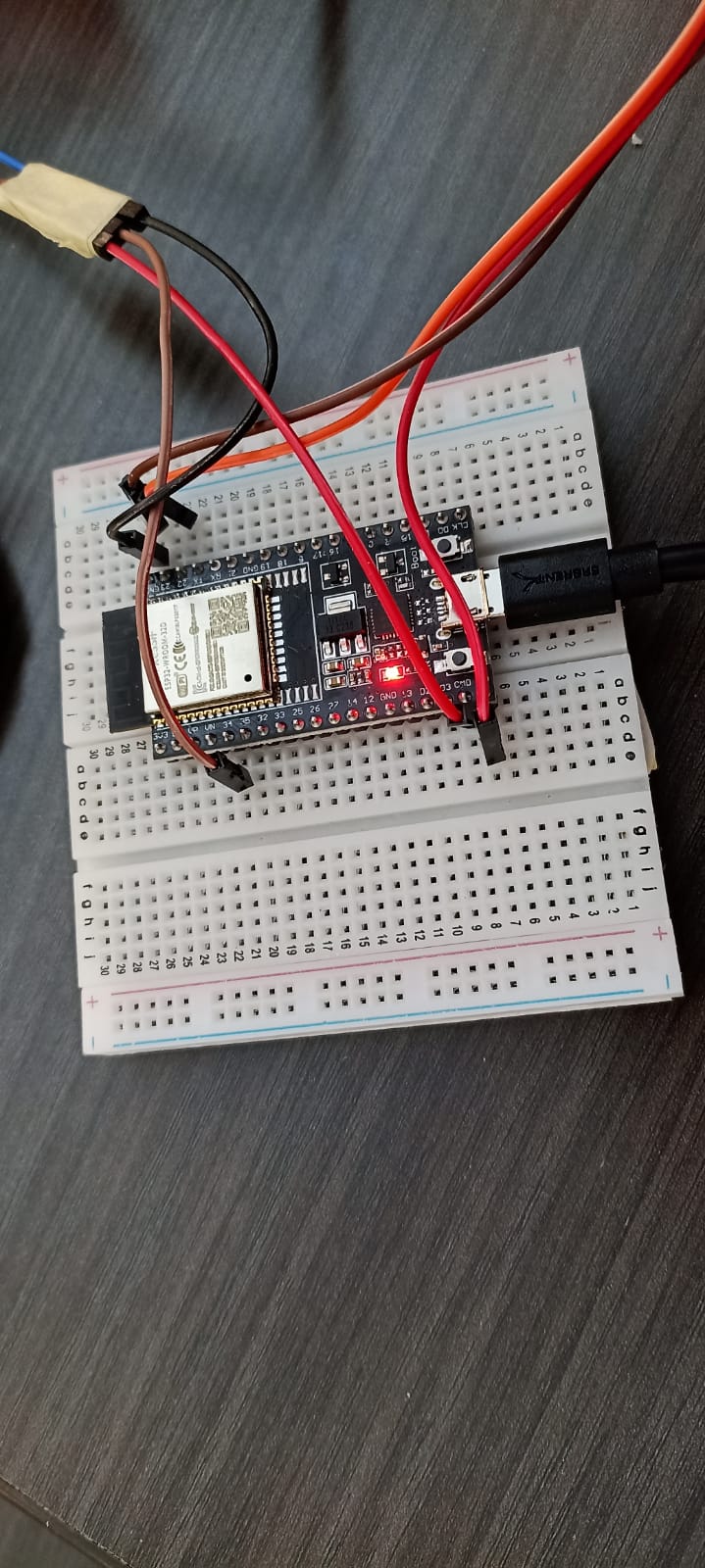
ESP32 part
Inspiration
We need to take clear picture of the small insects. It is quite challenging as it is very difficult to predict, when they will stay still and when they will fly. The main inspiration comes from the lenses of old camera, which lengths change along with the change of distance between the camera and the object. We are also inspired by stadium, which round shape allows the 360-degree view. Therefore, we built this adjustable round photobooth to better observe small insects.
What it does
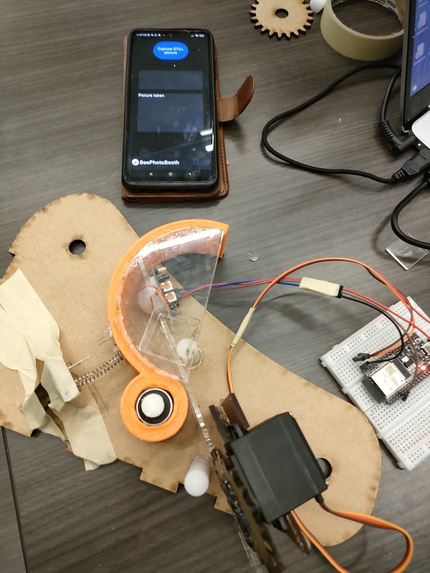
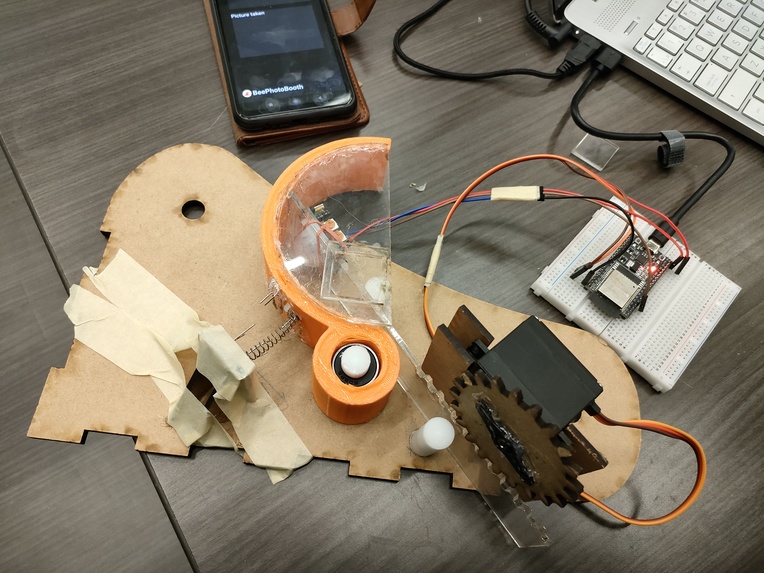
Our project is a combination of mobile app, some mechanical structures and some electrical circuits having some microcontroller and WiFi modules. The photobooth can adjust to reduce the space, it will allow to keep the insect within the focus area of camera. The motion detector can sense when the insect stops moving. That is the time when the pictures are taken to ensure high quality of still objects.
How we built it
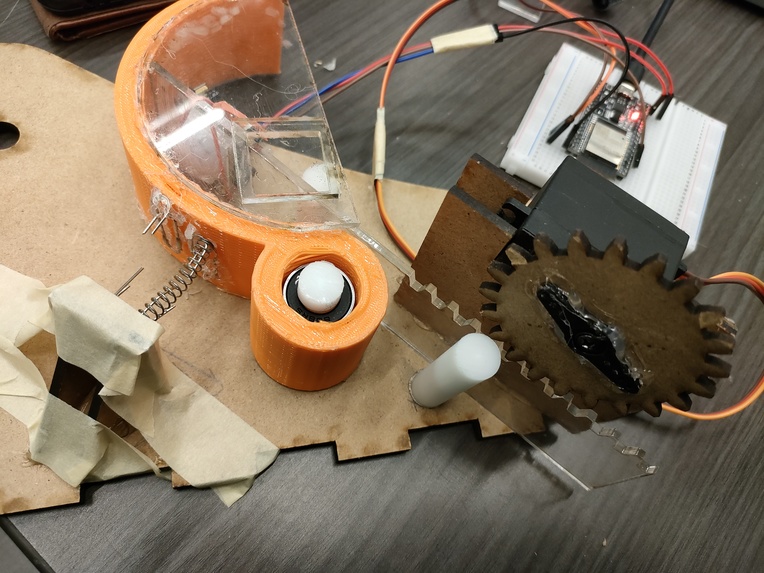
We have created one innovative mechanical design for a size-adjustable chamber. We have used the combination of 3D-printing and laser-cutting for implementing the design. Then with the help of a servo motor, controlled by an ESP32 IoT microcontroller board, we managed to change the size of the chamber.
Inside the chamber, we have placed one PIR motion sensor. When it detects that the insect is not moving at all, then it sends signal to the mobile app developed by us via the ESP32 board. After receiving the signal, the app opens the mobile's back camera to click the image. The entire process is automated. The top plate of the chamber is transparent, so basically the observer can just keep the mobile on top of that (facing the back camera towards the chamber) and start the app. Then the observer do not need to monitor it at all. Our solution (i.e., the combination of the app, ESP32, PIR sensor, the adjustable chamber) will do everything and take the picture when the insect is still.
The components of our solution are:
- The mechanical structure for the size-adjustable chamber
- PIR sensor
- ESP32 and the coding done within it to control the chamber, and sensing the motion using the PIR sensor
- The app which communicates with ESP32 and opens the camera to click the picture
Challenges we ran into
There are two main challenges. First, the time and resources are very limited. 36 hours including time to sleep and eat present the biggest challenge in designing and executing an invention using multi-disciplinary knowledge. We can only use the existing resources, even though sometimes alternatives, which are still economic, are more suitable. Second, we underestimated the gaps between theories and applications. For example, our perfect design and 3D / laser cut may not prove to be applicable in real life, especially when the force of the motor overcomes the strength of the glues. We believe that our dedication and quick responses to challenging situations have helped conquer the challenges. Hopefully such a spirit reflects in our prototype.
Accomplishments that we're proud of
There are two accomplishments that we are proud of. First, we completed the project with a functioning prototype! Even though there are a lot of room to improve, we are proud of completing a quality deliverable in such a short time. Second, we worked well as a team. We didn’t know each other until this Friday. We formed quick bond based on our complimentary expertise and wonderful personalities. Our effective communications, generous support of each other, balance between working by ourselves and teamwork, and combination of work and fun, make the project productive and enjoyable. Therefore, we are proud of establishing such a dream team.
What we learned
There are two key takeaways. First, we learned that we would need to consider more about the applications than the beauty of the design. Even though the functionality of our design made perfect sense, the practical use can present challenges. Second, we learned about the importance of multi-disciplinary collaboration. All three of use are very good at our tasks, but given the time and knowledge restraints, none of us could complete the quality work by ourselves. Moreover, the different knowledge and personalities can be useful and pleasant, if one asks the thought-provoking questions and bring humours to teamwork. Therefore, we believe that in the future, we will develop more holistic considerations of our designs and enjoy teamwork with wonderful teammates.
What's next for Smile, You are on Camera - Photobooth for Small Insects
The next step for the project is to improve it. This includes four parts, including polished designs, improved materials, learning through applications, and using results and evidence to further improve. First, we will need to refine the design, to make it more practical and easy to use. Second, we will use improved materials, such as more transparent pane and automatic photo-taking app. Third, we will learn from the mistakes when applicating the photobooth, which will result in more sound design. Fourth, we will use the results data to generate evidence to enhance future improvement of the design.

Log in or sign up for Devpost to join the conversation.