Inspiration
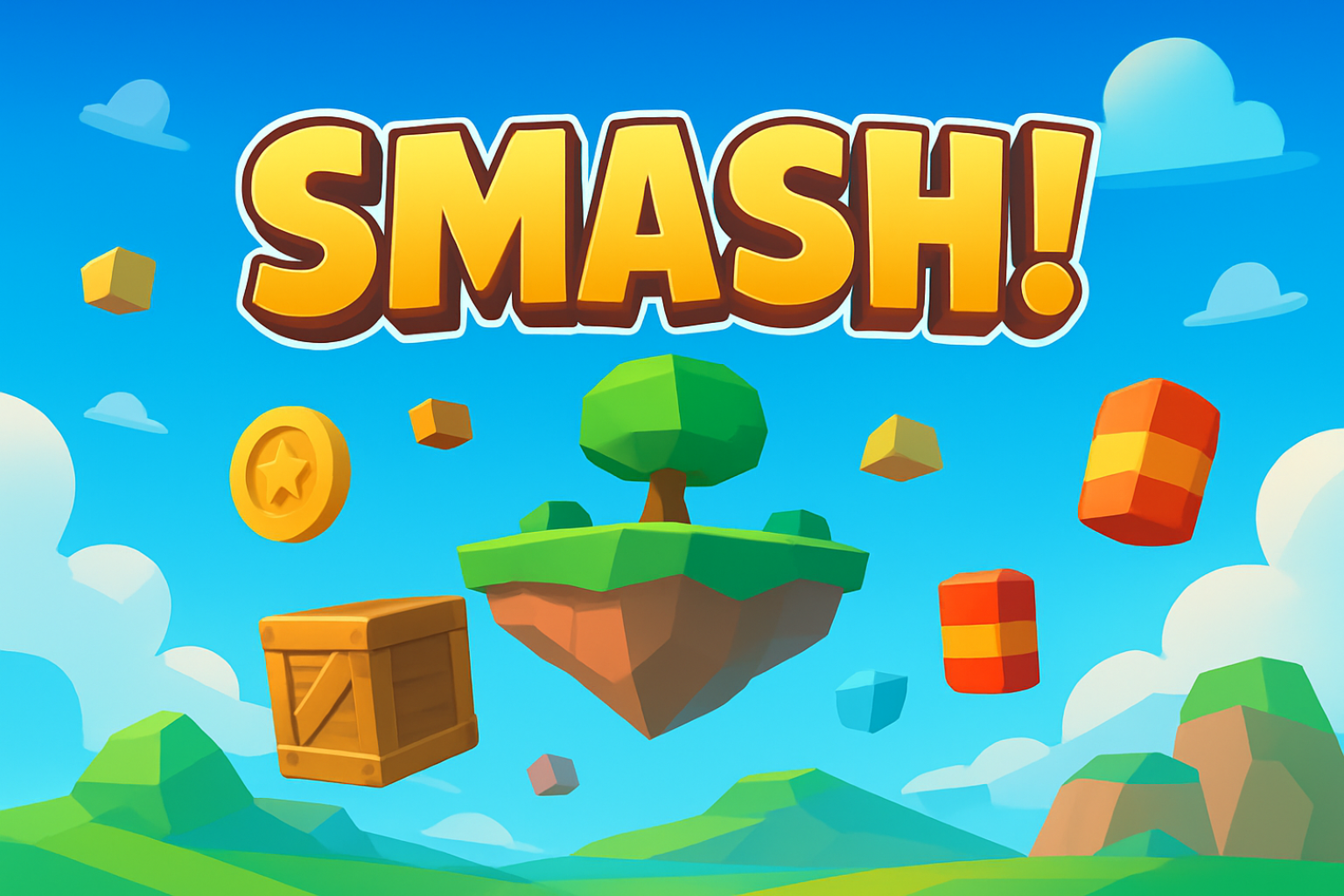
This project was inspired by the platform fighter Super Smash Brothers. I wanted to capture the same chaotic, fast-paced energy in a multiplayer world that works well on both VR and mobile. My goal was to create a party game that’s quick to pick up, fun to play in short bursts, and designed to support frequent replayability.
What it does
Smash is a battle platformer game built for up to ten players. It features:
Fast-paced brawling combat
Modular level spawning system
A token collection and reward system
Player XP and exponential leveling
Each round is short and action-packed, with a focus on mobility, knockback, and chaos. It’s designed to feel like a competitive playground that players can return to over and over again.
How we built it
This world was developed entirely solo. I built systems that were designed to be both flexible and expandable, including:
Level spawning logic with randomized layouts
Core combat and knockback systems
Persistent token tracking and storage
A leveling system based on XP gained from matches
A cosmetic shop that tracks item unlocks and booster purchases
A custom UI built to support both mobile and VR layouts
Much of the development effort focused on making sure every component could be reused or modified for future updates without needing a full rebuild.
Challenges we ran into
One of the bigger challenges was creating a progression system that felt rewarding without overwhelming the fast-paced gameplay. Balancing token rewards, XP gain, and level curves required multiple iterations.
Another major hurdle was designing a shop system that worked smoothly across sessions, allowing cosmetic upgrades and booster tracking. Horizon’s persistent variables system required careful handling to ensure everything saved and loaded properly across all players and devices.
UI layout was another challenge, especially on mobile, where Horizon’s built-in overlays can interfere with custom HUD elements.
Accomplishments that we're proud of
I’m proud of how fun and chaotic the final gameplay feels, especially in larger groups. The game delivers the party-style energy I originally envisioned, and it works great on both mobile and VR platforms.
I’m also proud of the UI design. Building a clean, responsive HUD system for multiple platforms was a huge milestone for me as a developer still learning advanced UI techniques in Horizon Worlds.
What we learned
This project helped me deepen my understanding of:
Persistent storage and save systems in Horizon Worlds
Creating scalable XP and level systems
Designing modular, data-driven logic for weapons and maps
UI responsiveness and layout considerations across devices
The importance of playtesting for balance and pacing
What's next for Smash
The next step is to continue expanding the game with:
More brawling levels
Seasonal cosmetic weapons that rotate over time
New types of boosters and unlockable rewards
Ongoing optimization and refinement of progression systems
The modular architecture allows for frequent updates and seasonal content. My goal is to keep the gameplay fresh and build a vibrant, replayable party game that grows over time.


Log in or sign up for Devpost to join the conversation.