-
-
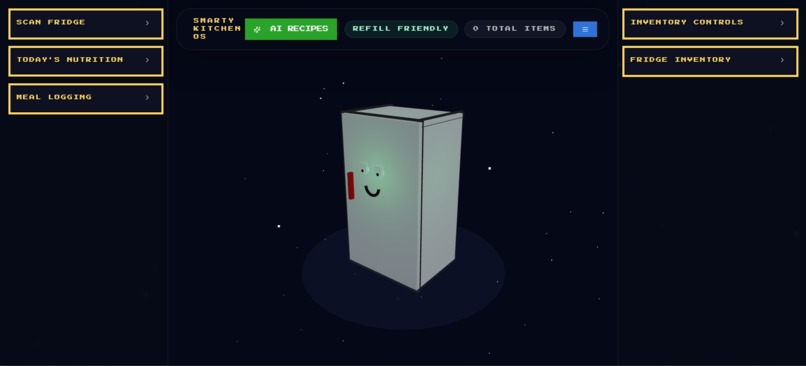
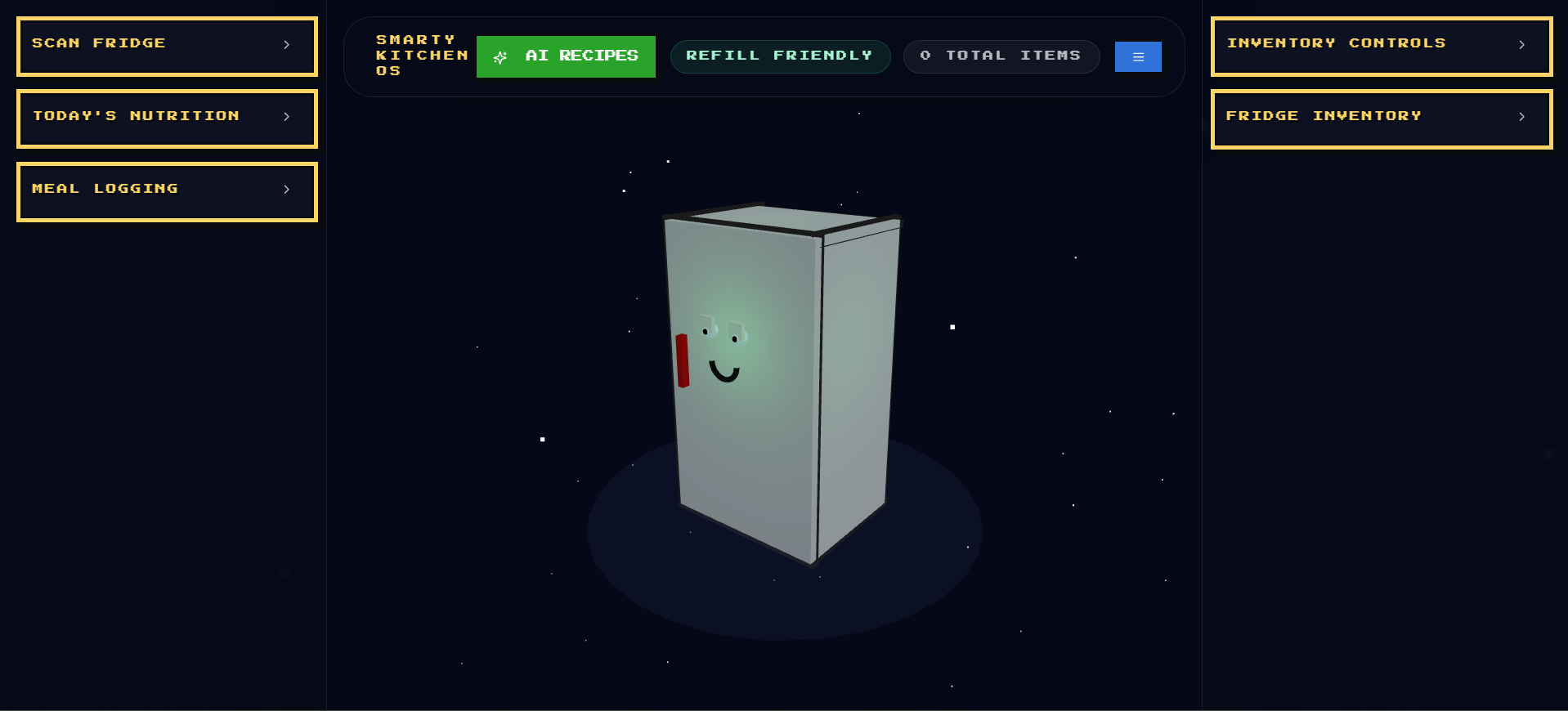
SMARTY!!!
-
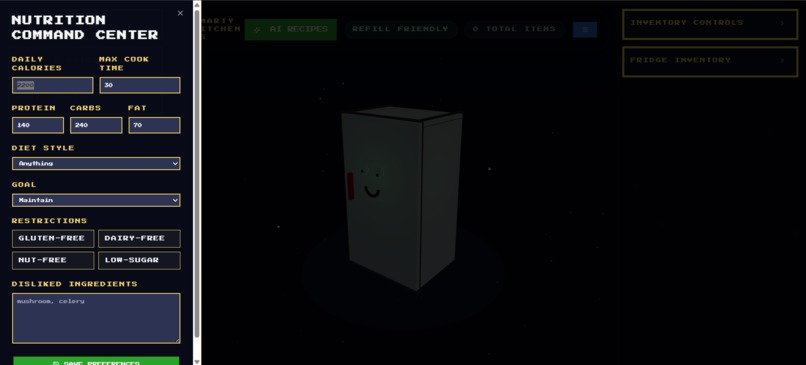
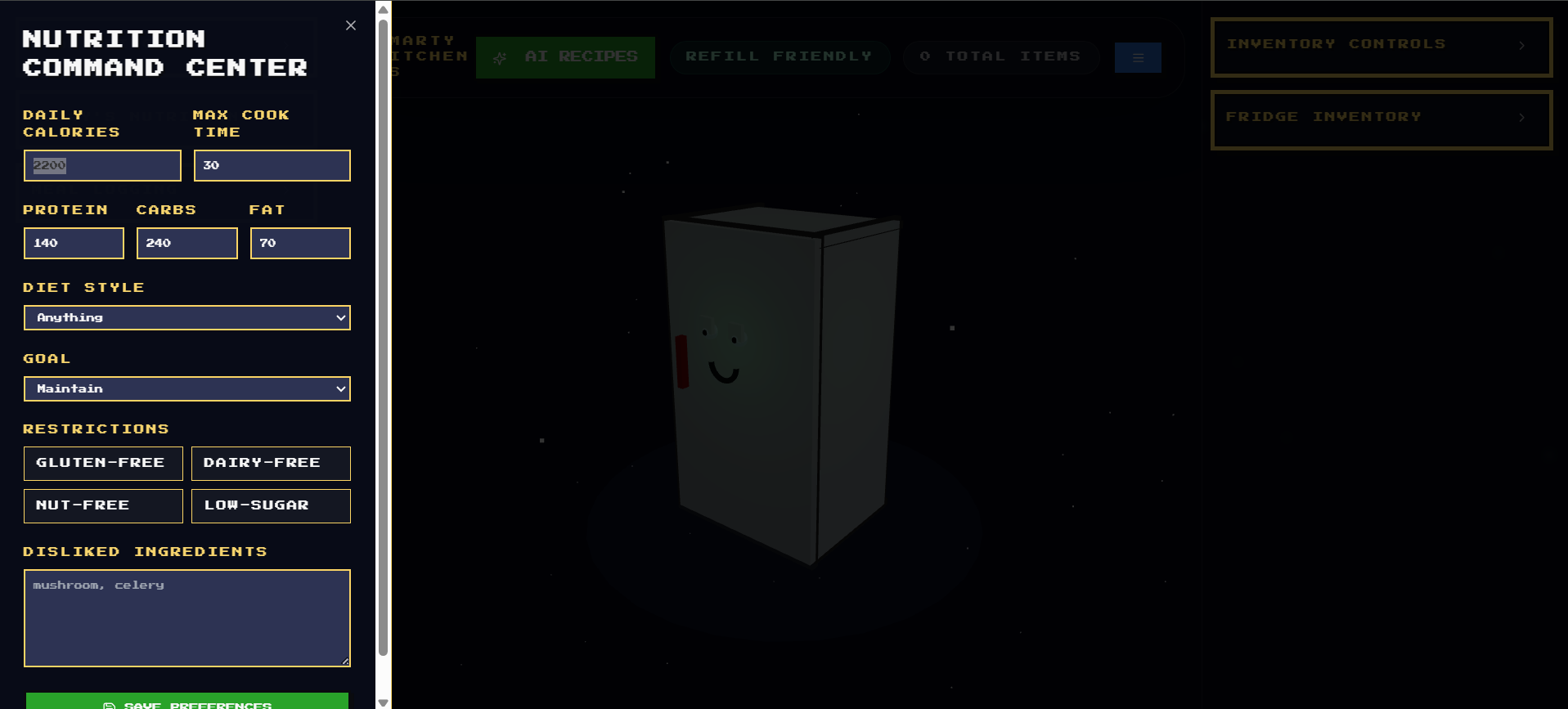
Menu to add diet preferences
-
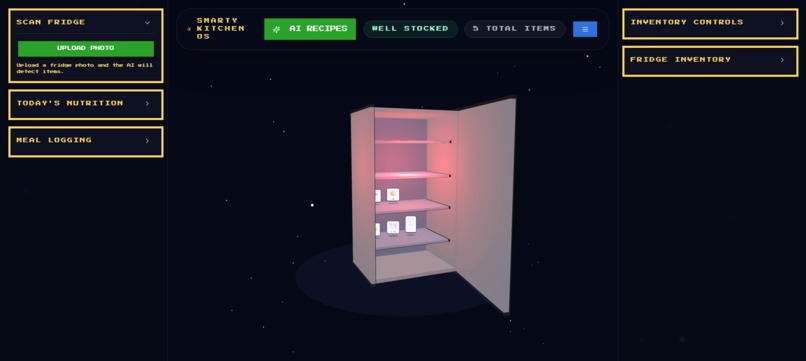
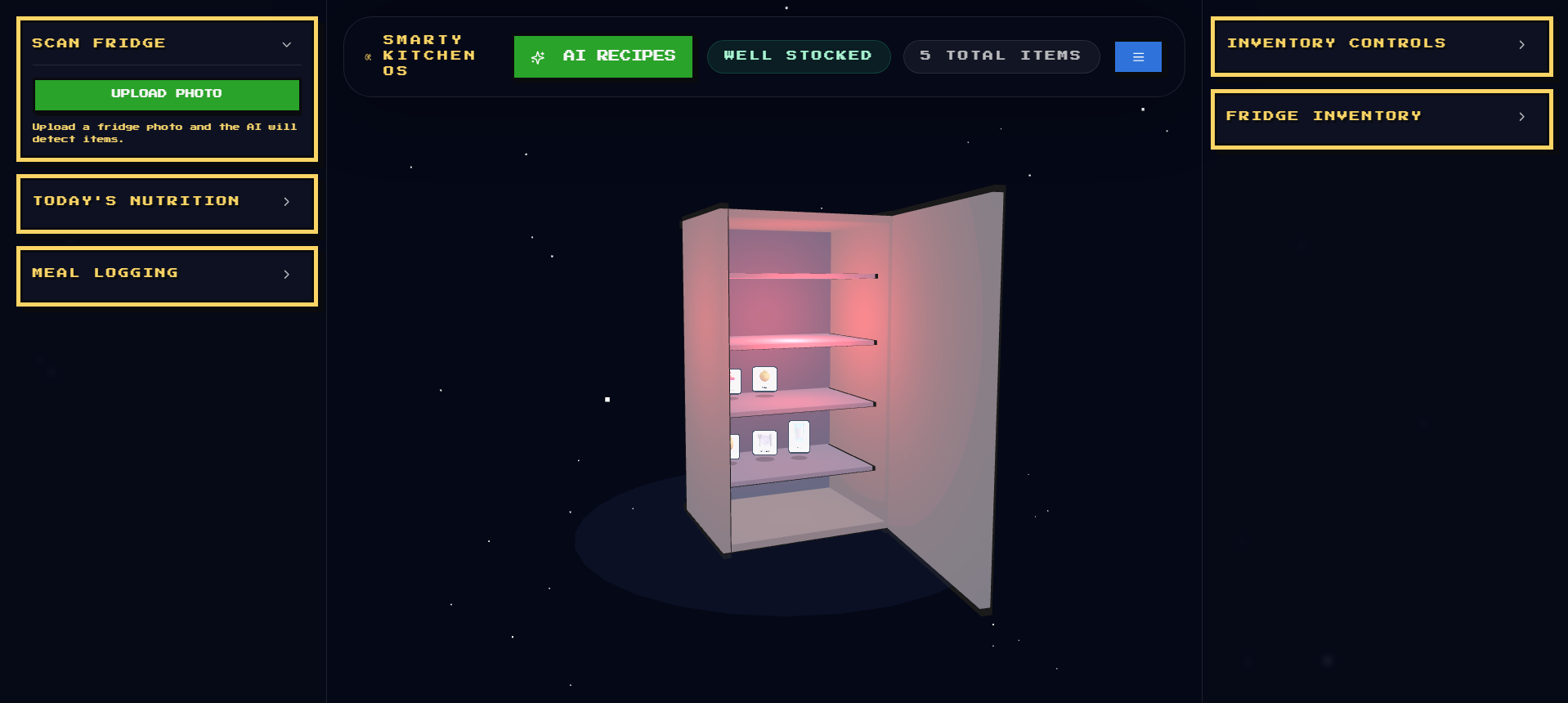
Fridge with ingredients
-
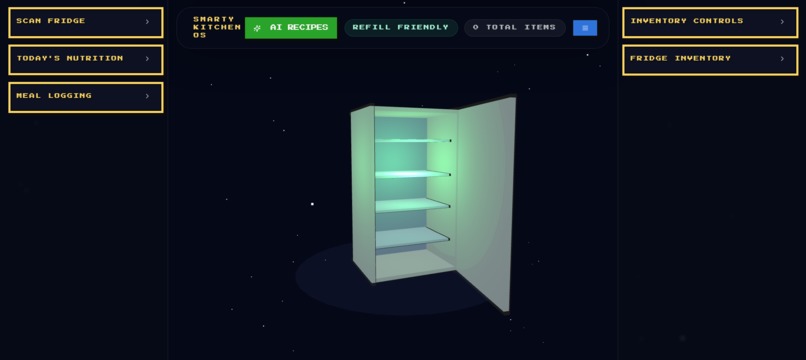
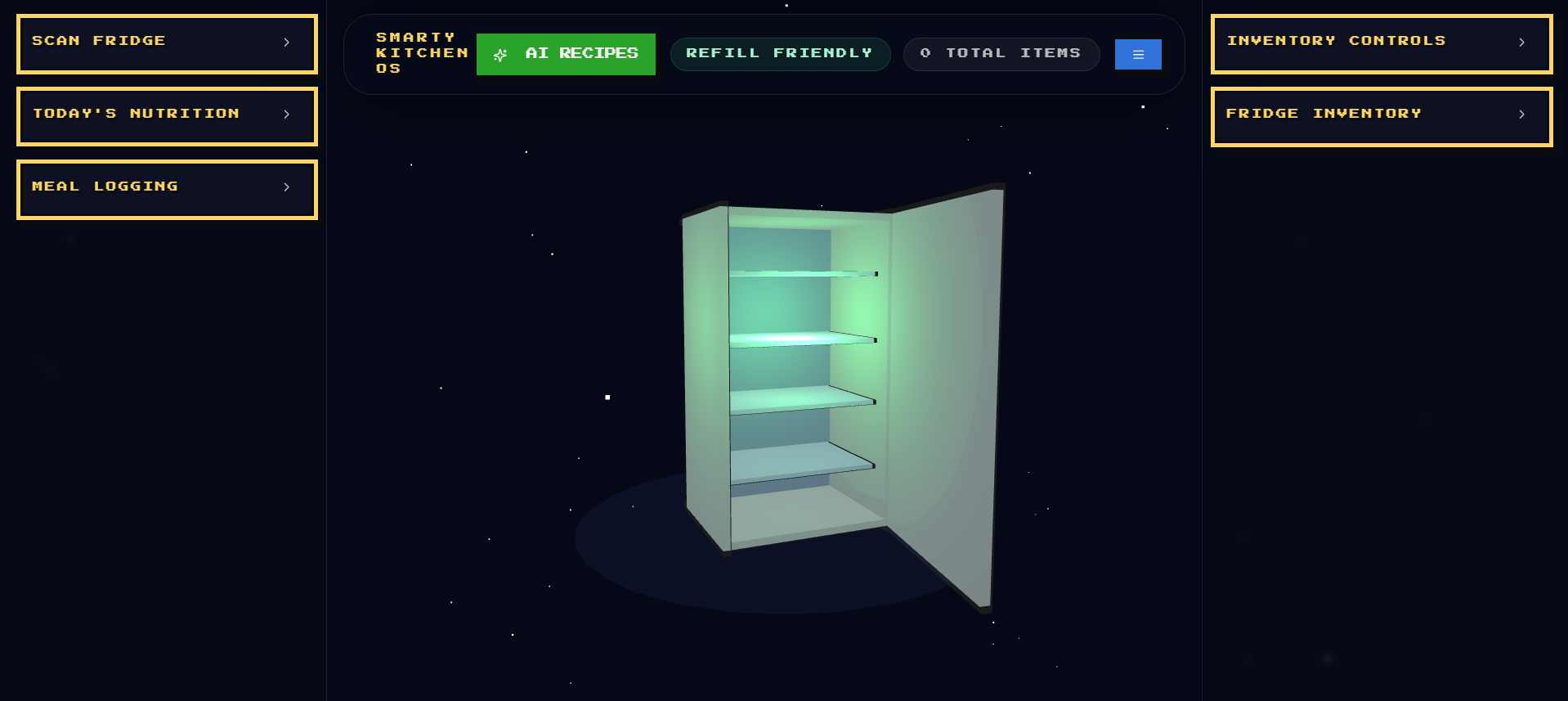
Empty fridge
-
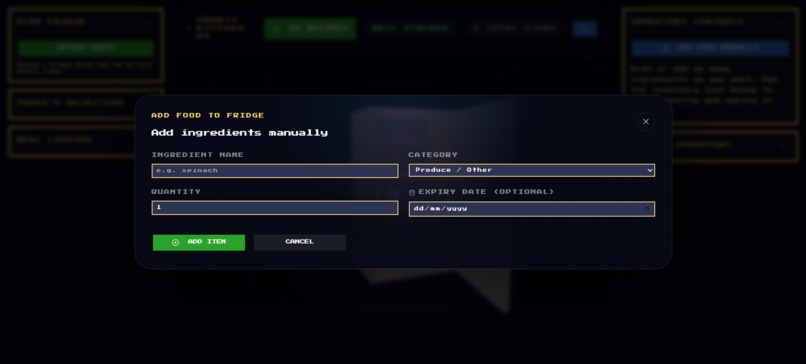
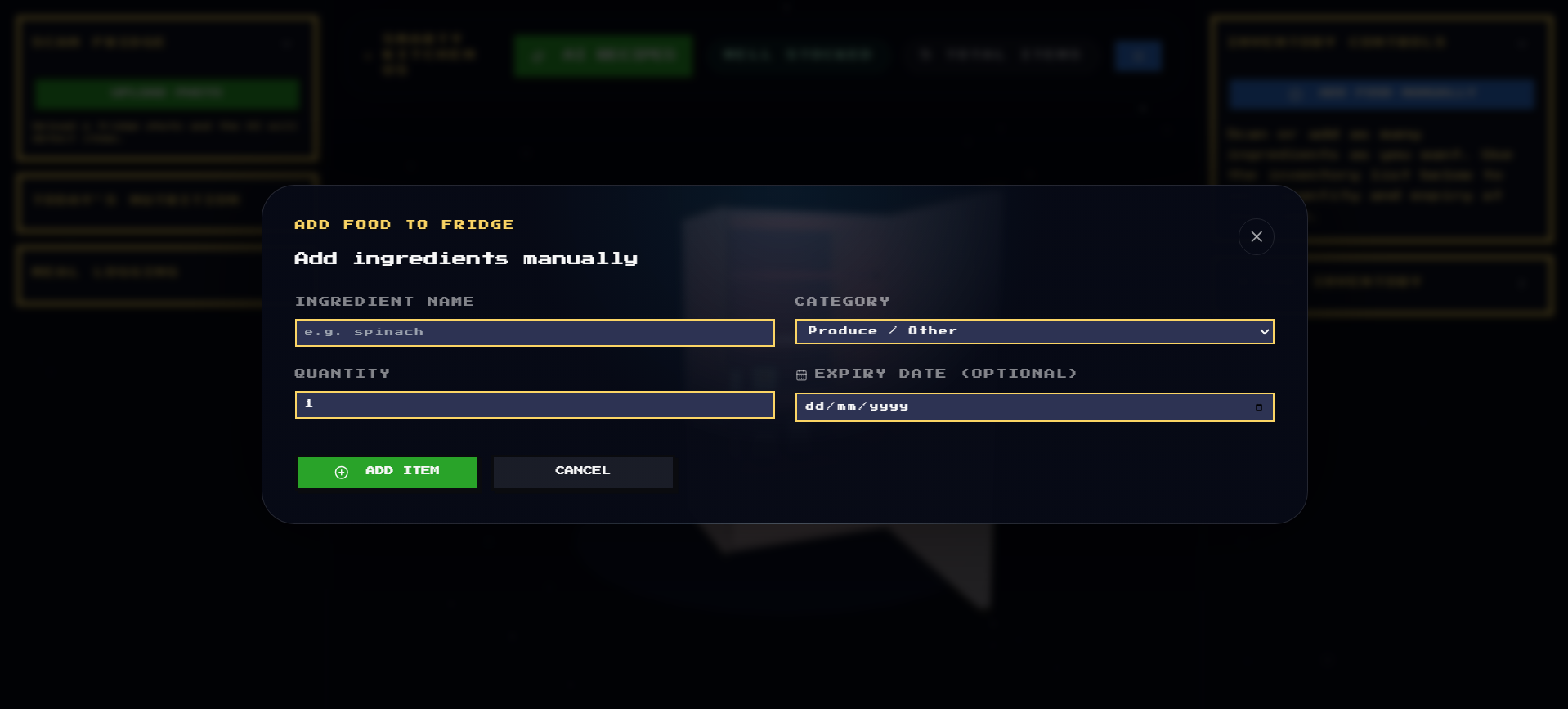
Add ingredient manually
-
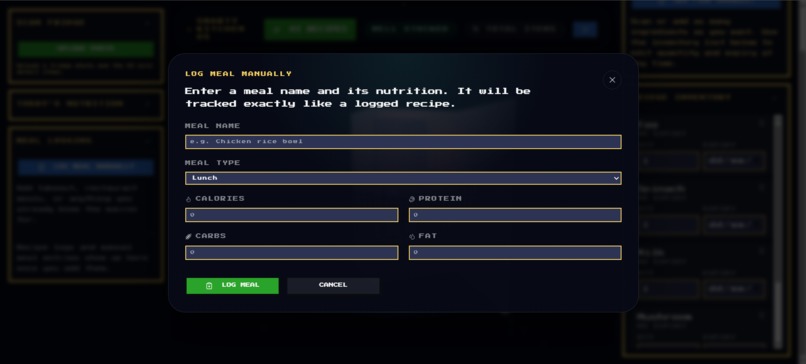
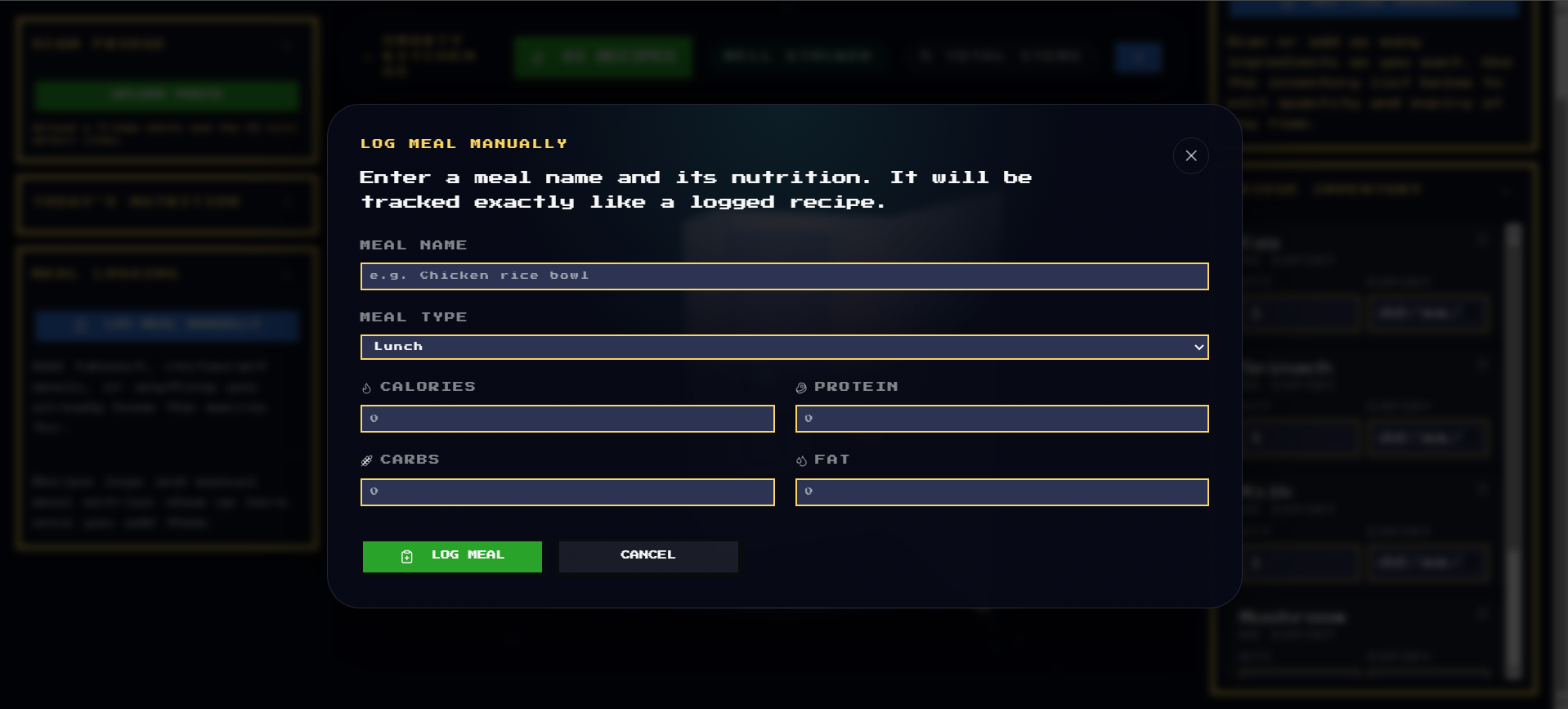
Add meal log manually
-
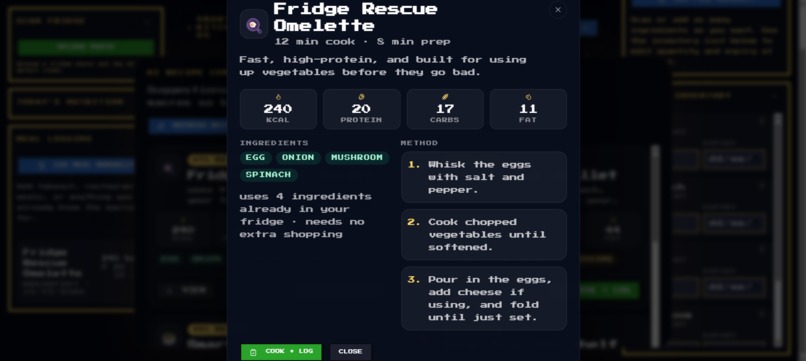
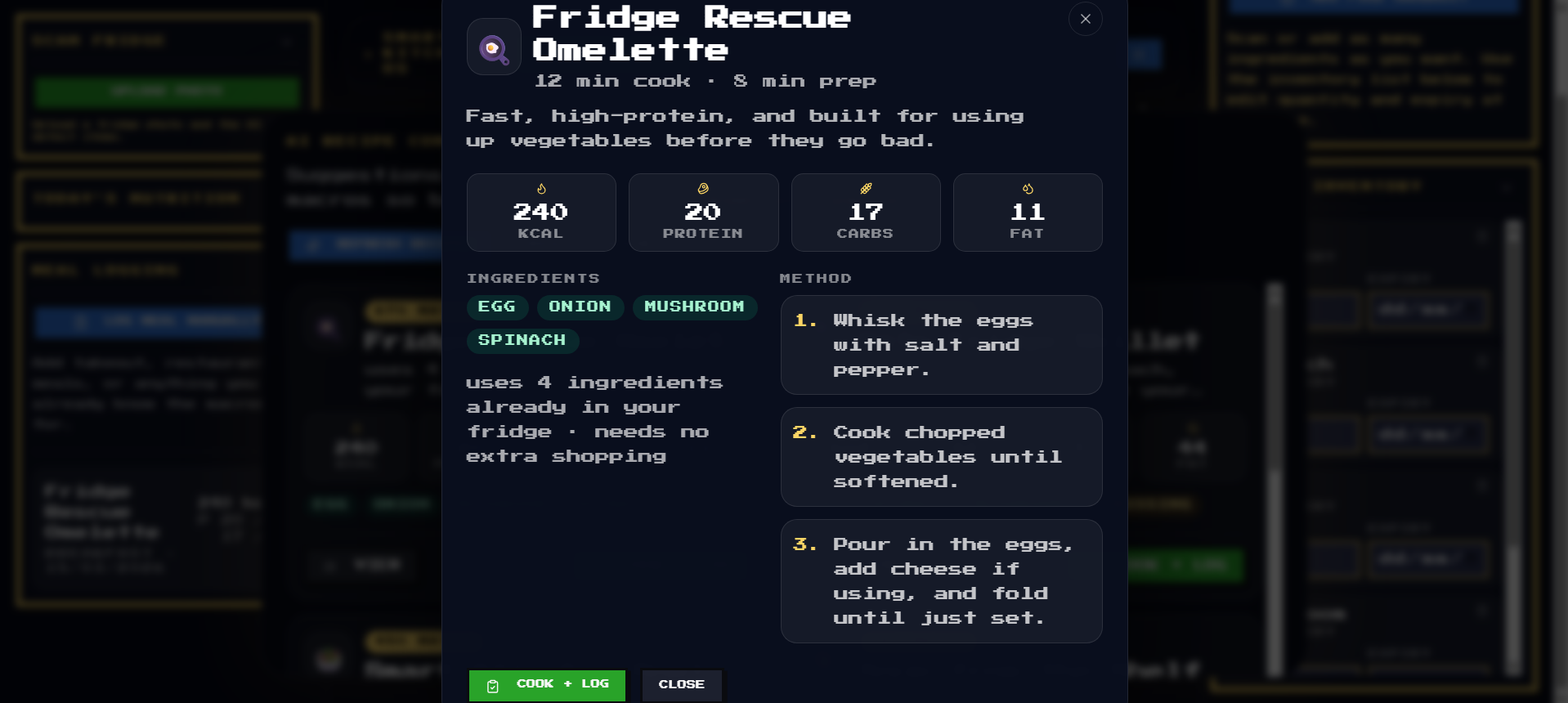
AI recipe details
-
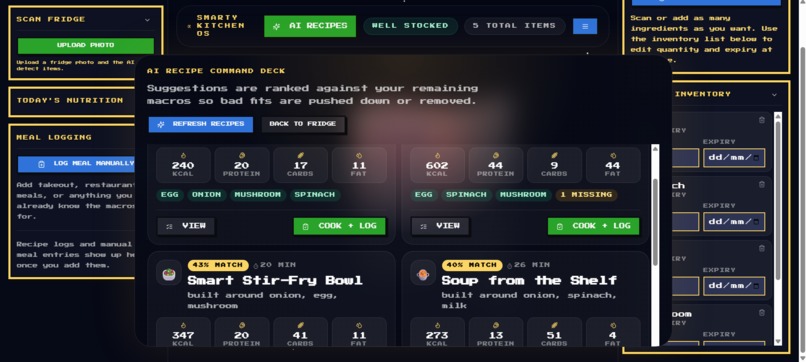
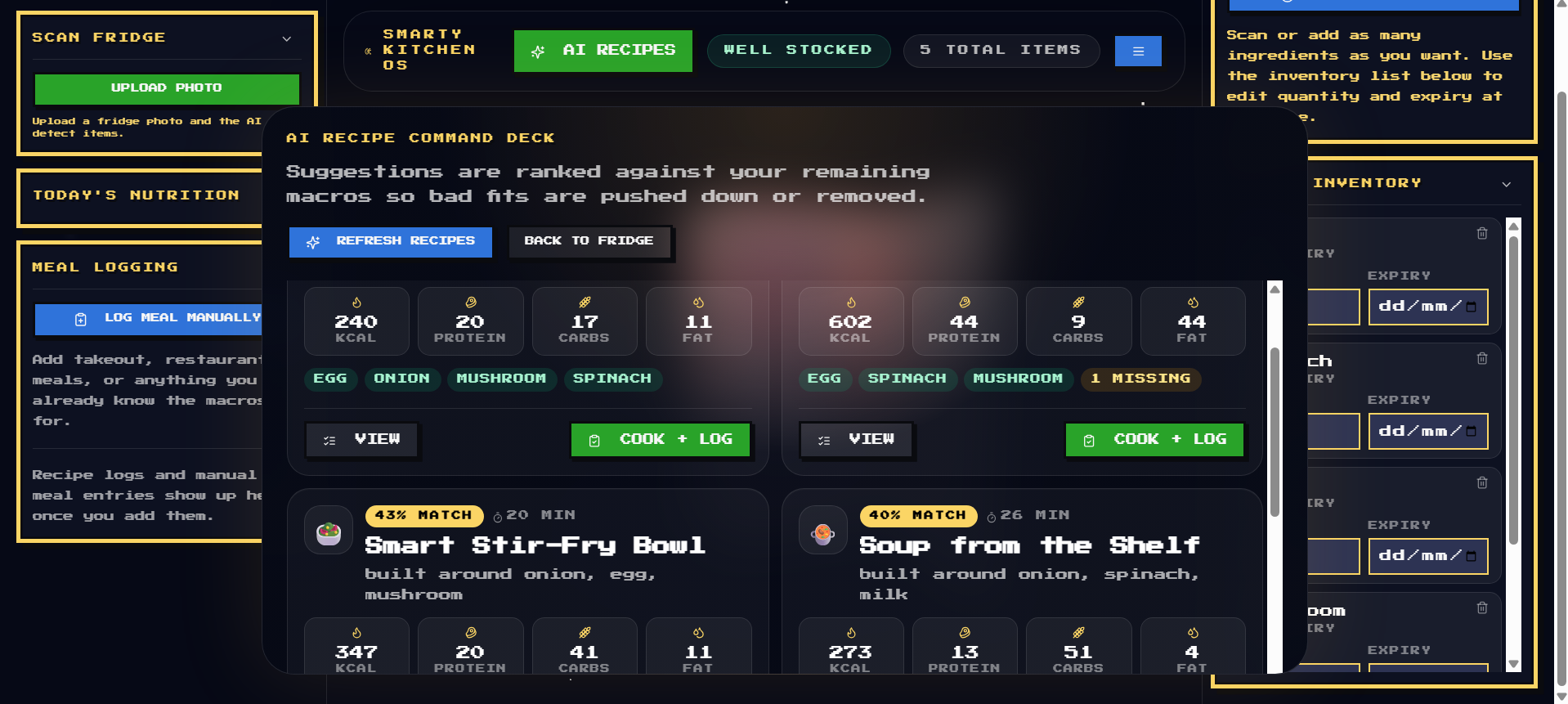
Suggested AI recipies
AI Smart Fridge Assistant
Problem
Many people buy groceries without a clear plan, forget what ingredients they already have, and struggle to decide what to cook.
This leads to:
- Food waste
- Unhealthy last-minute meals
- Time spent searching for recipes
Solution
Our AI Smart Fridge Assistant helps users decide what to cook using the ingredients they already have.
By analyzing a fridge image and generating recipes automatically, the system reduces decision fatigue and helps users make better use of their food.
Inspiration
As international students living away from home, managing food on a daily basis can be surprisingly difficult. It is common to buy groceries without a clear plan, forget what is already in the fridge, or struggle to decide what to cook with the ingredients available. This often leads to food waste, unhealthy eating habits, and unnecessary spending.
This project was inspired by a simple idea:
What if your fridge could actually help you decide what to cook?
Instead of manually checking ingredients or searching for recipes online, we wanted to create a system where a user could upload a photo of their fridge, allow AI to detect the ingredients, and instantly receive recipe suggestions based on what is already available.
Our goal was to build a tool that helps people cook smarter, eat healthier, and reduce food waste.
What it does
Our project is an AI-powered smart fridge assistant that helps users decide what to cook using the ingredients they already have.
Users can:
- Upload a photo of their fridge
- Automatically detect ingredients using AI
- Generate recipe suggestions based on available ingredients
- View nutrition insights and meal suggestions
- Explore their ingredients through a 3D virtual fridge interface
Recipes are generated dynamically using AI, meaning the suggestions adapt based on the actual ingredients detected in the fridge.
How we built it
This project combines computer vision, generative AI, and interactive visualization.
1. Fridge Image Scanning
Users upload an image of their fridge. A vision model analyzes the image and detects visible food items.
2. Ingredient Extraction
Detected objects are converted into a structured list of ingredients that can be used by the recipe generation system.
3. AI Recipe Generation
We use Google Gemini to generate recipe suggestions based on the ingredients detected in the fridge.
4. Interactive Fridge Interface
Using Three.js, we built a 3D fridge interface where detected ingredients appear visually on shelves.
5. Nutrition-Based Recommendation System
Recipes are ranked based on how well they match the ingredients available in the fridge and their nutritional balance.
We approximate a recipe match score using the following formula:
$$ Score = \frac{\text{Ingredients Available}}{\text{Total Ingredients Required}} \times 100 $$
This prioritizes recipes that make the best use of ingredients the user already has.
Challenges we ran into
Ingredient Detection Accuracy
Fridge images can be complex. Items may be partially hidden, inside containers, or poorly lit, which makes detection more difficult.
Structuring AI Outputs
Generative AI typically produces free-form text. We needed to carefully design prompts and parsing logic to convert the responses into structured recipe data.
Building the 3D Fridge
Creating a responsive 3D fridge using Three.js required balancing visual detail with performance so that the interface remained smooth and interactive.
System Integration
We had to connect several components together: image input, ingredient detection, recipe generation, and the user interface.
What we learned
Working on this project gave us practical experience with several technologies and concepts:
- Integrating generative AI into a real application
- Prompt engineering for structured outputs
- Building interactive 3D environments using Three.js
- Designing AI systems that address everyday problems
More broadly, the project showed how AI can be used not just for automation, but also to support healthier habits and reduce waste.
Future improvements
Due to time constraints during the hackathon, several features remain part of our future roadmap.
Potential improvements include:
- A gamified nutrition system with points and achievements
- An AI health coaching chatbot to analyze user eating habits
- Personalized nutrition analytics
- Smart grocery recommendations based on missing ingredients
- Machine learning models to learn user food preferences over time
These additions would evolve the project from a recipe assistant into a broader AI-powered nutrition companion.
Conclusion
This project explores how AI can improve everyday kitchen decisions. By combining image recognition, generative AI, and an interactive interface, we created a system that helps users make better use of the ingredients they already have.
Tools like this have the potential to reduce food waste, encourage healthier eating habits, and simplify meal planning for students and busy individuals.
Built With
- cursor
- gemini
- github
- javascript
- linode
- lovable
- next
- ubuntu
- vite
- vs
- wsl


Log in or sign up for Devpost to join the conversation.