-
-
Title
-
Drawings, sketches, CAD design
-
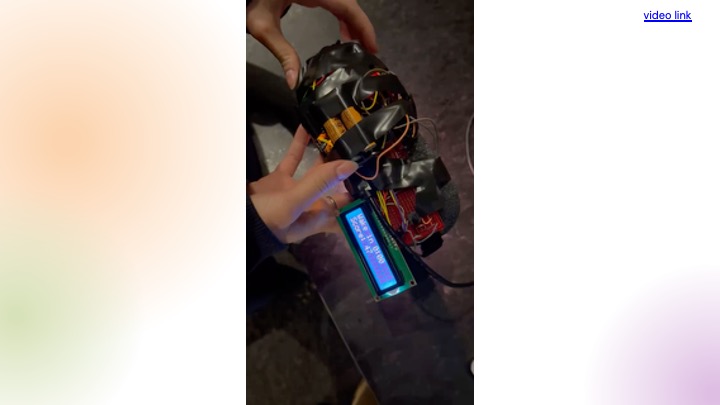
Demo Video
-
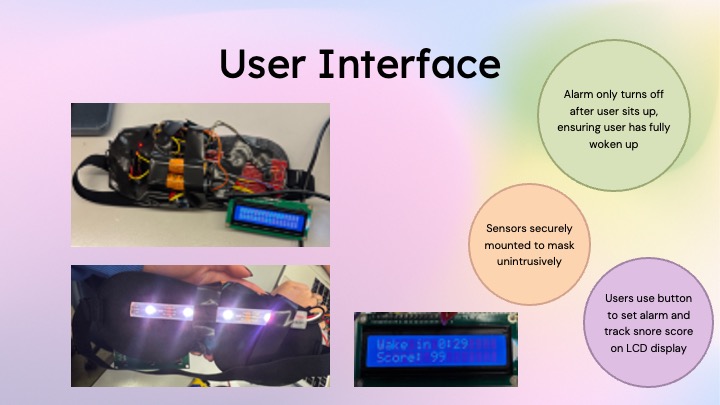
User interface
-
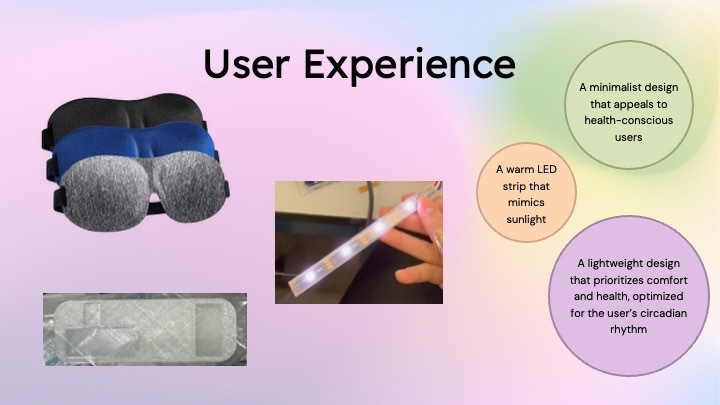
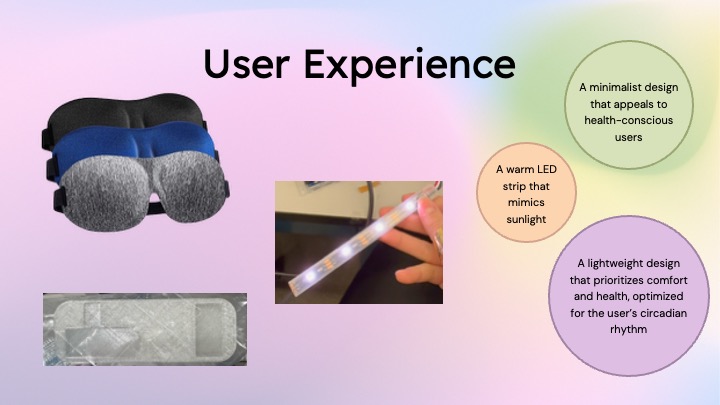
User experience
-
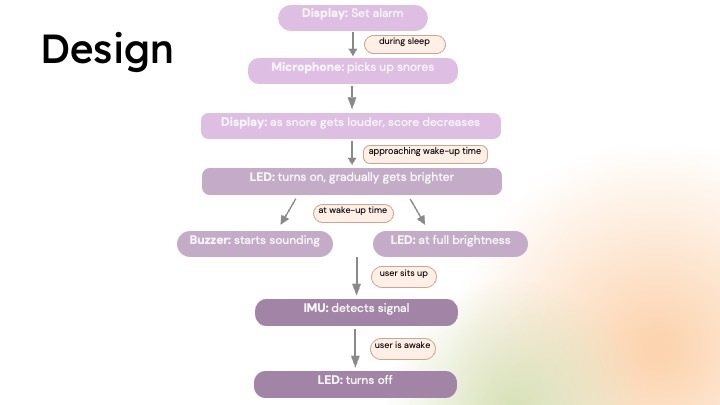
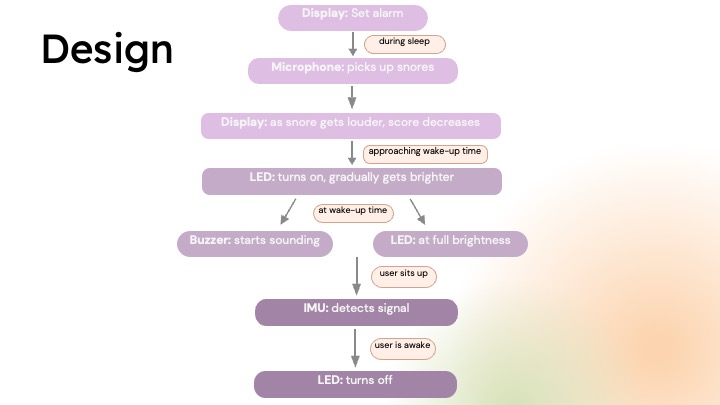
Design flow
-
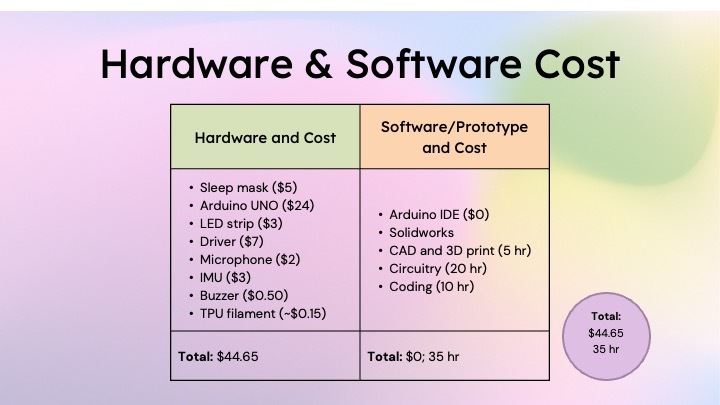
Hardware, Software, and Prototyping Cost


Inspiration
We are health conscious students who want to improve their sleep quality.
What it does
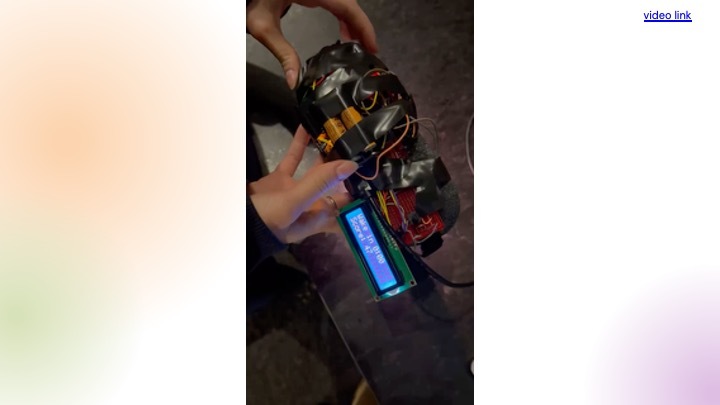
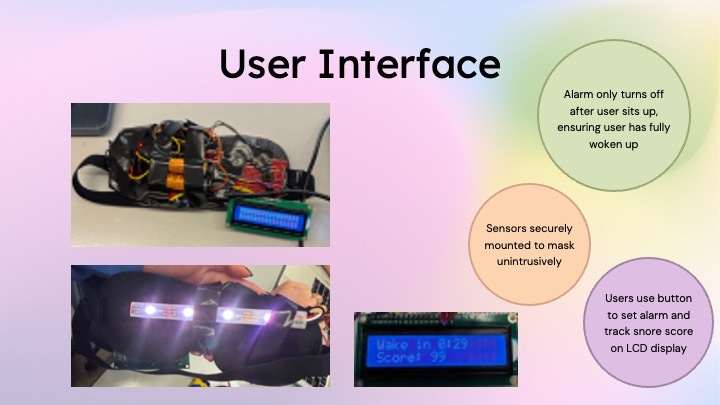
Wakes the user up with LEDs that mimic sunlight. It also calculates sleep score by using a baseline so the user can also track how much they are snoring.
How we built it
We built this with an Arduino UNO R4 connected to a circuit.
Challenges we ran into
The first challenge we faced was connecting the device to the IoT network. We first aimed to build a Firebase app, but struggled, so we tried Blynk, which lacked the graphs we needed, then Arduino Cloud. After finally getting an LED to work, the whole circuit required a premium plan. A firmware update broke the Arduino, so we switched to a visual display, which works well.
Another challenge we faced was related to the design. To optimize the design and reduce its size, the initial goal was to solder the circuit board onto a protoboard; however, that proved frustrating. After soldering the entire circuit board, the Arduino would not turn on. After switching the Arduino to a new one, the circuit would turn on and off, leading us to conclude that the soldering was creating an unwanted connection. For practical reasons, the design was kept using a breadboard and insulating tape.
We also spent hours working with accelerometers. There must have been an issue with the library we were using. But we also figured out that we had broken two accelerometers by overloading the circuit with a 9V battery. This took a lot of testing to figure out; we just needed new ones and to not use an external power source.
Accomplishments that we're proud of
We're proud we constructed a circuit that integrates various sensors while creating a design that optimizes comfort for the user.
What we learned
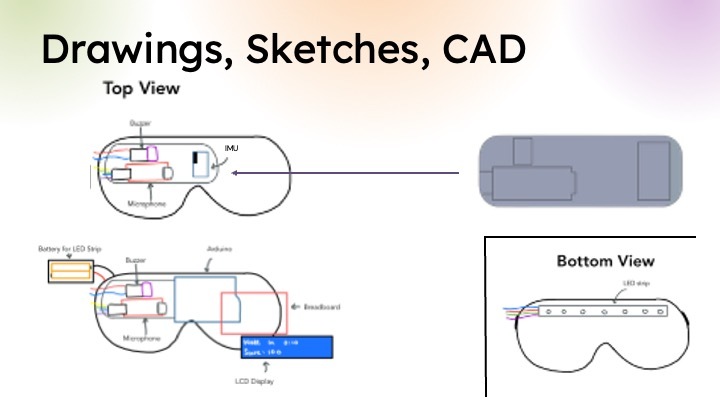
We learned how to implement circuitry with various sensors, including an IMU, a buzzer, and a microphone. We also learned how to install an LED strip with a driver to make the light dimmer.
We also learned about troubleshooting and how to debug a circuit when it is not working. For example, we had to check all the wiring, replace any broken wires, check the code in various ways, check parts separately, and replace any that were broken or overloaded. All of these problem-solving skills are highly adaptable if we ever have to work with circuitry again.
What's next for SmartWake
SmartWake can integrate a new design as well as IoT and an app in order to optimize user experience and comfort.

Log in or sign up for Devpost to join the conversation.