-
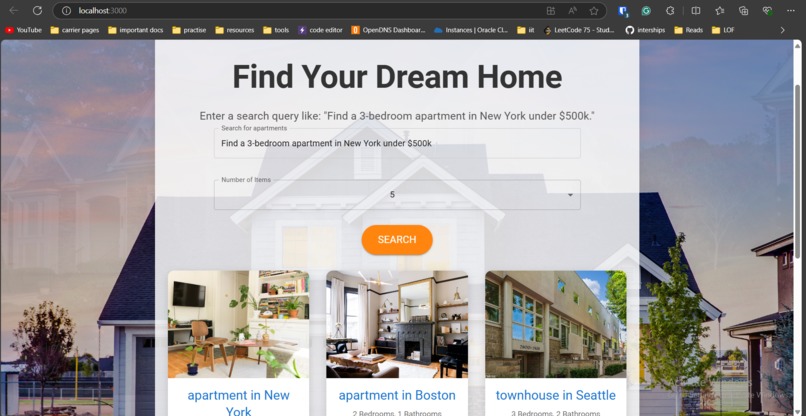
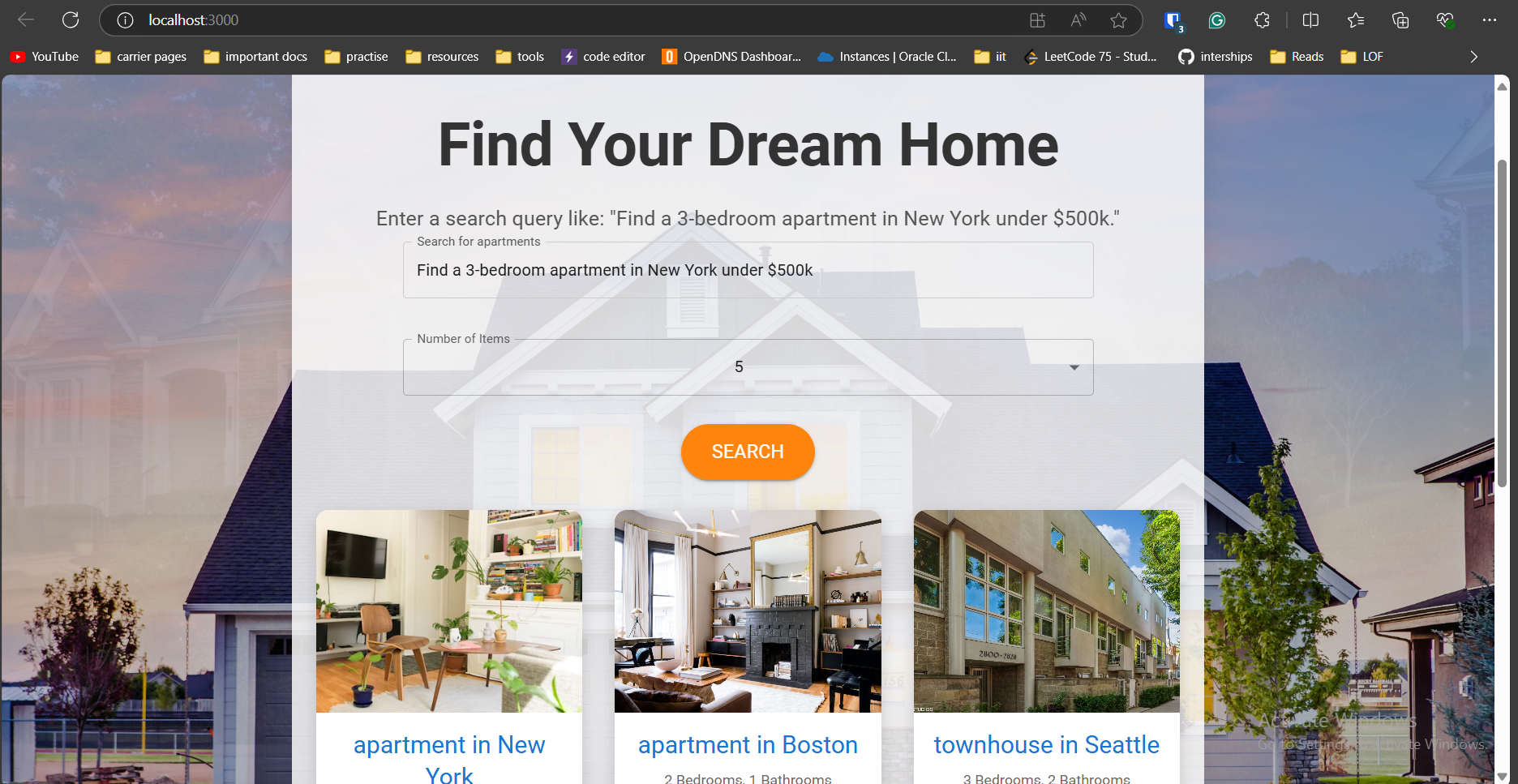
App dashboard
Inspiration
The idea for SmartSearch came from the need to simplify the property search process by making it more intuitive and user-friendly. Traditional filters for location, price, and amenities were often too rigid and time-consuming, leading to frustration. We wanted to create a solution that would allow users to express their search preferences in natural language. Additionally, by incorporating a similarity-based suggestion engine, users can discover properties even if their criteria are loosely defined, making the search experience both comprehensive and flexible.
What it does
SmartSearch revolutionizes property searches by allowing users to input search criteria in natural language. Whether typing or speaking their requirements, users can describe what they're looking for, and SmartSearch converts these inputs into precise SQL queries to retrieve matching listings. Beyond direct matching, the new similarity-based feature provides suggestions based on how closely properties match the intent or features described in the query, allowing for more exploratory and flexible searches.
How we built it
We started by studying how users interact with existing property search engines and the limitations of filter-based systems. Using Azure AI’s NLP services, we trained models on real estate data to understand property-related language, capturing specific search parameters such as "3-bedroom condo near downtown" or "garden apartment under $1500." To complement this, we developed a similarity-based search engine that identifies properties related to user input based on key features, even when there’s no exact match. The pipeline integrates natural language processing with SQL query generation, ensuring both precision and flexibility in retrieving results.
Challenges we ran into
The biggest challenge was creating a natural language model that could handle diverse query inputs while maintaining accuracy. Users often phrase their requirements differently, use incomplete phrases, or introduce regional variations, so our model needed to be robust and flexible. Balancing accuracy and performance in both direct queries and similarity-based suggestions was also difficult. Another challenge was optimizing the similarity-based search to ensure it provides relevant results, even when the user input is ambiguous or loosely defined.
Accomplishments that we're proud of
We’re proud of how quickly we adapted to Azure AI and natural language processing. Despite limited prior experience, we built a working prototype early on that could process both direct property searches and similarity-based suggestions. The addition of the similarity feature marked a major leap in enhancing user experience, giving users more discovery-based search options. Our team's strong collaboration was essential, allowing us to effectively combine natural language processing, SQL query generation, and innovative search approaches in a seamless manner.
What we learned
Through the development of SmartSearch, we gained extensive experience in integrating NLP and machine learning into real-world applications. We learned to work with Azure AI's NLP services and how to build machine learning models that can interpret diverse user inputs. The hackathon taught us the value of iterative development, rapid prototyping, and flexibility in adapting to new technologies. The project also reinforced the importance of user-centered design, particularly when balancing technical complexity with the need for simplicity and accessibility in user interfaces. Additionally, we explored image recognition for future feature enhancements, expanding our knowledge in combining text and image-based searches.
What's next for SmartSearch
Our future plans include integrating image-based search, allowing users to upload photos of properties or design elements they like, and using image recognition to match listings. The similarity-based feature will also be expanded to include visual comparisons, recommending properties based on aesthetic and functional resemblances. We also aim to further improve the AI’s ability to handle more abstract or vague queries like "affordable cozy home," where it would interpret terms like "affordable" and "cozy" based on user preferences and regional data. Finally, we plan to implement voice search, making SmartSearch even more accessible and user-friendly.


Log in or sign up for Devpost to join the conversation.