-
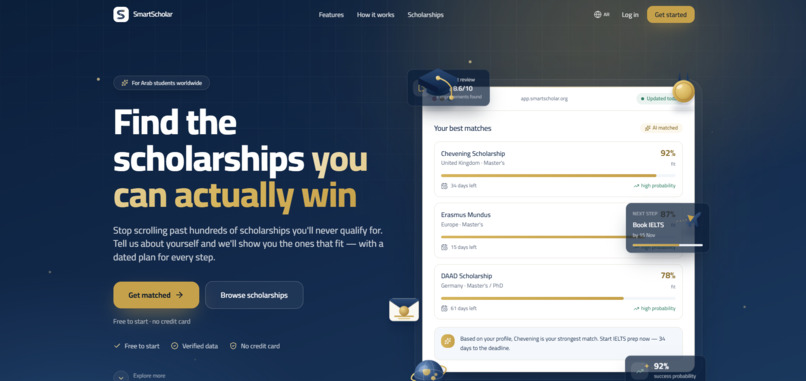
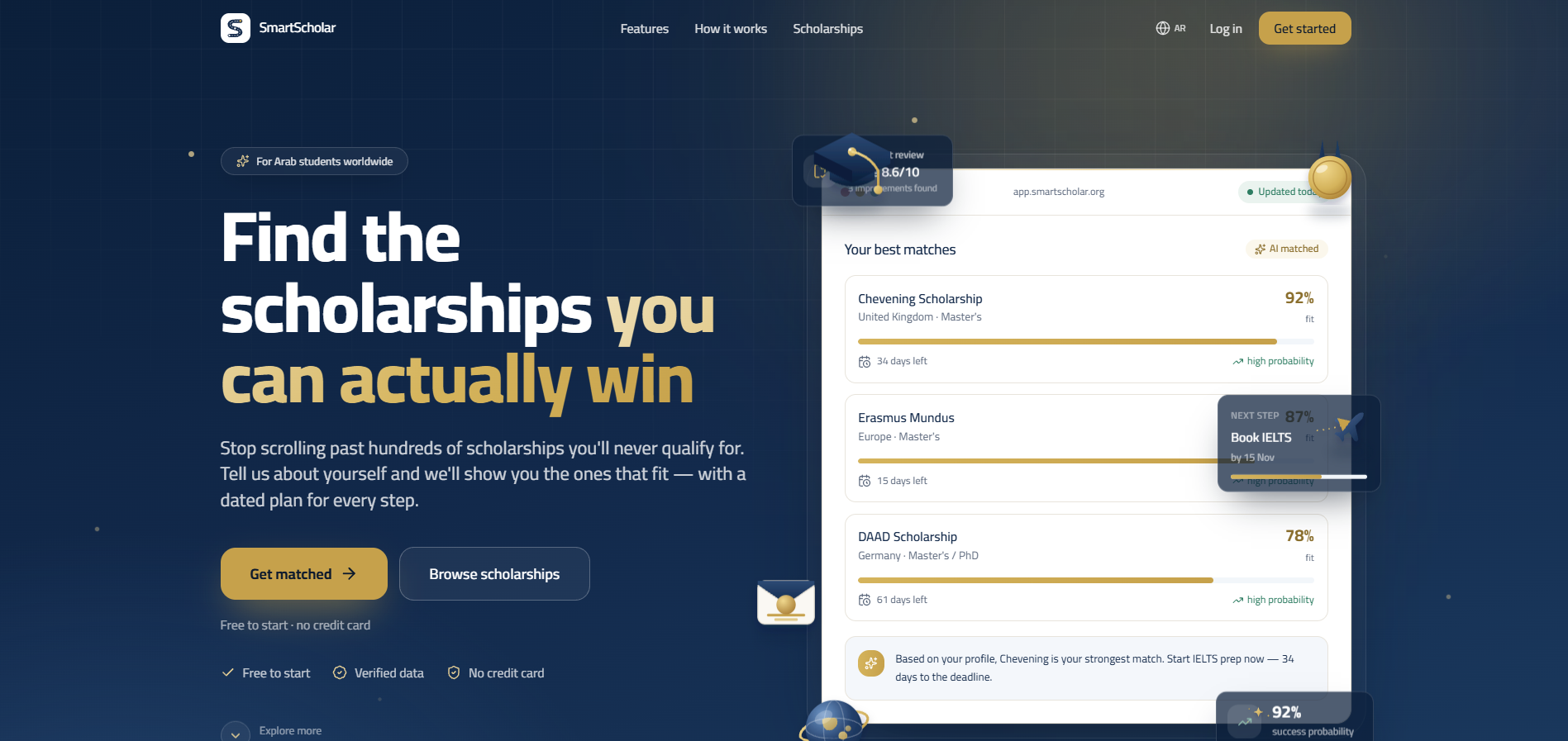
Main page
-
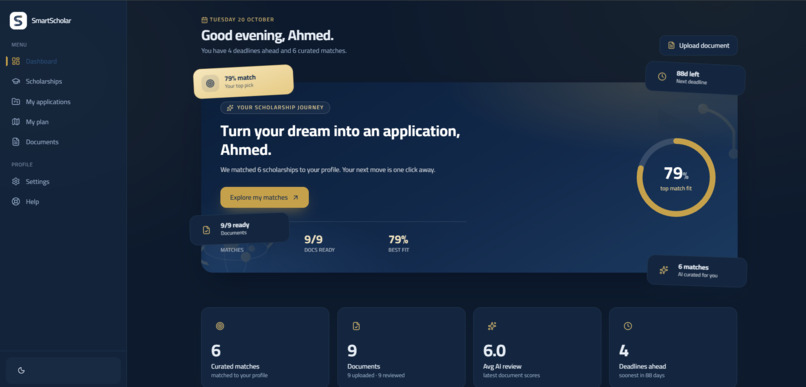
Scholarship matching
-
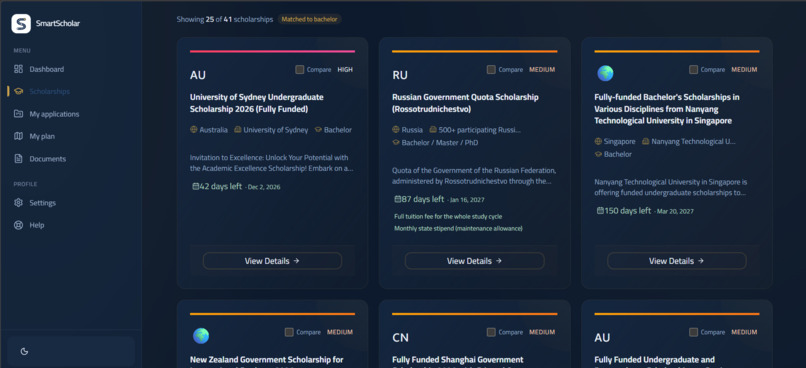
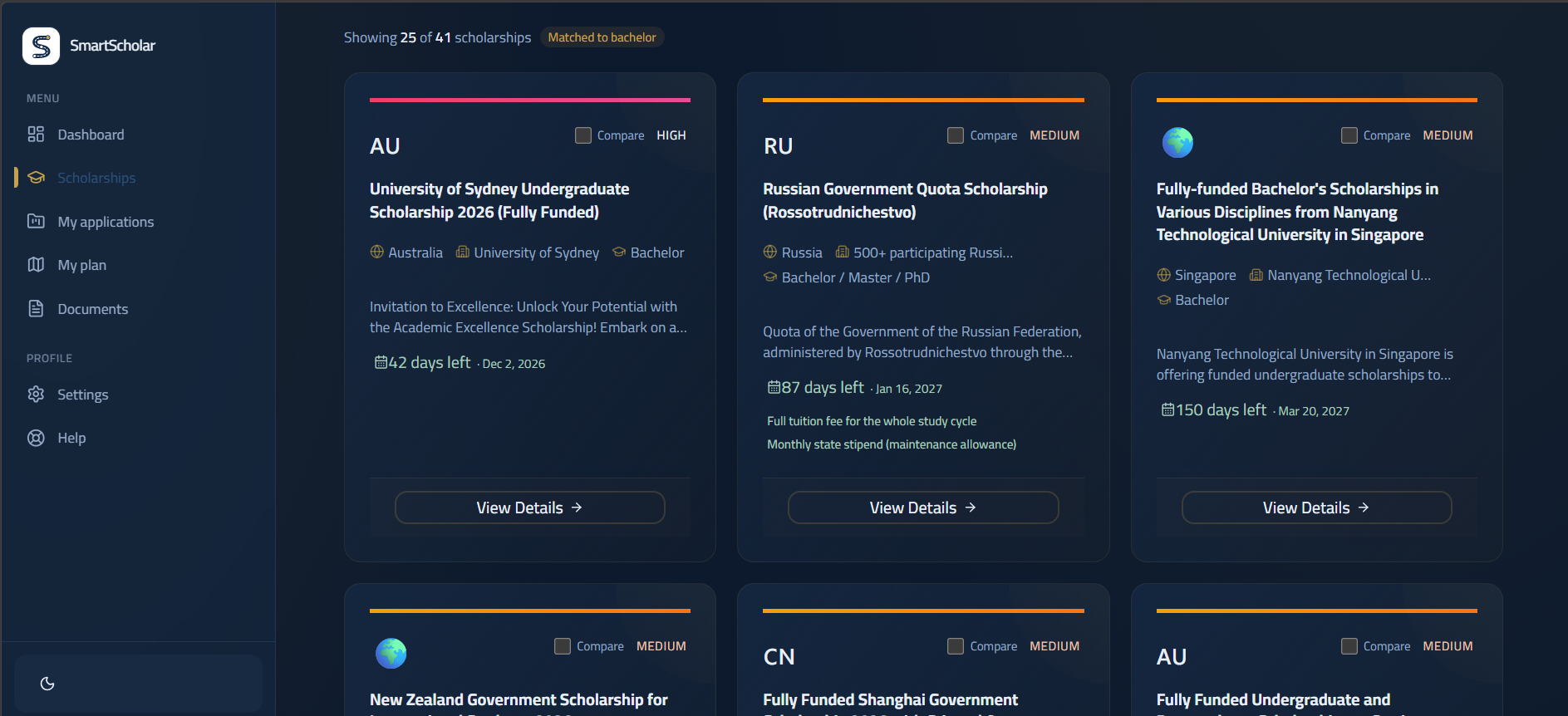
Scholarship search
-
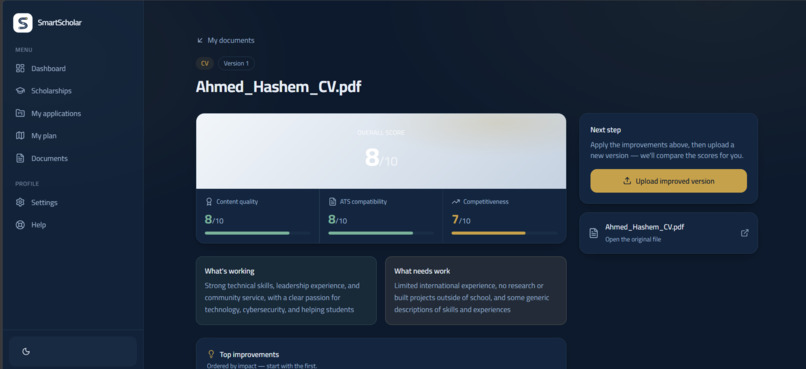
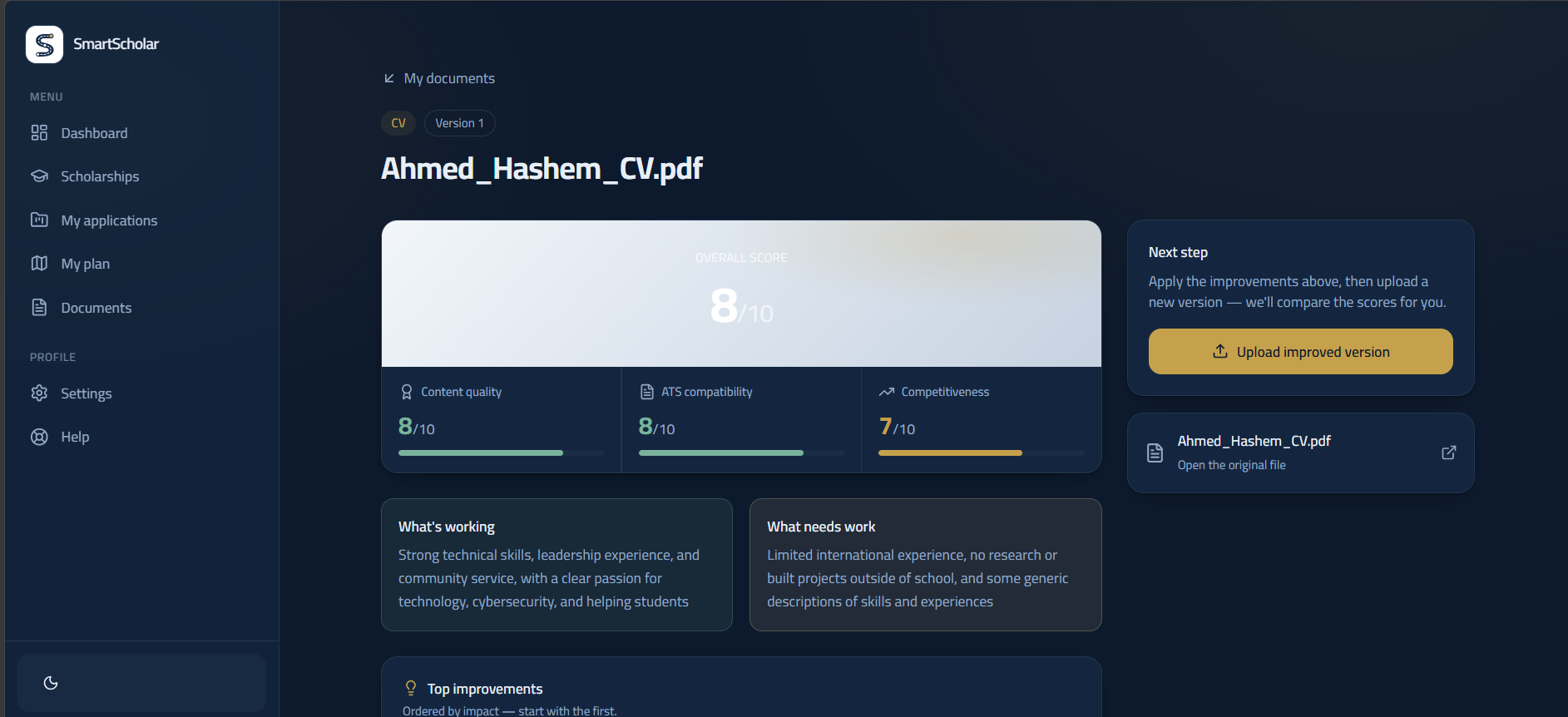
AI Document review
Inspiration
A student can be qualified for a life-changing scholarship and still miss it simply because they never found it, misunderstood the requirements, or didn't know how to prepare a strong application. I think that's a problem worth solving.
That's what inspired me to build SmartScholar. I wanted to make scholarship opportunities easier to find, especially for Arab and MENA students who often have to search across multiple websites just to understand what they're eligible for. Instead of building another website that only lists scholarships, I wanted to create something that supports students throughout the entire application process.
What it does
SmartScholar is a scholarship discovery and application support platform that helps students find opportunities that fit their profiles and prepare stronger applications.
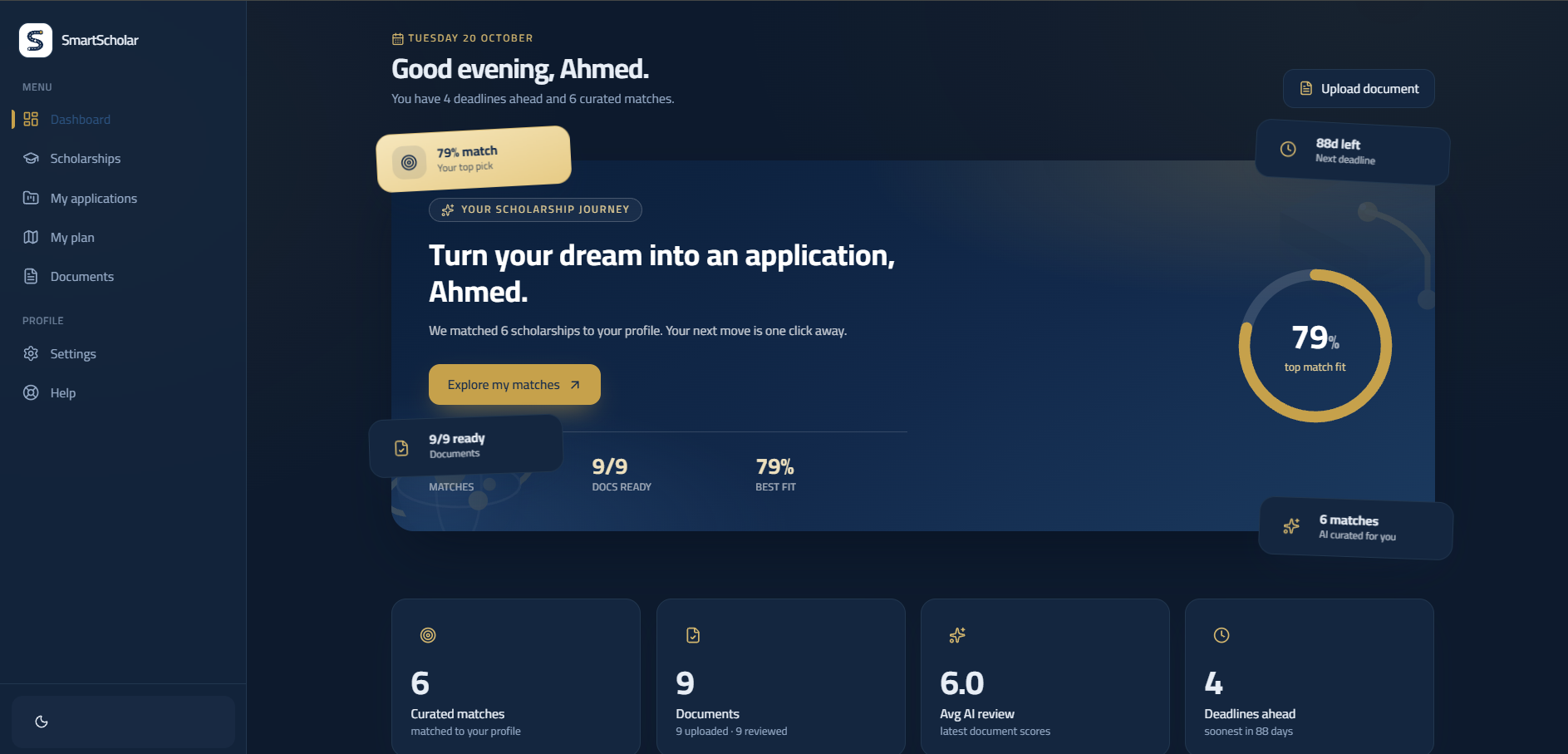
Students can discover scholarships based on their personal information and academic background, understand eligibility requirements, get AI-assisted feedback on their CVs and statements of purpose, and keep track of deadlines and applications.
The goal is to bring the most important parts of scholarship hunting into one place and make the process less confusing for students who don't have access to expensive counselors or professional guidance.
How we built it
I built SmartScholar by learning as I went, using AI-assisted development tools to help me write, understand, and debug code. I worked on the frontend, backend, database, and deployment, gradually turning the idea into a working platform.
Beyond the interface, I had to work on how scholarship information is structured, how eligibility requirements are represented, and how the different parts of the application communicate with each other. I also tested and refined the code as the project grew.
I didn't approach AI as a replacement for understanding the project. I used it to move faster, explore solutions, and troubleshoot problems, while still having to test the results and make decisions about what actually belonged in the product.
Challenges we ran into
One of our biggest challenges was data quality. A scholarship listing is not very useful if it has missing deadlines, incomplete eligibility requirements, or outdated information. Making the platform useful meant thinking beyond collecting scholarships and focusing on how students would actually use that information to make decisions.
We also faced technical issues with database consistency, deployments, and AI integrations. Some features behaved differently locally than they did in production, which meant investigating errors that weren't always obvious at first.
Another challenge was balancing development with school and other commitments. With limited time and resources, I had to prioritize the problems that mattered most instead of trying to build everything at once.
Accomplishments that we're proud of
One of our biggest accomplishments was turning an idea into a working platform while learning many of the technical skills needed along the way.
We also validated the idea through a survey of 44 students: 91% expressed interest in SmartScholar, 88% wanted AI application coaching, and 55% said they would be willing to pay for it.
More importantly, two major Arabic scholarship organizations have agreed to collaborate with SmartScholar, with a combined reach of more than 2,000 students. For me, this is an important step toward taking the project beyond a website and getting it in front of the students it was designed to help.
These are early milestones, but they show that the problem is worth working on and that there is potential to build something useful around it.
What we learned
I learned that building a product is very different from simply making an idea work once. A feature can look finished and still have problems with its data, reliability, or actual usefulness to users.
I also learned how to approach debugging more systematically, think about the product from the user's perspective, and use AI-assisted development without blindly trusting generated code. Moving quickly is useful, but understanding what you're building and checking whether it works correctly are just as important.
Most importantly, I learned that validating a problem with real people matters more than assuming that a good idea will automatically become a good product.
What's next for SmartScholar
Our next priority is making SmartScholar production-ready. We already have a working platform and early validation, but turning it into something students can reliably use requires more than adding new features.
We're focusing on improving scholarship data quality, fixing remaining technical issues, strengthening the backend and AI integrations, and making sure the platform handles errors gracefully. We also want to improve performance, security, and reliability, then test the complete application flow before opening it up to more users.
With two scholarship organizations agreeing to collaborate with us and a combined reach of more than 2,000 students, we need to make sure the platform is ready to deliver a good experience when real students start using it.
The goal now is simple: move SmartScholar from a working MVP to a stable, trustworthy product that can handle real users, real scholarship data, and real applications without falling apart when it matters most.
Built With
- ai
- gemini
- generative-ai
- groq
- next.js
- postgresql
- prisma
- react
- supabase
- typescript
- vercel

Log in or sign up for Devpost to join the conversation.