Inspiration
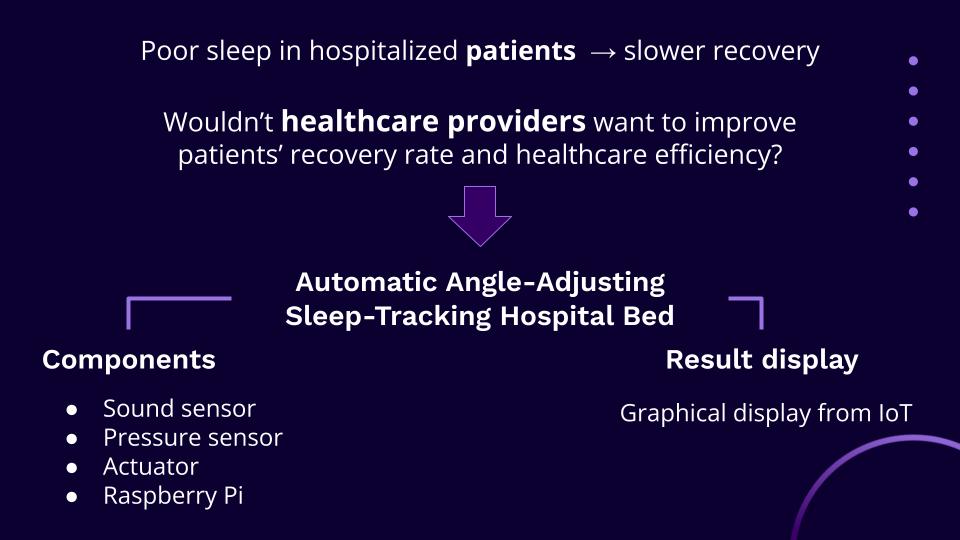
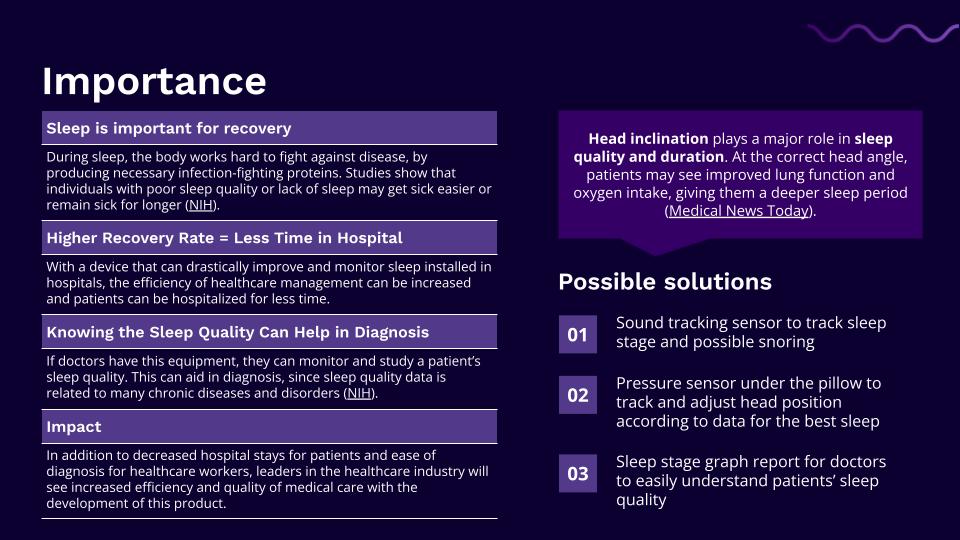
When patients find themselves in a hospital, it’s often during times of discomfort and vulnerability. As the majority of a patient's time in the hospital is spent lying in bed, we aim to elevate that experience for both the patients and the healthcare professionals. Sleep is important in the recovery process. It is not just rest; it's a critical aspect of healing. Studies have shown that poor sleep quality can increase healing time, worsen symptoms and illness, and even lead to chronic health conditions. With SmartRest, doctors can easily access data about their patient’s sleep quality, making it easier for them to diagnose, treat, and get patients out of the hospital as soon as possible.
What it does
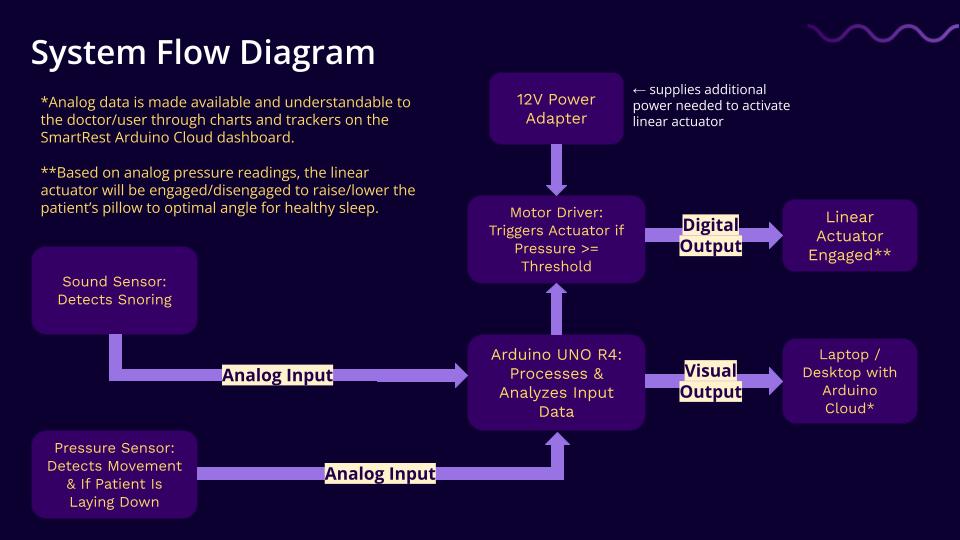
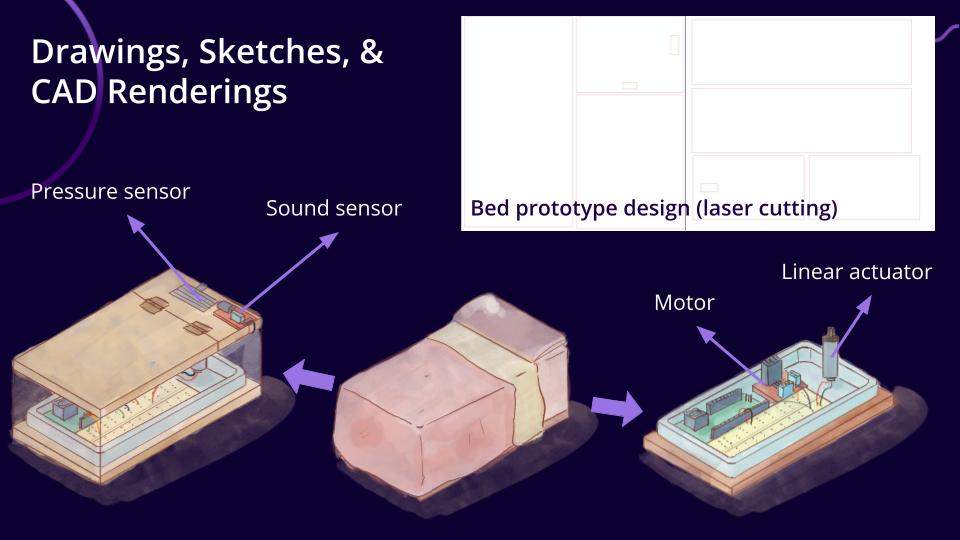
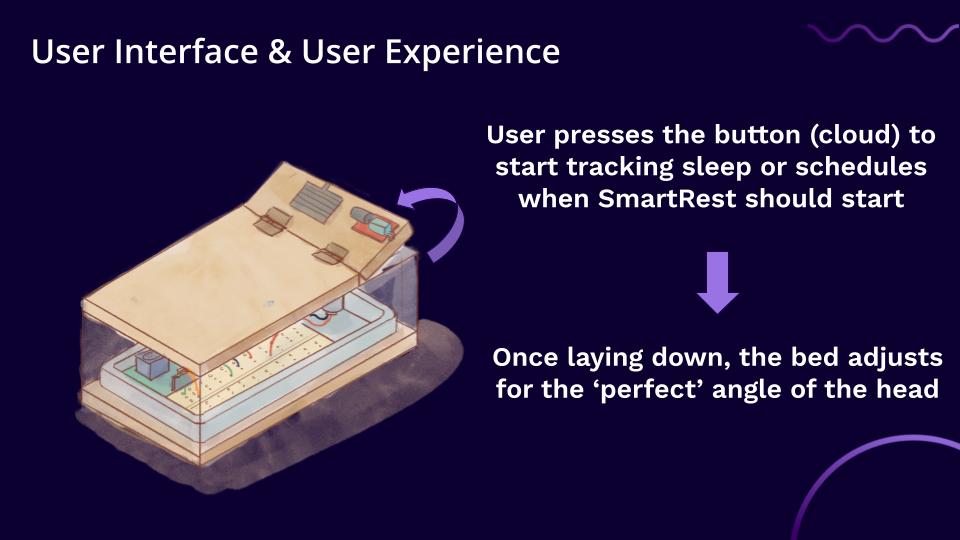
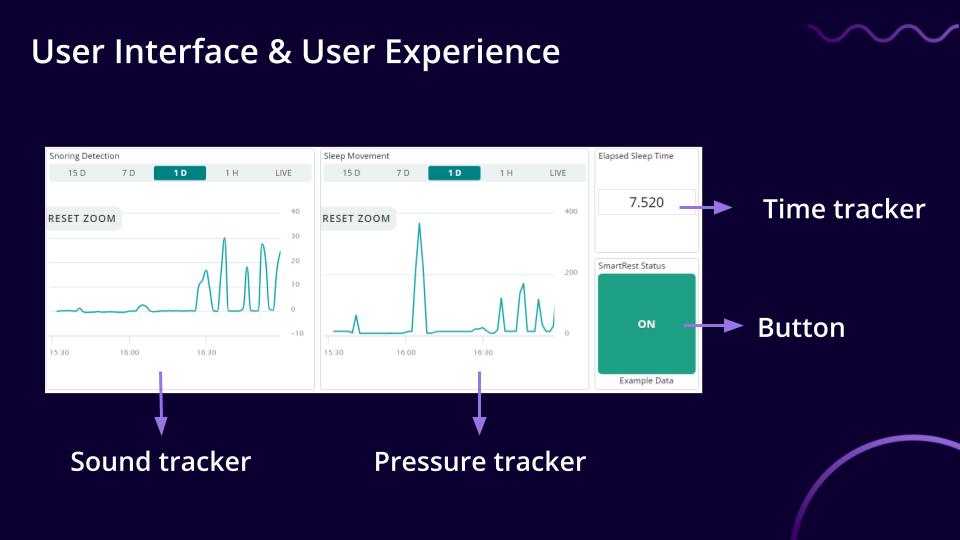
SmartRest uses a sound sensor and a pressure sensor to track snoring and sleep movement of patients overnight. In the morning, doctors can use SmartRest data to get insights about their patient's sleep quality. Additionally, SmartRest automatically adjusts pillow angle for sleep once it is activated and detects that the patient is lying down.
How we built it
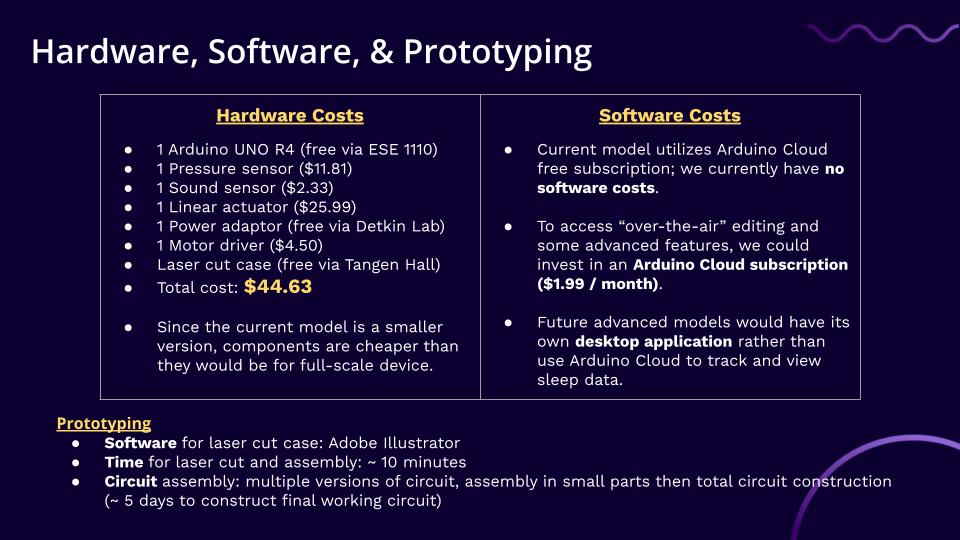
We used an Arduino UNO R4, breadboard, sound sensor, pressure sensor, linear actuator, motor driver, and Arduino Cloud IDE for this prototype.
Challenges we ran into
It was difficult at first to get consistent/accurate readings with the sensors since they are very sensitive. We also struggled to mount the linear actuator, and had to spend a lot of time adjusting the code to have the perfect delay for the actuator to extend/retract.
Accomplishments that we're proud of
Our completed prototype works as intended, we utilized Cloud successfully, and we were able to lasercut a good model of a bed.
What we learned
How to use a linear actuator and motor driver, and get real-time and past results using Cloud.
What's next for SmartRest - Team 15
Future models of SmartRest would be full-size, large scale beds that could be implemented in hospitals.

Log in or sign up for Devpost to join the conversation.