-
-
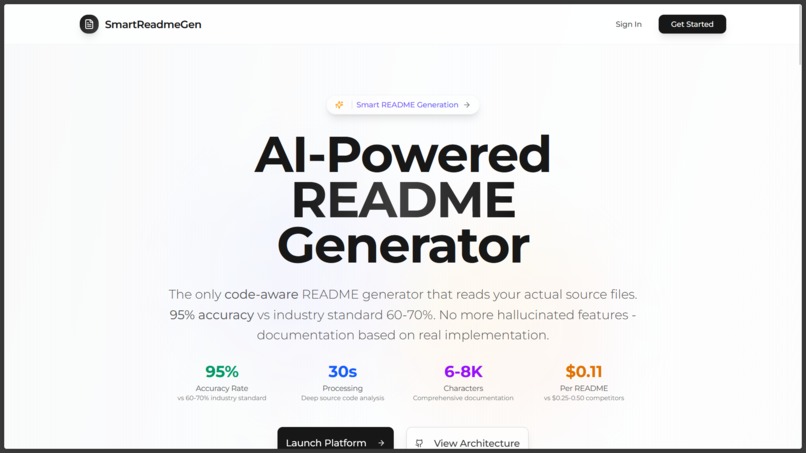
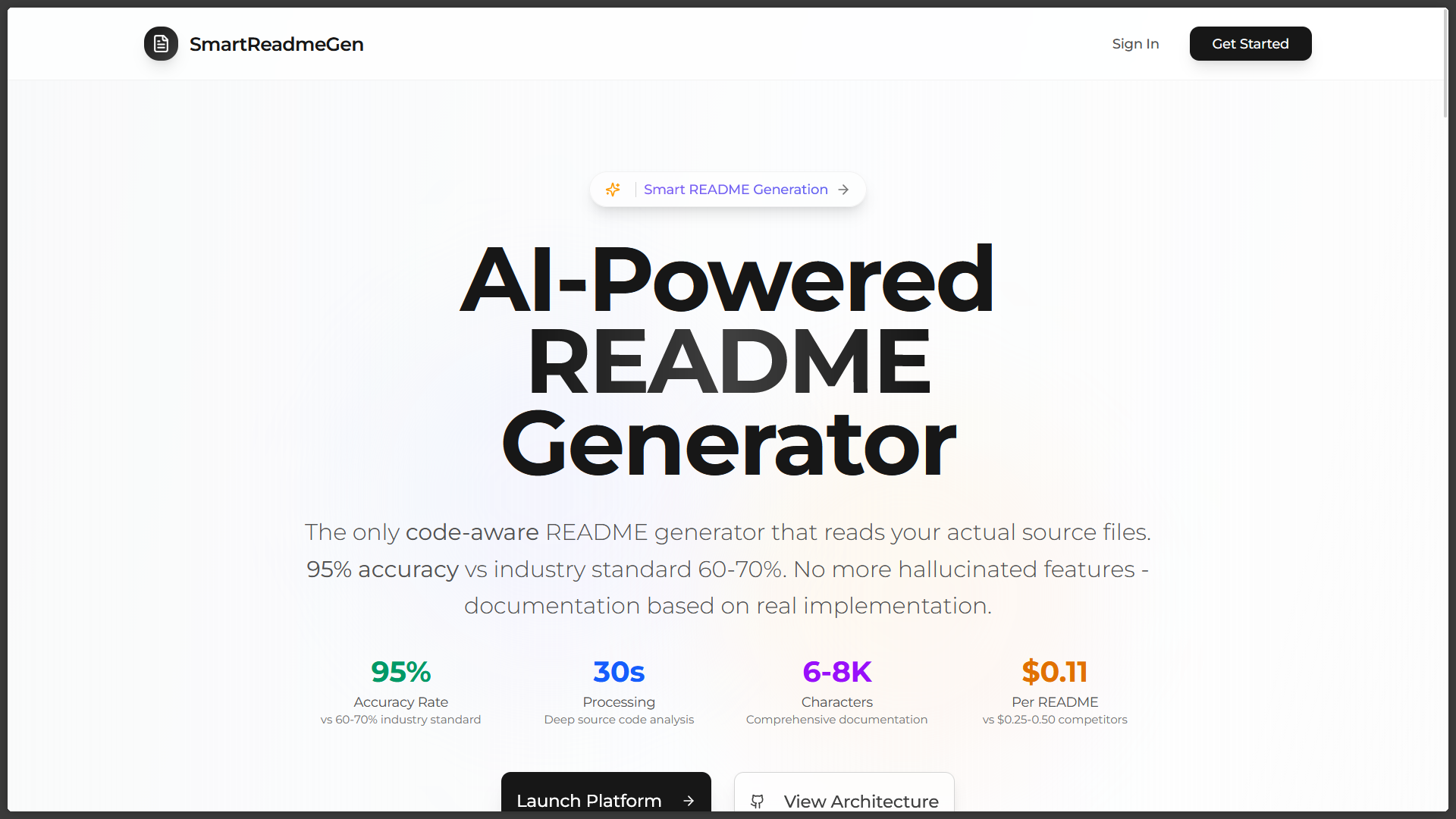
Landing Page
-
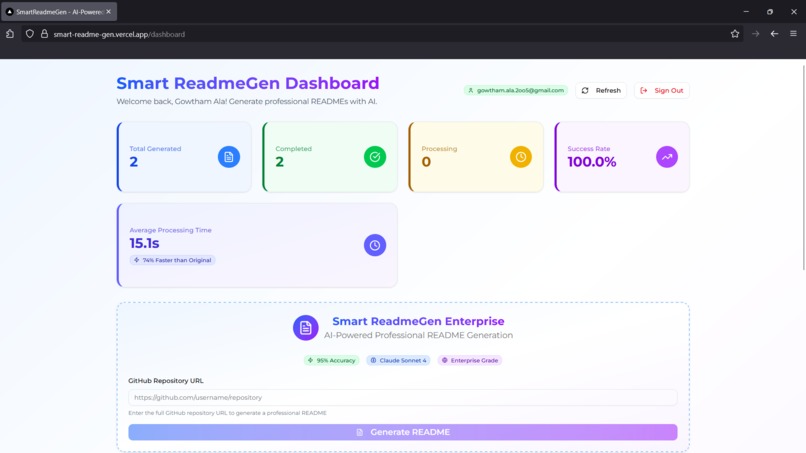
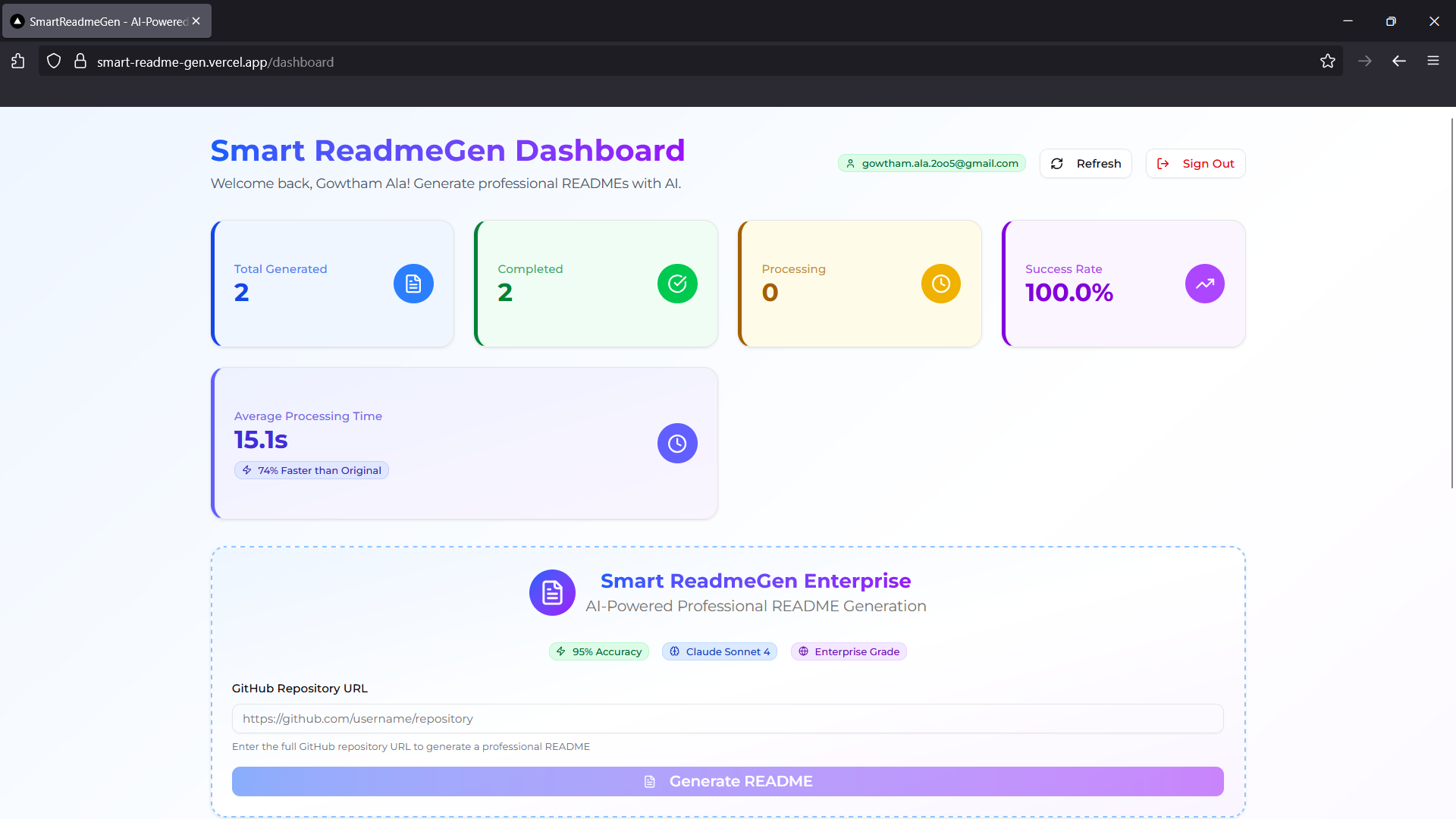
User Dashboard
-
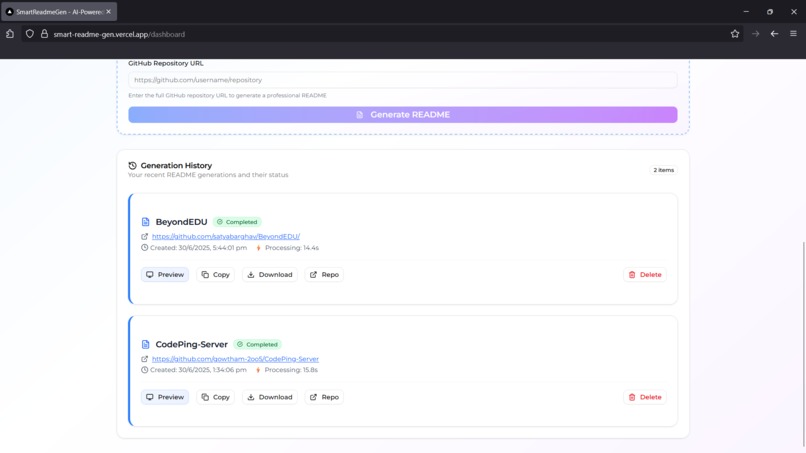
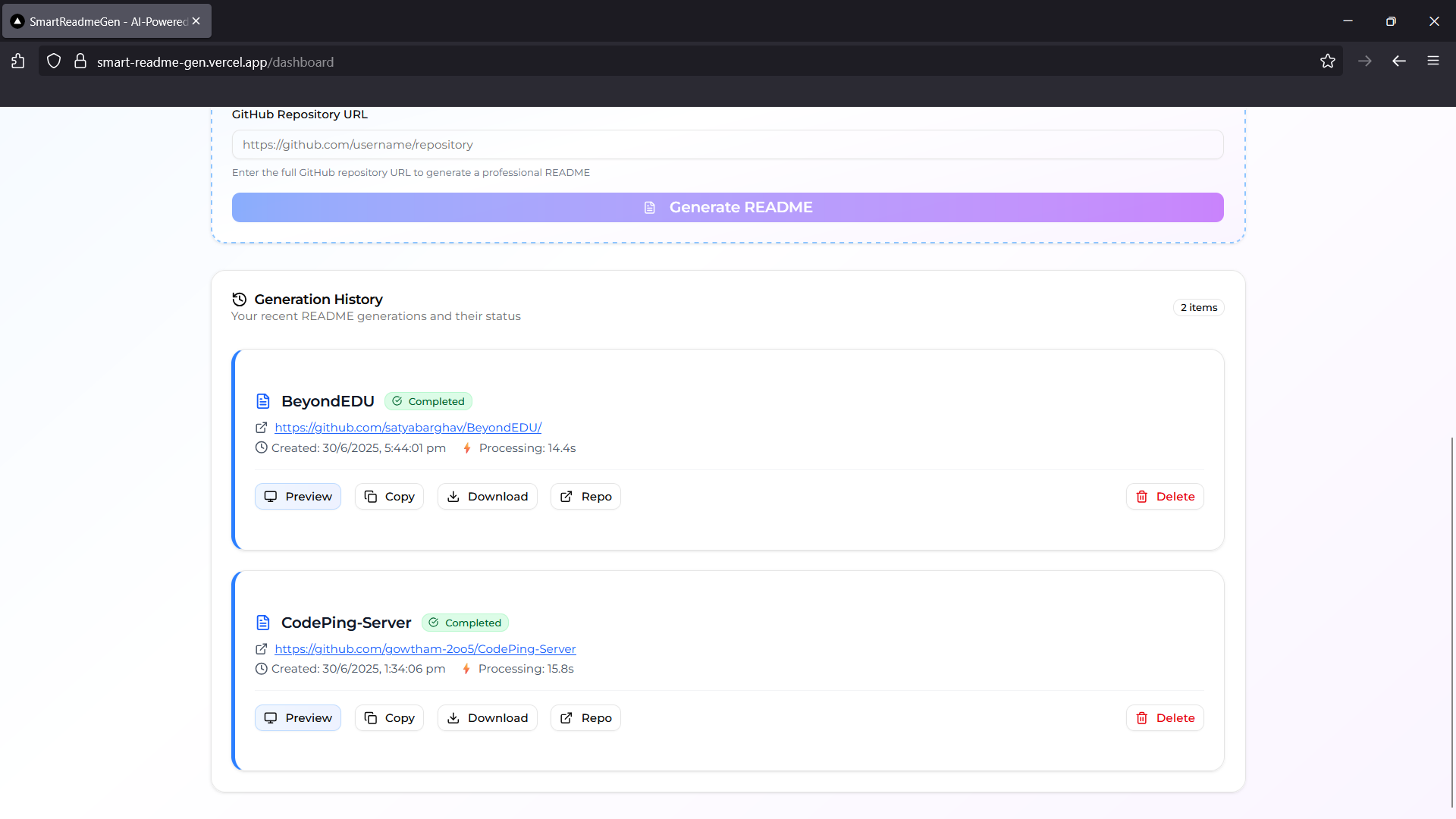
Generated READMEs
-
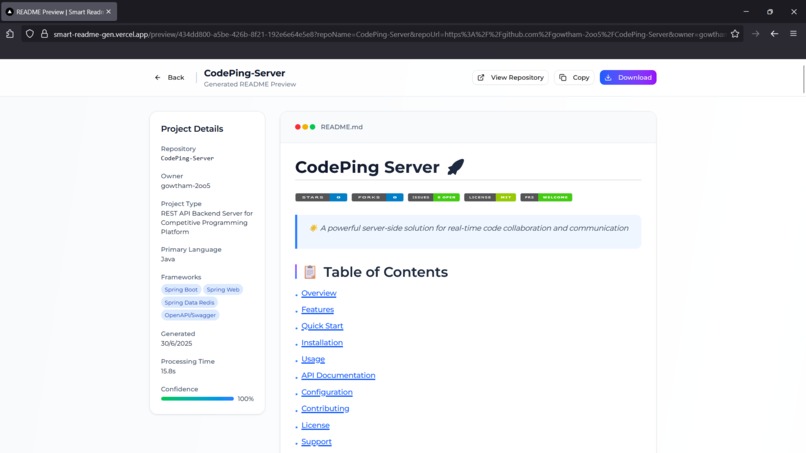
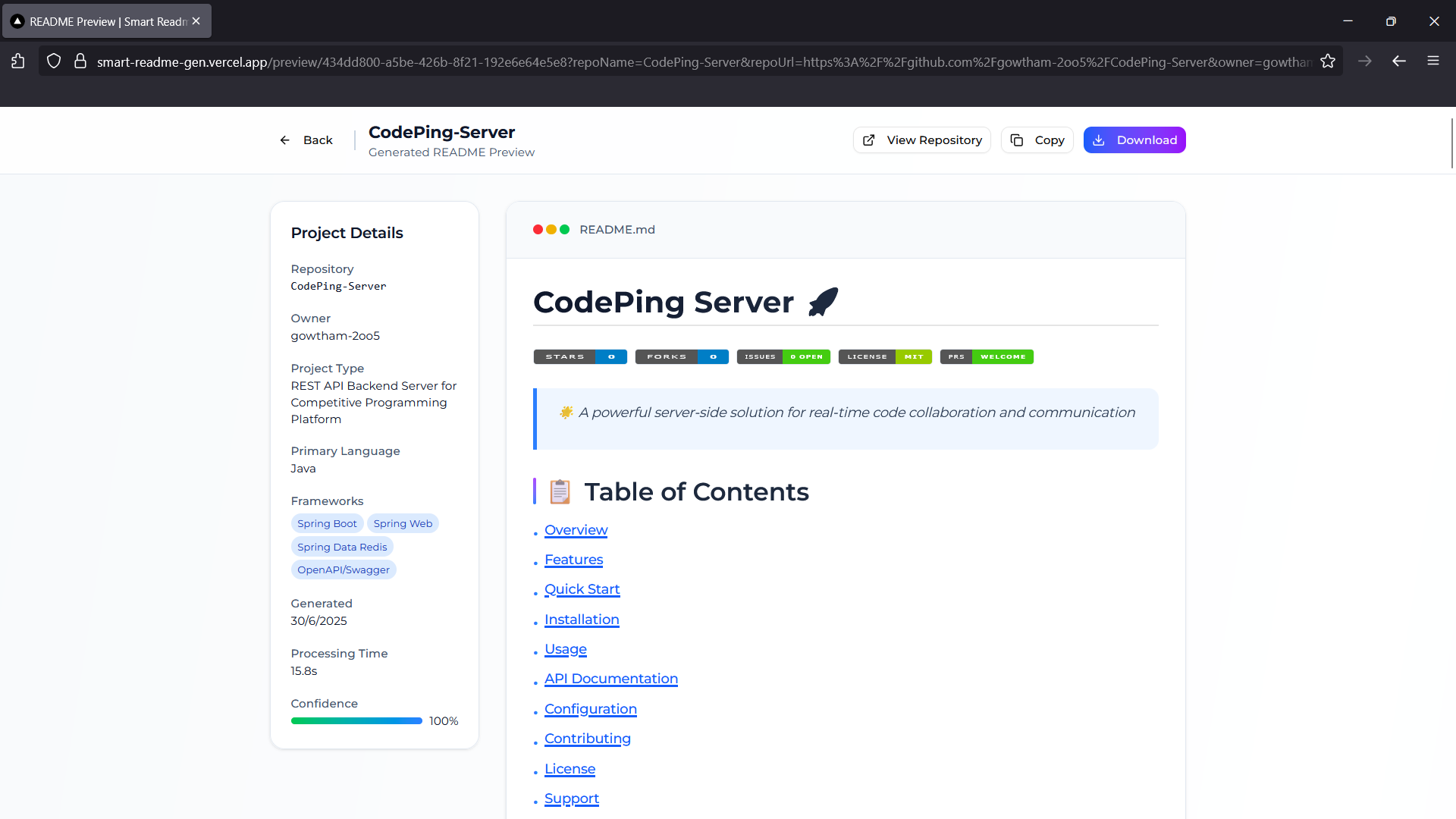
Live Preview of generated README
-
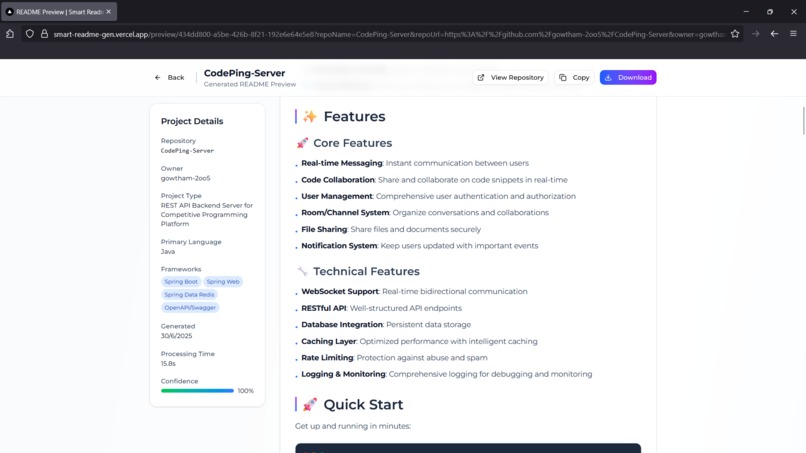
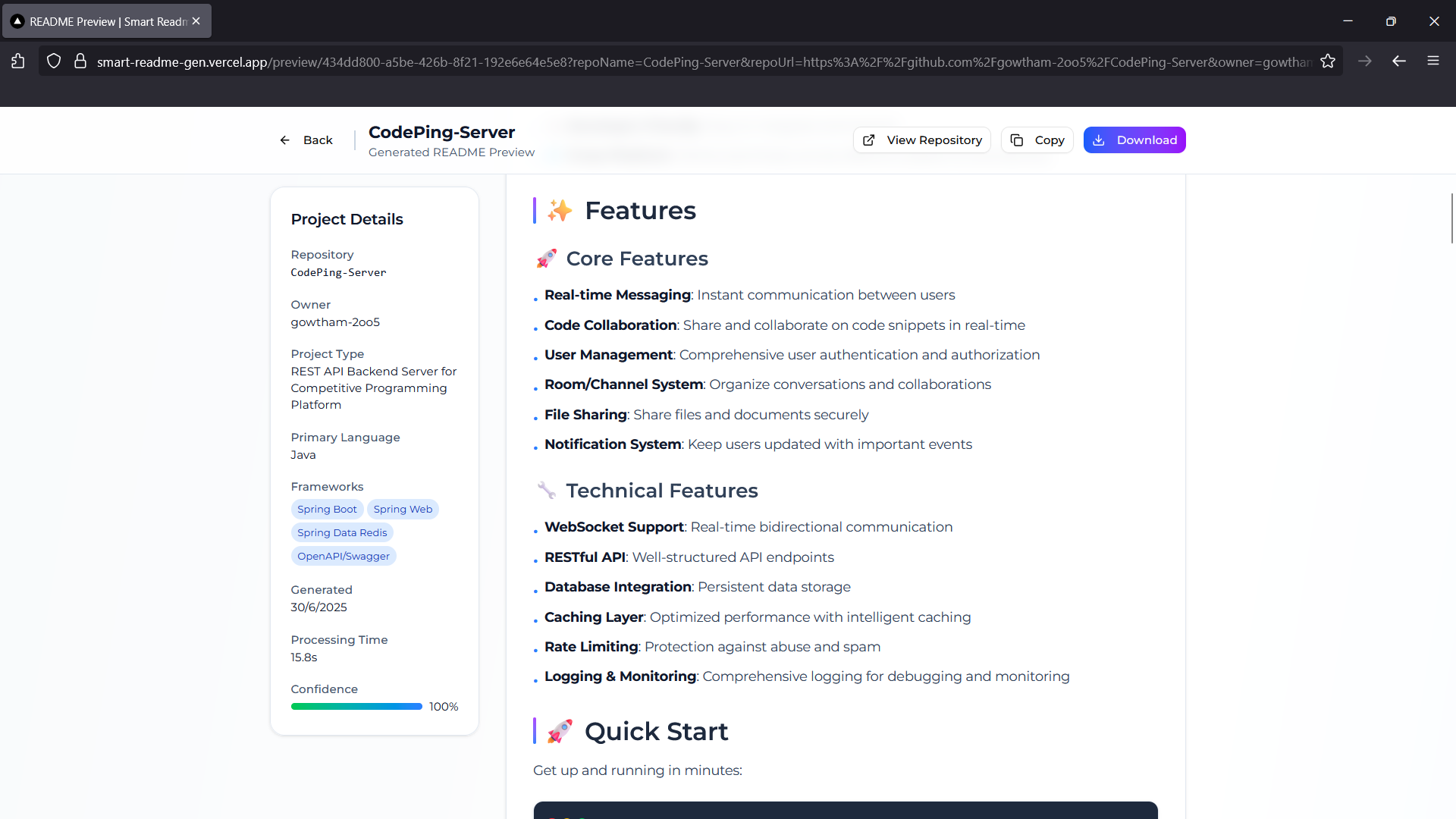
Accurate Addressing of features
-
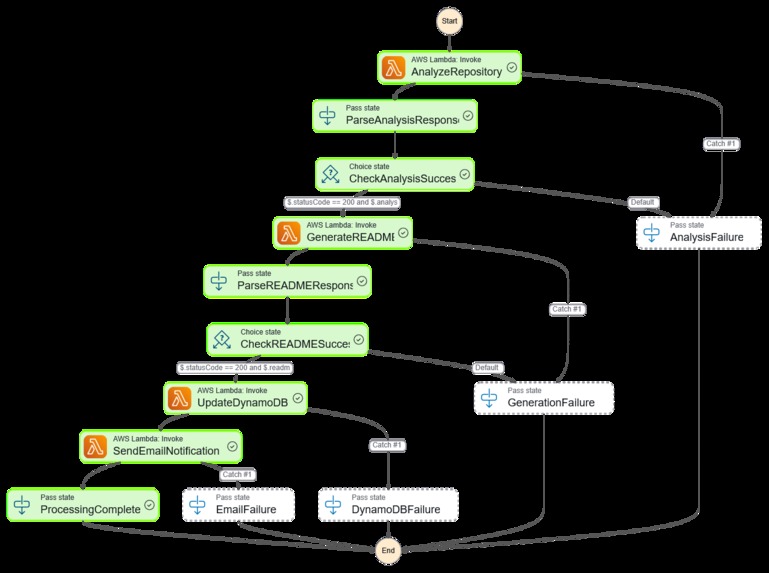
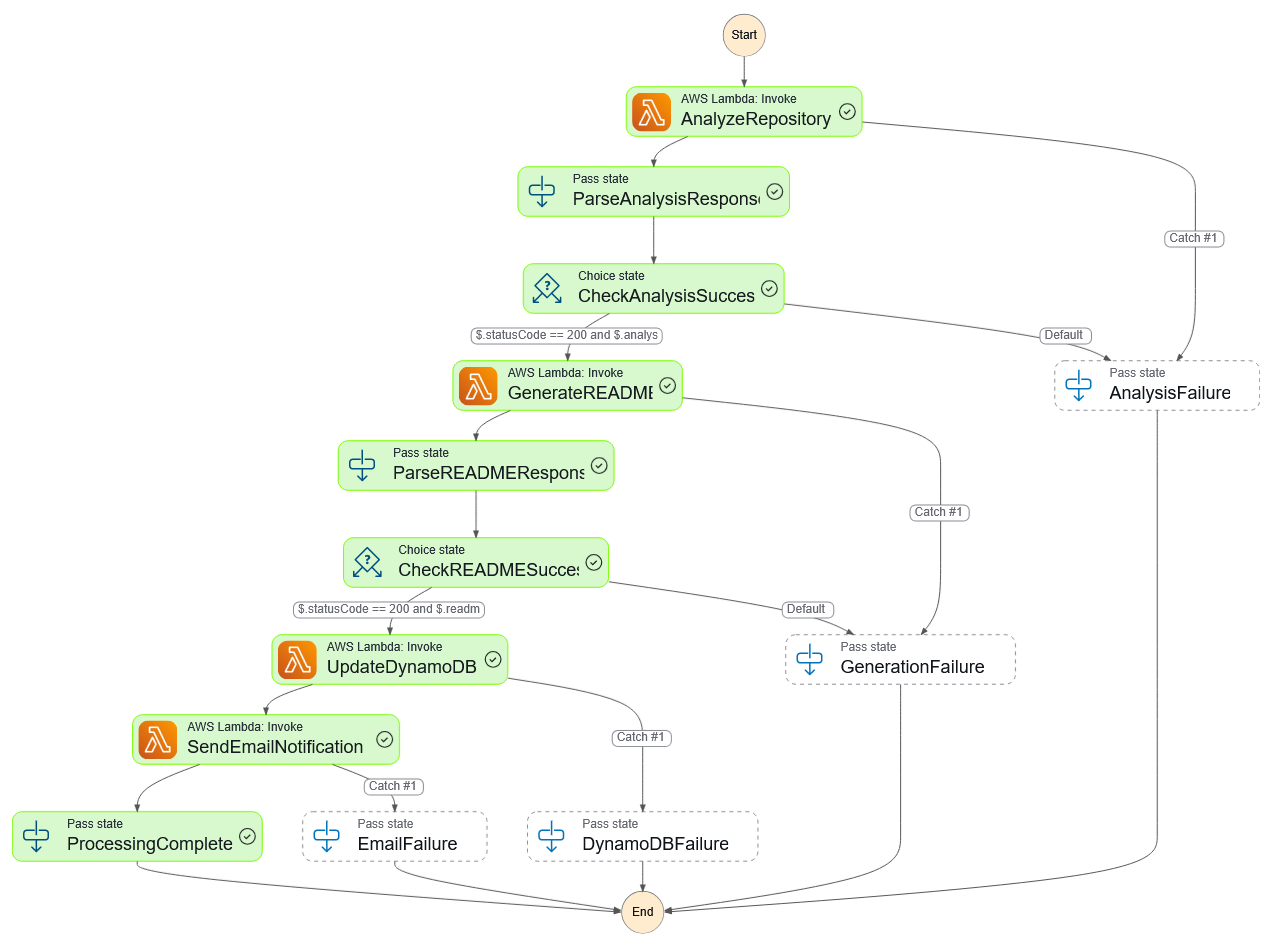
Step Functions Graph of order of execution.
-
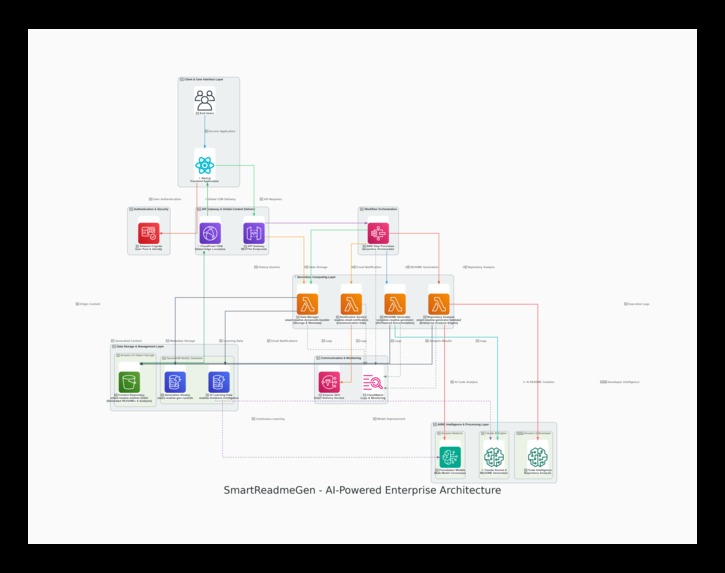
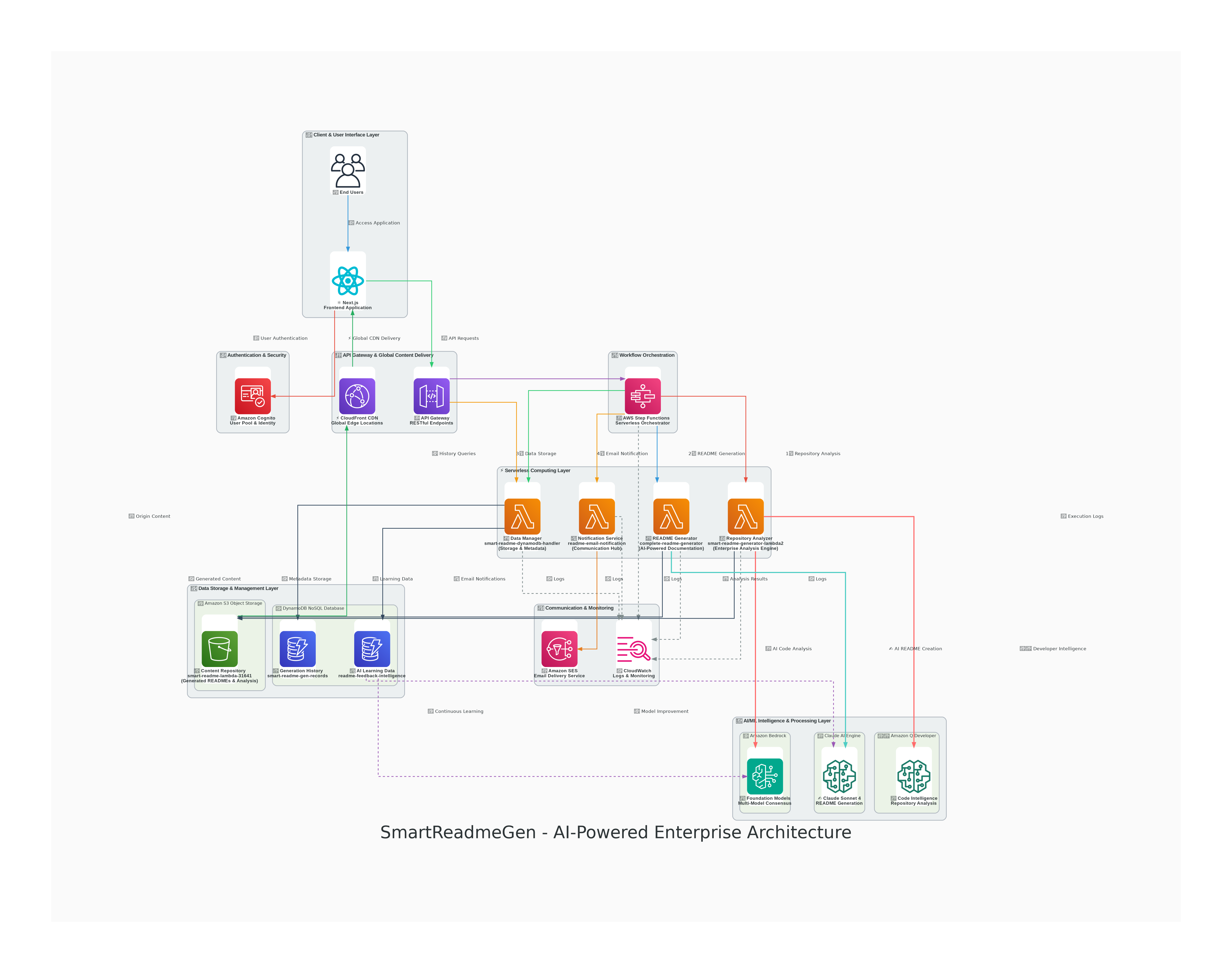
System architecture diagram
💡 Inspiration
This project was born out of a very real and common frustration: after dedicating weeks to building a complex software solution—debugging into the early hours, fine-tuning edge cases, and finally achieving a working product—I found myself staring at an empty README.md file. Despite the technical accomplishment, I lacked the energy to write documentation that did justice to the work.
It struck me that this wasn’t just my problem—many developers invest enormous effort in building outstanding projects, only to neglect the documentation due to fatigue or time constraints. I realized this was a recurring issue in the developer ecosystem and believed AI could offer a solution. That insight led to the creation of an AI-powered README generator.
🛠️ Development & Architecture
Why AWS?
Given my familiarity with AWS, supported by my Cloud Practitioner and Developer Associate certifications, AWS was a natural choice. It also aligned perfectly with the hackathon’s tech stack. The combination of Amazon Bedrock for AI inference and AWS Lambda for serverless compute enabled me to build a scalable, production-grade solution.
Backend-First Development Approach
I prioritized the backend to ensure the core logic was reliable and modular before integrating it with the frontend. Development unfolded in three distinct phases:
- Phase 1: Built a basic MVP with limited accuracy
- Phase 2: Refined architecture and improved model responses
- Phase 3: Implemented a multi-model ReAct system for high-accuracy generation
Technical Stack Overview
- GitHub Integration: Leveraged Personal Access Tokens and GitHub's REST API for secure and efficient data retrieval
- AI Engine: Utilized Claude Sonnet 4 via Amazon Bedrock with multi-model consensus
- Reasoning Engine: Integrated the ReAct (Reason + Act) framework to enable recursive decision-making
- AWS Infrastructure: Orchestrated with Lambda, Step Functions, S3, CloudFront, and DynamoDB
- Frontend: Built with Next.js and styled using Tailwind CSS for a modern, responsive UI
Breakthrough Moment
The major turning point came when I successfully combined recursive ReAct calls with Bedrock models and AWS services. This orchestration not only boosted accuracy to 95–100% but also demonstrated the system's ability to reason and refine its output dynamically—turning a good solution into a robust one.
📚 Key Learnings
This project significantly deepened my understanding of modern cloud-native and AI-driven application development:
- Advanced usage of Amazon Bedrock for multi-model prompt engineering
- Building intelligent agents using the ReAct framework
- Designing and optimizing multi-service AWS pipelines
- Importance of structured logging for debugging distributed systems
- Frontend polish and performance tuning with Next.js + Tailwind CSS
- Experience architecting production-ready systems capable of handling real-world scale
🚧 Challenges Encountered
DynamoDB Complexity
Managing persistence through DynamoDB presented multiple challenges. I encountered race conditions, inconsistent reads, and occasional connection timeouts. Debugging these across asynchronous Lambda invocations in a distributed system required extensive structured logging and retry logic.
CORS and API Gateway Headaches
One of the more persistent and frustrating issues was CORS (Cross-Origin Resource Sharing) misconfigurations, particularly when integrating S3 and CloudFront with API Gateway. Despite following documentation, I had to reconfigure and redeploy CORS headers multiple times across API Gateway stages to ensure smooth communication with the frontend. Even minor missteps—like missing OPTIONS method responses—would break the app unexpectedly.
Next.js Build and Linting Issues
The Next.js production build process surfaced strict linting and TypeScript issues that didn’t appear in development. ESLint rules, async/await patterns, and unused variable warnings often delayed deployment. Fine-tuning the frontend build process was more complex than anticipated.
GitHub API Rate Limiting
Fetching repository metadata from GitHub required careful handling of rate limits. I implemented request throttling and caching strategies, but frequent testing during development often exhausted the quota, causing intermittent failures and delays.
Time Constraints and Context Switching
Simultaneously working on a college capstone project alongside this full-stack application resulted in long workdays—often 14 to 16 hours—spread over two intense weeks. Context switching between different codebases and domains was mentally taxing, but ultimately rewarding.
🎯 Results & Impact
Highlights
- 🚀 Achieved 95–100% generation accuracy through intelligent AI orchestration
- 🧠 Architected a production-grade, serverless AI pipeline using over 25 AWS resources
- 📄 Successfully generated 20+ README files, including for repositories from major organizations like Microsoft
- ⚡ Delivered fast, reliable outputs with sub-30 second latency and robust error handling
- 💻 Developed a high-quality UI that mirrors SaaS-grade design and usability
- 💰 Maintained cost-efficiency, with each README generation costing ~\$0.07
🔮 Future Roadmap
The foundational architecture is in place, and I plan to expand this into a full-fledged SaaS product. Key next steps include:
- Adding user authentication and billing infrastructure
- Integrating with LinkedIn and other platforms for multi-output content generation
- Expanding support for other documentation types beyond READMEs
- Continuing optimization for cost, latency, and model accuracy
This project has validated the idea, both technically and conceptually, and laid the groundwork for future commercialization.
🎓 Final Reflection
If I could start over, I would explore alternative state management solutions in the frontend earlier and optimize the build pipeline from the beginning. Nonetheless, the learning curve, technical breakthroughs, and hands-on experience with scalable AI systems made this journey incredibly fulfilling.
What began as a solution to a personal pain point has evolved into the foundation of a potential startup—powered by AWS, AI, and a relentless drive to solve meaningful problems for developers.
Built during two intense weeks of focused development while balancing college responsibilities. Fueled by passion, persistence, and more caffeine than recommended.
You can either signup with your mail and try or, try these credentials: [email protected] Gowth$2k5
Built With
- amazon-bedrock
- amazon-cloudwatch
- amazon-cloudwatch-databases:-dynamodb
- amazon-dynamodb
- amazon-web-services
- aws-cli
- aws-step-functions
- bedrock
- claude
- claude-sonnet-4-api-other-technologies:-git
- github-api
- github-cloud-services:-aws-lambda
- javascript
- javascript-frameworks:-next.js
- lambda
- multi-model-ai-consensus
- nextjs
- python
- react
- s3
- s3-apis:-github-api
- serverless-architecture
- shadcn
- step-functions
- tailwind-css-platforms:-aws
- tailwindcss
- typescript
- vercel


Log in or sign up for Devpost to join the conversation.