-
-
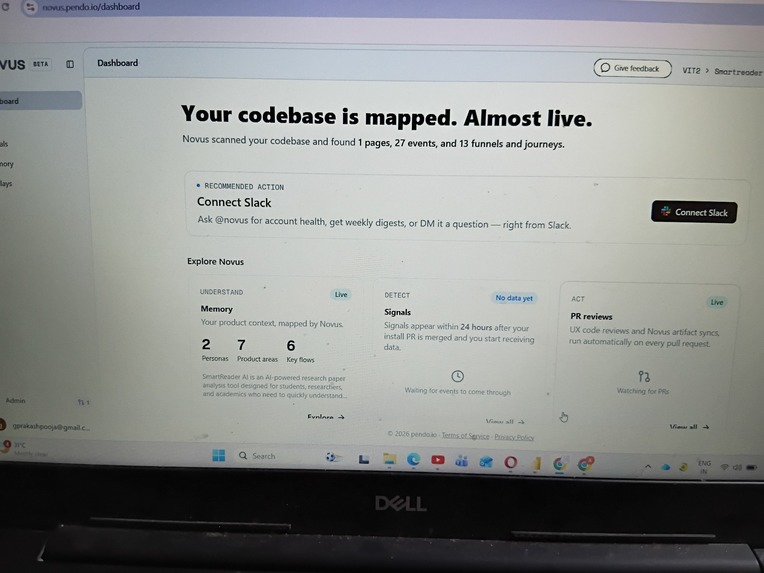
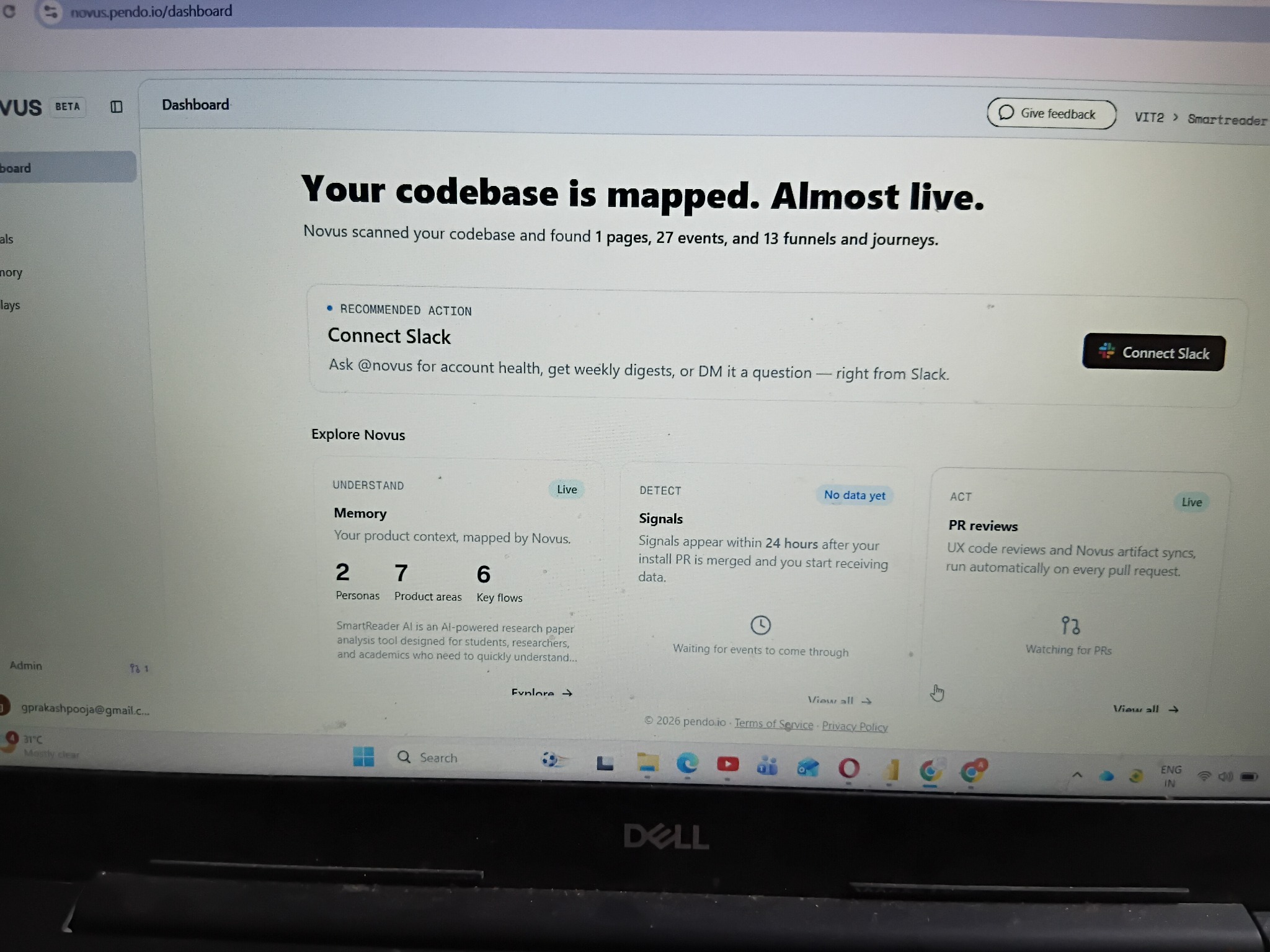
we integrated this ai
Inspiration
During my internship and academic projects, I often had to read and analyze research papers before implementing ideas or conducting experiments. I quickly realized that understanding a single paper could take anywhere from 30 minutes to several hours. Extracting the methodology, datasets, results, limitations, and future research directions was a repetitive and time-consuming process.
As a Data Science student, I experienced this challenge firsthand while reviewing papers related to machine learning, deep learning, EEG analysis, and computer vision. I wanted a tool that could help me understand research papers faster without losing important insights.
This inspired me to build SmartReader AI, an AI-powered research assistant that transforms complex research papers into summaries, study notes, flashcards, viva questions, and research-gap insights within minutes.
What it does
SmartReader AI helps students, researchers, professors, and professionals quickly understand academic papers.
Users can upload a PDF or paste research paper text and instantly receive:
Executive Summary Key Findings Methodology Analysis Dataset Information Results and Conclusions Research Gaps Study Notes Flashcards Viva & Interview Questions Vocabulary Simplification Reading Time Savings
The goal is to reduce paper understanding time from nearly an hour to just a few minutes.
How we built it
Frontend React TypeScript Vite Tailwind CSS Framer Motion Backend Serverless Functions Google Gemini API Storage Local Storage for history and user sessions AI Processing
The application uses Gemini AI to analyze research paper content and generate structured educational outputs such as summaries, flashcards, research gaps, and viva questions.
Challenges we ran into
One of the biggest challenges was handling large research papers while maintaining fast response times.
Some papers contained tens of thousands of characters, which required optimizing the amount of text sent for analysis.
Another major challenge was working with AI-generated structured data. Large responses occasionally produced malformed JSON, so I had to improve prompt engineering, response validation, and error handling to ensure reliable outputs.
Balancing feature richness with performance was also difficult. I learned that a fast and focused user experience is often more valuable than adding too many features.
Accomplishments that we're proud of
🚀 Reduced research paper understanding time from hours to minutes. 🤖 Built an AI-powered research assistant using Gemini AI. 📚 Generated summaries, study notes, flashcards, and viva questions automatically. 🔍 Extracted key insights, methodologies, and research gaps from papers. 🎓 Solved a real problem I faced during my internship and academic research. ⚡ Delivered a fast, modern, and user-friendly learning experience.
What we learned
Through this project, I gained hands-on experience with:
AI-powered application development Prompt engineering Research paper analysis workflows Gemini API integration React and TypeScript development Serverless backend architecture Error handling and optimization for production-style applications
Most importantly, I learned how to build a product around a real problem that I personally faced during my internship and academic journey.
What's next for SmartReader AI – Research Assistant
Future improvements include:
Multi-paper comparison Literature review generation Citation analysis Research recommendation engine Collaborative study workspaces Personalized learning paths Academic search integration
Built With
- api
- css
- framer
- functions
- gemini
- git
- html
- javascript
- local
- motion
- react
- serverless
- storage
- tailwind
- typescript
- vite

Log in or sign up for Devpost to join the conversation.