-
-
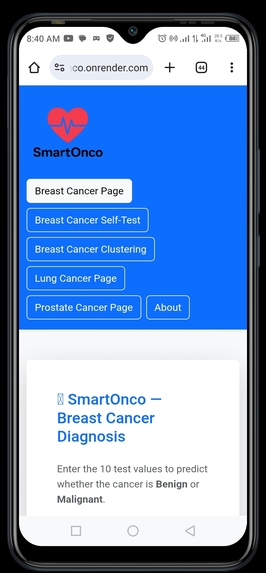
breast cancer page
-
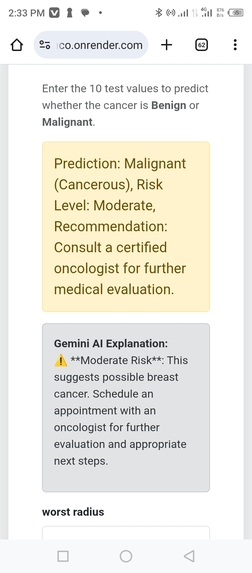
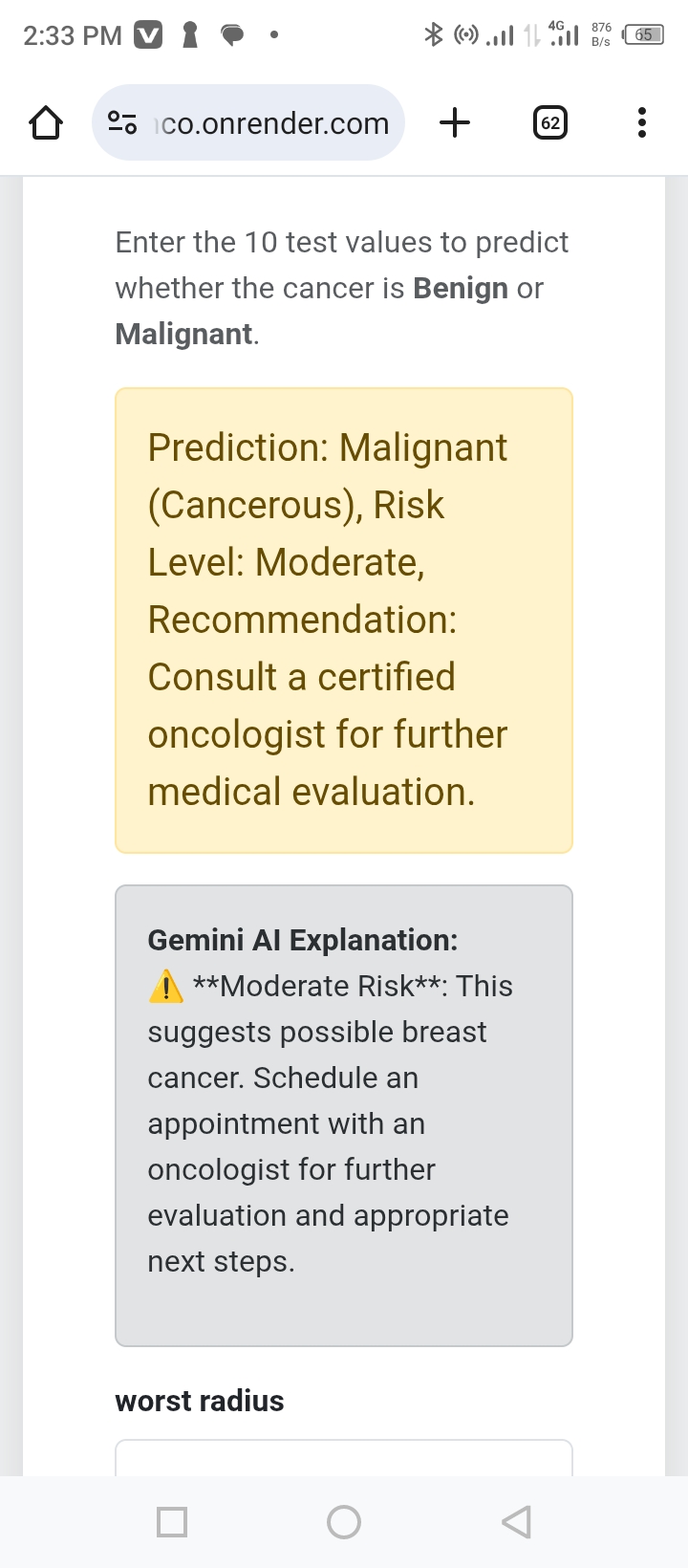
breast cancer prediction result with gemini ai explanation
-
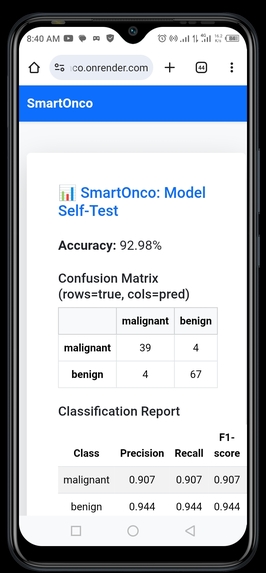
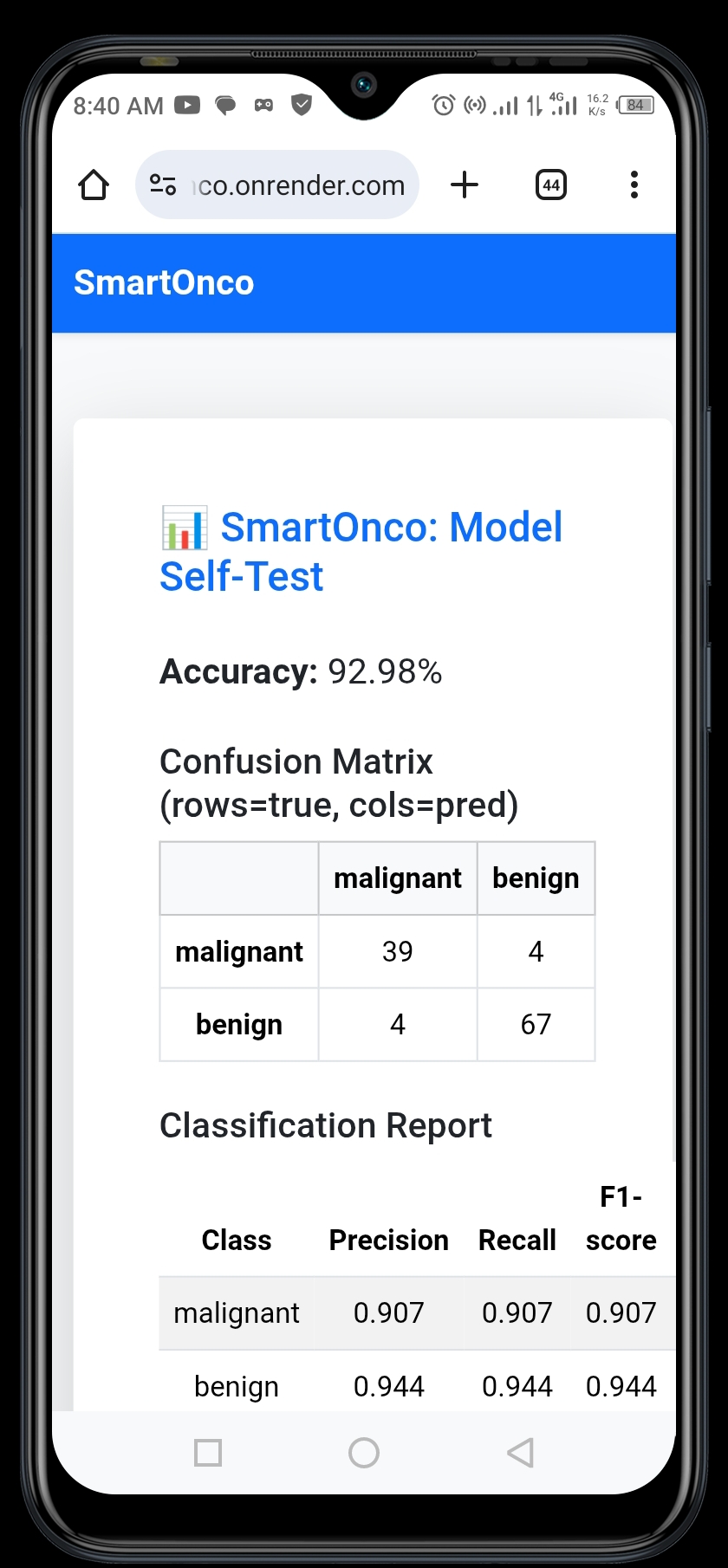
breast cancer model self test page
-
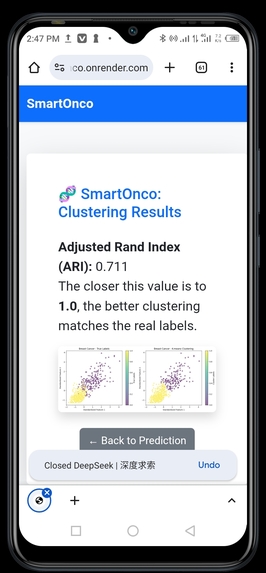
breast cancer clustering page
-
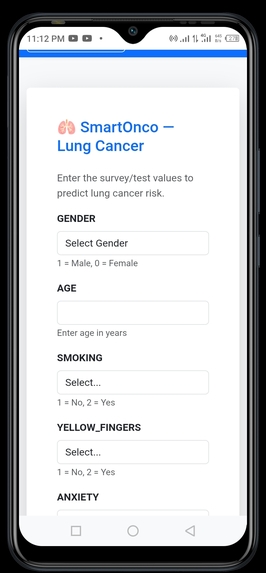
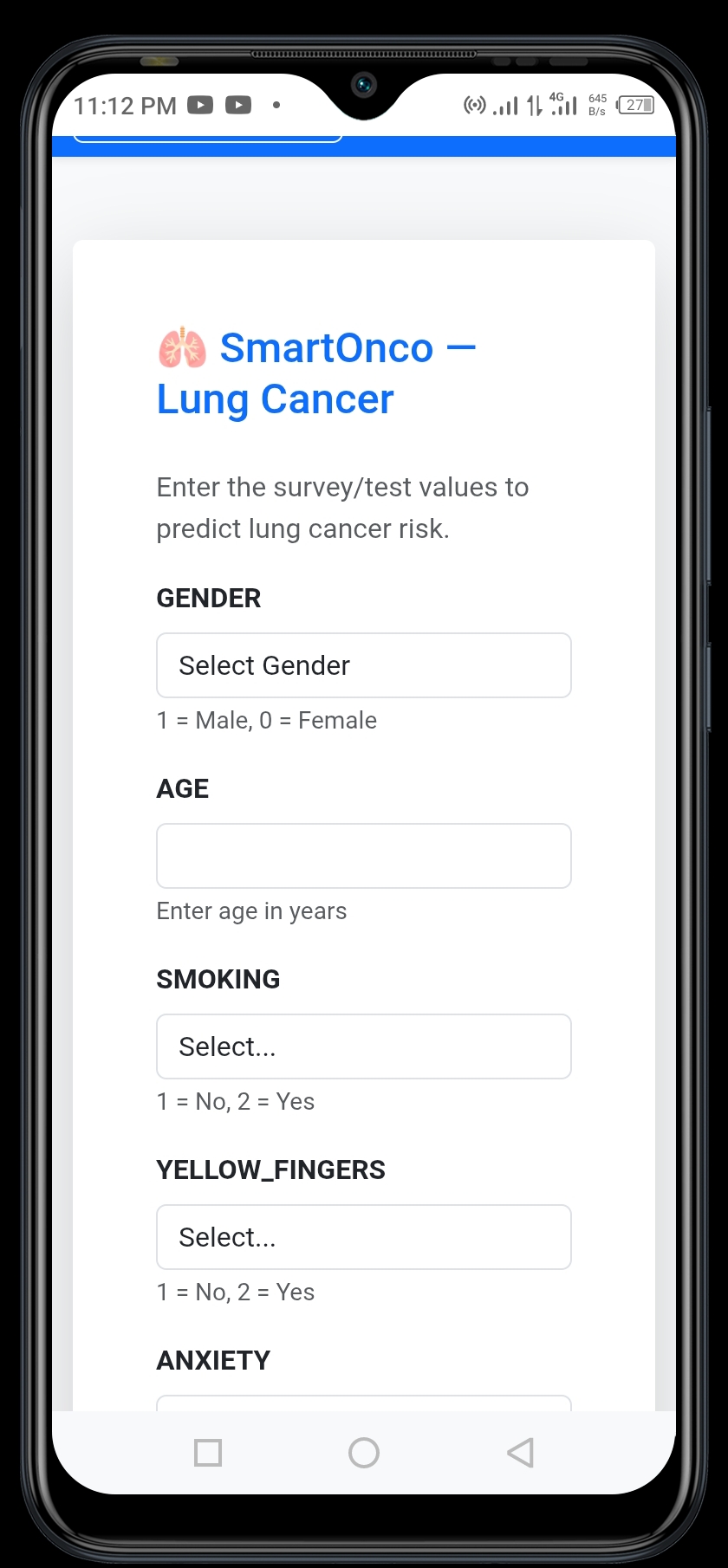
lung cancer page
-
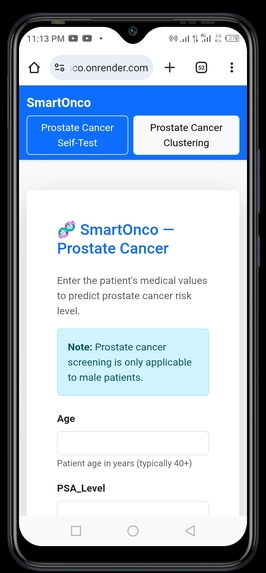
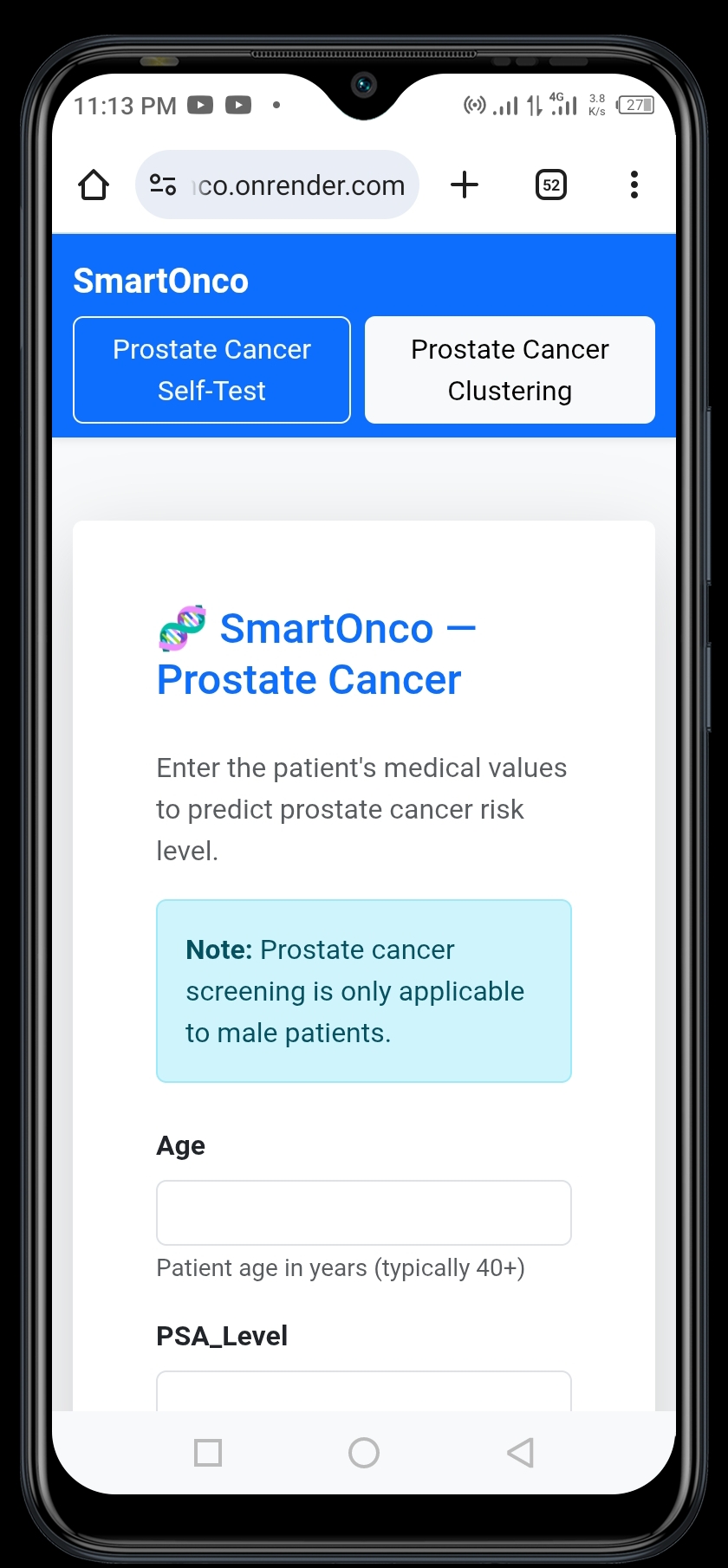
prostate cancer page
-
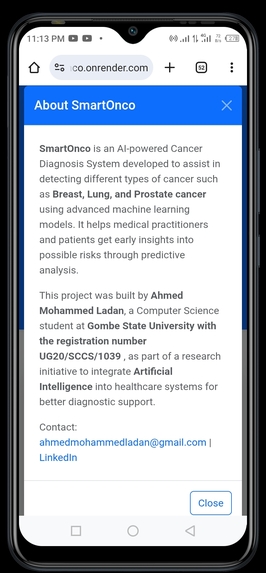
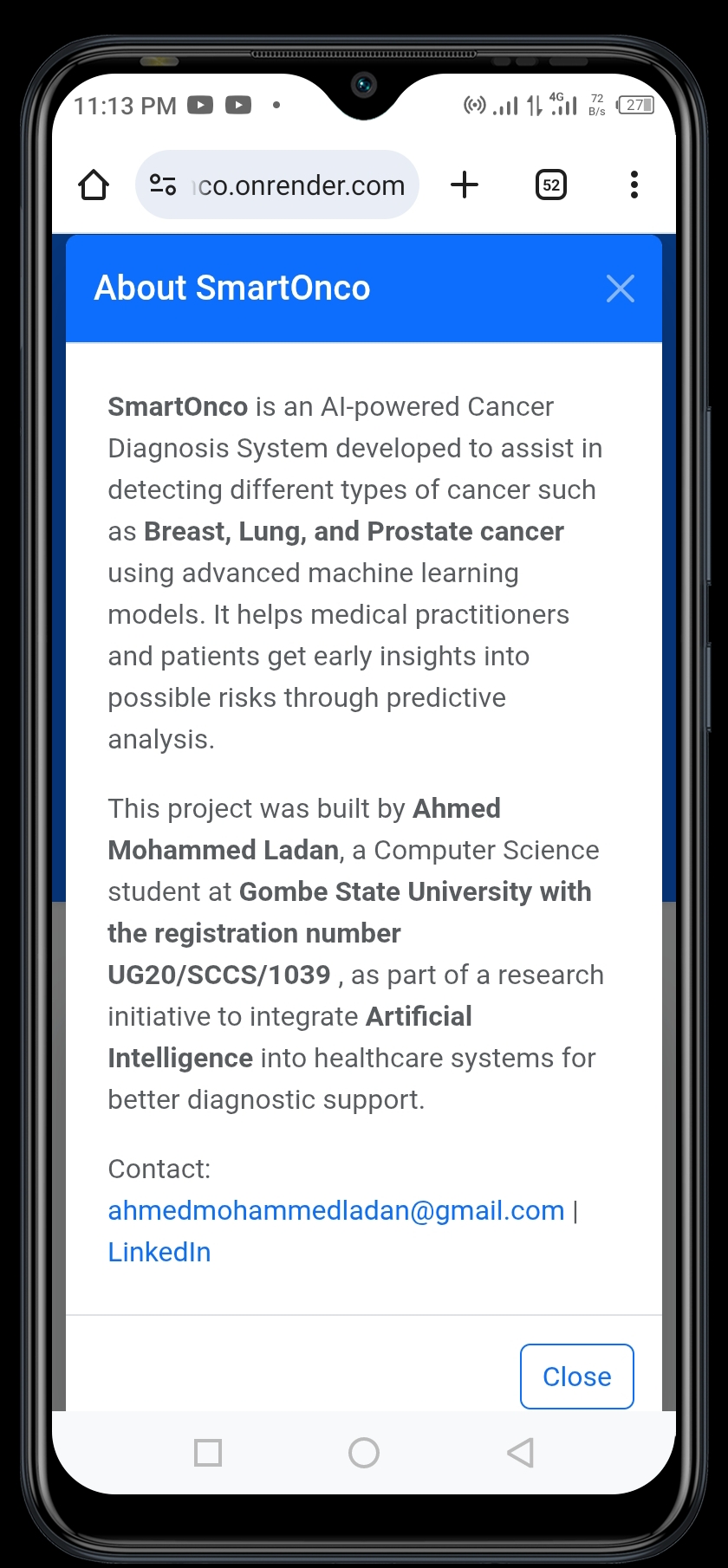
About page
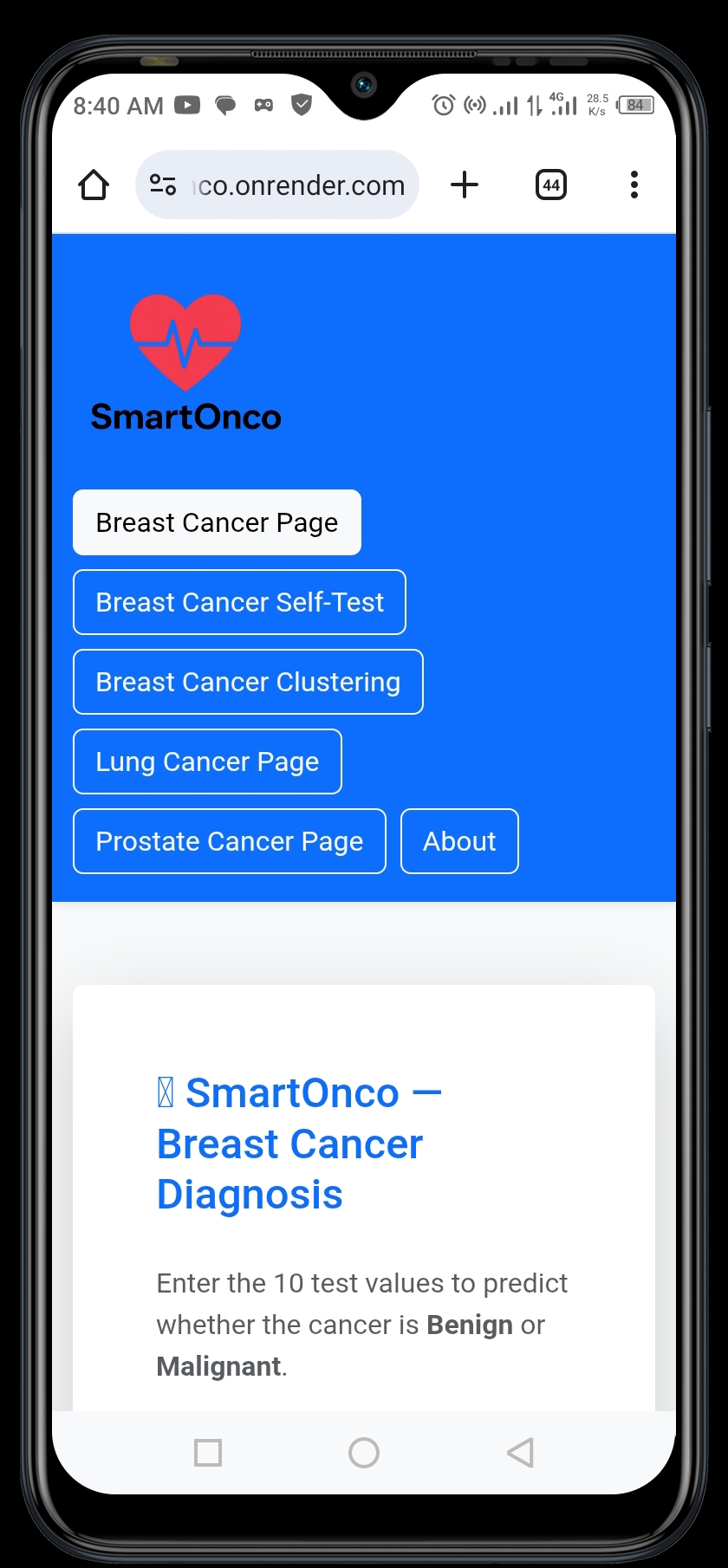

Inspiration Cancer is one of the leading causes of death worldwide, and early detection plays a critical role in improving survival rates. I was inspired to create SmartOnco to make early cancer risk screening more accessible and understandable for both patients and healthcare professionals. Many existing systems provide predictions without clear explanations, so I wanted to bridge the gap between AI predictions and human understanding by combining machine learning with generative AI.
What I Learned While developing SmartOnco, I strengthened my knowledge of: Machine learning for medical risk prediction Data preprocessing and feature selection using Pandas and NumPy Flask-based web application development Cloud deployment on Render Generative AI integration, using Google Gemini to transform technical predictions into patient-friendly explanations I also learned how to design medical AI systems responsibly by ensuring predictions are supportive, transparent, and encourage professional medical consultation rather than self-diagnosis.
How I Built It SmartOnco is an AI-powered cancer risk screening and clinical decision-support system built with Python and Flask. Machine-learning models predict breast, lung, and prostate cancer risk Users input clinical or questionnaire-based data The system outputs: Risk Level (Low, Moderate, High) Medical recommendations for next steps Gemini AI–generated explanations that translate complex medical results into clear, easy-to-understand language for patients and non-specialists Scikit-learn was used for model development, while Google Gemini was integrated to provide natural-language explanations that improve interpretability and user trust. The application is deployed on Render for real-world accessibility.
Challenges Key challenges included: Preparing and managing multiple datasets with varying structures Ensuring medical explanations generated by Gemini remain accurate, safe, and non-alarming Integrating generative AI without compromising performance or reliability Clearly positioning SmartOnco as a decision-support tool, not a replacement for medical professionals Addressing these challenges helped me balance technical innovation with ethical responsibility in healthcare AI.

Log in or sign up for Devpost to join the conversation.